

Note: This article contains affiliate links. If you click on these links and make a purchase, I may earn a small commission at no extra cost to you. This helps support my research and content. Read my full affiliate disclosure here.
If you want to protect patios, garden beds, and lawn edges from flying and crawling insects without hauling cans or mixing concentrates, a hose bug spray can make routine pest control much simpler. The right spray attachment and formula affect how far the mist travels, how long protection lasts, and how safe it is around plants and pets. This guide covers seven shortlisted hose options that suit common backyard situations and explains the practical tradeoffs you should expect. We assessed each entry for spray coverage, application control, and suitability around outdoor plants. Read on to find the hose-based bug spray setup that fits your garden layout and pest pressure.
Top Picks at a Glance
| Best Overall The best all-around choice for most situations | Wondercide Outdoor Pest Control Spray — 32 oz Ready-to-Use |  |
| Best Quality Built to a higher standard if you want something more solid | BioAdvanced Complete Insect Killer Ready-to-Spray, 32 oz |  |
| Best Value The sweet spot between price and what you get | Ortho BugClear Insect Killer for Lawns & Landscapes Ready-to-Spray, 32 oz |  |
| Best Budget The cheapest option that still gets the job done reliably | Spectracide Triazicide Insect Killer for Lawns & Landscapes, 32 oz |  |
| Highest Rated A top-rated pick with lots of positive feedback | Ortho Tick B-gon Ready-to-Spray Tick Killer, 32 fl. oz. | 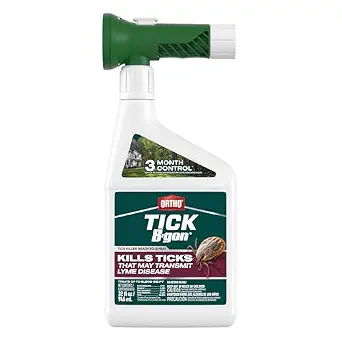 |
| Most Popular A crowd favorite that many people choose with confidence | Cutter Backyard Bug Control Spray Concentrate, 32 oz (2 pack) |  |
Wondercide Outdoor Pest Control Spray — 32 oz Ready-to-Use

| Format | Pre-mixed, hose-end spray |
|---|---|
| Active ingredients | Cedarwood Oil 12.63%, Sesame Oil 2.73% |
| Coverage | Up to 5,000 sq ft (general); 2,500 sq ft (ticks/mosquito repel) |
Wondercide Ready-to-Use Outdoor Pest Control is a hose‑end spray designed for treating yards up to 5,000 sq ft for general pests and 2,500 sq ft for ticks and mosquito repellency. You attach the bottle to a garden hose, sweep the nozzle across lawns, patios, and foundation lines, and the cedarwood‑based formula delivers quick coverage with no dry time required. Notable features include plant-powered active ingredients (cedarwood and sesame oils), ready-to-use convenience, and instructions for both active infestations and preventative maintenance. Practical benefits are that it is safe to use around people and pets when directions are followed, residues are reported to be non-harmful to pollinators, and the hose attachment makes treating large areas fast. Important limitations are that effectiveness depends on water pressure, walking speed, and weather, heavy rain may require reapplication, and spraying in temperatures above 90°F or direct sun can cause plant burn. Users who need an all‑season, high‑durability pesticide for heavy infestations should plan on repeated applications and follow label precautions to protect sensitive plants.
Best for: Buyers who prioritize effective, plant‑based mosquito and tick control for medium to large yards and want a fast hose‑attached solution that is safe around families and pets when used as directed.
Less Ideal for: Gardeners who need a single, long‑lasting professional‑grade pesticide for severe, persistent infestations or who cannot reapply after rain should consider alternative, heavier‑duty treatments.
- Ready-to-use hose-end applicator for fast coverage of large yards
- Plant-based active ingredients (cedarwood and sesame oils) that target common yard pests
- No dry time required so kids and pets can re-enter treated areas quickly
- Covers up to 5,000 sq ft for general pest control and 2,500 sq ft for ticks/mosquito repellency
- May cause phytotoxic burning if applied in direct sun or temperatures above 90°F
- Performance depends on water pressure and user walking speed which can lead to uneven coverage
- Heavy rain can wash it away and requires reapplication
Verdict: If you want a fast, family- and pet-friendly plant‑based spray to reduce mosquitoes and ticks across a medium to large yard, this ready‑to‑use hose‑end formula delivers practical, repeatable results.
BioAdvanced Complete Insect Killer Ready-to-Spray, 32 oz

| Liquid Volume | 32 fluid ounces |
|---|---|
| Active Ingredients | 0.72% Imidacloprid, 0.36% Beta-cyfluthrin |
| Target Species | Insects |
The BioAdvanced Complete Insect Killer is a ready-to-use 32 ounce spray formulated to control both surface and soil insects across an entire lawn. It uses a two-way formula with imidacloprid and beta-cyfluthrin to knock down ants, grubs, ticks, mosquitoes and many other listed pests, often showing activity within 24 hours. The bottle is intended for direct spray application to turf and around home perimeters and can also be used as a concentrate refill for tank or dial sprayers. Notable features include treatment coverage large enough for a typical yard and labeled subsurface protection that lasts up to three months against soil pests. In practice this product is strong for quickly reducing insect pressure and cutting reinfestation from belowground pests, but it is a chemical insecticide so users must follow label directions, avoid application in restricted states, and take standard precautions around pollinators and water. For someone focused on fast, measurable pest control on lawns, it delivers effective performance but requires careful, label-compliant use.
Best for: Gardeners who prioritize fast, dependable lawn pest control and want both immediate knockdown and longer subsurface protection for turf areas.
Less Ideal for: People seeking organic or pollinator-safe alternatives or those with strict local restrictions on synthetic insecticides should consider a different product.
- Two-way formula treats both surface and soil insects for broader control
- Fast-acting results with many listed pests affected within 24 hours
- Provides up to three months of subsurface protection against soil pests
- Ready-to-spray bottle can also serve as a refill for sprayers for flexible application
- Not labeled for sale or use in several states
- Contains synthetic active ingredients that require careful handling and adherence to label restrictions
Verdict: Choose this ready-to-spray formula if you need rapid, wide-area lawn pest control with lasting subsurface protection.
Ortho BugClear Insect Killer for Lawns & Landscapes Ready-to-Spray, 32 oz

| Item Form | Aerosol |
|---|---|
| Target Species | Ant |
| Liquid Volume | 32 fluid ounces |
Ortho BugClear Ready-to-Spray is a hose‑end insecticide designed for homeowners who want a fast, no-mix solution to reduce mosquitoes and many other yard pests. You attach the 32 oz. bottle to a garden hose and apply across lawns, foundation perimeters and ornamentals; one bottle covers up to about a 5,300 sq ft lawn or targeted perimeter areas. The formula lists bifenthrin and zeta‑cypermethrin and is described as non‑staining and odor free, with knockdown that starts within minutes and protection that can last for months. Practical benefits include quick application without measuring, broad-spectrum control of dozens of species including mosquitoes and ticks, and compatibility with turf, shrubs and listed edibles when used as directed. Important limitations are that it is a contact/residual insecticide so timing matters for weather and pollinator safety, and hose-end coverage is fixed so very large properties may need multiple bottles; follow label precautions for pets, people and bloom protection.
Best for: Homeowners who want an affordable, easy-to-use mosquito and general yard pest treatment they can apply themselves without mixing concentrates.
Less Ideal for: People who prefer organic or non-chemical mosquito control methods or those managing very large properties who need professional-scale coverage.
- Ready-to-spray hose-end design for quick, no-mix application
- Claims fast knockdown and long-lasting residual control
- Broad-spectrum label lists many outdoor pests including mosquitoes and ticks
- Non-staining and low odor for outdoor use near living spaces
- Contains synthetic pyrethroids that require careful timing and avoidance of blooming plants to protect pollinators
- Single bottle covers limited area for very large yards
Verdict: A budget-friendly, ready-to-spray option that makes quick, DIY mosquito and yard pest control simple for typical residential lawns.
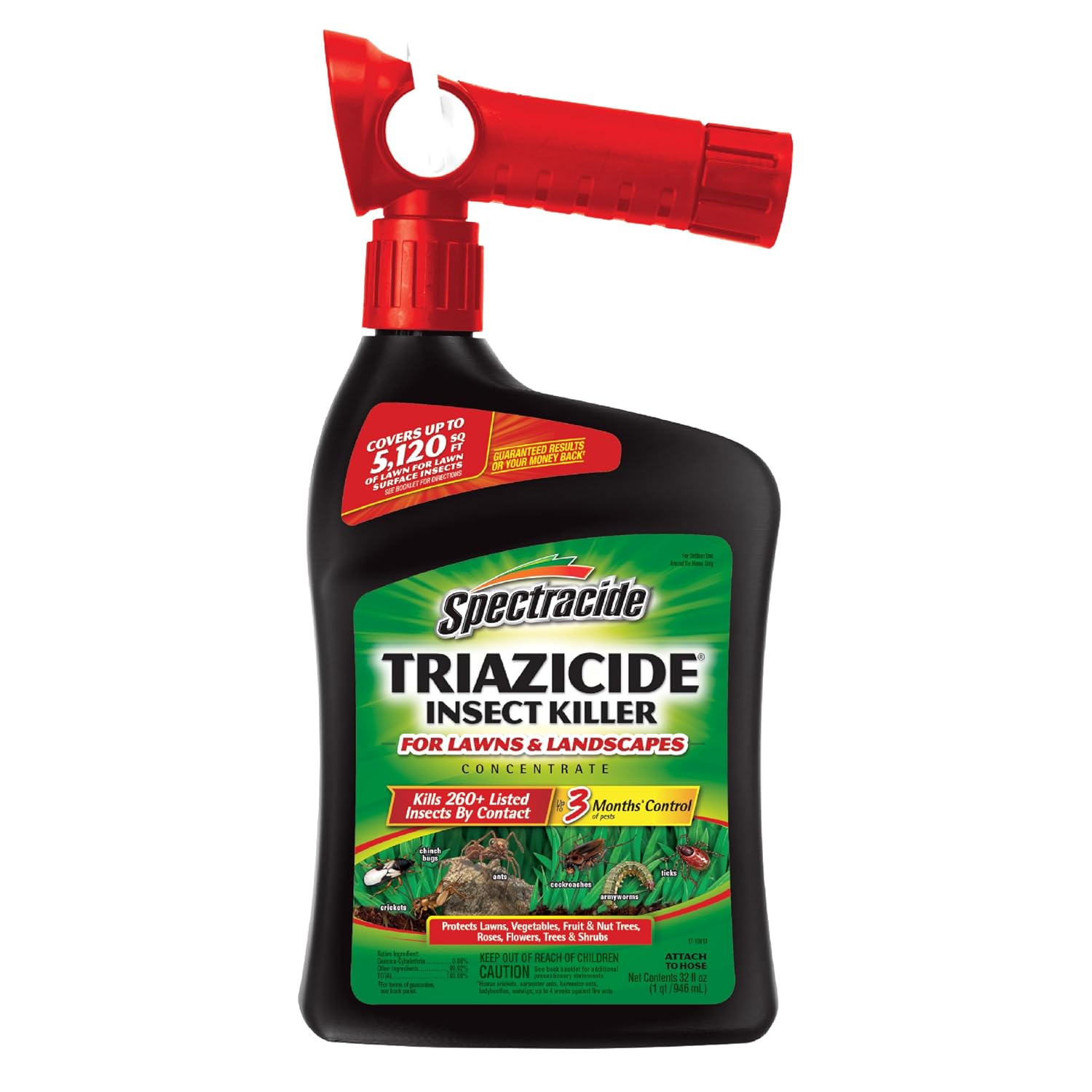
Spectracide Triazicide Insect Killer for Lawns & Landscapes, 32 oz
| Unit Count | 32 Ounce |
|---|---|
| Item Form | Spray |
| Target Species | Insects |
| Active Ingredients | Gamma-Cyhalothrin (0.08%) |
Spectracide Triazicide is a 32-ounce concentrate formulated to control more than 260 listed insects on lawns, flower beds, trees, shrubs and around vegetables. You mix the concentrate with water and apply it with a tank or hose-end sprayer; the ready-to-spray variant can attach to a garden hose for quicker application. The active ingredient, gamma-cyhalothrin, delivers fast contact kill for pests such as fleas, ticks, Japanese beetles and many surface insects, and the label claims protection for up to three months in some uses. It is non-staining when used as directed and can treat large areas, making it practical for whole-yard applications and targeted mound treatments like fire ants. Important limitations include toxicity to fish and bees, so it must not be applied near water or blooming plants, and the product requires careful handling and adherence to safety directions. Follow mixing rates and timing recommendations for best results and to minimize environmental risk.
Best for: Buyers who need an affordable, large-area solution to knock down common lawn and landscape pests and prefer a concentrate that stretches coverage when mixed.
Less Ideal for: People with small ornamental gardens near ponds, homeowners who prioritize pollinator-safe products, or those unwilling to follow pesticide safety precautions should consider gentler or targeted alternatives.
- Concentrate covers large areas so a single bottle treats many square feet when mixed correctly
- Fast-acting contact kill for a wide range of listed insects including fleas, ticks and Japanese beetles
- Versatile use on lawns, flower beds, trees, shrubs and around vegetables
- Non-staining when used as directed and available in hose-end ready-to-spray format for easier application
- Highly toxic to aquatic life and bees so it cannot be used near water or blooming plants
- Requires careful mixing and protective handling due to chemical toxicity
Verdict: A cost-effective, fast-acting concentrate for treating broad lawn and landscape pest problems when used with care and proper precautions.
Ortho Tick B-gon Ready-to-Spray Tick Killer, 32 fl. oz.

| Item Form | Spray |
|---|---|
| Scent Name | Unscented |
| Target Species | Insects |
| Active Ingredients | Bifenthrin 0.300%, Zeta-Cypermethrin 0.075% |
Ortho Tick B-gon Ready-to-Spray is a hose-end treatment designed to simplify backyard tick and flea control. You attach the 32 fl. oz. bottle to a garden hose, spray lawn areas, perimeters, and ornamentals, and the formula begins working within minutes while providing up to three months of control for listed pests. It targets American dog ticks, deer ticks, cat and dog fleas, mosquitoes and more, and covers large areas per application so a single bottle treats most average yards. The ready-to-spray delivery eliminates measuring or mixing, and the product is labeled for use around lawns, trees, shrubs and even certain vegetable/fruit plants when label directions are followed. Important limitations are that it contains bifenthrin and zeta-cypermethrin so users must follow safety directions and keep people and pets out of treated areas until dry, and reapplication may be needed sooner for heavy infestations. Also it is not for direct use on pets and requires attention to label restrictions for edible plants.
Best for: Buyers who want a straightforward, low-effort way to reduce ticks and fleas across a typical yard and who prioritize broad, multi-month protection with easy hose-end application.
Less Ideal for: People who prefer non-chemical or organic pest controls or who need solutions safe for immediate pet contact or for direct application to animals.
- Ready-to-spray hose-end applicator for fast, no-mix backyard treatments
- Provides up to 3 months control against ticks, fleas, and many listed pests
- Label allows use on lawns, perimeters, ornamentals and some edible gardens with directions
- Covers large area per treatment so one bottle treats most average yards
- Contains synthetic pyrethroid active ingredients that require following safety and re-entry instructions
- Not formulated for direct application to pets; separate veterinary treatment needed if animals are infested
Verdict: A simple hose-end treatment that delivers broad, up-to-three-month yard protection against ticks and fleas with minimal setup.
Cutter Backyard Bug Control Spray Concentrate, 32 oz (2 pack)

| Unit Count | 64 Fluid Ounces |
|---|---|
| Item Form | Spray |
| Target Species | Insects |
| Active Ingredients | Lambda Cyhalothrin |
This Cutter Backyard Bug Control Spray Concentrate is a hose‑end applicator concentrate designed to treat lawns, shrubs and other outdoor surfaces to reduce mosquitoes and a range of listed insects. You attach the QuickFlip hose‑end sprayer, walk the area and apply as a cover spray; the ready‑to‑mix nozzle meters water automatically so you do not need separate measuring. The formula lists lambda‑cyhalothrin as an active ingredient and claims up to 12 weeks of control and coverage for up to 5,000 sq ft per bottle, which makes it suitable for seasonal perimeter treatments and spot landscape applications. Practical benefits include easy application with the flip‑on nozzle, thorough foliar coverage when used as directed, and long residual control that reduces repeat treatments. Important limitations are that it is a pesticide so you must keep children and pets out of treated areas until dry, follow label restrictions for vegetables and sensitive areas, and avoid applications before rain or near drains or water bodies.
Best for: Buyers who want a simple, ready‑to‑use perimeter treatment to reduce mosquitoes and common yard insects across lawns and landscaped beds without frequent reapplication.
Less Ideal for: People who need an organic, pet‑safe, or water‑safe option for insect control or those who require frequent spot treatments in small container gardens.
- Hose‑end QuickFlip sprayer for fast, no‑mix application over large areas
- Claims up to 12 weeks of residual control, reducing the need for frequent reapplications
- Covers up to 5,000 sq ft per bottle for single‑treatment perimeter protection
- Works on lawns, shrubs and outdoor surfaces for flexible use around the yard
- Contains a synthetic pesticide ingredient and requires strict adherence to safety and label restrictions
- Not intended for use where runoff could reach water bodies or drains
Verdict: A convenient hose‑end concentrate that delivers broad yard coverage and long‑lasting mosquito and insect control with minimal setup.
Choosing the Right Hose Bug Spray: Key Factors to Consider
Spray Pattern and Range
How the spray distributes droplets determines how effectively you reach pests hiding in shrubs, under eaves, or among dense foliage. A wider cone or fan pattern covers more area in less time but can produce finer droplets that drift in wind. A focused stream reaches farther and is useful for spot treating upper shrubs or hard-to-reach areas.
Consider the typical distance you need to cover and how often you will spray. If you routinely treat tall hedges or rooflines, prioritize attachments with longer reach and adjustable patterns. For close-in applications along foundation plantings and flowerbeds, finer control and a narrower spray may help avoid overspray onto desirable plants.
Chemical Formulation and Residual Control
Different active ingredients give different modes of action, kill speed, and residual protection. Some formulas provide quick knockdown but little lasting effect, while others leave a short residual that reduces re-infestation for days or weeks. Consider how much residual control you need based on pest pressure and whether nearby pollinators are active.
Also think about plant safety and label restrictions. Certain formulations are not recommended for flowering plants or edible gardens. Choose a product labeled safe for the types of plants in your yard and follow reentry and harvest intervals when they apply.
Droplet Size and Wind Sensitivity
Droplet size affects deposition and drift. Very fine mist covers surfaces thoroughly but can drift away in breezy conditions and may land on unintended areas. Larger droplets reduce drift and provide better contact on lower leaves and trunks, but they may not coat undersides or dense foliage as uniformly.
Look for adjustable nozzles that let you tune droplet size for weather and target pests. On windy days, use coarser settings or postpone treatment to avoid wasted product and non-target exposure.
Compatibility and Hose Fittings
Not all hose attachments use the same threads or quick-connect systems. A mismatch can cause leaks, reduce pressure, or prevent use entirely. Check that the spray unit fits common garden hose threads or offers adapters for quick connectors you already own.
Also consider water pressure requirements. Some long-range sprays need higher pressure to form the correct droplet pattern. If you have low household water pressure, choose options designed to work at moderate flow rates or that boost delivery mechanically.
Durability and Outdoor Handling
Garden equipment sees sun, water, and rough handling. Materials and construction affect how long a hose-connected spray will remain leak-free and maintain spray pattern accuracy. Metal fittings and reinforced hoses resist wear better than thin plastics, but heavier components may be harder to maneuver.
Consider how you store the unit between uses, whether it will be left attached through the season, and how easy replacement parts and seals are to find. A more robust build reduces the chance of sudden failure during a treatment session.
When a Hose Spray Is the Right Choice
Hose-connected bug sprays excel when you want quick, repeatable treatments over lawns, patios, and landscape beds without mixing concentrates or carrying a pump sprayer. They are particularly useful for seasonal flare-ups of mosquitoes, flies, and common garden pests where broad coverage is needed.
Choose this format if you value speed and convenience and treat areas regularly. If you need targeted treatments inside tight plant canopies or in edible gardens with strict residue limits, a hand sprayer with lower-volume applications may be preferable.
- Good for routine perimeter and patio treatments
- Saves time compared with hand-mixing and measuring
- Requires attention to wind and nearby pollinator activity
Applying Sprays Without Harming Plants
Timing and dilution matter. Apply sprays late in the day when pollinators are less active and temperatures are cooler to reduce plant stress and off-target exposure. Rinse or avoid spraying open flowers and newly emerging foliage when labels caution against it.
Start with a test area on a few plants and check for phytotoxicity 24 to 48 hours after application. If no adverse effects appear, proceed to larger areas, adjusting droplet size and distance to limit leaf burn and run-off.
- Avoid midday applications in hot weather
- Use coarser droplets on windy days to reduce drift
- Follow label instructions for edible gardens and reentry times
Maintaining Hose Spray Attachments
Regular maintenance keeps spray patterns consistent and prevents leaks. After each use, flush the unit with clean water until the spray clears to remove residual chemicals. Inspect O-rings and seals for cracking and replace them before they cause leaks.
Store attachments in a shaded, dry place over winter and disconnect hoses to prevent freeze damage. Lubricate rubber seals periodically with a small amount of silicone-safe lubricant recommended for garden fittings.
- Flush after use to clear chemicals
- Check seals and replace worn parts
- Store indoors through freezing weather
Managing Non-target Exposure
Be mindful of bees, beneficial insects, and water features. Avoid spraying flowering plants and hive areas. If treating near vegetable beds, use products labeled for edible plants and observe harvest intervals.
Create barriers such as tarps or wet rags to protect surfaces you do not want sprayed. Consider spot treatments for small infestations rather than whole-area sprays when beneficial insect activity is high.
- Avoid flowering plants during application windows
- Protect water sources and containers
- Prefer spot treatments when pollinators are active
Adjusting Technique for Common Yard Pests
Different pests respond to different application styles. Flying pests like mosquitoes are best reduced with perimeter treatments and targeting shaded, humid areas where they rest. Crawling insects often need contact application to ground covers and lower stems.
For heavy infestations, increase coverage frequency rather than drastically increasing concentration. Repeated, properly timed applications reduce populations while minimizing plant stress and non-target harm.
- Use perimeter sprays for flying pests
- Focus contact sprays at the base for crawling insects
- Increase frequency over concentration for stubborn populations
How We Chose the Best Hose Bug Spray
We focused on features that matter in real outdoor use and excluded products that only work indoors or require specialized professional equipment. Selection prioritized spray performance and safe application for home gardens. Key evaluation criteria included spray pattern and coverage, chemical formulation and residual control, ease of attachment and adjustment, compatibility with garden hoses and fittings, and durability under outdoor conditions. We also checked how straightforward each option is to rinse off leaves and surfaces when needed. We excluded concentrates that need complex measuring, battery-only foggers, and devices meant for agricultural machinery. Our shortlist favors hose-connected sprays that let gardeners control range and droplet size, provide predictable pest control timelines, and minimize plant stress when used according to label directions.
FAQ
Are hose bug sprays safe to use around flowers and vegetables?
It depends on the product label. Some formulations are cleared for use around ornamentals and certain edible plants if applied according to directions. Always check the label for restrictions, especially during bloom and before harvest.
How often should I reapply a hose spray for mosquitoes?
Frequency depends on the residual action of the formulation and local pest pressure. Many gardeners reapply weekly to biweekly during peak season, but some products offer longer-lasting control. Follow label guidance and monitor pest activity.
Will a hose spray damage delicate plants or new growth?
Fine mists and high volumes can stress tender foliage and cause leaf burn in hot conditions. Use coarser droplet settings, shorter application durations, and cooler parts of the day to reduce risk. Testing on a small area first helps prevent widespread damage.
Can I leave the spray attached to the hose between uses?
Leaving a unit attached increases convenience but can expose it to sun and weathering. If you leave it attached, park it in shade and inspect seals often. For long-term protection against freezing, disconnect and store it indoors.
How do I prevent drift onto neighboring properties?
Spray in calm conditions, use larger droplet sizes, and keep the nozzle closer to the target. Avoid application during temperature inversions or steady breezes. Communicate with neighbors when treating shared boundaries.
Final Verdict
Picking the right hose-based bug spray comes down to matching spray reach and droplet control with the pests you face and the plants you want to protect. Prioritize compatibility with your hose and garden layout, choose formulations appropriate for nearby ornamentals or edibles, and plan timing to reduce non-target exposure. With the right balance of coverage, chemical selection, and application technique, you can reduce outdoor pest pressure while limiting risk to beneficials and desirable plants.
