

Note: This article contains affiliate links. If you click on these links and make a purchase, I may earn a small commission at no extra cost to you. This helps support my research and content. Read my full affiliate disclosure here.
Growing hibiscus in containers concentrates the plant's needs into a small volume of potting mix, so the right fertilizer matters more than it does in open ground. In pots you control feeding, drainage, and nutrient availability, which affects bloom size, leaf health, and winter resilience. This guide looks at seven shortlisted fertilizers suited to potted hibiscus, each chosen for how it feeds blooms, preserves potting mix structure, and fits typical container routines. We evaluate nutrient ratios, release type, and gardener-friendly application to help you pick the best option for your patio or balcony plantings.
Top Picks at a Glance
| Best Overall The best all-around choice for most situations | Miracle-Gro Water Soluble Bloom Booster Flower Food, 5.5 lb |  |
| Best Quality Built to a higher standard if you want something more solid | Cz Garden BloomBiscus Hibiscus Plant Food 10-4-12 (4 lb) |  |
| Best Value The sweet spot between price and what you get | Nelson Plant Food NutriStar Hibiscus Granular Fertilizer (10-4-12) |  |
| Best Budget The cheapest option that still gets the job done reliably | Miracle-Gro Water Soluble Bloom Booster Flower Food, 10-52-10, 1 lb |  |
| Highest Rated A top-rated pick with lots of positive feedback | CFUTABOH Water‑Soluble 10-30-20 Blossom Booster Fertilizer (8 oz) |  |
| Most Popular A crowd favorite that many people choose with confidence | TPS NUTRIENTS Hibiscus Liquid Fertilizer, 8 oz |  |
| Best Seller A high-volume bestseller chosen again and again | ferti-lome Hibiscus & Tropical Plant Food 17-7-10, 4 lb |  |
Miracle-Gro Water Soluble Bloom Booster Flower Food, 5.5 lb

| Item Form | Powder |
|---|---|
| Application Method | Mix with water |
| Target Species | Flower |
| Mixing Ratio | 1:Water |
Miracle‑Gro Water Soluble Bloom Booster is a powdered, water‑mix fertilizer designed to be dissolved and applied every 7 to 14 days to flowering plants. It carries a high middle number NPK (10‑52‑10) so it delivers an extra boost of phosphorus to encourage bud set and larger blooms, and it can be used for in‑ground beds, containers and indoor flowering plants when diluted to the package directions. The included mixing guidance and scoop make it straightforward to dose for small containers or larger garden areas, and one 5.5 lb container covers a substantial area. Practical benefits include fast uptake when watered in at the base of plants and compatibility with common feeders or a watering can. Limitations are that the concentrated phosphorus focus is for flowering performance rather than overall foliage growth and it requires regular reapplication through the blooming season rather than a single slow‑release feed. Also users should follow safety directions when handling and avoid overfeeding sensitive or newly transplanted plants.
Best for: Gardeners who prioritize showy, frequent blooms and want a product they can apply regularly to flower beds and containers during the flowering season.
Less Ideal for: People looking for an all‑season, low‑maintenance slow‑release fertilizer or those who need a balanced feed for foliage and establishment of new transplants.
- High phosphorus NPK (10-52-10) targets bud set and bloom production
- Water‑soluble powder mixes quickly for fast feeding and easy use in a watering can or garden feeder
- Suitable for both in‑ground beds and container flowering plants including roses and hydrangeas
- Covers a large area from a single 5.5 lb container when used to label directions
- Requires frequent applications during bloom period rather than providing long‑term slow release
- Formulation focuses on flowering so it is less balanced for leafy growth or general maintenance
Verdict: Choose this bloom booster if your goal is bigger, more frequent flowers by feeding a high‑phosphorus, fast‑acting soluble fertilizer during bloom season.
Cz Garden BloomBiscus Hibiscus Plant Food 10-4-12 (4 lb)
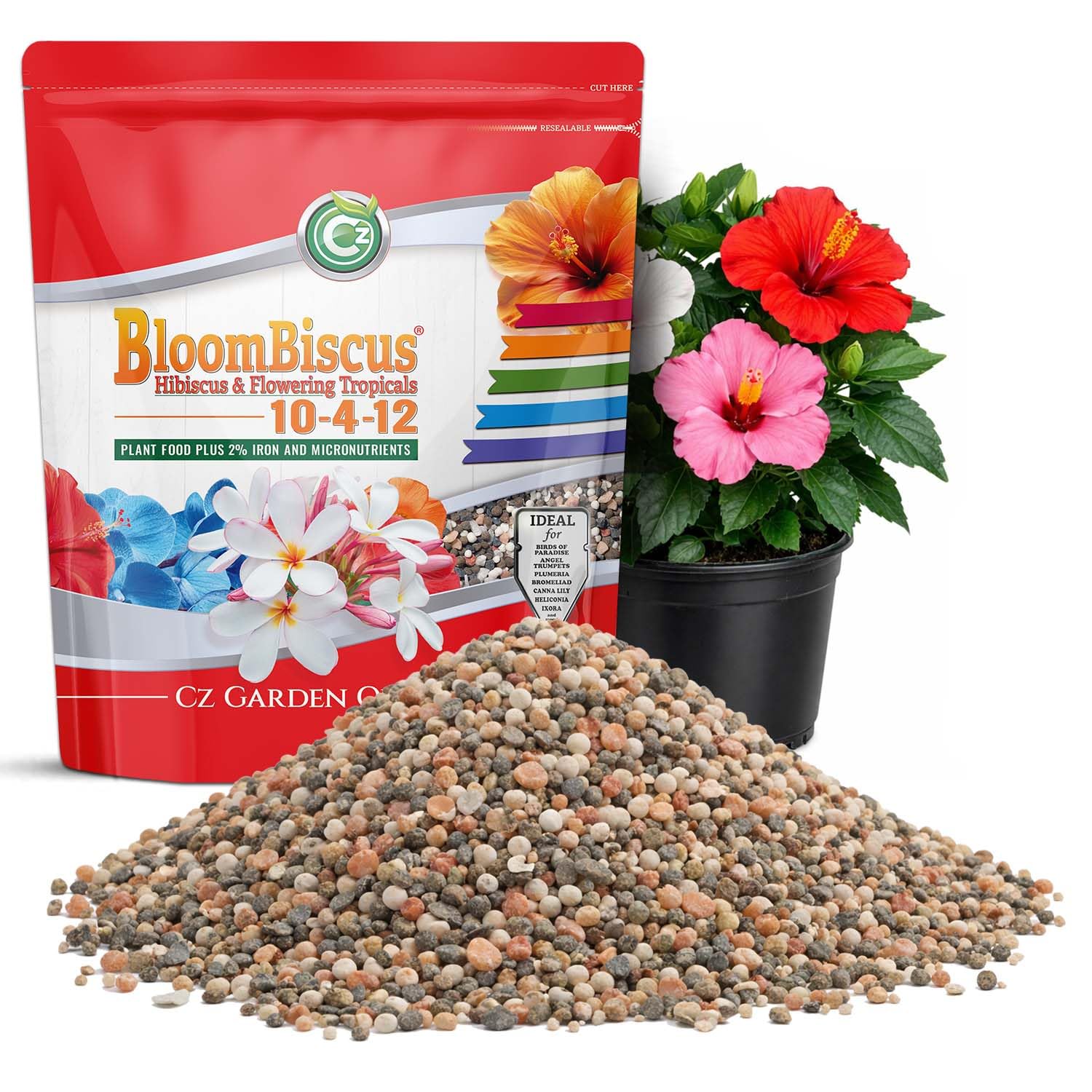
| Item Form | Granules |
|---|---|
| Specific Uses For Product | Plant Growth, Root Development, Seed Development, Soil Conditioning |
| Target Species | Flowering Tropicals |
| Unit Count | 64 Ounce |
| Mixing Ratio | 10-4-12 |
This granular BloomBiscus formula is designed to boost blooms and overall vigor in hibiscus and similar tropical flowering plants. It is typically worked into potting mix or applied around the root zone and watered in according to package directions. The 10-4-12 NPK delivers higher potassium for flowering and fruiting while the modest nitrogen supports leaf growth without excessive lushness that can reduce blooms. The added 2% iron and micronutrients help correct common deficiencies that dull flower color. Packaging comes in a resealable pouch for easy pouring and storage. Practical benefits include targeted nutrition for bloom production, broad suitability across many tropical species, and US-made ingredient sourcing. Limitations are that the product is a general granular feed rather than a slow-release or time-release formula so it may require regular reapplication and careful dosing for container-grown plants. Directions are brief on the label so growers who want a feeding schedule may need to follow common hibiscus fertilizing guidelines or consult extension recommendations.
Best for: A gardener focused on getting bigger, more consistent blooms from hibiscus and other tropical flowering plants who prefers a targeted, performance-oriented fertilizer.
Less Ideal for: Those who want a long-term slow-release feed or a liquid program for weekly foliar feeding should consider alternative formulations.
- NPK ratio (10-4-12) concentrated toward flowering and fruiting
- Includes 2% iron plus micronutrients to address common deficiencies
- Resealable heavy-duty pouch for easy pouring and storage
- Formulated specifically for hibiscus and other flowering tropicals
- Not specified as slow-release so it may need more frequent reapplication
Verdict: Choose this 10-4-12 granular with 2% iron when your main goal is stronger, more reliable hibiscus blooms.
Nelson Plant Food NutriStar Hibiscus Granular Fertilizer (10-4-12)

| Item Form | Granules |
|---|---|
| Application Method | Sprinkle granules around the base of the plant |
| Target Species | Hibiscus |
| Mixing Ratio | 10-4-12 |
Nelson NutriStar Hibiscus is a granular, slow‑release plant food designed for monthly feeding of hibiscus and other tropical flowering plants both indoors and out. It is applied by sprinkling granules around the plant base and works with soil biology to release nutrients over time, reducing the need for frequent liquid feeding. The 10-4-12 N‑P‑K mix, fortified with calcium, iron, and magnesium, targets stronger roots, better foliage and more abundant blooms, and the higher potassium helps flower production. Its consistency makes it easy to use in hanging baskets, pots, and garden beds. Because it is medium coverage and slow release, you get sustained nutrition rather than quick bursts, but that also means it is not a fast corrective for severe nutrient deficiencies. The product is straightforward to use for routine maintenance and best suited to growers who want a low‑maintenance monthly feed to keep tropical flowering plants healthy and blooming through the season.
Best for: Buyers who want a low‑maintenance, month‑to‑month fertilizer to encourage bigger blooms and healthier tropical plants without frequent liquid feeding.
Less Ideal for: Growers needing an immediate corrective treatment for nutrient deficiencies or those managing very large landscapes who need bulk coverage planning.
- Slow‑release granular formula for once‑a‑month feeding
- 10-4-12 N‑P‑K balance with added calcium, iron, and magnesium
- Suitable for indoor and outdoor use including hanging baskets and potted plants
- Easy granular application that works with soil biology for extended feeding
- Not formulated for rapid correction of acute nutrient deficiencies
- Coverage described as medium so larger plantings may need multiple applications or larger package sizes
Verdict: Use this slow‑release granular formula for simple, monthly maintenance that boosts blooms and root health in hibiscus and other tropical flowering plants.
Miracle-Gro Water Soluble Bloom Booster Flower Food, 10-52-10, 1 lb

| Item Form | Liquid |
|---|---|
| Application Method | Water Soluble |
| Coverage | 500 square feet |
| Target Species | all blooming plants |
| Mixing Ratio | 1 tablespoon/gallon (1.5 tsp for indoor plants) |
This Miracle-Gro bloom booster is a water-soluble plant food designed for flowering annuals and perennials, and it is typically mixed into a watering can or used with a garden feeder. The 10-52-10 formula supplies a high phosphorus dose aimed at increasing bud set and flower production, and it starts working quickly through root and foliar feeding when applied as directed. Practical features include a simple mixing ratio (1 tablespoon per gallon for outdoor use, reduced rate for indoor plants) and compatibility with the Miracle-Gro garden feeder for easy coverage up to about 500 square feet per refill. For gardeners focused on colorful displays, the concentrated phosphorus and repeat feeding schedule (every 7 to 14 days during bloom) deliver noticeably fuller flower shows. Limitations are that it is specifically a bloom booster rather than an all-purpose fertilizer and should be used only during bud set and bloom to avoid nutrient imbalance; following label rates is important to prevent overfeeding. For basic container or bedding displays, it is an easy-to-use option that targets bloom performance without complicated application steps.
Best for: Gardeners who want an affordable, straightforward booster to increase flower production on annuals and container displays and who plan to feed regularly during the bloom period.
Less Ideal for: Those seeking an all-in-one, season-long fertilizer or a slow-release product for hands-off maintenance should look elsewhere.
- High phosphorus 10-52-10 formula to promote more blooms and better bud set
- Water-soluble for quick uptake and easy mixing in a watering can or garden feeder
- Clear mixing instructions with lower indoor rate to reduce risk of burning when used as directed
- Covers a substantial area per feeder refill, useful for beds and multiple containers
- Focused on bloom boosting rather than providing a balanced, all-season nutrient program
Verdict: If you want an inexpensive, easy-to-use booster that reliably increases blooms on annuals and containers, this is a strong, no-frills choice.
CFUTABOH Water‑Soluble 10-30-20 Blossom Booster Fertilizer (8 oz)

| Item Form | Powder |
|---|---|
| Application Method | water-soluble |
| Target Species | Flowers |
| Ingredients | 10-30-20 |
This concentrated powder fertilizer is designed as a blossom booster for flowering plants, using a high‑phosphorus 10-30-20 N‑P‑K ratio plus micronutrients to encourage bud set, more flowers, and stronger color. It dissolves quickly for use as a root drench, foliar spray, or through drip irrigation, so you can feed potted hibiscus the same way you already water them. The fine powder makes multiple gallons of feed from a small package, which is convenient for seasonal bloom pushes and reduces storage bulk compared with ready‑made liquids. Added trace elements support overall plant vigor and can help potted hibiscus maintain longer flowering periods. Limitations to note are that specific dilution rates and feeding schedules are not listed on the product sheet here so you should follow general phlox/flowering plant recommendations or the label if available, and high phosphorus formulas should be used according to your plant's needs to avoid nutrient imbalance in long term routine feeding.
Best for: Gardeners growing potted flowering plants who want a reliable, concentrated bloom booster they can mix for root or foliar feeding and use with drip systems to increase flower count and color.
Less Ideal for: People seeking an all‑in‑one balanced daily feed for foliage growth or those who prefer pre‑mixed liquid fertilizers with detailed feeding instructions included.
- High phosphorus 10-30-20 formula targeted to increase bud formation and bloom quantity
- Water‑soluble powder that dissolves quickly for root feeding, foliar spray, or drip systems
- Includes micronutrients to support plant vigor and prolong blooming
- Concentrated powder yields multiple gallons of feed from an 8 oz package for efficient storage
- Product listing does not include explicit dilution rates or a recommended feeding schedule
- High phosphorus ratio may not be appropriate for all long‑term fertilizer programs
Verdict: A concentrated, water‑soluble 10-30-20 bloom booster that reliably increases flower production and color for potted flowering plants like hibiscus.
TPS NUTRIENTS Hibiscus Liquid Fertilizer, 8 oz

| Unit Count | 8 Fluid Ounces |
|---|---|
| Brand Name | TPS NUTRIENTS |
| Item Highlight | Supports Vibrant Flower Color, Helps Reduce Bud Drop, For Potted & Outdoor Plants |
| Manufacturer | TPS Nutrients |
This 8-ounce liquid hibiscus fertilizer is a concentrated plant food meant for regular feeding of potted and outdoor hibiscus. It is formulated to encourage large, colorful blooms, reduce bud drop, and support fresh leaf and branch growth, so you would typically dilute and apply it on the schedule recommended for tropical and flowering plants. The fast-absorbing formula makes nutrients available quickly, which is useful when you want visible bloom improvement during the growing season. It is compact and easy to store, which suits gardeners who rotate treatments between containers and garden beds. Important practical limits are its small bottle size, which means frequent purchases or careful measuring for larger planted areas, and the safety precautions required to keep it away from children and pets. For hobbyists seeking a targeted bloom booster for hibiscus and similar ornamentals, this product offers a straightforward, easy-to-use option that focuses on flower color and consistent blooming rather than broad-spectrum feeding.
Best for: Gardeners who prioritize getting consistent, showy blooms from hibiscus and other tropical ornamentals and who prefer an easy-to-apply liquid feed for containers and small beds.
Less Ideal for: Those managing large landscapes or many plants at once who need bulk fertilizer solutions or a general-purpose, all-season feed.
- Formulated specifically for hibiscus and tropical flowering plants to support bigger, more colorful blooms
- Fast-absorbing liquid makes nutrients available quickly after application
- Suitable for both potted and outdoor plants, offering flexible use around the garden
- Compact 8 oz bottle is easy to store and handle for intermittent feeding
- Small unit size may not be economical for large gardens or frequent feeding schedules
- Safety warnings require keeping the product away from children and pets and avoiding skin or eye contact
Verdict: Use this compact, fast-absorbing liquid fertilizer when you want an easy, targeted boost to produce more vibrant hibiscus blooms in containers or small garden beds.
ferti-lome Hibiscus & Tropical Plant Food 17-7-10, 4 lb

| Item Form | Granules |
|---|---|
| Specific Uses For Product | Plant Food |
| Coverage | Medium |
| Target Species | Hibiscus |
| Mixing Ratio | 17:7:10 |
This granular ferti-lome formula is designed specifically for hibiscus and other tropical flowering plants grown in containers or garden beds. It supplies a 17-7-10 N-P-K ratio that supports leafy growth early and then promotes larger, more colorful blooms when applied as directed. Typical use is every other week until flowers start, then monthly during bloom time, which makes it straightforward to schedule for potted hibiscus. The granules are easy to measure and mix according to the label so you can control feeding strength for different pot sizes. Practical benefits include targeted bloom enhancement and a familiar, fast-acting formulation for gardeners who prefer predictable results. Limitations are that it is a synthetic granular product, so you will need to follow application rates carefully to avoid overfeeding and it does not provide the slow-release convenience of some other formulations.
Best for: A cautious gardener growing hibiscus in pots who wants a straightforward, bloom-focused fertilizer with clear application instructions and predictable results.
Less Ideal for: Gardeners seeking an organic or slow-release fertilizer or those who prefer low-maintenance, once-a-season feeding routines.
- 17-7-10 N-P-K ratio tailored to promote bloom size and color on hibiscus
- Granular form is easy to measure and apply for container plants
- Clear application schedule for bloom and pre-bloom feeding
- Fast-acting formula gives visible results within a few applications
- Not a slow-release formula so more frequent applications and careful dosing are required
- Contains synthetic nutrients rather than organic sources
Verdict: Choose this if you want a simple, bloom-focused granular fertilizer that reliably enhances hibiscus flowers in pots.
Choosing the Right Fertilizer for Hibiscus in Pots: Key Factors to Consider
Nutrient Ratio and Bloom Support
Hibiscus in pots responds to a fertilizer balance that encourages flower production without excessive vegetative growth. A formula with moderate nitrogen, elevated phosphorus, and adequate potassium helps the plant set and sustain big blooms. Too much nitrogen in a small container often produces lush foliage at the expense of flowers and can also increase the need for more frequent watering.
In containers you can adjust strength and timing, so choose a product whose ratio matches your flowering goals and that allows dilution. Consider seasonal adjustments as well; many gardeners reduce nitrogen in late summer to prepare plants for cooler months.
Release Type and Feeding Schedule
How the fertilizer releases nutrients affects both convenience and risk. Slow-release granules provide steady feeding and reduce the chance of spikes in soluble salts, which is helpful in small pots. Water-soluble feeds deliver quick results and let you correct deficiencies fast but require more frequent application and careful measurement to avoid buildup.
Think about how often you want to feed and whether you prefer set-and-forget granules or regular liquid applications. For balcony gardeners with limited time, a long-release product can maintain bloom production with fewer interventions.
Solubility and Application Method
In containers the ability to dissolve and move through potting mix matters. Water-soluble powders and liquids mix uniformly and reach roots quickly, which is useful when you need fast color or to correct yellowing leaves. Granular or coated fertilizers rely on microbial activity and moisture cycles to release nutrients, so they perform best in pots with consistent moisture.
Also consider application logistics. Liquids require measuring and mixing but reduce the chance of localized salt pockets. Granules are easier to apply on top of the soil but should be kept away from direct stem contact and may need light incorporation or topdressing.
Salt Index and Root Safety
Potted plants are more vulnerable to salt buildup because there is limited soil to buffer concentrated fertilizers. A low salt index reduces the risk of root burn and leaf-edge browning, which is a common symptom when salts concentrate in the root zone. Products designed for containers often specify safe dilution rates and include instructions for periodic leaching.
Regularly flushing pots with extra water and choosing fertilizers with lower recommended concentrations helps protect roots. If you repot annually or refresh topsoil, you can also reduce long-term salt accumulation.
Micronutrients and pH Compatibility
Beyond N-P-K, hibiscus benefit from iron, magnesium, and trace elements that support leaf color and metabolic functions. Micronutrient deficiencies show up as interveinal chlorosis or poor flower development, and they can be harder to correct in small pots. Some fertilizers include chelated micronutrients that remain available across a wider pH range.
Check how a product interacts with your potting mix pH and whether it supplies or complements micronutrients. If your water is very hard or alkaline, formulations with chelated iron or soluble micro mixes will be more effective.
Container Size and Root Mass Considerations
The amount of potting mix and root volume changes how quickly nutrients are depleted and salts build up. Small pots need lighter, more frequent feedings or a gentle slow-release product, while larger containers buffer nutrient swings better. Root-bound plants will show different responses to feeding than recently repotted specimens; they often require repotting or a lighter-strength feed to avoid shocking the roots.
Match fertilizer strength and frequency to pot size and plan to adjust feeding after repotting or during active root growth to prevent nutrient stress.
When to Feed Potted Hibiscus
Timing feeding to the plant's growth cycle improves bloom performance and reduces stress. Start regular feeding in spring as new growth appears and continue through the main bloom period. Reduce or stop regular feeding in late fall if plants go semi-dormant or are moved indoors for winter.
Observe leaf color and bloom set to fine-tune timing. After a heavy flush of flowers, a light feed can support a second round of blooms, while sustained green growth without flowering often signals too much nitrogen or a need to increase phosphorus slightly.
- Begin feeding when new shoots appear in spring
- Use lighter maintenance doses during summer if temperatures are very high
- Pause or taper feeding in late fall before dormancy
How to Apply Fertilizer Safely in Containers
Apply fertilizers according to label instructions and err on the side of weaker concentrations for small pots. Keep granules away from direct stem contact and water thoroughly after application to move nutrients into the root zone. For liquid feeds, use measured dilutions and pour evenly around the root ball to avoid hot spots.
Periodically flush containers with extra water to leach accumulated salts, especially if you use regular soluble feeding. If you see leaf-tip burn or stunted growth, stop feeding and flush the pot before resuming at a reduced strength.
- Measure liquid concentrates precisely and dilute as directed
- Topdress granules rather than burying them near stems
- Flush pots occasionally to prevent salt buildup
Adjusting Feeding for Indoor or Balcony Conditions
Light, temperature, and watering frequency differ between indoor and outdoor container locations, and those differences change fertilizer needs. Indoor hibiscus often receive less light and slower soil drying, so reduce feed strength and frequency to avoid overfertilizing. Balcony plants in full sun may use nutrients faster and tolerate slightly stronger feeds.
Consider wind exposure and heat, which accelerate water loss and nutrient drawdown. Match your feeding routine to environmental conditions rather than a fixed schedule.
- Lower feed strength indoors to match reduced light
- Increase frequency slightly for very sunny balcony plants
- Monitor water use and adjust feed cadence accordingly
Combining Fertilizer With Repotting and Soil Refreshes
Repotting is an ideal time to reset nutrient levels. Fresh potting mix supplies a baseline of nutrients and often reduces the need for immediate heavy feeding. If you repot, wait a few weeks for roots to recover before applying a full-strength feed.
Topdressing with compost or a light slow-release product can maintain steady fertility between repots without disturbing roots. For plants that are root bound, repot first rather than increasing fertilizer strength to force growth.
- Wait after repotting before resuming full-strength feeding
- Use topdressings to maintain steady nutrients
- Address root-bound plants with repotting rather than heavy feeding
Common Feeding Mistakes and How to Avoid Them
Overfertilizing is the most common error with potted hibiscus and leads to salt stress, leaf burn, and fewer blooms. Always measure concentrations and consider the pot size when applying. Another mistake is feeding on a fixed calendar without watching plant response; adjust based on growth and flowering.
Failing to flush pots or refresh media allows salts to accumulate. Also avoid using outdoor landscape blends meant for beds because their release patterns and salt content may not suit small containers.
- Measure and dilute liquid feeds carefully
- Do not feed on autopilot; watch plant response
- Flush and refresh soil periodically to prevent buildup
How We Chose the Best Fertilizer for Hibiscus in Pots
We focused on fertilizers that meet the specific needs of hibiscus grown in containers and that make maintenance straightforward for everyday gardeners. Key evaluation dimensions included nutrient ratio and bloom support to judge whether the formula favors flowering without causing excessive leaf growth. Release type and feeding frequency were used to assess convenience and the risk of salt buildup in small pots. Solubility and form determined how evenly nutrients distribute through potting mix during watering. Salt index and recommended application rates were checked because potted plants are more susceptible to fertilizer burn. Finally, compatibility with common potting media and whether the product aids micronutrient availability influenced selection. Products were excluded if they were formulated only for large landscape plantings, required specialist equipment to apply, or lacked clear instructions for container use. We prioritized formulations and delivery methods that let gardeners control strength and frequency to avoid common overfeeding problems in containers.
FAQ
How often should I fertilize hibiscus in pots during the growing season?
It depends on the product. Slow-release products often last several months with a single application, while water-soluble feeds are usually applied every one to two weeks at diluted strength. Monitor growth and flower production and err toward lighter, more frequent doses rather than concentrated blasts.
Can I use indoor houseplant fertilizer on potted hibiscus?
Often you can, but check the nutrient ratio and strength. Many houseplant fertilizers emphasize balanced N-P-K and may be lower in phosphorus needed for big blooms. If using a general houseplant feed, dilute it and consider supplementing with a bloom-boosting feed during flowering.
What signs show my potted hibiscus needs a different fertilizer?
Yellowing between veins, poor bud set, or abundant leafy growth with few flowers suggest nutrient imbalance. Leaf-tip burn and browning edges indicate salt stress from overfertilizing. Adjust the ratio, switch release types, or flush the potting mix depending on the symptoms.
Is slow-release better than liquid fertilizer for container hibiscus?
Both have merits. Slow-release reduces maintenance and lowers the risk of spikes in soluble salts, making it a good choice for busy gardeners or small pots. Liquid feeds act quickly and are easier to fine-tune but require more frequent application and careful dosing.
How do I avoid fertilizer burn in small pots?
Use weaker dilutions than label maximums for small containers, apply less frequently, and water thoroughly after fertilizing to move salts away from roots. Periodically flush the pot with extra water and refresh topsoil during repotting to reduce long-term buildup.
Final Verdict
Choosing the right fertilizer for hibiscus in pots is about matching nutrient balance and delivery method to your container size and gardening routine. Prioritize a bloom-friendly nutrient ratio, a release type that fits how often you want to tend plants, and low salt impact to protect roots. Adjust feeding after repotting and adapt strength for indoor or sunny balcony conditions. Focus on steady, measured feeding rather than heavy doses. That approach preserves potting mix health and produces reliable flowering across the season.
