

Note: This article contains affiliate links. If you click on these links and make a purchase, I may earn a small commission at no extra cost to you. This helps support my research and content. Read my full affiliate disclosure here.
Getting the right fertilizer for lettuce plants makes the difference between slow, leggy seedlings and compact, tender heads you actually want to harvest. Lettuce has a shallow root system and fast growth cycle, so nutrient timing, form, and concentration affect flavor, texture, and bolting risk. This guide covers seven shortlisted fertilizers suited to lettuce growing in beds, containers, and raised planters. We evaluate each option on the factors that matter to home gardeners and small-scale growers, including nutrient balance, application ease, and suitability for frequent harvests. Read on to see which types fit your planting style and schedule.
Top Picks at a Glance
| Best Overall The best all-around choice for most situations | Gardenera Liquid Power Lettuce Fertilizer, Concentrated 8 fl oz |  |
| Best Quality Built to a higher standard if you want something more solid | Greenway Biotech Lettuce Fertilizer 8-15-36 Powder, 1 lb |  |
| Best Value The sweet spot between price and what you get | Greenway Biotech Lettuce Fertilizer Powder 8-15-36 with Chelated Micronutrients (5 lb) |  |
| Best Budget The cheapest option that still gets the job done reliably | PowerGrow Systems MasterBlend Lettuce Fertilizer Formula 8-15-36 (1 lb) |  |
| Highest Rated A top-rated pick with lots of positive feedback | HiThrive Aeroponics & Hydroponic Liquid Fertilizer, 32 oz, 4-3-6 NPK |  |
| Most Popular A crowd favorite that many people choose with confidence | YARDi Brassicas & Greens Liquid Plant Food 32 oz (8-3-3) |  |
| Best Seller A high-volume bestseller chosen again and again | TPS Nutrients Kratky Hydroponic Fertilizer, Liquid Concentrate, 32 oz |  |
Gardenera Liquid Power Lettuce Fertilizer, Concentrated 8 fl oz

| Item Form | Liquid |
|---|---|
| Specific Uses For Product | Lettuce |
| Coverage | Low |
| Liquid Volume | 8 fluid ounces |
Gardenera Liquid Power is a concentrated liquid fertilizer made specifically for lettuce varieties. It is mixed at 1 teaspoon per gallon and applied with regular watering, making it simple to use in beds, containers, or hydroponic systems. The formula emphasizes high nitrogen for leafy growth plus phosphorus and potassium to support roots and plant structure, and it includes chelated micronutrients and organic acids to improve nutrient uptake. The product claims a low pH to help unlock micronutrients in alkaline conditions, which can reduce pale leaves and tip burn. Practical benefits include quicker green-up, fuller heads, and firmer, crisper leaves useful for repeated harvesting. Limitations are the small 8 ounce volume for larger plots and the concentrated nature that requires careful measuring to avoid overfeeding; users should follow the recommended dilution and monitor plants for sensitivity. It is presented as compatible with soil and hydroponics but does not list NPK numbers by percentage on the label text provided, so exact nutrient ratios are not available from the package information shown.
Best for: Gardeners who want a ready-to-use lettuce-focused feed to improve leaf color, head formation, and harvest quality, and who value an easy mixing routine for beds, containers, or small hydroponic setups.
Less Ideal for: Growers managing large-scale plantings or those who need precise macronutrient percentages for a fertility program should consider larger-volume or fully labeled fertilizers.
- Lettuce-specific formula aimed at leafy growth and head formation
- Concentrated liquid that is easy to mix and apply with regular watering
- Includes chelated micronutrients and organic acids to improve nutrient uptake
- Low pH formulation helps unlock micronutrients in alkaline soils
- Small 8 fl oz bottle may not be economical for large beds or frequent feeding
- Label text provided does not specify exact NPK percentages
Verdict: Choose this concentrated lettuce formula when you want an easy-to-mix, lettuce-focused boost that sharpens leaf color and promotes fuller heads in small-scale growing.
Greenway Biotech Lettuce Fertilizer 8-15-36 Powder, 1 lb

| Item Form | Powder |
|---|---|
| Specific Uses For Product | Hydroponics |
| Target Species | Leafy greens |
| Mixing Ratio | 1 tablespoon per gallon |
This powder fertilizer is built for growers who want targeted nutrition for leafy greens. The 8-15-36 N-P-K ratio emphasizes potassium to firm tissue and extend shelf life while providing moderate nitrogen to encourage steady leaf growth without excessive stretch. The formula includes EDTA-chelated iron, manganese, zinc, and copper plus boron and molybdenum, which helps keep micronutrients available across a wide pH range. It is fully water soluble and designed to work in soil, containers, and a variety of hydroponic systems including NFT, DWC, aeroponics, and drip lines without clogging. Typical use is mixing the measured dose into water (manufacturer recommends about 1 tbsp per gallon for general mixes) and applying as a soil drench, foliar feed, or via your irrigation system; stronger guidelines are provided for commercial hydroponic concentrations. The product is CDFA registered and batch-tested for heavy metals, which adds confidence for food crops. Limitations are that it is a specialty leafy-green formula, so it is not balanced for fruiting vegetables and growers will still need to manage calcium and magnesium separately to prevent tip burn in high-demand stages.
Best for: Growers who prioritize performance and consistent, marketable leafy green quality—backyard hobbyists scaling up to commercial hydroponic operators who need a dependable, high-potassium feed.
Less Ideal for: Home gardeners who want an all-purpose fertilizer for flowers and fruiting vegetables should choose a more balanced formula tailored to those crops.
- High potassium content promotes firmer leaves and longer postharvest shelf life
- EDTA-chelated micronutrients remain available across a wide pH range
- Fully water soluble and formulated to avoid clogging drip lines and nozzles
- Versatile for soil, container, and multiple hydroponic systems
- Batch-tested and CDFA registered for contaminant safety
- Specialized for leafy greens and not formulated for flowering or fruiting crops
- Does not include significant calcium and magnesium, which growers may need to supplement
Verdict: Choose this fertilizer when you need a performance-focused, high-potassium feed to produce crisp, long-lasting lettuce and other leafy greens.
Greenway Biotech Lettuce Fertilizer Powder 8-15-36 with Chelated Micronutrients (5 lb)

| Item Form | Powder |
|---|---|
| Specific Uses For Product | Hydroponics |
| Target Species | Leafy greens |
| Mixing Ratio | 1:water |
This powdered lettuce fertilizer is built for growers who want one concentrated formula for all leafy greens. The 8-15-36 NPK balance emphasizes potassium to improve texture and shelf life while moderate nitrogen supports steady leaf growth. It dissolves completely in room-temperature water, making it suitable for soil drenches, foliar sprays, drip systems and common hydroponic setups without clogging lines. The product includes EDTA-chelated iron, manganese, zinc and copper plus boron and molybdenum, which helps nutrients remain available across a wide pH range. Directions are straightforward: measure small doses (about 2.5 g per gallon) for maintenance and scale up per reservoir size. Important strengths are the heavy-metal testing and CDFA registration, which give extra assurance for food crops. Expect to handle and measure the powder carefully and mix in water rather than applying dry to foliage. If you need a specialized blend for flowering or fruiting vegetables this focused leafy-green formula may not be ideal.
Best for: Gardeners and small-scale growers who want a single, tested fertilizer to reliably feed lettuce and other leafy greens in soil or common hydroponic systems while minimizing fuss over pH-related nutrient availability.
Less Ideal for: Growers who prioritize tailored feeding programs for flowering or fruiting vegetables or those who want a ready-to-use liquid rather than a powder to measure and mix.
- High potassium formula designed to improve leaf texture and extend shelf life
- EDTA-chelated micronutrients reduce risk of nutrient lockout across pH 4–9
- 100% water soluble and formulated to avoid clogging drip lines and nozzles
- Tested for heavy metals and registered with a state agricultural agency
- Powder form requires precise weighing and mixing, which adds preparation time
- Single formula focused on leafy greens rather than a broader crop range
Verdict: A versatile, lab-tested water-soluble fertilizer optimized to reliably feed lettuce and leafy greens in both soil and hydroponic systems.
PowerGrow Systems MasterBlend Lettuce Fertilizer Formula 8-15-36 (1 lb)

| Item Form | Powder |
|---|---|
| Application Method | Water Soluble |
| Specific Uses For Product | Plant Growth |
| Target Species | Lettuce |
| Mixing Ratio | 1:1:1:1:1 |
PowerGrow Systems MasterBlend Lettuce is a water-soluble powder fertilizer designed for lettuce, especially in hydroponic systems but also usable in soil. It supplies an 8-15-36 NPK profile that emphasizes higher potassium for root development and head formation while providing readily soluble nutrients that dissolve into feeding solutions. Typical use is mixing the powder with water according to the provided ratios and applying as a nutrient solution or side-dress for foliar or drip feeding. Notable features include a commercial-grade formulation trusted by growers and a clear mixing ratio for consistent dosing. In practice it delivers concentrated feeds, so a little goes a long way and it is convenient for regular scheduled feedings. Important limitations are that it is a single-component blend that the maker recommends pairing with calcium nitrate and magnesium sulfate for a complete program, so additional supplements may be required for balanced micronutrients and calcium management. Also it is sold in small unit counts that may require buying multiple units for larger plantings.
Best for: Shoppers who want a purpose-built, water-soluble fertilizer for lettuce or hydroponic leafy greens and who plan to follow a planned feeding regimen.
Less Ideal for: Casual gardeners who prefer an all-in-one complete fertilizer or those who want a granular slow-release product for low-maintenance beds.
- Formulated specifically for lettuce with an 8-15-36 NPK ratio suited to leafy head development
- Water-soluble powder mixes easily for hydroponic and soil feeding
- Concentrated commercial-grade formula used by growers for consistent results
- Clear mixing ratio provided for reproducible nutrient solutions
- Not a complete program by itself and recommended to be used with calcium nitrate and magnesium sulfate
- Sold in small unit count which may be inconvenient for larger gardens
Verdict: Buy this if you want a concentrated, water-soluble fertilizer tuned for lettuce that lets you build consistent hydroponic or soil feeds.
HiThrive Aeroponics & Hydroponic Liquid Fertilizer, 32 oz, 4-3-6 NPK

| Unit Count | 32 Fluid Ounces |
|---|---|
| Mixing Ratio | 1:32 (1 tsp per quart) |
| Item Form | Liquid |
| Target Species | Plants |
HiThrive’s liquid fertilizer is designed for water-based growing systems and supplies a 4-3-6 NPK blend with micronutrients to support faster, greener plant growth. It is used by diluting 5 ml (about 1 teaspoon) per quart of reservoir water or per three standard growing pods and feeding every two weeks, which makes it straightforward to include in routine maintenance for lettuce and other leafy greens. The 32 oz bottle is sized to provide many feedings, and the product is liquid so it disperses quickly and cleanly through pumps and emitters without needing pre-mixing. Practical benefits for lettuce growers include a heavier nitrogen component for leaf development and a balanced potassium and phosphorus presence to support plant health and root strength. Limitations are that the label gives a single general mixing and feeding schedule rather than crop-specific EC or pH targets, so growers who require precise electrical conductivity management or frequent fine-tuning will need to monitor and adjust their reservoir conditions separately.
Best for: Growers who prioritize consistent, simple feedings for hydroponic or aeroponic lettuce setups and want a ready-to-use concentrated fertilizer to maintain steady vegetative growth.
Less Ideal for: Specialist growers who need crop-specific EC and pH formulation guidance or those running highly tailored nutrient programs that require multi-part mixes.
- Concentrated liquid formula that is easy to dose into reservoirs
- NPK 4-3-6 ratio emphasizes nitrogen for leafy growth suited to lettuce
- Includes micronutrients to support balanced development beyond basic NPK
- Compatible with aeroponic and hydroponic systems and pumps due to liquid form
- Label provides a general feeding schedule but omits target EC or pH ranges for precise nutrient management
Verdict: A no-fuss concentrated liquid fertilizer formulated to deliver steady, nitrogen-forward feedings for reliable lettuce growth in aeroponic and hydroponic systems.
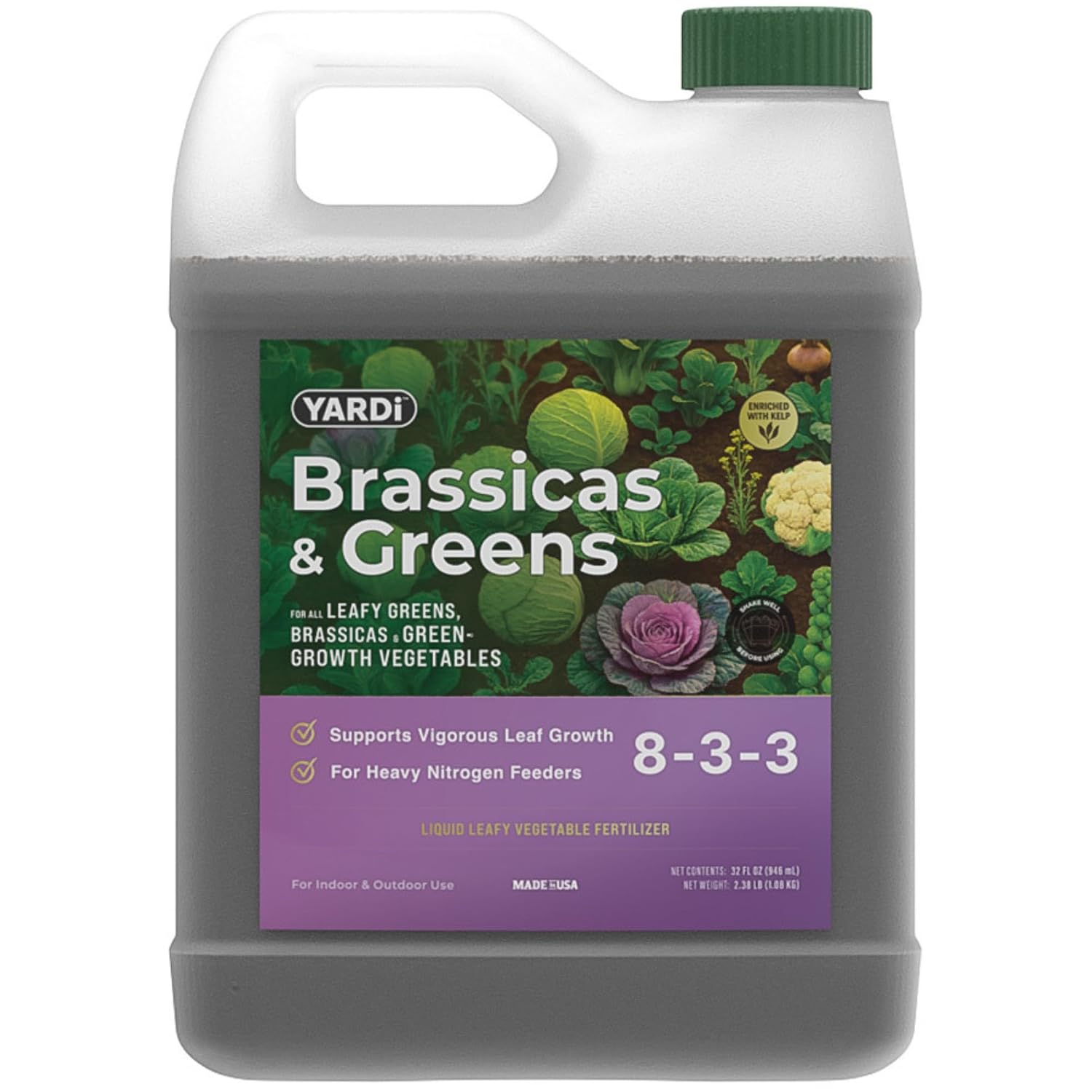
YARDi Brassicas & Greens Liquid Plant Food 32 oz (8-3-3)
| Item Form | Liquid |
|---|---|
| Specific Uses For Product | Leafy Greens |
| Target Species | Vegetables |
| Unit Count | 32 Fluid Ounces |
This 32-ounce YARDi liquid plant food is a nitrogen-forward 8-3-3 concentrate designed for outdoor brassicas and salad greens. It mixes easily with water (the label suggests 1–2 teaspoons per gallon) and can be applied as a soil drench, foliar spray, through drip irrigation, or with a hose-end applicator, making it flexible for beds, raised planters, and small-scale vegetable plots. The higher nitrogen ratio promotes lush, dark green foliage and sustained leafy growth in crops like kale, cabbage, broccoli, spinach and lettuce, and the formula includes micronutrients to support overall plant vigor. Practical benefits include straightforward dilution instructions and multiple application methods so you can feed regularly every 2–3 weeks during the growing season. Limitations are that the product is targeted to leafy vegetables and may be less appropriate for fruiting or flowering stages where balanced or phosphorus-heavy feeds are preferred, and frequent foliar or high-nitrogen use can require monitoring to avoid excess vegetative growth at the expense of yield.
Best for: Gardeners who prioritize big, healthy leaves on brassicas and salad greens and want a simple liquid feed they can use across beds and containers throughout the season.
Less Ideal for: Growers focused on flowering or fruiting crops or those who prefer granular slow-release fertilizers for low-maintenance feeding.
- High nitrogen 8-3-3 formula tailored for vigorous leafy growth
- Liquid concentrate that dilutes easily for foliar, soil drench, drip, or hose-end use
- Clear directions for regular feeding every 2–3 weeks during the season
- Includes micronutrients to support plant vigor beyond basic NPK
- Formulated specifically for leafy greens so not ideal as an all-purpose or bloom-promoting fertilizer
- Requires regular applications and careful dosing to avoid excessive leafy growth
Verdict: Choose this liquid 8-3-3 feed when your goal is consistently lush, vigorous leafy growth in brassicas and salad greens.
TPS Nutrients Kratky Hydroponic Fertilizer, Liquid Concentrate, 32 oz

| Item Form | Liquid |
|---|---|
| Coverage | Indoor plants and hydroponic systems |
| Target Species | Leafy Greens, Herbs |
| Liquid Volume | 32 fluid ounces |
| Mixing Ratio | No mixing required |
This liquid concentrate is built specifically for passive, non-circulating hydroponic setups using the Kratky method and is aimed at simplifying nutrient management for lettuce and herbs. The product is applied once to the reservoir and supplies balanced nutrition as water levels drop, so you do not need pumps or continual dosing. Notable features include a no-mixing-required formulation and a concentration sized for multiple small systems or repeated plantings. In practice it keeps foliage healthy and supports steady growth in indoor hydroponic gardens, classroom projects, and countertop Kratky buckets. Practical benefits are simplicity and cleanliness compared with soil feeding or active hydroponic rigs, plus clear directions that suit cautious growers who want predictable results. Limits to consider are that it is tailored to passive systems and leafy crops, so growers wanting a formula for fruiting plants or adjustable EC/pH control will need additional products or monitoring. For someone seeking a low-maintenance, reliable feed for lettuce, this delivers exactly that.
Best for: Practical home growers and beginners who want a low-maintenance, predictable fertilizer for indoor lettuce and herb Kratky setups without regular dosing or complex monitoring.
Less Ideal for: Growers running active circulating hydroponic systems, those growing tomatoes or other fruiting crops, or hobbyists who need precise EC and pH control.
- Formulated for passive Kratky hydroponic systems so no pumps or circulation required
- Ready-to-use concentrate with no on-site mixing needed
- Designed specifically for leafy greens and herbs common to lettuce setups
- Made in the USA and packaged in a 32 fl oz unit suitable for multiple uses
- Not intended for fruiting or heavy-feeding crops where tailored nutrient schedules are needed
Verdict: Choose this product if you want a simple, ready-to-use fertilizer that reliably feeds lettuce and herbs in Kratky-style passive hydroponic systems.
Choosing the Right Fertilizer for Lettuce Plants: Key Factors to Consider
Nutrient Ratio and Timing
Lettuce favors vegetative growth, so a fertilizer with a moderate to higher nitrogen ratio compared with phosphorus and potassium supports leaf production. That does not mean pushing nitrogen endlessly; excess nitrogen can cause overly soft tissue and increase susceptibility to pests and disease.
Timing matters because lettuce matures quickly. Fast-acting fertilizers or soluble feeds let you correct deficiencies during the crop window. For successive plantings or cut-and-come-again systems, favor formulas that can be applied more frequently at light doses to avoid root burn and salt buildup.
Formulation and Solubility
How the fertilizer dissolves determines how quickly lettuce roots can access nutrients. Water-soluble feeds deliver nutrients rapidly and are easy to dose for container-grown lettuce or small beds. Granular or slow-release products may be suitable for longer-term plantings but can release unevenly in cool, wet conditions.
Consider whether you want a product that is easily mixed for foliar spray. Foliar feeding can quickly correct visible deficiencies in young lettuce leaves, but it should be used as a supplement rather than the primary nutrient source.
Micronutrients and Trace Elements
Lettuce commonly shows symptoms from deficiencies of iron, manganese, boron, and magnesium, which affect leaf color, texture, and tip burn resistance. A fertilizer that includes essential micronutrients or is compatible with a separate micronutrient supplement reduces the risk of yellowing or poor head formation.
Check labels for chelated iron or magnesium formulations when growing in alkaline soils, since those forms remain available at higher pH. For container culture, micronutrient levels should be balanced to avoid toxic accumulation when repeating feedings.
Salt Index and Root Safety
Shallow roots make lettuce vulnerable to fertilizer burn. Products with a low salt index and instructions for dilute, frequent application lower the risk of root damage, especially in containers and small raised beds where salts can concentrate.
Look for guidance on maximum concentrations for seedlings and transplants. Rinse or leach containers occasionally if you use more concentrated feeds to prevent salt buildup and maintain healthy root function.
Compatibility With Soil and Organic Practices
Whether you prefer organic growing or conventional fertilizers affects product choice. Organic options rely on microbial breakdown and steady nutrient delivery, which can be ideal for longer rotations but may be slower to correct acute deficiencies.
Consider how a fertilizer interacts with compost, worm castings, and soil amendments. Some synthetic soluble feeds complement organic soils by delivering immediate nutrients while leaving the soil biology intact. Confirm compatibility to avoid disrupting beneficial soil organisms.
Ease of Use and Application Flexibility
Practical application matters for gardeners who plant multiple small beds or many containers. Clear dosing, ready-to-use soluble mixes, and packaging that allows precise measurement reduce waste and mistakes.
Versatile products that work for soil drench, foliar spray, and side-dressing simplify management across different planting stages. Also consider storage stability if you buy in bulk or store fertilizer on a patio or shed.
Adjusting Feed Strength by Growth Stage
Young lettuce seedlings need gentler feeding than mature heads. Start with very dilute feeds or low-rate granular starter formulations during the first true leaves, then increase concentration slightly as the plants enter rapid leaf production.
- Dilute soluble feeds to one-quarter or one-half strength for seedlings.
- Increase to labeled rates during mid-growth for steady expansion.
- Reduce or pause feeding as heads near harvest to avoid overly succulent texture.
Using Foliar Sprays to Correct Deficiencies
Foliar feeding gives a fast nutrient boost directly to leaves and can correct visible chlorosis or nutrient mottling quickly. Use foliar sprays sparingly and at cooler times of day to improve uptake and avoid leaf burn.
- Use foliar sprays for micronutrients like iron or magnesium when soil changes are slow to take effect.
- Avoid foliar applications at midday to reduce evaporation and leaf stress.
- Combine foliar feeding with gentle soil feeds rather than as a long-term sole solution.
Managing Fertilizer in Containers and Small Beds
Containers concentrate salts and require more frequent, lighter feeding compared with in-ground beds. Choose low-salt soluble feeds and flush containers periodically with plain water to prevent buildup. In small beds, incorporate a balanced, slow-releasing organic amendment at planting and supplement with soluble feeds during the season.
- Use smaller, more frequent doses in containers.
- Leach pots every few weeks if salts accumulate.
- Topdress beds with compost and use soluble feeds for fast correction.
Organic Versus Synthetic Options
Organic fertilizers feed soil biology and release nutrients as microbes break them down. They are great for long-term soil health and steady nutrient supply but can lag when lettuce needs a quick boost. Synthetic soluble fertilizers provide immediate plant-available nutrients and are easy to calibrate for fast-growing lettuce. Many gardeners use a hybrid approach: build soil fertility with organic matter and apply light soluble feeds during peak growth.
- Use compost and worm castings to improve structure and baseline fertility.
- Reserve soluble feeds for catch-up feeding and quick nutrient corrections.
- Match fertilizer choice to your management style and harvest frequency.
Timing to Reduce Bolting and Tip Burn
Excessive nitrogen or irregular watering can trigger bolting or tip burn in lettuce. Maintain steady, moderate feeding and consistent moisture to reduce stress-related quality problems. Avoid heavy high-nitrogen feeds late in the growth window. If you see bolting tendencies, reduce nitrogen and provide shade during hot daytime peaks to slow the transition to flowering.
- Keep fertilizer strength consistent through the crop cycle.
- Avoid late heavy nitrogen that yields tender but short-lived heads.
- Manage water and microclimate to complement feeding strategy.
How We Chose the Best Fertilizer for Lettuce Plants
We focused on fertilizers that match lettuce biology and common urban and backyard growing situations. Selection began by filtering for formulas and application methods appropriate to leafy greens: moderate to high nitrogen ratios for vegetative growth, adequate potassium for plant health, and available micronutrients like iron and magnesium that prevent yellowing and maintain flavor. We prioritized products that are safe and practical for shallow-rooted crops, offering application options for both soil beds and containers. Ease of application was a key filter: granular formulas that dissolve predictably, soluble feeds with clear dosing for small volumes, and options compatible with foliar feeding earned higher consideration. Environmental factors were considered, including low-salt options and compatibility with organic soil amendments. We excluded fertilizers designed specifically for fruiting or tuber crops, high-salt lawn feeds, and slow-release products whose release profile is too slow for rapid lettuce growth cycles. Final inclusion depended on nutrient clarity, labeling transparency, and versatility across common lettuce planting methods.
FAQ
How often should I feed lettuce plants?
Usually feed shallow-rooted lettuce with a dilute soluble fertilizer every one to two weeks during active growth. Frequency depends on the product and whether you use a compost-rich soil; organic soils often need less frequent supplementation.
Can I use a general vegetable fertilizer on lettuce?
Often yes, as long as the ratio supports vegetative growth with moderate nitrogen and includes micronutrients. Avoid fertilizers formulated for flowering or fruiting crops that favor phosphorus and potassium over nitrogen.
Is foliar feeding safe for edible leaves?
Foliar feeding is safe when you use products labeled for edible crops and follow concentration and harvest-interval instructions. Rinse leaves before eating if you applied a foliar spray close to harvest as a precaution.
What signs show my lettuce needs fertilizer?
Slow, stunted growth, pale or yellowing leaves, and small heads can indicate nutrient deficiency. Check soil moisture and pH first, then apply a balanced soluble feed or a targeted micronutrient if symptoms persist.
Should I change fertilizer for transplants versus direct-seeded lettuce?
Transplants often benefit from gentler feeding and lower concentrations to avoid root stress. Direct-seeded crops can tolerate slightly stronger initial feeds if soil fertility is low, but dilute applications are still safest for seedlings.
Final Verdict
Prioritize fertilizer choices that match lettuce biology: steady, moderate nitrogen, accessible micronutrients, and low salt to protect shallow roots. Choose a formulation and application rhythm that fits your planting method, whether containers, beds, or continuous cut-and-come-again harvests. Balance quick-acting soluble feeds for rapid correction with soil-building practices for longer-term fertility. With the right mix of nutrient balance and practical application, you can reliably produce tender, flavorful lettuce without risking bolting or leaf quality loss.
