

Note: This article contains affiliate links. If you click on these links and make a purchase, I may earn a small commission at no extra cost to you. This helps support my research and content. Read my full affiliate disclosure here.
A good garden hose splitter makes it simple to run multiple watering lines from one spigot without constant swapping. Whether you need to feed a drip system, operate a sprinkler, or run a handheld hose at the same time, the right splitter keeps water flowing where you want it and reduces leaks and drips that waste water and frustrate gardeners. This guide covers seven shortlisted options tried for common yard and patio setups. We evaluate control, durability, and installation ease so you can choose a splitter that fits your faucet, watering schedule, and climate. Read on for what mattered during our selection and practical tips to match a splitter to your garden layout.
Top Picks at a Glance
| Best Overall The best all-around choice for most situations | LNEZCDB 2-Way Brass Garden Hose Splitter with Long Metal Handles |  |
| Best Quality Built to a higher standard if you want something more solid | SNUTUYA 304 Stainless Steel 2-Way Garden Hose Splitter (3/4" GHT) |  |
| Best Value The sweet spot between price and what you get | Hourleey Brass 2-Way Garden Hose Splitter with Individual Valves |  |
| Best Budget The cheapest option that still gets the job done reliably | Sanpaint 2-Way Brass Garden Hose Splitter with Shut-Off Valves |  |
| Highest Rated A top-rated pick with lots of positive feedback | SNUTUYA 304 Stainless Steel 3-Way Garden Hose Splitter (3/4" GHT) |  |
| Most Popular A crowd favorite that many people choose with confidence | Biswing 2-Way Brass Garden Hose Splitter with Individual Valves |  |
| Best Seller A high-volume bestseller chosen again and again | Hourleey 4-Way Solid Brass Garden Hose Splitter (3/4" GHT) |  |
LNEZCDB 2-Way Brass Garden Hose Splitter with Long Metal Handles
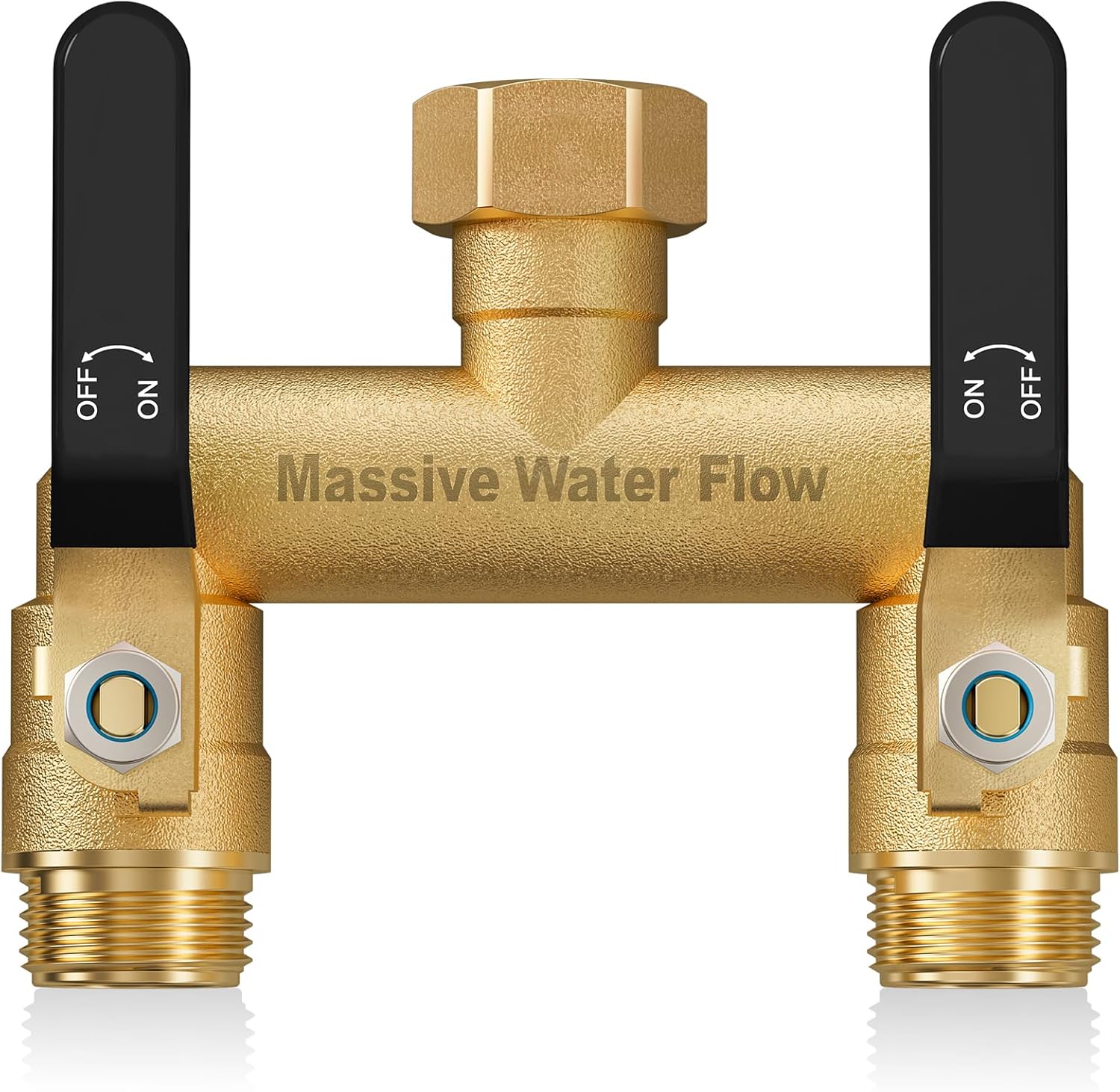
| Material Type | Brass, Iron, Stainless Steel |
|---|---|
| Number of Ports | 2 |
| Thread Type | GHT |
| Thread Size | 3/4 inch |
| Valve Type | Ball Valve |
This two-way hose splitter converts one outdoor faucet into two independently controlled outlets, letting you run a sprinkler, hose, or irrigation timer at the same time. It is precision cast from heavy-duty C38500 brass with threaded 3/4-inch GHT connections and long metal handles for easy valve control even with gloves. The large ball valves and a 0.6-inch inner diameter are designed for high flow, and the 2.79-inch spacing and vertical thread make it convenient to attach large timers or bulky hose fittings without strain. The manufacturer reports rigorous strength and temperature testing and includes an O-ring and waterproof tape for sealing. Important limits to note are the listed maximum operating pressure of 17.6 psi, which is lower than many municipal supply ratings, and the recommendation to drain the unit before freezing temperatures to avoid damage. Installation is tool-free on the thickened inlet hex, and replacing the O-ring can fix sealing issues if they arise over time.
Best for: Buyers who want a durable, easy-to-operate splitter for everyday garden tasks and occasional irrigation timer use and who prioritize build quality and flow over handling very high inlet pressures.
Less Ideal for: Not the best choice for setups that demand high-pressure operation or for users who need a permanently installed splitter that will remain pressurized through freezing seasons.
- Solid brass construction for corrosion resistance and durability
- Large ball valves and 0.6-inch inner diameter for higher flow
- Long metal handles provide easy grip and operation with gloves
- 2.79-inch outlet spacing and vertical thread reduce stress on attached timers and fittings
- Listed maximum operating pressure of 17.6 psi may limit performance on high-pressure systems
- Requires draining before freezing weather to prevent damage
Verdict: A heavy-duty brass two-way splitter that delivers higher flow and easy valve control for gardeners who want a durable, versatile way to run two hoses from one spigot.
SNUTUYA 304 Stainless Steel 2-Way Garden Hose Splitter (3/4" GHT)

| Material Type | Stainless Steel |
|---|---|
| Thread Size | 3/4 Inch |
| Thread Type | GHT |
| Connector Type | Hose Splitter |
This SNUTUYA 304 stainless steel 2-way hose splitter turns a single outdoor faucet into two independently controlled, full-flow outlets. Built from 304 stainless steel with a large ball-valve bore and wide outlet passages, it is designed to keep flow resistance low so both lines deliver strong water pressure. Each outlet has its own long handle for easy on/off control and the large 360-degree rotary nut makes attachment to a standard 3/4" GHT faucet straightforward. Practical benefits include corrosion resistance for long outdoor life, a smooth threaded connection that reduces leaks, and the ability to run two tasks at once such as watering beds while filling a rain barrel. Important limitations are that it is not intended for drinking water systems and washers will need replacement over time to stop leaks; it also must be removed in freezing weather. Overall it is a performance-focused splitter for demanding garden and outdoor uses where durability and maximum flow matter most.
Best for: Gardeners and homeowners who prioritize maximum flow and long-term durability for dual outdoor water tasks and who need reliable, heavy-duty plumbing hardware.
Less Ideal for: People who need potable-water rated fittings or who prefer a low-cost temporary plastic splitter for occasional light use.
- Durable 304 stainless steel construction resists corrosion and handles high pressure
- Full-flow internal ball valve and large outlet diameters preserve water pressure to both lines
- Independent long handles let you shut off or modulate each outlet separately
- Smooth, accurate 3/4" GHT threads and a 360° rotary nut simplify installation and reduce leaks
- Not rated or intended for use with drinking water systems
Verdict: Choose this stainless steel 2-way splitter when you want a durable, high-flow solution that keeps strong water pressure to two outlets.
Hourleey Brass 2-Way Garden Hose Splitter with Individual Valves

| Connector Type | Coupling |
|---|---|
| Thread Size | 0.75 inch |
| Thread Type | GHT |
| Material Type | Brass |
This Hourleey two-way hose splitter is a straightforward solution for running two hoses from a single outdoor faucet. Made from solid brass with GHT 3/4-inch threads, it screws onto a standard garden spigot and gives each outlet its own quarter-turn ball valve so you can shut off or throttle each line independently. The ergonomic valve handles are easier to grip than thin metal tabs, which helps when tightening or operating with wet or stiff hands. Hourleey includes two spare O-rings and thread tape so you can install it leak-free, and the manufacturer rates the part for typical household water pressure. Because it is brass and not plated alloy, it resists corrosion and should last through seasons of outdoor use. The unit is simple to install with no tools in most cases, but tight connections still benefit from tape and careful threading to avoid leaks. The splitter is purely mechanical so it does not filter or regulate pressure beyond the valve control, and it requires compatible 3/4-inch fittings to work without adapters.
Best for: Buyers who want a durable, no-nonsense way to expand one outdoor faucet into two independently controlled lines and prefer a long-lasting metal connector over cheaper plastic options.
Less Ideal for: People who need integrated pressure regulation, filtration, or nonstandard thread sizes should consider alternatives or add-on adapters and regulators.
- Solid brass construction offers good corrosion resistance for outdoor use
- Two independently controlled ball valves let you run or isolate hoses separately
- Ergonomic valve handles are easier to operate with wet or stiff hands
- Includes spare O-rings and thread tape for straightforward leak prevention
- Works only with 3/4-inch GHT fittings so adapters are needed for other thread sizes
- Does not include built-in pressure regulation or filtration
Verdict: A tough, easy-to-use brass splitter that reliably turns one spigot into two independently controlled garden lines.
Sanpaint 2-Way Brass Garden Hose Splitter with Shut-Off Valves

| Material Type | Brass |
|---|---|
| Thread Size | 0.75 inch |
| Thread Type | GHT |
| Included Components | Garden Hose Splitter 2 Way |
This compact brass 2-way hose splitter converts a single 3/4" outdoor spigot into two independently controlled outlets. It screws onto standard GHT threads and provides two valve handles so you can run one hose, both, or shut either off without returning to the faucet. Built from solid brass with rubber washers included, it is designed for routine garden use and resists corrosion better than plastic alternatives. The large plastic handles make the valves easy to turn even when wet, and the adapter fits common hoses and attachments. Expect reliable basic performance for watering, sprinklers, and simple irrigation tasks, though the splitter is a straightforward mechanical part with no pressure regulation or quick-connect fittings. Because it is brass and compact, it is heavier than plastic models but should last longer under normal outdoor use. If you need a multi-way manifold with integrated quick connects or freeze protection, look elsewhere, but for a no-frills, durable budget splitter this performs well.
Best for: Buyers looking for a durable, no-frills way to split one spigot into two for routine watering and sprinkler use while keeping costs low.
Less Ideal for: People who need rapid tool-free hose changes, integrated pressure control, or a multi-outlet manifold for complex irrigation setups.
- Solid brass construction for better corrosion resistance than plastic
- Two independent shut-off valves let you control each outlet separately
- Fits standard 3/4" GHT faucets and common garden hoses
- Includes extra rubber washers to help prevent leaks
- No quick-connect fittings so attaching and detaching hoses is slower
- Does not include freeze protection or pressure regulation
Verdict: A dependable, budget-friendly brass two-way splitter that gives independent on/off control for two hoses from one spigot.
SNUTUYA 304 Stainless Steel 3-Way Garden Hose Splitter (3/4" GHT)

| Material Type | Stainless Steel |
|---|---|
| Thread Size | 3/4" GHT Thread |
| Connector Type | Barb |
| Number of Pieces | 1 |
This SNUTUYA 3-way hose splitter is built for heavy use where reliability matters. It attaches to a standard 3/4" GHT spigot and provides three full-bore outlets that maintain a wide internal diameter for strong, unrestricted flow. The stainless steel body and thick valve construction are designed to resist deformation and corrosion under pressure, while precision-machined threads and a 360° swivel nut help create a tight, low-leak connection. Large 2.1" metal butterfly handles give good leverage for opening and closing each outlet without tools, and the vertical 90° male threads reduce strain on attached hoses, timers, and irrigation accessories. Expect this to work well with sprinklers, timers, drip systems, and hose-fed tools. The main limitations are that it is a single solid piece without integrated shutoff for separate inlet control and its heavier construction adds bulk at the faucet, which may require support to avoid stress on older spigots.
Best for: Gardeners and homeowners who prioritize long-term, leak-free outdoor plumbing and want a durable splitter to run sprinklers, timers, and hose tools without frequent replacements.
Less Ideal for: Users looking for the lightest or cheapest temporary splitter for occasional use or those who need an integrated inlet shutoff function.
- 304 stainless steel construction resists corrosion and can withstand high pressure
- Full-bore valve design preserves strong flow with approximately 30% more throughput than standard splitters
- Precision threads and 360° swivel nut help create a tight, low-leak seal
- Large metal butterfly handles provide easy, tool-free operation and good grip
- Vertical 90° male threads and spaced outlets reduce strain on attached timers and hoses
- Heavier and bulkier than plastic or brass alternatives which can stress older spigots
- No integrated master shutoff for the inlet so stopping all flow requires turning the faucet
Verdict: Choose this stainless steel 3-way splitter when you need a heavy-duty, low-leak connection that reliably delivers full water flow to multiple outdoor lines.
Biswing 2-Way Brass Garden Hose Splitter with Individual Valves

| Connector Type | Splitter |
|---|---|
| Thread Type | GHT |
| Material Type | Brass, Rubber |
| Size | 2 Way |
The Biswing 2-way brass garden hose splitter turns a single spigot into two independently controlled outlets so you can run two hoses or a hose and a sprinkler without swapping connections. It threads onto a standard GHT faucet and uses built-in ball valves so each outlet can be opened or shut and flow adjusted separately. Made from heavy duty brass with rubber washers, the unit is corrosion resistant and designed for regular outdoor use. In practice the metal construction gives a solid, leak-resistant connection when washers are seated and fittings are tightened by hand. It is not suited for potable water systems and should be removed before freezing weather to avoid damage. Also expect to replace washers after long service if you notice dripping. For someone who wants a durable, straightforward way to expand one tap into two service points, this splitter delivers reliable everyday performance without complicated installation.
Best for: Buyers who prioritize reliable, well-made hardware and want an easy way to run two hoses or a hose plus irrigation from one outdoor faucet, backed by many user recommendations.
Less Ideal for: People who need a splitter for potable water or who prefer plastic quick-connect systems for very light seasonal use should consider other options.
- Solid brass construction resists corrosion and feels durable.
- Individual ball valves allow independent on/off control and flow adjustment for each outlet.
- Includes rubber washers to help create a tight seal and reduce initial leaks.
- Not rated or intended for drinking water use.
- Can develop leaks over long-term use requiring washer replacement.
Verdict: A sturdy brass two-way splitter that gives dependable independent control of two water lines from a single faucet.
Hourleey 4-Way Solid Brass Garden Hose Splitter (3/4" GHT)

| Connector Type | Coupling |
|---|---|
| Thread Type | GHT |
| Material Type | Brass |
| Set Name | 4-way |
This Hourleey 4-way hose splitter is a straightforward, heavy-duty accessory for dividing one outdoor spigot into four independently controlled outlets. Made from solid brass with GHT threads, it installs onto a standard 3/4 inch faucet and each outlet has its own quarter-turn valve so you can run or shut off individual lines without disconnecting hoses. The unit ships with extra rubber washers and PTFE tape which helps get a leak-free connection out of the box. In practice the brass construction resists corrosion and feels sturdier than plastic alternatives, so it is well suited to repeated seasonal use. Expect the splitter to add noticeable weight at the faucet, so support or a short hose loop can reduce stress on older spigots. There is no built-in pressure regulator or integrated filter, so if you need flow metering or debris protection you will need separate accessories. For a risk-averse buyer wanting a durable, no-nonsense splitter that minimizes leak points, this performs reliably and simply.
Best for: Buyers who prioritize durability and a simple, reliable setup for running multiple hoses from one faucet and who prefer metal fittings over plastic for long-term use.
Less Ideal for: People who need built-in flow metering, filtration, or a very lightweight option for fragile or decorative spigots should consider other solutions.
- 100% solid brass construction for durability and corrosion resistance
- Four individually controlled valves let you run or shut off each hose separately
- Includes extra rubber washers and PTFE tape to help achieve a tight, leak-free seal
- Standard 3/4 inch GHT threads fit most outdoor faucets
- Adds weight to the spigot and may require support to avoid strain on older faucets
- No integrated pressure regulation or debris filter
Verdict: A solid brass four-way splitter that reliably turns one outdoor faucet into four independently controlled lines for durable, low-maintenance garden watering.
Choosing the Right Garden Hose Splitter: Key Factors to Consider
Leak Resistance And Seals
A splitter spends its life under pressure and exposed to weather, so gasket and thread design is critical. Look for durable rubber or neoprene washers and valve seats that compress evenly against the faucet and outlet fittings. Threaded connections should seat flush without wobble, and any built-in washers should be replaceable so you can renew the seal after seasonal wear.
Leaks are the most common annoyance with splitters. A slow drip at the spigot or a weeping valve can waste water and encourage algae or mold on siding. Prioritizing a splitter with proven sealing geometry and replaceable seals reduces maintenance and prevents steady water loss.
Individual Flow Control
Being able to shut off or meter each outlet independently is essential when running different devices from a single spigot. Reliable shutoff valves let you turn a drip line on low while running a higher-pressure sprinkler on another outlet. Valves should operate smoothly and provide clear open/closed positions so you can make quick adjustments without guesswork.
Valve design also affects fine-tuning. Quarter-turn ball-style valves usually give decisive on/off control, while multi-turn valves allow more precise throttling. Consider which type matches your watering habits and the equipment you run off each outlet.
Material And Weather Resistance
Splitters are installed outside and face UV exposure, cold temperatures, and occasional impact. Common materials include brass, zinc alloy, and plastic composites. Brass tends to resist corrosion and handle repeated freeze-thaw cycles better, while quality composites can resist corrosion and reduce weight. Check for UV-stabilized plastics and corrosion-resistant metal finishes.
Durability also includes how well moving parts hold up. Valve stems, handles, and internal seats should resist stripping and cracking so the splitter stays serviceable for multiple seasons.
Spigot Thread And Compatibility
Not all outdoor faucets are identical. The most common residential spigots use standard garden hose threads, but variations exist for frost-free spigots, integrated vacuum breakers, or male versus female threads. Confirm the splitter mates cleanly with your spigot type and any integrated backflow or anti-siphon devices.
Adapters can bridge slight mismatches, but each adapter adds another sealed joint that can leak. Choosing a splitter that matches your faucet profile reduces installation hassle and long-term leak risk.
Ease Of Installation And Maintenance
A splitter should install quickly with minimal tools and allow easy access to seals and valves for occasional servicing. Threaded connections that hand-start easily and valve handles that clear nearby fixtures speed installation. Consider whether the splitter requires plumber tape, washers, or tools you already own.
Maintenance includes ability to replace gaskets, swap out a failed valve cartridge, or winterize the unit without disconnecting permanent plumbing. Models designed with common replacement parts save time and reduce the chance of permanent replacement after a small failure.
Flow Capacity And Pressure Drop
A splitter divides a single supply into multiple outlets, so overall flow and pressure at each outlet depend on pipe, hose, and valve size. Look at outlet bore size and valve design to estimate how much flow you lose when both lines are open. Wider passages and minimal internal restrictions preserve pressure, which matters if you run sprinklers or pressure-dependent devices.
Consider the demands of the attached devices. Low-flow drip systems tolerate reduced pressure better than impact or rotary sprinklers. If you expect to run high-demand devices simultaneously, choose a splitter designed for higher flow without excessive pressure loss.
Matching Splitters To Common Garden Setups
Different garden layouts use splitters in distinct ways. For a small patio with a potted-plant irrigation line and a handheld hose, a compact two-outlet splitter with easy quarter-turn valves often works best. In larger yards where a sprinkler and a drip system run together, prioritize splitters with larger bores and reliable individual shutoffs so both systems get adequate flow.
Consider how often you will switch lines. If the splitter is mostly left in place and you only toggle an outlet seasonally, durability and weather resistance matter more than precision throttling. For frequent adjustments, choose a design with smooth, accessible controls.
- Patio or balcony: compact, lightweight splitter with good seals
- Vegetable beds with drip: precise flow control and low-pressure compatibility
- Lawn sprinklers plus hose: higher bore size and robust valves
Installing A Splitter Properly
Before installation, inspect the spigot threads and clean any old plumber tape or debris. Hand-start the splitter threads to ensure correct alignment and prevent cross-threading. Tighten by hand until snug, then give a small additional turn with pliers if the product instructions recommend it. Over-tightening can deform washers and cause leaks.
If your spigot has an anti-siphon or vacuum breaker, check whether the splitter is compatible without removing that device. In some cases you will need a short adapter to mate the two pieces cleanly. After installation, run water with each outlet open and closed to confirm valves seat properly and there are no weeps at connections.
- Hand-start threads to avoid cross-threading
- Use replaceable washers rather than permanent sealants where possible
- Test each outlet under pressure after installation
Winter Care And Seasonal Storage
Freezing water can crack splitter bodies and damage internal seals. For climates with freezing winter temperatures, drain the splitter completely and remove it from the spigot before the first hard freeze. Store it indoors in a dry place to protect valves and handles from brittle failure.
If a splitter must remain installed year-round, choose models rated for freeze resistance and follow manufacturer guidance for low-pressure winter settings. Regularly inspect seals after winter for hardening or cracks and replace washers as needed before the first heavy-use season.
- Always drain and remove splitters in freezing climates
- Inspect and replace seals each spring if exposed all winter
- Store spare washers and small tools with your garden winter kit
DIY Repairs And When To Replace
Many common issues are simple to fix: replace a hardened washer to stop drips, tighten a loose threaded joint, or swap a worn handle. Keep a small kit of spare washers, plumber tape, and basic pliers to handle these repairs quickly. Valve cartridges on some models are replaceable, extending the useful life of the splitter.
Replace the entire unit if corrosion has compromised threaded surfaces, if internal passages have cracked, or if repeated failures occur at multiple points. A well-made splitter should last several seasons with basic care; recurring problems usually indicate broad material or design shortcomings rather than a single serviceable part.
- Carry spare washers and tape for quick fixes
- Replace rather than repeatedly patch units with corroded threads
- Check valve operation each season to catch wear early
How We Chose the Best Garden Hose Splitter
We focused on features that matter to gardeners who run more than one watering line from a single outdoor faucet. Our selection criteria prioritized leak resistance at threaded and valve connections, individual flow control for each outlet, compatibility with common spigot sizes and backflow requirements, and durable materials that withstand sun and freeze cycles. We also evaluated ease of installation and replacement parts availability because a splitter that is hard to fit or service quickly becomes a nuisance in a busy garden. Excluded from consideration were single-outlet adapters, indoor plumbing fittings, and specialty manifolds intended only for commercial irrigation. We favored splitters that provide independent shutoff for each line, clear valve feedback for precise adjustment, and standard hose-thread fittings for broad compatibility. The final list balances control, longevity, and practical installation across typical residential yards, patios, and small vegetable plots.
FAQ
Will a hose splitter reduce water pressure to my sprinkler?
Usually the pressure at each outlet drops when multiple lines run simultaneously. The amount depends on the splitter's internal bore size and the demands of connected devices. For high-demand sprinklers, use a splitter with larger passages or avoid running heavy-use outlets at the same time.
Can I install a splitter on a frost-free spigot?
Often yes, but you must confirm thread compatibility and clearance for any built-in vacuum breaker. Some frost-free spigots have backflow prevention that changes the connection profile. If unsure, remove and inspect the spigot or use a short adapter made for outdoor faucets to ensure a secure fit.
How do I winterize my hose splitter?
Shut off the indoor supply if applicable, disconnect the splitter, and drain all water before storing it inside. If you leave a splitter installed, ensure it is rated for freezing conditions and drain lines after each use to reduce freeze damage risk. Inspect seals in spring and replace any that show hardening or cracking.
Are plastic splitters reliable for long-term outdoor use?
Quality UV-stabilized composites can perform well, but cheaper plastics may become brittle with sun exposure and temperature swings. Metal splitters, particularly corrosion-resistant finishes or brass, typically offer longer service life in demanding outdoor conditions. Consider local climate and exposure level when choosing materials.
Do I need plumber tape when installing a splitter?
Plumber tape can help create a better seal on threaded joints, but it is often not necessary if the splitter uses a replaceable rubber washer at the spigot connection. Use tape sparingly and avoid wrapping over internal washers. Follow the splitter's installation guidance for best results.
Final Verdict
Choose a garden hose splitter that matches how you will use it rather than the fanciest feature list. Prioritize reliable seals and compatible spigot threads to avoid the most common leaks. If you run multiple devices at once, favor higher bore sizes and clear individual flow control so each line gets adequate pressure. With the right balance of material durability, valve design, and installation simplicity, a splitter can save time and reduce hose swapping. Focus on the tradeoffs described above to pick a unit that fits your watering patterns and climate for trouble-free operation over multiple seasons.
