

Note: This article contains affiliate links. If you click on these links and make a purchase, I may earn a small commission at no extra cost to you. This helps support my research and content. Read my full affiliate disclosure here.
If you have smaller hands or limited grip strength, a standard pruner can feel bulky, cause hand strain, and make precise cuts difficult. Choosing pruners designed for small hands can improve comfort, reduce fatigue, and help you prune more accurately around delicate stems and tight spaces. This guide covers seven shortlisted pruners chosen for their compact grip geometry, manageable handle reach, and reliable cutting performance. Below you will find practical notes on fit, cutting action, and durability that matter for petite grips, plus buying guidance to help you pick the right pruners for your garden tasks.
Top Picks at a Glance
| Best Overall Pruners A well-rounded pruner that balances size, cut power, and comfort | Fiskars Bypass Pruning Shears, 5/8" Cut Capacity |  |
| Best Budget Pruners Affordable, no-frills pruners that still cut cleanly and fit well | VIVOSUN 6.5 Inch Gardening Pruning Shears with Straight Stainless Steel Blades |  |
| Best Compact Pruners Shorter, smaller-profile pruners built specifically for tighter grips and precision | ARS HP-130DX 7-Inch Light Bypass Pruner |  |
| Best Ergonomic Pruners Pruners with contoured or soft-grip handles designed to reduce hand fatigue | Fiskars SoftGrip Bypass Pruning Shears (5/8" Cut Capacity) |  |
| Best Lightweight Pruners Ultra-light pruners using lighter materials for easy one-handed use all day | Modern Sprout Hand Pruners — Lightweight Bypass Pruning Shears with Safety Lock |  |
| Best Professional Pruners Higher-end, durable pruners with replaceable parts and precision blades | Okatsune 101 7-inch Bypass Pruners |  |
| Best Low-Effort Pruners Tools that amplify cutting power—ratchet or power-assisted—for easier sawing | GEROSSI Ratchet Anvil Pruning Shears, 8” with High-Carbon Blade |  |
1. Fiskars Bypass Pruning Shears, 5/8" Cut Capacity
Best Overall Pruners
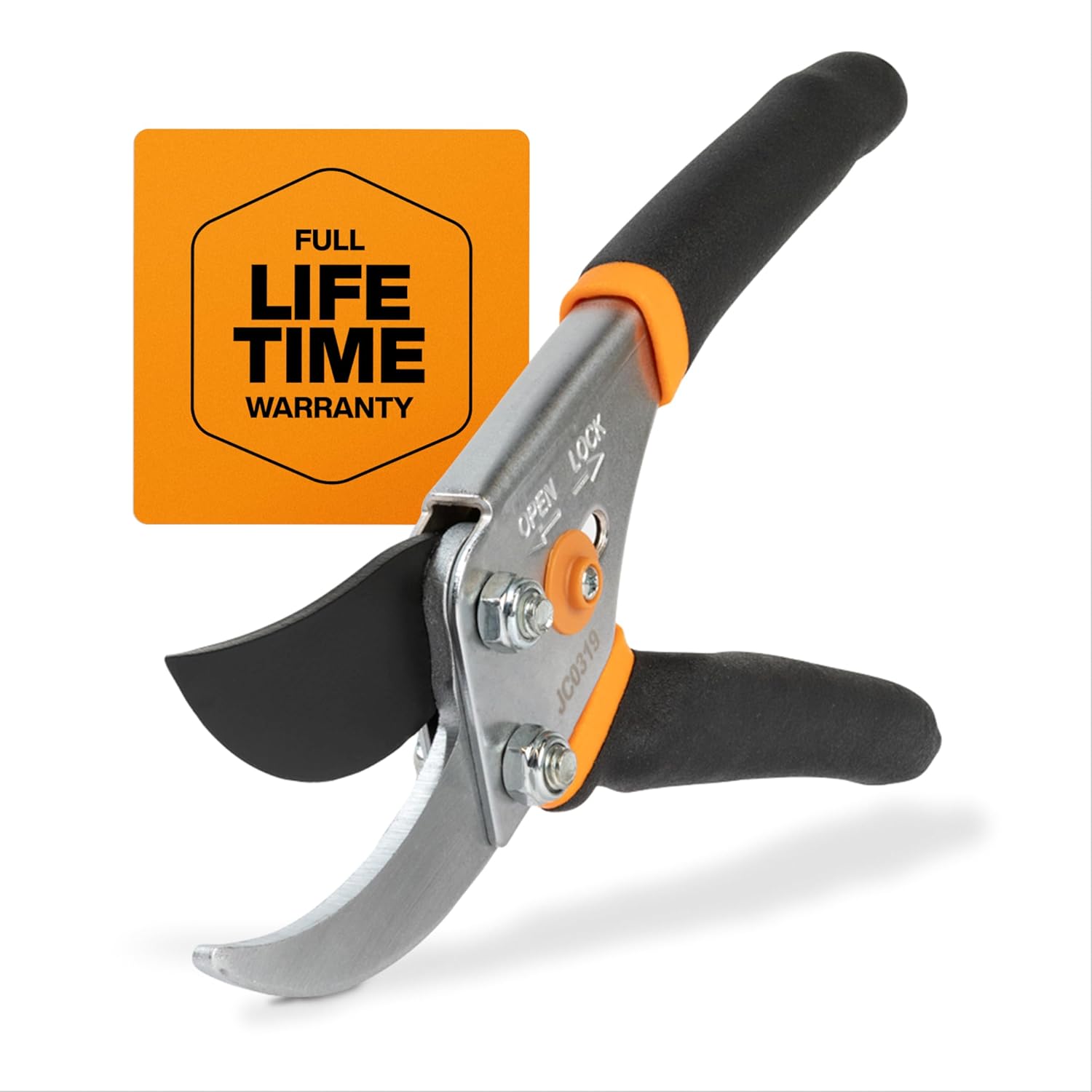
| Cutting width | 0.63 Inches |
|---|---|
| Cut Capacity | 5/8" diameter |
| Blade Material | Alloy Steel |
| Hand Orientation | Ambidextrous |
The Fiskars Bypass Pruning Shears are a compact, all-steel hand pruner designed for routine trimming of flower stems, houseplants, and small garden branches up to 5/8 inch diameter. Its bypass blade action provides clean cuts on live growth, while the precision-ground alloy-steel blades and low-friction coating reduce sap buildup and improve rust resistance for regular outdoor use. The ergonomic non-slip handle fits smaller hands comfortably and helps reduce fatigue during repetitive tasks, and the ambidextrous design works for either hand. A built-in sap groove and serrated edge improve grip on slippery stems, and the easy-open safety lock keeps the blades secure for storage. Because the tool is compact and focused on everyday pruning, it is not intended for heavy woody pruning or larger branches. Buyers should also plan routine cleaning and light oiling to preserve blade performance over many seasons. Backed by a lifetime warranty, these shears are a dependable, simple tool for frequent garden maintenance and detailed trimming.
Best for: Home gardeners who want a single, comfortable pair of pruners that fits smaller hands and delivers reliable, precise cuts for everyday trimming and shaping.
Less Ideal for: People who need one tool for heavy woody pruning or cutting branches larger than small shrubs should choose a larger lopper or pruning saw instead.
- Bypass blade design produces clean cuts on live stems and minimizes plant damage
- Low-friction coating and sap groove reduce sticking and improve rust resistance
- Ergonomic non-slip handle suits smaller hands and reduces hand fatigue
- All-steel construction and precision-ground blades offer durable, long-term performance
- Cut capacity is limited to about 5/8 inch, so not suitable for larger branches
- All-steel handles add durability but can feel heavier than lighter composite models
Verdict: Choose this slot if you want a single pair of pruners that fits small hands while delivering reliable cuts and comfortable everyday use.
2. VIVOSUN 6.5 Inch Gardening Pruning Shears with Straight Stainless Steel Blades
Best Budget Pruners
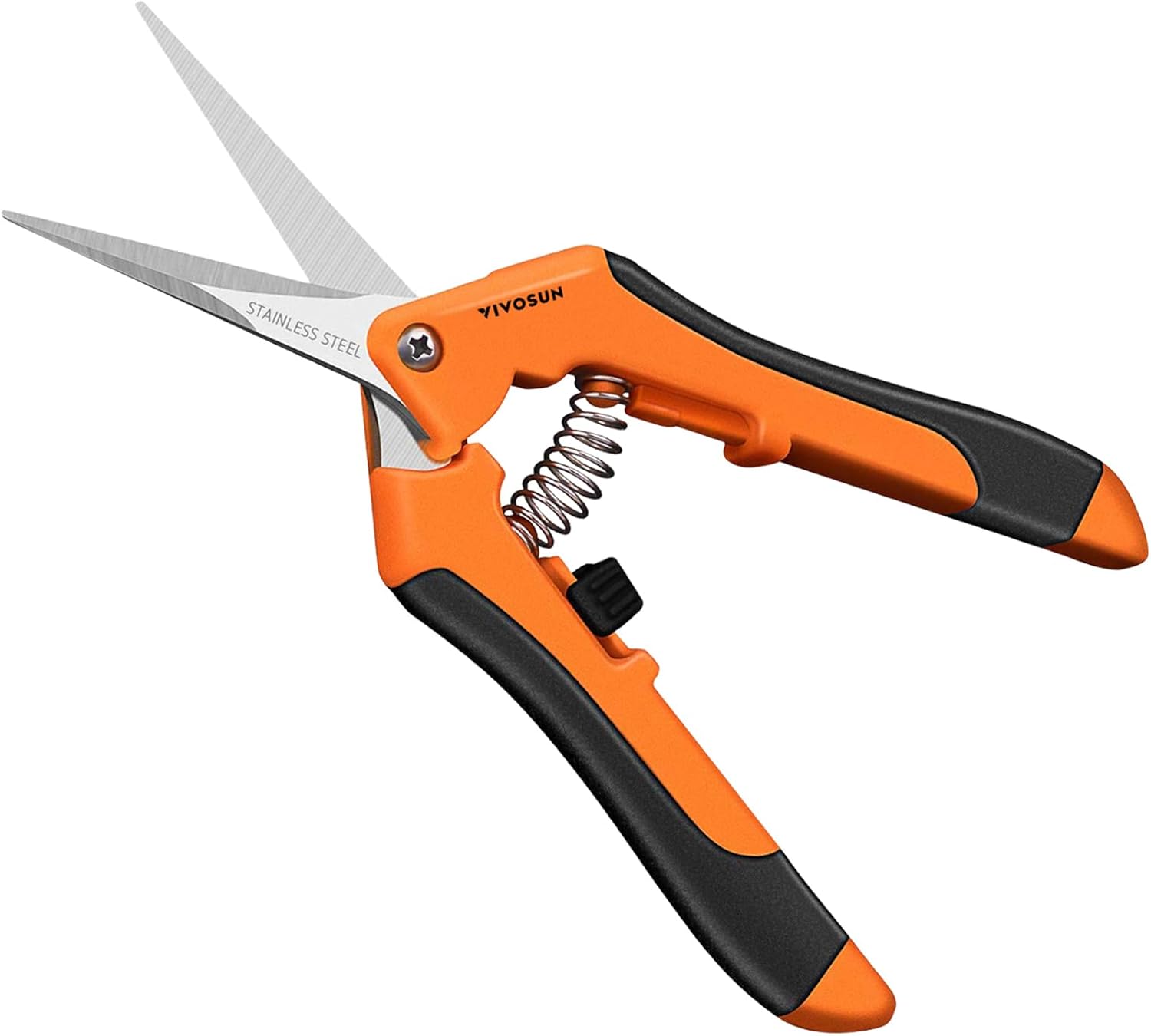
| Blade Material | Stainless Steel |
|---|---|
| Blade Edge | Straight |
| Blade Type | Anvil |
| Hand Orientation | Ambidextrous |
These VIVOSUN pruning shears are a straightforward, budget-friendly tool for everyday garden tasks. The 6.5 inch overall length and 2.1 inch stainless steel blades make them suited to precise jobs like deadheading, trimming small stems, and shaping flowers without disturbing nearby growth. The straight anvil-style blade and micro tip profile help get close into tight clusters, and the ambidextrous stainless steel handles work for left- or right-handed users. A simple sideways locking mechanism keeps the blades closed for safe storage, and the low weight reduces hand fatigue during repetitive snipping. Because the tool is basic and made entirely from stainless steel, it does not include shock-absorbing grips, replaceable blades, or a spring adjustment for heavy use, so it performs best on small-diameter stems rather than woody branches. For gardeners who need an inexpensive, no-frills snip for routine pruning and deadheading, these shears deliver predictable, clean cuts; users expecting heavy-duty durability or ergonomic cushioning may prefer an upgraded model.
Best for: Buyers on a tight budget who need a compact, no-frills snip for routine deadheading, light pruning, and precise trimming in small gardens or containers.
Less Ideal for: Gardeners who regularly cut thick woody stems, want advanced ergonomic features, or need a professional-grade, long-lasting pruner should choose a more robust model.
- Straight stainless steel blades provide precise cuts for flowers and small stems
- Ambidextrous design works comfortably for left- and right-handed users
- Lightweight construction reduces hand strain during repetitive snipping
- Simple locking mechanism secures blades for safe storage
- No padded or shock-absorbing grips for extended comfort
- Not designed for heavy or woody branches and lacks blade replacement options
Verdict: Pick this option when you need a low-cost pruner that fits smaller hands and handles routine trimming without extra features.
3. ARS HP-130DX 7-Inch Light Bypass Pruner
Best Compact Pruners

| Blade Length | 2 Inches |
|---|---|
| Blade Type | Bypass |
| Blade Material | High Carbon Steel |
| Hand Orientation | Right |
The ARS HP-130DX is a small, lightweight bypass pruner built for precise, light-duty garden work. Its high-carbon steel blade is hard chrome plated for rust resistance and easy cleaning, while the single-bevel bypass action makes clean cuts on live stems and flower stalks. The ergonomic plastic handle is shaped to fit smaller hands, giving good control when trimming herbs, deadheading, or working on bonsai and delicate plants. At seven inches overall with a two-inch blade, it is highly portable and easy to carry around the garden or clip into a pocket. The pruner is designed with professional-grade materials, but it is optimized for lighter tasks rather than heavy woody cutting; users should avoid forcing it on thick branches. Maintenance is straightforward: wipe the chrome finish, keep the blade sharp, and occasional lubrication will preserve performance. This is a practical choice when you need a reliable, compact cutter for detailed pruning rather than a heavy-duty lopper.
Best for: Gardeners with smaller hands who need a nimble tool for delicate tasks like deadheading, herb harvesting, and bonsai or floral work; ideal when control and precision matter more than brute cutting power.
Less Ideal for: People who regularly cut large or very woody branches should choose a heavier-duty pruner or lopper instead.
- High-carbon steel blade with hard chrome plating resists rust and wipes clean easily
- Compact 7-inch form factor and ergonomic handle provide precise control for small hands
- Bypass blade design produces clean cuts on live stems and flowers
- Lightweight and portable for carrying around the garden
- Sized and rated for light applications so not suitable for cutting thick woody branches
- Plastic handle may be less durable or comfortable for extended heavy use
Verdict: Choose a compact pruner when small hands need better control for delicate work like flower stems, herbs, and bonsai pruning.
4. Fiskars SoftGrip Bypass Pruning Shears (5/8" Cut Capacity)
Best Ergonomic Pruners

| Cutting width | 0.63 Inches |
|---|---|
| Blade Type | Bypass |
| Blade Edge | Convex |
| Blade Material | Alloy Steel |
| Hand Orientation | Ambidextrous |
These Fiskars SoftGrip bypass pruning shears pair a precision-ground alloy-steel blade with an ergonomic, cushioned handle to make routine pruning easier on the hands. They are used for cutting flower stems, herb maintenance, and small woody growth up to about 5/8 inch in diameter; the bypass blade and convex edge produce clean cuts that are healthier for live stems. The handle features a non-slip SoftGrip surface and an ambidextrous shape that helps reduce hand fatigue during longer sessions, and a sap groove and low-friction blade coating limit gumming and rust. A simple safety lock keeps the tool closed when not in use. Expect durable performance from the hardened blade, though heavier pruning tasks beyond the stated cutting capacity require larger loppers. These shears are a solid daily-use tool if you want dependable sharpness and cushioned handling for extended pruning tasks.
Best for: Gardeners with smaller hands who need a cushioned, shaped pruner for frequent trimming and longer sessions will appreciate the SoftGrip comfort and easy control of these shears.
Less Ideal for: People who regularly cut thick woody branches or need a heavy-duty lopper should choose a larger pruning tool instead.
- Precision-ground alloy-steel bypass blade for clean cuts on live stems
- SoftGrip cushioned, non-slip handle designed to reduce hand strain
- Low-friction blade coating and sap groove that reduce gumming and improve rust resistance
- Ambidextrous design and user-friendly safety lock for easy handling and storage
- Cutting capacity limited to about 5/8 inch, not suitable for thicker branches
Verdict: This slot is for gardeners with small hands who prioritize cushioned, shaped handles that minimize strain during longer pruning sessions.
5. Modern Sprout Hand Pruners — Lightweight Bypass Pruning Shears with Safety Lock
Best Lightweight Pruners

| Blade Type | Bypass |
|---|---|
| Blade Material | Carbon Steel |
| Hand Orientation | Ambidextrous |
| Cutting width | 0.5 Inches |
These Modern Sprout hand pruners are a compact, lightweight tool for routine trimming, deadheading, and snipping flexible stems around the house or balcony garden. The high-carbon/chrome-plated bypass blade delivers clean, precise cuts up to about 1/2 inch in diameter, which makes them useful for herbs, flowers, and small shrubs. The ambidextrous, rubberized handle is shaped for comfort and reduces hand fatigue during longer sessions, and the integrated safety latch keeps the blades closed for safe storage. Because the blades are carbon steel and chrome plated they resist rust but will still need occasional cleaning and sharpening to stay at peak performance. These pruners favor finesse and low weight over heavy-duty cutting, so they are best for light to medium garden tasks rather than thick branches. The compact size also helps reach into tight pots and crowded foliage but may feel small for users with very large hands.
Best for: A good choice for gardeners who need a lightweight, easy-to-handle pruner for extended trimming sessions on herbs, flowers, and small potted plants, especially for users prioritizing comfort and precision.
Less Ideal for: Not a fit for people who regularly need to cut thick or woody branches or who want heavy-duty loppers for large shrubs and trees.
- Very light and easy to maneuver for extended use
- Sharp carbon steel bypass blade gives clean cuts for delicate stems
- Ergonomic, ambidextrous grip reduces hand fatigue
- Integrated safety latch secures blades for safe storage
- Not intended for cutting thick, woody branches beyond about 1/2 inch
- Carbon steel blades require periodic maintenance to prevent corrosion and keep edge
Verdict: Select a lightweight pruner when small hands need a tool that’s easy to maneuver for extended periods without feeling heavy.
6. Okatsune 101 7-inch Bypass Pruners
Best Professional Pruners

| Blade Length | 53 Millimeters |
|---|---|
| Cutting width | 0.75 Inches |
| Blade Type | Bypass |
| Blade Edge | Serrated |
| Hand Orientation | Ambidextrous |
The Okatsune 101 is a compact professional bypass pruner built almost entirely from steel and finished with a serrated, high-hardness Izumo Yasuki Japanese alloy blade that stays sharp through heavy use. At about 7 inches long it is designed for precise cuts on stems up to three quarters of an inch and the specially engineered blade angle minimizes crushing for cleaner pruning wounds. The ambidextrous handles and one-hand locking mechanism make it easy to operate and secure between tasks, and the all-steel construction gives it a workshop-grade feel and long service life. Because it is relatively small and rigid, it excels for detailed pruning, deadheading, and work in tight spaces but may feel stiff for very large hands during all-day use. It lacks replaceable soft-grip handles and there is no mention of a user-serviceable spring or blade replacement parts in the listing, so maintenance requires basic metal skills or a trip to a pro sharpener. For gardeners who want a durable, no-nonsense pruner that delivers clean cuts, this is a strong choice; those needing ergonomic cushioning or modular replacement parts should consider alternatives.
Best for: A gardener who prioritizes workshop-level durability and clean cutting in a compact tool, especially someone with smaller hands or who needs precision in tight spaces.
Less Ideal for: Users who need cushioned ergonomic handles for long sessions or those who want a pruner with clearly documented replaceable parts and easy in-field servicing.
- Very hard Izumo Yasuki alloy steel blade for long-lasting sharpness
- One-hand locking mechanism for quick, single-handed securing
- Ambidextrous, all-steel construction for durability and professional feel
- Blade geometry and serrated edge deliver clean cuts with minimal crushing
- No listed soft-grip handles which may reduce comfort during extended use
- Product information does not specify user-replaceable parts or an easy blade swap system
Verdict: Opt for a professional-grade pruner if you want a long-lasting tool that fits smaller hands but offers workshop-level durability and serviceability.
7. GEROSSI Ratchet Anvil Pruning Shears, 8” with High-Carbon Blade
Best Low-Effort Pruners

| Blade Length | 2 Inches |
|---|---|
| Cutting width | 0.75 Inches |
| Blade Material | High Carbon Steel |
| Handle Material | Aluminum with Ergonomic Rubber Grip |
| Product Style | Anvil |
These GEROSSI ratchet anvil pruning shears combine a ratcheting, 3-step mechanism with an anvil blade to make cutting thicker, dried, or woody stems much easier for gardeners with limited hand strength. Use the single-cut mode for everyday light pruning and switch to ratchet mode when a tougher branch needs multiple, low-effort squeezes rather than a single powerful pull. The SK-5 high carbon steel blade with corrosion-resistant coating delivers sharp, clean cuts and the ambidextrous ergonomic handles with rubber grip and safety lock keep sessions comfortable and secure. Practical benefits include reduced hand fatigue during longer tasks and the ability to tackle up to about 3/4 inch stems that would otherwise need stronger hands or larger tools. Limitations: the anvil-style cut can crush green stems compared with bypass shears, so these are best for dried or woody branches rather than delicate live pruning, and the ratchet adds mechanical complexity that may require occasional cleaning and lubrication to stay smooth.
Best for: Gardeners who need mechanical advantage—people with small or weak hands, arthritis, or anyone who wants to prune thicker, woody stems without high hand force.
Less Ideal for: Users who routinely prune live green shoots and need the precise shearing action of bypass pruners or gardeners who prefer a completely simple, low-maintenance tool.
- Ratchet 3-step mechanism multiplies cutting power for low-effort slicing of thicker stems
- SK-5 high carbon steel blade with corrosion-resistant coating for durable, sharp cuts
- Ergonomic aluminum handles with rubber grip and ambidextrous design reduce hand fatigue
- Safety lock and included hang rope for convenient storage and one-handed security
- Anvil cutting style can bruise or crush green stems compared with bypass pruners
- Ratcheting mechanism requires occasional maintenance to prevent stiffness or gumming
Verdict: Pick low-effort pruners when small hands need mechanical advantage or power assistance to cut thicker stems with less hand force.
Choosing the Right Pruners: Key Factors to Consider
Grip Size and Handle Geometry
Proper grip size determines how comfortably you can wrap your hand around the pruner without overstretching fingers. Handles that are too long or thick force small hands into awkward positions that increase fatigue and reduce control.
Look for rounded profiles and reduced handle circumference that allow your fingers to contact the trigger and lower handle naturally. The distance between handles when closed and open affects leverage. A shorter reach reduces strain and improves precision when working on small stems or in tight clusters.
Required Squeeze Force
The force needed to close the blades directly influences how long you can prune before your hands tire. Lower squeeze force is especially important for gardeners with limited grip strength or joint sensitivity.
Mechanisms that provide better leverage, such as compound-action designs, can reduce hand effort. Consider tools with smooth pivot points and good bearing action, since stiffness or friction increases required force and hastens fatigue.
Cutting Mechanism and Blade Type
Bypass-style blades make clean, scissor-like cuts on green wood, which reduces damage to live stems. Anvil designs are generally easier to operate but can bruise soft plant tissue, so they are less ideal for delicate pruning tasks.
Sharp, well-ground blades require less force and deliver cleaner cuts. Thin-edge blades slice smoothly and reduce tearing, which matters when trimming flowering stems or young shoots where plant health and appearance are priorities.
Handle Material and Grip Texture
Handle composition affects comfort, slip resistance, and long-term durability. Soft rubber or elastomer overmolds cushion the hand and improve grip, while smooth metal or hard plastic can become slippery when wet.
Texture and contoured shapes help small hands maintain control with minimal gripping effort. Consider whether the grip profile supports single-handed use and is comfortable for repeated motions without causing hotspots or pressure points.
Blade Maintenance and Sharpenability
A blade that stays sharp reduces the force you need and yields better cuts. Easy-to-sharpen steel and accessible blade geometry make maintenance straightforward, extending the useful life of the tool.
Removable or replaceable blades simplify servicing and keep cutting performance consistent. Consider whether the design allows for simple cleaning and lubrication, since grime and sap increase friction and hand effort during use.
Safety and Locking Features
A lock that is easy to operate with small hands prevents accidental opening when storing or carrying the pruners. Complex or stiff locks can be hard to manipulate and may discourage safe storage.
Accessible safety features should not add excessive bulk to the handle or require large thumb motions. Look for locks positioned where your thumb naturally rests and that offer positive feedback so you know when the tool is secured.
Which Cutting Action Works Best for Small Hands
For gardeners with small hands, bypass cutting action is usually the best match because it produces cleaner cuts with less pinch force than many anvil designs. The shearing motion of bypass blades lets users slice through green stems without crushing them, reducing the need for extra squeeze to finish a cut.
Compound-action pruners add internal leverage that can lower effort while keeping handles compact. If you have limited grip strength, a compact compound design bridges the gap between comfort and cutting power without increasing handle size significantly.
- Bypass blades for clean cuts on live stems
- Compound-action mechanisms reduce hand effort
- Avoid large anvil tools for delicate pruning
Fitting Pruners to Your Hand Size
Measure the distance from the base of your palm to the tip of your middle finger and compare it to handle reach specifications when available. Try to test grips in person when possible to feel handle thickness and whether your thumb can easily operate the lock and pivot.
If testing is not possible, look for descriptions that list handle circumference or state suitability for small hands. Pay attention to reviews or specs that mention one-handed operation and the tool's closed-handle width.
- Measure hand length for a baseline fit
- Check closed-handle width in specs
- Ensure thumb can reach lock and pivot comfortably
Ergonomic Add-Ons and Accessories
Some pruners include removable grip sleeves, cushioned covers, or adjustable stops to tailor handle fit. These accessories can make a marginally larger pruner usable for a smaller hand without sacrificing cutting power.
If you frequently prune for extended periods, consider lightweight wrist straps or garden gloves with thin padding that improve friction and leverage without adding bulk between your hand and the handle.
- Removable grip sleeves can reduce handle diameter
- Lightweight gloves improve friction without bulk
- Wrist straps help distribute repetitive motion strain
Care and Maintenance Tips to Preserve Ease of Use
Routine cleaning, lubrication, and sharpening keep pruning motion smooth and reduces required squeeze force. Wipe sap and debris from the blades after each use, apply a light oil to the pivot, and hone blades periodically to maintain a crisp edge.
Inspect the locking mechanism and pivot hardware regularly. Tightening or loosening the pivot to maintain smooth action can dramatically affect how much effort is needed to cut, particularly for pruners with compound mechanisms.
- Wipe sap after each use
- Oil pivot points for smoother operation
- Hone blades to reduce cutting force
When to Choose Lightweight Versus Heavy-Duty
Lightweight pruners reduce fatigue during long sessions and are usually easier for small hands to maneuver. They work well for routine deadheading, trimming soft stems, and light pruning tasks around the garden.
For occasional thicker branches, select a compact design rated for slightly larger diameters rather than a heavier general-purpose tool. Prioritize an ergonomic, manageable handle over raw cutting capacity to maintain comfort and control.
- Lightweight tools for frequent, light pruning
- Compact, higher-capacity designs as a compromise
- Avoid heavy, bulky pruners if you prune often
How We Chose the Best Pruners
We focused on features that directly affect usability for gardeners with small hands. Selection criteria included grip circumference and handle length to ensure a comfortable, secure hold without overstretching fingers. We evaluated cutting mechanism and blade geometry, favoring bypass-style and low-pinch designs that require less hand force for clean cuts on live stems. Ease of operation and required squeeze force were used to assess how manageable pruning motions feel over extended use. Durability and blade retention were considered so tools remain precise after repeated use. Locking mechanisms and safety features were checked for accessibility and ease of use with smaller thumbs and fingers. Materials and maintenance needs were reviewed to favor blades that sharpen easily and handles that resist slipping when wet or sweaty. We excluded oversized, industrial pruning tools and any designs explicitly meant for heavy-duty lopping. Tools that required two-handed operation or had very large handle spreads did not pass our filters. The final list balances compact ergonomics with dependable cutting performance and simple maintenance.
FAQ
How do I measure my hand to choose pruners that fit?
Measure from the base of your palm to the tip of your middle finger and compare that length to any handle reach or closed-handle width specs. If specs are not available, aim for compact or small-hand models and test feel in person when possible.
Are compound-action pruners better for small hands?
Compound-action pruners often reduce the squeeze force required, which can benefit small hands and limited grip strength. Choose a compact compound model to avoid increasing handle size while gaining mechanical advantage.
Can I modify pruner handles to fit my hand better?
Minor adjustments like adding a thin grip sleeve or using a lightweight padded glove can improve comfort without altering tool balance. Major modifications are not recommended because they can interfere with safety features or leverage.
What blade type should I get for delicate garden pruning?
Bypass blades are preferred for delicate, live-wood pruning since they make cleaner cuts and reduce tissue damage. Look for thin, sharp edges that slice rather than crush.
How often should I sharpen pruner blades?
Sharpen blades when you notice they tear stems rather than make clean cuts, or roughly every few months with regular use. Regular honing preserves cutting efficiency and reduces the hand force needed for each cut.
Is a locking mechanism important for small hands?
Yes. A lock that is easy to reach and operate with a small thumb helps with safe storage and handling. Avoid locks that require large thumb motions or excessive strength to engage.
Final Verdict
Focus on fit and required squeeze force when choosing pruners for small hands. Prioritize compact handle geometry, smooth pivot action, and sharp bypass blades to reduce fatigue and make precise cuts. Consider lightweight or compound-action designs if you need mechanical assistance without increasing handle size. Balance comfort and cutting capability based on the typical stems you prune. If you prioritize consistent control and reduced hand strain, choose a pruner that emphasizes ergonomics over raw cutting capacity.
