

Note: This article contains affiliate links. If you click on these links and make a purchase, I may earn a small commission at no extra cost to you. This helps support my research and content. Read my full affiliate disclosure here.
Choosing the right plants for patio pots changes how your outdoor space looks and how much time you spend maintaining it. Potted plants face different stresses than in-ground beds: limited root volume, faster soil drying, and exposure to reflected heat or wind. That makes sun tolerance, watering frequency, and container-compatible size the top concerns. This guide shortlists seven top plants for patio pots that suit a variety of light conditions and maintenance levels. We evaluate each plant on practical gardener-focused criteria so you can pick options that match your patio, schedule, and aesthetic. Read on to see how each plant performs in real container situations.
Top Picks at a Glance
| Best Overall The best all-around choice for most situations | Plants for Pets Euphorbia 'Crown of Thorns' Live Succulent (4" Pot) |  |
| Best Quality Built to a higher standard if you want something more solid | The Succulent Cult 5-Pack Live Succulent Assortment (2" Grower Pots) |  |
| Best Value The sweet spot between price and what you get | Plants for Pets Euphorbia 'Crown of Thorns' Live Plant (4" Pot) | |
| Best Budget The cheapest option that still gets the job done reliably | Sandys Nursery Plumbago Auriculata 'Imperial Blue' 4" Potted Perennial Shrub |  |
| Highest Rated A top-rated pick with lots of positive feedback | American Plant Exchange Petite Pink Oleander — 10-inch Potted Flowering Shrub |  |
| Most Popular A crowd favorite that many people choose with confidence | PERFECT PLANTS Frostproof Gardenia Live Plant, 1 Gallon |  |
| Best Seller A high-volume bestseller chosen again and again | HOME GROWN Rainbow Mix Coleus Seeds (approx. 400) |  |
Plants for Pets Euphorbia 'Crown of Thorns' Live Succulent (4" Pot)

| Indoor Outdoor Usage | Indoor, Outdoor |
|---|---|
| Other Special Features | Drought Tolerant |
| Sunlight Exposure | Full Sun |
| Moisture Needs | Moderate Watering |
This Crown of Thorns (Euphorbia milii) is a small, showy succulent shrub sold in a 4-inch nursery pot that works well as a sunny patio or sunny-window houseplant. It produces clusters of pink bracts for much of the year in mild climates and stays compact enough for pots, mixed containers, or small garden beds. The plant stores water in its thick stems so it can handle dry spells and requires well-draining soil and allowing the potting mix to dry between waterings. Notable features are its tolerance for full sun and partial shade, low pest pressure, and year-round decorative color in suitable climates. Buyers should handle it carefully because injured stems exude a caustic, irritating sap that can harm skin and eyes and is toxic if ingested. As a practical, low-maintenance flowering succulent for sunny spots, it delivers reliable color without much fuss, but keep it out of reach of children and pets and use protective gloves when pruning.
Best for: Buyers who want a low-maintenance, sun-loving flowering succulent to add reliable color to pots, sunny patios, or bright indoor windows without frequent watering or pest work.
Less Ideal for: Homes with small children or curious pets where a poisonous, sap-producing plant would be a safety concern or for gardeners who prefer completely sap-free, non-spiny plants.
- Drought tolerant and stores water in stems, reducing watering frequency
- Compact 4-inch nursery pot size fits small pots, mixed containers, and tight garden spaces
- Produces colorful pink bracts most of the year in mild climates for long-lasting visual interest
- Tolerates full sun and partial shade, making placement flexible for sunny patios or bright windows
- Releases a caustic, toxic sap when injured that can irritate skin and eyes and is hazardous if ingested
Verdict: A compact, sun-tolerant flowering succulent that delivers long-lasting pink bracts with minimal watering, ideal for pots and sunny spots.
The Succulent Cult 5-Pack Live Succulent Assortment (2" Grower Pots)

| Sunlight Exposure | Partial Shade, Partial Sun |
|---|---|
| Soil Type | Well Draining |
| Moisture Needs | Moderate Watering |
| Unit Count | 5 Count |
This 5-pack from The Succulent Cult delivers five small, fully rooted succulents selected from the nursery’s stock for variety in color and texture. Each plant arrives in a 2" grower pot and is intended for quick display in terrariums, small planters, hanging starters, or as desk accents. The listing emphasizes year-round suitability, moderate watering needs, and partial sun to partial shade tolerance, which makes them easy to integrate into most bright indoor spots or protected outdoor locations. Practical extras from the nursery—local growing and established root systems—reduce the risk of early transplant shock and speed up display-ready use. Limitations include the inability to choose exact varieties and seasonal availability that can affect which species you receive. Buyers should plan to re-pot into well-draining soil soon after arrival and expect small plants that need time to grow into larger displays.
Best for: Buyers who want an easy, attractive starter set to quickly assemble small displays or terrariums and prefer low-maintenance plants that establish quickly.
Less Ideal for: Collectors seeking specific rare varieties or gardeners who need larger, mature specimens for instant focal plants should look elsewhere.
- Five distinct rooted succulents provide immediate variety for displays
- Suitable for indoor or sheltered outdoor use with moderate watering needs
- Hand-selected and locally grown plants reduce early transplant issues
- Specific varieties are not guaranteed and availability varies seasonally
Verdict: A simple, low-effort way to add five pretty, ready-to-use succulents to small displays or terrariums.
Plants for Pets Euphorbia 'Crown of Thorns' Live Plant (4" Pot)
| Indoor Outdoor Usage | Indoor, Outdoor |
|---|---|
| Other Special Features of the Product | Drought Tolerant |
| Sunlight Exposure | Full Sun |
| Soil Type | Loam Soil |
| Moisture Needs | Moderate Watering |
This Crown of Thorns (Euphorbia milii) arrives in a 4-inch nursery pot and is meant as a low-maintenance flowering succulent for sunny spots on a patio or a bright indoor window. It produces persistent pink bracts held on woody, thorned stems and tolerates a range of light levels, although it performs best in full sun. The plant stores water in its stems so it only needs moderate watering and well-draining loam, which makes it suitable for busy owners or those who prefer fuss-free potted displays. Practical benefits include pest resistance and a compact habit that fits in small containers or mixed sunny containers. Important limitations are the plant sap, which is caustic and toxic if ingested and can irritate skin and eyes, and the sharp spines that require careful handling and placement out of reach of children and pets. Expect a long-blooming, drought-tolerant accent plant that adds color where larger shrubs would not fit.
Best for: Buyers who want a low-maintenance, sun-loving flowering succulent for small pots or sunny patios and prioritize easy care and seasonal color without frequent watering.
Less Ideal for: Those seeking child- and pet-safe houseplants or grab-and-go plants for high-traffic areas should choose a non-toxic, spineless alternative.
- Drought tolerant and stores water in thick stems for low-frequency watering
- Suitable for full sun and bright indoor locations, making it versatile for patios or sunny windows
- Compact form fits small pots and crowded container arrangements
- Naturally resistant to common garden pests, reducing maintenance
- Caustic white sap is toxic and can irritate skin and eyes, so it requires careful handling
- Woody stems bear sharp spines that limit placement in homes with close contact
Verdict: A compact, sun-loving, low-maintenance flowering succulent ideal for practical gardeners who need a drought-tolerant potted accent for full-sun spots.
Sandys Nursery Plumbago Auriculata 'Imperial Blue' 4" Potted Perennial Shrub

| Expected Blooming Period | Year Round |
|---|---|
| Sunlight Exposure | Full Sun |
| USDA Hardiness Zone | 8,9,10,11 |
| Soil Type | Sandy Soil |
This 4-inch potted Plumbago Auriculata 'Imperial Blue' is a budget-friendly option for adding year-round blue blooms to a patio container or small landscape spot. It grows with a mounding to slightly climbing habit and can be trained on a small trellis or kept as a rounded accent in a planter. The plant prefers full sun and well-drained, sandy soils and will need regular watering while it establishes, then occasional water during drought or extreme heat. Notable practical benefits are its continuous blooming potential in warm zones and its adaptability to containers, making it a good pick for decks and small patios. Because it ships as a small potted specimen, expect several months of growth before it reaches mature height and width, and plants may not arrive in bloom. Also it is suitable only in USDA zones 8 to 11 and will require winter protection or indoor overwintering outside those zones.
Best for: Buyers who want an affordable, easy-to-grow flowering shrub for patio pots or small containers in warm climates and prefer a plant that can be trained as an accent or small climber.
Less Ideal for: Gardeners in cold-winter regions who cannot provide winter protection or those seeking an immediately large specimen straight from the nursery.
- Produces sky-blue flowers for much of the year in warm climates
- Compact growth habit that works well in containers and on small trellises
- Adaptable to a range of soils if well drained
- Easy to establish with regular watering the first seasons
- Only hardy in USDA zones 8 to 11 so not suited to colder climates
- Ships as a small 4-inch pot so it takes time to reach its mature size
Verdict: A low-cost way to add a compact, year-round blue-flowering shrub to patio containers in warm climates.
American Plant Exchange Petite Pink Oleander — 10-inch Potted Flowering Shrub

| Plant or Animal Product Type | Shrub & Hedge |
|---|---|
| Sunlight Exposure | Partial Shade |
| Moisture Needs | Moderate Watering |
| Expected Blooming Period | Summer |
| Material Features | Live Plant, Nursery Pot, Potting Soil |
The Petite Pink Oleander is a compact flowering shrub intended for sunny patios, containers, borders, or low hedges where reliable color and evergreen texture are wanted. Supplied in a nursery pot, the plant produces clusters of soft pink flowers in summer and keeps narrow evergreen leaves year-round, so it works as both a seasonal focal point and a structural container plant. It is drought tolerant once established and prefers full sun with well-draining, sandy soil, which makes it a low-maintenance choice for warmer climates and water-wise patios. Practical benefits include its compact size for tight spaces, attractive pollinator-friendly blooms, and simple care: deep occasional watering and letting the topsoil dry between waterings. Important limitations are that all parts of the plant are highly poisonous so it must be placed away from children and pets and handled with gloves, and it is best suited to USDA zones for warm climates rather than cool, wet regions. For patio use, expect a sturdy, low-effort flowering shrub that adds dependable color and screening when given sunny, well-drained conditions.
Best for: Buyers who want a low-maintenance, reliable container shrub that delivers consistent summer color and year-round evergreen structure on sunny patios and small outdoor spaces.
Less Ideal for: Do not choose this plant for child- or pet-centric containers or for cool, damp climates where oleander struggles; consider non-toxic, cold-hardy patio shrubs instead.
- Compact semi-dwarf habit fits well in patio pots and small garden beds
- Produces abundant soft pink blooms that attract pollinators during the season
- Drought tolerant once established, reducing routine watering needs
- Evergreen narrow foliage provides year-round structure and texture
- All parts are highly poisonous and require careful placement and handling
- Best suited to warm, well-drained sites so performance drops in cool or waterlogged climates
Verdict: A compact, low-maintenance oleander that reliably delivers season-long pink blooms and evergreen structure for sunny patio pots when kept out of reach of children and pets.
PERFECT PLANTS Frostproof Gardenia Live Plant, 1 Gallon

| Indoor Outdoor Usage | Outdoor |
|---|---|
| Other Special Features of the Product | Deer Resistant, Fragrant |
| Expected Blooming Period | Summer |
| Sunlight Exposure | Full Sun, Partial Shade |
| Expected Planting Period | Spring |
This 1-gallon Frostproof gardenia is a compact, fragrant shrub intended for outdoor landscape use. It arrives as a live plant with a recommended mature height around 5 feet and is typically planted in mulch beds, as a low hedge, or as an accent near entries where its scent can be enjoyed. Notable features include deer resistance, a history of reliable spring and summer blooms, and included easy-to-use plant food for a simpler start. The plant prefers full sun to partial shade, so it will tolerate some shaded locations but performs best where it receives several hours of direct light. Practical benefits for a cautious buyer are straightforward care, minimal pruning to maintain shape, and an aromatic presence that enhances small gardens or patios. Limitations are that it is sold as a 1-gallon specimen so it will need time to reach mature size, and the product text notes shipping exclusions to a few states which affects availability for some buyers.
Best for: Buyers who want an easy-care, scented shrub for a small garden or patio and prefer reliable, low-maintenance plants that establish steadily rather than instant large specimens.
Less Ideal for: Gardeners seeking an immediate tall screening hedge or a plant for deep, full shade should consider alternative species better suited to dense shade or instant privacy needs.
- Fragrant white blooms that enhance outdoor seating areas during spring and summer
- Deer resistant variety reduces need for protective measures in deer-prone yards
- Includes plant food to simplify initial establishment
- Tolerates partial shade, allowing placement in spots without full sun all day
- Sold as a small 1-gallon plant so it requires time to reach mature size
- Per product notes it does not ship to certain states which limits access for some buyers
Verdict: Choose this gardenia if you want a low-maintenance, fragrant shrub that tolerates some shade and adds seasonal white blooms to small outdoor spaces.
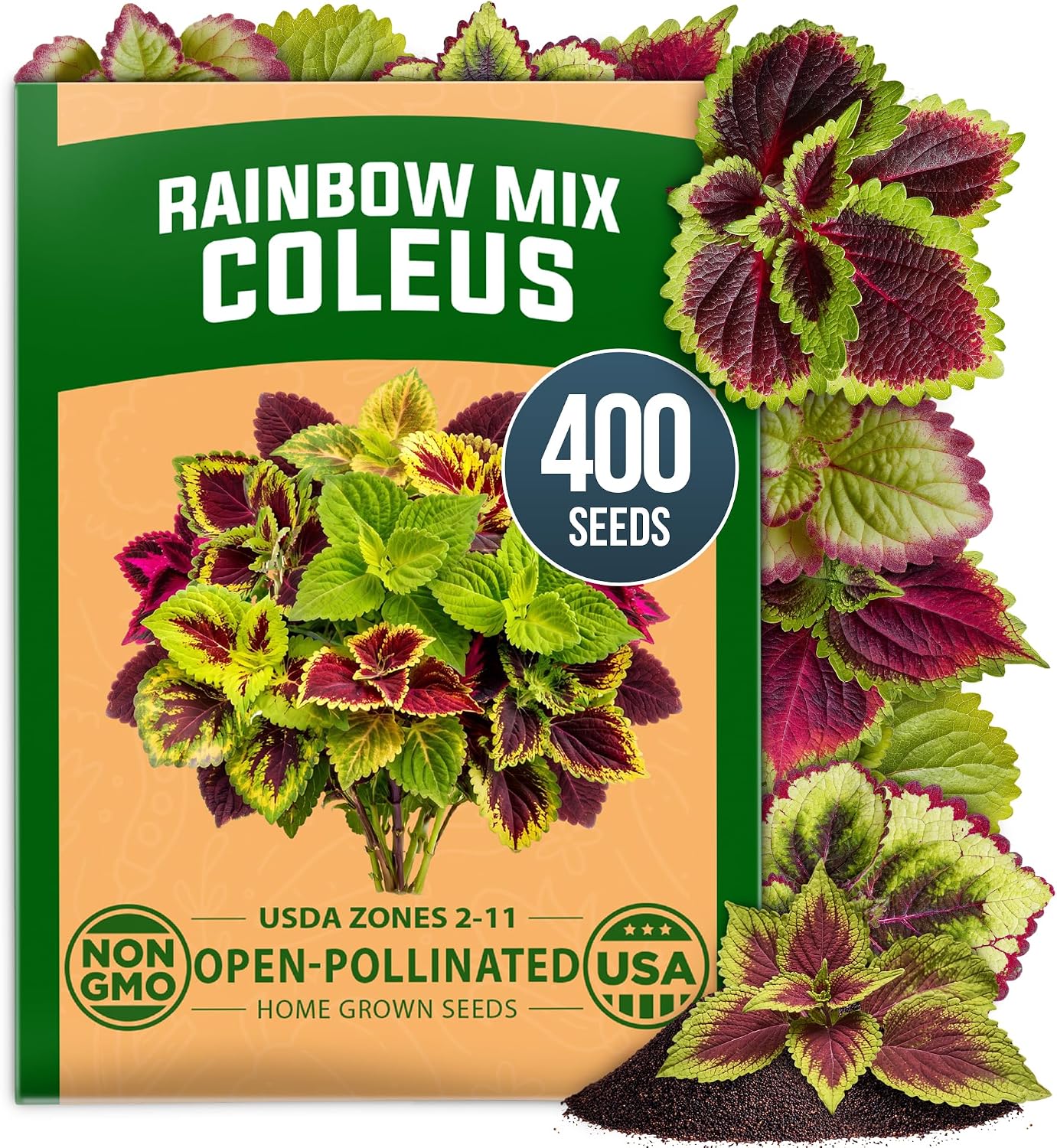
HOME GROWN Rainbow Mix Coleus Seeds (approx. 400)
| Sunlight Exposure | Part Shade to Shade |
|---|---|
| USDA Hardiness Zone | 2-11 |
| Expected Blooming Period | Spring through Frost |
| Material Features | GMO Free, Heirloom |
| Unit Count | 1 Count |
These Rainbow Mix coleus seeds produce compact, colorful foliage plants that are well suited to containers and shaded patio spots. Surface-sow the tiny seeds (do not cover), keep the medium warm and consistently moist, and seedlings typically appear in 10–14 days; pinch growing tips to encourage bushy, mounded plants. The mix is valued for season-long leaf color in shades of rose, green, bronze, cream, and scarlet, so you get visual impact without relying on flowers. Coleus grows indoors near bright north or east windows and outdoors in part shade to shade, making it a flexible choice for window boxes, mixed planters, and small pots. Important limitations are that coleus is a tender annual in most regions and needs protection from frost and prolonged drought, and it prefers warm temperatures for best germination and growth. For container gardeners who want low-maintenance, high-impact foliage, this seed mix is an easy way to produce many plants from one packet.
Best for: Gardeners who want easy-to-grow, high-impact foliage for containers and shaded patios and prefer predictable, low-fuss plants they can start from seed.
Less Ideal for: People seeking long-lived perennial landscaping or plants that tolerate full sun and drought without extra care.
- High seed count (about 400) gives many starts for containers or massing
- Open-pollinated non-GMO seeds from a mix that yields varied, colorful foliage
- Specifically suited to part shade and shade where many flowering plants struggle
- Compact, mounded habit that performs well in pots, window boxes, and mixed planters
- Tender annual in most zones and requires frost protection or indoor overwintering
- Requires consistent moisture and will suffer if soil dries out or remains waterlogged
Verdict: A high-count, non-GMO coleus seed mix that reliably produces compact, colorful foliage perfect for containers and shaded patios.
Choosing the Right Plants for Patio Pots: Key Factors to Consider
Light Exposure and Placement
Patio pots experience a wide range of light conditions from full sun to deep shade. Knowing exactly how many hours of direct sun your site receives helps you match plants that will flower and hold foliage color rather than scorch or stretch. East-facing spots usually suit plants that need morning sun and protection from afternoon heat, while west- and south-facing patios favor heat- and drought-tolerant selections.
Placement also matters for reflected heat from walls or concrete. Pots placed against warm surfaces will dry out faster and can raise ambient temperatures around roots. Consider movable containers so you can shift plants with seasonal changes in sun and wind exposure.
Watering Needs and Soil Volume
Containers hold limited soil and therefore less water and nutrients than in-ground plantings. Plants with high water demands will need frequent watering or very large pots. Evaluate how often you are willing to water: daily or every few days for thirsty bloomers, or weekly for drought-tolerant options.
Soil mix and pot material influence moisture retention. Lightweight potting mixes with good drainage help avoid root rot, while thicker mixes with organic matter hold moisture longer. Match plant water needs to pot size and your availability to water regularly.
Mature Size and Growth Habit
Containers constrain root systems, so choose plants whose mature size fits the pot and the visual scale of the patio. Upright, mounding, and trailing habits each serve different design roles: upright plants add vertical structure, mounding plants fill mid-level space, and trailers spill over edges for softness. Avoid aggressive rooters or rampant spreaders unless you plan to renew the soil and repot frequently.
Consider eventual pruning needs and whether the plant will need a larger container after one or two seasons. Compact cultivars and varieties labeled for containers are often the safest choices for small pots.
Cold Hardiness and Seasonal Care
Potted plants face greater temperature swings than in-ground specimens because pots expose roots to air temperatures. Choose plants whose cold hardiness matches your winter conditions or be prepared to move containers indoors or provide frost protection. Some plants are treated as annuals in colder climates but will overwinter in mild regions.
Think about seasonal maintenance such as cutting back perennials, storing tender bulbs, or refreshing the potting medium each spring. Planning for how you will handle winter helps you pick species that fit your willingness to provide off-season care.
Feeding, Fertility, and Potting Mix
Nutrient levels in containers decline faster than in garden beds because water leaches soluble nutrients with each irrigation. Regular feeding is important for flowering and fruiting container plants. Slow-release granular fertilizer incorporated at repotting and periodic liquid feeds during the growing season balance convenience with plant demand.
The right potting mix supplies structure, aeration, and water retention. Avoid using garden soil in pots; choose mixes formulated for containers, and consider adding water-holding crystals or organic matter for thirsty plants.
Pest Pressure and Maintenance Routine
Containers can concentrate pest problems because plants are close together and stressed roots reduce plant defenses. Select species with known resilience to common patio pests, and plan a regular inspection routine to catch issues early. Clean foliage and remove spent flowers to reduce disease inoculum and keep plants vigorous.
Consider ease of maintenance when selecting plants. If you prefer minimal upkeep, choose species with low pruning and deadheading needs and that tolerate brief dry spells without decline.
Matching Plant Habit to Pot Size and Design
Think about the visual role each plant will play in the pot. A classic container design uses a thriller, spiller, filler approach: one taller structural plant, a few mid-height mounding plants, and one or two trailing plants to soften the edges.
For very small patios use compact, slow-growing varieties that keep shape without constant pruning. For larger containers, include a taller central element for height and balance with trailing plants to create movement.
- Thriller: vertical or architectural plants for height
- Filler: mounded plants that provide body and color
- Spiller: trailing plants that cascade over pot edges
Season-Long Color Strategies
To maintain continuous color, combine plants with staggered bloom times and varied foliage textures. Early-season bulbs or spring-flowering perennials pair well with summer annuals and late-season foliage interest.
Evergreen or semi-evergreen container plants provide structure when annuals finish. Consider swapping out seasonal bedding plants rather than redoing permanent displays to extend color with minimal effort.
- Combine spring bulbs with summer bloomers
- Use evergreen foliage for winter structure
- Rotate seasonal annuals for peak color windows
Pot Material and Drainage Considerations
The pot material affects soil moisture and root temperature. Terracotta wicks moisture and is ideal for drought-tolerant plants but requires more frequent watering. Plastic and glazed ceramic retain moisture longer and suit thirstier species.
Always ensure adequate drainage. Use pots with drainage holes and a free-draining potting mix. In frost-prone areas avoid methods that trap water against roots during cold snaps.
- Terracotta: breathable, dries quickly
- Plastic/glazed: retains moisture, lighter care
- Ensure drainage holes and a free-draining mix
Container Combinations for Small Balconies
On narrow balconies maximize vertical space by using stacked pots, railing planters, or tall narrow containers. Pair compact upright plants with trailing foliage to soften railings and create depth.
Choose plants with similar light and water needs when grouping containers so maintenance is streamlined. Plants in the same cluster will compete for water if they have different demands, increasing the risk of stress.
- Group containers by water needs
- Use height variations to create interest
- Select compact cultivars for limited space
Propagating and Refreshing Pots
Many patio pot plants are easy to propagate from cuttings or divisions, which lets you expand your display without buying new stock. Propagation is also a way to refresh a faded container by replacing tired mid-season specimens.
Refreshing a pot each season by replacing annuals, renewing the top layer of compost, and checking root health keeps containers vigorous and reduces pest buildup.
- Use cuttings to replace or expand plants
- Renew potting mix annually for long-term health
- Check rootbound plants and repot when necessary
How We Chose the Best Plants for Patio Pots
We selected plants for this list by focusing on practical, container-specific traits that matter in real patios and balconies. Key evaluation criteria included sun and shade tolerance to match common patio exposures, drought resilience and watering frequency because pots dry faster than garden beds, mature size and growth habit to avoid overpotting small containers, and seasonal interest covering blooms, foliage color, or structure. We also considered pest and disease resilience for container settings and ease of sourcing or propagating common varieties. Plants that require extensive soil volume, specialized soil chemistry, or frequent repotting were excluded. We did not include plants that are only suitable for large planters or in-ground use. The final shortlist emphasizes species and cultivars known to perform consistently in pots across a range of climates and that offer clear maintenance tradeoffs so gardeners can match choices to their patios and time budgets.
FAQ
How often should patio pots be watered?
Watering frequency depends on pot size, plant type, and weather. Small pots in full sun often need daily watering in summer, while larger pots or shade-tolerant species can go several days between waterings. Check soil moisture with your finger and adjust schedule rather than following a fixed interval.
Can plants in patio pots survive winter outside?
That depends on the plant's cold hardiness and how exposed the pot is. Hardy species can overwinter in pots in cold zones if insulated or sheltered, but tender plants usually need to be brought indoors or heavily protected. Consider moving containers to a protected spot or storing them indoors when temperatures drop.
What size pot is best for a flowering patio plant?
Choose a pot that provides enough root room for the plant's mature size. For many flowering annuals and small perennials a 10 to 14 inch diameter pot works well; larger specimens need correspondingly bigger containers. A slightly larger pot reduces watering frequency and supports stronger root systems.
How do I prevent root rot in containers?
Use a free-draining potting mix and ensure drainage holes are open. Avoid heavy garden soil in pots and do not let containers sit in standing water. If you see yellowing foliage and a soggy smell, reduce watering and repot into fresh, well-draining mix.
Are slow-release fertilizers good for patio pots?
Slow-release fertilizers can provide steady nutrients for several months and reduce the need for frequent feeding. They work well when combined with an occasional liquid feed during peak bloom. Choose formulas balanced for flowering plants and follow package guidance to avoid over-fertilizing.
Final Verdict
Picking plants for patio pots is about matching environmental conditions and your maintenance rhythm. Prioritize light exposure, water needs, and mature size to ensure plants thrive in confined soil volumes. Accept tradeoffs between high-impact seasonal bloomers that need more care and low-maintenance, long-lived container plants that offer structure. With clear priorities-light match, pot size, and watering commitment-you can assemble containers that deliver visual impact and fit your available time. Choose plants that align with those choices and you will get attractive, resilient patio pots year after year.
