

Note: This article contains affiliate links. If you click on these links and make a purchase, I may earn a small commission at no extra cost to you. This helps support my research and content. Read my full affiliate disclosure here.
Carpenter ants behave differently from kitchen-invading ants, nesting in damp or decayed wood and requiring targeted control in structural spaces. Choosing the right ant trap for carpenter ants matters because the bait type and where you place the device determine whether foraging workers carry the toxicant back to the colony or simply ignore it. This guide covers six shortlisted ant traps chosen for their bait formulations and design features suited to wood-inhabiting colonies. We evaluate each option for bait attractiveness, durability in typical outdoor and indoor conditions, and ease of placement so you can choose a solution that fits your home and maintenance routine.
Top Picks at a Glance
| Best Overall The best all-around choice for most situations | BASF Advance Granular Carpenter Ant Bait, 8 oz |  |
| Best Quality Built to a higher standard if you want something more solid | Envu Maxforce Fleet Ant Bait Gel (4 × 27 g) |  |
| Best Value The sweet spot between price and what you get | FLODTEEK 80-Pack Slow-Acting Ant Gel Bait Stations |  |
| Highest Rated A top-rated pick with lots of positive feedback | ROUTADE 48-Pack Slow-Acting Ant Gel Bait Stations |  |
| Most Popular A crowd favorite that many people choose with confidence | Syngenta Optigard Ant Gel Bait, 4 x 30 g Tubes with Plungers |  |
BASF Advance Granular Carpenter Ant Bait, 8 oz

| Item Form | Granules |
|---|---|
| Target Species | Ants |
| Active Ingredients | Abamectin 0.011% |
This granular bait is formulated to be picked up by large worker ants and carried back to the nest, using a delayed-action active ingredient to interrupt the colony rather than just killing scouts. It is applied as loose granules around ant activity areas outside the home or in voids and entry points indoors where allowed. Notable features include a proprietary attractant blend and larger grit size that make it easier for many large ant species to pick up and transport, plus the active ingredient abamectin at a low concentration for delayed mortality. Practical benefits are targeted colony control, flexible indoor or outdoor use, and a product form that works for species that do not accept liquid baits well. Important limitations are the need to follow label safety directions carefully because it is toxic to people, pets, fish, and wildlife, and that results depend on proper placement and ants accepting the bait which can vary by species and season.
Best for: Gardeners or homeowners who want a targeted bait solution to tackle established carpenter ant colonies and prefer a ready-to-use granular product they can place around likely foraging routes.
Less Ideal for: People seeking nonchemical or pet-safe control methods or those who need a universal instant-kill solution for all ant species should consider alternative approaches.
- Granular formulation with larger grit that many large ants can pick up and transport to the colony
- Contains abamectin with delayed action to allow bait sharing and colony-level control
- Labeled for indoor and outdoor application for flexible placement
- Ready-to-use bottle that requires no mixing or special equipment
- Contains an active ingredient hazardous to people, pets, fish, and wildlife so careful placement and label compliance are required
- Effectiveness depends on ants accepting the bait which can vary by species, season, and local food preferences
Verdict: Choose this granular bait when you need a ready-to-use, colony-targeting solution for large carpenter ants that foragers will carry back to the nest.
Envu Maxforce Fleet Ant Bait Gel (4 × 27 g)

| Item Form | Gel |
|---|---|
| Target Species | Ants, Argentine Ants, Carpenter Ants, and Household Ants |
| Active Ingredients | Fipronil |
| Included Components | Four Syringes |
| Specification Met | EPA |
Maxforce Fleet is a thick, syringe-applied ant gel that uses fipronil to kill foraging ants and pass the active ingredient through trophallaxis to the queen and brood. You apply small dots or beads along trails, entry points, or near nests indoors or outdoors where warranted. The gel’s viscosity helps it stay put on vertical surfaces and reduces dripping during placement, while the concentrated fipronil provides fast knockdown of hard-to-control species including carpenter ants. In practice the product shortens the time to colony suppression compared with typical baits, and the included multiple syringes let you treat several hotspots without frequent refills. Important limits are that it is a chemical control and should be used with standard safety precautions around pets and children, and success still depends on correct bait placement and ant foraging activity rather than blanket application. For targeted, performance-focused control of persistent ant problems this gel is a reliable option.
Best for: Buyers who want a fast, high-performance chemical bait to eliminate persistent carpenter and household ant infestations and who will place bait strategically along active trails and entry points.
Less Ideal for: People looking for non-chemical or organic ant control methods or those unwilling to follow safety precautions around insecticide use.
- Contains fipronil, a potent active ingredient effective against carpenter and other tough ant species
- Thick gel formula adheres to vertical surfaces and resists dripping
- Designed for trophallaxis so foragers can transfer the bait to the queen and brood
- Includes four syringe applicators for treating multiple sites without frequent refills
- Contains a professional insecticide that requires careful handling around people and pets
- Effectiveness depends on correct placement where ants are actively foraging
Verdict: Choose this fipronil gel when you need a fast, professional-strength bait that targets and breaks down stubborn carpenter ant colonies through forager-to-nest transfer.
FLODTEEK 80-Pack Slow-Acting Ant Gel Bait Stations

| Unit Count | 80 Count |
|---|---|
| Target Species | Ant |
| Included Components | 80 ant gel bait |
This 80-piece FLODTEEK ant gel bait kit is a simple, no-mess solution for reducing carpenter ants and other common household species by using a slow-acting formulation that worker ants carry back to the colony. Each station is prefilled and ready to place around kitchens, basements, patios and entryways; the brand suggests visible reduction in 5 to 7 days when placed in active trails. The pack size supports covering multiple hotspots at once and replacing stations over time, which helps with longer-term prevention. Setup uses an included double-sided tape so stations stay put on floors, walls or inside cabinets without pouring or mixing. Important limitations are that it is not an instant-contact spray so results take several days and success depends on ants feeding on the bait and bringing it to the nest, and heavy or hard-to-locate nests may need additional control methods.
Best for: Buyers who want a practical, low-effort approach to reduce carpenter ants across multiple rooms or outdoor entry points and prefer stocking enough bait to treat recurring hotspots.
Less Ideal for: People needing immediate knockdown of visible ants or those dealing with a very large or hard-to-find nest that likely requires professional intervention.
- Slow-acting formula designed for colony elimination rather than surface-only kills
- Large 80-piece pack lets you deploy multiple stations to cover a whole house and outdoor entry points
- Ready-to-use stations with included double-sided tape for quick, no-mess placement
- Labeled for both indoor and outdoor use so the same product can protect kitchens, basements, patios and porches
- Requires several days of continuous placement before noticeable reduction in ant activity
- Effectiveness depends on ants accepting the bait and transporting it to the nest
Verdict: A convenient bulk kit for homeowners who want an easy, long-term baiting strategy to reduce carpenter ant colonies across indoor and outdoor hotspots.
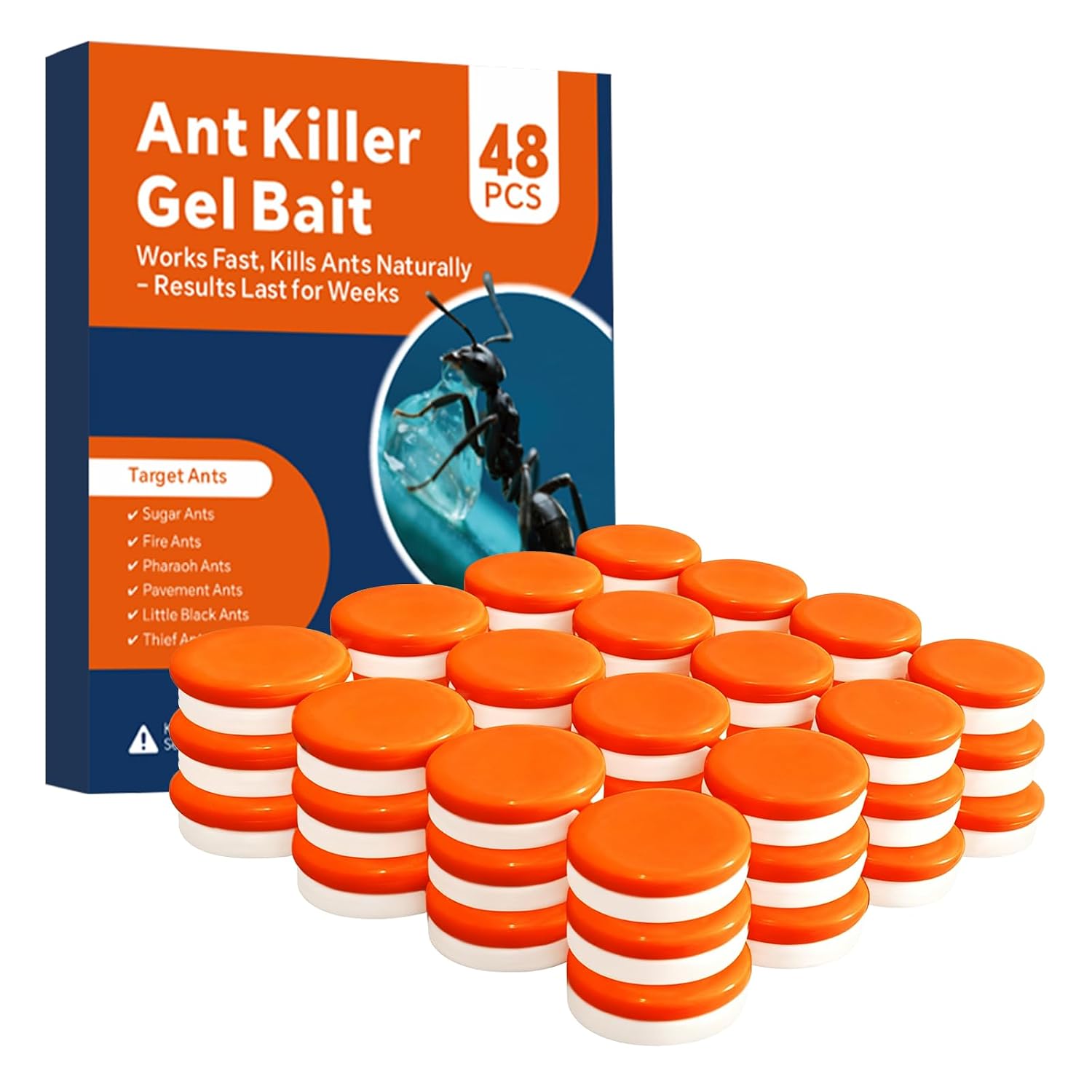
ROUTADE 48-Pack Slow-Acting Ant Gel Bait Stations
| Unit Count | 48 Count |
|---|---|
| Item Form | Gel |
| Target Species | Ants |
| Included Components | Ant gel bait |
This 48-pack of ROUTADE slow-acting ant gel bait stations is built for systematic, long-term ant control in and around the kitchen. Each station contains a gel formula that worker ants consume and carry back to the nest, which helps reduce the entire colony rather than only visible foragers. The product is supplied in ready-to-use stations with adhesive tape so you can place them along baseboards, in cabinets, near sinks, and on entry thresholds without messy sprays or frequent repositioning. The large pack lets you deploy multiple stations in high-traffic areas and replace them over time for continuous coverage. Because the formula is slow-acting, it is effective against a range of common household species including carpenter ants and sugar ants, but it requires several days to weeks to knock down a colony and will not give instant removal of visible ants. Also the stations are small and contain gel rather than a tamper-resistant hard block, so keep them away from children and pets. For someone wanting a low-maintenance, colony-focused approach to kitchen ant problems, this kit makes it easy to set and forget while the bait works.
Best for: Homeowners who prioritize reliable, long-term elimination of ant colonies in kitchens and want a low-maintenance bait they can deploy across multiple hotspots.
Less Ideal for: People who need an immediate knockdown of visible ants or who require childproof solid bait stations should consider alternatives.
- Slow-acting gel designed for worker ants to carry bait back to the nest for colony-level control
- Ready-to-use bait stations with adhesive for easy placement along baseboards and in cabinets
- 48-count pack provides broad coverage around a kitchen and enough replacements for extended use
- Versatile for indoor and outdoor placement to block entry points and high-traffic ant routes
- Slow-acting formula takes days to weeks to eliminate a colony so visible results are not immediate
- Gel in small stations may require careful placement to keep away from children and pets
Verdict: A practical, deploy-and-forget gel bait kit for reliable colony-level control of kitchen ant infestations.
Syngenta Optigard Ant Gel Bait, 4 x 30 g Tubes with Plungers

| Unit Count | 1.06 Ounce |
|---|---|
| Included Components | 4 plungers, 4 syringes, 4 tips |
| Item Form | Gel |
| Target Species | Insects |
| Active Ingredients | Thiamethoxam |
Optigard Ant Gel is a ready-to-use gel bait intended to eliminate ant colonies by encouraging worker ants to feed on and carry the bait back to the nest. You apply small dollops in cracks, along trails, under appliances and in other sheltered areas where ants forage. The clear, sugar-based gel is formulated with 0.01% thiamethoxam and is described as having good acceptance and a consistency that ants can transport to nestmates, which supports colony-level control rather than just killing visible workers. The package includes four syringe-style tubes with plungers and tips for precise placement, making indoor applications straightforward and minimizing mess. Important limitations are that it is a chemical bait containing a systemic insecticide so it must be used according to label directions and kept away from children and pets, and some very large or well-established nests may require repeat inspections and reapplications. For balanced home use, it works well as a focused part of an integrated control plan rather than a one-time universal cure.
Best for: Homeowners seeking a practical, targeted product to reduce or eliminate household ant colonies who want something easy to apply and effective against many common ant species.
Less Ideal for: People looking for non-chemical or purely preventive solutions or those who need outdoor broadcast treatments for large landscape infestations should consider other approaches.
- Clear, odorless gel that is attractive to many ant species
- Syringe tubes with plungers and tips allow precise, low-waste placement
- Formulation designed to be carried back to the colony for broader control
- EPA specification met and uses the active ingredient thiamethoxam
- Contains a chemical insecticide and requires cautious use around children and pets
- May need repeated applications or follow-up treatments for large or deep nests
Verdict: A ready-to-use, colony-focused gel bait that is easy to place and effective against a wide range of common ant species.
Choosing the Right Ant Trap for Carpenter Ants: Key Factors to Consider
Bait Type and Carpenter Ant Preference
Carpenter ants vary their food preferences by season and colony needs. In spring and early summer they often forage for proteins and fats to feed developing brood, while at other times they may accept sweet baits. Choosing a trap with a bait formulation that matches local foraging behavior increases the chances that workers will take the bait back to the nest.
Also consider bait concentration and how quickly it immobilizes foragers. A bait that kills too quickly may prevent transfer to the colony, while one that acts slowly but is attractive supports bait-sharing and nest-level control. Look for clear information on bait type and active ingredient behavior when selecting a trap.
Placement and Access to Foraging Trails
Correct placement is crucial for traps to work. Carpenter ants travel along predictable trails from nests in wood to food sources. Position traps near baseboards, wall void entry points, along ant trails, and close to moist or decayed wood areas rather than simply leaving traps on countertops. Traps that allow bait to be exposed to foragers while attached to vertical or narrow surfaces make it easier to intercept workers.
Consider whether the trap design fits in gaps, crevices, or behind trim. Some housings are low-profile and can be slid into gaps; others are bulkier but more secure. Your chosen trap should permit placement where carpenter ants actually travel without blocking access or becoming dislodged.
Durability and Moisture Resistance
Carpenter ants commonly nest in damp or decaying wood, so traps placed near exterior entries, porches, or basement sills must resist humidity. A trap that soaks up moisture will degrade bait quickly and become unattractive. Look for housings that shield bait from rain splashes, condensation, and debris while still letting ants enter.
Material choice and seal design affect longevity. Durable plastics with tight seams and small entry ports last longer in sheltered outdoor locations. If you plan to use traps in basements or crawlspaces, pick designs that tolerate occasional dampness without leaking or collapsing.
Safety and Tamper Resistance
Homes with children or pets require traps with secure housings that prevent accidental access to bait. Tamper-resistant features include locking clips, snap-fit lids, and small entry ports that allow ants in but keep larger animals out. Safety labels and clear placement instructions also matter for responsible use.
Consider whether traps can be anchored or affixed out of reach while still accessible to ants. A device that can be attached behind trim or inside a wall void reduces the chance of disturbance. Evaluate packaging and instructions to confirm how to handle used or spent traps safely.
Ease of Monitoring and Replacement
Effective ant control requires checking traps regularly and replacing bait when it is depleted or contaminated. Choose traps that allow quick visual checks of bait quantity and condition without disturbing the housing. Transparent windows or clear access panels make monitoring easier.
Also consider how easy it is to replace bait or swap in a new cartridge. Systems that use prefilled pods reduce mess and guesswork, while refillable reservoirs can save waste but may require careful handling. Time spent on maintenance affects how consistently you will follow up, which influences long-term success.
How Carpenter Ant Behavior Affects Trap Strategy
Carpenter ants do not eat wood but excavate galleries in it, so traps must intercept foragers rather than rely on contact treatments inside galleries. Foraging patterns tend to be narrow and repeatable, especially in established colonies, which favors placing baits along trails and at likely entry points into structures.
Because colonies often have multiple galleries and satellite nests, a single trap might not reach all foragers. Expect to deploy several traps in a coordinated pattern around the infestation area and to monitor them for activity changes over several weeks.
- Place traps where you see worker traffic or near moist wood.
- Use multiple traps to increase the chance of reaching different foraging groups.
- Check traps every few days and move them if you see no activity.
Indoor Vs Outdoor Placement Considerations
Indoor placements prioritize safety and discretion. Put traps behind baseboards, in wall gaps, or along attic rafters close to suspected nest sites. Indoor traps should have tamper-resistant housings and minimal odor so they do not interfere with living spaces.
Outdoor or semi-exposed placements must cope with humidity and debris. Use traps designed for sheltered outdoor use and install them under eaves, behind siding, or along foundation seams where they will be shielded from direct rain but accessible to foragers.
- Avoid direct sun and rain exposure when placing outdoor traps.
- In basements, keep traps off the ground on shelves or attached to framing to reduce moisture contact.
Monitoring Activity and Adjusting Placement
Effective control requires tracking which traps attract workers and which do not. Mark trap locations and record activity over a two-week period. If a trap shows no activity after several days, move it to a nearby trail or junction where ants are more active.
When activity declines across all traps, it can indicate colony reduction. However, persistence and spot checks are important because colonies can relocate or have unexposed satellite nests.
- Use a simple log to note dates and activity levels.
- Relocate inactive traps closer to new trails as needed.
Combining Traps with Habitat Modifications
Traps are most effective when combined with habitat changes that reduce nesting opportunities. Address moisture issues, repair roof leaks, replace decayed wood, and keep woodpiles away from foundations to make your property less hospitable to carpenter ants.
Sealing entry gaps and improving ventilation in crawlspaces reduces internal humidity and can discourage nesting. These measures do not replace traps but improve long-term control and reduce reinfestation risks.
- Eliminate moisture sources near foundations and wooden structures.
- Trim vegetation away from siding to reduce access points.
When to Call a Professional
If you find extensive internal wood damage, large colonies, or persistent activity despite careful baiting and habitat work, professional assessment may be warranted. Experts can inspect wall voids and structural timbers and recommend targeted interventions beyond consumer traps.
Consider professional help when nests are inaccessible, when you identify multiple inside nests, or when safety concerns make placement of traps difficult.
- Seek inspection if structural damage is visible or suspected.
- Use professionals for hard-to-reach or hazardous placements.
How We Chose the Best Ant Trap for Carpenter Ants
We shortlisted traps that address carpenter ant biology and the practical realities of treating wood-infesting colonies. Key evaluation criteria included bait attractiveness to carpenter ants and bait persistence, because carpenter ants are often selective and may avoid certain sugar-based baits. We tested claims about device durability for indoor and sheltered outdoor use, examining whether the trap housings protect bait from moisture and debris. Ease of placement and access for workers was assessed, since traps must be positioned where foragers travel without obstructing structural elements. We also considered safety features such as tamper-resistant housings for homes with pets or children and the clarity of usage instructions for targeted placement around wooden structures. We excluded broad-spectrum station types that are designed solely for indoor sugar-ant problems or products intended for broadcast granular application. The final picks focus on traps designed to be placed along ant trails, near wall voids, and at wood-contact points. Products lacking clear bait composition, durability data, or secure housings were not considered. The included criteria align with the scoring metrics used across each item so readers can compare real-world tradeoffs.
FAQ
How long before I see fewer carpenter ants after placing traps?
It usually takes several days to a few weeks to see a notable decline. Carpenter ant colonies can be large and foragers may not immediately accept bait, so allow time for workers to find and share the bait and for the active ingredient to affect the colony.
Can I use the same traps indoors and outdoors?
Some traps are versatile, but many indoor designs lack the moisture resistance needed outdoors. Choose traps rated for the specific environment and follow placement guidance for sheltered outdoor spots if using them near foundations.
Are sugar-based baits effective against carpenter ants?
Sugar baits can work at certain times when ants are seeking carbohydrates, but carpenter ants often prefer protein or fat sources during brood-rearing. Using bait types that match local foraging preferences improves success.
How often should I check and replace bait traps?
Check traps every few days at first, then weekly once activity is consistent. Replace bait when it is depleted, moldy, or saturated with moisture. Frequent checks reduce wasted bait and help you spot shifting trails.
Will traps alone eliminate a carpenter ant infestation?
Traps can significantly reduce foraging populations when placed and monitored properly, but severe infestations or multiple internal nests may require additional measures such as removing moisture sources and repairing damaged wood. Long-term control often combines traps with habitat fixes.
Final Verdict
Choose an ant trap based on bait type, durability for the intended placement, and safety features that suit your home. Prioritize traps with bait formulations that match local carpenter ant feeding habits and housings that tolerate damp or sheltered outdoor conditions. Monitor activity and be prepared to move or add traps as you track foraging patterns. If damage is extensive or baiting does not reduce activity, seek a professional inspection.
