

Note: This article contains affiliate links. If you click on these links and make a purchase, I may earn a small commission at no extra cost to you. This helps support my research and content. Read my full affiliate disclosure here.
Picking the right commercial hedge trimmer matters when you manage large properties, apartment complexes, or frequent client jobs. The right tool reduces fatigue, speeds up hedging tasks, and gives cleaner cuts that support plant health and a professional finish. This guide highlights seven shortlisted commercial hedge trimmers that are suited to heavy use and varied planting situations. We evaluate each option on the hard-working specs that matter in the field, including blade reach, motor reliability, balance, and serviceability. Read on for practical notes to match a trimmer to your workload and routine.
Top Picks at a Glance
| Best Overall The best all-around choice for most situations | ECHO HCA-2620 21" Gas Articulating Shaft Hedge Trimmer |  |
| Best Quality Built to a higher standard if you want something more solid | Milwaukee M18 FUEL 24-inch Cordless Hedge Trimmer |  |
| Best Value The sweet spot between price and what you get | EGO POWER+ HT2600 26" Cordless Hedge Trimmer (battery and charger not included) |  |
| Best Budget The cheapest option that still gets the job done reliably | SENIX 4QL HT4QL-L 26.5cc 4-Cycle 22" Gas Hedge Trimmer | 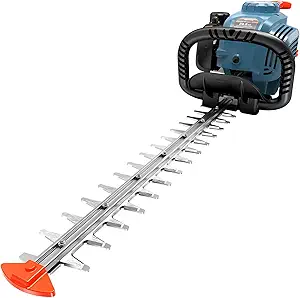 |
| Highest Rated A top-rated pick with lots of positive feedback | DEWALT 20V MAX 22" Cordless Hedge Trimmer Kit (DCHT821P1) |  |
| Most Popular A crowd favorite that many people choose with confidence | Husqvarna 322HD60 24-inch Gas Hedge Trimmer |  |
ECHO HCA-2620 21" Gas Articulating Shaft Hedge Trimmer

| Blade Length | 21 inches |
|---|---|
| Shaft Length | 59 inches |
| Engine Displacement | 25.4 cc |
| Fuel Capacity | 20.6 fl. oz. |
| Blade Type | Double-sided, double-reciprocating |
The ECHO HCA-2620 is a gas-powered articulating-shaft hedge trimmer built for tackling tall and dense hedges. Its 59-inch shaft and articulating gear case that pivots up to 135 degrees let you reach high or awkward angles without a ladder, while the 21-inch double-sided, double-reciprocating RazorEdge blades provide fast, clean cuts on thicker growth. The 25.4 cc two-stroke engine and large 20.6 fl. oz. fuel tank deliver long run times for multi-garden jobs, and the bellows-style fuel transfer plus two-stage air filtration improve starting and reduce field maintenance. Vibration reduction isolates the handles for steadier control and less fatigue during extended use. Expect a solid, tool-friendly service experience thanks to tool-less air filter access, but note this is a gas machine so it requires regular engine upkeep, fueling, and more noise than electric options. Its weight and engine complexity make it better suited to experienced users or professionals rather than those wanting near-silent, low-maintenance tools.
Best for: Gardeners and maintenance pros who need a powerful, reach-capable hedge trimmer for frequent or large-scale pruning and who are comfortable with routine engine upkeep.
Less Ideal for: Casual homeowners with small yards or those who prefer near-silent, low-maintenance electric or battery tools should consider lighter alternatives.
- Articulating shaft with 135° pivot for reaching tall and awkward hedges without a ladder
- 21-inch double-sided, double-reciprocating RazorEdge blades cut efficiently through thick growth
- 25.4 cc two-stroke engine and 20.6 fl. oz. fuel tank provide extended run time for larger jobs
- Tool-less air filter access and two-stage filtration reduce maintenance time
- Vibration-reduction system improves operator comfort during long use
- Requires regular two-stroke engine maintenance and fuel mixing
- Heavier and louder than electric or battery trimmers which can limit use in noise-sensitive areas
Verdict: Choose the ECHO HCA-2620 when you need a powerful, long-reach gas hedge trimmer that handles tall, heavy pruning jobs reliably.
Milwaukee M18 FUEL 24-inch Cordless Hedge Trimmer

| Blade Length | 24 inches |
|---|---|
| Power Source | Battery Powered |
| Blade Material | Alloy Steel |
The Milwaukee M18 FUEL 24-inch hedge trimmer is built for homeowners who want near-professional cutting power without a cord. Its POWERSTATE brushless motor and 24-inch alloy-steel blade are rated to cut up to about 1-1/4 inch branches, so it handles thick hedges and heavier pruning better than lighter consumer models. Typical use is trimming long runs of hedgerow, shaping shrubs, and tackling occasional overgrown branches; the long blade reduces passes and speeds work. The metal construction and long cutting width give a durable feel, while battery operation provides freedom of movement and quieter operation compared with gas. Expect a bit more weight than compact trimmers, which can make extended overhead work tiring, and runtime depends on battery capacity which is sold separately. Overall it pairs professional-grade cutting performance with the convenience of cordless power for serious residential maintenance.
Best for: Homeowners who prioritize cutting performance and durability and who regularly maintain large or overgrown hedges and want cordless convenience over a gas tool.
Less Ideal for: Casual gardeners with small yards who only need light shaping or who prefer the lightest, easiest-to-handle trimmers.
- POWERSTATE brushless motor delivers strong cutting power for branches up to about 1-1/4 inches
- 24-inch alloy-steel blade covers long runs with fewer passes
- Battery powered for cordless mobility and quieter operation than gas
- Metal construction and professional-grade components improve durability
- Heavier than compact consumer trimmers, which may cause fatigue during long overhead sessions
- Battery and charger are not included so runtime depends on separately purchased batteries
Verdict: Choose this Milwaukee M18 FUEL if you want cordless, near-professional cutting power for large or overgrown hedges.
EGO POWER+ HT2600 26" Cordless Hedge Trimmer (battery and charger not included)

| Blade Length | 26 inches |
|---|---|
| Power Source | Battery Powered |
| Speed | 3400 rpm |
| Voltage | 56 volts |
| Blade Material | Alloy Steel |
The EGO POWER+ HT2600 is a professional-grade cordless hedge trimmer built for extended use around large properties or commercial jobs. It uses dual‑action 26-inch alloy steel blades and a high‑efficiency brushless motor that delivers up to 3,400 strokes per minute for fast, clean cuts and reduced vibration. The carbon fiber rail keeps the tool light without sacrificing rigidity, and the five-position 180-degree rotating handle gives good ergonomics for shaping vertical and horizontal hedges. It accepts EGO 56V ARC Lithium batteries (2.5Ah recommended) for up to about 60 minutes of run time with the suggested pack, and the serviceable gearbox makes blade sharpening straightforward in the field. IPX4 weather resistance and a lifetime warranty on the rail add durability for commercial use. Expect to supply your own compatible battery and charger and plan for occasional sharpening on heavier material; the trimmer handles up to about 1.2-inch branches but is not a substitute for a chainsaw on very thick limbs.
Best for: A buyer who needs a durable, high‑performance cordless trimmer for frequent use on large properties or commercial jobs and values speed, ergonomics, and low vibration.
Less Ideal for: Casual homeowners who want an all-in-one kit with battery and charger included or those who regularly need to cut very thick limbs should consider simpler or more heavy‑duty alternatives.
- Long 26-inch dual-action blades for efficient coverage on large hedges
- Brushless 56V motor producing up to 3,400 strokes per minute for fast, low-vibration cutting
- Carbon fiber rail provides high strength with reduced weight and is backed by a lifetime warranty
- Five-position 180-degree rotating handle improves control and reduces fatigue during complex cuts
- IPX4 weather resistance and a serviceable gearbox make it durable and easy to maintain in the field
- Battery and charger are not included so runtime depends on purchasing compatible packs separately
- Cut capacity is about 1.2 inches which limits use on very thick branches
Verdict: Pick this trimmer if you want a lightweight, commercial‑leaning cordless tool that delivers fast, low‑vibration cutting and superior ergonomics for large jobs.
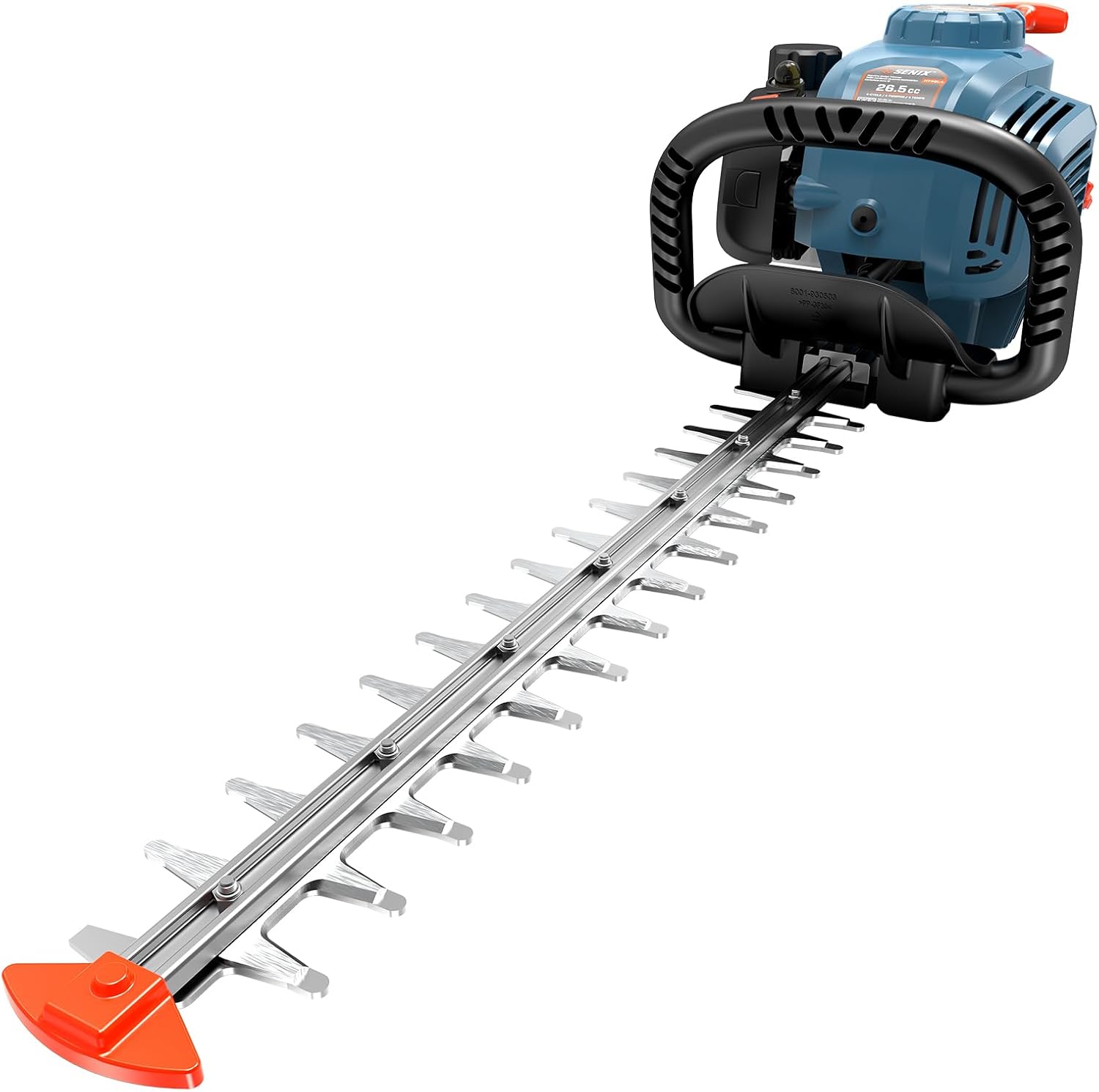
SENIX 4QL HT4QL-L 26.5cc 4-Cycle 22" Gas Hedge Trimmer
| Power Source | Gas Powered |
|---|---|
| Blade Length | 22 inches |
| Blade Material | Stainless Steel |
| Cutting width | 1.13 inches |
| Engine displacement | 26.5 cc |
The SENIX 4QL 22-inch gas hedge trimmer is built for heavier hedge and shrub work where corded or battery tools run short. It uses a 26.5 cc 4-cycle 4QL engine that does not require premixing fuel and oil, reducing fuss and the risk of leaks while claiming lower emissions and fuel use than typical two-stroke motors. The 22-inch laser-cut dual-action stainless steel blades and 1-1/8-inch cutting capacity make quick work of thick growth, and the rotating rear handle helps you maintain comfortable angles when trimming tall or wide hedges. Included items such as a blade cover, spark plug wrench, and oil bottle let you start right away and perform basic maintenance. Expect a tool that favors power and continuous run time over lightweight portability and low noise; at about the size and weight of typical gas trimmers it can be tiring for long overhead work and requires regular engine maintenance. For buyers prioritizing simple fueling and robust cutting in commercial or heavy residential tasks, this is a practical gas option.
Best for: Buyers who need a budget-minded gas trimmer that delivers sustained cutting power for commercial or heavy residential hedge jobs and who prioritize runtime and cutting capacity over lightweight ergonomics.
Less Ideal for: If you need the quietest, lightest tool for long periods of overhead or precision topiary work, a battery or electric trimmer would be a better fit.
- Powerful 26.5 cc 4-cycle engine that runs without mixing fuel and oil
- 22-inch laser-cut dual-action stainless steel blades for efficient cutting of thick foliage
- Rotating rear handle for comfortable all-direction trimming
- Includes blade cover and basic maintenance tools to start using right away
- Heavier and bulkier than battery trimmers so it can be fatiguing for extended overhead work
- Gas engine requires regular maintenance and produces engine noise and emissions
Verdict: Choose this SENIX gas trimmer when you want a no-mix, powerful 22-inch tool that delivers continuous cutting performance for demanding hedge work.
DEWALT 20V MAX 22" Cordless Hedge Trimmer Kit (DCHT821P1)

| Blade Length | 22 inches |
|---|---|
| Power Source | Battery Powered |
| Blade Material | Alloy Steel |
| Material Type | Aluminum |
This DEWALT 20V MAX 22" cordless hedge trimmer is built to handle heavier trimming tasks while staying easy to maneuver. The high-output motor is rated to cut branches up to 3/4 inch thick and drives laser-cut, hooked-tooth blades for clean, efficient cuts. In real use the 22-inch blade covers more area per pass, and the friction clutch helps protect the transmission when you hit hidden obstacles. The kit includes a 20V MAX battery and charger and claims up to 78 minutes of runtime, which is helpful for longer jobs without swapping cells. The unit is described as compact and lighter than comparable models, improving control around dense hedges and reducing arm fatigue. Important limitations are that battery runtime will vary with branch thickness and load, and very large branches or professional continuous-use scenarios may still need a gas or larger battery platform. There is also an optional hedge sweep accessory sold separately for clipping collection.
Best for: Buyers who prioritize a dependable, rugged cordless trimmer for thick backyard hedges and seasonal heavy-duty cleanups and who value protection features that reduce mechanical wear.
Less Ideal for: Landscaping professionals who need continuous, all-day cutting power or users who regularly tackle very large branches that exceed the 3/4-inch cut capacity.
- High-output motor capable of cutting branches up to 3/4 inch thick
- 22-inch laser-cut hooked-tooth blades for cleaner, faster cuts
- Friction clutch protects the transmission from impacts
- Includes battery and charger with advertised long runtime
- Compact, lighter design for improved maneuverability and reduced fatigue
- Runtime and cutting performance depend on battery condition and load, so heavier work may reduce advertised runtime
- Not designed for continuous professional heavy-duty use like commercial gas trimmers
Verdict: A dependable cordless hedge trimmer that reliably handles thick backyard branches while protecting the drive train for long-term durability.
Husqvarna 322HD60 24-inch Gas Hedge Trimmer
| Power Source | Gas Powered |
|---|---|
| Speed | 7800 rpm |
| Blade Material | Hardened Steel |
| Blade Length | 24 inches |
| Material Type | Alloy Steel |
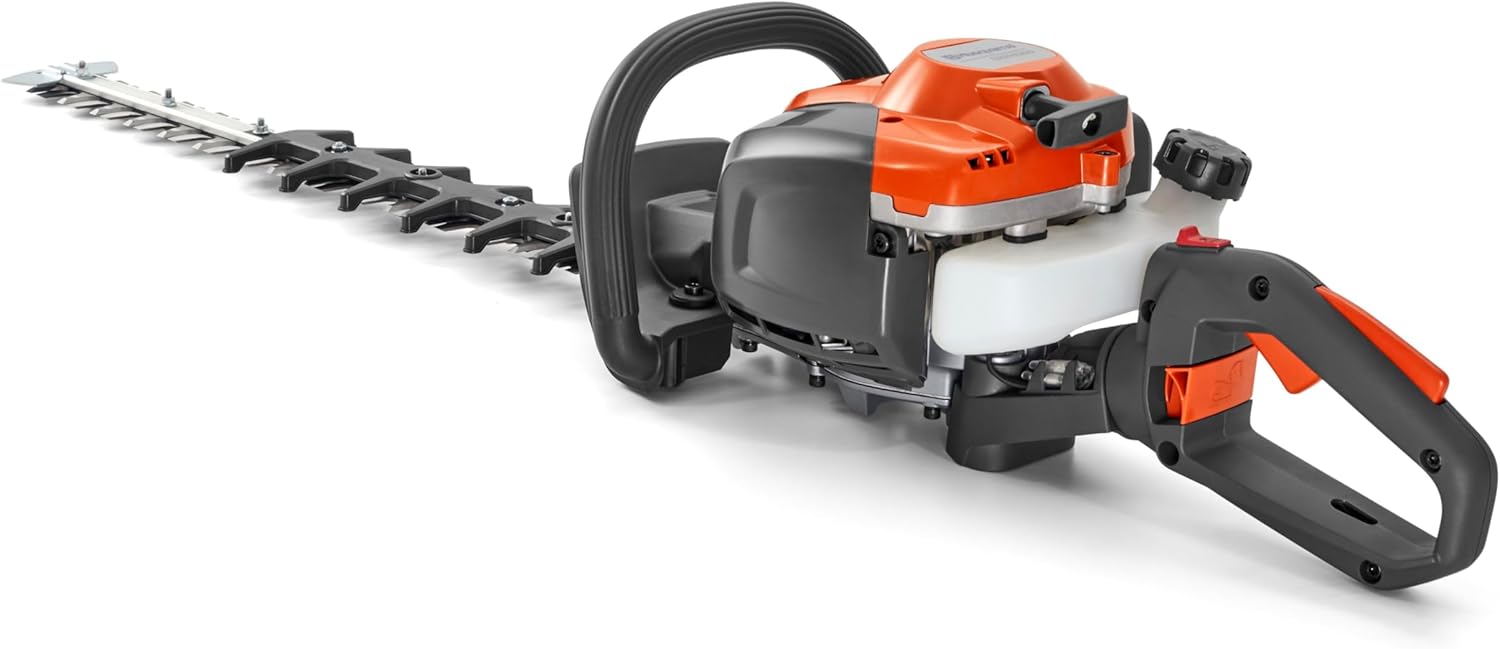
The Husqvarna 322HD60 is a gas-powered double-sided hedge trimmer built for high-capacity residential and light professional work. It uses a 21.7cc two-cycle engine that delivers strong cutting power and a 24-inch dual-action hardened-steel blade that cuts in both directions for faster shaping and fewer passes. An adjustable rear handle and relatively light overall weight make it easier to maneuver around large hedges and tight spots while the durable gearbox and professional-grade knife blades are aimed at frequent use. Typical tasks include trimming mature hedges, reducing overgrowth, and shaping long runs of shrubs where gas power and a long reach speed the job. Important limitations are the need for fuel mixing and routine engine maintenance, and the noise and vibration levels typical of gas tools compared with electric models. If you need long runtime and cutting force for thick stems, this trimmer delivers; if you prefer low-maintenance, quieter operation for smaller yards, an electric or battery model may be more suitable.
Best for: Buyers who prioritize cutting power and long runtime for heavy hedges and frequent trimming tasks and who are comfortable maintaining a gas engine.
Less Ideal for: Casual gardeners with small yards who prefer quieter, low-maintenance electric or battery trimmers.
- Powerful 21.7cc two-cycle engine for cutting thicker stems and long runs
- 24-inch dual-action hardened-steel blade that cuts in both directions for efficient shaping
- Adjustable rear handle and relatively light weight improve maneuverability during extended use
- Durable gearbox and professional-grade knife blades built for frequent residential or part-time professional work
- Requires fuel mixing and regular engine maintenance typical of gas tools
- Higher noise and vibration compared with electric or battery trimmers
Verdict: Choose the Husqvarna 322HD60 when you need gas-powered cutting power and a long dual-action blade for fast, professional-quality hedge work.
Choosing the Right Commercial Hedge Trimmer: Key Factors to Consider
Blade Length and Tooth Spacing
Blade length determines how much hedge you can cut with each pass and how quickly you can shape long runs. Longer blades cover more linear feet but can be heavier and harder to control on tight jobs.
Tooth spacing affects the maximum branch diameter the trimmer can cleanly cut. Narrower spacing gives a finer finish on soft growth while wider spacing handles thicker woody stems. Consider the dominant plant types you trim and balance cutting reach against maneuverability.
Power Source and Motor Duty Cycle
Commercial trimmers use petrol, corded electric, or high-capacity battery systems. Motor power and duty cycle indicate how well a tool maintains cutting speed under load and how long it can run without overheating or performance loss.
For route-based work, look for motors rated for continuous operation or battery systems with quick-swap capacity and matched chargers. The motor type also affects maintenance needs and expected lifespan.
Ergonomics and Vibration Control
Ergonomics directly impact how long an operator can work comfortably and accurately. Handle placement, grip shape, weight distribution, and anti-vibration features reduce fatigue and improve cut consistency across long shifts.
Vibration damping lessens hand and arm strain and lowers the risk of errors when working at height or on uneven terrain. Assess how a trimmer balances in both horizontal and vertical cutting positions.
Build Quality and Weather Resistance
Commercial use exposes tools to dust, moisture, and repeated impacts. Housings, seals, and finish quality determine how well a trimmer resists corrosion and dirt ingress over time.
Metals used in gearboxes, blade heat-treatment, and protective coatings all matter for longevity. Choose designs with serviceable sealing points and materials specified for heavy use rather than consumer-grade finishes.
Serviceability and Parts Availability
A commercial fleet depends on quick repairs. Easy access to wear parts, modular components, and widely available replacement blades or filters reduces downtime.
Consider how simple routine maintenance is: blade sharpening or replacement, tension adjustments, lubrication points, and whether common tools can be used on site. Parts commonality across a fleet simplifies logistics.
Safety Features and Controls
Durable safety controls and predictable shutdown behavior protect operators and bystanders. Guarding, two-handed trigger arrangements, and clear choke/stop controls reduce accident risk.
Good safety design also includes clear visibility of the cutting edge and predictable power delivery when barrels or poles are used. Confirm controls are reachable and intuitive while wearing gloves.
Choosing the Right Power Type for Your Route
Decide whether you need petrol, corded electric, or battery-powered equipment by mapping a typical day. Petrol models excel on long, remote routes where recharging is impractical and deliver steady power for thick growth. Corded electric tools provide continuous operation where outlets are accessible and eliminate fuel maintenance.
High-capacity battery systems reduce noise and emissions and can be viable for commercial use when paired with multiple batteries or fast chargers. Factor in swap time, charger availability, and battery lifespan when considering battery-powered machines.
- Petrol: best for long runs and heavy woody growth.
- Corded electric: continuous power where extension is feasible.
- Battery: quieter, lower vibration, needs battery logistics for routes.
Matching Blade Geometry to Plant Types
Leafy hedges, soft ornamental shrubs, and formal topiary benefit from finer tooth spacing and blades that produce a clean, neat edge. Thicker, woody hedgerows require wider tooth spacing and sharper blades rated for heavier cuts.
Consider whether you need dual-action blades for reduced vibration or single-action designs for lighter trimming. Blade mounting options that accept common aftermarket blades make adapting to different plant types easier.
- Fine finishing: narrow tooth spacing and shorter teeth.
- Heavy cutting: wider spacing and tougher blade steel.
- Dual-action blades: smoother cuts and reduced vibration.
Operator Comfort and Fleet Efficiency
Operator rotation, scheduled breaks, and ergonomics all affect productivity. Tools with adjustable handles, balanced weight, and low vibration reduce fatigue across long shifts, which improves cut quality and lowers injury risk. Consider training operators on posture and handling to maximize comfort.
For fleet managers, standardizing on models with similar service intervals and common consumables simplifies maintenance scheduling and inventory. Ergonomics that suit multiple users keep productivity more consistent across teams.
- Look for adjustable grips and shoulder strap compatibility.
- Check declared vibration figures and anti-vibration features.
- Standardize consumables like blades and filters across the fleet.
Maintenance Routines That Keep Machines in Service
Routine tasks include blade tension checks, lubrication of sliding surfaces, sharpening or replacing cutting blades, and inspecting seals and fasteners. Establish a simple daily and weekly checklist to catch wear before it becomes a failure.
Keeping a log of operating hours and maintenance performed helps predict parts life and schedule repairs during low-demand windows. Quick field checks that do not require special tools are especially valuable for commercial users.
- Daily: visual inspection, blade clearance check, quick lubrication.
- Weekly: tighten fasteners, inspect air intakes, sharpen blades as needed.
- Monthly: gearbox checks, comprehensive fastener torque, parts inventory review.
Transporting and Storing Commercial Trimmers
Safe transport and storage extend equipment life. Secure tools in the vehicle to prevent impact damage and keep blades covered. For petrol units, drain or stabilize fuel if machines will sit unused for extended periods.
Store trimmers in a dry, ventilated area away from direct sunlight and temperature extremes. Consider simple racks or wall mounts that keep equipment off the floor and easy to access during busy seasons.
- Use blade covers during transport and storage.
- Keep a clean, dry storage area with tool organization.
- Follow fuel-storage best practices for petrol machines.
How We Chose the Best Commercial Hedge Trimmer
We focused on specifications and features that matter to professionals and serious landscapers. Primary evaluation criteria included blade length and tooth spacing for cut capacity, motor type and continuous run characteristics for sustained workloads, tool balance and vibration for operator comfort during long shifts, durability of housing and gearbox for daily commercial use, and maintenance access for quick field servicing. We favored units whose design reduced downtime, such as easy blade tension adjustments and accessible lubrication points. Safety features and compatibility with standard replacement parts were also weighed to minimize fleet-level downtime. Excluded items included consumer-oriented hobby trimmers and devices built for infrequent home use only. We did not include battery-only models with runtimes clearly insufficient for commercial routes unless their fast-swap battery systems met professional continuous-use needs. The resulting selections emphasize reliable cutting geometry, robust drive systems, service-friendly designs, and operator ergonomics.
FAQ
How long should a commercial hedge trimmer run between services?
Service intervals vary by model and workload, but commercial units often need routine checks after every day of heavy use and more thorough servicing every 100 to 250 operating hours. Track hours and inspect blades, gearbox seals, and air intakes regularly.
Are battery-powered commercial trimmers viable for large routes?
They can be viable if you plan for battery logistics with multiple packs and fast charging. High-capacity battery systems reduce noise and vibration but require either quick-swap workflows or access to charging between jobs to match petrol runtime.
What blade length is best for mixed shrub and hedge work?
A medium-length blade often provides the best compromise for mixed jobs: long enough to cover runs efficiently but short enough to remain controllable around tight shapes. Consider blade variety options if you frequently switch between fine shaping and bulk removal.
How important is vibration rating when choosing a commercial trimmer?
Vibration rating matters for operator comfort and long-term health. Lower vibration reduces fatigue and improves control during extended use. Look for anti-vibration features and test balance where possible.
Can I sharpen commercial trimmer blades myself in the field?
Basic sharpening and minor tune-ups can often be done on-site with common files and simple jigs, but major repairs or re-heat treatments should be handled by a workshop. Regular light sharpening maintains cutting quality and extends blade life.
Final Verdict
For commercial hedge trimming, prioritize blade geometry and motor duty cycle to match the plant types and daily workload. Ergonomics, vibration control, and serviceability are equally important because they affect operator productivity and fleet uptime. Expect tradeoffs between reach and control and between power source convenience and continuous runtime. Choose a machine that fits your route profile and maintenance capacity. Focus on durable construction, easy parts access, and operator comfort to keep crews efficient and hedges looking professional season after season.
