

Note: This article contains affiliate links. If you click on these links and make a purchase, I may earn a small commission at no extra cost to you. This helps support my research and content. Read my full affiliate disclosure here.
Choosing the right rooting hormone for water propagation changes how quickly and consistently your cuttings develop roots in jars, bottles, or clear vases. The wrong product can cloud the water, overwhelm delicate stems, or deliver inconsistent doses that produce weak root systems. This guide covers six shortlisted rooting hormones formulated or suitable for propagation in water, highlighting how they behave in a real home propagation setup. We evaluate each option on concentration control, solubility and water clarity, application accuracy, and plant compatibility so you can pick the method that fits your routine and plant types. Read on to see which approaches work best for fast, clean rooting in transparent containers.
Top Picks at a Glance
| Best Quality Built to a higher standard if you want something more solid | Southside Plants Root Drops Liquid Rooting Hormone (4 oz) |  |
| Best Value The sweet spot between price and what you get | Root Drops Liquid Rooting Hormone for Cuttings |  |
| Best Budget The cheapest option that still gets the job done reliably | Root Drops 100 ml Liquid Rooting Hormone for Cuttings |  |
| Highest Rated A top-rated pick with lots of positive feedback | Herrdemia 3-in-1 Rooting Powder (IBA + NAA + Mycorrhizae) |  |
| Most Popular A crowd favorite that many people choose with confidence | Garden Safe TakeRoot Rooting Hormone Powder, 2-Pack (2 oz) | 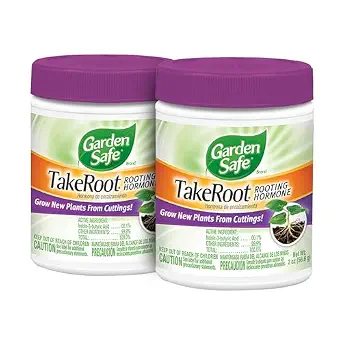 |
| Best Seller A high-volume bestseller chosen again and again | Hormex Liquid Rooting Hormone Concentrate with Vitamin B1, 8 oz |  |
Southside Plants Root Drops Liquid Rooting Hormone (4 oz)

| Item Form | Liquid |
|---|---|
| Specific Uses For Product | Cuttings in water, soil, or newly transferred to soil |
| Application Method | Drops |
| Unit Count | 4 Ounce |
| Target Species | Houseplants |
Southside Plants Root Drops is a concentrated liquid rooting hormone designed to speed and strengthen root formation for indoor plant propagation. It is applied as drops — for water propagation the recommended dose is two drops per cup — and the product is also intended for use when transplanting cuttings into soil or soilless media such as LECA or sphagnum moss. The formula lists 0.025% indole butyric acid plus vitamins and lanolin-based proprietary components, which makes it more comparable to liquid hormone treatments than to powders or gels. Practical benefits include easy, mess-free dosing, suitability across multiple substrates, and a small bottle that lasts because of the low dose. Limitations are that the concentration is fixed so you cannot adjust strength beyond changing dose, and the product is aimed at houseplants rather than outdoor or edible crops. For growers focused on efficient, repeatable propagation this is a simple, usable option; those needing broad agricultural use or adjustable formulations should consider alternatives.
Best for: Buyers who prioritize efficient, low-waste propagation for houseplants and want a hassle-free liquid option that performs across water and soilless setups.
Less Ideal for: Growers who need adjustable-strength rooting solutions or products formulated for large-scale outdoor or edible crop propagation should look elsewhere.
- Concentrated liquid formula that requires only a few drops per propagation session
- Works across multiple media: water, soil, LECA and sphagnum moss
- Includes vitamins and lanolin-based ingredients intended to promote stronger, healthier roots
- Dropper bottle enables clean, mess-free application
- Fixed formulation with a single listed concentration limits ability to fine-tune hormone strength
- Product labeling and ingredients list use proprietary terms so exact composition beyond active IBA percentage is limited
Verdict: A compact, easy-to-use liquid rooting hormone that speeds and supports houseplant propagation across water and soilless media.
Root Drops Liquid Rooting Hormone for Cuttings

| Formulation | Liquid |
|---|---|
| Active ingredient | IBA |
| Use cases | Water, soil, moss, perlite, LECA |
Root Drops is a concentrated liquid rooting hormone designed to stimulate root formation on cuttings and to support transplanting. You use it by adding a drop or two to a cup of water or by briefly dipping cut stem ends before placing them in water, perlite, moss, LECA, or soil. The formula contains IBA, so it encourages faster, stronger root development compared with plain water; because it is a liquid it is easy to measure and mixes cleanly for water propagation. Its concentration means a small bottle lasts through many propagation sessions, which is convenient for hobbyists and enthusiasts who propagate frequently. The product is versatile for houseplants such as pothos, monstera, philodendron, herbs, and many succulents. Important limitations are that results still depend on cutting health and environmental conditions and that some growers prefer powders or gels for direct stem coating in very humid setups, so you may need to adapt your technique for certain species or propagation methods.
Best for: Plant owners who regularly propagate houseplants and want a small, concentrated rooting aid that is easy to measure and works well for water-based propagation.
Less Ideal for: Growers who rely exclusively on powder or gel rooting products for direct stem coating or who propagate very difficult-to-root species without optimizing cutting health and environment.
- Concentrated IBA formula promotes faster and stronger root formation
- Works in multiple media including water, soil, moss, perlite, and LECA
- Very low dose per use extends the bottle for many propagation sessions
- Liquid form mixes cleanly for water propagation and is easy to apply
- Liquid format may be less convenient than powders or gels for direct stem coating in extremely humid or misting setups
- Effectiveness still depends on cutting quality and environment rather than guaranteeing roots on difficult species
Verdict: A small, concentrated liquid rooting hormone that makes water propagation simpler and stretches across many cuttings so you get reliable root starts with minimal product use.
Root Drops 100 ml Liquid Rooting Hormone for Cuttings

| Volume | 100 ml |
|---|---|
| Application | Water, soil, moss, LECA |
| Intended plants | Indoor houseplants (e.g., pothos, monstera, spider plant) |
This 100 ml bottle of liquid rooting drops is formulated to encourage faster, more reliable root development for cuttings used in water propagation and other media. You apply the drops with the built-in dropper to the cutting base or into the propagation water, where mild ingredients help stimulate root formation and support nutrient uptake during the early stages. It is useful for pothos, monstera, spider plants and similar houseplants and works in hydroponic setups, substrate mixes, moss and LECA. The product’s small, precise dropper makes dosing easy for small pots and multiple cuttings, which is convenient for repeated propagation sessions. Practical benefits include quicker establishment, reduced transplant stress and improved cutting survival for beginners. Limitations are that the listing provides no concentration details or ingredient breakdown and the bottle size is modest, so heavy users may need to repurchase more often; effectiveness will also vary by plant species and cutting condition.
Best for: Ideal for budget-minded indoor plant owners who propagate houseplant cuttings in water and want a simple, easy-to-use rooting aid to increase success rates.
Less Ideal for: Not the best choice for commercial growers or heavy propagators who need detailed ingredient data and larger volumes; also avoid if you require veterinary-grade or fully transparent formulation information.
- Works in water and multiple media so you can use it for water propagation and in soil or LECA
- Dropper applicator allows controlled dosing for small cuttings and pots
- Formulation aims to speed root formation and reduce transplant stress
- No ingredient list or concentration is provided so potency and active ingredients are unclear
- 100 ml volume may be small for frequent or large-scale propagators
Verdict: A compact, easy-to-use rooting dropper that gives budget-conscious indoor gardeners a simple way to improve water propagation success.
Herrdemia 3-in-1 Rooting Powder (IBA + NAA + Mycorrhizae)

| Item Form | Powder |
|---|---|
| Application Method | dip or mix with water |
| Specific Uses For Product | Root Development, plant propagation |
| Target Species | Houseplants |
| Unit Count | 1.1 Ounce |
This rooting powder is designed to accelerate root initiation and improve survival of cuttings across soil and hydroponic systems. It is typically used as a dip for soil propagation or dissolved in water for water and LECA propagation; the package includes mixing ratios and step-by-step directions. The formula combines IBA for feeder roots, NAA for a strong central root, and R. irregularis mycorrhizae to extend nutrient uptake, plus adjuncts such as seaweed extract and chitosan to reduce stress and protect cut sites. Practical benefits include faster visible rooting in 1–2 weeks in many species, compatibility with popular houseplants and woody cuttings, and an estimated high coverage per bottle suited to repeated propagation projects. Important limitations are the need to follow the dosage carefully because overuse can inhibit rooting, and the product is a concentrated chemical powder that requires careful handling and must be kept away from children and pets. Overall it is a reliable option for gardeners who want consistent rooting performance when propagating a variety of plants.
Best for: Buyers who prioritize dependable, repeatable propagation results and want a single product that works across soil and water systems for houseplants and woody cuttings.
Less Ideal for: Gardeners who prefer purely organic, food-safe options or who will not follow precise dosing and safety precautions should consider alternative gentler methods.
- Broad-spectrum formula combining IBA, NAA, and mycorrhizae for stronger, more complete root systems
- Works in both soil and water propagation and is compatible with hydroponic media like LECA
- Includes practical directions and mixing ratios for dips and water solutions
- High estimated coverage per bottle suitable for many cuttings or repeated propagation sessions
- Concentrated formula requires precise dosing since overuse can suppress rooting
- Contains active ingredients that are hazardous if swallowed or inhaled and must be stored safely
Verdict: Choose this powder when you want a single, lab-tested rooting hormone that reliably speeds and strengthens root formation across soil and water propagation.
Garden Safe TakeRoot Rooting Hormone Powder, 2-Pack (2 oz)

| Item Form | Powder |
|---|---|
| Specific Uses For Product | Plant Growth, Root Development |
| Application Method | Stir cut ends in powder |
| Number of Packs | 2 |
| Active Ingredient | Indole-3-butyric acid |
Garden Safe TakeRoot is a simple powder rooting hormone intended to help grow new plants from stem cuttings. You moisten the cut end, dip or stir it in the powder, tap off excess and plant the treated cutting in a rooting medium, then mist regularly. The active ingredient is indole-3-butyric acid, a commonly used auxin that encourages root initiation on a wide range of houseplant and garden varieties such as African violets, geraniums, roses, poinsettias and many woody ornamentals. In practice the powder form is easy to apply, low-mess compared with liquids, and the included two-pack gives extra supply for repeated propagation attempts. Limitations are that it is a basic, single-concentration product so you cannot adjust strength for difficult species, and you must avoid cross-contaminating the jar when treating multiple plants. For cautious gardeners who prefer a proven, no-frills rooting aid, this product reliably increases the odds that common cuttings will form roots when used with proper cutting and aftercare techniques.
Best for: Buyers who want a straightforward, proven rooting aid to improve success with common cuttings and who favor reliable, low-risk products over experimental approaches.
Less Ideal for: Propagators seeking adjustable-concentration hormones, specialized formulations for very difficult-to-root plants, or liquid dosing systems should consider other options.
- Contains indole-3-butyric acid, a widely used rooting hormone that promotes root formation
- Powder form is easy to apply and reduces spills compared with liquid formulations
- Suitable for many common houseplants and garden cuttings including roses, geraniums and African violets
- Two-pack supply lets you treat multiple cuttings or keep a back-up jar
- Single-strength powder does not allow dosing adjustments for very sensitive or hard-to-root species
- Requires careful handling to avoid contaminating the container when treating multiple plants
Verdict: A dependable, easy-to-use powder rooting hormone that raises your chances of success with typical houseplant and garden cuttings.
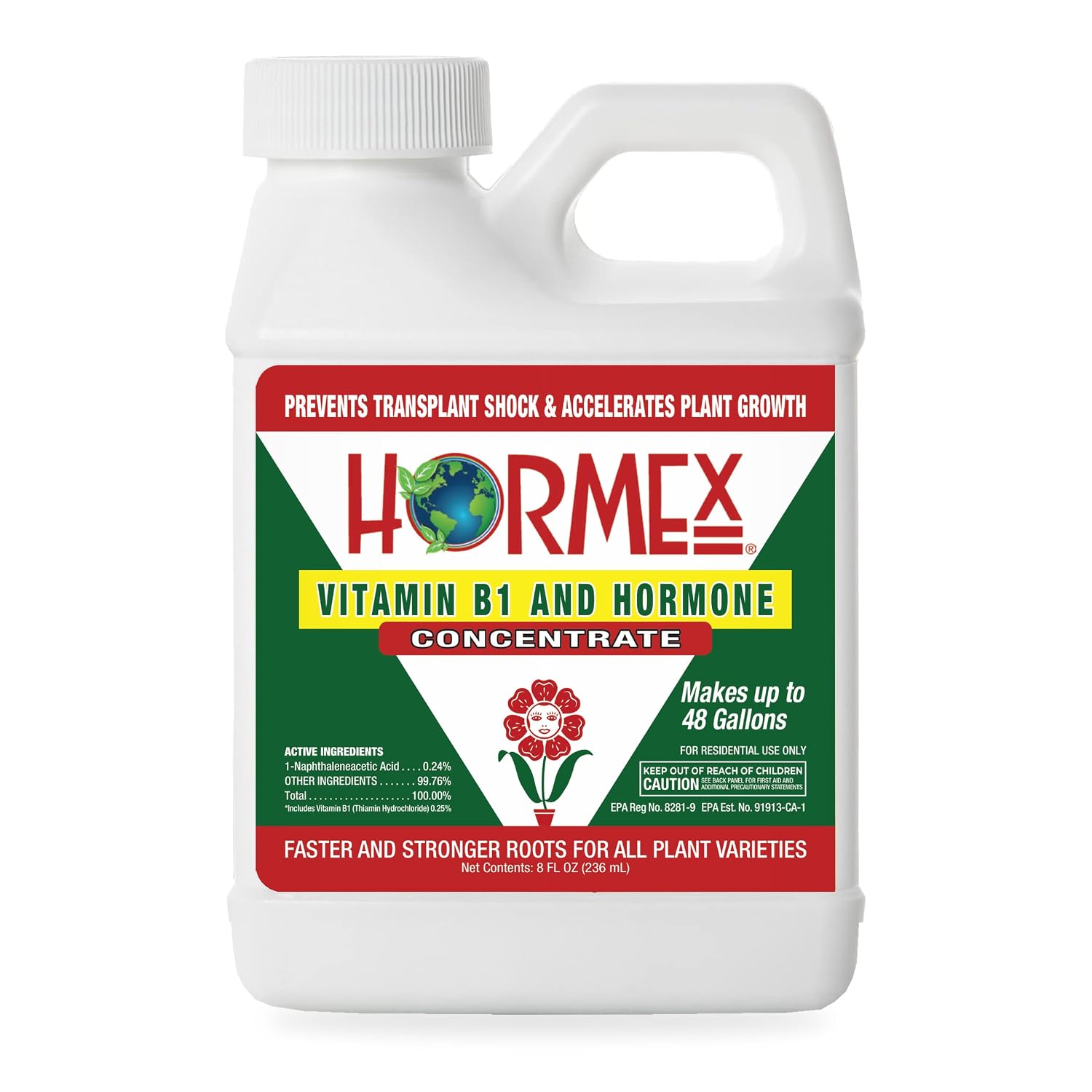
Hormex Liquid Rooting Hormone Concentrate with Vitamin B1, 8 oz
| Item Form | Liquid |
|---|---|
| Specific Uses For Product | Root Stimulator – Enhances Rooting and Growth for All Plant Varieties and Growing Mediums. |
| Application Method | Mix into watering routines or hydroponic systems |
| Coverage | Transplanting – Hydroponics – Indoor Plants – Cut Flowers – Bare Root Planting – Lawn & Ground Cover |
| Mixing Ratio | 1 teaspoon per quart of water |
Hormex Liquid Rooting Hormone is a versatile concentrate designed for water propagation, transplanting, repotting and hydroponic use. You dilute it by drops or teaspoons depending on the task: a few drops per 16 oz of water for rooting cuttings in jars, 1 to 2 teaspoons per gallon for transplants or hydroponic reservoirs, and a short full-strength dip for tender cuttings. The formula pairs a rooting hormone with vitamin B1 and micronutrients to encourage feeder root growth and help plants recover from transplant stress. Practical benefits include clear dosing guidance for common propagation scenarios, compatibility with soil and soilless media, and concentrated volume so a small bottle treats many propagations. Limitations to note are that effective results depend on following the mixing instructions and choosing the right strength for woodier versus softer cuttings, and it is not a single-step solution for very difficult woody cuttings where a specialized powder strength may be better.
Best for: Gardeners who prefer low-risk, proven solutions for propagating houseplant cuttings and protecting newly transplanted plants and who value clear, conservative dosing guidance.
Less Ideal for: Specialist propagators who routinely root very woody or hard-to-root species and expect a single product to handle all cutting types without matching different strength formulas.
- Specifically dosed for water propagation with clear drop-based instructions
- Includes vitamin B1 and micronutrients to support transplant recovery and root development
- Concentrated formula where a small bottle treats many propagations and transplants
- Works across media: soil, coco, rockwool and hydroponic systems
- Requires careful measuring for different uses which adds a small learning step
- May not replace specialist powder strengths for very woody or difficult cuttings
Verdict: A reliable, easy-to-measure liquid rooting concentrate that makes water propagation and post-transplant recovery straightforward for cautious gardeners.
Choosing the Right Rooting Hormone for Water Propagation: Key Factors to Consider
Concentration Control and Dosing
Rooting hormones come in varied strengths. For water propagation you need a product that lets you control concentration precisely because too strong a solution can burn soft tissues while too weak may not trigger root formation. Look for liquid concentrates with clear dilution ratios or dropper bottles that allow incremental dosing. If a product only lists broad instructions for soil use, that increases the risk of overdosing when adapting it to water.
Consistent dosing matters from cutting to cutting. When you are propagating several stems at once, a reproducible mixture helps you compare results and refine technique. Products that stain hands or glass can make it hard to judge how much product is actually in the water, so consider packaging and labeling as part of dosing control.
Solubility and Water Clarity
Good solubility prevents residues that cloud the propagation vessel and can shelter bacteria or algae. For water propagation you want a rooting aid that dissolves cleanly or will emulsify without leaving particles. Cloudy water reduces light penetration to the stem base and makes it difficult to monitor root development.
Some powdered or gel forms work when thoroughly dissolved, but they often require more effort to mix and may settle over time. Liquids formulated to blend with water usually give the clearest visual field and simpler maintenance for long rooting periods.
Application Accuracy and Ease of Use
How easily you can apply the hormone affects both success rate and the daily care workflow. Droppers, calibrated syringes, or spray applicators help you place the correct amount directly on the cutting or into the water. Bulk bottles without measuring tools increase the chance of inconsistent application.
Also consider whether the product can be pre-mixed and stored safely between batches. Some solutions lose potency or promote microbial growth if left standing, which makes single-use or small-batch mixing preferable for casual propagators.
Plant Compatibility and Hormone Type
Different plants respond to different auxin concentrations and carrier types. Soft-stemmed houseplants and many ornamentals often root readily with low-concentration auxin solutions, while woody shrubs and certain herbaceous perennials may need stronger stimulation. The hormone formulation-whether an indole-type auxin or another rooting stimulant-affects how you dilute and apply it.
Choosing a broadly compatible product is sensible if you propagate a wide range of species. If you work mainly with one plant type, pick a formulation known to suit that family and adjust concentration accordingly.
Contamination Risk and Preservation
Standing water with cuttings is prone to bacterial and fungal growth, which can rot stems and abort rooting. Products that contain preservatives or that encourage cleaner water conditions reduce maintenance demands. Conversely, organic or unpreserved formulas may look attractive but could increase the frequency of water changes and cleaning.
Also factor in bottle hygiene. Products packaged with droppers or sealed caps reduce the chance of introducing contaminants from repeated handling. For prolonged rooting periods, routines that include fresh water changes and occasional surface cleaning of containers are crucial when using any rooting aid.
Preparing Cuttings for Water Propagation
Start with healthy, non-flowering stems and make a clean cut just below a node. Remove lower leaves so only the top foliage remains above the water line to reduce rot and improve air circulation around the cutting base.
- Use a sharp, sterile knife or shears to minimize tissue crushing.
- Make cuts at a 45-degree angle to increase the surface area for rooting.
- Trim any thick or woody bark if you are working with semi-woody material to expose fresh tissue.
Mixing and Maintaining Propagation Solutions
Follow dilution guidance precisely if the product provides a ratio for water use. When no explicit water-propagation ratio exists, start with a very dilute solution and increase concentration gradually across batches. Change the water every 3 to 7 days depending on clarity and any signs of cloudiness.
- Prepare only small batches to avoid losing potency or promoting microbial growth.
- Rinse containers when changing water to remove biofilm.
- Keep propagation jars in bright, indirect light to encourage root formation without stressing the cutting.
How to Apply Hormone in Water Versus Direct Application
There are two common approaches: pre-dipping cuttings into a diluted hormone solution before placing them in plain water, or adding a measured amount directly to the propagation container. Pre-dipping gives precise, localized exposure and minimizes product introduced into the vessel. Adding hormone to the water treats multiple cuttings simultaneously but requires careful dosing and water monitoring.
- Pre-dip for 1 to 5 seconds for soft-stemmed plants, longer for tougher stems.
- If dosing the water, record exact measurements for repeatability.
- Avoid combining different stimulants at once; simplicity reduces unexpected interactions.
Troubleshooting Common Water Propagation Issues
Yellowing or limp cuttings often indicate water quality problems, overuse of hormone, or insufficient light. If roots fail to appear, try a gentler concentration or switch application method from water dosing to quick pre-dips. Rotting bases usually signal bacterial growth; discard affected cuttings, sanitize containers, and start a fresh batch with a lower concentration.
- Cloudy water: change solution and consider a product with better solubility.
- Slow rooting: increase light slightly and ensure fresh cuts at the node.
- Algae buildup: move containers out of direct sun and change water more frequently.
Container Choice and Visibility
Clear glass jars, narrow-neck vases, and small bottles let you monitor root progress without disturbing the cutting. The shape of the container also affects stem positioning. Narrow openings hold stems upright, reducing leaf contact with water, while wide mouths may let leaves touch the surface and rot.
- Use opaque coverings if light exposure encourages algae but keep the cutting base visible.
- Support longer stems with plant stakes or tape to prevent wobbling.
- Label containers with plant type and mix concentration to track what works.
When to Move Cuttings to Soil or Soilless Mix
Transplant cuttings once roots reach about 1 to 2 inches and show healthy white tips. Moving too early risks transplant shock, while waiting too long can create root-bound conditions or reduce root hair vitality. Acclimate roots by briefly exposing them to air and then transplanting into a loose, well-draining medium.
- Water-rooted plants adapt quickly to misting before potting to reduce desiccation.
- Plant into a moist but not saturated medium and keep humidity elevated for the first week.
- Avoid deep burying of the stem base; place roots gently and firm the medium lightly.
How We Chose the Best Rooting Hormone for Water Propagation
We selected items that are commonly used or formulated for encouraging root formation in stem cuttings placed in water. Our filters favored products with clear dosing guidance and stable formulations that disperse well in water rather than leaving residues that cloud propagation jars. We excluded thick gels or pastes intended only for soil insertion unless they had documented effectiveness when diluted for water use. Evaluation criteria focused on concentration control, solubility and water clarity, application accuracy, plant compatibility across common houseplants and ornamentals, and safety for frequent indoor use. We prioritized products with straightforward dilution instructions or dropper dosing, evidence of consistent rooting responses in multiple plant families, and low risk of bacterial or fungal overgrowth in standing water. Products lacking clear instructions for water propagation or with known residue issues were removed from consideration.
FAQ
Can I use any rooting hormone for water propagation?
Often you can adapt many liquid rooting hormones to water propagation, but not all formulations dissolve cleanly. Choose products with clear dilution instructions for water or those designed to blend with water to reduce residue and contamination risk.
How long should I leave cuttings in water with hormone?
Typically roots appear within 1 to 6 weeks depending on species and conditions. Check periodically for signs of rot or cloudy water and replace the solution every few days to a week based on cleanliness.
Will rooting hormone speed up rooting for all plants?
It depends on species. Many soft-stem houseplants root readily without hormone, while some woody or slow-rooting types benefit noticeably. Hormone improves consistency more than guaranteeing much faster roots for already easy-to-root plants.
Is it better to pre-dip cuttings or add hormone to the water?
Pre-dipping offers more controlled, localized exposure and reduces chemical load in the vessel. Adding hormone to the water treats multiple cuttings at once but requires precise measurement and more frequent water changes.
How do I prevent bacterial or fungal growth in propagation water?
Use clean containers, change water regularly, avoid overcrowding, and start with cuttings that are free of damaged tissue. Some products include preservatives or recommend brief soaking in a diluted solution to reduce contamination risk.
Final Verdict
Prioritize solubility, dosing control, and contamination risk when choosing a rooting hormone for water propagation. For casual propagators, easy-to-measure liquids that dissolve clearly in water offer the most predictable results and lowest maintenance. More experienced gardeners might favor adjustable concentrates or pre-dip protocols tuned to specific plant families. Balance the tradeoffs between simplicity and control: opt for products and routines that match how often you propagate and the variety of plants you work with. With clear dosing, clean containers, and attentive water changes, you can confidently root a wide range of cuttings in water.
