

Note: This article contains affiliate links. If you click on these links and make a purchase, I may earn a small commission at no extra cost to you. This helps support my research and content. Read my full affiliate disclosure here.
Picking the right soaker hose for vegetable gardens changes how reliably your beds get water and how much you waste each season. The right hose delivers slow, even moisture directly to roots, reduces surface evaporation, and saves time compared with hand-watering. In this guide we shortlisted the best options suited specifically for vegetable beds, patios with container vegetables, and raised-planter layouts. We evaluated products for flow control, construction durability, ease of layout and maintenance, and how well they integrate with common garden irrigation setups. Below you will find the top picks and clear notes on which features matter for different garden sizes and soil types.
Top Picks at a Glance
| Best Overall The best all-around choice for most situations | Raindrip 1/4-Inch x 50-Foot Soaker Hose Tubing |  |
| Best Quality Built to a higher standard if you want something more solid | Water Right 700 Series Polyurethane Soaker Hose, 25 ft (1/2" ID) |  |
| Best Value The sweet spot between price and what you get | Hourleey Flat Soaker Hose 100 ft – Linkable Dual-Layer Drip Hose |  |
| Best Budget The cheapest option that still gets the job done reliably | Rocky Mountain Goods 15-Foot Flat Soaker Hose |  |
| Highest Rated A top-rated pick with lots of positive feedback | New England Garden Tools 25 ft Flat Soaker Hose for Drip Irrigation |  |
| Most Popular A crowd favorite that many people choose with confidence | Gilmour 50' Flat Weeper Soaker Hose |  |
| Best Seller A high-volume bestseller chosen again and again | MIXC 100ft Thickened Soaker Hose with Copper Connector |  |
Raindrip 1/4-Inch x 50-Foot Soaker Hose Tubing

| Material Type | Recycled rubber |
|---|---|
| Nominal Wall Thickness | 0.080 inches |
| Outside Diameter | 0.25 inches |
| Unit Count | 50 Feet |
This Raindrip 1/4-inch by 50-foot soaker hose is a simple, flexible option for delivering low-pressure, even moisture to vegetable beds and small planting areas. The recycled rubber tubing is porous and non-pressure-compensating so water gently seeps out along the whole length, which helps keep root zones uniformly moist on flat runs and curved layouts. It connects to common supply lines using 1/4-inch micro fittings or barbed connectors and can be cut to fit specific bed lengths. Practical benefits include easy handling for short runs, compatibility with standard drip- irrigation parts, and the ability to leave it buried under mulch or soil in cold climates without winterizing. Limitations are its small 1/4-inch diameter, which makes it best for short to moderate runs rather than high-flow or long-distance systems, and the non-pressure-compensating construction means output can vary with supply pressure and elevation changes. Expect occasional checks for pinhole leaks or damage over seasons, but for straightforward vegetable garden watering this hose is a low-effort, water-efficient choice.
Best for: Gardeners who want a low-maintenance, water-efficient way to keep vegetable beds and small borders evenly moist without building a complex irrigation system.
Less Ideal for: People planning long-distance irrigation, heavy clay soils that block pores, or systems that require precise pressure-compensated emitters should consider other solutions.
- Porous recycled rubber construction provides gentle, continuous seepage for even root-zone watering
- Flexible tubing that can be cut to fit curved beds and short runs
- Compatible with common 1/4-inch micro fittings and barbed connectors for easy integration into drip systems
- Can be left in place under mulch or soil in cold climates without mandatory winterizing
- Non-pressure-compensating design can produce uneven output if supply pressure varies or on sloped terrain
- Small 1/4-inch diameter limits flow for long runs or high-demand installations
Verdict: A simple, flexible 50-foot soaker hose that delivers gentle, whole-line watering ideal for vegetable beds and small garden runs.
Water Right 700 Series Polyurethane Soaker Hose, 25 ft (1/2" ID)

| Material Type | Polyurethane |
|---|---|
| Unit Count | 25 Feet |
| Inner Diameter | 1/2" |
| Maximum Pressure | 150 psi |
| Included Components | End cap, fittings, strain reliefs |
The Water Right 700 Series soaker hose is built for steady, root-level irrigation in vegetable beds and compact garden plots. Install it along rows or weave it through raised beds and connect to a faucet or timer for long, low-pressure runs that soak soil rather than spray foliage. Its 1/2" inner diameter and porous wall produce a consistent weep from end to end, which reduces runoff and promotes deep root growth for vegetables. Polyurethane construction makes the hose light to handle, resistant to kinks and UV damage, and safe for edible gardens because it is free of lead, phthalates, and BPA. The hose comes with end fittings and an end cap so you can section beds and control flow, and the manufacturer recommends a filter if you have hard water to avoid mineral clogging. The main limitations are that a 25 ft length suits small to medium beds only and soaker hoses require careful placement and occasional unclogging compared with emitters or drip tubing for very long runs or precision single-plant feeding.
Best for: Gardeners who prioritize reliable, plant-safe irrigation and want a simple low-pressure solution for small to medium vegetable beds that promotes deep root watering.
Less Ideal for: Large-scale vegetable plots or gardeners who need precise per-plant emitters or very long continuous runs without connectors should consider alternative drip systems.
- Consistent end-to-end seep for even root-zone watering
- Made from drinking-water-safe polyurethane with no lead, phthalates, or BPA
- Resists kinking, cracking, and UV damage for season-to-season durability
- Includes end cap, fittings, and strain reliefs for straightforward installation
- 25-foot length may be too short for larger gardens without joining multiple sections
- Porous wall can clog with hard water minerals if an inline filter is not used
Verdict: Choose this hose if you want a durable, drinking-water-safe soaker hose that delivers consistent, root-focused watering for small to medium vegetable beds.
Hourleey Flat Soaker Hose 100 ft – Linkable Dual-Layer Drip Hose

| Material Type | Nylon |
|---|---|
| Item Length | 100 feet |
| Maximum Pressure | 150 psi |
| Included Components | Soaker Hose, Stake |
The Hourleey Flat Soaker Hose is a 100 foot, linkable drip hose intended for garden beds and landscaped rows where steady, low-volume watering is needed. It delivers water through evenly spaced holes along a dual-layer PVC and nylon construction so moisture soaks into the root zone instead of spraying the surface. Typical use is laying the hose along beds, staking it in place, connecting multiple lengths end-to-end, and running at the recommended working pressure for even output. Notable features include a kink-resistant flat profile that tucks under mulch, a fabric cover to resist clogging, and stakes for straightforward placement. Practical benefits are clear water savings when compared with open hoses and less hand-watering for seedlings and vegetables. Important limitations are that it is meant for cold water only and performs best within the suggested 60–80 PSI range; pressure outside that range can affect drip consistency. Also the flat profile may be harder to repair than standard round soaker hoses if punctured.
Best for: Gardeners who prioritize efficient, low-maintenance irrigation for beds or vegetable rows and want a product that can be extended and tucked under mulch for consistent root watering.
Less Ideal for: People who need a hose for frequent high-pressure or hot-water tasks or who prefer a round, easily repairable soaker hose for heavy-duty rough use.
- Delivers water directly to roots for efficient irrigation and reduced evaporation
- Linkable end-to-end design makes it easy to extend coverage across beds
- Dual-layer PVC and nylon construction offers kink resistance and durability
- Fabric-covered design helps reduce clogging and allows under-mulch placement
- Requires appropriate water pressure to maintain even drip performance
- Not rated for use with hot water
Verdict: Choose this hose if you want a water-saving, linkable soaker system that delivers steady root-zone irrigation across long garden beds.
Rocky Mountain Goods 15-Foot Flat Soaker Hose

| Item Length | 25 feet |
|---|---|
| Material Type | Polyvinyl Chloride (PVC), Vinyl |
| Maximum Pressure | 30 psi |
This Rocky Mountain Goods 15-foot flat soaker hose is built for simple, low-tech irrigation of flower beds and small vegetable gardens. The hose uses a perforated PVC liner covered in an extra-strength fabric layer to resist splitting and provide steady seepage along its length. It is intended to be run along planting rows or buried lightly under mulch, connected to a low-pressure supply and adjusted until water drips slowly and evenly; the manufacturer recommends about 25 to 30 psi for best performance. The main practical benefits are water savings by delivering moisture directly to roots and an easy, hands-off watering routine once properly set up. Because it is flat and flexible, it conforms to beds and stores compactly when not in use. Limitations are its short 15-foot length, which means multiple sections or connectors are needed for larger plots, and the 30 psi maximum rating that requires moderate household pressure and careful adjustment to avoid overwatering.
Best for: Gardeners on a tight budget who need a straightforward, low-maintenance way to water a small vegetable patch or a few planting rows and prefer conserving water over precision drip systems.
Less Ideal for: Those managing large raised beds, long garden rows, or who need a configurable, low-pressure drip system with emitters for individual plants.
- Double-layer PVC with fabric coating resists splitting compared with basic vinyl soaker hoses
- Delivers consistent slow seepage that reduces evaporation and targets roots
- Flat, flexible design lies close to soil and stores compactly
- Made from materials marketed as environmentally friendly for use in vegetable gardens
- Only 15 feet long, so it may not cover larger beds without additional hoses or connectors
- Recommended operating range around 25–30 psi limits use with very low-pressure drip systems
Verdict: A no-frills, heavy-duty soaker hose that saves water and handles small vegetable garden beds affordably.
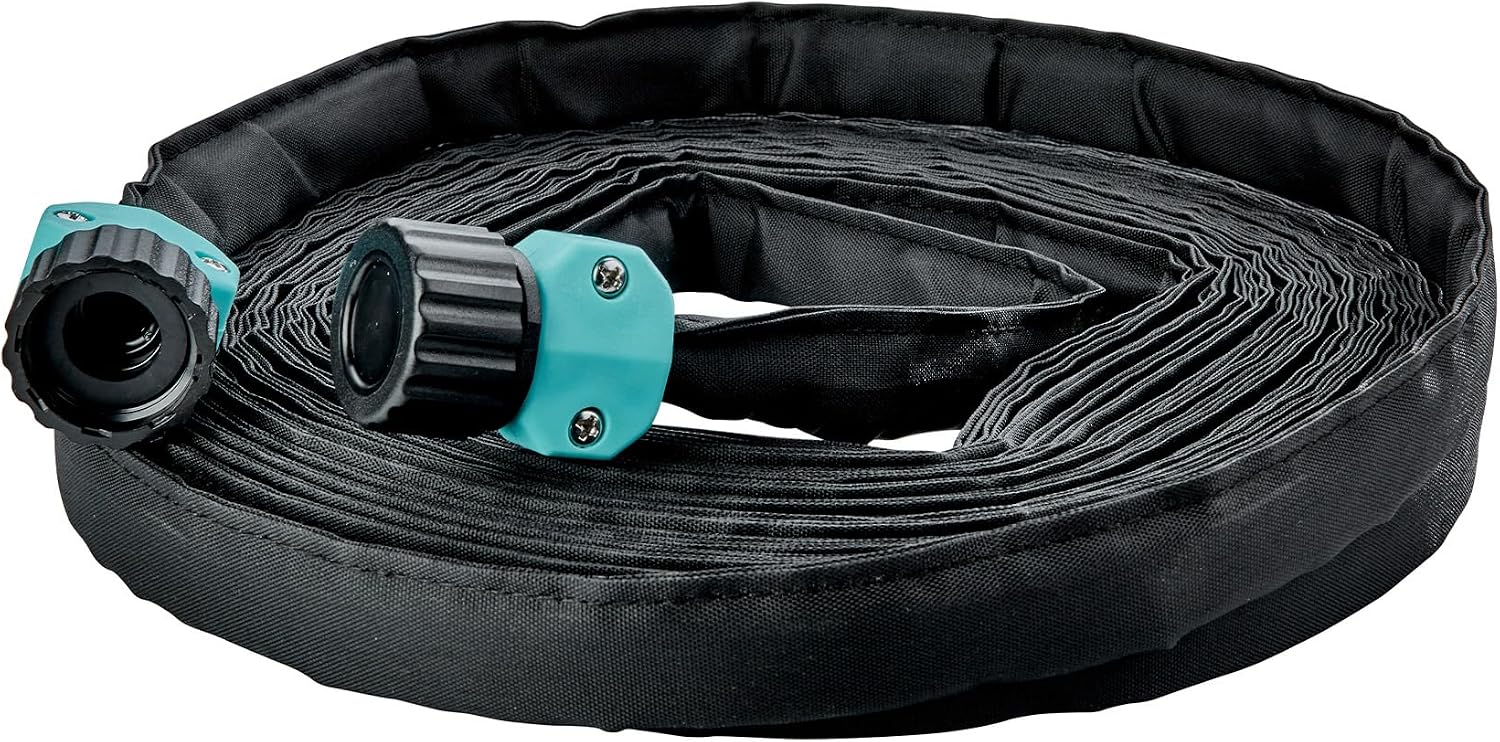
New England Garden Tools 25 ft Flat Soaker Hose for Drip Irrigation
| Item Length | 25 feet |
|---|---|
| Material Type | Synthetic Polymer |
| Maximum Pressure | 60 psi |
| Unit Count | 1 Count |
This New England Garden Tools 25 ft flat soaker hose is built for steady, low-pressure watering of vegetable beds and focused root-zone irrigation. The hose uses a double-layer construction with a nylon fabric jacket that resists UV exposure and helps prevent abrasion when laid on soil or mulch. It connects with anti-corrosive male and female couplings so you can link additional 25 ft sections or attach a timer for automated watering. Rated to 60 psi and delivering a measured low flow, it supplies consistent seepage along its length to keep root zones moist without surface runoff. Practical benefits include lightweight handling for easy placement and storage and the ability to shape the hose to fit irregular bed layouts. Important limitations are that it is non-expandable and depends on proper pressure and placement for even distribution, so very long runs or heavily compacted soil may need additional sections or adjustments to avoid dry spots. For vegetable gardeners looking for a durable, low-maintenance drip option this soaker hose provides reliable, targeted watering.
Best for: Vegetable gardeners who prioritize a dependable, low-maintenance irrigation method for raised beds and small plots and want a hose that resists UV damage and links easily to timers or additional sections.
Less Ideal for: People who need a fully automatic drip system with adjustable emitters per plant or who plan to water very large beds from a single long run without breaks.
- Double-layer construction with nylon fabric jacket for UV and abrasion resistance
- Anti-corrosive male and female couplings allow linking multiple sections
- Lightweight and flexible for easy placement and winter storage
- Delivers low steady flow for targeted root-zone watering and water conservation
- Non-expandable flat design can produce uneven seepage over very long runs without additional sections
- Flow distribution depends on correct pressure and placement so setup may need adjustments
Verdict: A rugged, linkable 25 ft soaker hose built for steady, water-efficient irrigation of vegetable beds.
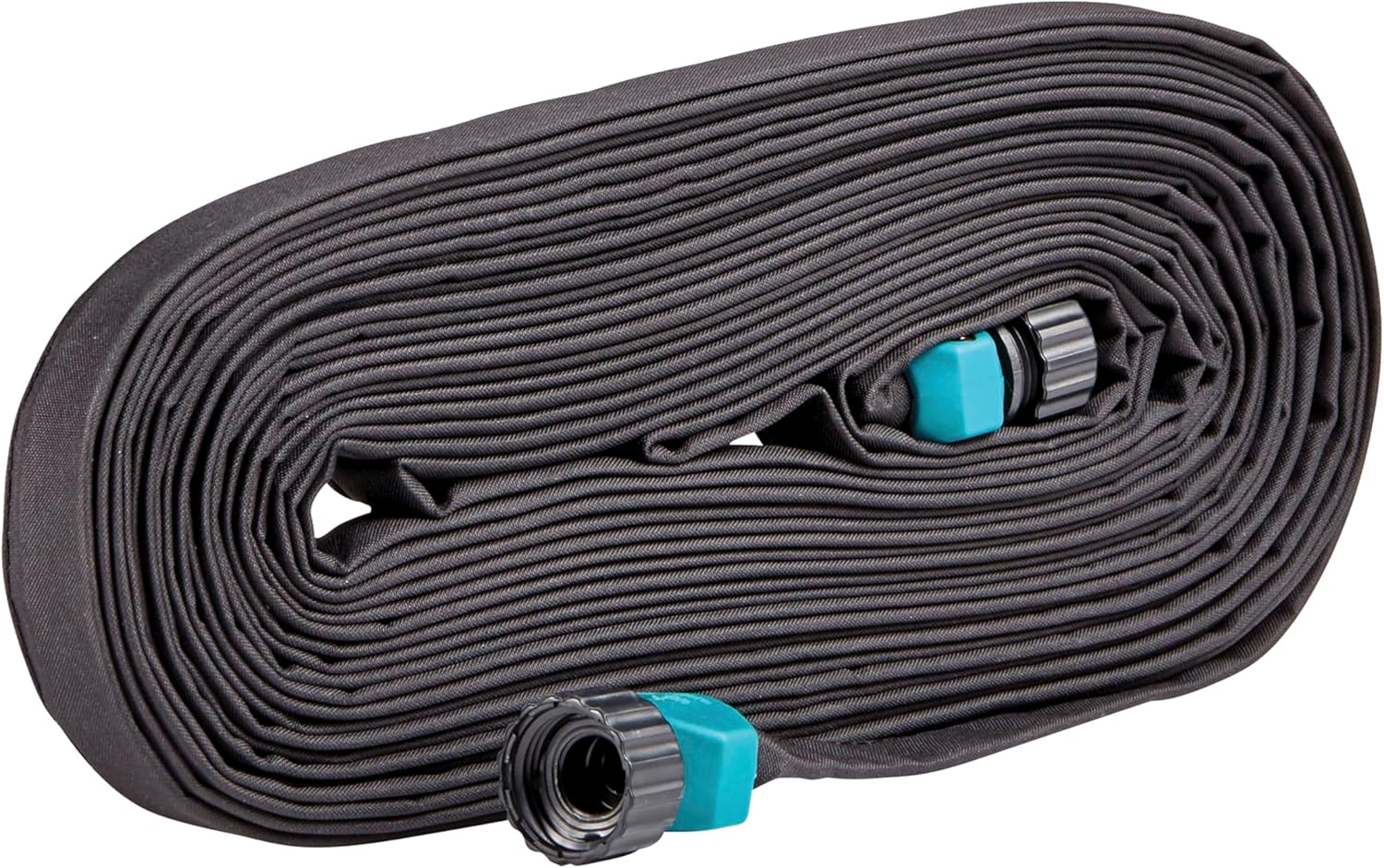
Gilmour 50' Flat Weeper Soaker Hose
| Material Type | Vinyl |
|---|---|
| Item Length | 50 feet |
| Nominal Wall Thickness | 0.0625 inches |
| Outside Diameter | 0.63 inches |
The Gilmour 50' Flat Weeper Soaker Hose is a lightweight, vinyl soaker hose that waters plants by seeping moisture through a fabric jacket directly into the soil. It is typically laid along planting rows or buried shallowly under mulch so water reaches roots without wetting foliage or pathways. Notable features include a clog-resistant fabric cover and a flat profile that makes rolling and winter storage simple. Being made from 100% recycled vinyl and described as UV resistant, it is intended for repeated seasonal use and can be linked to additional hoses to create a longer DIY drip system. Practical benefits are water savings from targeted delivery and easier placement in narrow beds where sprinklers would waste water. Limitations to expect are the usual for vinyl soaker hoses: it is not intended for high-pressure use and can be punctured by sharp tools or heavy foot traffic, and performance depends on even water pressure along the length so very long runs may deliver uneven soaking without splitters or a faucet regulator.
Best for: Gardeners who prioritize reliable, water-efficient irrigation for beds and vegetable rows and who prefer a simple, low-tech solution that is easy to install and store.
Less Ideal for: People who need high-pressure irrigation, frequent heavy-duty use, or a permanent buried drip system should consider reinforced or commercial-grade drip tubing instead.
- Delivers water directly to roots through a fabric jacket for efficient, low-waste watering
- Clog-resistant fabric cover helps maintain consistent seepage over time
- Flat, flexible design rolls up for compact, easy seasonal storage
- Made from recycled vinyl and marketed as UV resistant for seasonal durability
- Not designed for high-pressure applications and can give uneven watering on very long runs
- Vinyl construction can be damaged by sharp objects or heavy foot traffic
Verdict: A straightforward, water-saving soaker hose that makes efficient root watering and seasonal storage easy for home garden beds.
MIXC 100ft Thickened Soaker Hose with Copper Connector

| Unit Count | 100 Feet |
|---|---|
| Nominal Wall Thickness | 1 millimeters |
| Material Type | Brass, Polyvinyl Chloride (PVC) |
| Maximum Pressure | 50 psi |
This MIXC soaker hose is built for steady, low-flow irrigation of vegetable beds and other planted areas. It uses a doubled wall thickness (1 mm) compared with many economy hoses, which reduces punctures and wear when dragged across rough ground. The hose includes brass/copper-style metal connectors and aluminum locking rings that hold fittings tightly and help prevent leak-prone plastic joints. A longer swivel handle on the connector makes attaching and turning the hose easier in tight spaces. In practice you lay it through rows or around raised beds and run low pressure water into it; the built-in seepage holes wet soil slowly and evenly without runoff. Important limitations to plan for are water-pressure sensitivity and recommended run length: the manufacturer advises keeping pressure below 50 psi and testing in 50 ft sections because flow falls off toward the far end. The hose is aimed at routine garden irrigation rather than high-pressure use or very long continuous runs, and you should use the included washers and a pressure regulator for the most reliable performance.
Best for: Gardeners who prefer a durable, low-maintenance soaker hose for regular vegetable bed irrigation and value reliability over lowest cost.
Less Ideal for: People who need to irrigate very large areas from a single long continuous hose run or who require frequent high-pressure flushing for emitters.
- Thicker 1 mm wall resists punctures and abrasion compared with typical 0.5 mm soaker hoses
- Metal (brass/copper) connector and aluminum locking rings reduce connection leaks and breakage
- Long swivel-handle connector eases attachment and prevents hose twisting during use
- Designed for slow, even seepage that minimizes runoff and conserves water
- Recommended maximum pressure and run length limit suitability for long continuous runs without additional supply/pressure management
- Flow can decrease toward the far end of a long lay so multiple sections or splitters may be needed for larger gardens
Verdict: Choose this hose if you want a tougher, leak-resistant soaker hose built for dependable vegetable garden irrigation.
Choosing the Right Soaker Hose for Vegetable Gardens: Key Factors to Consider
Flow Consistency and Emit Rate
How evenly a soaker hose releases water and the rate at which it seeps are essential for vegetable gardens. A steady low-rate flow wets the root zone without pooling on the surface, reducing disease risk and encouraging deeper root growth.
Emit rate also affects how long you run the hose and whether you can use a timer. If the flow is too high you risk soggy soil and root rot; too low and you need long run times that are impractical for regular watering. Look for clear specifications on gallons per hour per foot or similar metrics to match your soil drainage and plant needs.
Material Durability and Puncture Resistance
Vegetable beds get a lot of foot traffic, tool use, and seasonal rearranging. Hose material must resist pinholes, abrasion from mulch and soil, and UV damage from sun exposure.
Thicker walls and reinforced weaves tend to last longer, especially when run under mulch or across compacted paths. Consider hoses that tolerate being stepped on and that retain flexibility in cooler months so they do not crack during handling and storage.
Emitter Spacing and Coverage Pattern
Emitter spacing determines how evenly moisture distributes along a row or under a planting. Tight spacing works well for closely planted beds and small plants, while wider spacing is fine for larger-spaced crops or single-row plantings.
Also consider whether the hose has directional seepage or omnidirectional distribution. Directional seepage is useful along single rows; all-around seepage can serve clustered plantings and container groupings without intricate layout changes.
Compatibility with Garden Irrigation Gear
Your soaker hose should work with common connectors, timers, and pressure regulators. Hose diameter and end fittings dictate whether you need adapters, and some hoses are easier to connect to a standard spigot or quick-connect system.
If you plan to automate watering, ensure the hose functions well at typical household water pressures. Some hoses require a pressure regulator or flow restrictor to prevent over-seeping, so check compatibility with your existing irrigation components.
Ease of Installation and Layout
Practical installation affects whether you actually use a soaker hose effectively. Flexible hoses that are easy to uncoil and pin down make arranging rows and weaving between plants straightforward.
Consider how the hose behaves when you need to move it for succession planting or harvest. Hoses that kink, twist, or resist laying flat will create dry spots and frustrate maintenance. Look for features like removable stakes, prepunched holes for pegs, or hoses that conform to bed contours with minimal fuss.
Maintenance, Cleaning, and Seasonal Storage
Vegetable gardens require changing layouts and seasonal care. You will need to flush or clean the hose occasionally to prevent clogging from mineral buildup or organic debris. Hoses that are easy to drain and dry reduce winter freeze damage risk.
Storage considerations matter too. Hoses that coil neatly and remain flexible after months of use are simpler to store in off-season. Also think about how easy it is to locate and repair a leak; models that allow spot repairs or patching save replacement cost and time.
Best Layouts for Vegetable Beds
Match hose layout to your planting scheme. For single-row plantings run a single line along the root zone, keeping the hose near the crown but not touching stems to limit disease risk. For wider beds consider a serpentine or parallel-run layout so each plant gets water near the roots.
Raised beds and containers benefit from shorter runs and closer emitter spacing to compensate for faster drainage and smaller soil volumes.
- Single row: run along the base of plants with 2 to 4 inches offset from stems
- Dense beds: use serpentine runs with closer emitter spacing
- Containers: use measured loops or individual short lengths for each pot
Integrating Soaker Hoses with Timers and Pressure Regulators
Soaker hoses typically perform best at low pressure. If you automate with a timer, add a pressure regulator to avoid over-seepage and uneven distribution. Many household spigots deliver higher pressure than a hose needs, so regulation is a simple step that improves consistency.
Set shorter, more frequent cycles in hot weather to avoid runoff and longer cycles in cool weather. Test run times with a soil probe or finger test to confirm moisture reaches the root zone without saturation.
- Install a pressure regulator if your water pressure exceeds recommended levels
- Use short cycles during heat waves to keep the root zone moist
- Flush the line before connecting a timer to clear debris
Handling Mulch, Soil Types, and Drainage
Mulch reduces evaporation and helps distribute moisture from a soaker hose. Lay the hose on top of the soil and cover loosely with 1 to 2 inches of organic mulch to protect the hose from UV and to retain moisture. Avoid burying hoses too deeply because regular inspection and repair are harder when buried.
Soil texture alters run time. Sandy soils drain quickly and need more frequent watering, while clay soils hold moisture longer and require shorter cycles. Adjust emitter spacing and run durations according to your soil's water-holding capacity.
- Sandy soil: shorter runs, more frequent cycles
- Loam: moderate run times and spacing
- Clay: shorter, less frequent cycles to avoid waterlogging
Repairing and Extending Soaker Hose Runs
Small punctures and wear points are common in garden hoses. Keep spare connectors, repair couplers, and patch kits on hand. Many hoses accept barbed couplers that let you splice in a short replacement section without replacing the entire run.
When extending runs, match internal diameter and ensure connectors are snug to avoid pressure loss. Test the extended run before tucking it under mulch to find and fix drips or weak seepage zones.
- Carry a basic repair kit with couplers and clamps
- Match hose diameter when splicing to avoid uneven flow
- Locate and test repairs before covering with mulch
Storing and Preparing Hoses for Winter
Drain hoses completely before cold weather to prevent freeze damage. Coil loosely and store in a sheltered location out of direct sun when not in use. Hoses left pressurized or half-filled risk cracking when temperatures drop.
If you plan to run the hose season-round in mild climates, inspect for brittleness and replace sections that show UV damage. Periodic cleaning with a vinegar solution can reduce mineral buildup in areas with hard water.
- Flush and drain before storage
- Store coiled in shade or a cool shed
- Inspect for stiffness or cracks in spring
How We Chose the Best Soaker Hose for Vegetable Gardens
We focused on criteria that matter in everyday vegetable-garden use. Primary evaluation metrics included flow consistency and emit rate, construction material and puncture resistance, ease of installation and layout in beds, compatibility with common connectors and timers, and long-term maintenance needs like cleaning and winter storage. We tested specification sheets, user guidance, and common installation scenarios to see which features translated into better moisture delivery for roots. Products were excluded if they lacked clear emitter spacing or flow data, used fragile or unproven materials, or were primarily intended only for ornamental beds rather than vegetable beds and containers. We also filtered out options that required specialty fittings not widely available to home gardeners. The final list prioritizes hoses that reliably deliver low-pressure seepage, hold up to repeated handling, and are easy to place around rows, clumps, and containers.
FAQ
How far can a soaker hose run and still provide even watering?
Run length depends on hose diameter, emitter design, and household water pressure. Shorter runs under 100 feet usually provide the most even coverage. For longer distances split runs or use parallel lines to maintain consistent seepage.
Can I bury a soaker hose under mulch or should it stay on top of the soil?
Laying the hose on top of the soil and covering it loosely with mulch is usually best. This protects the hose from sun and improves moisture retention while keeping the line accessible for inspection and repair.
Will a soaker hose work in containers and raised beds?
Yes. Containers and raised beds often need shorter runs and closer emitter spacing because their soil volume is smaller and drains faster. Use short loops or individual segments to match pot groupings.
How do I winterize a soaker hose?
Disconnect and thoroughly drain the hose, coil it loosely, and store it in a sheltered spot to avoid freezing and UV exposure. If you must leave lines in place, ensure they are completely emptied of water before cold snaps.
How often should I clean or flush a soaker hose?
Flush the line at the start of the season and periodically during heavy use, especially if you have hard water or visible debris. A quick flush after disconnecting from the spigot prevents mineral buildup and keeps emitters flowing.
Final Verdict
Choose a soaker hose based on how your vegetable beds are arranged, your soil type, and whether you plan to automate watering. Prioritize consistent low-rate seepage, durable materials that tolerate garden traffic, and compatibility with your connectors and timer. Accept tradeoffs between flexibility and durability when you pick a hose. A well-matched hose will simplify daily care, promote deeper roots, and reduce water waste compared with surface watering methods. Focus on emitter pattern and ease of maintenance to decide confidently.
