

Note: This article contains affiliate links. If you click on these links and make a purchase, I may earn a small commission at no extra cost to you. This helps support my research and content. Read my full affiliate disclosure here.
If you grow edibles, choosing the right vegetable insect killer matters more than picking the most powerful product. You need something that controls chewing and sap-sucking pests without harming beneficial insects, contaminating produce, or stressing plants. This guide shortlists seven top options suitable for vegetable gardens of various sizes and growing methods. We evaluated candidates for how reliably they suppress common pests, their safety for use on food crops, and how easy they are to apply. Read on to see which types of insect control fit your garden style and maintenance preferences before the product list below.
Top Picks at a Glance
| Best Overall The best all-around choice for most situations | BioAdvanced Vegetable & Garden Insect Spray Concentrate, 32 fl oz |  |
| Best Quality Built to a higher standard if you want something more solid | BioAdvanced Fruit, Citrus & Vegetable Insect Control Concentrate, 32 oz |  |
| Best Value The sweet spot between price and what you get | Garden Safe Insecticidal Soap Ready-to-Use Spray, 32 oz |  |
| Best Budget The cheapest option that still gets the job done reliably | Bonide Eight Garden & Home Ready-to-Use Insect Control, 32 oz |  |
| Highest Rated A top-rated pick with lots of positive feedback | Sevin Insect Killer Concentrate II, 32 oz |  |
| Most Popular A crowd favorite that many people choose with confidence | Bonide Captain Jack's Ready-to-Use Neem Oil Spray, 32 oz |  |
| Best Seller A high-volume bestseller chosen again and again | Spectracide Triazicide Insect Killer for Lawns & Landscapes, 32 oz |  |
BioAdvanced Vegetable & Garden Insect Spray Concentrate, 32 fl oz
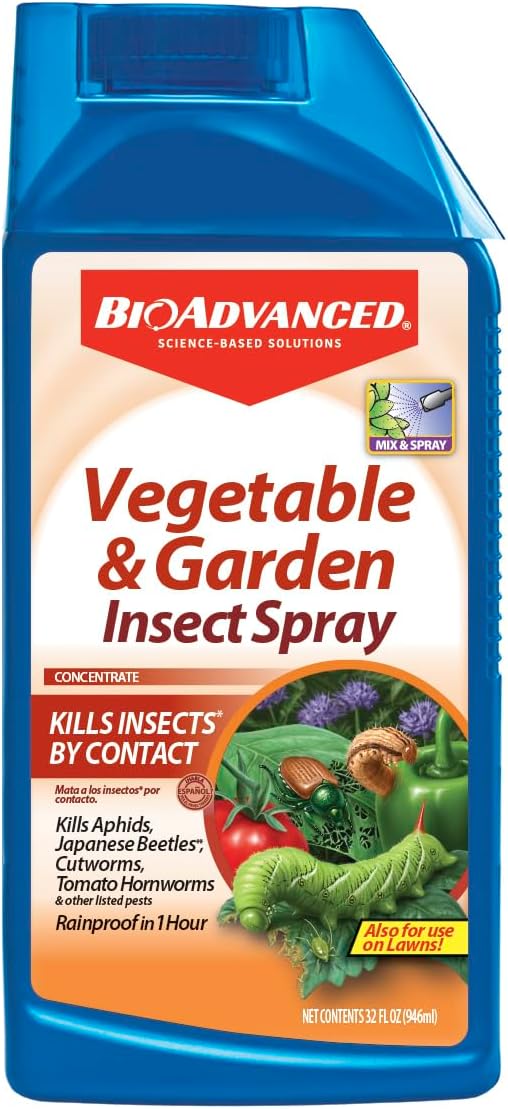
| Item Form | Spray |
|---|---|
| Target Species | Insects |
| Liquid Volume | 32 fluid ounces |
| Active Ingredients | Cyfluthrin |
This BioAdvanced concentrate is designed for gardeners who need a versatile, broad-spectrum insect control for outdoor plants. The bottle mixes into a ready spray that kills common pests on contact, including aphids, caterpillars, whiteflies, and tomato hornworms, and the formula becomes rainproof in about an hour so treatments hold up to light rain. Because it is a concentrate, one 32-ounce bottle makes up to 64 gallons of spray, which is convenient for treating larger beds or multiple plantings without frequent repurchasing. Typical use is diluting to label rates, filling a garden sprayer, and coating leaves until wet but not dripping. The main limitation is that it uses a synthetic pyrethroid active ingredient so it will also affect nontarget insects including beneficials if oversprayed, and label precautions must be followed for edible crops and pollinators. It is not a selective or organic option, but for balanced gardeners wanting an effective, easy-to-apply contact insecticide for outdoor plants, it provides strong, reliable control.
Best for: Gardeners who want a single, effective contact insecticide to protect vegetables, fruits, and ornamentals across a typical backyard garden and value ease of use and wide pest coverage.
Less Ideal for: Growers who prioritize organic methods, pollinator-safe selective controls, or those managing very small container plantings where concentrate dilution is inconvenient.
- Concentrate mixes to make up to 64 gallons, suitable for treating large areas
- Kills a wide range of listed garden pests on contact, including common vegetable pests
- Rainproof protection within one hour helps treatments withstand light rain
- Can be applied with most common garden sprayers for straightforward use
- Contains a synthetic pyrethroid (cyfluthrin) that can harm beneficial insects if not used carefully
- Not an organic or selective option for gardeners seeking softer pest control
Verdict: A productive, rainproof concentrate that delivers broad, contact insect control for gardeners who need reliable protection across vegetable and outdoor plantings.
BioAdvanced Fruit, Citrus & Vegetable Insect Control Concentrate, 32 oz
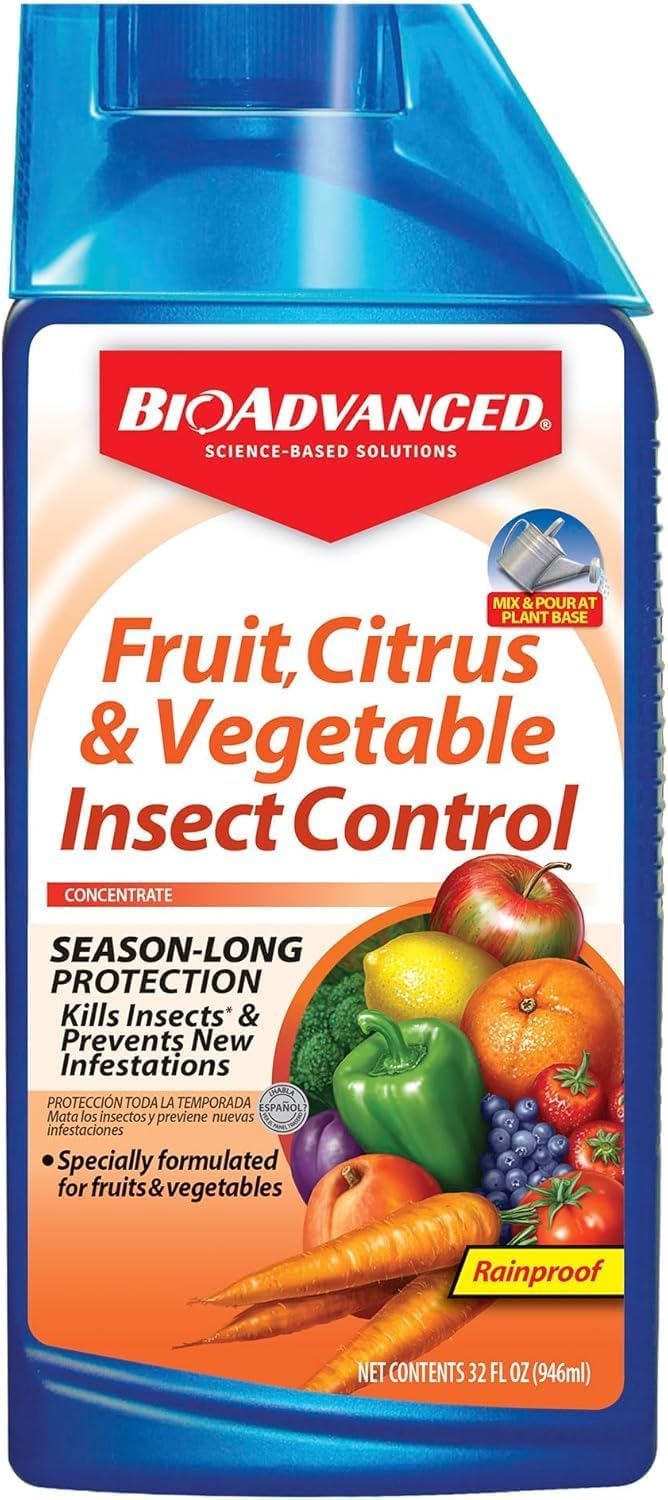
| Item Form | Concentrate |
|---|---|
| Target Species | Aphid, Whiteflies, Japanese Beetles, Mealybugs, Asian Citrus Psyllid |
| Liquid Volume | 32 fluid ounces |
| Specification Met | EPA |
| Active Ingredients | avocado |
This 32-ounce BioAdvanced concentrate is a systemic insect control designed for edible gardens. You mix the concentrate with water and pour it at the base of plants so the active ingredient is taken up into the plant and protects foliage and fruit without foliar spraying. It targets a broad list of pests including aphids, whiteflies, Japanese beetles, mealybugs, leafhoppers and Asian citrus psyllid, and is labeled to protect more than 100 fruit, vegetable, and citrus crops. Notable practical benefits are season-long protection from a single treatment, rainproof uptake within an hour, and the convenience of no-spray application that treats up to about 640 square feet. Limitations to consider are product restrictions in several states and that it contains a neonicotinoid active ingredient which requires following labeled harvest intervals and use directions for edible plants. For gardeners seeking a straightforward, systemic defense against chewing and sucking insects, this bottle reduces repeat foliar spraying while covering a wide range of common vegetable pests.
Best for: Gardeners who prioritize effective, low-maintenance protection for vegetable and fruit beds and want a season-long, systemic solution to reduce repeat foliar spraying.
Less Ideal for: Growers in states where this product is restricted or gardeners seeking an organic or contact-only insecticide should look for alternative products.
- Systemic concentrate provides season-long protection with a single application
- Covers a wide range of listed pests common to vegetables, fruit, and citrus
- Rainproof protection as plants absorb the treatment about one hour after application
- No foliar spraying required—mix and pour application simplifies treatment of beds and small orchards
- Not legal for sale or use in several U.S. states and some New York counties
- Contains imidacloprid (a neonicotinoid) requiring adherence to label harvest intervals and precautions
- Application treats area but does not provide immediate knockdown on foliage contact
Verdict: A single 32 oz concentrate delivers wide-spectrum, season-long systemic insect protection for vegetable and fruit gardens with minimal repeat work.
Garden Safe Insecticidal Soap Ready-to-Use Spray, 32 oz

| Item Form | Spray |
|---|---|
| Target Species | Insects |
| Liquid Volume | 32 fluid ounces |
| Active Ingredients | Potassium Salts Of Fatty Acids |
Garden Safe Insecticidal Soap is a ready-to-use contact spray formulated with potassium salts of fatty acids to control aphids, mealybugs, mites, whiteflies and similar soft-bodied pests. You use it like a normal garden spray: thoroughly coat insects and all plant surfaces including undersides of leaves, ideally in calm weather and not in full sun. It is safe for use on vegetables, fruit trees, ornamentals, shrubs, flowers and in greenhouses and may be applied to edibles up to the day of harvest, which simplifies timing for vegetable growers. The spray works on direct contact so thorough coverage is essential and multiple applications may be needed for heavy infestations. The product is convenient because no mixing is required, but it can be washed off by rain and is hazardous to aquatic invertebrates so care is needed to avoid runoff into water. For routine control of common garden pests this soap is a practical, low-toxicity option when used as part of an integrated pest management approach.
Best for: Gardeners who prioritize practical, low-toxicity pest control and want a ready-made spray that can be used on edible crops without pre-harvest delays.
Less Ideal for: People needing a long-residual or systemic pesticide for heavy infestations or for pests hidden inside plant tissues should consider other control methods.
- Ready-to-use formula requires no mixing for quick spot treatments
- Labeled for use on vegetables and may be applied up to the day of harvest
- Controls a broad list of soft-bodied pests including aphids, mites and whiteflies
- Plant-safe when used as directed and usable indoors, outdoors and in greenhouses
- Only kills pests by direct contact so it has limited residual or systemic activity
- Can be washed off by rain and must be reapplied after watering or heavy rainfall
- Harmful to aquatic invertebrates so it requires careful application near water
Verdict: A convenient, low-toxicity ready-to-use soap spray that gives effective contact control of common soft-bodied garden pests and is safe to use up to harvest.
Bonide Eight Garden & Home Ready-to-Use Insect Control, 32 oz

| Brand | Bonide |
|---|---|
| Item Form | Spray |
| Target Species | ant |
| Liquid Volume | 32 fluid ounces |
Bonide Eight Garden & Home is a 32-ounce ready-to-use spray formulated to control more than 130 insect pests on vegetables, ornamentals, lawns, shrubs, trees, and roses. You use it like a typical pump-and-spray treatment: pump the attached wand and apply about a foot from foliage or surfaces until the area is lightly covered. Its water-based formula reduces odor and is unlikely to stain most siding, and the spray kills on contact which makes it useful for fast knockdown of visible pests. Because it is labeled for many plant types and pests, it functions as an all-purpose spot treatment for summer outbreaks, including beetles that chew leaves. Limitations include that it must contact pests to be effective so it will not provide long residual control or systemic protection, and it is not labeled for indoor use. For gardeners on a budget who want a simple spray bottle solution for treating visible infestations on outdoor plants, this product is practical and easy to deploy.
Best for: Gardeners looking for an inexpensive, easy-to-use outdoor spray to quickly knock down visible pests on vegetables, roses, shrubs, and ornamentals.
Less Ideal for: People seeking long-term beetle prevention, systemic protection, or indoor pest control should consider other products designed for residual or systemic action.
- Ready-to-use pump spray requires no mixing or special equipment
- Water-based formula with low odor and minimal risk of staining most siding
- Controls a broad list of over 130 pests across many garden plants
- Compact 32 oz bottle is convenient for spot treatments and storage
- Kills on contact only and does not provide long-lasting residual or systemic control
- Not labeled for indoor use
Verdict: A budget-friendly, ready-to-use outdoor spray that delivers fast contact kill for visible garden pests.
Sevin Insect Killer Concentrate II, 32 oz

| Item Form | Liquid |
|---|---|
| Target Species | Insects |
| Liquid Volume | 32 fluid ounces |
| Active Ingredients | Zeta Cypermethrin |
Sevin Insect Killer Concentrate II is a garden spray concentrate you mix with water and apply with a handheld, tank, or hose-end sprayer to control insects on lawns, vegetables, fruits, shrubs, and ornamentals. The label rate (for example 4 fl oz per gallon) and included measuring cap make mixing straightforward for routine applications. It kills by contact more than 500 listed pests and claims residual control for up to three months on most insects, which reduces how often you need to reapply. The formula lists zeta-cypermethrin as the active ingredient, so it is fast acting against chewing and sap-sucking pests but you must avoid spraying open blooms to protect pollinators and follow label precautions for personal safety. It is versatile for spot treatments or broader landscape use, but users should follow label restrictions for certain pests and regional regulations. Practical gardeners will appreciate the concentrated format and multi-plant label, while those needing an organic or pollinator-safe option will want alternatives.
Best for: Gardeners who want a practical, no-nonsense concentrate to control a wide range of insect pests across vegetable beds, ornamentals, and lawns and who prioritize effective, infrequent applications.
Less Ideal for: People seeking organic, pollinator-safe, or aquatic-friendly pest control should consider non-synthetic or targeted biological options instead.
- Concentrated formula lets you treat large areas from a single bottle when mixed as directed
- Kills over 500 listed insect pests by contact, covering many common garden problems
- Measuring cap and clear mixing instructions make preparation simple and consistent
- Works on both ornamental and edible plants so one product covers multiple garden zones
- Contains a synthetic pyrethroid (zeta-cypermethrin) which can harm pollinators and aquatic life if misused
- Not registered for certain pests or regions so users must check local label restrictions
Verdict: A versatile, concentrated insecticide that gives practical gardeners broad-spectrum, long-lasting control when used according to the label.
Bonide Captain Jack's Ready-to-Use Neem Oil Spray, 32 oz

| Item Form | Liquid |
|---|---|
| Target Species | Insects |
| Liquid Volume | 32 fluid ounces |
| Active Ingredients | Clarified Hydrophobic Extract of Neem Oil |
This ready-to-use neem oil spray is a multipurpose garden treatment that kills insects at all life stages while also serving as a miticide and preventative fungicide. Packaged in a 32-ounce trigger bottle, it is applied by shaking and thoroughly spraying plant surfaces, including leaf undersides, at the first sign of pests or disease and reapplying every 7 to 14 days as needed. The active ingredient is a clarified hydrophobic extract of neem oil, which is approved for organic gardening and labeled safe to use on vegetables up to the day of harvest. Practical benefits include broad pest coverage (aphids, whiteflies, spider mites and others), disease suppression such as powdery mildew, and convenience from a ready-to-use sprayer. Important limitations are that results are slower than synthetic contact insecticides and application timing matters to avoid leaf burn in full sun; repeated applications may be needed for heavy infestations. Follow label safety directions and keep the product away from children and pets.
Best for: Gardeners who want a single, organic-approved product to manage common vegetable garden pests and fungal problems and who prefer products with strong user feedback.
Less Ideal for: Growers needing rapid knockdown of severe infestations or commercial producers who require fast-acting, high-throughput treatments.
- Kills multiple pest stages including eggs, larvae and adults for more complete control.
- Also acts as a fungicide and miticide so one product covers pests and common fungal issues.
- Ready-to-use trigger bottle requires no mixing and is easy to apply to leaves and undersides.
- Approved for organic gardening and can be used on vegetables up to day of harvest.
- Slower-acting than many synthetic contact insecticides, so it may take several applications to see control.
- Must avoid spraying in peak sunlight to reduce risk of leaf burn.
Verdict: A convenient, organic-approved all-in-one neem spray that controls common vegetable garden pests and fungal issues with minimal fuss.
Spectracide Triazicide Insect Killer for Lawns & Landscapes, 32 oz
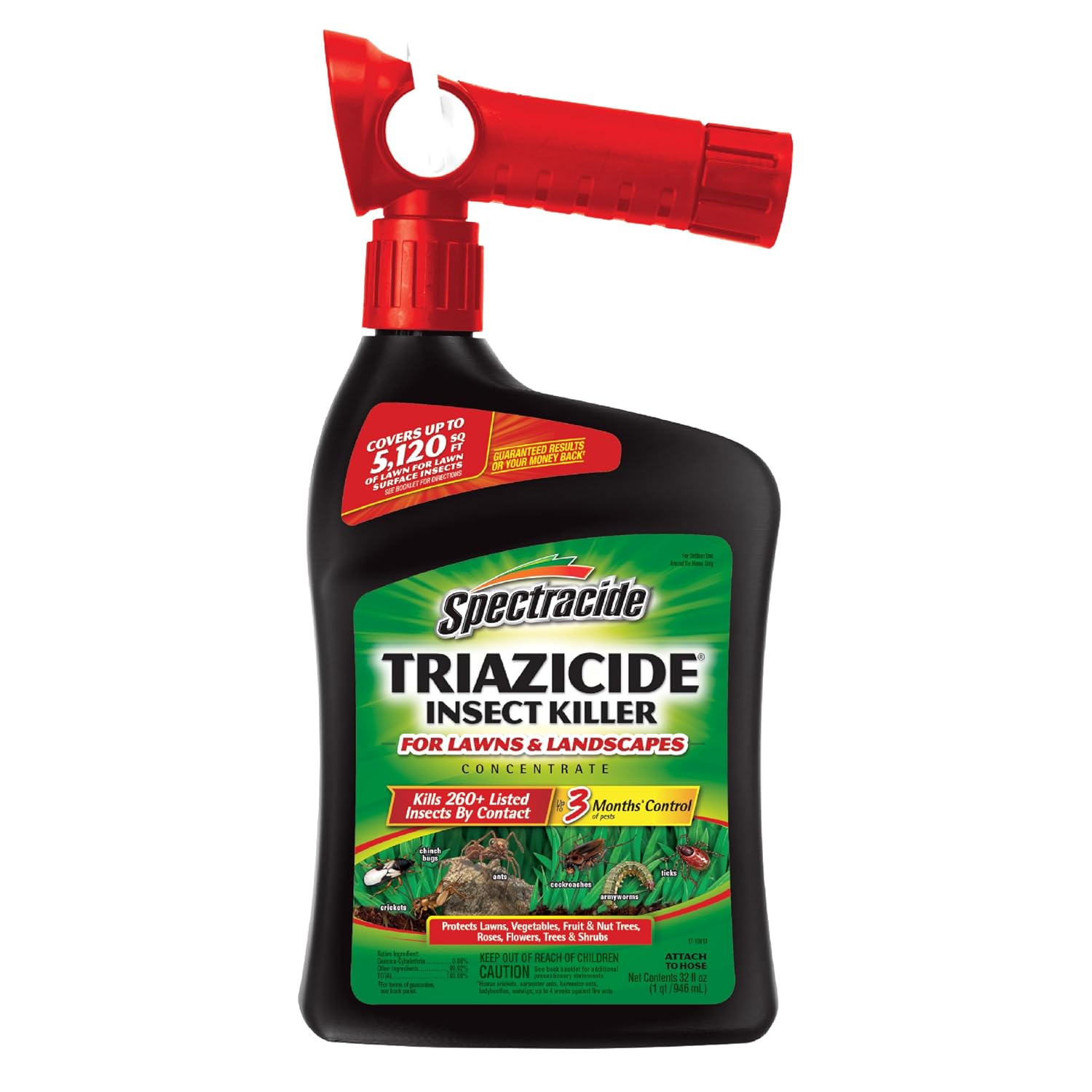
| Unit Count | 32 Ounce |
|---|---|
| Item Form | Spray |
| Target Species | Insects |
| Active Ingredients | Gamma-Cyhalothrin (0.08%) |
Spectracide Triazicide is a 32-ounce concentrate formulated to control more than 260 listed insects on lawns, flower beds, trees, shrubs and around vegetables. You mix the concentrate with water and apply it with a tank or hose-end sprayer; the ready-to-spray variant can attach to a garden hose for quicker application. The active ingredient, gamma-cyhalothrin, delivers fast contact kill for pests such as fleas, ticks, Japanese beetles and many surface insects, and the label claims protection for up to three months in some uses. It is non-staining when used as directed and can treat large areas, making it practical for whole-yard applications and targeted mound treatments like fire ants. Important limitations include toxicity to fish and bees, so it must not be applied near water or blooming plants, and the product requires careful handling and adherence to safety directions. Follow mixing rates and timing recommendations for best results and to minimize environmental risk.
Best for: Buyers who need an affordable, large-area solution to knock down common lawn and landscape pests and prefer a concentrate that stretches coverage when mixed.
Less Ideal for: People with small ornamental gardens near ponds, homeowners who prioritize pollinator-safe products, or those unwilling to follow pesticide safety precautions should consider gentler or targeted alternatives.
- Concentrate covers large areas so a single bottle treats many square feet when mixed correctly
- Fast-acting contact kill for a wide range of listed insects including fleas, ticks and Japanese beetles
- Versatile use on lawns, flower beds, trees, shrubs and around vegetables
- Non-staining when used as directed and available in hose-end ready-to-spray format for easier application
- Highly toxic to aquatic life and bees so it cannot be used near water or blooming plants
- Requires careful mixing and protective handling due to chemical toxicity
Verdict: A cost-effective, fast-acting concentrate for treating broad lawn and landscape pest problems when used with care and proper precautions.
Choosing the Right Vegetable Insect Killer: Key Factors to Consider
Pest Spectrum And Mode Of Action
Know which pests you need to manage and how the product attacks them. Some insect killers act by contact and require good coverage to kill aphids, caterpillars, flea beetles, or beet armyworms. Others are stomach poisons that must be eaten by chewing insects to work. Biologicals and insect growth regulators impact specific life stages and can reduce populations over time rather than providing immediate knockdown.
Matching mode of action to the pest biology improves control and slows resistance development. For example, systemic products move in plant tissues and can protect new growth, which matters for sap-feeders. Contact sprays are best when you can reach the insects directly. Consider whether you need immediate knockdown for a severe outbreak or longer-term suppression for recurring pest pressure.
Safety For Edible Crops And Pre-Harvest Interval
Safety on food crops is non-negotiable. Check label directions for pre-harvest intervals and maximum allowable applications. Shorter pre-harvest intervals let you treat closer to harvest but may come with tradeoffs in persistence. Products with minimal residual persistence reduce risk of detectable residues on produce but might require more frequent applications.
Think about whether you are growing for toddlers, immunocompromised household members, or market sale; that will change how cautious you must be. Organic-approved options often have more forgiving residue profiles for home use, but being labeled organic does not eliminate the need to follow harvest interval directions.
Impact On Beneficial Insects And Pollinators
Vegetable plots rely on predators and pollinators. Broad-spectrum insect killers can decimate lacewings, lady beetles, parasitoid wasps, and bees that provide natural pest suppression and pollination. Some products are relatively selective, targeting specific pests while sparing beneficials when used at recommended timings.
Align applications with pollinator activity: treat in the early morning or late evening, and avoid spraying open flowers. Consider spot treatments or baits that limit exposure to beneficial species, and integrate cultural controls so you do not rely solely on chemical options.
Application Method And Equipment Compatibility
Choose formulations that match how you maintain your plot. Ready-to-use sprays are convenient for small raised beds, while concentrates that mix in a pump sprayer or hose-end applicator are more efficient for larger vegetable beds. Some materials are formulated for soil drench or seed treatment rather than foliar spray, and those serve different control goals.
Application equipment affects coverage and drift. Fine mist sprayers can reach undersides of leaves where many pests hide, but they also increase drift risk. Make sure you can achieve adequate coverage without splitting or damaging tender vegetable foliage.
Residue Persistence And Environmental Fate
How long an active ingredient persists determines both reapplication frequency and environmental exposure. Short-lived products may require repeat treatments during heavy pest pressure, while persistent chemistries can offer longer intervals but increase the chance of residues on harvestable produce and runoff into soil or water.
Consider your garden site: near water bodies, in sandy soils, or where runoff is likely, choose options with lower mobility and shorter soil persistence. Rotating between modes of action can also reduce environmental loading over a season.
Ease Of Use And Gardener Safety
Practicality matters in a working vegetable patch. Readiness for immediate use, ease of mixing, and clear application rates reduce user error. Also evaluate personal protective equipment requirements and how easy it is to avoid contamination of harvest containers and food-prep surfaces.
If someone in the household prefers low-handling options, look for formulations that minimize direct contact during mixing. Clear label instructions and reduced PPE needs typically indicate products designed for home garden use rather than commercial operations.
When To Treat Vegetable Plants
Timing treatments around pest life cycles and crop stages improves results and reduces unnecessary applications. For many sap-sucking pests such as aphids or whiteflies, early detection and targeted spot treatments prevent rapid population build-up. Caterpillar outbreaks often escalate quickly; treat when you find eggs or small larvae for best control.
For flowering crops, avoid spraying during peak pollinator activity. If you must treat a flowering crop, target nonflowering parts or apply when pollinators are inactive to reduce harm.
- Inspect plants weekly, paying attention to leaf undersides and new growth.
- Treat small infestations early with spot sprays to preserve beneficial insects.
- Hold off on sprays during open bloom whenever possible.
Integrating Cultural Controls With Products
Products are most effective when paired with cultural practices that reduce pest habitat and pressure. Crop rotation, sanitation, removing infested plant material, and using row covers for seedlings can all lower the number of insects that need treatment. Healthy, well-fed plants tolerate some pest damage better than stressed plants and recover more quickly after control measures.
Use mulches and drip irrigation to reduce soil splash that spreads pathogens and can attract chewing pests. Combine tolerant varieties and proper spacing to improve air flow and deter pests that prefer crowded, humid conditions.
- Rotate families of crops to interrupt pest life cycles.
- Remove volunteer plants and weeds that host pests.
- Use physical barriers like floating row covers for early-season protection.
Application Tips To Maximize Effectiveness
Coverage is the single biggest determinant of success for many contact insect killers. Focus sprays on the undersides of leaves and new terminal growth where many pests feed and hide. Calibrate sprayers to deliver a fine but thorough mist rather than a heavy drench that wastes material.
Follow label rates closely to avoid phytotoxicity. Test sprays on a small patch of sensitive crops first, especially during hot, sunny weather. Rinse sprayers after use to prevent residue buildup and cross-contamination between products.
- Spray in calm conditions to limit drift and improve coverage.
- Avoid application during midday heat to reduce leaf burn risk.
- Record application dates to respect pre-harvest intervals.
Organic And Low-Toxicity Options For Vegetables
If you prefer low-impact approaches, several biologically based insect control options work well in vegetable gardens. Botanical extracts and microbial agents can be effective against specific pests with limited non-target effects. These materials often require more frequent applications, but they degrade quickly and are generally safer around pollinators when used properly.
Combine organic sprays with monitoring and mechanical controls for best results. Remember that organic does not mean completely harmless; follow instructions and observe pre-harvest timing.
- Use microbial agents for caterpillars and certain soil pests.
- Apply botanical sprays as spot treatments rather than broad area drench when feasible.
- Keep a log of organic applications and harvest intervals.
Managing Resistance And Rotating Modes Of Action
Repeated use of the same chemistry encourages resistant pest populations. Rotate between products with different modes of action to slow resistance development and preserve long-term control options. When relying on biological or selective agents, monitor their ongoing effectiveness and switch strategies if control declines.
Incorporate nonchemical tactics such as physical removal, traps, and encouraging predators to reduce selection pressure on any one active ingredient.
- Alternate contact and systemic approaches where appropriate.
- Use pheromone or sticky traps to reduce adult populations when possible.
- Record which classes you use each season to guide rotations.
How We Chose the Best Vegetable Insect Killer
We prioritized practical, garden-focused criteria that reflect real decisions gardeners make when protecting edible plants. First we screened for label approvals and explicit suitability on vegetable crops, excluding any product that lacks guidance for use on food-bearing plants or that requires long post-application reentry intervals that are impractical for home gardeners. We also evaluated mode of action and spectrum: products that target key chewing and sap-sucking pests without being needlessly broad were favored. Other core criteria included safety profile and residue behavior, assessed by looking at stated pre-harvest intervals and known persistence. Ease of application and compatibility with common garden systems were considered next; we preferred formulations that work in hand-sprayers, hose-end applicators, or are compatible with organic practices when the gardener requested it. Finally, user experience factors such as how quickly visible control appears and any notes on phytotoxicity at recommended rates influenced inclusion. Materials were excluded if they are only labeled for ornamental use, require specialized equipment, or have excessive harvest restrictions for edible crops.
FAQ
Can I spray insect killers on leafy greens right before harvest?
It depends on the product. Many insect control materials have a specified pre-harvest interval that tells you how long to wait before harvesting. Choose products with short intervals or use nonpersistent options if you need to treat close to harvest.
Will insect sprays harm bees visiting my vegetable flowers?
Some sprays are toxic to pollinators, especially when flowers are open. To reduce risk, avoid spraying during bloom, treat in early morning or late evening when bees are inactive, and target nonflowering parts or use spot treatments.
Are organic insect killers as effective as conventional ones?
Organic options can be effective against particular pests but often act slower or require more applications. They are generally lower in residual persistence and safer for beneficials, so integrating them with monitoring and cultural controls usually yields the best outcome.
How often should I reapply treatments during heavy infestations?
Reapplication frequency depends on the product's persistence and label directions. Shorter-lived materials may need repeat applications every few days, while longer-residual options cover longer intervals. Always follow label rates and avoid exceeding maximum applications per season.
Can I use the same insect killer on all my vegetable types?
Not always. Labels indicate which crops are approved and may list restrictions for delicate or leafy vegetables. Check crop-specific directions and recommended rates to avoid phytotoxicity, particularly on tender seedlings or heat-stressed plants.
How can I limit residue when using an effective insect killer?
Pick products with short residual persistence where possible, follow label application rates, avoid spraying right before harvest, and target treatments to affected areas rather than blanket-spraying the entire bed.
Final Verdict
Choose a vegetable insect killer based on the specific pests you face, how close crops are to harvest, and the presence of beneficial insects. Prioritize products labeled for edible use, note pre-harvest intervals, and match application methods to garden size and layout. Rotating modes of action and combining chemical options with cultural controls will give you consistent results while reducing environmental impact. Focus on the tradeoffs you can accept: immediate knockdown versus reduced residues, broader spectrum versus selectivity for beneficials, and convenience versus the need for more frequent applications. Those priorities will point you to the best control approach for your vegetable plot.
