

Note: This article contains affiliate links. If you click on these links and make a purchase, I may earn a small commission at no extra cost to you. This helps support my research and content. Read my full affiliate disclosure here.
Choosing the right potting soil matters more than you might think when you're managing indoor plants and trying to avoid fungus gnats. A soil that holds too much moisture creates habitat for larvae, while a quick-draining, stable mix reduces pest pressure and supports healthy roots. This guide focuses on mixes formulated for indoor plant situations where gnats are a recurring problem. We shortlisted seven top approaches and evaluated them on drainage, organic matter, and pest-resistance characteristics gardeners care about. Read on to understand the tradeoffs so you can pick a soil that keeps roots healthy and minimizes gnat issues.
Top Picks at a Glance
| Best Overall The best all-around choice for most situations | Miracle-Gro Houseplant Potting Mix, 4 qt. |  |
| Best Quality Built to a higher standard if you want something more solid | Rosy Soil Organic Houseplant Potting Mix, Peat-Free, 4 Quart |  |
| Best Value The sweet spot between price and what you get | Miracle-Gro Indoor Potting Mix with Indoor Plant Food Bundle |  |
| Best Budget The cheapest option that still gets the job done reliably | Miracle-Gro Indoor Potting Mix for All Plants, 16 qt. |  |
| Highest Rated A top-rated pick with lots of positive feedback | circle soil Houseplant Potting Mix (Peat-Free, 4 Qt) |  |
| Most Popular A crowd favorite that many people choose with confidence | Miracle-Gro Organic Indoor Potting Mix, 16 qt. |  |
| Best Seller A high-volume bestseller chosen again and again | Back to the Roots Organic Indoor Potting Mix, 12 Quart |  |
Miracle-Gro Houseplant Potting Mix, 4 qt.

| Unit Count | 128 Ounce |
|---|---|
| Volume | 5 quarts |
| Item Highlight | Fertilized, Perlite Soil for Indoor Gardening, Designed to Be Less Prone to Gnats |
| Ingredients | Perlite, Sphagnum Peat Moss, Fertilizer, Wetting Agent, Coir |
Miracle-Gro Houseplant Potting Mix is a ready-to-use indoor potting soil for common houseplants such as pothos, monstera, spider plants and philodendrons. The mix combines sphagnum peat moss, coir and perlite with a built-in fertilizer and a wetting agent so it holds moisture evenly while remaining airy enough for container roots. It is designed to avoid ingredients like compost and bark that can attract fungus gnats, which makes it a sensible choice when repotting plants indoors. Use it to fill a container with a drainage hole, set the root ball, top up and water thoroughly; one 4-qt bag is intended to fill an 8-inch pot. The included fertilizer feeds plants for up to six months, but you should start a regular feeding schedule after that for sustained growth. This is a convenient, widely available option for quick repotting, though larger or specialty mixes may be a better fit for growers who need exact pH control or custom blends for orchids and succulents.
Best for: Houseplant owners who want a dependable, ready-made potting mix for routine repotting and steady results without fuss; good for people who prioritize convenience and fewer pest issues indoors.
Less Ideal for: Collectors who need custom media for orchids, cacti, or bonsai or growers who require precise control over pH and nutrient profiles.
- Formulated for indoor plants with perlite and coir to improve aeration and drainage
- Contains fertilizer that feeds houseplants for up to six months after potting
- Designed to be less prone to fungus gnats by excluding compost and bark
- Includes a wetting agent to help the mix absorb water evenly when watering
- Bag size (4 qt.) is small for multi-plant households and may require frequent repurchasing
- Not formulated for specialty plants that require very fast drainage or coarse media
Verdict: A convenient, fertilized potting mix that makes repotting houseplants quick while reducing the risk of fungus gnats.
Rosy Soil Organic Houseplant Potting Mix, Peat-Free, 4 Quart

| Unit Count | 128 Ounce |
|---|---|
| Style Name | Houseplant |
| Ingredients | Biochar, Bark Fines, Compost, Worm Castings, Mycorrhizae |
| Volume | 4 quarts |
Rosy Soil Houseplant Potting Mix is an organic, peat-free potting medium designed to boost root health and keep containers well drained. It combines biochar, worm castings, mycorrhizal fungi and compost in a chunky texture that resists compaction, so pots stay aerated and water moves through instead of pooling. You would use this as a straight potting mix for tropical houseplants or blend it into existing soil when repotting; the manufacturer says 4 quarts fills two to three medium pots. The inclusion of mycorrhizae and beneficial microbes supports stronger root establishment and better nutrient uptake, which is useful if you are prioritizing vigorous growth. Practical benefits include reduced need for frequent repotting because biochar holds structure, and improved foliage health from the added micronutrients in worm castings. Limitations are the small bag size for larger shrubs or multiple jasmines and the need to monitor water for plants that prefer very dry conditions, since organic components still retain some moisture. Always wear gloves when handling and follow safety guidance to avoid inhaling dust.
Best for: A grower focused on maximizing root performance and steady vegetative growth who wants a ready-to-use, organic peat-free mix for container-grown tropicals and flowering houseplants.
Less Ideal for: Not the best choice for someone planting large outdoor jasmine beds or managing many plants on a tight budget who needs bulk soil; also avoid if you need an ultra-sandy, cactus-specific mix.
- Peat-free organic formula with biochar and worm castings for lasting structure and micronutrients
- Contains mycorrhizal fungi and beneficial microbes to improve root colonization and nutrient uptake
- Chunky, well-draining texture reduces compaction and helps prevent root rot
- Resealable bag and stable biochar mean mix stays usable longer between repots
- Small 4 quart volume may be insufficient for multiple plants or large pots
- Not formulated specifically for very dry-loving plants so some adjustment to watering may be needed
Verdict: Choose this mix if you want an organic, peat-free potting soil that promotes stronger roots and reliable drainage for container-grown jasmine and other tropical houseplants.
Miracle-Gro Indoor Potting Mix with Indoor Plant Food Bundle

| Item Form | Liquid |
|---|---|
| Specific Uses For Product | Plant Food,Potting |
| Application Method | Directly to soil |
| Target Species | Any indoor or edible plants |
| Mixing Ratio | 1-1-1 |
This bundle pairs a 6 qt indoor potting mix with an 8 fl oz liquid plant food to simplify houseplant care. The potting mix is formulated for indoor use and omits compost and bark to make the soil less attractive to fungus gnats, so it is a sensible choice when repotting or refreshing container plants. Use the mix to plant or top-dress pots, then wait about 30 days before beginning a regular feeding schedule. The liquid plant food is a water-soluble 1-1-1 formula applied directly to the soil every one to two weeks to deliver nutrients quickly. Practical benefits include easier transplanting, reduced gnat risk compared with mixes that contain compost, and a ready-to-use feeding regimen that supports steady growth. Important limitations are the modest volume of mix (covers a few small pots) and that the kit does not address severe gnat infestations or provide long-term controlled-release fertility, so larger collections or pest problems will need additional strategies.
Best for: Buyers who want a simple, low-maintenance repotting solution that minimizes fungus gnat risk and includes an easy feeding plan for small indoor collections.
Less Ideal for: Not a good fit for people with large indoor plant collections or those needing a long-term slow-release fertilizer or a full pest-control solution.
- Formulated specifically for indoor plants to regulate moisture and support houseplants
- Made without compost or bark to reduce attraction for fungus gnats
- Includes liquid 1-1-1 plant food for quick, easy feeding starting 30 days after planting
- Convenient bundle that covers potting and initial nutrition for several small containers
- Small potting mix volume suitable for only a few small pots
- Liquid fertilizer requires regular application and is not a slow-release option
Verdict: A compact, practical kit that repots small houseplants with gnat-reducing soil and provides a simple liquid feeding routine to keep them healthy.
Miracle-Gro Indoor Potting Mix for All Plants, 16 qt.

| Unit Count | 128 Ounce |
|---|---|
| Item Type Name | Soil |
| Item Highlight | Feeds for up to 6 Months |
| Style Name | All Purpose Indoor Potting Mix |
| Volume | 16 quarts |
Miracle-Gro Indoor Potting Mix is a lightweight, ready-to-use soil designed for common houseplants, herbs, tropicals, foliage plants, and flowering indoor containers. It blends sphagnum peat moss, coconut coir, and perlite to retain moisture while allowing excess water to drain, so roots stay aerated and less prone to rot. The formula is bark- and compost-free, which helps reduce habitat for fungus gnats. Use it straight from the bag to repot plants or to fill new containers; one 16 qt. bag is sized to refill multiple 8-inch pots. The mix includes nutrients meant to feed plants for up to six months, but you will want to start a regular feeding schedule after that period for actively growing specimens. Practical gardeners will appreciate the consistent texture and the ease of use, though heavy feeders or plants with specialized needs may still require custom amendments or more frequent fertilizing.
Best for: Houseplant owners who want a low-effort, reliable potting mix for everyday repotting and container refreshes and prefer a product that minimizes common indoor pest issues.
Less Ideal for: Growers who manage high-demand vegetables, orchids, or carnivorous plants that require specialized media or precise nutrient and pH management should choose a purpose-made substrate.
- Ready-to-use balanced blend suitable for a wide variety of indoor plants
- Contains peat moss, coir, and perlite for good water retention and drainage
- Bark- and compost-free formula that helps reduce fungus gnat habitat
- Feeds plants for up to six months, reducing immediate need for fertilizer
- Nutrient boost lasts about six months so additional feeding is required afterward
- Not formulated for specialty crops that need very high nutrient levels or specific pH
Verdict: A convenient, all-purpose indoor potting mix that makes repotting and maintaining healthy houseplants quick and low effort.
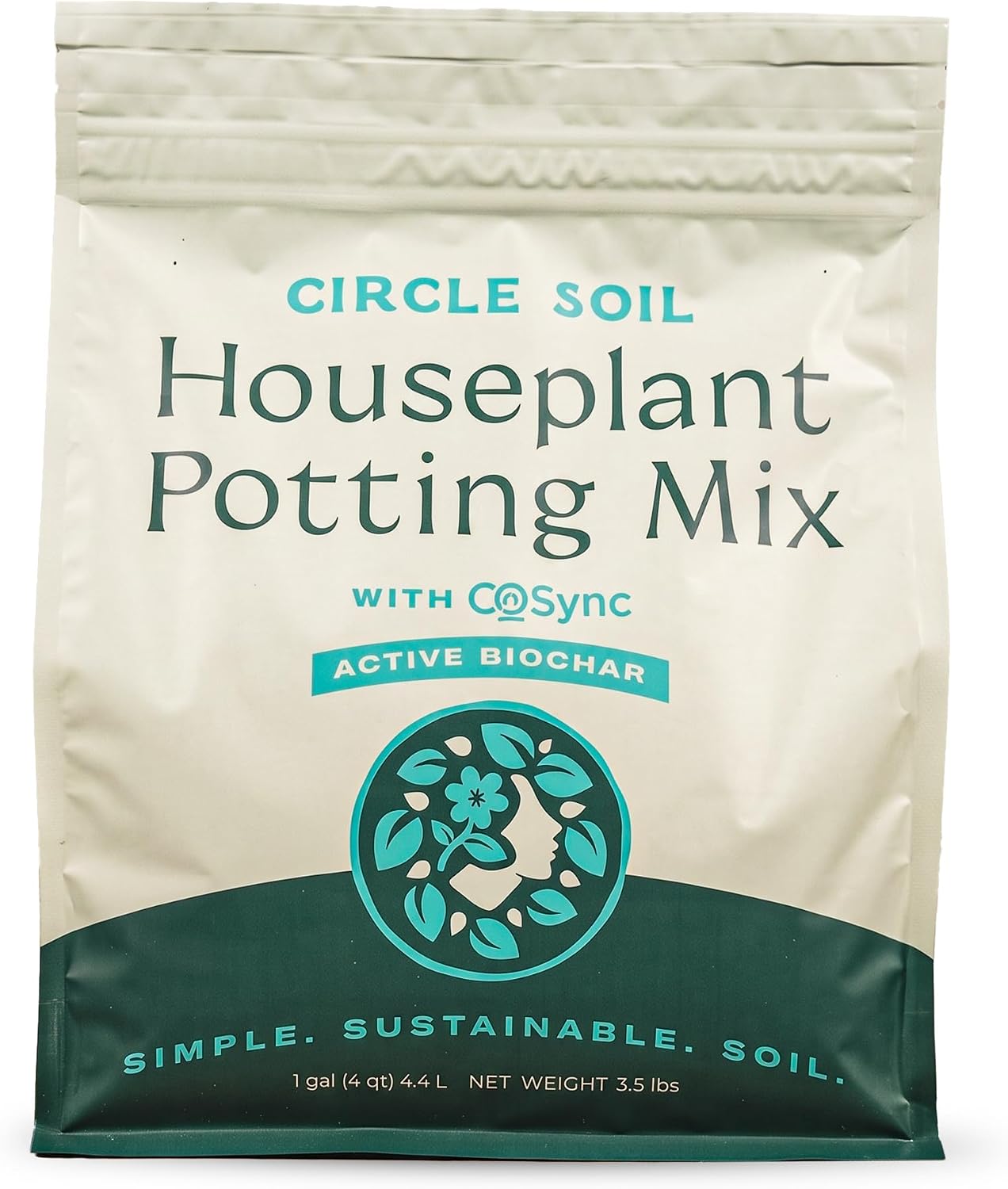
circle soil Houseplant Potting Mix (Peat-Free, 4 Qt)
| Unit Count | 56 Ounce |
|---|---|
| Item Highlight | Active Biochar, Worm Castings, Expanded Shale, Peat-Free, Organic, for Indoor Plants and Herbs |
| Brand Name | circle soil |
| Number of Packs | 1 |
This peat-free houseplant potting mix is built around active biochar, coconut coir and expanded shale to give a light, well-aerated medium that holds moisture without waterlogging. Typical uses include repotting potted herbs and common houseplants or topping up container soil for more even moisture retention. Notable features are the biochar that helps retain nutrients and support microbial life, worm castings and local compost for organic feeding, and expanded shale for natural drainage. In practice the mix should reduce the risk of root rot and encourage healthy root development by balancing air and water in small pots. Because it is designed for everyday indoor use, gardeners will appreciate the resealable packaging and the peat-free composition if they prefer sustainable ingredients. Limitations are that the bag is a modest 4 quart size, so frequent purchases are likely for multiple or larger containers, and gardeners needing a gritty, fast-draining cactus mix or a heavy-duty outdoor planting soil will want a different formula.
Best for: Gardeners who prioritize consistent, reliable results for potted herbs and common indoor plants and prefer sustainable, peat-free mixes for routine repotting and container care.
Less Ideal for: Growers who need large volumes of soil for outdoor beds or a very gritty, cactus-specific mix for drought-tolerant plants should consider other products.
- Peat-free formula with active biochar to improve nutrient retention and microbial activity
- Balanced aeration and drainage from expanded shale and coconut coir to prevent waterlogging
- Contains organic amendments like worm castings and compost for gentle, ongoing nutrition
- Resealable packaging helps keep the small bag usable between repottings
- Small 4 quart unit requires buying multiple bags for more than a few pots
- Not formulated specifically for succulents or heavy outdoor soils so drainage profile is moderate rather than very fast
Verdict: Choose this peat-free, biochar-enriched potting mix when you want a reliable, sustainable medium that keeps potted cilantro and other herbs evenly moist without soggy roots.
Miracle-Gro Organic Indoor Potting Mix, 16 qt.

| Volume | 1 cubic feet |
|---|---|
| Style Name | Indoor |
| Item Highlight | Protects Against Over & Under Watering |
| OMRI Listed | Yes |
Miracle-Gro Organic Indoor Potting Mix is a ready-to-use organic blend designed for houseplants, seedlings, and container herbs. It combines coir for air space and moisture retention, sphagnum peat moss to hold and release water, and a quick-start natural fertilizer so young plants get an initial nutrient boost. Typical use is filling pots or seed trays with a drain hole, transplanting by loosening the root ball and topping up with fresh mix, or starting seeds in shallow trays and keeping them moist until germination. Practical benefits for herb growers include improved moisture regulation that helps prevent both waterlogging and rapid drying, and organic certification for those avoiding synthetic inputs. The bag claims one 16 qt. package fills a 12-inch container, which fits small- to medium-sized herb pots. Limitations are the modest volume per bag for users with multiple pots and the inclusion of peat, which some growers try to avoid for sustainability reasons. Also, plants that need very fast-draining media, such as certain succulents, may need a different blend or added grit.
Best for: Buyers who want an easy, organic potting mix for growing kitchen herbs and houseplants and who prioritize proven formulations and user guidance over sourcing bulk soil.
Less Ideal for: People looking to pot large numbers of containers at once or gardeners who prefer a peat-free, fast-draining custom mix should consider larger bags or alternative blends.
- OMRI listed and made with organic ingredients suited to organic indoor gardening
- Blend of coir and sphagnum peat moss balances aeration and moisture retention
- Includes quick-start natural fertilizer to feed plants during establishment
- Formulated specifically for indoor containers and seed starting
- 16 qt. bag provides limited coverage if you have several herb pots
- Contains peat which some gardeners avoid for environmental reasons
Verdict: A convenient OMRI-listed indoor potting mix that helps regulate moisture and gives seedlings and container herbs a reliable, organic start.
Back to the Roots Organic Indoor Potting Mix, 12 Quart

| Volume | 12 quarts |
|---|---|
| Item Highlight | Indoor potting mix for pothos, monstera, ferns |
| Organic | 100% organic |
| Peat-free | Peat-free |
| Origin | Made in the USA |
This indoor potting mix is designed for everyday houseplants and seed starting, offering an organic, peat-free alternative that emphasizes moisture retention and root health. The formula includes yucca extract to help the soil hold water longer and added mycorrhizae to encourage stronger root development and better nutrient uptake. It also uses dolomitic limestone to balance pH and is made without bark or compost to reduce gnats and other indoor pests. Typical use is repotting monsteras, pothos, ferns and similar tropical foliage or refreshing topsoil in indoor containers. Practical benefits include easier watering management for busy or cautious plant owners and a reduced likelihood of pest problems compared with mixes containing coarse bark. Limitations are that the mix is an all-purpose indoor blend rather than a chunky, fast-draining aroid-specific mix, so growers who need very airy media for large root-bound monsteras may want to amend it with perlite, orchid bark, or pumice for extra drainage and airflow.
Best for: Homeowners who prefer a low-risk, easy-care potting mix for common tropical houseplants and want an organic, low-gnat option that reduces hands-on maintenance.
Less Ideal for: Advanced collectors growing very large or high-airflow aroids who need a chunky, fast-draining substrate straight out of the bag.
- Organic and peat-free composition suitable for eco-conscious indoor gardeners
- Yucca extract improves moisture retention for less frequent watering
- Includes mycorrhizae to support root growth and nutrient uptake
- Balanced pH with dolomitic limestone to help nutrient availability
- Not formulated as a very airy aroid mix so may require amendments for large monsteras
Verdict: A reliable, organic indoor potting mix that makes repotting monsteras and other common houseplants low effort and low risk.
Choosing the Right Potting Soil for Indoor Plants Without Gnats: Key Factors to Consider
Drainage and Aeration
How quickly water moves through a potting mix determines how long the surface and pore spaces remain moist. Fast drainage and good aeration limit the continuously damp microenvironment fungus gnats need to lay eggs and for larvae to survive. For indoor use, look for mixes that include coarse particles such as perlite, pumice, calcined clay, or shredded bark to create larger air pockets.
However, drainage must be balanced with water retention that suits your plant types. Too-fast draining mixes can stress plants that prefer consistent moisture, so consider container size, watering frequency, and plant species when choosing how coarse you go.
Top Layer and Surface Management
Surface conditions influence adult gnat egg-laying and larval survival. A coarse, dry surface layer such as horticultural grit, orchid bark, or washed sand reduces moisture at the soil-air interface and makes it harder for gnats to lay eggs and for newly hatched larvae to reach moist root zones. Some mixes include a built-in coarse top layer or recommend one be added after potting.
Even with a suitable mix, surface watering technique matters. Letting the top inch dry between waterings and avoiding overhead misting reduces surface humidity and the appeal to adult gnats.
Ingredient Composition and Organic Matter
The type and amount of organic matter affects both water retention and nutrient availability. Sphagnum peat and coconut coir hold water differently, while compost provides nutrients but can increase fine particles that retain moisture. For gnat-prone indoor settings, mixes that combine stable organic components with inert aggregates help limit prolonged dampness while still offering some moisture buffering.
Consider whether the mix includes slow-release nutrients or composted materials; these can feed plants but may also attract adults if the surface remains moist. Look for balanced recipes that emphasize coarse organic fractions and minimal fine dust.
Biological and Physical Pest Resistance
Some potting soils are formulated with ingredients or amendments that reduce pest survival. Physical deterrents include coarse top layers and gritty components. Biological approaches might use nematodes, beneficial microbes, or diatomaceous earth to lower larvae counts. While these measures do not guarantee zero gnats, they reduce population growth when combined with cultural practices.
When selecting a mix, check whether it specifies biological amendments and whether those additives remain effective in a typical indoor watering regime. Remember that biological controls often work best as part of a broader strategy, not as a single fix.
Moisture Retention Vs Plant Needs
Different indoor plants have varying water needs. Succulents and cacti need very fast-draining soils with minimal water-holding organics, while ferns and some tropicals prefer more consistent moisture. Choosing a mix that matches your plants prevents overwatering and reduces the chance of conditions that favor gnats.
If you tend to overwater, err toward a drier mix or one that holds less surface moisture. If you have moisture-loving species, pair a moisture-retentive mix with surface management tactics like top dressing and strict watering schedules to keep gnat habitat limited.
Physical Stability and Repotting Frequency
Some mixes break down faster and compact, reducing aeration and increasing the time the soil stays wet. Long-lasting structure helps maintain drainage and prevents repeated repotting. Look for mixes that include stable inorganic aggregates or coarse bark that resist compression.
If you prefer low-maintenance pots and infrequent repotting, choose a mix formulated for stability. If you repot frequently or want faster plant establishment, fresher, more organic-rich blends can be acceptable but may require closer monitoring for gnat activity.
How Potting Mixes Create Gnat Habitat
Fungus gnats are drawn to moist, organic-rich surfaces where adults lay eggs and larvae feed on fungal growth and decaying matter. In indoor pots, the combination of a damp surface layer, fine organic dust, and poor aeration creates an ideal microhabitat for their life cycle. A well-structured potting mix interrupts that chain by drying at the surface faster and reducing fungal colonization.
Understanding this helps gardeners choose mixes and watering routines that are less attractive to gnats while still meeting plant water needs.
- Fine particles and compacted mixes hold moisture at the surface
- Coarse aggregates speed drying and improve air exchange
- Surface moisture management is as important as mix composition
Best Container and Watering Practices with Anti-gnat Mixes
Pick containers with adequate drainage and avoid saucers that hold standing water. Use pots sized appropriately for the plant; oversized containers hold more moisture than many indoor plants need. When using a fast-draining, pest-resistant mix, adjust your watering schedule to account for the quicker drainage.
Water deeply but less frequently, and allow the top inch to dry for most houseplants. Consider bottom-watering for species that tolerate it; this reduces surface wetting and can lower egg-laying opportunities for adult gnats.
- Ensure at least one large drainage hole per pot
- Remove excess water from saucers after watering
- Avoid frequent light misting that keeps the surface humid
How to Amend Standard Potting Soil to Reduce Gnats
If you already have a general-purpose potting soil, a few simple amendments can reduce gnat habitat. Incorporate coarse materials like pumice, perlite, or small orchid bark to improve porosity. Mixing in a layer of grit or horticultural sand on the surface also discourages adult egg-laying.
You can also add biological amendments such as beneficial nematodes or microbial products labeled for soil pest suppression, but combine those with physical changes and altered watering to see the best results.
- Mix one part coarse aggregate to three parts potting mix for better aeration
- Top-dress with 0.25 to 0.5 inch of coarse material to keep the surface dry
- Avoid adding fresh compost to surface layers where it will stay moist
When to Choose a Heavy Organic Mix Versus a Gritty Mix
Choose a gritty, fast-draining mix for succulents, cacti, and plants prone to root rot. These mixes minimize surface moisture and dry faster between waterings, which helps prevent gnats. For moisture-loving houseplants, a more organic mix can be appropriate but requires stricter surface management and possibly a coarser top layer to limit gnat attraction.
Match the mix to the plant's natural habitat and your watering habits. If you tend to keep humidity higher or want simpler care, pick plants that suit higher moisture soils rather than forcing moisture-loving species into a fast-draining medium.
- Gritty mixes reduce watering frequency needed for succulents
- Organic mixes need more active surface drying techniques
- Consider plant grouping by moisture need to simplify care
Long-term Maintenance to Keep Gnats Away
Even the best potting soil benefits from routine maintenance. Remove fallen leaves and debris that trap moisture on the surface, refresh top dressing annually, and repot when mixes show signs of compaction. Regularly inspect for overwatering and adjust care seasonally as indoor temperatures and humidity change.
If you see gnat activity, combine cultural controls with physical barriers and, if needed, targeted biological treatments rather than relying on a single product change.
- Clean up surface debris promptly
- Replace or refresh soil after two to three years if compacted
- Rotate plants to drier positions if humidity spikes
How We Chose the Best Potting Soil for Indoor Plants Without Gnats
We focused on product features that directly affect moisture-related pest pressure and indoor plant root health. Key evaluation dimensions included drainage and aeration properties, organic ingredient composition, ability to suppress fungus gnat larvae (for example through coarser top layers or biological amendments), and long-term physical stability so mixes do not compact over time. We also considered ingredients that influence water retention for common indoor plant types, such as blends of bark, perlite, pumice, or sphagnum peat alternatives, and whether mixes were free of fine dust that can hold surface moisture. Excluded items included straight garden soil, pure compost, or decorative top layers alone; those do not function as complete potting mixes for indoor containers. We prioritized mixes intended for indoor container use and filtered out soils formulated solely for outdoor beds. The resulting shortlist emphasizes real-world gardener concerns: faster drying where appropriate, stable structure, and ingredient choices that reduce the lifecycle of fungus gnats while still supporting plant growth.
FAQ
Will a coarser potting mix stop fungus gnats completely?
A coarser mix reduces the conditions gnats need but may not eliminate them entirely. Combined with surface management and proper watering, a coarse mix greatly lowers gnat populations, but adult gnats may still appear occasionally.
Can I add sand to potting soil to prevent gnats?
A thin layer of washed coarse sand as a top dressing can help dry the surface and deter egg-laying. Avoid mixing fine sand throughout the entire mix, because that can create a compact layer that holds moisture.
How often should I repot to reduce gnat problems?
Repot when the mix compacts or drains slowly, typically every two to three years for many indoor plants. If you notice persistent dampness, poor aeration, or increased gnat activity, repot sooner with a grittier, more stable mix.
Are biological additives like nematodes effective in indoor pots?
Beneficial nematodes and some microbial agents can reduce larvae when applied correctly, but they work best alongside drainage improvements and watering changes. Their effectiveness depends on moisture regimes and consistent application.
Should I stop using organic fertilizer to avoid gnats?
Not necessarily. Organic fertilizers can attract gnats if they create damp, nutrient-rich surface layers, but proper incorporation and avoiding surface applications reduces that risk. Use controlled-release formulations or apply fertilizer below the surface when possible.
Is peat-free mix better for preventing gnats?
Peat-free mixes vary widely. What matters more is the particle size distribution and surface behavior. Some peat-free blends offer good drainage and low surface moisture, which helps reduce gnats, while others may be fine-textured and hold moisture.
Final Verdict
Prioritize mixes that match your plants' water needs while minimizing surface moisture and maintaining good aeration. For gnat-prone indoor settings, favor stable, coarse components and use a dry top layer and adjusted watering to reduce habitat for larvae. Balancing moisture retention with drainage and routine surface maintenance will deliver the best long-term control and healthier indoor plants.
