

Note: This article contains affiliate links. If you click on these links and make a purchase, I may earn a small commission at no extra cost to you. This helps support my research and content. Read my full affiliate disclosure here.
Picking the right budget raised garden bed changes how well your plants do and how easy your seasonal work feels. With limited space or a tight budget, the wrong bed can mean poor drainage, premature rot, or constant repairs. This guide focuses on affordable raised beds that still offer sound construction, sensible drainage, and workable dimensions for patios, balconies, and small backyards. Below are our shortlisted top picks for Budget Raised Garden Beds, chosen for real-garden performance. We evaluated structure, weather resistance, drainage, and ease of assembly to help you narrow choices quickly before digging in.
Top Picks at a Glance
| Best Overall The best all-around choice for most situations | Best Choice Products 6x3x2 ft Powder-Coated Steel Raised Garden Bed |  |
| Best Quality Built to a higher standard if you want something more solid | Vego Garden 17" Tall Modular Metal Raised Garden Bed Kit (6-in-1) |  |
| Best Value The sweet spot between price and what you get | Rakukiri 5 ft Galvanized Raised Garden Bed Planter Box |  |
| Best Budget The cheapest option that still gets the job done reliably | SnugNiture Galvanized Raised Garden Bed, 4x2x1 ft Oval Metal Planter Box |  |
| Highest Rated A top-rated pick with lots of positive feedback | Videnlum Galvanized Steel Raised Garden Bed, 8×4×1 ft |  |
| Most Popular A crowd favorite that many people choose with confidence | Land Guard Galvanized Oval Raised Garden Bed Kit (4×2×1 ft) |  |
| Best Seller A high-volume bestseller chosen again and again | Land Guard 2-Pack 4×2×1 ft Galvanized Raised Garden Bed |  |
Best Choice Products 6x3x2 ft Powder-Coated Steel Raised Garden Bed

| Capacity | 269 gallons |
|---|---|
| Material Type | Alloy Steel, Powder-Coated Steel |
| Other Special Features of the Product | Drainage Hole |
| Mounting Type | Floor Standing |
This powder-coated steel raised bed is built for gardeners who want a long-lasting, easy-to-assemble metal container with serious planting depth. Panels bolt together with included wingnuts and bolts and rubber edging so you can put the bed together without specialized tools. The 24 inch depth creates a large, 36 cubic foot planting volume that suits medium to deep-rooted vegetables, perennials, or layered plantings. Powder-coated alloy steel resists corrosion and the kit includes ground stakes and stabilizing rods to keep the structure steady. There is no bottom panel, which lets excess water drain naturally but means you will need to place it on soil, gravel, or add a liner if you want a contained base. The bed is marketed as non-toxic and tested to FHSA standards which is reassuring for edible planting. For gardeners optimizing space and longevity, this bed balances a heavy-duty feel with straightforward assembly, though it requires a permanent outdoor footprint because it is designed to be floor standing.
Best for: Gardeners who want a durable, low-maintenance metal raised bed that provides deep soil volume for vegetables and perennials and who prioritize longevity and straightforward assembly.
Less Ideal for: People who need a lightweight, portable planter or who must place a bed on a hard patio without installing a liner or base beneath it.
- 24 inch planting depth supports medium to deep-rooted vegetables and layered beds
- Powder-coated alloy steel construction offers corrosion resistance for outdoor use
- Tool-free assembly with wingnuts and bolts and included rubber edging for safer handling
- Includes ground stakes and stabilizing rods to improve structural stability
- Independently tested non-toxic materials suitable for growing edibles
- No bottom panel included so it cannot hold soil on hard surfaces without a liner or base preparation
- Relatively heavy and intended for a permanent outdoor location rather than frequent relocation
Verdict: Choose this powder-coated steel raised bed if you want a durable, deep metal planter that delivers long-term performance and large soil volume for vegetable gardening.
Vego Garden 17" Tall Modular Metal Raised Garden Bed Kit (6-in-1)

| Material Type | Metal |
|---|---|
| Other Special Features of the Product | Rust Resistant, UV Resistant, Weather Resistant |
| Mounting Type | Wall Mount |
| Indoor Outdoor Usage | Outdoor |
This Vego Garden 17" tall raised bed kit is a modular metal planter aimed at gardeners who want a durable, configurable planting solution. The kit assembles into six possible layouts so you can adapt it to different garden footprints or scale over time. Constructed from a zinc-magnesium-aluminum coated steel with painted finish, it is marketed for rust, UV, and weather resistance and includes rubber edging and an oval design to reduce sharp corners during installation. At 17 inches deep it provides good rooting space and makes planting and harvesting easier because you do not have to bend as far. The system is straightforward to assemble with fasteners and yields a tidy modern look for patios, decks, or ground placement. Limitations to note are that the kit is metal rather than wood, so it conducts heat more readily and may warm soil faster in hot climates, and the included capacity and footprint are fixed per panel sizes so very large vegetable plots require multiple kits or larger models. Overall it is a robust, low-maintenance option for gardeners who prioritize durability and flexible layout.
Best for: Gardeners who want a long-lasting, performance-focused raised bed system they can reconfigure to match changing plots and who prioritize durability and low maintenance over a traditional wooden aesthetic.
Less Ideal for: People seeking a natural wood look or those who only need a very small container for a few herbs should consider simpler pots or wooden planters instead.
- Modular 6-in-1 design lets you build multiple layouts to fit different spaces
- Corrosion-resistant VZ 2.0 metal coating and painted finish for long outdoor life
- 17-inch planting depth supports healthier root development and less bending
- Oval panels with rubber edging reduce sharp corners and simplify installation
- Metal walls can heat the soil more than wood, which may affect heat-sensitive plants
- To cover large vegetable beds you will need multiple kits or larger models
Verdict: Buy this if you want a durable, configurable raised bed that gives deep planting space and long-term weather resistance for serious vegetable gardening.
Rakukiri 5 ft Galvanized Raised Garden Bed Planter Box

| Capacity | 68 gallons |
|---|---|
| Material Type | Metal |
| Finish Types | Powder Coated |
| Other Special Features of the Product | Rust Resistant, Weather Resistant |
| Indoor Outdoor Usage | Outdoor |
This Rakukiri 5 ft galvanized raised garden bed is a straightforward, durable planter for growing vegetables and herbs. It assembles with simple hardware and butterfly nuts, then sits as an open-bottom oval that lets excess water drain into the soil below while keeping roots from sitting in standing water. The 0.8 mm galvanized sheet and powder-coated finish provide corrosion resistance that suits year-round outdoor use and reduces the need for frequent replacement. With roughly 68 gallons of planting capacity the bed gives enough soil depth for most shallow- to medium-rooted vegetables and herbs. Because it is metal and not insulated, soil in very hot or cold climates will respond faster to ambient temperatures, so you may need to add mulch or insulation for extreme conditions. The open base also means you must place it on stable, reasonably level ground and expect some root growth into the subsoil. For gardeners who want a low-maintenance, long-lasting planting container that maximizes growing area per footprint, this is a practical choice.
Best for: Gardeners who want a sturdy, low-maintenance raised bed to maximize productive vegetable and herb growing area without complex installation.
Less Ideal for: People needing a portable or insulated raised bed for container-only production or those who must prevent any root penetration into underlying soil.
- Thicker 0.8 mm galvanized metal construction for better durability and rust resistance
- Open-bottom design provides natural drainage and improved root access to subsoil
- Powder-coated finish adds weather resistance for outdoor use
- Easy assembly with butterfly nuts and included hardware
- Metal walls offer little thermal insulation so soil temperature can fluctuate in extreme heat or cold
- Open bottom allows roots to grow into underlying soil which may complicate relocation
Verdict: A robust, easy-to-assemble galvanized raised bed that gives practical, long-lasting planting space for vegetable and herb gardeners.
SnugNiture Galvanized Raised Garden Bed, 4x2x1 ft Oval Metal Planter Box

| Capacity | 7.68 cubic feet |
|---|---|
| Material Type | Metal |
| Other Special Features of the Product | Drainage Hole |
| Mounting Type | Floor Standing |
| Indoor Outdoor Usage | Outdoor |
This SnugNiture galvanized raised garden bed is a simple, no-frills metal planter built for outdoor vegetable and herb growing. The oval, open-bottom design is intended to sit directly on soil so roots can access native ground and excess water drains naturally. Made from painted or coated galvanized steel with folded panel edges and a protective rubber strip, it aims to resist corrosion and reduce sharp edges during planting and maintenance. Assembly is straightforward with included components and basic instructions, and the wavy panel plus horizontal pull rods add rigidity so the bed holds its shape under load. At about 12 inches tall it provides a shallow but usable planting depth suited to shallow-rooted vegetables, salad greens, and herbs. It is lightweight for easy repositioning but that also means it will rely on the soil and the pull rods for long-term stability rather than heavy mass. If you want an affordable, durable metal option for creating a tidy vegetable patch on a patio or lawn, this bed delivers practical functionality with minimal fuss.
Best for: Gardeners who want an inexpensive, durable metal raised bed to grow vegetables and herbs in a patio or backyard with minimal setup and maintenance.
Less Ideal for: Growers who need deep, high-capacity beds for root crops or who want a heavy, permanent structure that will not move once placed.
- Galvanized steel construction resists rust for outdoor use
- Open-bottom design allows natural drainage and root extension into native soil
- Protective rubber strip and folded edges reduce sharpness and improve safety
- Wavy panel and horizontal pull rods increase structural stability
- Includes components and clear instructions for easy assembly
- Only about 12 inches tall, which limits planting depth for deep-rooted vegetables
- Lightweight build may shift on uneven ground without added anchoring
Verdict: A budget-friendly, galvanized metal raised bed that gives patio and backyard gardeners a durable, easy-to-assemble planting solution for vegetables and herbs.
Videnlum Galvanized Steel Raised Garden Bed, 8×4×1 ft
| Material Type | Iron |
|---|---|
| Finish Types | Galvanized |
| Mounting Type | Floor Standing |
| Included Components | Screws, Hardware, Rubber Edge Protectors, Lateral Support Brackets |
| Size | 8×4×1ft |
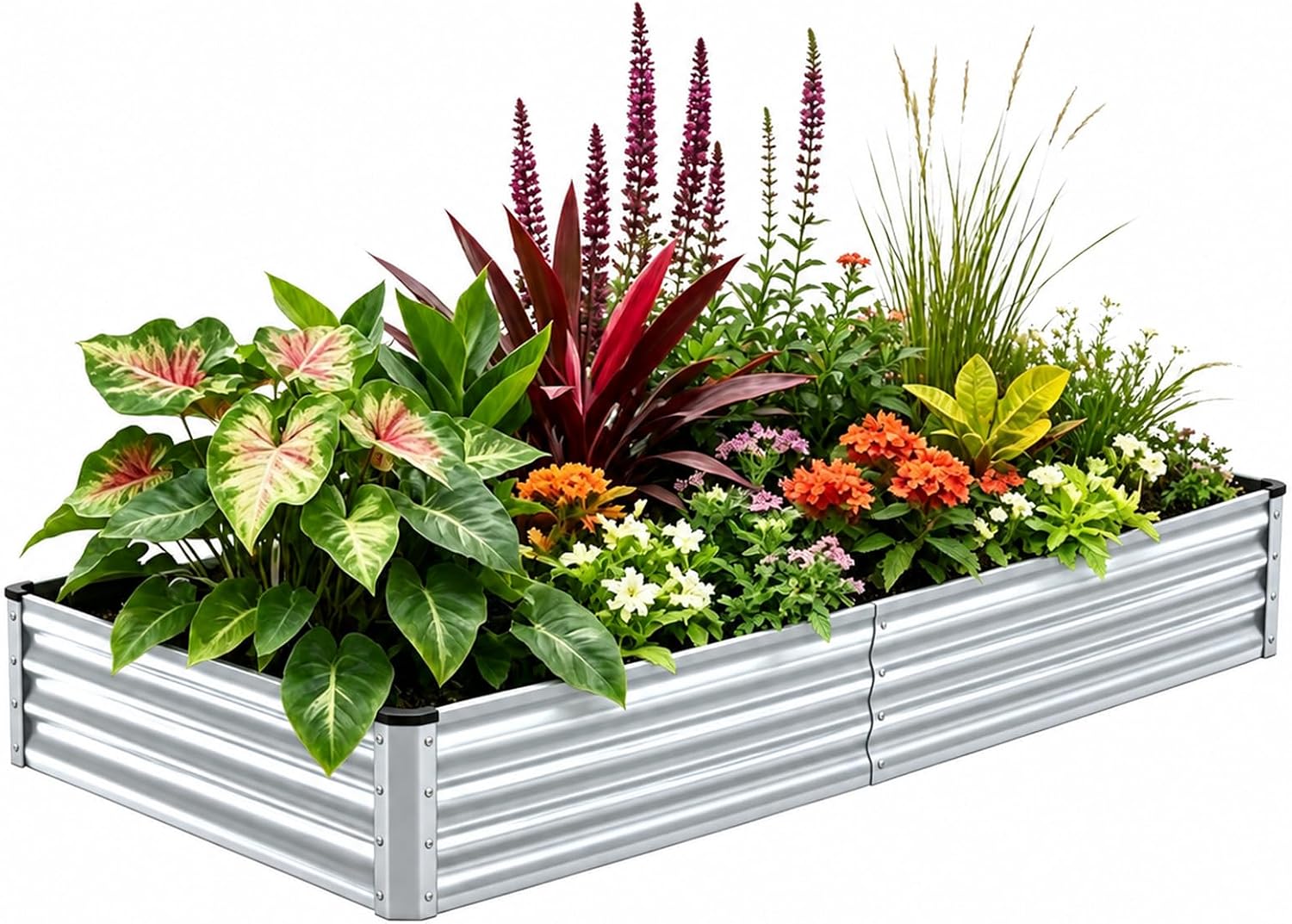
This Videnlum galvanized steel raised garden bed is a straightforward, reliability-minded option for people who want a durable metal planter without complicated setup. It arrives as flat panels and hardware and assembles with the included screws and lateral support brackets; rubber edge protectors cover the top seams to make assembly and planting safer. The panels use thicker galvanized steel than many budget metal beds, and the corrugated, reinforced construction plus support brackets keep the sides from bowing and seams tight so soil stays contained. The open-bottom design lets roots reach native soil and provides fast drainage so you do not need a liner for most vegetables, herbs, or shallow-rooted flowers. Because the finish is fully galvanized, the bed resists rust from rain and snow for season-to-season use, though heavy winter exposure over many years will still eventually wear metal. It is best for raised vegetable or herb plots where a low profile and good drainage matter, and it balances durability and ease of assembly at a budget-friendly size.
Best for: Buyers who prioritize a dependable, low-maintenance raised bed for vegetables, herbs, or strawberries and want sturdy metal construction that resists bowing and corrosion over multiple seasons.
Less Ideal for: Gardeners who need deep soil for large root crops or those who prefer nonmetal planters to avoid heat gain under strong sun.
- 0.5mm+ galvanized steel panels and lateral support brackets reduce bowing and keep seams tight
- Rubber edge protectors cover top seams for safer assembly and planting
- Open-bottom design allows rooting into native soil and provides good drainage without a liner
- Includes screws and hardware for DIY assembly with no special tools
- Low 1 ft height limits use to shallow-rooted plants and may not suit gardeners wanting deep beds
- Metal will eventually show wear in harsh climates despite the galvanized finish
Verdict: Choose this galvanized steel raised bed when you want a sturdy, low-profile planter that resists bowing and provides reliable drainage for shallow-rooted vegetables and herbs.
Land Guard Galvanized Oval Raised Garden Bed Kit (4×2×1 ft)

| Material Type | Metal |
|---|---|
| Finish Types | Double-layer galvanized |
| Capacity | 7.14 cubic feet |
| Mounting Type | Floor Standing |
This Land Guard raised garden bed is a simple, durable option for planting vegetables, herbs, or mixed annuals in a compact outdoor space. The kit arrives as flat panels that assemble into an oval planter about 4 by 2 feet and 1 foot deep, and setup is straightforward so you can fill and plant in minutes. Its double-layer galvanized steel construction and wave-shaped panels are intended to resist corrosion and add rigidity, and the manufacturer states thicker panels at stress points to reduce deformation. An open base design lets excess water drain and helps avoid root rot if placed on soil or lawn. Practical benefits include low maintenance, a tidy planted border that keeps soil contained, and a metal finish that lasts longer than untreated steel. Limitations are the shallow depth for deep-rooted crops and the likelihood the metal will warm quickly in hot sun, which may require more frequent watering or shade management. It is best used as a portable, long-lasting planter for raised-bed style container gardening rather than a full replacement for deeper in-ground beds.
Best for: Gardeners who want a quick-to-assemble, durable raised planter to grow vegetables or herbs in small outdoor spaces and who prioritize evidence of longevity over decorative complexity.
Less Ideal for: Growers who need deep soil for large root crops, or those looking for insulated or fully enclosed beds to control soil temperature and moisture long-term.
- Galvanized double-layer steel resists corrosion for multi-season outdoor use
- Oval, interlocking panel design assembles quickly with included tools
- Open base allows natural drainage to reduce standing water and root rot
- Compact footprint fits small patios, balconies, and tight garden beds
- Only 12 inches deep which limits planting of larger, deep-rooted vegetables or shrubs
- Metal surface can heat up in full sun and increase watering needs
Verdict: A tough, easy-to-assemble galvanized oval raised bed that gives small-space gardeners a durable, low-maintenance container for vegetables and herbs.
Land Guard 2-Pack 4×2×1 ft Galvanized Raised Garden Bed

| Capacity | 54 gallons |
|---|---|
| Material Type | Galvanized Metal |
| Included Components | 2x Planter, Instruction manual, Tools |
| Indoor Outdoor Usage | Outdoor |
These Land Guard raised beds are a practical two-pack of galvanized steel planters meant for patios, backyard beds, and small vegetable plots. Each 4×2×1 ft planter assembles from panels and included hardware to create an open-bottom raised bed that sits directly on soil or hard surfaces. The galvanized finish with a thickened zinc layer offers weather and rust resistance so the beds can stay outdoors through seasons without significant corrosion. The open base supports strong drainage and reduces trapped moisture, which helps prevent root rot and makes the beds easy to integrate into an existing garden or over a weed barrier. They arrive with basic tools and instructions, so assembly is straightforward for one person. Limitations are the shallow 1 ft depth, which restricts large root crops and long-term tree planting, and the metal will warm more in hot sun compared with wood or composite. For gardeners who prioritize durability, easy setup, and tidy planting zones, these planters are a low-maintenance option; heavy-duty growers wanting deeper soil will need a different solution.
Best for: Gardeners who want a durable, low-maintenance raised bed solution to organize vegetable, herb, or flower planting in small yards or patios and who prefer quick assembly and long-lasting materials.
Less Ideal for: Growers who need deep soil for root vegetables, large perennials, or who prefer insulating materials like wood or composite to moderate soil temperature.
- Galvanized steel construction with thick zinc coating provides strong rust and weather resistance
- Open-bottom design promotes excellent drainage and easier integration with ground soil
- Two-planter set covers multiple planting rows or doubles planting area without buying extra units
- Includes hardware and instructions for relatively simple assembly
- Only 12 inches deep, limiting suitability for deeper-rooted vegetables and perennial shrubs
- Metal surfaces can heat up in full sun, which may affect soil temperature and moisture
Verdict: A durable, easy-to-assemble two-pack of galvanized raised beds that gives practical, low-maintenance planting space for small-scale veggie and flower gardens.
Choosing the Right Budget Raised Garden Bed: Key Factors to Consider
Construction Material and Longevity
The material of a raised garden bed determines how long it will last under sun, rain, and soil contact. Wood options need rot-resistant species or pressure treatment to avoid structural failure within a few seasons. Metal and composite panels resist rot but must cope with corrosion or UV degradation. Plastic modules will not rot but can crack in cold weather or warp under sun exposure.
Consider what tradeoffs you accept: cheaper wood may look natural but require replacement or lining sooner, while low-cost metal can dent and rust if not well protected. Longevity affects long-term cost and how often you must transfer soil and plants to a new structure.
Drainage Performance
Raised beds must shed excess water while holding enough moisture for roots. Poor drainage leads to waterlogged soil and root rot, while too-rapid drainage can stress seedlings. Look for beds with built-in drainage slots, breathable side panels, or designs that allow you to add a proper substrate and drainage layer.
On impermeable bases, you may need to create drainage holes or add gravel layers. Drainage also interacts with your garden site: a bed on concrete needs deliberate drainage planning, whereas beds on soil will drain naturally if the bottom is open or slatted.
Assembly and Ongoing Maintenance
How a raised bed goes together affects whether you actually set it up correctly. Simple hardware-free boxes or panels that click together are quick to assemble but can be less sturdy. Bolt-together frames offer strength but take more time and tools. Consider whether you will install the bed yourself, move it seasonally, or leave it permanent.
Maintenance includes tightening fasteners, replacing liner materials, and treating wooden surfaces if applicable. A design that simplifies these tasks will save time and keep plants healthier over multiple seasons.
Depth, Width, and Planting Area
Planting depth is critical for root development. Most vegetables need at least 8 to 12 inches of loose soil, while larger root crops and shrubs require deeper beds. Width matters for reach: beds wider than about 4 feet make the center hard to access from either side, while very narrow beds limit planting density.
Choose a bed depth and width that match your intended crops and physical access. Compact beds for patios should still allow adequate soil volume, and modular units that stack or join let you adapt spacing over time.
Weather and Pest Resistance
Budget options vary widely in how they handle weather and pests. UV-stabilized plastics and powder-coated metals resist sun damage, while untreated wood can attract insects and rot. Consider whether the bed will be exposed to intense sun, heavy rain, or snow load, and whether rodents or burrowing pests are a concern in your area.
A bed that resists common local stressors will reduce the need for repairs and protect your soil from contamination or leakage.
Soil Compatibility and Liner Options
Some cheap raised beds have materials that react poorly with soil amendments or retain salts. Lining options let you use richer mixes without worrying about metal corrosion or wood chemical leaching. However, liners can impede drainage if improperly installed.
Plan for whether you will use a liner, what type it should be, and how that affects depth. A breathable landscape fabric maintains drainage while protecting structural materials, and removable liners simplify soil replacement later.
Best Bed Layouts for Small Spaces
When space is tight, shape and modularity matter more than brand. Narrow rectangular beds or half-moon planters maximize edge planting and allow you to place multiple units along a balcony or fence. Modular panels that connect let you create longer runs or separate growing zones while keeping each unit manageable to move or refill.
Think about access paths and where sunlight falls during the day. Placing a bed where you can reach all sides without stepping on planting soil preserves soil structure and reduces compaction.
- Use narrow beds that let you reach the middle from either side.
- Join modules to create accessible long beds without wider single units.
- Position beds to capture morning sun for many vegetables.
Preparing Soil Mixes for Shallow Budget Beds
Budget beds are often shallower, so the soil mix must squeeze maximum fertility and water-holding capacity into a limited depth. A mix of topsoil, compost, and a light mineral or grit helps roots find nutrients while preventing compaction. Avoid heavy clay or unamended local soil in shallow beds.
Add slow-release organic matter and use mulch to reduce watering frequency. For very shallow units, favor compact-growing crops like lettuces, herbs, and small-root radishes rather than deep-rooting vegetables.
- Aim for a light, well-draining mix with at least 30 percent organic matter.
- Top-dress with compost each season instead of replacing the whole fill.
- Mulch to reduce evaporation and maintain steady moisture.
Extending Life on a Budget
A few small upgrades keep inexpensive beds working longer. Line wooden beds with breathable landscape fabric to delay rot. For metal units, keep fasteners tight and touch up exposed edges with rust-inhibiting paint or sealant. For plastic beds, avoid prolonged heavy loads and store panels indoors if you remove them seasonally.
Regular maintenance like checking drainage, replacing worn liner pieces, and keeping soil a bit off side walls can double a bed's usable life without significant cost.
- Install a breathable liner to protect wood while preserving drainage.
- Tighten hardware annually and inspect for corrosion.
- Move lightweight beds to sheltered spots over winter if freeze-thaw is severe.
Siting and Microclimate Considerations
Where you place a raised bed affects temperature, moisture, and pest pressure. South-facing locations get more sun and warmth but dry out faster. Placing beds near walls or fences can create windbreaks and heat sinks that lengthen the growing season. Avoid low-lying frost pockets and areas with poor air circulation.
Consider proximity to a water source and how you will haul soil and amendments to the bed. Convenience affects how consistently you maintain moisture and fertility.
- South or southeast exposure is best for most vegetables.
- Keep beds within easy reach of a water source to simplify irrigation.
- Avoid placing beds directly under trees to prevent root competition.
Simple Drainage Fixes for Impermeable Bases
If you must sit a raised bed on concrete or a deck, create deliberate drainage. Drill or cut drainage holes in the bottom where possible, add a shallow gravel layer, and use coarse sand or grit under the soil to encourage vertical movement of water. Ensure water will not pool against foundations or wooden structures.
For beds you cannot modify, consider using a boxed liner with bottom openings or elevating the bed slightly to allow water to escape from beneath.
- Add coarse gravel or broken pottery at the bottom to create a drainage zone.
- Use a few drilled holes aligned with low points to let water escape.
- Elevate beds with small cleats to create an air gap under the base.
How We Chose the Best Budget Raised Garden Bed
To build this shortlist we looked for raised beds that balance affordable construction with real durability in outdoor growing conditions. Key evaluation criteria included construction material and rot resistance, drainage and soil retention, ease of assembly and maintenance, footprint and planting depth, and warranty or manufacturer support where available. We prioritized options that stood up to repeated wet-dry cycles, resisted common pests or corrosion, and allowed standard soil mixes and amendments without frequent overhaul. We excluded overly specialized or temporary items such as thin fabric planters, single-season disposable kits, and large commercial planter boxes not suited to small yards. We also set aside overly small troughs that do not provide recommended root depth for most vegetables. The result is a practical set of budget raised garden beds that should perform season after season in typical residential settings.
FAQ
How deep should a budget raised garden bed be for most vegetables?
Most vegetables do well with 8 to 12 inches of loose soil, while root crops and larger plants benefit from 12 to 18 inches. On a tight budget, choose crops that match your bed depth or consider modular beds that can be stacked for extra depth.
Can I use untreated wood for a cheap raised bed?
Untreated wood is inexpensive but will rot faster when in contact with moist soil. Lining the interior with a breathable fabric extends life, and choosing rot-resistant species or adding a preservative on the exterior can help. Expect shorter service life than treated or composite materials.
What is the best way to improve drainage in a shallow raised bed?
Use a light, well-draining soil mix with coarse components and add a shallow gravel layer or coarse grit at the bottom. Avoid dense clay and install drainage holes if the bed has an impermeable base. Mulch helps maintain consistent moisture without waterlogging.
Are plastic raised beds safe for edible gardening?
Many plastic beds are suitable for edibles, but look for UV-stabilized materials and avoid brittle plastics that crack in cold. Using a liner or adding a soil buffer reduces contact between soil and some lower-grade plastics. If chemical leaching is a concern, choose options labeled safe for food or use a barrier layer.
How do I prevent pests from burrowing into my raised bed?
Place hardware cloth under the bed or line the bottom with a buried barrier to block burrowers. Regularly inspect for entry points and avoid placing beds directly against areas with known pest tunnels. Dense planting and surface mulch can also discourage rodents by reducing exposed soil.
Final Verdict
A budget raised garden bed can deliver reliable yields if you match material, depth, and placement to your garden goals. Prioritize adequate planting depth and drainage first, then choose materials that balance durability with initial cost. Maintenance and simple upgrades like liners or touch-up coatings extend service life so you get more seasons from an affordable bed. Decide which tradeoffs matter most to you: a slightly higher initial spend for longer life, or the lowest-cost option paired with planned replacement. With the right siting and soil, a budget raised garden bed will support productive, low-maintenance growing in small yards or patios.
