

Note: This article contains affiliate links. If you click on these links and make a purchase, I may earn a small commission at no extra cost to you. This helps support my research and content. Read my full affiliate disclosure here.
If you manage lots of edge work, long fence lines, or overgrown patches, a wheeled string trimmer can save time and reduce back strain. These tools roll along the ground to stabilize cutting and let you cover wider swaths than a handheld trimmer. Choosing the right wheeled string trimmer matters because differences in cutting width, drive system, and height adjustment change how it handles thick grass, steep yard edges, and uneven ground. This guide shortlists the top picks in the wheeled string trimmer category and explains the practical features gardeners rely on. Below we outline the evaluation criteria used and what to look for, then present the products that passed those filters.
Top Picks at a Glance
| Best Overall The best all-around choice for most situations | BILT HARD Self-Propelled Walk-Behind 170cc 4-Cycle String Trimmer, 22" Cutting Path |  |
| Best Quality Built to a higher standard if you want something more solid | EARTHQUAKE Walk-Behind String Mower with 160cc Viper Engine, 22" Cutting Width (Model 47325) |  |
| Best Value The sweet spot between price and what you get | PowerSmart 22-inch 161cc Gas Walk-Behind String Trimmer (DB6222) |  |
| Best Budget The cheapest option that still gets the job done reliably | SENIX 22" High-Wheel Gas Walk-Behind Brush Cutter and String Trimmer (160 cc) |  |
| Highest Rated A top-rated pick with lots of positive feedback | Powerhorse 22 in. High-Wheeled Walk-Behind String Trimmer, 173cc |  |
| Most Popular A crowd favorite that many people choose with confidence | Earthquake Walk-Behind String Mower with 160cc Viper 4-Cycle Engine, 22-inch Cut |  |
| Best Seller A high-volume bestseller chosen again and again | YARDMAX YL2250 22 in. 170cc Gas Walk-Behind String Trimmer Mower |  |
BILT HARD Self-Propelled Walk-Behind 170cc 4-Cycle String Trimmer, 22" Cutting Path

| Engine Displacement | 170cc |
|---|---|
| Cutting Swath | 22 inches |
| Drive | Self-propelled (1.9 mph) |
| Cutting Height Range | 1.6–3.7 inches |
| Wheel Size | 10 inches |
This BILT HARD walk-behind string trimmer pairs a 170cc OHV 4-cycle engine with a self-propelled drive to make heavy trimming and brush clearing less tiring. It is used like a compact brush mower: the 22-inch cutting swath and durable nylon line clear wide passes, while the eight-position height adjustment (1.6 to 3.7 inches) lets you set the cut for different grass lengths and terrain. The heavy steel deck and side-discharge design keep clippings moving away from the cutting path, and 10-inch flat-free wheels ease movement over roots and bumps. The unit starts with a manual recoil and moves at about 1.9 mph under its self-propelled system, so it is best for moderate to large yards with patches of thick grass or light brush. Be aware it is a gas machine, so you will have routine fuel and oil maintenance and some engine noise. The foldable handle helps with storage but the overall weight and size mean it is less convenient to transport than a handheld trimmer. For buyers wanting a robust, self-propelled machine to replace repeated handheld passes, this model delivers solid cutting power and stability.
Best for: Buyers who want a gas-powered, self-propelled walk-behind trimmer to handle overgrown lawns, thick grass, and light brush without repeated handheld passes and who value cutting efficiency over lightness.
Less Ideal for: Those who need a lightweight, easily portable solution for small ornamental lawns or who prefer an electric or battery-powered unit for quieter, low-maintenance operation.
- Powerful 170cc 4-cycle engine suitable for thick grass and light brush
- 22-inch cutting swath clears more ground per pass to save time
- Self-propelled drive reduces operator fatigue on slopes and large lawns
- Eight-position height adjustment for flexible cutting heights from 1.6 to 3.7 inches
- Durable steel deck and 10-inch flat-free wheels improve stability and rough-terrain handling
- Requires regular gas and oil maintenance and produces typical engine noise
- Larger and heavier than handheld trimmers, making transport and maneuvering in tight spaces harder
Verdict: If you want a robust, self-propelled four-cycle trimmer that clears wide swaths of thick grass and light brush with less physical effort, this BILT HARD model is a strong choice.
EARTHQUAKE Walk-Behind String Mower with 160cc Viper Engine, 22" Cutting Width (Model 47325)

| Power Source | Gas Powered |
|---|---|
| Cutting width | 22 inches |
| Engine | 160cc 4-cycle Viper |
| Wheel Size | 2.5 inches |
| Number of Positions | 4 |
This Earthquake walk-behind string mower turns handheld trimming tasks into a productive, wheeled operation for overgrown areas and brush. The 160cc Viper 4-cycle engine provides reliable power so the Hurricane cutting head keeps momentum through thick grass without frequent bogging. The cutting head is designed to resist weed wrap and accepts heavier line for tough jobs, while the Grab-N-Go engagement bail lets you stop the head without killing the engine to clear obstacles quickly. Extra-wide airless wheels and an adjustable handlebar improve balance and reduce operator fatigue when pushing across uneven terrain. Tool-less height adjustment from about 1" to 4" and a one-piece long steel deck let you trim under low branches and fences more easily than a handheld trimmer. Expect the machine to be heavier and bulkier than hand tools and best used where a wheeled unit can be pushed; it is not intended for tight, highly landscaped beds or precision edging. Overall this model is built for straightforward, heavy-duty trimming and brush clearing where power and uptime matter most.
Best for: Buyers who need a powered wheeled trimmer to clear overgrown yards, trails, or brush quickly and prefer uptime and cutting power over fine control.
Less Ideal for: Homeowners focused on manicured lawns, narrow beds, or detailed edging should choose a handheld trimmer or a dedicated mower for precision work.
- 160cc 4-cycle Viper engine provides consistent starting and strong torque for thick grass
- Hurricane cutting head resists weed wrap and supports single or multiple line loading for variable cutting power
- Grab-N-Go engagement bail stops the cutting head without shutting off the engine for quick obstacle clearing
- Extra-wide 2.5" x 14.5" airless wheels improve flotation and control on uneven terrain
- Tool-less height adjustment and foldable handlebar make set up and storage simpler
- Bulkier and less maneuverable than handheld trimmers in tight or highly landscaped areas
- Not suited for precision edging or fine-detail lawn work
Verdict: If you need a robust wheeled string trimmer to power through thick grass and brush with minimal stoppages, this Earthquake model delivers dependable power and easy on-the-fly controls.
PowerSmart 22-inch 161cc Gas Walk-Behind String Trimmer (DB6222)

| Engine Displacement | 161cc |
|---|---|
| Engine Type | 4 Cycle |
| Cutting Width | 22 inch |
| Start Type | Pull Cord |
| Fuel Tank Capacity | 0.21 gal |
This walk-behind PowerSmart string trimmer is built to tackle overgrown patches that a regular mower or handheld trimmer cannot reach. It uses a 161cc 4-stroke OHV engine and a heavy-duty 0.155-inch trimming line to cut through tall grass, thick weeds, and light brush while a wide 22-inch cutting path speeds progress across larger areas. Large 14-inch rear wheels and an offset design help it roll over uneven terrain and edge close to fence lines and around obstacles. The handle folds for more compact storage and the cutting height adjusts between 1.9 and 3.9 inches to suit different ground conditions. Expect straightforward pull-cord starting and routine maintenance like oil and fuel, since it is gas powered and requires 10W-30 oil. It is heavier and louder than electric alternatives and will need fuel storage and occasional tune-ups, but for reclaiming rough, overgrown ground this unit delivers power and coverage that handheld trimmers cannot match.
Best for: Buyers who want a no-nonsense, gasoline-powered wheeled trimmer to clear overgrown areas quickly and prefer durability and cutting power over lightweight convenience.
Less Ideal for: If you mostly mow small, manicured lawns, need quiet battery operation, or want a low-maintenance electric tool, this heavy gas unit is not the best choice.
- Powerful 161cc 4-stroke OHV engine for cutting tall grass and light brush
- Wide 22-inch cutting width covers more ground per pass
- Large 14-inch rear wheels improve maneuverability on uneven terrain
- Adjustable cutting height (1.9–3.9 inches) and foldable handle for storage
- Requires regular fuel and oil maintenance and produces engine noise and emissions
- Heavier than electric options which makes it less convenient for frequent light trimming
Verdict: Choose this PowerSmart if you need a robust, wheeled gas trimmer that quickly reclaims large or overgrown areas where handheld tools fall short.
SENIX 22" High-Wheel Gas Walk-Behind Brush Cutter and String Trimmer (160 cc)
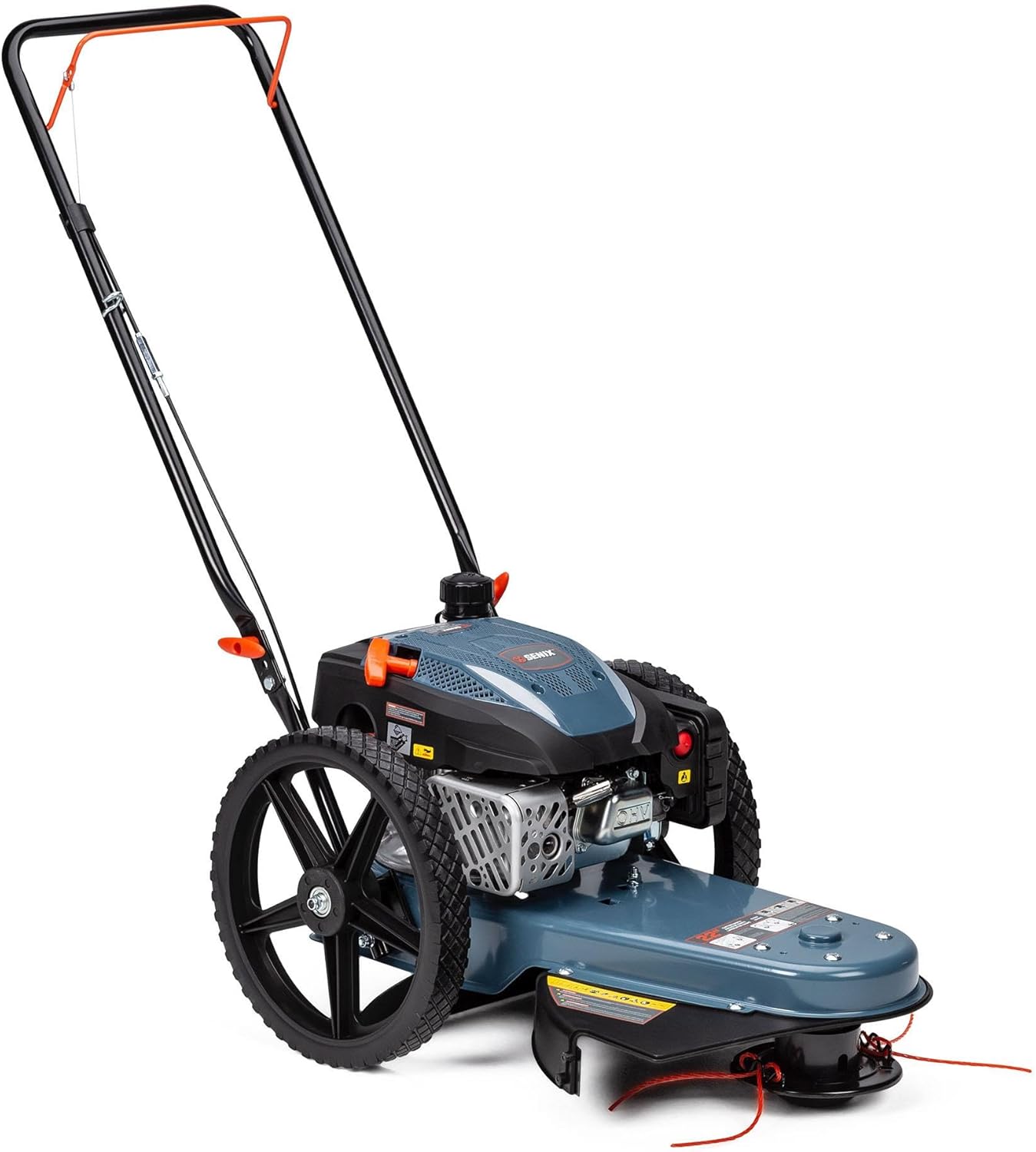
| Power Source | gasoline-powered |
|---|---|
| Cutting width | 22 inches |
| Size | 22-Inch |
| Recommended Uses For Product | Maintaining large lawns, trimming around edges, clearing brush |
The SENIX walk-behind brush cutter is a high-capacity wheeled string trimmer built to clear heavy weeds, overgrowth, and large lawn edges without pushing a full mower. It uses a 160 cc 4-cycle engine to drive a .155-inch line across a 22-inch cutting swath, so you cover wide passes quickly while the 14-inch rubber wheels smooth movement over uneven ground. Height is adjustable via a five-position steel deck so you can set cut height between about 1.6 and 3 inches, and the ergonomic, fold-down handle makes operation more comfortable and storage simpler. The unit arrives with engine oil and extra line and emphasizes durability with a steel deck and large wheels that resist rough terrain. Expect typical gas-tool maintenance such as fuel management, spark plug and air-filter care, and louder operation than electric alternatives. It is heavier and bulkier than handheld trimmers, so storage space and occasional tuning are required to keep peak performance when used frequently on big yards or brush areas.
Best for: Buyers who need a cost-effective, powerful wheeled trimmer to clear heavy weeds or maintain large yards and who are willing to perform basic gas-engine upkeep.
Less Ideal for: People with small yards, strict noise restrictions, or those who prefer low-maintenance electric or battery tools should consider lighter, quieter options.
- Large 22-inch cutting swath covers wide areas faster than handheld trimmers
- 160 cc 4-cycle engine provides steady power for heavy weeds and brush
- Five-position height adjustment for controllable cutting heights
- 14-inch rubber wheels improve maneuverability on uneven terrain
- Includes engine oil and replacement trimmer line out of the box
- Requires regular gas-engine maintenance and storage considerations
- Louder and heavier than electric or battery-powered alternatives
Verdict: If you want an affordable, gas‑powered wheeled trimmer that clears heavy brush and large areas quickly, this SENIX 22" walk‑behind unit delivers strong cutting power and durability.
Powerhorse 22 in. High-Wheeled Walk-Behind String Trimmer, 173cc

| Power Source | gasoline |
|---|---|
| Cutting width | 22 inches |
| Operation Mode | Manual |
| Engine displacement | 173cc |
The Powerhorse wheeled walk-behind string trimmer is built to tackle tall grass, thick weeds, and rough patches without the constant bending and bumping that handheld trimmers require. Its 173cc vertical gas engine provides strong torque for a 22-inch cutting swath, and the offset head plus rear wheels let you push the unit across uneven ground for faster coverage. It ships with a multi-pack of 4mm square line so you can get started trimming wide swaths right away. Practical advantages include straightforward walk-behind control that reduces operator fatigue and a design focused on durability for demanding yard or jobsite work. Important limitations are that it is a gas machine, so expect routine fuel, oil, and spark plug maintenance and more noise than electric alternatives; it is also relatively heavy to maneuver when lifting or loading. For someone who prioritizes reliable, powerful trimming across larger or rough lots, this is a practical, work-ready choice.
Best for: Buyers who need a robust, jobsite-capable trimmer for regular heavy-duty property maintenance and prioritize dependable power and uptime over quiet or lightweight operation.
Less Ideal for: Casual gardeners with small lawns, or buyers seeking a low-noise, low-maintenance cordless or electric option should consider lighter alternatives.
- Powerful 173cc gas engine for consistent cutting performance on thick vegetation
- 22-inch cutting width reduces passes and speeds up large-area trimming
- Wheeled walk-behind design reduces user fatigue and improves control on rough terrain
- Includes replacement trimmer line so the unit is ready to use out of the box
- Gas-powered operation requires regular fuel and engine maintenance
- Heavier unit that can be awkward to lift or transport for one person
Verdict: Choose this wheeled gas trimmer if you need a rugged, high‑power unit that covers wide swaths quickly for demanding yards and jobsite cleanup.
Earthquake Walk-Behind String Mower with 160cc Viper 4-Cycle Engine, 22-inch Cut

| Power Source | Gas Powered |
|---|---|
| Cutting width | 22 inches |
| Maximum Adjustable Cutting Height | 3 inches |
| Minimum Adjustable Cutting Height | 1.5 inches |
| Number of Positions | 5 |
The Earthquake Walk-Behind String Mower is a purpose-built machine for clearing thick grass, brush and tight paths where conventional rotary mowers cannot go. You push the unit along like a small mower while the 160cc Viper four-cycle engine drives a 22-inch string cutting head that accepts 0.155 line. Key usability features include a Grab-N-Go engagement bail that stops the cutting head without killing the engine, wide airless wheels that float over uneven ground, and an adjustable handlebar for operator comfort. The one-piece steel deck and oversized debris deflector help direct clippings away from the operator and let the head reach under low obstacles. Typical use is trimming long grass, reopening overgrown trails, or mowing around fences and trees where a wheeled mower would not fit. Expect easier starting and lower vibration from the 4-cycle engine compared with two-stroke trimmers, but know this is a handheld-string-mower alternative that still requires fuel, regular line replacement, and routine engine maintenance. It is a strong choice when you need a more stable, walk-behind solution for heavy trimming jobs rather than a handheld trimmer.
Best for: Gardeners and property owners who want a stable, walk-behind solution to clear thick grass and brush where a handheld trimmer or standard mower cannot reach and who prioritize reliable gas power and operator comfort.
Less Ideal for: People seeking a lightweight electric or battery tool for small yards or those who prefer near-silent, low-maintenance equipment for frequent light trimming.
- Powerful 160cc four-cycle Viper engine for reliable starting and sustained cutting power
- 22-inch cutting head covers wide swaths and reduces passes compared with handheld units
- Grab-N-Go engagement bail lets you stop the cutting head without restarting the engine
- Extra-wide airless wheels and adjustable handlebar improve balance and reduce operator fatigue
- Requires gasoline and routine engine maintenance unlike electric alternatives
- Cutting height range is limited to 1.5 to 3 inches which may not suit very low-mow finishes
Verdict: Choose this walk-behind string mower when you need reliable gas-powered cutting power and a wider 22-inch clearing path to tackle thick grass and brush where handheld trimmers fall short.
YARDMAX YL2250 22 in. 170cc Gas Walk-Behind String Trimmer Mower
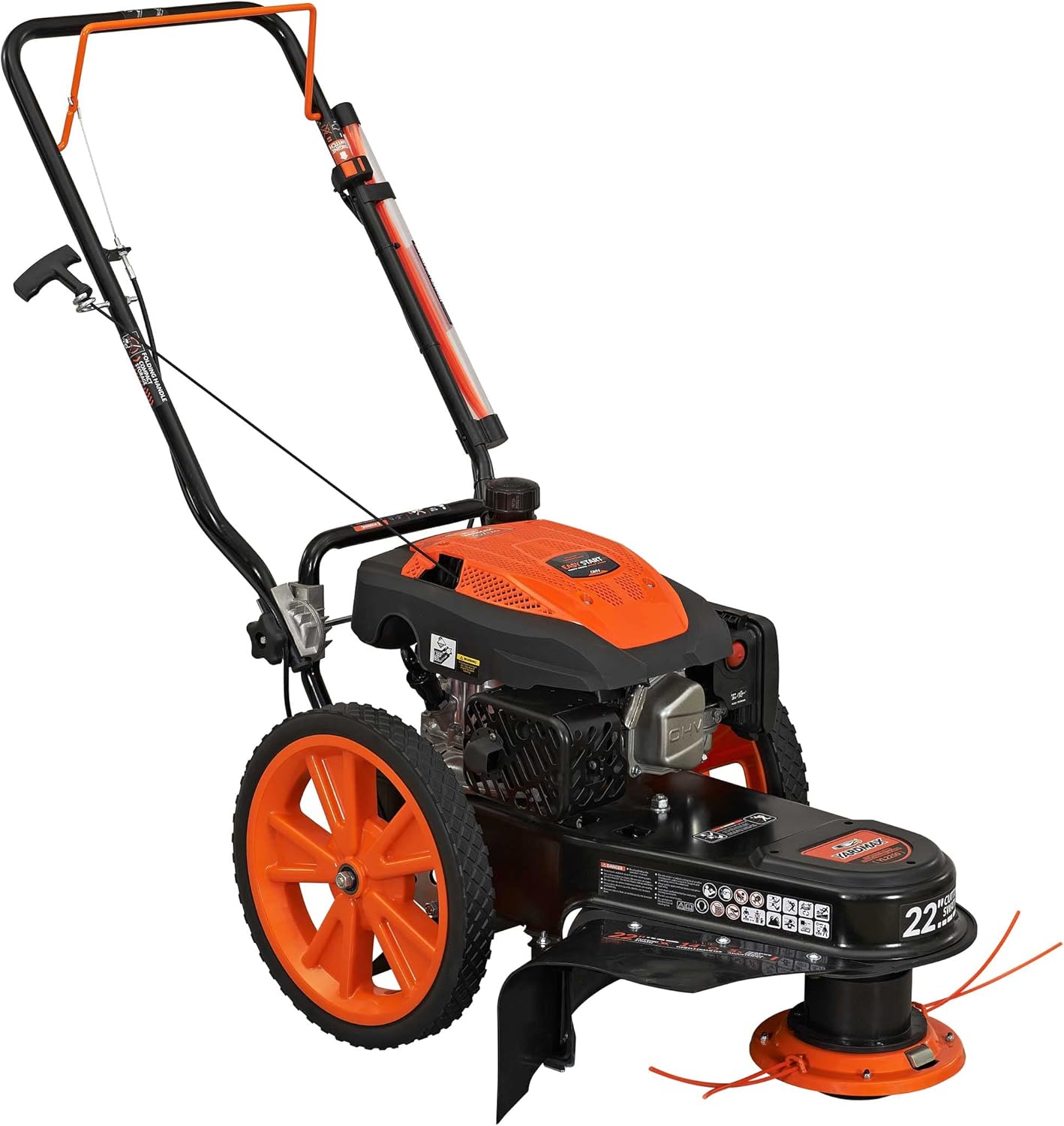
| Cutting width | 22 inches |
|---|---|
| Power Source | gasoline-powered |
| Number of Positions | 5 |
| Wheel Size | 14 inches |
The YARDMAX YL2250 is a wheeled, gas-powered string trimmer mower built to cover large areas and reach edges that a regular mower misses. You push it like a lawn mower while the offset head and 22-inch cutting width let you trim close to fences, beds, and structures without awkward angling. It stores extra pre-cut string in an onboard cord caddy and offers tool-free height adjustment across five positions from 1.5 to 3.5 inches, so you can adapt quickly between light touch-ups and heavier cuts. Rugged 14-inch ball-bearing wheels and a one-piece seamless metal deck reduce vibration and help it roll over uneven ground. Because it is gasoline-powered and manually operated, expect louder operation and the usual maintenance for small engines, and it is heavier to move than a battery model. For routine yard maintenance where fuel range and continuous power matter, this unit is a practical, no-frills performer.
Best for: Buyers who want a dependable, gas-powered wheeled trimmer to handle larger yards and frequent edge work with minimal refilling downtime and straightforward controls.
Less Ideal for: People who need a lightweight, quiet, low-maintenance solution for very small yards or who prefer cordless electric tools for zero-emission operation.
- Wide 22-inch cutting width covers more ground per pass than handheld trimmers
- Offset head design helps trim close to fences and landscaping without repositioning
- Onboard cord caddy stores extra pre-cut string for quick replacements
- Tool-free adjustment with five cutting heights from 1.5 to 3.5 inches
- 14-inch ball-bearing wheels and seamless metal deck reduce vibration and improve roll
- Gasoline engine requires regular maintenance and produces noise and emissions
- At over 60 pounds it is heavier to maneuver than battery-powered alternatives
Verdict: A robust gas walk-behind string trimmer mower that lets you trim wide swaths and finish edge work efficiently without frequent recharging.
Choosing the Right Wheeled String Trimmer: Key Factors to Consider
Cutting Width and Line Capacity
How wide the trimmer cuts per pass determines how quickly you finish large areas or long borders. A wider head clears more material but can demand more power and shorter battery runtime or heavier engine load. Line capacity matters because larger spools or dual-line heads mean fewer reloads during extended jobs, and they can handle thicker, wetter vegetation without bogging down.
For yard work that includes long fence lines or overgrown patches, prioritize a model with a broader cutting swath and a spool system that is easy to reload in the field. If your work is mostly tight beds and tight corners, a narrower head can be easier to control and less likely to fling debris into planting areas.
Wheel Stability and Maneuverability
Wheel size, tread pattern, and mounting geometry affect how a wheeled trimmer tracks on uneven turf, slopes, or gravel. Large, pneumatic or semi-pneumatic wheels roll over bumps and ruts more smoothly and maintain a consistent cut height. Narrow, hard wheels can snag in soft soil or sink into ruts, causing uneven cutting and extra effort.
Also consider steering and wheelbase length. A machine with a longer wheelbase and a well-placed front guide tends to stay straight on long runs, while a short, nimble layout helps when working around obstacles and tight corners. If you often trim near flower beds, look for good low-speed handling and the ability to make small-radius turns without tearing turf.
Power Source and Delivery
Whether gas, corded electric, or battery-powered, the power source dictates runtime, torque for dense vegetation, and maintenance needs. Gas models typically sustain higher RPM under load for heavy brush but require fuel and engine upkeep. Battery options deliver quieter operation and lower maintenance, but runtime depends on battery capacity and whether the motor maintains speed under heavy load.
Consider how the machine performs when meeting thick, wet grass or viney growth. A motor or engine that sags under load forces slower passes and more effort. Look for models with consistent line speed and clear specs on expected runtime or fuel consumption for longer jobs.
Adjustable Cutting Height and Handle Ergonomics
Adjustable height makes it easier to match turf contour and protect nearby plants from accidental clipping. Being able to set the head lower for close edge work or higher for rough brush improves versatility. Handle layout and angle affect push comfort, wrist strain, and control when negotiating slopes or transitions.
Ergonomic grips, simple height levers, and reach adjustments help you maintain a comfortable posture during extended use. If you have physical limitations or frequent long sessions, prioritize models with easy, tool-free height and handle adjustments to reduce fatigue.
Debris Management and Guard Design
How a trimmer controls thrown grass, twigs, and clippings matters for protecting plantings, hardscape, and bystanders. A well-designed guard channels debris away from beds and windows and reduces the chance of line entanglement around the wheels or drive. Guards also influence visibility to the cutting head and access for line changes.
Choose a trimmer with a guard that balances protection and serviceability. Removable or hinged guards can make cleaning and spool changes easier while still preventing most kickback of material toward the operator or fragile plants.
Serviceability and Spare Parts Availability
Routine maintenance-replacing spool line, checking drive components, and servicing wheels-keeps a wheeled trimmer reliable across seasons. Models that allow quick spool swaps, easy belt or gearbox access, and common replacement part sizes reduce downtime. Availability of standard spool sizes or common replacement wheels makes repairs simpler for a home gardener.
Consider how easy it will be to perform basic upkeep yourself and whether common consumables like replacement line are available in convenient packaging. If you prefer to minimize trips to a shop, favor designs with straightforward, tool-free service points.
When a Wheeled Trimmer Is the Better Choice
Wheeled string trimmers excel on long runs, wide lawn edges, and areas where a consistent cut height matters. They trade some tight-space nimbleness for stability and reduced effort, making them preferable when you need to cover distance without constant bending or lifting.
Choose a wheeled model if your property has extended fence lines, long driveways with grassy edges, or large patches of tall grass that would be tiring with a handheld trimmer. They also help keep a steady line height when trimming slopes or terraces.
- Better for sustained runs and long perimeters
- Reduces operator fatigue compared with handheld trimmers
- Maintains more consistent cut height on uneven ground
Choosing Between Gas and Battery Wheeled Trimmers
Gas machines deliver continuous power for heavy, fibrous vegetation and long jobs without swapping batteries. They are usually better at maintaining cutting speed under load but require fuel, spark plug checks, and periodic engine servicing.
Battery wheeled trimmers are quieter and lower maintenance. Look for high-capacity batteries and efficient motors if your work includes dense grass. If you choose battery power, consider whether you already have compatible battery packs for other tools to reduce extra expense.
- Gas: stronger under heavy load, more maintenance
- Battery: quieter, lower upkeep, limited by battery life
Edge Work Techniques with a Wheeled Trimmer
For clean edges, set the cutting height slightly lower than your mowing deck and walk at a steady pace. Overlapping passes by a few inches prevents scalloped results. On corners, slow down and use short, controlled strokes rather than trying to pivot the whole machine aggressively.
When trimming near beds, shield plants by angling the guard or using a temporary board to deflect clippings. Regularly check the spool for uneven wear to avoid feathered cutting lines that leave ragged edges.
- Set head lower than mower for close edges
- Overlap passes slightly for an even line
- Use shields to protect nearby plantings
Maintaining Your Wheeled Trimmer Between Uses
After each session, clear accumulated grass from wheels, guards, and the head area to prevent clogs and uneven tracking. Inspect line condition and replace or refill the spool before the line becomes so short that cutting efficiency drops.
Seasonal tasks include checking wheel bearings, lubricating pivot points, and examining drive belts or gears for wear. For gas models, drain fuel if storing for months; for batteries, store at partial charge in a cool, dry place.
- Clean wheels and guard after use
- Refill or replace spool line proactively
- Follow seasonal care for power source
Common Modifications and Add-Ons
Useful accessories include alternative spool types, heavier gauge cutting line for brush, and optional shield extensions to protect plant beds. Some gardeners add small pneumatic tires for better float over soft ground or swap in thicker line for thorny patches.
While modifications can improve performance for a specific task, ensure any changes do not interfere with wheel clearance or compromise the guard. Keep a factory-style spare spool available for general trimming duties.
- Thicker line for brushy patches
- Shield extensions for bed protection
- Upgraded wheels for soft or uneven ground
How We Chose the Best Wheeled String Trimmer
We focused on features and real-world handling that matter for wheeled string trimmers rather than marketing claims. Our selection began by filtering for machines designed to be pushed or self-propelled on wheels and excluding compact handheld-only trimmers or heavy-duty brush cutters not intended for wheeled use. We evaluated each candidate across several measurable dimensions: cutting width and line capacity to judge how much ground is cleared per pass; wheel and chassis design for stability on slopes and rough turf; power delivery and line speed for cutting density and fibrous weeds; adjustable cutting height and ergonomics to fit different edge and lawn conditions; and maintenance access and spare-line availability so the tool stays useful season after season. We also considered durability of drivetrain and guard design to reduce clogging. Products with limited replacement spool availability, poor wheel stability, or designs that compromised maneuverability were excluded. The final list emphasizes machines that balance wide coverage with predictable handling and reasonable upkeep for regular yard maintenance.
FAQ
How wide of an area will a wheeled string trimmer cover compared with a handheld trimmer?
Wheeled models often have wider cutting heads and maintain consistent line speed, so they clear long runs faster than handheld trimmers. Exact coverage depends on cutting width and power, but the wheeled design reduces fatigue over extended work.
Can a wheeled trimmer handle thick, woody brush?
Many wheeled trimmers can handle dense grass and light brush, but very woody or sapling-sized stems may overwhelm standard line. For heavy brush, use a unit with high line speed and thicker gauge line, or consider a dedicated brush cutter attachment.
Are wheeled trimmers hard to maneuver around garden beds and obstacles?
They are less nimble than a handheld trimmer but still manageable with the right wheelbase and steering geometry. Slow, controlled passes and shorter strokes around tight spots reduce turf damage and improve accuracy.
How often will I need to replace spool line or service the head?
That depends on usage and vegetation. For routine lawn edges, expect to refill spools periodically through the season. Inspect the head after heavy jobs and replace line before it becomes too short to cut efficiently to maintain consistent performance.
Is battery power sufficient for most wheeled trimming jobs?
Battery models are often sufficient for typical homeowner jobs and offer quieter operation and easier upkeep. For extended runs or very dense vegetation, ensure you have high-capacity batteries or a quick swap plan to avoid lost time.
Final Verdict
A wheeled string trimmer is a strong choice when you need to cover distance quickly and reduce operator fatigue. Prioritize cutting width and wheel stability if you have long runs or uneven ground, and favor robust power delivery when you expect heavy vegetation. Balance maintenance convenience and power source when matching a model to your workload. Focus on how the trimmer handles under load and how easy it is to service in the yard. That approach will help you pick a wheeled trimmer that delivers steady, predictable results season after season.
