

Note: This article contains affiliate links. If you click on these links and make a purchase, I may earn a small commission at no extra cost to you. This helps support my research and content. Read my full affiliate disclosure here.
Top-dressing with compost can rescue compacted turf, smooth bumpy lawns, and feed grassroots without heavy fertilizer. Choosing the right compost for lawn top dressing matters because particle size, nutrient profile, and weed-free status determine how the material integrates with the existing turf and soil. This guide looks at a shortlist of six top-rated composts selected for common lawn situations, from thin urban turf to established home lawns. Below we explain the factors that affect how compost performs when spread over grass, summarize why each option made the cut, and provide practical advice for applying and maintaining a top-dressed lawn.
Top Picks at a Glance
| Best Overall The best all-around choice for most situations | Coast of Maine Monhegan Blend Organic Topsoil (1 cu ft) |  |
| Best Quality Built to a higher standard if you want something more solid | Blue Ribbon Organics OMRI-Certified Organic Compost (Bag) |  |
| Best Value The sweet spot between price and what you get | Old Potters Organic Plant-Based Compost, 24 Quarts |  |
| Highest Rated A top-rated pick with lots of positive feedback | Brut Organic Worm Castings, 5 lb |  |
| Most Popular A crowd favorite that many people choose with confidence | R&M Organics Cow Manure Compost Soil Amendment (10 lb) |  |
Coast of Maine Monhegan Blend Organic Topsoil (1 cu ft)
| Unit Count | 1 Count |
|---|---|
| Volume | 1 cubic feet |
| Main Ingredients | Composted farm manures, sphagnum peat moss, aged bark |
| Made in | United States |
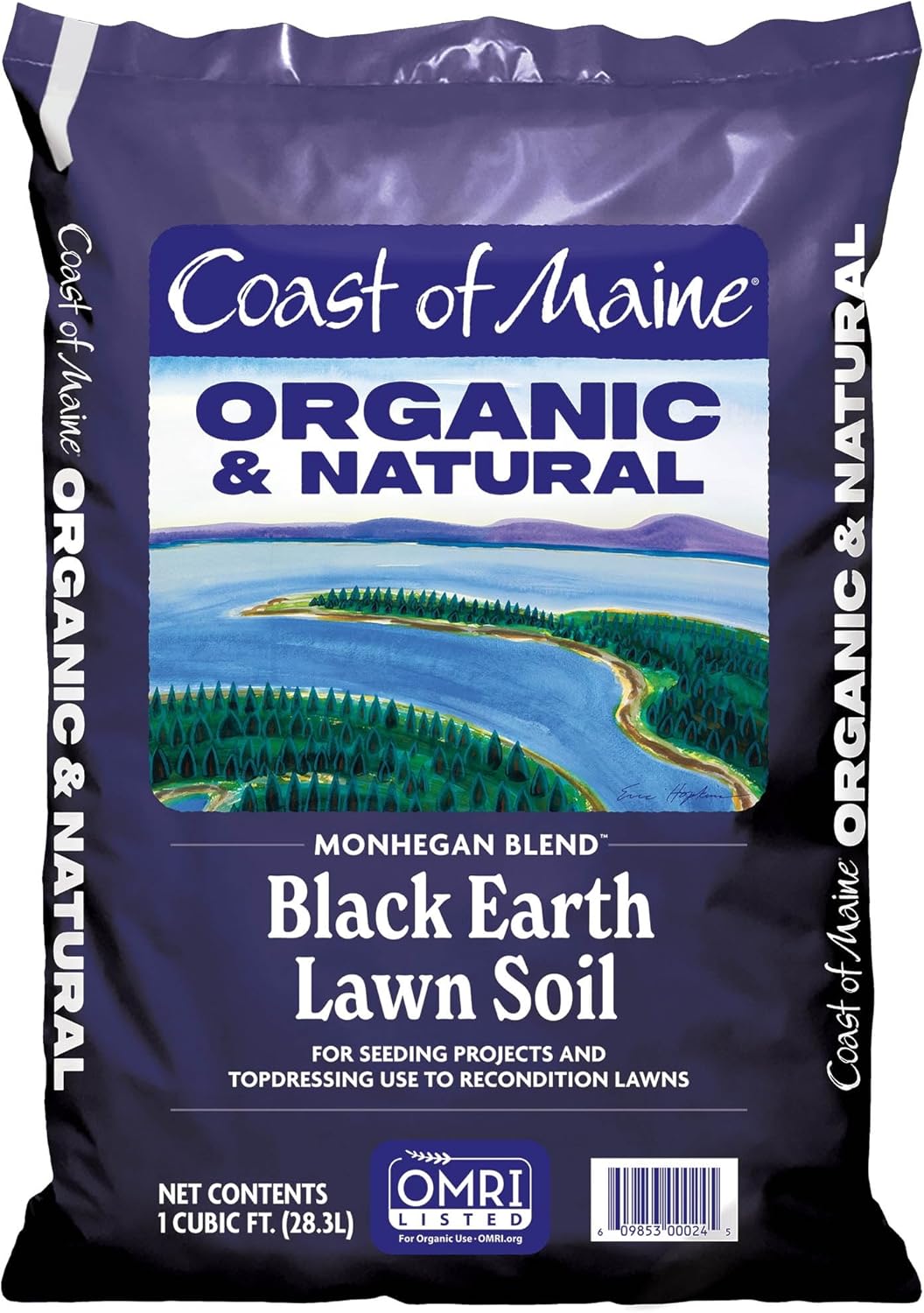
Coast of Maine Monhegan Blend is an organic topsoil formulated from composted farm manures, sphagnum peat moss, and aged bark that works well for reconditioning lawns and filling thin or bare patches. Typical use is as a topdressing or spot repair material: spread a thin layer over the turf or bare area, water it in, and allow grass to grow through. Notable features include OMRI listing for organic gardening, a fine texture that makes it easy to spread by hand or with a rake, and ingredients that improve moisture retention and soil structure to support root development and beneficial microbes. In practice this means fewer amendments are needed to establish seed or strengthen weakened turf and it is light enough to use in raised beds and containers as well. Limitations to note are the small 1 cu ft bag size, which requires many bags for large lawns, and the peat content, which some gardeners avoid for sustainability reasons. Also handle with care to avoid inhaling fine particles.
Best for: Gardeners who prioritize a reliable, organic soil amendment for repairing lawns and improving thin turf and who prefer ready-to-use topdressing that supports soil biology.
Less Ideal for: People who need to cover large lawn areas with a single purchase or who want a peat-free or bulk delivery soil option.
- OMRI-listed organic formula suitable for organic lawns
- Fine, easy-to-spread texture ideal for topdressing and patching
- Blend of composted manures, peat moss, and aged bark improves moisture retention and soil structure
- Supports beneficial microorganisms that aid turf recovery
- Small 1 cubic foot bag means multiple bags are needed for larger lawns
- Contains peat moss, which some gardeners avoid for environmental reasons
Verdict: Choose this OMRI-listed topsoil when you want a dependable organic blend for reliable lawn patching and topdressing.
Blue Ribbon Organics OMRI-Certified Organic Compost (Bag)

| Brand | Blue Ribbon Organics |
|---|---|
| Included Components | Compost |
| Item Type Name | Organic Compost |
| Volume | 7.48 gallons |
Blue Ribbon Organics OMRI-Certified Compost is a bagged, fully processed organic compost designed to be worked into beds, used as a topdressing on lawns, or applied as a mulch around trees and shrubs. It is made from recycled food and yard residuals, monitored for maturity and contaminants, and certified for organic use so you can add it directly to vegetable, flower, and landscape plantings. Typical applications include incorporating 3–4 inches into new beds, adding a light 1/4–1 inch replenishment to established beds, or topdressing lawns at 1/4–1/2 inch in fall. The product claims improved aeration, increased water retention, pH buffering, and a boost of key nutrients such as nitrogen, phosphorus, and potassium. Because it is a natural material, moisture variation can affect bag weight and handling, and a single bag covers a modest area, so larger projects will require multiple bags or bulk compost. For gardeners focused on measurable soil improvement and organic certification, this compost delivers an easy, safe way to rebuild soil health without synthetic inputs.
Best for: Gardeners who prioritize measurable soil improvement and organic certification and want a ready-made compost to reliably boost planting beds, lawns, and established landscapes.
Less Ideal for: Large-scale landscapers or gardeners needing to amend many beds quickly should consider bulk compost options rather than repeated bag purchases.
- OMRI certified and meets US Composting Council standards so it is suitable for organic vegetable and flower gardens
- Processed and tested for maturity, pathogens, and weed seed to reduce risk of introducing problems
- Versatile use: can be tilled into new beds, used as a topdressing for lawns, or applied as mulch around trees and shrubs
- Contains a balanced mix of organic nutrients and improves soil aeration and water retention
- Bag size/volume is modest so several bags are needed for large beds or multiple trees
- Moisture variation in a natural product can make individual bag weights inconsistent
Verdict: Choose this bagged OMRI-certified compost when you want a tested, organic-ready product that reliably improves soil structure and supports performance-oriented gardening.
Old Potters Organic Plant-Based Compost, 24 Quarts

| Unit Count | 768 Fluid Ounces |
|---|---|
| Style Name | Nutrient-rich |
| Brand Name | Old Potters |
This Old Potters organic compost is a plant-based, chemical-free amendment intended to boost soil health for gardens and lawns. Gardeners typically use it as a top dressing, mixed into potting mixes, or incorporated into planting holes to improve aeration and moisture retention. Notable features include a nutrient-rich blend with peatmoss and horticultural charcoal mentioned by the brand and a large 24-quart (768 fl oz) volume per bag. In practice it adds organic matter that can help turf roots establish when used as a thin top dressing and will lighten compacted soil when worked in. The product is sustainable in that it recycles plant material and avoids synthetic inputs. Important limitations are standard for compost products: it may vary in particle size and nutrient concentration batch to batch, and handling requires gloves and a mask for dust protection due to possible allergens. It is not a quick-release synthetic fertilizer, so expect gradual improvement over weeks to months rather than instant green-up.
Best for: Home gardeners and turf stewards who prefer organic, sustainable soil amendments and want a reliable compost to improve soil structure and moisture retention over time.
Less Ideal for: People who need immediate, fast-release nutrient fixes or precise, laboratory-grade soil amendments for professional turf management.
- 100% plant-based and chemical-free formulation suitable for organic lawn care
- Large 24-quart bag provides substantial coverage for top dressing or mixing into soil
- Contains peatmoss and horticultural charcoal components that aid aeration and moisture control
- Improves long-term soil structure and nutrient availability when incorporated into turf or garden beds
- Not a fast-acting synthetic fertilizer so results develop over multiple weeks
- May produce dust and requires gloves and a mask for safe handling due to allergy risk
Verdict: A roomy, plant-based compost that steadily improves soil structure and moisture retention, making it a practical choice for organic lawn top dressing.
Brut Organic Worm Castings, 5 lb

| Item Form | Granules |
|---|---|
| Specific Uses For Product | Gardening,Organic |
| Target Species | All plants |
| Mixing Ratio | 1:5 |
Brut Organic Worm Castings function as a concentrated, natural soil amendment you mix into potting mixes or top-dress garden beds and raised beds. Typical use is mixing at the recommended 1:5 ratio for new indoor plants, sprinkling a cup around established houseplants, or working into outdoor planting holes and beds according to the brand directions. The product is OMRI/CDFA listed and produced in controlled conditions, which supports consistent nutrient content and beneficial microbial life that help roots establish, improve soil structure, and increase moisture retention without burning plants. Practical benefits for raised garden beds include improved aeration, slow-release nutrients, and a boost in microbial activity that supports long-term fertility. Limitations are that it is not a complete NPK fertilizer for immediate heavy feeding needs and larger beds require significant quantities to hit the suggested per-square-foot rates, so frequent applications or bulk purchases may be needed for big projects.
Best for: Gardeners who prioritize dependable, organic soil improvement for raised beds and container gardens and prefer predictable, low-risk amendments that support long-term soil health.
Less Ideal for: Those needing immediate, high-NPK feeding for heavy-feeding crops or gardeners who want to amend very large beds without buying supplemental bulk material.
- Certified organic and produced indoors for consistent purity
- Rich in beneficial microbes that improve soil structure and plant vigor
- Easy-to-use granular form suitable for mixing or top-dressing
- Not a standalone high-NPK fertilizer for rapid nutrient correction
- Five-pound bag may be small for large raised beds and repeated seasonal use
Verdict: Use this OMRI/CDFA-listed worm castings product to reliably build long-term fertility and microbial health in raised beds and containers.
R&M Organics Cow Manure Compost Soil Amendment (10 lb)

| Item Form | Solid |
|---|---|
| Specific Uses For Product | Organic |
| Application Method | Apply a thin layer around plants or mix into soil |
| Coverage | All-purpose |
| Target Species | fruits, vegetables, flowers, lawns, trees |
This 10 lb bag of R&M Organics compost is a straightforward, all-purpose soil amendment aimed at improving soil health in garden beds, containers, and raised beds. Made from cured cow manure and fully composted, it is low-odor and easy to work with — apply a thin quarter-inch layer around established plants or mix into planting soil at the recommended 5:1 ratio for new beds. The compost enhances moisture retention, aeration, and organic matter, which helps roots establish and reduces watering frequency. Its small bag size and modest weight make it convenient for small to medium projects and for gardeners who prefer incremental soil improvements. Because the product is pure compost rather than a balanced fertilizer, it is best used as a long-term soil builder rather than a quick nutrient fix; you may still need targeted fertilizers for heavy-feeding vegetables or to correct specific nutrient deficiencies. The simplicity and low odor make it a practical choice for backyard growers who want a reliable organic amendment without handling fresh manure or bulk deliveries.
Best for: Gardeners who prefer incremental, low-effort soil improvement for beds and containers and who prioritize organic, low-odor amendments for everyday maintenance.
Less Ideal for: Large-scale gardeners or landscapers who need bulk amendments or immediate corrective fertilizers for specific nutrient deficiencies should look for bulk compost or formulated plant foods.
- Fully composted cow manure reduces pathogens and minimizes odor compared with raw manure
- Improves soil structure and moisture retention for beds, containers, and raised beds
- Small 10 lb bag is easy to carry, store, and apply for small to medium gardens
- Versatile all-purpose amendment suitable for fruits, vegetables, flowers, lawns, and trees
- Not a formulated fertilizer so it may not supply immediately available nutrients for heavy feeders
- Bag size is small for larger beds or bulk soil rebuilding projects
Verdict: A convenient, low-odor organic compost that steadily improves soil structure and moisture retention for small to medium garden beds.
Choosing the Right Compost for Lawn Top Dressing: Key Factors to Consider
Particle Size and Screening
Particle size determines how the compost settles into the grass canopy and how evenly it spreads. Fine, screened compost blends level small depressions and avoid clumping on the blades, while coarse or woody pieces sit on top and make the lawn look untidy. Ideal top-dressing compost is screened to remove sticks and large fragments so it can be applied in thin layers without smothering grass.
Screening also affects how quickly the compost integrates with the soil. Finer particles work into thatch and surface soil faster, improving seed-to-soil contact for overseeding. If you plan multiple light top-dressing passes, consistent screening helps maintain even texture across applications.
Nutrient Profile and C:N Ratio
A balanced nutrient profile provides slow-release fertility to grassroots without the spike that can encourage excessive shoot growth or disease. The carbon-to-nitrogen ratio indicates how quickly microbes will consume the material and release nutrients. Compost with a moderate C:N (not too high) supports microbial activity without creating a short-term nitrogen drawdown that can stress grass.
Knowing the nutrient balance helps you decide whether to pair top-dressing with a starter fertilizer or overseed mix. Lawns generally benefit from modest, steady nutrient additions rather than high-soluble-nitrogen inputs when top-dressing with compost.
Weed Seed Content and Sanitation
Compost that contains viable weed seed or plant pathogens can introduce problems rather than fix them. Properly managed composting reaches temperatures that kill most common weed seeds and pathogens. Composts labeled as weed-free or made from hot, monitored processes reduce the risk of bringing in new weeds.
For high-value lawns or recently renovated turf, prioritize compost with documented sanitation practices. In less critical situations, locally sourced compost can work if it is well-rotted and screened, but gardeners should inspect for germinable seeds before large-scale use.
Maturity and Stability
Immature compost will continue decomposing after application, which can generate heat, produce odors, or tie up nitrogen as microbes break down fresh carbon. Stable, mature compost has finished the active decomposition stage and will behave predictably on the lawn.
Mature compost is less likely to compact or shift, and it provides structure and pore space that benefits soil biology. Ask suppliers about curing time or choose products tested for stability to avoid surprises during the growing season.
Organic Matter Content and Soil Improvement
The primary long-term benefit of top-dressing with compost is increasing soil organic matter. Organic matter improves water retention in sandy soils and drainage in heavy clays by enhancing structure and aggregation. It also supports beneficial soil life that helps with nutrient cycling and root health.
Higher organic matter composts deliver more lasting gains, but the application rate still needs to be thin to avoid smothering grass. Consistent, repeat applications of modest depth are the safest way to build organic matter over time.
Moisture Content and Ease of Spreading
Moisture level affects handling and application. Compost that is too wet will clump and may not spread evenly from a broadcast spreader or by hand raking. Overly dry compost can be dusty, won't settle, and may blow away on windy days.
For practical lawn work, aim for compost that is slightly moist and free-flowing so it passes through spreader openings and lays thinly across the turf. This reduces labor and improves uniformity of the top-dressing layer.
When to Top-Dress Your Lawn
The best window for top-dressing depends on grass type and climate. For cool-season lawns, early fall is ideal because temperatures support root growth and seedling establishment if you overseed at the same time. Warm-season turf responds best to late spring or early summer when the grass is actively growing and will incorporate the material faster.
Avoid top-dressing during drought stress or extreme heat since the additional layer can reduce light to crowns and slow recovery. Plan top-dressing after aeration or light scarification so the compost has a chance to work into surface soil and contact roots.
- Coordinate with aeration or overseeding for best results
- Avoid application during drought or heat stress
- Prefer windows when root growth is active
How to Apply Compost for Top Dressing
Spread compost in thin, even layers. Aim for a maximum of about 1/4 inch per pass so grass blades remain visible and air exchange continues. For deeper leveling, make multiple passes spaced several weeks apart to let grass recover and microbes incorporate the material.
Use a push broom, leaf rake, or a drop spreader calibrated for fine materials. After spreading, water lightly to settle the compost and help it work into the canopy. If overseeding, apply seed on top of the compost layer or mix a light seed-compost blend for better seed-to-soil contact.
- Target 1/8 to 1/4 inch per application
- Use multiple light passes for deeper leveling
- Water gently after application to settle material
Tools and Equipment That Help
A few basic tools make top-dressing faster and neater. A wheelbarrow and shovel handle bulk compost moves. For small yards, a leaf rake and push broom work well to distribute thin layers. For larger areas, a drop spreader or powered top-dresser attachment speeds the job and improves uniformity.
Consider a soil probe or core aerator before top-dressing. Aeration creates channels for compost to move into the soil, increasing contact with roots. Lightweight seeders that can broadcast a fine compost-seed mix also save time if you plan to overseed at the same time.
- Wheelbarrow and shovel for transport
- Drop spreader or powered top-dresser for larger lawns
- Rake or broom for finishing; consider aeration beforehand
Pairing Top-Dressing with Overseeding and Fertilizing
Top-dressing is most effective when combined with overseeding in thin or worn lawns. Compost improves seed-to-soil contact and provides a microenvironment for seedling establishment. Use fine, screened compost to avoid burying small seed too deeply.
Limit soluble high-nitrogen fertilizer when top-dressing with high-organic compost because the compost itself supplies gradual fertility. If you need rapid greening, use a light starter fertilizer targeted at seedlings, but avoid overapplication that can burn new turf.
- Top-dress at the same time as overseeding for best establishment
- Choose fine compost so small seed remains at the soil surface
- Use starter fertilizer sparingly if compost provides sufficient nutrients
Storing and Transporting Compost Safely
Store compost on a hard surface or under cover to keep it from mixing with subsoil or becoming waterlogged. Avoid long-term piles on lawns, which can smother grass and introduce uneven moisture conditions. Transport in covered containers on windy days to reduce dust and loss.
If you buy by the yard, plan delivery times to coincide with application to minimize double handling. For gardeners producing their own compost, screen and cure batches before using them on lawns to ensure maturity and weed-free status.
- Keep compost on hard surfaces to prevent contamination
- Cover during transport to reduce dust loss
- Cure and screen home compost before use on lawns
How We Chose the Best Compost for Lawn Top Dressing
We focused on attributes that directly affect how compost behaves when applied thinly over turf. Primary evaluation criteria included particle size and texture for even spreading and quick incorporation into the grass canopy; nutrient balance and carbon-to-nitrogen ratio to support gradual root uptake without burning; weed seed and pathogen screening to avoid introducing unwanted plants or disease; maturity and stability so the material will not reheat or decompose rapidly on the lawn; organic matter content and moisture-holding capacity for soil structure improvement; and consistency of supply for gardeners planning phased top-dressing. We excluded materials that are primarily soil blends, unprocessed yard waste with visible woody chunks, or fresh manures that can scorch grass. Products were also screened out if they lacked clear production or screening information, which increases the risk of uneven performance on a lawn. The result is a set of composts that meet practical on-lawn standards for safety, texture, and turf benefit.
FAQ
How thick should compost be when top-dressing a lawn?
Apply thin layers, typically 1/8 to 1/4 inch per pass. Thicker single applications can smother grass; use multiple light passes spaced over weeks for deeper correction.
Can I use any garden compost for lawn top dressing?
Not all composts are suitable. Choose screened, mature compost with low weed seed content and an appropriate texture. Fresh or woody composts can cause odor, uneven settling, or nitrogen drawdown.
Should I aerate before applying compost?
Aeration helps compost move into the root zone and improves contact with soil. Core aeration is especially beneficial when addressing compaction or thatch before top-dressing.
Is compost a substitute for fertilizer when top-dressing?
Compost supplies slow-release nutrients and improves soil biology, but it is not an immediate replacement for a targeted starter fertilizer if rapid greening is needed. Assess soil fertility and the compost's nutrient content to decide.
When is the best time to top-dress my lawn?
For cool-season grasses, early fall is preferred. Warm-season grasses do better with top-dressing in late spring to early summer when growth is vigorous and incorporation is faster.
Final Verdict
Choose compost for lawn top dressing based on how it will behave on your turf. Prioritize screened particle size, confirmed maturity, and low weed-seed content so the material integrates quickly and improves soil structure. Consider moisture handling and organic matter content relative to your soil type, and plan thin, repeated applications rather than a single heavy layer. By matching compost attributes to your lawn goals and working with proper timing and tools, you can steadily rebuild soil health and improve turf resilience without risking smothering or weed introduction.
