

Note: This article contains affiliate links. If you click on these links and make a purchase, I may earn a small commission at no extra cost to you. This helps support my research and content. Read my full affiliate disclosure here.
A good landscaping garden rake is one of the simplest tools that dramatically changes how your beds, lawn edges, and paths look at the end of a job. Whether you are finishing a bed after planting, spreading mulch, or leveling fresh topsoil, the right rake saves time and reduces strain. This guide shortlists seven strong options that gardeners and landscapers turn to for consistent results. We evaluated each rake for tine durability, handle ergonomics, material resistance, and the tool's usefulness across common yard tasks. Read on to see how these picks perform on those dimensions and which features matter most for your landscape needs.
Top Picks at a Glance
| Best Overall The best all-around choice for most situations | THE GROUNDSKEEPER II Garden Rake with Fiberglass Handle and Hardened Steel Tines |  |
| Best Quality Built to a higher standard if you want something more solid | Truper Tru Pro 15-Tine Forged Bow Rake with 60" Fiberglass Handle and Cushion Grip |  |
| Best Value The sweet spot between price and what you get | DIIG 63" Bow Rake with 17-Tine Metal Head and Stainless Steel Handle |  |
| Best Budget The cheapest option that still gets the job done reliably | YEELOR 16-Tine Heavy-Duty Garden Bow Rake with Adjustable Stainless Steel Handle |  |
| Highest Rated A top-rated pick with lots of positive feedback | Bully Tools 7-Gauge 16-Tine Stone Rake with 66" Fiberglass Handle |  |
| Most Popular A crowd favorite that many people choose with confidence | Oliynedy Adjustable Metal Leaf Rake with Expandable Head |  |
| Best Seller A high-volume bestseller chosen again and again | VEVOR 36-inch Landscape Rake with 75-inch Aluminum Handle |  |
THE GROUNDSKEEPER II Garden Rake with Fiberglass Handle and Hardened Steel Tines

| Head Material | Alloy Steel |
|---|---|
| Handle Material | Fiberglass |
| Head Size | 21 inches |
| Number of tines | 28 |
The Groundskeeper II is a purpose-built garden rake that uses angled, hardened steel tines and a lightweight fiberglass handle to make leaf removal, mulch work and light de-thatching easier. In everyday use the 21-inch head with 28 spring-loaded tines digs into debris so you can rake standing up with less downward force, which reduces back strain on longer jobs. The fiberglass handle keeps the tool light while the co-polymer head resists breakage, and the tines are replaceable for longer service life. It also self-cleans when flipped and pulled toward you, speeding repetitive passes and clearing needles or pine straw efficiently. Some assembly is required and the aggressive tines are stiffer than flexible leaf rakes, so they work best on lawns, beds, gravel and heavier debris rather than on very delicate plants or fine mulch that could be disturbed. Overall it is a durable, pro-oriented option if you want a rake that reduces effort and stands up to frequent use.
Best for: Buyers who value a durable, low-effort rake for frequent yard work and prefer tools with proven customer feedback and long-term reliability.
Less Ideal for: If you only need an occasional, gentle leaf rake for delicate flower beds or very fine mulch, a softer fan-style rake would be a better choice.
- Light overall weight reduces fatigue during extended use
- Angled, spring-loaded hardened steel tines let you rake while standing and dig in without downward pressure
- Durable construction with fiberglass handle and co-polymer head for professional-use longevity
- Self-cleaning action when flipped and pulled speeds work and reduces clogging
- Stiffer steel tines can be too aggressive for very delicate plants or fine decorative mulch
- Requires minor assembly before first use
Verdict: Choose the Groundskeeper II when you want a lightweight, professional-grade rake that reduces back strain and holds up to regular, heavy yard work.
Truper Tru Pro 15-Tine Forged Bow Rake with 60" Fiberglass Handle and Cushion Grip

| Rake Type | Garden Rake |
|---|---|
| Handle Material | Fiberglass |
| Head Material | Metal |
| Grip Material | Thermoplastic Elastomer (TPE) |
This Truper Tru Pro bow rake is built for heavy landscape work, combining a one‑piece forged steel 15‑tine head with a long fiberglass handle and an extended cushion grip. It is typically used for leveling soil, spreading gravel or mulch, and clearing debris across garden beds or larger landscaping areas. The forged head provides strong tines that resist bending when dragging heavy material, while the bow design gives a little spring for improved control and smoother leveling. The fiberglass handle resists weathering and won't rot like wood, and the TPE cushion grip reduces hand fatigue during extended use. Practical benefits include durability for frequent contractor or homeowner use and versatility across tasks from prepping beds to moving small aggregates. Limitations are that the long non‑collapsible handle and solid forged head make it a full‑size outdoor tool that is less convenient for tight spaces or compact storage, and the fiberglass handle can shatter if subjected to sudden heavy impact.
Best for: Buyers who prioritize rugged, professional‑grade performance for frequent landscaping tasks like soil leveling, gravel spreading, and bed preparation and want a tool that holds up under heavy use.
Less Ideal for: If you need a small, lightweight rake for tight spaces, patios, or frequent folding storage, this full‑length professional rake is more than required.
- Forged one‑piece 15‑tine steel head for strength and resistance to bending
- 60‑inch fiberglass handle resists rot and weathering for long service life
- Extended TPE cushion grip reduces hand fatigue during long jobs
- Bow rake shape provides controlled spring action for smoother leveling and spreading
- Non‑collapsible long handle makes storage and transport bulkier than compact rakes
- Fiberglass handles can shatter if struck hard, requiring careful handling
Verdict: Choose this rake when you need a robust, professional‑grade tool that reliably handles heavy leveling and spreading tasks.
DIIG 63" Bow Rake with 17-Tine Metal Head and Stainless Steel Handle
| Handle Material | Stainless Steel |
|---|---|
| Head Material | Metal |
| Head Size | 17 |
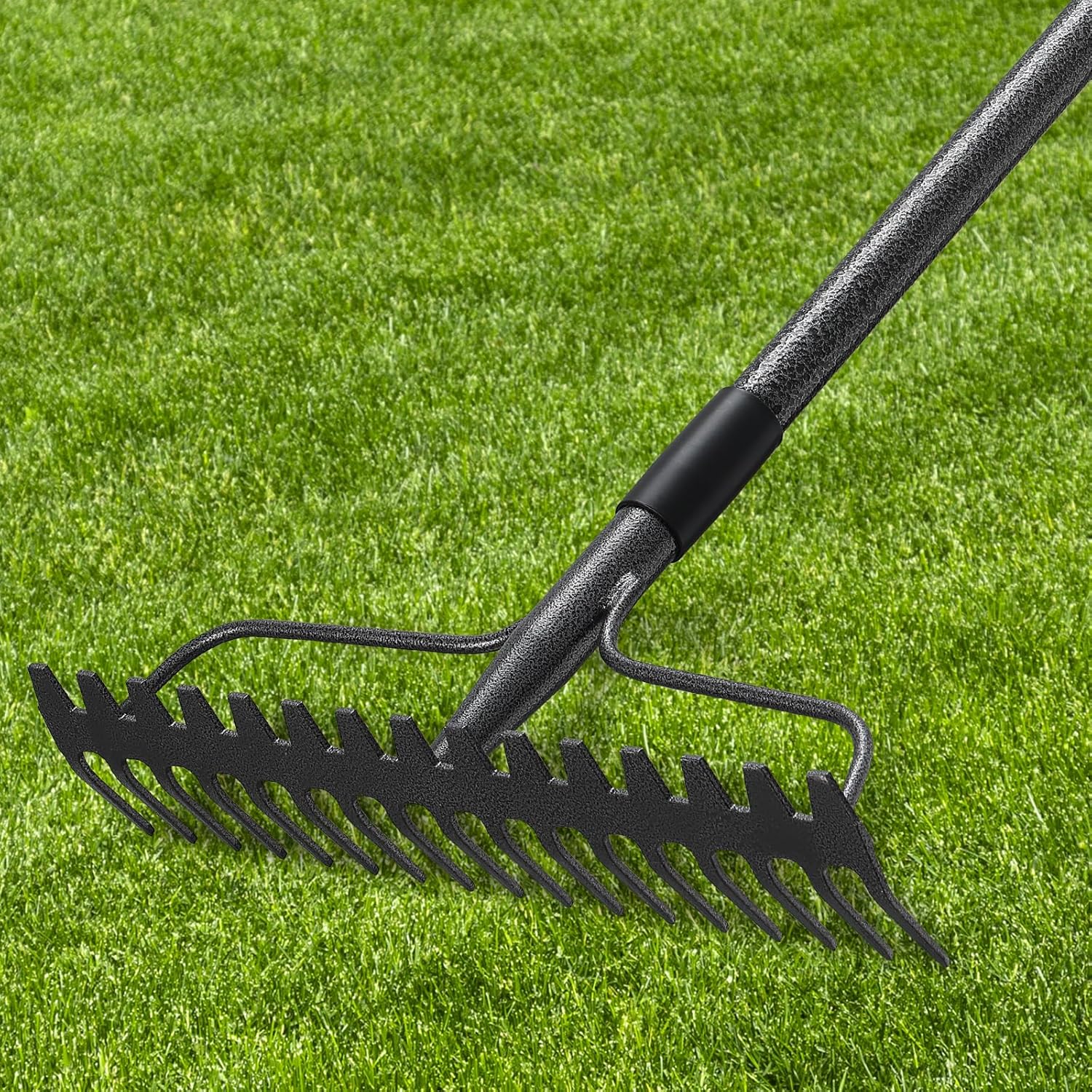
The DIIG 63" bow rake is a versatile garden tool built for heavier yard chores like breaking up compacted soil, spreading topsoil or gravel, and gathering light debris. Its 17 steel tines and 17" wide head penetrate and level ground efficiently, while the 3mm-thick head and triple-welded connection reduce the chance of teeth bending or detaching during tougher jobs. The stainless steel multi-section handle adjusts by rotating and tightening sections, so you can shorten it for detail work or extend for leverage when prying rocks out of grass. Practical benefits include good ground coverage per stroke, corrosion-resistant materials for outdoor use, and straightforward assembly. Limitations are that the all-metal stainless handle and grip may feel cold or slick in wet conditions and the rake is aimed at general yard use rather than delicate gardening tasks where finer tines are needed. For removing medium-sized rocks from turf and general leveling this rake offers durability and reach, but expect a firm, utilitarian feel rather than cushioned ergonomics.
Best for: Gardeners who want a single, durable tool for medium-duty yard work such as removing rocks from turf, breaking up compacted soil, and leveling ground without switching tools frequently.
Less Ideal for: Those needing a delicate rake for fine gardening, transplanting, or prolonged raking where a lightweight, cushioned-handle tool would be preferable.
- 17-tine wide metal head provides good coverage for leveling and pulling rocks from grass
- Triple-welded head connection and 3mm-thick tines increase durability under heavy use
- Stainless steel handle resists rust and the multi-section design allows adjustable length
- Metal construction handles heavier materials like gravel, compacted soil, and thatch
- All-metal grip and handle offer little cushioning and can be uncomfortable during long sessions
- May be heavier than lightweight rakes, which can tire some users over extended use
Verdict: Sturdy, wide 17-tine head and rust-resistant stainless steel construction make this rake a reliable choice for removing rocks from grass and heavy yard leveling tasks.
YEELOR 16-Tine Heavy-Duty Garden Bow Rake with Adjustable Stainless Steel Handle

| Handle Material | Stainless Steel |
|---|---|
| Head Material | Aluminum |
| Grip Material | Rubber |
| Head Type | 16-tine bow rake |
This YEELOR bow rake is a straightforward landscaping tool built for common yard tasks like loosening soil, leveling mulch, spreading gravel, and gathering debris. The 16-tine aluminum head is fastened with screws for a secure feel, and the carbon/stainless steel construction aims to resist rust while staying sturdy during heavier use. The handle adjusts by combining sections, so you can shorten it for storage or extend it for reach without tools. A rubber ergonomic grip makes longer sessions more comfortable and helps control the rake when breaking clods or smoothing topsoil. Practical advantages are reliability and simplicity: it assembles quickly, tolerates routine landscaping work, and avoids fragile fittings found on cheaper rakes. The main trade-offs are that the head is aluminum rather than thicker forged steel and the adjustable pole uses a multi-joint design rather than a continuous forged shaft, so very heavy, professional repeated use may wear connections faster than industrial-grade rakes. For homeowners and weekend landscapers who want a durable, no-frills tool on a budget, this rake covers the essential jobs well.
Best for: Homeowners and DIY landscapers who need an affordable, durable rake for occasional to regular garden and yard tasks and who prioritize value over industrial-grade longevity.
Less Ideal for: Professional landscapers or users who perform continuous heavy-duty raking and require the absolute highest durability and single-piece construction.
- Secure 16-tine aluminum head fastened with screws to reduce loosening during use
- Adjustable stainless steel handle lets you change length for storage and reach without tools
- Carbon steel and stainless materials offer corrosion resistance for longer outdoor life
- Ergonomic rubber grip reduces hand fatigue during extended raking sessions
- Aluminum head is lighter and less impact-resistant than forged steel heads
- Multi-joint adjustable handle may be less durable than a single-piece shaft under heavy professional use
Verdict: A cost-conscious, reliable bow rake that handles typical landscaping tasks with a secure 16-tine head and adjustable stainless steel handle.
Bully Tools 7-Gauge 16-Tine Stone Rake with 66" Fiberglass Handle

| Rake Type | Stone Rake |
|---|---|
| Head Material | Alloy Steel |
| Handle Material | Fiberglass |
| Head Size | 18 inches |
| Tines | 16 |
The Bully Tools 7-gauge 16-tine stone rake is built for heavy-duty gravel and yard-prep work where strength and coverage matter. The extra-thick alloy-steel head and 16 tines let you move and level gravel, mulch, and compacted soil without bending or missing spots, while the 66-inch fiberglass handle gives good leverage and cuts fatigue compared with a short wooden shaft. Typical use cases are spreading stone, smoothing beds before seeding, redistributing mulch, and scraping out debris or roots. Notable features are the commercial 7-gauge steel construction, rubber grip for control, and weather-resistant fiberglass handle that holds up to moisture. Practical benefits include faster coverage of large areas thanks to the wide 18-inch head and durable materials that stand up to repeated heavy use. Limitations are that its heavy-duty build makes it heavier to swing than lightweight leaf rakes and the fixed long handle can be awkward in tight beds or trucks; minor assembly is required out of the box.
Best for: Buyers who prioritize performance and durability for large gravel beds, landscaping jobs, or regular heavy-duty yard work and want a tool that speeds up coverage and holds up to frequent use.
Less Ideal for: Not the best choice for gardeners who need a lightweight rake for delicate beds, tight planting areas, or primarily leaf cleanup in small yards.
- Commercial-grade 7-gauge alloy-steel head for exceptional durability under heavy loads
- 16 tines and 18-inch head provide broad, even coverage for faster leveling
- 66-inch fiberglass handle offers strong leverage and resists moisture
- Rubber grip improves control during heavy raking tasks
- Heavier than lightweight leaf rakes, so more effort for prolonged overhead use
- Long fixed handle can be cumbersome in tight spaces or when transporting
Verdict: Choose this stone rake when you need a tough, commercial-grade tool that moves and levels gravel and mulch quickly and reliably.
Oliynedy Adjustable Metal Leaf Rake with Expandable Head

| Rake Type | Garden Rake |
|---|---|
| Manufacturer Warranty Description | 1 Year Warranty |
| Head Material | Metal |
| Handle Material | Plastic |
| Head Size | 17 inches |
This adjustable metal leaf rake lets you change the head width from about 9 to 17 inches and breaks down into multiple handle pieces for easier storage and transport. The metal head and 1-inch diameter poles give it enough stiffness for clearing leaves and light debris across lawns and around shrubs, while the narrower setting is useful for tight spots like flower beds or pine straw. The plastic-sleeved handle and grip make it comfortable to hold, and assembly is simple: screw the poles together with no tools. Because the head is painted to resist rust and the pole joints collapse, the rake works well both at home and carried in an RV or trunk. Expect reasonable durability for routine leaf cleanup but not industrial abuse; the plastic handle sections and locking mechanism can wear faster than all-metal models if subjected to heavy leverage or prying. This is a practical, portable option for homeowners who need a versatile rake without specialized features.
Best for: A buyer who values social proof and wants a dependable, versatile rake for routine yard care and occasional travel; good for homeowners who prefer a portable, easy-to-assemble tool.
Less Ideal for: Landscape professionals or gardeners who need a heavy-duty, single-piece all-metal rake for daily commercial use.
- Adjustable head width (9–17 inches) for tight spots and open areas
- Collapsible multi-piece handle for compact storage and transport
- Metal head and 1" diameter poles provide firm raking performance
- Painted finish on head helps resist rust during outdoor use
- Handle sections and plastic top may be less durable than a single-piece wooden or all-metal handle
- Not intended for heavy-duty prying or moving large, wet debris
Verdict: A practical, portable adjustable-head metal rake that balances everyday yard performance with easy storage and transport.
VEVOR 36-inch Landscape Rake with 75-inch Aluminum Handle
| Head Material | Aluminum Alloy |
|---|---|
| Handle Material | Aluminum |
| Grip Material | Rubber |
| Number of Tines | 37 |
| Item Type Name | Lake Weed Rake with 75" Long Handle, for Loosening Soil, Lawn Care |
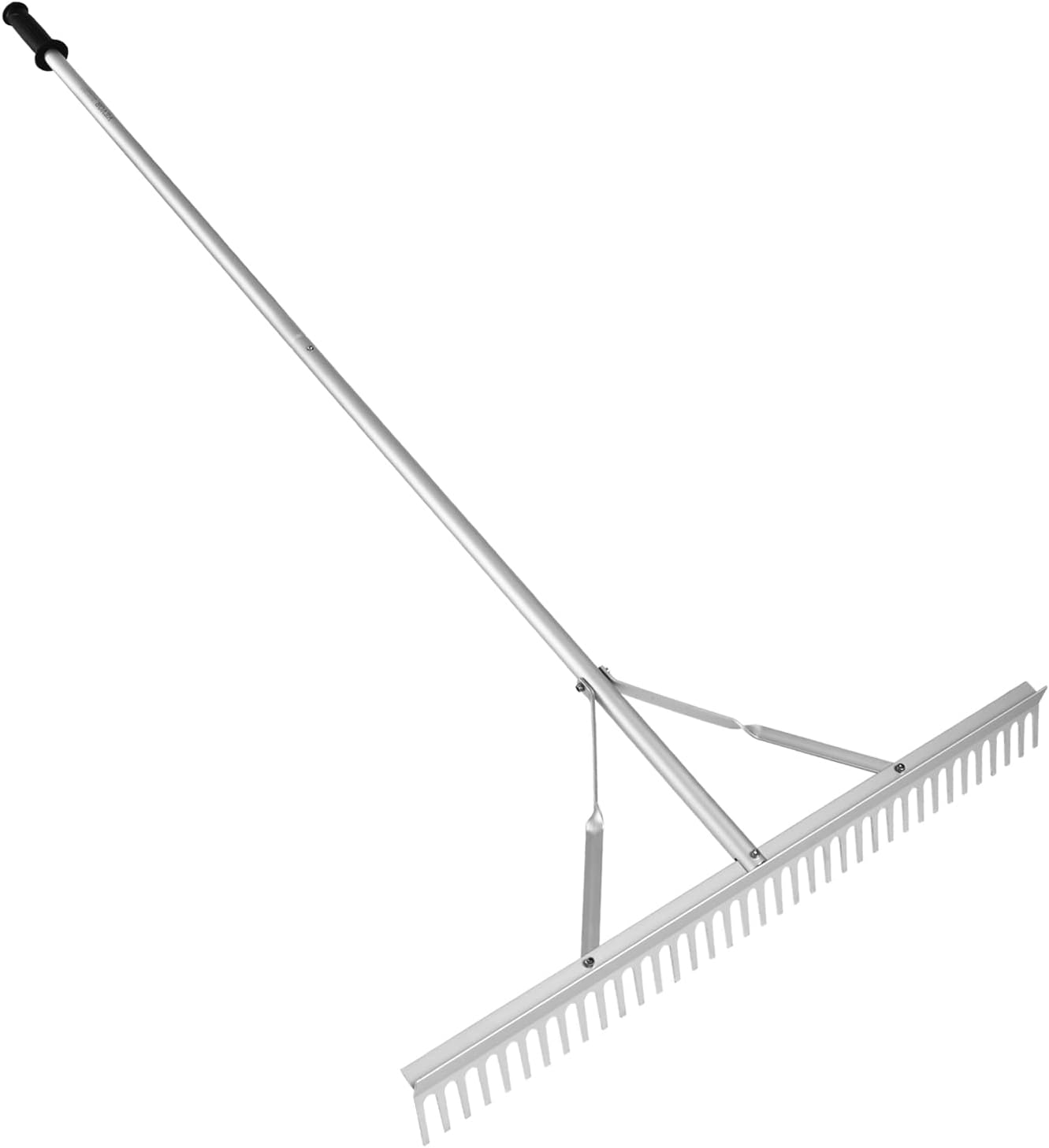
The VEVOR 36" landscape rake is built for broad cleanup jobs both on land and in shallow water. The 37-tooth aluminum-alloy head and relatively wide tines let you collect leaves, lake weed, grass clippings, and small stones in fewer passes, while the 75" extendable handle reduces bending and increases reach for pond edges or larger beds. It uses a spring-lock assembly with two length settings for quick setup and compact storage, and a triangular rubber grip improves control when pulling heavier loads. The all-aluminum construction and claimed waterproof, scratch-resistant finish suggest good corrosion resistance for outdoor use, and the anti-loose screw helps keep the head secure during repeated use. Limitations to note are the lightweight aluminum build, which favors ease of handling but may flex under heavy, rocky work, and the head is optimized for small-to-medium debris rather than large roots or heavy sod removal.
Best for: Buyers who want a dependable, low-effort rake for routine landscape and pond-edge cleanup and who prioritize easy handling and reduced bending during chores.
Less Ideal for: Not a good fit for users who need a heavy-duty rake for breaking up compacted soil, removing large roots, or moving heavy rocks and sod.
- Wide 36-inch head with 37 tines captures more debris per pass
- Long 75-inch handle reduces bending and extends reach for pond edges and tall piles
- Lightweight aluminum construction makes the tool easy to carry and maneuver
- Spring-lock two-level assembly enables fast setup and compact storage
- Rubber triangular grip improves control and reduces hand slip during use
- Aluminum head and handle can flex or struggle with very heavy, rocky, or root-filled tasks
Verdict: A lightweight, easy-to-handle landscape and pond rake that speeds routine debris cleanup while minimizing bending.
Choosing the Right Landscaping Garden Rake: Key Factors to Consider
Tine Strength and Spacing
Tine strength determines whether a rake bends when you pull it through heavier soils, gravel, or compacted material. Thicker, forged tines resist bending and return to shape after repeated use, which matters when you need consistent, straight passes across a bed.
Spacing between tines affects what the rake moves. Narrow spacing traps fine soil and small debris, producing a smooth finish. Wider spacing is better for moving larger debris like sticks or for working with coarse mulch. Consider the materials you handle most and choose a tine pattern that matches those tasks.
Handle Material and Ergonomics
Handle material affects weight, shock absorption, and longevity. Fiberglass and composite handles resist rot and weathering and often absorb vibration, while hardwood handles offer a comfortable, traditional feel but can weather and splinter without care.
Length and balance change how much bending you do and how controlled each stroke feels. A longer handle gives more reach and leverage for raking larger areas but can be heavier and harder to maneuver in tight beds. Look for ergonomic grips or tapered designs that reduce hand fatigue during long sessions.
Head Width and Shape
Head width determines how much ground you cover per pass. Wider heads speed up work across open lawns or large beds, while narrower heads allow greater control near edges and between plants.
The head shape also matters: a slightly curved head holds material for moving, while a flatter profile is better when you want to level soil or spread mulch thinly. Think about the common task you perform-leveling, spreading, or debris clearance-and choose a head geometry that supports that use.
Corrosion Resistance and Finish
Rakes live outdoors and often contact wet soil and fertilizers that accelerate corrosion. Powder-coated steel, stainless parts, or rust-inhibiting finishes extend usable life and reduce stiffness when tines seize up.
Pay attention to how the head attaches to the handle and whether that junction is protected from moisture. Metal sleeves or sealed sockets reduce the chance of rust weakening the joint over time, which is a frequent failure point on cheaper tools.
Weight and Balance
Overall weight influences how quickly you tire and how much force you can apply. Heavier rakes can move denser materials with less effort because they transfer momentum, but they also increase shoulder and back strain during long jobs.
Balance between head and handle affects control. A well-balanced rake tracks straight with each pull, reducing corrective strokes. Choose a weight profile that matches the scale of your tasks and your physical comfort.
Maintenance and Repairability
A repairable rake lasts longer and often costs less in the long run. Look for heads that bolt or screw on rather than being permanently fixed, and handles that can be replaced without special tools.
Ease of cleaning and re-coating matters too. Smooth finishes rinse clean of wet clay, and replaceable grips or sleeves are simple ways to refresh a tool without buying a new one.
Best Rake Types for Different Landscaping Tasks
Different rake head types suit different jobs. Lawn rakes with flexible, closely spaced tines pull up thatch and leaves without disturbing soil. Landscape or garden rakes with rigid, widely spaced tines are better for moving heavy mulch, leveling soil, and spreading gravel. Bow rakes with a flat profile help grade and level because their tines are sturdy and aligned for push or pull action.
- Fine-tine rakes: good for leaf and light debris collection.
- Landscape rakes: strong tines for moving mulch and soil.
- Bow rakes: flat, rigid heads for leveling and grading.
Using a Landscaping Rake Efficiently
Start with a light pass to loosen material and remove large debris. For leveling, use push-and-pull strokes with even pressure and overlap passes slightly to avoid ridges. Keep wrists straight and use body weight for long pushes to reduce arm fatigue.
When spreading mulch, lift less per pass and focus on uniform thickness rather than moving large piles all at once. For compacted soil or gravel, use the rake at a lower angle to increase penetration of the tines.
- Overlap passes by about a quarter head width for consistent coverage.
- Use longer strokes for large, open areas and shorter strokes near beds or edging.
Caring for Your Rake
After each use, remove soil and organic debris with a stiff brush and rinse if needed. Dry the rake before storing to minimize rust. Periodically inspect the head-to-handle connection and tighten fasteners or replace worn sleeves to keep the tool secure.
For metal heads, a thin coat of light oil on tines prevents rust. Wooden handles benefit from occasional sanding and linseed oil to prevent splintering and moisture absorption. Store rakes hanging or off the ground in a dry location.
- Clean tines and dry thoroughly after wet use.
- Tighten the head socket and replace worn parts when loose.
Modifying a Rake for Specialized Jobs
You can adapt a standard landscaping rake to specific tasks. Adding a foam grip reduces shock in long sessions. Replacing a handle with a longer one increases reach for erosion control on slopes. If you do a lot of fine finishing work, consider swapping to a narrower head with closer tines for precision.
When modifying, keep durability in mind. Do not reduce the structural integrity of the head or attach overly heavy handles that stress the head-to-handle joint.
- Add padded grips to reduce hand fatigue.
- Use replaceable handles to change length without altering the head.
Working Safely with Heavy Materials
When moving gravel, compacted soil, or heavy mulch, lift with your legs and keep the rake close to your body to avoid overreaching. Use gloves with good grip to protect hands from blisters and accidental scrapes from tines. Be mindful of footing when raking slopes or uneven ground.
For particularly dense materials, take breaks and vary tasks to avoid repetitive strain. Use a partner or mechanical assistance for large-volume moves to protect your back.
- Wear gloves and supportive footwear.
- Take frequent breaks during long, heavy raking sessions.
How We Chose the Best Landscaping Garden Rake
We focused on the practical traits that determine how a landscaping garden rake performs day after day in real yards and gardens. Key evaluation criteria included tine strength and spacing to judge how well a rake penetrates and moves soil or mulch; handle material and length for durability and user comfort; head width and shape for coverage and maneuverability in different tasks; and corrosion resistance to predict longevity when used outdoors. We tested how each tool behaved with common materials gardeners move: topsoil, compost, rubber mulch, and gravel. Ease of maintenance and the ability to replace or tighten the head were also considered. We excluded lightweight decorative rakes and tools designed only for small indoor planters, focusing on full-size rakes meant for outdoor landscaping. Items that lacked sufficient manufacturing details or had clearly unsuitable head designs were not shortlisted. The result is a list that emphasizes strength, comfort, and useful geometry for real landscape work.
FAQ
Which rake head is best for leveling new topsoil?
A flat, rigid head such as a bow or landscape rake is best for leveling because the sturdy tines distribute force evenly and help produce a smooth surface.
How long should a rake handle be for comfortable use?
Handle length depends on your height and task scale. For general landscaping, a handle between 48 and 60 inches suits most users. Taller users or long-reach tasks benefit from longer handles.
Can I use a leaf rake for spreading mulch?
Leaf rakes are designed for light material and fine debris. They can spread light, small-particle mulch but are not ideal for heavy or coarse mulch where more rigid tines are needed.
How do I prevent a metal rake from rusting?
Clean mud and organic matter off after use, dry the rake thoroughly, and apply a thin coat of oil to metal parts periodically. Store the rake in a dry place off the ground.
Is a replaceable handle worth seeking out?
Yes. Replaceable handles extend the life of the head and let you customize length or material without buying a whole new tool. They also make repairs simpler if the handle breaks.
Final Verdict
Focus first on the tool geometry that matches your most common tasks: choose rigid, wide heads for moving heavy material and flatter heads for leveling. Pair that head with a handle material and length that keeps you comfortable and reduces fatigue during long jobs. Balance durability, corrosion resistance, and repairability when deciding. Prioritize features that reduce repetitive strain and make maintenance simple so the rake remains a reliable part of your landscape toolkit.
