

Note: This article contains affiliate links. If you click on these links and make a purchase, I may earn a small commission at no extra cost to you. This helps support my research and content. Read my full affiliate disclosure here.
Removing established grass and sod is one of the more physical garden jobs you will face, and the right shovel can save hours and spare your back. This guide focuses on shovels intended specifically for removing grass, sod strips, and shallow turf so you can compare options that match your yard size and soil conditions. We shortlisted seven top choices that perform well in real gardens and evaluated them on digging power, handle comfort, durability, and ease of use. Read on to understand which shovel design and features match your workflow and posture before you start digging.
Top Picks at a Glance
| Best Overall The best all-around choice for most situations | Lilyvane 60" Garden Flat Shovel and Floor Scraper |  |
| Best Quality Built to a higher standard if you want something more solid | Root Slayer Nomad Garden Spade (Serrated Edge) |  |
| Best Value The sweet spot between price and what you get | EUIJOIP 60" Garden Flat Shovel Floor Scraper with Adjustable Handle | 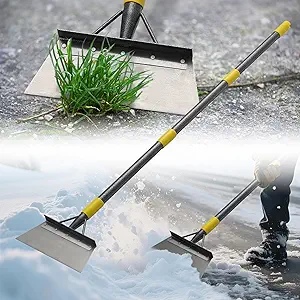 |
| Best Budget The cheapest option that still gets the job done reliably | Gingull Garden Cleaning Shovel (59" Heavy-Duty Floor Scraper) |  |
| Highest Rated A top-rated pick with lots of positive feedback | Root Slayer Garden Shovel with Serrated V-Tip |  |
| Most Popular A crowd favorite that many people choose with confidence | HANTOP Sharp-Blade Fiberglass-Handle Garden Spade |  |
| Best Seller A high-volume bestseller chosen again and again | CKLT 41in Lawn Border Edger with Spring Steel Serrated Blade |  |
Lilyvane 60" Garden Flat Shovel and Floor Scraper

| Blade Material | Metal |
|---|---|
| Handle Material | Metal |
| Grip Type | Ergonomic |
| Unit Count | 1 Count |
The Lilyvane 60" garden flat shovel is a long-handled metal scraper built for edging, removing grass and weeds from cracks, and heavy scraping tasks like breaking up packed snow or compacted soil. It uses a wide, sharp metal blade and a built-in foot pedal to apply extra downward force, which helps slice through turf and pull out roots when used vertically or at an edge. The handle screws together in sections for quick assembly and storage and the ergonomic grip makes longer sessions more comfortable. The metal construction is coated against rust for outdoor durability, but users should plan to sharpen the blade before first use to get the cleanest cuts. Because the shaft is a straight metal rod and the design is focused on scraping and edging rather than digging deep holes, it works best for removing grass, cleaning seams, and creating crisp landscape edges rather than transplanting or heavy trenching. For a buyer wanting one robust tool to handle most grass-removal and edging chores, this model balances reach, blade width, and durability effectively.
Best for: Gardeners who want a single, durable tool to remove grass, clean concrete seams, and create tidy lawn edges without switching between multiple tools.
Less Ideal for: Those who need a dedicated digging spade for deep planting, heavy soil breaking, or frequent trenching should choose a purpose-built digging shovel instead.
- Wide 11-inch metal blade covers more ground for faster scraping and edging
- 60-inch sectional handle provides reach and breaks down for compact storage
- Built-in foot pedal lets you apply extra force to cut through turf and stubborn material
- Rustproof coated metal construction increases outdoor durability
- Ergonomic grip improves comfort during extended use
- Straight metal shaft is optimized for scraping and edging but not for deep digging or heavy trenching
- Blade arrives unsharpened and requires initial sharpening for best performance
Verdict: A wide-blade, long-handled scraper that makes removing grass and cleaning edges faster and easier for general backyard maintenance.
Root Slayer Nomad Garden Spade (Serrated Edge)

| Material Type | Alloy Steel |
|---|---|
| Blade Material | Carbon Steel |
| Handle Material | Carbon Steel,Polypropylene |
| Grip Type | Ergonomic |
| Unit Count | 1 Count |
The Root Slayer Nomad is a scaled-down version of the award-winning Root Slayer spade built to handle tough digging and root removal in confined spaces. Its serrated, V-shaped tip and ripsaw teeth let you saw through roots and compacted soil while the powder-coated carbon steel blade resists corrosion during repeated use. The shorter head and long shaft make the tool easy to maneuver in raised beds, narrow planting strips, and when camping or trail work requires a compact shovel. A fiberglass shaft with non-latex grips provides leverage and a secure hold for directed digging and prying. Because it is made from robust carbon steel and engineered for heavy-duty tasks, the Nomad is best used for focused garden jobs rather than grave digging or continuous commercial use. Expect a dependable, long-lived tool for home gardeners who need a reliable root-cutting spade in smaller spaces, with the usual requirement of occasional blade cleaning and sharpening to maintain cutting performance.
Best for: Buyers who prioritize a dependable, long-lasting digging tool for home gardens and raised beds and who value root-cutting performance in confined or portable work sites.
Less Ideal for: People who need a full-size spade for large-scale or continuous commercial digging work should consider a larger, heavy-duty model instead.
- Aggressive serrated blade and V-shaped tip that cut through roots and compacted soil.
- Powder-coated carbon steel blade for strength and corrosion resistance.
- Compact head and long shaft for easy maneuvering in raised beds and tight spaces.
- Fiberglass shaft with non-latex grips offers good leverage and a secure hold.
- Smaller, compact design limits leverage and surface area compared with full-size spades for very large digging jobs.
- Requires periodic sharpening and cleaning to keep serrations effective and corrosion minimal.
Verdict: A compact, rugged spade built to reliably cut roots and dig in tight garden spaces, ideal for homeowners who want a durable, long-lasting tool.
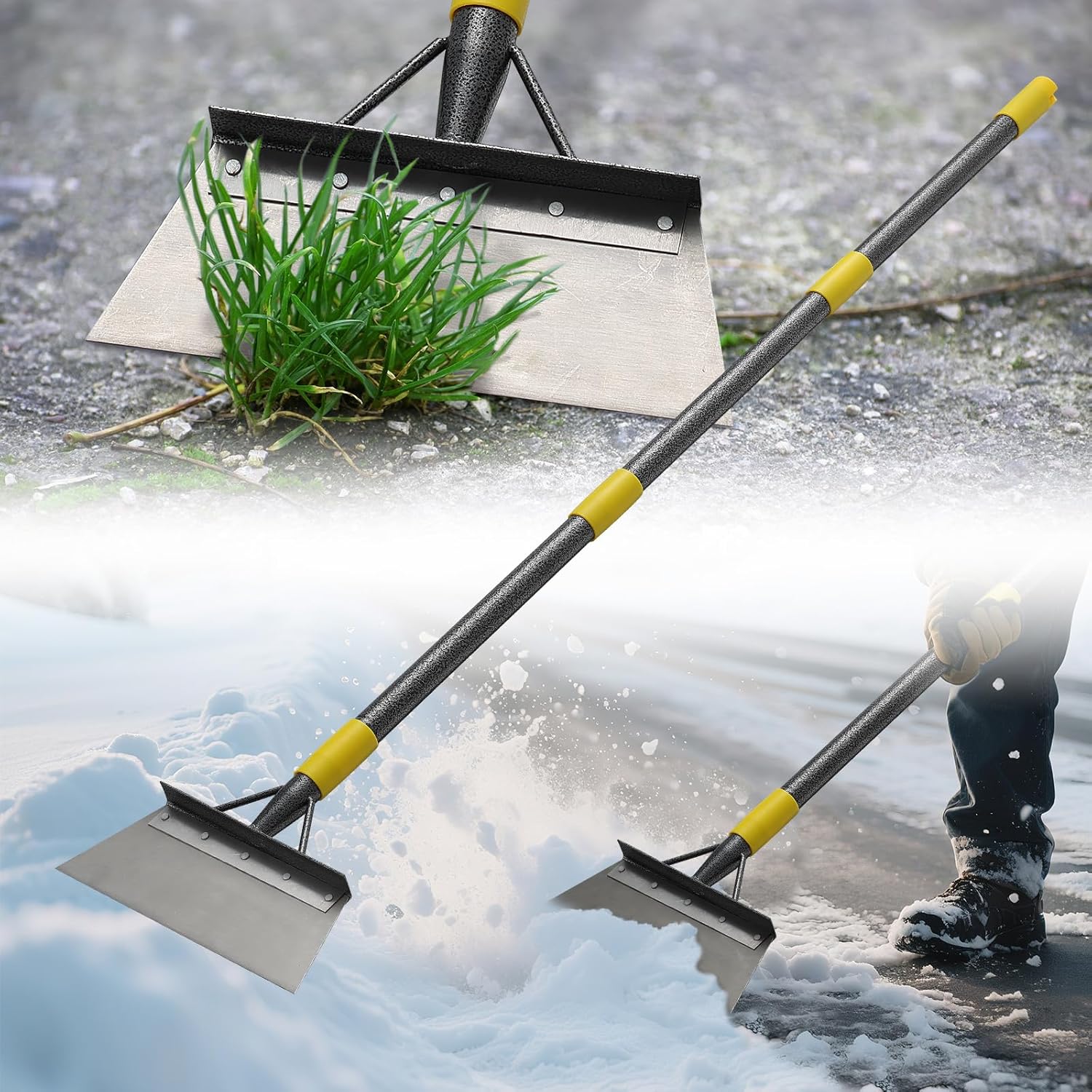
EUIJOIP 60" Garden Flat Shovel Floor Scraper with Adjustable Handle
| Blade Material | Stainless Steel |
|---|---|
| Handle Material | Alloy Steel |
| Item Highlight | 1.2mm thick blade, 10.6 in wide, reinforced head, 60 in adjustable handle |
| Grip Type | Ergonomic |
This EUIJOIP garden flat shovel is built as a multifunctional scraper for outdoor cleanup and edging. The broad 10.6‑inch stainless steel blade and reinforced 1.2 mm head let you clear weeds from cracks, scrape moss and stuck‑on dirt from concrete, and edge lawn borders with fewer passes. The sectional 60‑inch handle adjusts for standing work and stores compactly when detached, while a built‑in foot step and triangular head add leverage for cutting through stubborn grass or packed ice. An ergonomic grip and alloy steel shaft improve control during longer sessions. Expect a tool that handles tough scraping jobs better than a narrow shovel or flimsy scraper, but know it is focused on scraping and edging rather than digging deep holes or moving large volumes of loose soil. The stainless construction should resist corrosion, though the rigid blade and long handle make it better suited to firm surfaces and edging tasks rather than delicate garden beds or precision planting work.
Best for: A practical gardener who wants one durable tool to remove grass and weeds from hard surfaces and to edge lawns efficiently while minimizing bending and extra tool purchases.
Less Ideal for: Not the best choice for users who mainly need a dedicated digging shovel for planting, transplanting, or moving large volumes of loose soil.
- Wide 10.6‑inch flat blade covers more surface area for faster scraping and edging
- Reinforced 1.2 mm stainless steel blade and triangular head resist flex under heavy use
- Adjustable 60‑inch sectional handle lets you work from a standing position and stores compactly
- Built‑in foot step and ergonomic grip provide extra leverage and control for tough cutting/scraping
- Designed for scraping and edging rather than digging deep holes or moving large amounts of loose soil
- Heavier rigid blade and long handle can be awkward for precision work in tight plantings
Verdict: If you need a single robust tool to remove grass and weeds from edges and hard surfaces with less bending, this heavy‑duty flat shovel does the job efficiently.
Gingull Garden Cleaning Shovel (59" Heavy-Duty Floor Scraper)

| Material Type | Metal |
|---|---|
| Handle Material | Metal |
| Blade Material | Alloy Metal |
| Grip Type | Ergonomic |
This Gingull Garden Cleaning Shovel is a sturdy, all-metal tool built for scraping and removing grass, weeds and stubborn debris from edges and hard surfaces. The thick alloy blade and ergonomic grip let you apply downward pressure without the blade rolling, which makes it effective for slicing under grass sod and prying out roots along borders. The adjustable-length handle extends for upright use so you can work standing up and reduce back strain during longer jobs. It is reasonably versatile too: besides turf and edging tasks you can use it for scraping moss, clearing compacted soil from paths, or light ice removal in winter. Expect a durable feel from the metal handle compared with wood, but that also means it is heavier than composite options and will transfer more vibration to your hands on very hard surfaces. The blade is not a specialized turf spade, so for very tight root balls or deep digging a dedicated spade will perform better.
Best for: Practical gardeners who want a sturdy, multifunctional tool to remove grass, clean edges, and scrape compacted debris without spending much on specialized implements.
Less Ideal for: Professional landscapers or gardeners who need a lightweight tool for long daily use or a purpose-built turf spade for deep root and sod removal.
- All-metal alloy blade and handle for durability under heavy scraping
- Ergonomic grip and adjustable-length handle for more comfortable upright use
- Large blade surface speeds removal of surface grass and debris
- Rust-resistant design suitable for damp gardens and winter use
- Metal handle increases overall weight compared with wooden or composite shafts
- Not a dedicated turf spade so less efficient for very deep digging or removing large root balls
Verdict: A tough, no-frills all-metal scraper that delivers strong performance for removing grass and cleaning edges on a tight budget.
Root Slayer Garden Shovel with Serrated V-Tip

| Blade Material | Carbon Steel |
|---|---|
| Handle Material | Carbon Steel |
| Blade Length | 13 inches |
| Grip Type | Ergonomic |
The Root Slayer is a purpose-built digging shovel that combines a sharpened inverted-V tip, sawtooth edges, and a sturdy carbon steel blade so you can cut through roots and packed soil without switching tools. In use it functions as a spade, root saw, and hatchet for tasks like digging planting holes, removing stubborn grasses, and trenching in clay or compacted ground. The resin-encased steel shaft and ergonomic O-handle give good leverage and a comfortable grip during repeated digs, while the powder-coated carbon steel resists rust and holds up to heavy garden work. Because the blade focuses force on a narrow point it penetrates hard-packed areas more easily than a flat shovel, and the serrated sides let you slice roots instead of yanking them. Expect a robust, long-lasting tool suited to regular backyard landscaping, but be mindful it is built for cutting and digging rather than prying or levering large stones, and the heavier construction adds noticeable weight compared with lightweight trowels or fiberglass-handled alternatives.
Best for: Gardeners who need a single robust tool for digging in compacted soil and cutting roots while valuing proven design and positive user feedback.
Less Ideal for: If you mainly need a lightweight transplanting trowel, long-handled pry tool, or a shovel for moving large volumes of loose material, this specialized root-cutting shovel is not the best match.
- V-shaped sharpened tip concentrates force to penetrate compacted soil and break through roots
- Serrated blade edges allow cutting through roots without switching tools
- Powder-coated carbon steel blade offers durability and rust resistance for repeated outdoor use
- Ergonomic O-handle and resin-encased steel shaft provide good leverage and a comfortable grip
- Heavier construction makes it less convenient for prolonged overhead or fine-detail tasks
- Not designed for heavy prying or levering large rocks
Verdict: Buy this if you want a durable, root-cutting shovel that makes digging holes in compacted soil and slicing roots significantly easier than a standard spade.
HANTOP Sharp-Blade Fiberglass-Handle Garden Spade

| Blade Material | Alloy Steel (1050MN) |
|---|---|
| Handle Material | Fiberglass |
| Grip Type | Ergonomic D-shaped PP |
| Item Weight | 4.5 pounds |
This HANTOP spade is built for typical backyard digging tasks where leverage and blade strength matter. The tempered 1050MN alloy steel head has a serrated edge that helps penetrate compacted or clay soils, while the wide footplate and wave-pattern embossing give a secure place to plant your foot for stronger downward force. The fiberglass shaft and metal ring with multiple rivets aim to keep the head secure under repeated use, and the D-shaped PP gripper provides a comfortable hold for levering and edging. In practice the spade works well for digging trenches, transplanting, cutting turf and moving compost; the sawtooth blade makes initial breaks in hard ground easier than a smooth lip. Expect a solid, somewhat heavier tool that trades lightness for durability. If you need a lightweight tool for frequent shoulder-level work or a specialist narrow-root saw, this broader, sturdier spade is less suitable. For buyers who value a robust, long-wearing digging tool with good foot control, this performs reliably.
Best for: Gardeners who want a durable, workhorse spade for regular digging, edging and turf cutting and who prioritize tool longevity and confident footing over minimal weight.
Less Ideal for: People seeking an ultralight or highly specialized root-saw tool for frequent precision work or long-duration carrying should consider lighter or narrower alternatives.
- Tempered 1050MN alloy steel head with sawtooth edge for easier penetration of compacted soil
- Fiberglass handle and metal ring with rivets designed to resist breakage and corrosion
- Wide, non-slip footplate with embossing for secure footing and better leverage
- Ergonomic D-shaped PP grip for comfortable handling during digging and edging
- Relatively heavy for prolonged overhead or one-handed tasks
- Broad square-point blade is less effective for very narrow or precision root work
Verdict: A robust, heavy-duty spade that gives reliable penetration and strong foot leverage for everyday digging and edging tasks.
CKLT 41in Lawn Border Edger with Spring Steel Serrated Blade

| Material Type | Manganese Steel |
|---|---|
| Blade Type | Serrated Spring Steel |
| Footplate Width | 8-inch |
| Handle | Long Rubber Handle |
The CKLT 41in lawn edger is a straightforward manual tool for creating clean edges along driveways, sidewalks, and flower beds. It uses a serrated spring steel blade that resists bending and holds an edge longer than standard flat blades, and a rust-resistant finish that simplifies cleaning after use. The 8-inch wide footplate gives good leverage so you can apply steady pressure without awkward footing, while the long rubber handle improves reach and control for straight lines and smooth curves. Assembly is basic and guided with included fasteners and an L-shaped wrench. This is best for homeowners who prefer a quieter, eco-friendly alternative to powered trimmers and who want a durable hand tool for regular lawn maintenance. Limitations are those common to manual edgers: it requires physical effort for long runs and is slower than a powered trimmer for large properties, and deep compacted soil may need prior loosening for optimal cutting performance.
Best for: Homeowners who want a reliable, low-maintenance hand tool to keep lawn and garden borders tidy without using powered equipment, and who value durability and precise, neat edging.
Less Ideal for: Large properties or commercial landscaping where faster, motorized edging is needed or where users have limited ability to perform physical yard work.
- Serrated spring steel blade holds a sharp edge and resists deformation
- Rust-resistant finish and water-resistant design for easier cleaning and durability
- 8-inch wide footplate provides good leverage for comfortable pressure application
- Long rubber handle improves reach and control for straight and curved edging lines
- Manual tool requires physical effort and is slower for large areas
Verdict: Choose this edger if you want a durable, low-tech tool that delivers crisp, precise lawn edges without power tools.
Choosing the Right Garden Shovel for Removing Grass: Key Factors to Consider
Blade Shape and Edge
Blade shape determines how cleanly the shovel slices through grass and root mats. A narrow, sharp leading edge or a slightly rounded toe helps get under the sod with minimal tearing, producing strips that lift cleanly and are easier to roll or remove. A broad, square-point shovel can work but often shreds turf and requires more effort to pry out roots.
The cutting edge material and whether it can be resharpened matters because a blunt edge slows every cut. Consider blades with a defined cutting lip and a profile that matches the width of the strips you plan to remove.
Handle Length and Grip Design
Handle length affects leverage and how much you need to bend. Longer handles increase leverage for prying up sod but can be awkward in small beds or tight spaces. Shorter handles are easier to control near edges and patios but transfer more load to your lower back. Choose a length that fits your height and the scale of the job.
Grip design also changes fatigue levels and hand comfort. D-shaped or T-grips distribute force across the hand for powerful pulls, while cushioned, ergonomic handles reduce blistering during extended work. Inspect the shaft material too because rigid metal shafts transfer shock, while some fiberglass or ash handles absorb vibration better.
Material and Corrosion Resistance
Shovels used for turf removal see repeated contact with damp soil and abrasive roots, so materials that resist corrosion will last longer. High-carbon steel holds an edge better but can rust faster if not finished properly. Stainless or powder-coated finishes resist rust but may be harder to sharpen. The joint between blade and shaft is also a common failure point, so continuous steel sockets or reinforced flanges extend service life.
Consider whether the finish is easy to maintain in a home setting. A finish that tolerates quick rinsing and occasional oiling will keep the shovel functioning season after season.
Weight, Balance, and User Strength
Heavier blades provide momentum and can cut through thick root mats more easily, but excess weight increases fatigue when lifting long sod strips. Balance between blade and handle lets you place the blade without fighting the tool. For gardeners with limited upper-body strength or existing back issues, a lighter balanced shovel reduces strain and allows more precise work.
Think about who will do most of the work. If multiple people will share the tool, prioritize a middle-ground weight and a neutral balance that suits a range of strengths.
Maintenance and Sharpening
A well-maintained edge reduces effort on every cut, so consider how easy it is to sharpen the blade and maintain the finish after use. Simple maintenance tasks include rinsing soil off after each job, drying the blade to prevent rust, and occasionally filing the cutting lip. Some designs allow local edge reconditioning without special tools, which keeps the shovel effective longer.
Also factor in replaceable or serviceable parts. Handles that can be swapped and bolt-on blades extend the life of the tool and reduce waste.
Choosing the Right Shovel Profile for Your Lawn
Shovels for removing grass vary from narrow turf spades to wider sod cutters. Narrower blades let you cut longer, more manageable strips while wider blades remove more material per stroke but can be heavier to lift. For small patches or garden beds, a narrower profile helps maneuver around plants and edges.
If your lawn has a thatch or dense roots, favor a blade with a pronounced cutting lip that slices instead of pries. In looser soil, a flatter, broader blade can scoop up larger swaths with fewer passes.
- Narrow blades: better for long strips and tight spaces
- Wider blades: remove more turf per dig but increase lift weight
- Cutting lip: improves clean separation of turf from soil
Techniques for Efficient Grass and Sod Removal
Start by marking the area you want to remove and score straight lines with the shovel tip for easier lifting. Work in sections, cutting along your scored lines and prying up the sod in strips that can be rolled or stacked. Keeping the strips consistent in width makes handling and disposal easier.
Use your legs and hips when prying rather than relying solely on back strength. Lift with a controlled motion and avoid twisting while holding a heavy load. Wet soil is heavier, so time work for when the ground is moderately dry to reduce weight and mess.
- Score first to create clean edges
- Pry in consistent strips for easier rolling
- Use legs and hips to avoid back strain
Adapting Shovel Use to Different Soil Types
Sandy soils are easier to cut through but can allow strips to crumble if the edge is not sharp. In clay or compacted soils, expect more resistance and opt for a sharper, stronger edge and a robust shaft to handle prying. Rocky soil calls for caution: lighter strikes and shorter cuts reduce the chance of bending the blade.
When soil is very wet, turf will be heavier and more likely to clump. Wait for firmer conditions when possible, or plan for more frequent rests and smaller strips to manage weight.
- Sandy soil: keep edges sharp to prevent crumbling
- Clay soil: choose strong, sharp blades for prying
- Rocky ground: use shorter cuts to protect the tool
Ergonomic Setup and Body Mechanics
Adjust your stance and shovel placement to keep the work within a comfortable reach. If the handle is too short, you will bend excessively; if too long, it makes control awkward. A neutral wrist and straight spine during prying reduce cumulative strain over long sessions.
Consider using a lifting aid or a second person for long runs of heavy sod. Alternating tasks and taking regular breaks reduces muscle fatigue and lowers injury risk.
- Match handle length to your height to minimize bending
- Keep a neutral wrist and straight back when prying
- Alternate tasks and take breaks during long jobs
Storing and Caring for Your Shovel After Turf Work
After removing grass, clean soil from the blade and dry it to prevent rust. A light coat of oil on metal parts before storage helps protect the edge and finish. Check tightness at the blade-shaft junction and re-secure fasteners if needed.
Store the shovel off the ground in a dry place to avoid moisture damage to both metal and wooden handles. Repair or replace worn grips to keep handling safe and comfortable.
- Rinse and dry the blade after use
- Apply light oil to metal parts for corrosion protection
- Store off the floor in a dry location
How We Chose the Best Garden Shovel for Removing Grass
We selected shovels that are purpose-built for cutting and lifting grass and shallow sod rather than deep trenching or general digging. Our editorial filters prioritized blade geometry designed to slice turf, handle length and grip ergonomics that reduce bending, and material durability for repeated edge contact with roots and soil. We also considered weight balance and ease of maintenance because a heavier blade that is poorly balanced amplifies fatigue, while a rust-prone finish shortens useful life. Excluded items included lightweight hand trowels, broad digging spades intended for deep soil work, and multi-tool implements that lack a robust, turf-cutting blade. The core evaluation dimensions were digging and cutting efficiency, handle ergonomics and control, construction durability and corrosion resistance, and overall balance and weight. These criteria reflect the real demands of removing grass across different yard sizes and common soil types.
FAQ
What blade width is best for removing grass from small beds?
For small beds, a narrower blade around 4 to 6 inches wide is usually best. It allows you to work close to plants and along edges with more control and makes it easier to lift manageable strips.
How deep should I cut when removing sod to keep roots manageable?
Cutting into the soil about one to two inches below the root zone typically removes the majority of the turf without taking excessive soil. Deeper cuts increase weight and disturb more soil structure.
Can a regular digging spade work for turf removal?
A regular digging spade can work in a pinch, but it often tears turf rather than cutting clean strips. Dedicated turf or sod shovel profiles slice and lift more efficiently, reducing effort and cleanup time.
How do I prevent back pain while removing large areas of grass?
Prevent back pain by using a shovel with a suitable handle length and comfortable grip, practicing proper lifting mechanics using legs and hips, and breaking the task into shorter sessions. Lighter, well-balanced tools help reduce cumulative strain.
Is it better to remove grass when the soil is wet or dry?
Moderately dry soil is usually better because very wet soil increases weight and stickiness, making strips heavier and messier. Extremely dry, hard soil can be tougher to cut, so aim for a workable moisture level.
Final Verdict
When choosing a shovel for removing grass, prioritize a blade profile that cleanly slices turf, a handle length that fits your posture, and construction that will stand up to repeated prying. Balance and weight are key tradeoffs: heavier blades cut better but increase lifting strain, while lighter tools reduce fatigue but may require more passes. Focus on the factors that match your yard size, soil type, and physical comfort so you can remove turf efficiently and with less wear on your body.
