

Note: This article contains affiliate links. If you click on these links and make a purchase, I may earn a small commission at no extra cost to you. This helps support my research and content. Read my full affiliate disclosure here.
If shrubs in your landscape are showing leaf spots, powdery mildew, or dieback, choosing the right fungicide for shrubs can make the difference between a few spot treatments and prolonged stress. You want a product that arrests the disease without damaging foliage, fits into your spray routine, and matches the type of fungus affecting the plant. This guide reviews six top-rated options suited for shrub care and shortlists products that perform well in common garden situations. We evaluate how quickly each product controls disease and how safe it is for shrub leaves, roots, and beneficial garden life, plus ease of application and re-entry intervals. Read on to match a treatment to your shrub type and disease pressure.
Top Picks at a Glance
| Best Overall The best all-around choice for most situations | BioAdvanced 3-in-1 Insect, Disease & Mite Control Spray, 32 fl oz |  |
| Best Quality Built to a higher standard if you want something more solid | Atticus Gravex 20 EW Fungicide Concentrate (16 oz) |  |
| Best Value The sweet spot between price and what you get | BioAdvanced Disease Control for Roses, Flowers & Shrubs Concentrate, 32 oz |  |
| Best Budget The cheapest option that still gets the job done reliably | Bonide Fung-onil Multi-Purpose Fungicide Ready-to-Use Spray, 32 oz |  |
| Most Popular A crowd favorite that many people choose with confidence | Bonide Captain Jack's Liquid Copper Fungicide Ready-to-Use, 32 oz |  |
| Best Seller A high-volume bestseller chosen again and again | BioAdvanced All-in-One Rose & Flower Plant Care Spray, 24 fl oz | 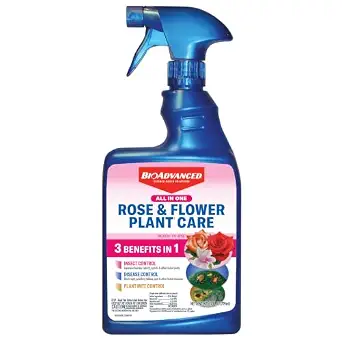 |
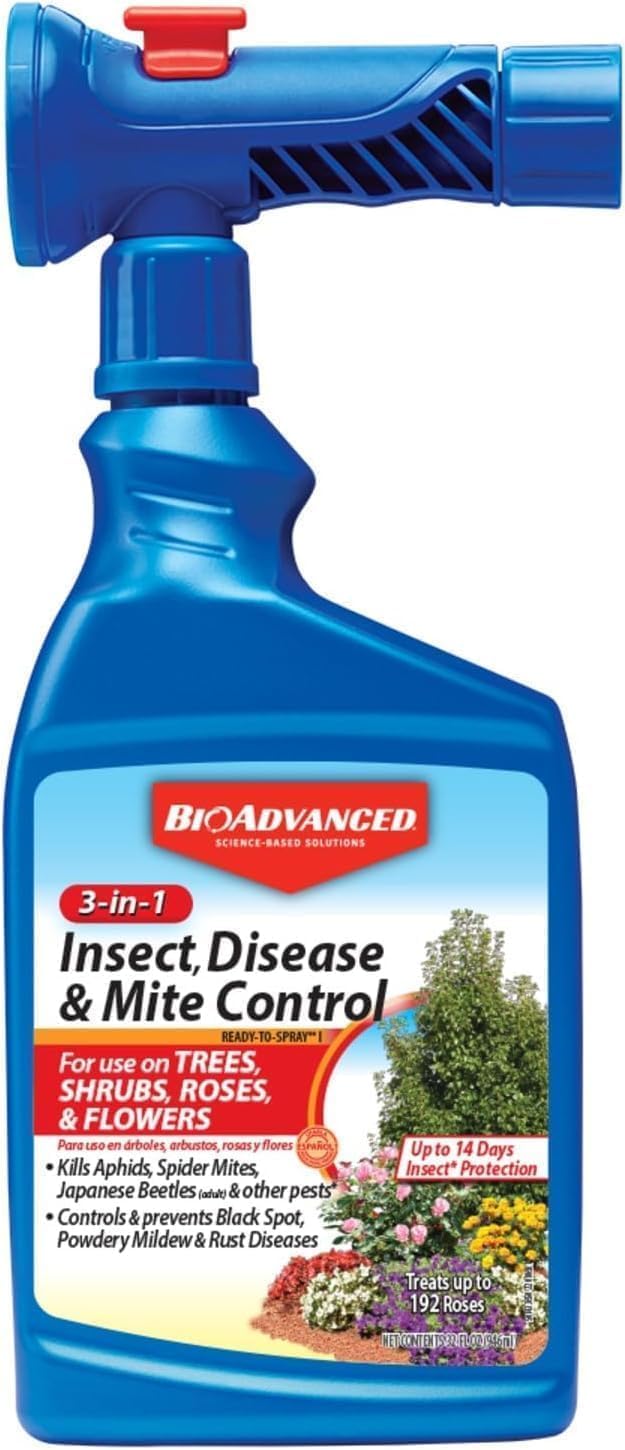
BioAdvanced 3-in-1 Insect, Disease & Mite Control Spray, 32 fl oz
| Unit Count | 32 Fluid Ounces |
|---|---|
| Item Form | Spray |
| Target Species | Aphids, caterpillars, leafminers, whiteflies and other listed pests |
| Active Ingredients | Tau-fluvalinate 0.61%, Tebuconazole 0.65% |
This BioAdvanced 3-in-1 spray is a performance-focused ready-to-use treatment that kills common pests on contact while also preventing and curing listed fungal diseases and controlling spider mites. It attaches to a garden hose for broad, even coverage and is labeled to treat up to 192 rose bushes, making it practical for medium to large beds and multiple shrubs. Key features include systemic ingredients plus contact control, rainproof protection lasting up to 14 to 30 days depending on labeled claims, and active ingredients targeting aphids, caterpillars, whiteflies, and mites. In use you spray foliage including undersides, and the product provides both immediate knockdown of insects and longer residual control so follow-up applications are less frequent. Limitations: it is a chemical treatment so users must follow safety directions and keep children and pets away until treated areas have dried, and it is not sold for use in New York. For someone prioritizing reliable, one-step control of aphids and associated fungal problems on roses and ornamentals, this bottle delivers convenient, broad-spectrum protection.
Best for: Gardeners who want a fast, high-performance one-step solution to control aphids and related pests while also preventing common fungal diseases on roses and ornamental plants.
Less Ideal for: Organic gardeners or those seeking nonchemical options should look for botanical or soap-based aphid controls instead.
- Combines insecticide, fungicide, and miticide in one ready-to-use formula for streamlined treatment
- Attaches to a garden hose for fast coverage of many plants including up to 192 roses
- Provides knockdown on contact and residual protection between labeled reapplications
- Controls a wide list of pests including aphids, spider mites, whiteflies, and caterpillars
- Contains chemical active ingredients that require careful handling and adherence to safety directions
- Not approved for sale in all states which limits availability for some users
Verdict: For gardeners focused on performance, this ready-to-spray 3-in-1 formula delivers fast aphid knockdown plus disease prevention in one convenient application.
Atticus Gravex 20 EW Fungicide Concentrate (16 oz)

| Unit Count | 16 Fluid Ounces |
|---|---|
| Item Form | Liquid |
| Target Species | Fungus |
| Active Ingredients | Myclobutanil |
| Specification Met | EPA |
Gravex 20 EW is a 16-ounce systemic fungicide concentrate whose active ingredient, myclobutanil, provides both curative and preventive control of many common fungal diseases. Intended for dilution and application with a hand or pressurized sprayer, it absorbs into leaves and roots so new growth is protected as it emerges and treated infections are suppressed. The label lists control for foliar problems that affect ornamentals, including powdery mildew, black spot and leaf spots, which are primary concerns for roses. Its systemic activity means fewer repeat spot treatments compared with contact products, and the product claims protection for up to about 28 days when used as directed. Practical limits include the need to follow label rates closely to avoid phytotoxicity and that it is an EPA-registered professional-style material, so proper PPE and application equipment are required. Gravex is a broad-use option for landscape, greenhouse and lawn settings but users should consult the label for species-specific instructions and local registration before treating roses.
Best for: Rose growers focused on performance who want a systemic, longer-lasting treatment for recurring foliar diseases and are comfortable following label directions and wearing proper PPE.
Less Ideal for: Casual gardeners who prefer ready-to-use or organic contact products or who do not want to handle concentrated chemicals or sprayer equipment.
- Systemic myclobutanil provides both curative and preventive control for common rose diseases
- Broad labeled use across ornamentals, lawns, greenhouse and fruit trees
- Absorbs into plant tissue to protect new growth for up to about 28 days
- Concentrated liquid formulaton works with common sprayers for flexible application
- Contains a professional-strength active ingredient that requires careful mixing and personal protective equipment
- Not registered for sale or use in all U.S. states and territories
Verdict: Choose Gravex 20 EW when you need a systemic, performance-oriented fungicide that treats and prevents tough foliar diseases on roses and other ornamentals.
BioAdvanced Disease Control for Roses, Flowers & Shrubs Concentrate, 32 oz

| Unit Count | 32 Fluid Ounces |
|---|---|
| Item Type Name | Fungicide |
| Item Form | Spray |
| Active Ingredients | Tebuconazole |
BioAdvanced Disease Control is a concentrated systemic fungicide designed to both cure and prevent listed fungal diseases on roses, flowers, shrubs and some ornamental trees and vines. You mix the concentrate with water and apply as a coarse spray using a pump sprayer or similar applicator; one 32 oz bottle makes up to about 42 gallons of spray, so it covers a lot of plants per bottle. The active ingredient tebuconazole works systemically, so treated plants receive protection from the inside out for up to two weeks and the product is rainproof once dry. That makes it useful for routine preventive applications or to treat visible problems like black spot and powdery mildew. Limitations are that it is for outdoor use only, it targets listed diseases rather than providing broad spectrum pest control, and users should follow safety and label directions for mixing rates and plant restrictions. This product is straightforward to use and efficient for seasonal disease management in ornamental beds and rose collections.
Best for: Gardeners who prioritize efficient, predictable disease control for ornamental shrubs and roses and want a concentrated product that stretches across multiple applications.
Less Ideal for: People seeking an all-in-one pest and feeding solution or indoor houseplant treatments should look for products with integrated insect control or formulations labeled for indoor use.
- Systemic formula provides internal protection and can both cure and prevent listed fungal diseases
- Long-lasting, rainproof protection for up to two weeks once dry
- Concentrate yields a large volume of spray (about 42 gallons) for covering many plants
- Effective against common diseases like black spot and powdery mildew
- Suitable for a range of ornamentals including roses, shrubs and vines
- Contains a specific active ingredient (tebuconazole) and is not a multi-purpose insecticide or fertilizer
- Not intended for indoor use; label restricts some states and has safety precautions
Verdict: A high-yield systemic concentrate that delivers reliable, rainproof control of common fungal diseases on roses and shrubs.
Bonide Fung-onil Multi-Purpose Fungicide Ready-to-Use Spray, 32 oz

| Unit Count | 32 Ounce |
|---|---|
| Item Form | Spray |
| Target Species | Fungicide |
| Active Ingredients | Chlorothalonil |
Bonide Fung-onil Ready-to-Use is a broad-spectrum garden fungicide packaged in a 32 ounce trigger-spray bottle for easy, direct application. It uses chlorothalonil to manage leaf spot, rust, blight, mildew, scab and other listed fungal problems and can be applied to vegetables, fruits, flowers, shrubs and trees. Typical use is shaking the bottle, then thoroughly spraying both tops and undersides of leaves at the first sign of disease and repeating every 7 to 14 days as directed. The ready-to-use format eliminates measuring and mixing, which saves time for casual gardeners and those treating small beds or container groups. Because it is a conventional chemical fungicide it gives reliable, preventive disease control when used as directed, but users must follow safety guidance on the label and avoid application to plants or areas not listed. The product is straightforward to use and convenient for routine garden maintenance, though gardeners seeking organic or completely nonchemical options should consider alternatives.
Best for: Gardeners who want an affordable, no-fuss fungicide for routine prevention and control of common fungal diseases across a variety of plants and prefer a product that is ready to spray.
Less Ideal for: People committed to organic gardening or those who avoid synthetic pesticides should choose an organic-certified or cultural control method instead.
- Ready-to-use trigger bottle requires no mixing or measuring
- Broad-spectrum active ingredient (chlorothalonil) controls many common fungal diseases
- Suitable for a wide range of plants including vegetables, fruits, ornamentals, shrubs and trees
- Clear repeat-application guidance (every 7 to 14 days) for preventive treatment
- Contains a conventional chemical active ingredient that is not organic
- Requires careful adherence to label safety directions and application limits
Verdict: A convenient, budget-friendly ready-to-use fungicide that delivers broad-spectrum control for common garden fungal diseases.
Bonide Captain Jack's Liquid Copper Fungicide Ready-to-Use, 32 oz

| Unit Count | 32 Ounce |
|---|---|
| Item Form | Spray |
| Active Ingredients | copper |
Bonide Captain Jack’s Liquid Copper Fungicide is a trigger-spray, ready-to-use copper solution designed to prevent and treat common fungal diseases on fruits, vegetables, nuts, herbs and ornamentals. It is applied by shaking the bottle and thoroughly spraying tops and undersides of leaves, with repeat applications every 7 to 10 days or as needed. The product is labeled for organic gardening and can be used up to the day of harvest, making it practical for vegetable beds and fruit trees where residue concerns matter. Notable features include its broad-spectrum activity against powdery mildew, leaf spot, blight and peach leaf curl, and the convenience of a pre-mixed spray bottle that removes measuring or mixing. Limitations are inherent to copper products: it treats fungal problems but does not replace cultural controls like good airflow and sanitation, and overuse of copper can accumulate in soil so following label directions is important. As a ready-to-use option, it is best for gardeners who want a simple, approved solution for recurring fungal issues without handling concentrates.
Best for: Gardeners who prioritize proven, labeled products and want an easy-to-use organic-approved fungicide for edible beds and ornamentals based on real-world effectiveness and peer recommendations.
Less Ideal for: Gardeners seeking an all-in-one pest control product or those who prefer to avoid any copper-based treatments should look at non-copper alternatives or integrated disease-management approaches.
- Ready-to-use trigger spray requires no mixing or measuring
- Approved for organic gardening and can be applied up to day of harvest
- Effective against a broad range of common fungal diseases
- Convenient repeat-application interval (7–10 days) for ongoing control
- Contains copper which can build up in soil with excessive use
- Does not address non-fungal problems like insects or bacterial diseases
Verdict: A convenient, ready-to-use copper fungicide for gardeners who want an effective organic-approved spray to manage common fungal diseases.
BioAdvanced All-in-One Rose & Flower Plant Care Spray, 24 fl oz

| Unit Count | 24 Fluid Ounces |
|---|---|
| Item Form | Liquid |
| Target Species | Fungus |
| Included Components | CARE ROSE&FLOWER RTU 3IN1 24OZ |
This ready-to-use BioAdvanced spray delivers three actions in one bottle: it kills listed insects on contact, controls common fungal diseases, and tackles spider mites while leaving a protective residue that lasts up to 14 days. You use it like a normal garden spray—apply to rose bushes, ornamentals, vines, shrubs, and similar plants when pollinators are not present. The product lists active ingredients (bifenthrin and myclobutanil) and is formulated to be rainproof within about four hours, so it holds up in typical garden conditions. Practical benefits include saving time by combining insect, disease, and mite control in a single application and being convenient as a ready-to-spray bottle. Important limitations are that it targets only the listed pests and diseases, must be used with pollinator safety in mind, and contains synthetic active ingredients that some gardeners prefer to avoid. Follow label directions and safety guidance for effective and responsible use.
Best for: Gardeners who want a simple, time-saving solution to keep roses and ornamental flowers healthy without mixing concentrates and who prioritize broad, short-term protection.
Less Ideal for: Growers seeking strictly organic or pollinator-safe products or those who need treatment for pests or diseases not listed on the label should look elsewhere.
- Three-in-one formula combines insecticide, fungicide, and miticide for fewer separate treatments
- Ready-to-use spray is convenient for spot and whole-plant applications
- Rainproof within about four hours and provides protection up to 14 days
- Kills listed pests on contact for fast visible results
- Active ingredients are synthetic and may be undesirable for organic gardeners
- Protection only covers pests and diseases specifically listed on the label
Verdict: Choose this ready-to-use spray if you want a convenient, single-product solution to kill common rose pests, control fungal diseases, and suppress mites with up to two weeks of protection.
Choosing the Right Fungicide for Shrubs: Key Factors to Consider
Target Pathogen and Disease Spectrum
Different fungicide active ingredients control different fungal groups. Some products are broad-spectrum and tackle leaf spots, powdery mildew, rust, and blights in one formulation, while others target only a narrow set of pathogens. Knowing the disease you are treating, or at least the symptoms and timing, helps you pick a product with the right activity.
Using a fungicide that does not affect the pathogen you have can waste time and stress the shrub. For chronic issues, rotate products with different modes of action to reduce resistance risk. Also consider systemic versus contact action: systemic materials move within plant tissue and can protect new growth, while contact sprays protect only tissues they coat.
Plant Safety and Phytotoxicity Risk
Shrubs vary in tolerance to spray chemicals, especially under heat or drought stress. Some formulations can cause leaf burn if applied during hot afternoons or to water-stressed plants. Check label directions for temperature limits, recommended dilution rates, and any species-specific cautions.
Spray during cooler parts of the day and avoid application when plants are wilting. When treating mixed beds, confirm the product is labeled safe for all species present. For newly planted or tender shrubs, choose gentler options or lower label rates until plants have established.
Residual Activity and Weather Tolerance
How long a fungicide remains active after application affects how often you must reapply and whether it will survive periods of rain. Products with longer residual activity reduce the frequency of treatments but may have longer withholding or re-entry intervals.
If your area sees frequent rain, favor formulations labeled as rainfast after a short drying period, or plan reapplication timing accordingly. Fast-acting products that are easily re-applied can be useful during prolonged wet spells, while longer-residual choices work well for preventive programs in drier seasons.
Mode of Action and Resistance Management
Pathogens can develop resistance if the same single-mode-of-action fungicide is used repeatedly. Select products with labeled mode-of-action group numbers and alternate between products from different groups as part of a resistance-management plan.
For recurring issues, integrate cultural controls such as pruning for air circulation, removing infected debris, and improving drainage. Use fungicides as one element in a program rather than as a sole long-term solution to reduce the chance of resistance build-up.
Application Method and Equipment Compatibility
Consider how you will apply the fungicide. Some treatments come as ready-to-use sprays, others as concentrates for hand sprayers, and some are designed for hose-end applicators. The chosen product should be compatible with the equipment you already own and practical for the size and density of your shrub planting.
Fine-mist sprayers provide good leaf coverage for foliar diseases, while coarse sprays may be adequate for trunk or basal treatments. Think about mixing, tank-mix compatibility with other labeled products, and whether the product needs special surfactants for better coverage.
Environmental Profile and Non-Target Safety
Fungicides vary in persistence and toxicity to non-target organisms such as pollinators, aquatic life, and beneficial insects. Review label statements about pollinator safety, buffer zones near water, and precautions for application during bloom periods.
Choose products and timing that minimize exposure to bees and other beneficials. For flowering shrubs or mixed plantings, avoid spraying during bloom or use targeted applications to minimize drift. Also consider disposal and storage guidance to limit environmental impact.
Identifying Common Shrub Fungal Problems
Recognizing symptoms narrows your treatment choices. Leaf spots often start as small discolored flecks that enlarge and may cause premature defoliation. Powdery mildew appears as white or gray powdery growth on upper leaf surfaces, while rust produces orange or brown pustules on the undersides of leaves.
Timing matters. Many fungal diseases show up during warm, humid periods or after overhead watering. Correct diagnosis helps determine whether a preventive or curative product is the better choice and whether cultural fixes can reduce future pressure.
When unsure, remove a few affected leaves, photograph symptoms, and compare to local extension guides. For persistent or unusual problems, a sample to a local extension lab can confirm the pathogen and guide treatment strategy.
- Leaf spots: look for circular discolored lesions and early leaf drop
- Powdery mildew: powdery white coating, often on new growth
- Rusts: orange to brown pustules, often on leaf undersides
- Botrytis and blights: larger necrotic patches and twig dieback
Preventive Care and Cultural Controls
Cultural practices reduce disease pressure and often mean fewer chemical treatments. Improve air circulation by proper pruning and spacing, avoid overhead irrigation when possible, and remove fallen leaves and infected debris promptly.
Mulching can reduce soil splash that carries fungal spores onto lower leaves, but avoid piling mulch against trunks. Maintain balanced fertilization; overly lush growth from high nitrogen can be more susceptible to some diseases.
Inspect shrubs regularly during the high-risk season so you can apply preventive treatments only when needed and catch curative opportunities early.
- Prune for airflow and remove crowded stems
- Water at the soil level in the morning
- Clean up and dispose of infected leaves
- Avoid excessive nitrogen late in the season
Timing Treatments and Application Best Practices
Follow label intervals for preventive sprays and start protection before symptoms peak in the season. Many foliar fungicides are most effective when applied at first sign of disease or on a regular schedule during vulnerable weather.
Apply in the early morning or late afternoon to reduce heat-related phytotoxicity and improve spray retention. Ensure thorough coverage of both leaf surfaces when treating foliar diseases and adjust nozzle settings for even distribution.
Keep a treatment log noting dates, products, weather conditions, and observed results. This helps with resistance management and in understanding what works best for the specific shrubs in your landscape.
- Begin preventive sprays before peak disease season
- Target both upper and lower leaf surfaces for foliar issues
- Avoid spraying in full sun or when plants are water-stressed
- Record treatments for future planning
Safe Use Around Pollinators and Beneficial Insects
Many fungicides are lower risk to pollinators than insecticides, but timing and method still matter. Avoid spraying when shrubs are in bloom and when bees are actively foraging. If treatment during bloom is unavoidable, choose contact methods that limit drift and focus on non-flowering parts.
Read label directions about buffer zones near water and any specific restrictions. Consider spot-treating affected areas rather than blanket applications to reduce impact on beneficial organisms.
- Avoid spraying during bloom and peak pollinator activity
- Use spot treatments to limit unintended exposure
- Follow label buffer-zone and aquatic-protection instructions
When to Call for Professional Diagnosis
If disease is spreading rapidly, causing widespread decline, or symptoms do not respond to standard treatments, seek a professional diagnosis. Some problems that look like fungal disease are actually insect damage, nutrient deficiencies, or abiotic stress.
A diagnostic lab or extension service can provide pathogen identification and tailored recommendations, which is especially useful for high-value or rare shrubs where incorrect treatment could do more harm than good.
- Rapid decline or widespread infection
- Unusual symptoms or mixed symptoms
- High-value or sensitive specimen plants
How We Chose the Best Fungicide for Shrubs
We shortlisted products based on criteria that matter in real shrub care situations. First, we prioritized proven disease control across the most common fungal problems for shrubs, including leaf spots, powdery mildew, rusts, and anthracnose. Next, plant safety was key: we favored formulations and application rates that minimize foliage burn and root stress across common ornamental shrub species. Application practicality was another filter. We looked for products that are easy to mix and apply with a hand sprayer or hose-end applicator, and that offer clear label directions for timing and frequency. Residual activity and rainfastness were evaluated so gardeners know how often to reapply after wet weather. We also considered environmental profile and restrictions, including pollinator and beneficial-insect guidance on labels. Excluded from the list were products with unclear label instructions for ornamental shrubs, formulations intended only for agricultural row crops, and treatments lacking documented activity against shrub-relevant fungal pathogens. The resulting picks balance efficacy, safety, and real-world usability for home and small-scale landscape gardeners.
FAQ
How often should I reapply fungicide to shrubs after heavy rain?
It depends on the product. Many labels recommend reapplication after a heavy rain if spray residue was washed off. Choose products with noted rainfastness or follow label guidance for reapplication intervals after wet weather.
Can I safely spray fungicide on flowering shrubs?
Often you should avoid spraying during bloom to protect pollinators. If treatment is necessary, apply in the evening or target non-flowering parts and follow label restrictions for pollinator protection.
Should I use a systemic or contact fungicide on my shrubs?
Systemic fungicides move within plant tissue and can protect new growth, which is useful for ongoing infections. Contact fungicides protect only surfaces they coat and are best for preventive coverage. The choice depends on the pathogen, disease stage, and label recommendations.
Will fungicide harm beneficial insects in my garden?
Most fungicides pose lower direct risk to beneficial insects than many insecticides, but some formulations can still affect non-targets. Apply when beneficials are least active, avoid spraying blooms, and follow label precautions to reduce impacts.
Can I tank-mix fungicides with fertilizers or insecticides?
Tank-mixing depends on label permissions and product compatibility. Some mixes are safe and save time, while others can cause phytotoxicity or reduce effectiveness. Check both product labels and perform a small jar test if permitted.
How do I avoid resistance when treating recurring shrub diseases?
Rotate products with different modes of action and follow label rates and intervals. Combine chemical control with cultural practices like pruning, sanitation, and proper irrigation to reduce pathogen pressure and reliance on a single product class.
Final Verdict
Choosing a fungicide for shrubs means balancing effective disease control with plant safety and environmental care. Prioritize products that match the pathogen you are treating, have clear label directions for the shrub species in your landscape, and fit your application routine. For long-term success, pair chemical treatments with cultural controls and rotate modes of action to limit resistance. Focus first on accurate identification and timing, then select a product that offers the needed protection while minimizing stress to the shrubs and surrounding garden life.
