

Note: This article contains affiliate links. If you click on these links and make a purchase, I may earn a small commission at no extra cost to you. This helps support my research and content. Read my full affiliate disclosure here.
Keeping fleas out of a home with cats means balancing fast, effective control with products that are safe for indoor use and easy to apply. A correctly chosen cat flea spray for home prevents bites, protects upholstery and carpets, and reduces the chance of recurring infestations. This guide shortlists reliable indoor-focused sprays and explains how each option performs on safety, residual control, and application convenience. Read on for practical tips and the criteria we used to evaluate these top picks for home use.
Top Picks at a Glance
| Best Overall The best all-around choice for most situations | Vet's Best Flea & Tick Easy Spray for Cats, Cotton Spice, 14 oz |  |
| Best Quality Built to a higher standard if you want something more solid | Vet's Best Flea & Tick Home Spray for Cats, Cotton Spice, 32 oz |  |
| Best Value The sweet spot between price and what you get | PetArmor Home & Carpet Spray, 16 oz — 7-Month Flea and Tick Control |  |
| Best Budget The cheapest option that still gets the job done reliably | Hartz UltraGuard Plus Flea & Tick Home Spray, 16 oz |  |
| Highest Rated A top-rated pick with lots of positive feedback | Advantage Spot & Crevice Spray 24 oz. |  |
| Most Popular A crowd favorite that many people choose with confidence | ADAMS Flea & Tick Home Spray, 24 oz |  |
| Best Seller A high-volume bestseller chosen again and again | Wondercide Flea, Tick & Mosquito Spray for Pets & Home, Rosemary, 16 fl oz |  |
Vet's Best Flea & Tick Easy Spray for Cats, Cotton Spice, 14 oz

| Unit Count | 14 Fluid Ounces |
|---|---|
| Item Form | Spray |
| Target Species | Cat |
| Active Ingredients | Clove Oil 0.05%, Cottonseed Oil 0.05% |
Vet's Best Flea & Tick Easy Spray is a 14 oz plant-powered spray formulated for use on cats 12 weeks and older and on household surfaces like bedding, carpets, and furniture. Its active ingredients are low concentrations of clove oil and cottonseed oil, which act on contact to kill adult fleas, flea eggs, ticks, and mosquitoes while leaving a mild cotton spice scent. Typical use is to spray lightly on a cat's coat and brush the product in so it reaches the skin, repeating twice weekly for active infestations or weekly for maintenance; the label also gives directions for spot-testing and treating fabrics. The formula is non-staining and positioned as a gentler alternative to chemical treatments, so it can complement oral or collar-based prevention. Important limitations are the low active percentages, which mean it is best for mild to moderate infestations or as part of an integrated program, and the need to avoid sensitive areas and let the coat dry before grooming to limit ingestion. Follow label directions and consult a veterinarian for severe infestations or animals with health issues.
Best for: Cat owners who want a gentler, plant-based spray to manage fleas and ticks around the home and as a weekly maintenance product alongside other prevention methods.
Less Ideal for: Owners facing a severe or widespread flea infestation who need fast, high‑strength chemical intervention or prescription treatments should consider stronger, vet-recommended options.
- Plant-based formula using clove and cottonseed oils for contact kill of fleas, flea eggs, ticks, and mosquitoes
- Safe for cats 12 weeks and older when used as directed and suitable for use on pet bedding and household fabrics
- Non-staining formula with a mild cotton spice scent that leaves the home smelling fresh
- Clear label directions for both pet and household application, including testing fabrics and frequency of use
- Active ingredients are present at low concentrations, so it may be less effective as a sole treatment for heavy infestations
- Requires careful application and drying time to avoid incidental ingestion during grooming
Verdict: A mild, plant-based flea and tick spray that works well for routine home use and light infestations while complementing other prevention methods.
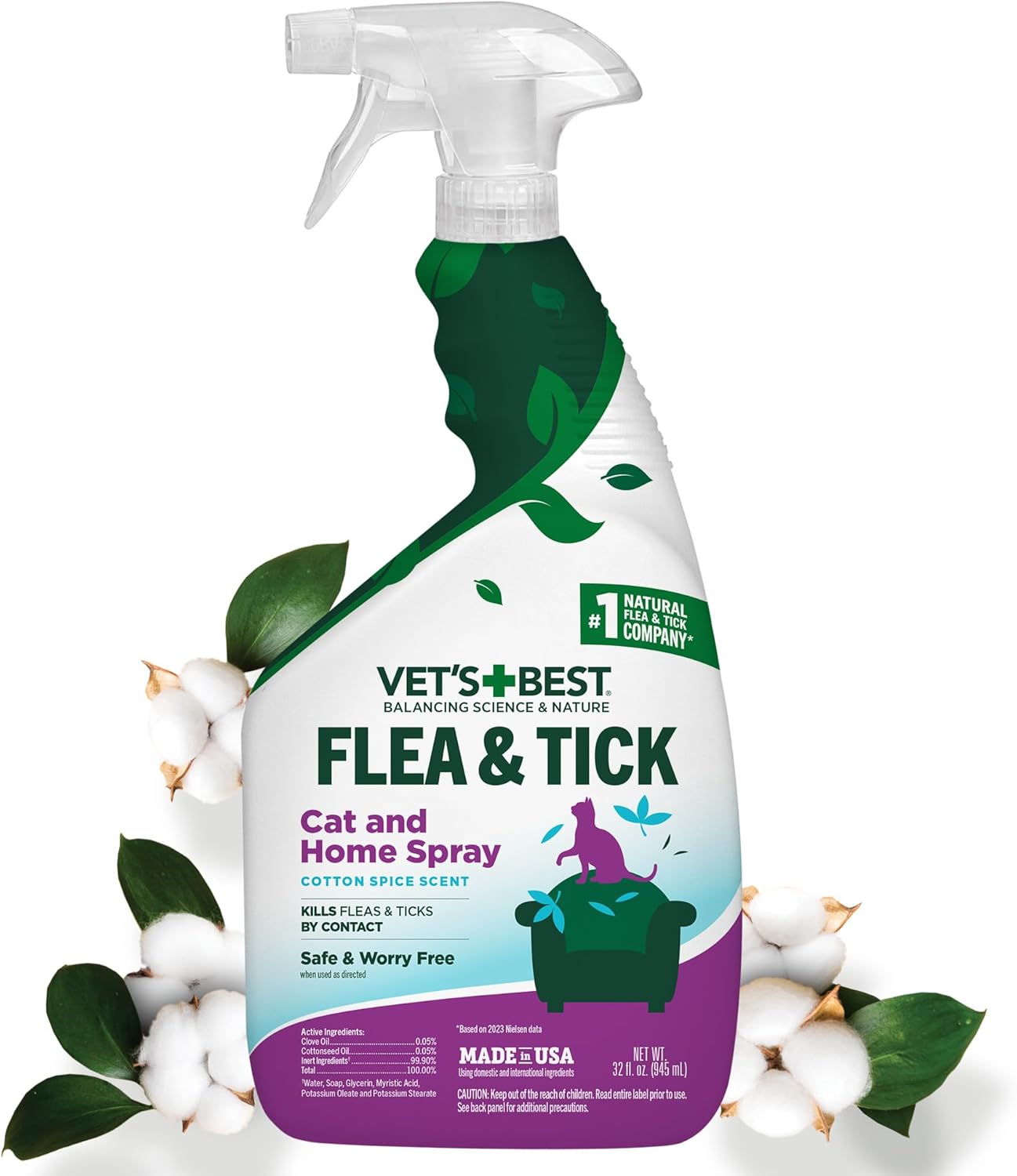
Vet's Best Flea & Tick Home Spray for Cats, Cotton Spice, 32 oz
| Unit Count | 32 Fluid Ounces |
|---|---|
| Item Form | Spray |
| Scent Name | Cotton Spice |
| Target Species | Cat |
| Active Ingredients | Clove Oil 0.05% Cottonseed Oil 0.05% |
This 32 oz Vet's Best home spray uses a plant-powered formula (cottonseed and clove oils) to target fleas, flea eggs, ticks and mosquitoes on contact and can be applied lightly to a cat's coat or sprayed on bedding, carpets and furniture. Typical use is a short patch test on the cat, then two weekly applications for active infestations or once weekly for maintenance; the label includes directions for treating surfaces without staining. Practical benefits include a gentler alternative to chemical treatments, a pleasant cotton spice scent, and versatility to treat both pets and their environment so you can break the flea life cycle. Important limitations are that active ingredients are present at very low concentrations so it is best used alongside veterinary prevention for robust, long-term control, and the product can cause sensitivity in some animals or mild eye and skin irritation in people if misused. Follow label guidance for kittens, pregnant or medicated cats and consult your veterinarian for severe infestations.
Best for: Buyers who want a veterinarian-formulated, gentler alternative to chemical sprays and who prioritize treating both the pet and the home as part of an integrated flea control plan.
Less Ideal for: Owners dealing with a severe, established infestation who need a single, high-potency medical treatment or those who prefer systemic prescription options for long-term prevention.
- Plant-based formula that kills fleas, flea eggs, ticks and mosquitoes on contact
- Can be used on cats 12 weeks and older and on bedding, carpets and furniture for environment treatment
- 32 fluid ounce size suitable for multi-room or multi-cat use
- Cotton spice scent leaves a pleasant aroma and is formulated to be non-staining
- Active ingredients are low concentration so may be less effective as a standalone solution for heavy infestations
- Some cats or household members may show sensitivity or irritation after use
Verdict: A vet-formulated, plant-based indoor spray that lets you treat cats and their environment for routine flea and tick control while avoiding harsher chemicals.
PetArmor Home & Carpet Spray, 16 oz — 7-Month Flea and Tick Control

| Unit Count | 16 Ounce |
|---|---|
| Item Form | Spray |
| Target Species | Cat |
| Volume | 16 fluid ounces |
| Active Ingredients | Contains pyrethroid, permethrin-type, and pyriproxyfen (0.10%) |
PetArmor Home & Carpet Spray is a household spray designed to reach fleas and related pests hiding in carpets, rugs, furniture, drapes, closets, and pet bedding. You use it after vacuuming: shake the bottle and apply in a sweeping motion over the affected area, then allow about two hours to dry. The formula lists an adulticide plus an insect growth regulator so it kills fleas and ticks and helps prevent flea eggs and larvae from developing, which is why the label claims up to seven months of residual protection and coverage up to roughly 500 square feet. Practical benefits include odor-free application and ability to treat multiple surfaces without leaving visible residue. Important limitations are that it is intended for home surfaces rather than direct application to pets and it requires careful vacuum disposal and drying time before re-entry. For heavy or established infestations you may need repeated treatments or to combine this with on-pet flea control for full effectiveness.
Best for: Buyers who prioritize efficient, long‑lasting home flea control and want a surface treatment that complements on‑pet flea products to reduce household reinfestation.
Less Ideal for: People looking for a treatment to spray directly on pets or those who need an immediate one‑time fix for a heavy infestation without follow-up treatments.
- Kills adult fleas and ticks and also targets flea eggs and larvae through an insect growth regulator
- Up to seven months of residual protection on treated surfaces
- Covers multiple household surfaces including carpets, rugs, upholstery, drapes, and pet bedding
- No noticeable residue or strong odor after drying
- Not formulated for direct use on animals so must be used alongside pet flea treatments
- Requires thorough vacuuming and disposal of vacuum bag before application to be most effective
- May need repeat treatments or professional help for severe infestations
Verdict: A practical, long‑lasting surface spray to reduce household flea and tick populations when used alongside pet flea treatments.
Hartz UltraGuard Plus Flea & Tick Home Spray, 16 oz

| Unit Count | 16 Ounce |
|---|---|
| Item Form | Spray |
| Scent Name | Clean Scent |
| Target Species | Fleas, Brown Dog Ticks |
| Active Ingredients | Piperonyl Butoxide, Pyrethrins, Pyriproxyfen |
Hartz UltraGuard Plus is a budget-friendly household spray formulated to kill adult fleas and ticks as well as eggs and larvae, and it comes in a 16-ounce trigger bottle for spot and surface treatments. Typical use is spraying furniture, carpets, baseboards and other areas where pets rest; the product includes an insect growth regulator to interrupt the flea life cycle so follow-up applications become less frequent. The formulation notes a clean fresh scent and lists active ingredients that provide both immediate adulticide action and longer-term control of immature stages. Important safety limits: do not spray on pets or people, avoid skin and eye contact, and ventilate treated areas until surfaces are dry. For treating upholstery, test an inconspicuous spot first and follow label directions for re-entry times. The main advantage is its broad target spectrum and IGR effect at a low price, while users must take standard chemical-safety precautions and allow treated areas to dry before reuse.
Best for: Buyers who want an inexpensive, no-frills household flea spray to treat furniture and high-traffic pet areas and who are comfortable following label safety steps.
Less Ideal for: People who need pet-safe on-animal treatments, households unwilling to isolate pets during application, or those seeking fragrance-free or non-chemical alternatives.
- Kills adult fleas and ticks plus eggs and larvae thanks to included insect growth regulator
- 16 ounce trigger bottle suited for spot treatments on furniture and carpets
- Clean fresh scent that helps mask chemical odor during application
- Not safe to spray on pets or humans so requires removing animals and people from treated areas until dry
- Can irritate eyes and skin so protective measures and ventilation are necessary
Verdict: A low-cost, effective indoor flea and tick spray for treating furniture and carpets when used carefully according to label safety directions.
Advantage Spot & Crevice Spray 24 oz.

| Unit Count | 24 Fluid Ounces |
|---|---|
| Item Form | Liquid |
| Scent Name | Unscented |
| Target Species | Cat |
| Active Ingredients | 0.40% Sumithrin, 1.00% MGK 264, 0.05% Imidacloprid |
Advantage Spot & Crevice Spray is an indoor liquid treatment designed to target fleas and other pests hiding in cracks, crevices and around furniture rather than on the pet itself. You use it as a spot application by shaking well and spraying from 8 to 10 inches until surfaces are slightly damp, then letting treated areas dry before allowing people or pets back. The formula lists imidacloprid and other actives and claims quick knockdown of adult fleas, flea eggs and ticks, and it is intended to complement topical pet treatments and yard sprays for comprehensive control. Practical benefits include fast drying, suitability for many indoor surfaces, and the ability to reach hidden infestation sites such as bed frames, baseboards and closets. Important limitations are that it is for indoor environmental use only and not for direct application to animals or people, and users should test for staining and keep children and pets away until surfaces dry. Follow label directions carefully for safe, effective results.
Best for: Buyers who prioritize dependable, environment-focused control and want a household treatment that complements on-pet flea protection to reduce reinfestation risk.
Less Ideal for: People who need an on-animal flea treatment or those who prefer fragrance-free household products without any surface-staining risk alternatives.
- Targets fleas, flea eggs and ticks in cracks and crevices where infestations often start
- Fast-drying formula lets treated areas return to normal use sooner
- Broad list of target pests includes bed bugs, dust mites and common household insects
- Not intended for use on pets or humans so you must pair it with on-animal treatments
- Label warns to test surfaces for staining before wider use
Verdict: A reliable indoor spot spray for homeowners who want a fast-drying, environment-focused product to kill fleas and pests where they hide.
ADAMS Flea & Tick Home Spray, 24 oz

| Unit Count | 24 Fluid Ounces |
|---|---|
| Item Form | Liquid |
| Scent Name | Fragrance Free |
| Target Species | Dog |
| Active Ingredients | Piperonyl Butoxide; Etofenprox; (S)-Methoprene 0.01% |
This 24-ounce ADAMS Home Spray is a trigger-spray insecticide formulated for indoor use on carpets, rugs, upholstery and pet bedding. It delivers fast knockdown of fleas and other listed pests and contains an insect growth regulator to interrupt the flea life cycle so treated areas can remain protected for months. Typical use is a light, uniform mist across carpeted rooms and furniture surfaces, then vacating the area for the recommended time. Notable features include a fragrance-free, non-staining formula and coverage sufficient for several rooms from one bottle. Practical benefits are that it treats both adults and immature stages to reduce repeat infestations and that it is versatile enough for multiple surfaces. Important limitations are that it must not be applied to people or pets, requires following label safety and reentry instructions, and some situations may need repeat applications or broader integrated pest control if infestations are heavy.
Best for: Buyers who prioritize proven indoor pest control and want a product with documented long‑term flea prevention for home and furniture areas.
Less Ideal for: People looking for a pet-applied solution or an immediate single-application cure for heavy, widespread infestations should consider treatments that are applied to animals or professional services instead.
- Kills a broad list of indoor pests including fleas, ticks and bed bugs
- Contains insect growth regulator to prevent flea reinfestation for up to 7 months
- Fragrance-free, non-staining formula suitable for carpets and upholstery
- Ready-to-use trigger bottle for straightforward application
- Not for use directly on pets or people and requires vacating treated areas per label
- May require repeat treatments or additional products for severe infestations
Verdict: Choose this spray if you want a ready-to-use indoor treatment that kills listed pests and helps prevent flea reinfestation for months.
Wondercide Flea, Tick & Mosquito Spray for Pets & Home, Rosemary, 16 fl oz

| Unit Count | 16 Fluid Ounces |
|---|---|
| Item Form | Spray |
| Scent Name | Rosemary |
| Active Ingredients | 4.2% Cedar Oil; 1.5% Rosemary Oil; 0.1% Sesame Oil |
Wondercide Rosemary spray is a plant‑powered topical and household spray designed to kill and repel fleas, ticks, and mosquitoes on pets and in the home. You apply it directly to fur by misting and rubbing through the coat for spot or whole‑body use, and you can also spray bedding, furniture, and play areas from 8 to 12 inches away. The formula lists cedar oil, rosemary oil, and sesame oil as active ingredients with water and mild surfactants as carriers, which makes it a low‑chemical alternative to conventional pesticides and suitable for use around families when directions are followed. Practical benefits include a pleasant rosemary scent, non‑staining water‑based formula, and a single product that treats both pets and living spaces. Limitations are that it is a contact‑kill product rather than a systemic treatment, so thorough application and repeated use are needed to break an infestation cycle, and it is not registered with the EPA as a traditional pesticide which may concern buyers wanting regulatory oversight. Follow the label for patch testing and avoid use on birds, reptiles, aquatic environments, or pets with compromised health.
Best for: Buyers who prioritize safer, plant‑based solutions and want a single spray for spot treatment of pets and to freshen and protect pet areas in the home.
Less Ideal for: Those who need a systemic or long‑lasting prescription strength flea treatment or who prefer products with full EPA pesticide registration.
- Plant‑based active ingredients (cedar oil, rosemary oil) offer a gentler alternative to conventional pesticides
- Can be applied to both pets and home surfaces, treating bedding, furniture, and play areas
- Water‑based, non‑staining formula with a mild rosemary scent
- Suitable for puppies, kittens, and senior pets when used as directed and after patch testing
- Kills by contact only, so it requires thorough and repeated application to control established infestations
- Not registered by the EPA as a conventional pesticide, which may be a concern for buyers seeking regulatory approval
Verdict: Choose this spray if you want a plant‑based, dual pet-and-home option that reduces pests by contact while avoiding harsh chemical treatments.
Choosing the Right Cat Flea Spray for Home: Key Factors to Consider
Cat-Specific Safety and Labeling
Cats metabolize certain chemicals differently than dogs, so choosing a spray with explicit cat-safe labeling is crucial. Look for products that state suitability for cats, list active ingredients with concentrations, and include instructions for use around kittens or pregnant cats when applicable. Clear safety directions reduce misuse and accidental exposures.
Pay attention to recommended re-entry times for people and animals after application, first-aid instructions, and any warnings about use on sick or elderly pets. Products with detailed labeling help you follow safe application routines and reduce the risk of adverse reactions in a multi-cat household.
Spectrum of Activity Across Flea Life Stages
Effective home control requires targeting both adult fleas and immature stages such as eggs and larvae. Some sprays combine an adulticide with an insect growth regulator or an insect development inhibitor to interrupt the life cycle. A product that only kills adults can give short-term relief but risks quick reinfestation if eggs and larvae remain.
Consider formulations that explicitly mention ovicidal or larvicidal activity, or include an IGR ingredient. That lowers the need for frequent repeat treatments and helps reduce long-term pressure on your indoor environment.
Application Method and Indoor Usability
The delivery system affects how well you can treat furniture, carpets, pet bedding, and baseboards without making a mess. Trigger sprayers and fine mists allow targeted spot treatments and better control in small spaces, while aerosols may reach crevices but can disperse more broadly and settle on surfaces you did not intend to treat.
Also consider whether the product requires rinsing after application, how long surfaces remain tacky, and whether it has strong odors. Easier application reduces the chance of overuse and helps maintain a safe indoor environment for cats and people.
Residual Activity and Reapplication Frequency
Residual control duration determines how often you need to retreat treated areas. Longer-lasting products can reduce labor and the frequency of disturbance to pets, but they must still fit your safety requirements for indoor use. Check the labeled residual period and follow reapplication intervals strictly.
Shorter-residual sprays may be appropriate if you need a low-residue approach around sensitive animals, but then plan for more follow-up treatments or combine spray use with environmental cleaning such as vacuuming to remove eggs and larvae.
Surface Compatibility and Stain Risk
Indoor flea sprays contact a variety of surfaces including upholstery, carpets, hardwood floors, and pet bedding. Make sure the product is labeled safe for the surfaces you intend to treat, or test an inconspicuous spot first. Some formulations can discolor fabrics or leave residues that attract dirt.
Consider whether items like removable bedding should be washed after treatment and whether the spray leaves a residue that requires wiping. Choosing a surface-compatible spray reduces the risk of damage to furniture while allowing effective flea control.
Household and Human Safety Considerations
Because sprays are used inside living spaces, human exposure is a real concern. Look for products with low inhalation and dermal risks when used as directed, and observe re-entry intervals stated on the label. Keep treated spaces ventilated and restrict access for young children until surfaces have dried.
Also consider storage and disposal instructions to avoid accidental exposure. A product with clear household safety guidance helps you use it confidently without compromising family or pet health.
Preparing Your Home Before Spraying
A successful treatment begins with preparation. Vacuum carpets, furniture crevices, and pet resting areas to remove eggs, larvae, and adult fleas. Empty the vacuum bag or canister contents into a sealed bag and discard outside to avoid reintroducing fleas.
Remove or wash loose bedding and launder any washable items at the hottest safe setting for fabric care. Move food dishes and cover aquariums, then ensure pets are out of the area during application and until surfaces are fully dry.
- Vacuum seams, under cushions, and along baseboards
- Wash removable bedding and soft toys
- Seal vacuum waste and dispose of it outside
- Isolate pets until treated areas are dry
Treating Spot Areas Versus Whole-Room Applications
Spot treatments are effective for isolated infestations or small apartments where pets use limited areas. Apply to pet beds, favorite resting spots, and baseboards following label directions. Spot treatments minimize chemical use and reduce disturbance to the rest of the home.
Whole-room applications may be necessary for established infestations. When treating an entire room, focus on floor coverings, under furniture, and cracks around baseboards. Plan to ventilate and allow sufficient drying time before reintroducing pets and people.
- Spot treat high-contact zones to reduce chemical load
- Use whole-room treatments for heavy or widespread infestations
- Always adhere to labeled coverage rates and dwell times
Combining Spray Use with Nonchemical Controls
Integrated control is the most effective long-term approach. Use mechanical methods such as frequent vacuuming, washing bedding, and grooming pets with a flea comb to reduce numbers between treatments. Heat from washing and drying bedding kills eggs and larvae efficiently.
Consider habitat modification to reduce flea-friendly microclimates: reduce clutter, repair entry points where wildlife might bring fleas, and maintain lawns and mulch away from building foundations to cut down on outdoor flea sources that can reinvade indoor spaces.
- Vacuum and wash bedding regularly
- Use flea combs on cats as a monitoring and removal tool
- Maintain perimeter landscaping to reduce outdoor flea pressure
Special Considerations for Multi-Cat Households
In homes with multiple cats, coordinate treatment so all pets and shared spaces are addressed within a tight time window. Otherwise, untreated animals can reintroduce fleas and undermine control efforts. Ensure each cat is on an appropriate veterinarian-recommended parasite program when combining environmental sprays with on-animal treatments.
Pay attention to cats with health issues, senior animals, or kittens. For these pets, choose lower-residue strategies, treat less frequently, and consult a veterinarian if you are unsure about specific ingredients or exposure risks.
- Treat all cats and shared spaces closely in time
- Adjust strategies for kittens and medical conditions
- Consult a veterinarian for integrated parasite control plans
When to Reassess and Repeat Treatment
Monitor treated areas for signs of ongoing activity for several weeks after application. New flea activity often indicates surviving eggs or reinfestation from outside sources. Follow labeled re-treatment intervals rather than guessing when to spray again.
If fleas persist after following label directions and good housekeeping, reassess your approach. Additional environmental steps, targeted spot treatments, or professional consultation may be necessary for stubborn infestations.
- Watch for flea activity for at least 4 to 6 weeks after treatment
- Follow product-specific reapplication intervals
- Consider professional help for persistent infestations
How We Chose the Best Cat Flea Spray for Home
We focused on sprays designed for regular indoor use around cats and the surfaces they use. Our selection filters favored products with clear safety guidance for multi-cat households, formulations that target both adult fleas and immature stages, and delivery systems suited to indoor application such as fine mists or trigger sprayers that reduce overspray. Evaluation criteria prioritized demonstration of safety (clear cat-specific labeling and separation from harmful ingredients), effectiveness against multiple flea life stages, ease of use indoors (sprayer type and surface compatibility), and persistence of control to limit reapplication. We excluded outdoor-only treatments, products labeled for dogs only, and formulations requiring professional equipment. We also filtered out sprays with unclear ingredient lists or inadequate residue information. The resulting shortlisted sprays represent options that meet indoor safety expectations while providing measurable control and straightforward application guidance.
FAQ
Are indoor flea sprays safe to use around cats?
Many indoor flea sprays are formulated for use around cats when used exactly as directed. Safety depends on following label instructions, keeping cats away during application and drying, and choosing products with cat-specific guidance.
How long after spraying can my cat return to the room?
Re-entry times vary by product. Most labels require keeping pets out until treated surfaces are dry and any recommended ventilation time has passed. Always follow the product-specific re-entry guidance to minimize exposure.
Can flea sprays eliminate eggs and larvae in the home?
Some sprays include active ingredients that affect eggs and larvae, such as insect growth regulators. Combining those products with cleaning actions like vacuuming and washing bedding improves overall control of immature stages.
Is it safe to spray cat bedding directly?
Some products allow treatment of bedding, while others advise washing rather than spraying. If you do spray bedding, follow instructions for contact time and drying, and consider laundering washable items to remove residues and killed organisms.
How often should I repeat flea spray treatments indoors?
Reapplication depends on the product's residual claim and infestation level. Follow label intervals; many products recommend treatments every few weeks during active infestations and less frequently for maintenance.
Will treating indoors alone solve a flea problem?
Indoor treatment helps, but outdoor sources can reinfest indoor spaces. Addressing pets with vet-recommended topical or oral preventives and reducing outdoor flea habitats improves long-term success.
Final Verdict
Choosing a cat flea spray for home involves balancing the need for effective control with safety for cats, people, and household surfaces. Prioritize products with clear cat-specific labeling, activity against multiple flea life stages, and application methods suited to indoor spaces. Pair spray use with thorough cleaning and coordinated treatment of all pets to reduce reinfestation risk. Decide based on the infestation severity and your household sensitivity. For light problems, targeted spot treatments and vigilant cleaning often suffice. For heavier infestations, choose an indoor-safe spray with residual activity and follow reapplication intervals carefully to regain control.
