

Note: This article contains affiliate links. If you click on these links and make a purchase, I may earn a small commission at no extra cost to you. This helps support my research and content. Read my full affiliate disclosure here.
Soggy patches, seasonal flooding, and consistently damp beds pose real challenges for gardeners. Choosing flowers adapted to wet soil prevents root rot, reduces maintenance, and ensures you still get color and pollinator activity where other plants fail. This guide covers six top choices purpose-selected for wet conditions and summarizes how we judged them. Below you will find practical notes on garden uses, moisture tolerance, sun preferences, and what to expect from each shortlisted option based on key evaluation criteria. Use the quick criteria to match plants to your garden's wet spots.
Top Picks at a Glance
| Best Overall The best all-around choice for most situations | Seedville Blue Flag Iris (Iris versicolor) Flower Seeds — 25 Count |  |
| Best Quality Built to a higher standard if you want something more solid | GINGERGLOW Sweetbay Magnolia Live Plant (Gallon Pot) |  |
| Best Value The sweet spot between price and what you get | CZ Grain Summer Snowflake Bulbs (Leucojum aestivum) – 4 Bulbs |  |
| Best Budget The cheapest option that still gets the job done reliably | NaturalRoots Cardinal Flower Seeds (Lobelia cardinalis) — Non‑GMO Perennial |  |
| Highest Rated A top-rated pick with lots of positive feedback | Smoke Camp Crafts Organic Blue Lobelia (Lobelia siphilitica) Seeds, 0.1 g (≈1000 seeds) |  |
| Most Popular A crowd favorite that many people choose with confidence | HOME GROWN Swamp Milkweed (Asclepias incarnata) Seeds — 200 Heirloom Non-GMO |  |
Seedville Blue Flag Iris (Iris versicolor) Flower Seeds — 25 Count

| Indoor Outdoor Usage | Outdoor |
|---|---|
| Expected Blooming Period | May – June |
| Sunlight Exposure | Sun – Part Shade |
| USDA Hardiness Zone | 1 – 9 |
| Unit Count | 25 Count |
These Seedville Blue Flag Iris seeds produce a native perennial well suited to moist or variable soil conditions. The plants form attractive foliage and large, fragrant purple flowers with white and yellow accents that typically bloom in May and June and draw butterflies. Use these seeds in rain gardens, along pond edges, or in beds that get sun to part shade; they tolerate both wet patches and periods of drought, so they adapt to shifting moisture. The packet is intended for fall planting with a cold stratification step or for indoor starts before the last frost, and spacing of roughly 15 to 18 inches helps mature clumps reach their 24 to 36 inch height. Important limitations are typical seed variability and the need for proper stratification and patience the first season before full flowering; results depend on local soil and planting technique. For gardeners in cold climates the species is very hardy, but expect a seasonal timetable for establishment rather than immediate mature plants.
Best for: Gardeners who need resilient, wildlife-friendly perennials for moist or seasonally wet sites and prefer establishing plants from seed to create naturalized drifts.
Less Ideal for: People who want instant, mature clumps or a guaranteed uniform display in the first season should choose nursery-grown rhizomes or potted plants instead.
- Native species adapted to USDA zones 1–9, offering strong cold hardiness.
- Tolerates both wet and drought conditions, making it versatile for rain gardens and pond edges.
- Fragrant, showy blooms in May–June that attract butterflies and improve garden interest.
- Packaged as 25 seeds, enough for establishing several clumps or a small drifts planting.
- Requires cold stratification or fall sowing and patience before plants reach full flowering.
- Seed-grown plants show natural variability so bloom timing and vigor can differ between seedlings.
Verdict: A hardy, wildlife-attracting iris grown from seed that reliably handles wet soil and makes a strong choice for rain gardens and pondside plantings.
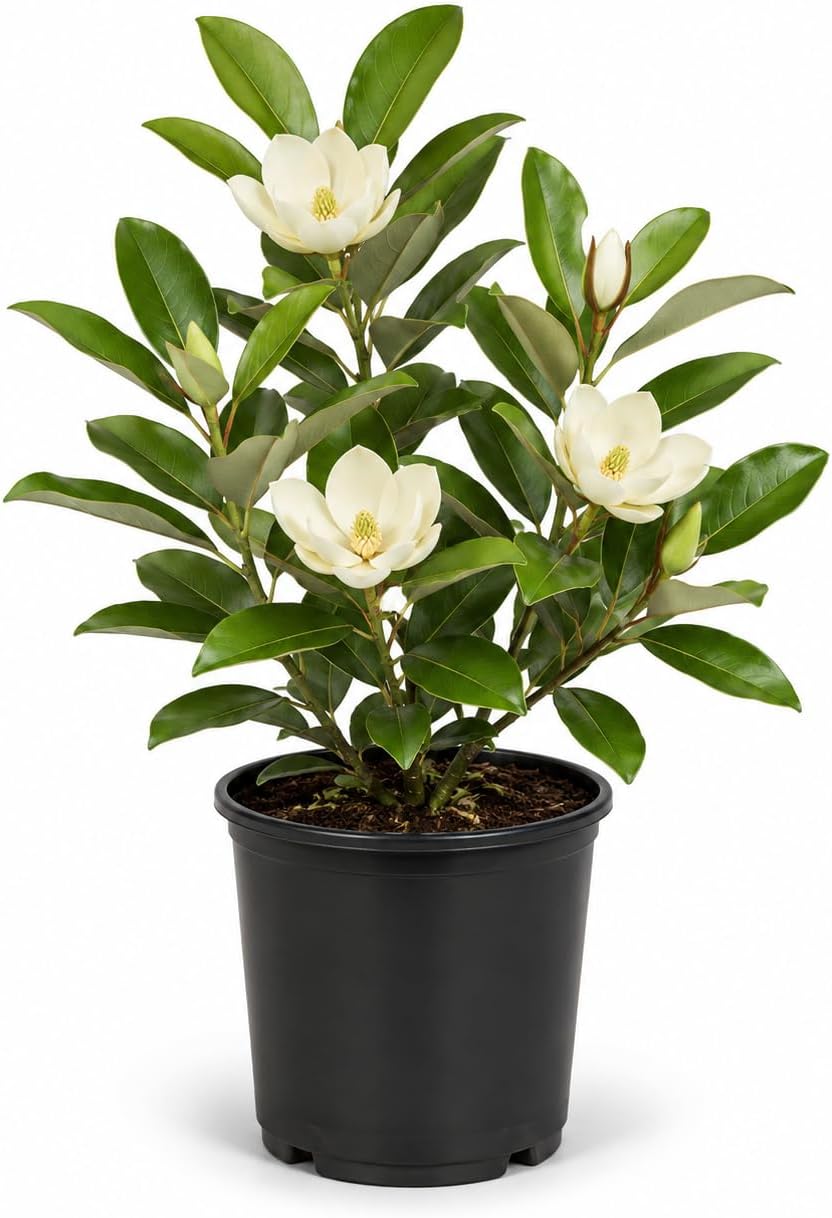
GINGERGLOW Sweetbay Magnolia Live Plant (Gallon Pot)
| Expected Blooming Period | Spring to Summer |
|---|---|
| Sunlight Exposure | Full Sun |
| USDA Hardiness Zone | 5-10 |
| Moisture Needs | Moderate Watering |
This Sweetbay Magnolia arrives as an established, gallon‑potted specimen intended to transplant easily into a landscape or large container. It is valued for its lemon‑scented, creamy white blooms that appear from spring into summer and for glossy leaves with silvery undersides that add year‑round structure. The listing emphasizes a strong root system and selection for vigor, which helps the tree establish quickly in moist, poorly drained areas where many ornamental trees struggle. Sweetbay Magnolia tolerates wet soil and colder zones down to USDA 5, and it will perform in full sun to partial shade. Practical benefits include low maintenance once established, reliable flowering, and seasonal fragrance. Limitations are typical of small nursery trees: you should plan for proper planting to avoid root stress and expect several seasons of growth before it reaches mature size and full flowering display. Also, specific dimensions and mature height are not provided here, so estimate spacing and long‑term placement before planting.
Best for: Gardeners who need a flowering tree that can handle moist or poorly drained sites and who prioritize quick establishment and seasonal fragrance in their landscape.
Less Ideal for: People wanting an immediate large specimen or exact size specifications without waiting multiple seasons for growth should consider larger field‑grown trees or consult a nursery for size guarantees.
- Selected and sold with a developed root system for easier transplanting and faster establishment
- Tolerant of wet or swampy soils, making it suitable for poorly drained sites
- Fragrant, creamy white blooms provide seasonal interest and a pleasant scent
- Adaptable to full sun or partial shade and hardy to USDA zone 5
- Mature size and specific dimensions are not provided so long‑term placement requires planning
- As a live plant, successful establishment depends on correct planting and aftercare
Verdict: Choose this Sweetbay Magnolia when you need a fragrant, well‑rooted flowering tree that reliably tolerates wet soil and establishes quickly.
CZ Grain Summer Snowflake Bulbs (Leucojum aestivum) – 4 Bulbs

| Sunlight Exposure | Partial Sun |
|---|---|
| Unit Count | 1 Count |
These pre-chilled Summer Snowflake bulbs arrive ready to plant and are aimed at gardeners who want reliable spring display with minimal fuss. Planted in pots or directly in beds, the bulbs send up 12–18 inch stems topped with nodding white bell flowers that have a green-tipped petal—an elegant look for edging, rain gardens, or consistently moist spots. The pre-chill treatment reduces the need for cold storage and improves the chance of a timely bloom, which is useful if you want dependable results without extra prep. They prefer partial sun and tolerate wet soil better than many spring bulbs, making them a practical choice for boggy areas or low spots. Limitations are modest bulb count per unit and the typical seasonal nature of bulbs: they give strong spring interest but need appropriate siting to naturalize well over years. Also expect routine bulb care like dividing and avoiding extremely dry, hot locations. For a gardener optimizing for dependable blooms in damp conditions, these are straightforward and low-maintenance additions.
Best for: Gardeners who want dependable spring blooms in low or wet areas and prefer solutions that minimize prep work and fuss.
Less Ideal for: People seeking summer or year-round flowering plants or those who need large quantities of bulbs from a single purchase.
- Pre-chilled bulbs arrive ready to plant, reducing need for home cold treatment
- Well suited to wet or consistently moist soil where many bulbs struggle
- Produces tall, elegant 12–18 inch stems with distinctive white bell flowers
- Works in both outdoor beds and indoor pots for forced blooms
- Package lists a small unit count which may require multiple purchases to fill a bed
- Seasonal spring display that requires siting and occasional division to naturalize long term
Verdict: Pick these pre-chilled Summer Snowflake bulbs if you want an easy, reliable way to add elegant spring flowers that tolerate wet soil with minimal preparation.
NaturalRoots Cardinal Flower Seeds (Lobelia cardinalis) — Non‑GMO Perennial

| Plant or Animal Product Type | Flower seed |
|---|---|
| Indoor Outdoor Usage | Indoor, Outdoor |
| Other Special Features of the Product | Attracts Pollinators, High Germination Rate, Low Maintenance |
| Sunlight Exposure | Full Sun |
These NaturalRoots cardinal flower seeds are a straightforward choice for gardeners who need a moisture‑loving perennial that attracts pollinators. Sow outdoors in late fall or early spring for natural cold stratification or start indoors after a 4–6 week refrigeration; seeds are surface sown and need consistent moisture and light to germinate. The plants form 24–48 inch tall spikes of tubular red flowers from late summer into fall, making them useful on pond edges, rain gardens, or any consistently damp border. Practical benefits include strong appeal to hummingbirds and butterflies, low maintenance once established, and non‑GMO seed stock advertised with a high germination rate. Expect to water regularly in average soils and to mulch to retain moisture while seedlings become established. Limitations are that they prefer part shade to full sun with moist soil so they are not drought tolerant, and germination requires attention to surface sowing and cold stratification for best results. Seed packets provide a low‑cost way to naturalize wet areas but will take a season to reach full display size.
Best for: Gardeners on a budget who want a low‑cost way to add tall, hummingbird‑attracting perennials to wet areas like rain gardens or pond margins.
Less Ideal for: Those with dry, drought‑prone yards or gardeners seeking instant mature plants rather than starting from seed.
- Non‑GMO seeds with claimed high germination rate
- Designed for moist to wet sites such as rain gardens and pond edges
- Attracts hummingbirds, butterflies, and other pollinators
- Low maintenance once established and provides late‑season color
- Requires consistent moisture and is not suitable for dry sites
- Successful germination benefits from cold stratification and surface sowing technique
Verdict: A budget‑friendly seed packet for gardeners who want eye‑catching red spikes that naturalize wet areas and support pollinators.
Smoke Camp Crafts Organic Blue Lobelia (Lobelia siphilitica) Seeds, 0.1 g (≈1000 seeds)

| Sunlight Exposure | Partial Shade to Shade |
|---|---|
| USDA Hardiness Zone | 4-9 |
| Expected Blooming Period | Summer |
| Moisture Needs | Moderate Watering |
These Organic Blue Lobelia seeds are aimed at gardeners who need a reliable native for damp areas such as rain gardens, pond edges, and low-lying beds. The packet contains about 0.1 gram (roughly 1,000 seeds) of Lobelia siphilitica, a short-lived perennial that forms a leaf rosette the first year and sends up 36-inch flowering spikes in following seasons. The seeds require 60 days of cold, moist stratification and surface sowing because they need light to germinate; stratified seeds typically appear in 14–21 days. Once planted in partial shade to shade in consistently moist soil, the plants attract hummingbirds and other pollinators and are deer and pest resistant. Practical benefits include their native hardiness across USDA zones 4–9 and suitability for wet-site planting where many ornamentals struggle. Expect to start seedlings indoors 8–10 weeks before last frost or sow outdoors in fall for natural stratification. Limitations are the need for intentional cold stratification and the plant’s short-lived perennial habit, which may require re-sowing or allowing self-seeding for long-term presence.
Best for: Gardeners who need a dependable native flower for consistently damp or wet garden spots and who are willing to follow stratification and sowing steps for reliable germination.
Less Ideal for: Gardeners seeking instant blooms or low-effort annuals, or those unable to provide moist soil conditions or the cold stratification step.
- Native North American species suited to moist or wet soils and rain gardens
- Attracts hummingbirds and other pollinators
- Organic seeds with pest and deer resistance noted
- Hardy across USDA zones 4–9 for broad climatic reliability
- Requires 60 days of cold, moist stratification before reliable germination
- Short-lived perennial that may need replanting or allowing self-seeding for continuity
Verdict: A dependable native choice for wet-site gardens that rewards proper stratification with hummingbird-attracting summer blooms.
HOME GROWN Swamp Milkweed (Asclepias incarnata) Seeds — 200 Heirloom Non-GMO

| Other Special Features of the Product | Attracts Pollinators, Cold Hardy, Moist Soil Tolerant, Monarch Host Plant, U.S. Native Wildflower |
|---|---|
| Expected Blooming Period | Summer to Fall |
| Sunlight Exposure | Full Sun to Partial Shade |
| Expected Planting Period | Fall, Spring |
| USDA Hardiness Zone | 3-9 |
These Swamp Milkweed seeds grow into tall, moisture‑tolerant native perennials prized for pollinator gardens and wet-site plantings. Sow after a 30‑day cold stratification or direct sow in late fall for natural stratification; seedlings typically appear within two to four weeks under warm germination conditions. The plants prefer full sun to partial shade and consistently moist, fertile soil, making them a good choice for rain gardens, pond edges, bioswales, and other wet areas where common milkweed struggles. Mature plants produce clusters of rosy to mauve flowers from summer into fall that attract monarchs, bees, and other beneficial insects while providing host foliage for caterpillars. This packet supplies a large number of heirloom, non‑GMO seeds, which is helpful when establishing a habitat or filling multiple planting sites. Expect to keep soil evenly moist during germination and early growth and to allow 1–2 feet spacing as plants establish vertical clumps. If you need immediate blooming plants or a low‑maintenance, drought‑tolerant choice, seeds require more time and moisture care than potted transplants or xeric species.
Best for: Gardeners creating rain gardens, pond edges, or native pollinator plantings who prioritize proven, habitat‑building species and want seed quantity to establish multiple plants.
Less Ideal for: Gardeners seeking instant floral impact or very low‑maintenance, drought‑tolerant plants should consider container‑grown transplants or xeric species instead.
- Large seed count (200) suitable for establishing multiple plants or habitats
- Heirloom, non‑GMO seed source appropriate for native plantings
- Tolerates consistently moist to wet soils where other milkweeds may not
- Attractive rosy to mauve flower clusters that support monarchs and many pollinators
- Cold‑hardy across USDA zones 3–9 so plants return year after year in a wide range of climates
- Seeds require a cold stratification period or late‑fall sowing for reliable germination
- Needs consistently moist soil during germination and establishment which may demand extra watering or site selection
Verdict: Choose these Swamp Milkweed seeds when you need a hardy, moisture‑loving native that reliably establishes pollinator habitat from seed.
Choosing the Right Flowers for Wet Soil: Key Factors to Consider
Moisture Tolerance Range
Not all "wet" soils are identical. Some areas are waterlogged for days after rain, while others stay evenly damp. Choose flowers rated for the specific range you have: standing water tolerance, periodic flooding tolerance, or mere constant dampness. A plant that tolerates brief flooding may still fail in a permanently saturated bed.
Understanding the duration and depth of water exposure affects root oxygen availability and the likelihood of root rot. Pick species with root systems adapted to low-oxygen conditions when water sits on or near the surface.
Sun and Shade Preferences
Wet sites vary widely in light. Marshy edges and bog gardens often receive full sun, while shaded swales under trees stay damp and darker. Match the plant's light needs to the actual microclimate: otherwise moisture tolerance alone will not guarantee success.
Some plants bloom best with several hours of sun even in wet soil, while others prioritize leaf growth and may struggle to bloom if shaded. Consider mature height and how light shifts seasonally as neighboring plants leaf out.
Soil Type and pH
Wet soil can be heavy clay, organic-rich peat, or mineral-rich silt; each holds and drains water differently. Some wet-tolerant flowers prefer acidic, peaty conditions while others do better in alkaline wet clay. Know your bed's soil texture and pH before planting.
Soil texture affects root stability and nutrient availability. Amending the bed can help but only within limits: true wetland species are often the easiest long-term solution if water cannot be drained.
Planting Depth and Root Structure
Plants adapted to saturated ground often have specialized root structures that tolerate low oxygen, like aerenchyma or shallow fibrous roots. Check recommended planting depth because planting too deep can suffocate roots, while planting too shallow can expose roots to drying during drier spells.
Transplanting technique matters: keep root balls intact and avoid burying the crown. Some wet-soil flowers establish best when set slightly higher on a small mound to allow oxygen exchange while still handling surface water.
Maintenance and Division Needs
Even wet-tolerant perennials benefit from periodic division, deadheading, or thinning. In waterlogged beds, foliage can stay wet longer and increase disease pressure; routine removal of spent stems and good spacing helps airflow.
Consider how easy the plant is to divide or propagate when planning beds. Species that naturalize aggressively may need containment in a rain garden, while slow growers may require patience but less maintenance.
Wildlife and Pollinator Benefits
Many wet-soil flowers provide season-long resources for bees, butterflies, and other beneficial insects. Choosing species with nectar-rich blooms or staggered flowering supports garden ecology and can improve overall garden resilience.
If wildlife value is a priority, prefer plants with open flowers accessible to a variety of pollinators and those that fruit or seed for birds later in the season.
Designing With Wet-Soil Flowers
Think of wet patches as intentional features rather than problems. Group wet-tolerant flowers into swathes or drifts so the color reads well even if some plants flop after heavy rain. Use height layering: sturdier, taller perennials at the back and lower, spreading forms at the edges to soften the transition to drier beds.
- Place the most flood-tolerant species in the lowest point of the site.
- Use gravelly or coarser edging where water flows out to prevent soil erosion.
- Consider seasonal interest by mixing early, mid, and late-season bloomers.
Planting and Establishment Tips
Plant during a drier spell if possible so roots can establish without being constantly saturated. When planting in very wet spots, consider forming a shallow berm or slightly raised mound for each crown to encourage initial root growth while keeping the overall bed moist. Mulch lightly with coarse material to reduce surface compaction but avoid heavy layers that hold excessive moisture against crowns.
- Firm soil gently around roots without compacting.
- Water only to settle soil at planting; avoid overwatering established wet-tolerant plants.
- Label plantings with moisture and light notes for future reference.
Managing Disease and Pests in Wet Conditions
High moisture increases the chance of fungal problems and slug activity. Improve airflow by spacing plants appropriately and removing dead foliage promptly. Avoid overhead watering in summer, since rain typically supplies enough moisture and additional splashing can spread spores.
- Inspect crowns and root collars annually for signs of rot.
- Use organic slug controls and encourage predators like birds and ground beetles.
- Thin crowded clumps in spring or fall to reduce humidity within the canopy.
Using Containers and Raised Beds
If site drainage cannot be changed, containers and raised beds offer options for controlling soil mix while still keeping plants moist. Use heavy, moisture-retentive mixes and run drainage holes that allow occasional standing water rather than constant saturation for species that tolerate brief flooding. Containers also let you move plants seasonally if a spot becomes too dry or too wet. Raised beds allow you to blend wet-tolerant species with others by adjusting mound height and soil composition within the same visual grouping.
- Choose containers with sturdy rims to prevent tipping when soil is saturated.
- Avoid lightweight potting mixes that float out of containers during heavy rains.
- Select raised-bed edging that resists rot from constant moisture.
Seasonal Care and Winter Considerations
Wet sites freeze differently than dry ones. Winter-thaw cycles can heave crowns and expose roots. Apply a breathable mulch after the ground has frozen to protect crowns, but remove excess mulch in spring to prevent prolonged wet crowns. Divide overcrowded clumps in late spring or early fall when soil is workable and not waterlogged. Monitor for winter-long standing water and adjust plant choices in the next season if necessary.
- Avoid late-season heavy pruning that leaves stems trapping moisture.
- Check for water pooling around stems early in spring and correct grading if possible.
- Choose species with good winter hardiness for your zone even if they tolerate moisture.
How We Chose the Best Flowers for Wet Soil
We prioritized species and cultivars that reliably establish and bloom in soils that stay moist or periodically flood. Our selection filters focused on proven moisture tolerance, seasonal bloom length, ecological benefits for pollinators, landscape versatility, and basic maintenance needs. We looked for plants that handle anaerobic soil conditions better than average, form healthy root systems rather than shallow, failing roots, and show resistance to common moisture-related diseases. Excluded from consideration were plants that only tolerate brief dampness, annuals that die after one wet season without reseeding, and species known to require aggressive soil modification to survive. We favored options with documented garden performance in the kinds of low-lying beds, rain gardens, and container setups where standing water or high water table conditions are common. Practical traits such as ease of division, seed or cutting propagation, and predictable bloom timing also influenced inclusion.
FAQ
Can I grow flowers in permanently waterlogged soil?
Some species tolerate permanent shallow standing water, but many will suffer if roots are submerged for long periods. Choose true wetland-adapted plants for permanently waterlogged beds and expect different maintenance than for damp but well-drained soils.
Will wet soil increase fungal disease in flowering perennials?
Yes, persistent moisture and poor airflow raise fungal risk. Reduce disease by spacing plants, removing dead foliage, improving air circulation, and selecting disease-resistant varieties when possible.
Should I amend wet soil before planting?
Amendments can help depending on texture. Incorporating organic matter improves structure in clay, while peat or compost can help in sandy wet soils. Avoid excessive amendments that change the hydrology away from what wet-adapted plants need.
Are there container options for gardens with a high water table?
Yes. Containers and raised beds let you control the soil mix and crown height while keeping plants moist without permanent saturation. Use heavier, moisture-retentive mixes and ensure stable placement to handle saturated conditions.
How do I protect crowns from winter freeze-thaw in a wet site?
Apply a breathable mulch after the soil freezes to reduce heaving, then remove or thin that mulch in spring. Choosing plants with strong crown structures and good cold hardiness also helps survive freeze-thaw cycles.
Final Verdict
Pick flowers that match the specific wetness and light conditions of your bed rather than relying on a single "wet-tolerant" label. Prioritize moisture tolerance range, bloom timing for seasonal interest, disease resistance, and pollinator benefits when deciding. Expect tradeoffs: the most flood-tolerant species may offer fewer bloom weeks, while showier perennials often need slightly less saturation. Use the evaluation criteria described above to match plants to the lowest spots, edges, or container solutions in your landscape. With the right choices you can convert soggy trouble areas into reliable, colorful garden features that support wildlife and reduce maintenance headaches.
