

Note: This article contains affiliate links. If you click on these links and make a purchase, I may earn a small commission at no extra cost to you. This helps support my research and content. Read my full affiliate disclosure here.
If you want to add color while protecting bare soil, ground-cover flowers are one of the most practical choices. The right low-growing flowering plants knit together quickly to suppress weeds, reduce erosion, and create a more finished look in beds, borders, and slopes. This guide presents a carefully shortlisted set of top options that perform well as ground cover in a range of light and soil conditions. Each pick was evaluated for spread habit, maintenance needs, and seasonal visual impact to help you choose a solution that fits your garden's conditions and the time you want to spend caring for it.
Top Picks at a Glance
| Best Overall The best all-around choice for most situations | SVI Mountain Phlox (Linanthus grandiflorus) Flower Seeds — 1500 Count |  |
| Best Quality Built to a higher standard if you want something more solid | KVITER Royal Carpet Sweet Alyssum Heirloom Flower Seeds (5000 Count) |  |
| Best Value The sweet spot between price and what you get | SURVIVAL GARDEN SEEDS Purple Royal Carpet Sweet Alyssum Seeds (1 Pack) |  |
| Best Budget The cheapest option that still gets the job done reliably | Carpet Creeping Viola sororia Violet Seeds, 200 Count |  |
| Highest Rated A top-rated pick with lots of positive feedback | Isotoma fluviatilis (Blue Star Creeper) Groundcover, 1 Quart |  |
| Best Seller A high-volume bestseller chosen again and again | Groundio Moss Rose (Portulaca grandiflora) Mixed-Color Seeds, 23,500 Count |  |
SVI Mountain Phlox (Linanthus grandiflorus) Flower Seeds — 1500 Count

| Unit Count | 1500 Count |
|---|---|
| Expected Blooming Period | Spring to Summer |
| Sunlight Exposure | Full Sun |
| USDA Hardiness Zone | 2-12 |
| Material Features | GMO Free, Heirloom |
These SVI Mountain Phlox seeds are sold in a 1500‑count packet and are aimed at creating a low, spreading carpet of fragrant phlox that blooms from late spring into early summer. Planting is straightforward: sow just under the soil surface in full sun, keep the soil evenly moist and expect germination in about 15–20 days. The plants reach roughly 18 inches and naturalize well in borders, rock gardens, or along paths, attracting bees and butterflies with scented blooms. The seeds are heirloom and GMO free, and each packet includes planting guidance to simplify seasonal sowing and successive batches or fall planting for earlier color. Because these are bulk seeds of a wild coastal California variety, germination and bloom timing can vary with local conditions and they will self‑seed if left unchecked. While excellent for performance—fast coverage and strong pollinator appeal—this is a seasonal, annualized ground cover solution rather than a permanent, maintenance‑free turf substitute.
Best for: Gardeners who want a high‑impact, fast‑establishing flowering ground cover to fill borders or rock gardens and prioritize bloom performance and pollinator value.
Less Ideal for: People seeking a permanent, no‑maintenance ground cover for dry, poor soils or those who want a fully contained, non‑self‑seeding planting solution.
- Large 1500‑count packet for rapid area coverage or multiple planting rounds
- Heirloom, GMO‑free seed source with clear planting guidance on each packet
- Fragrant blooms that attract pollinators and work well for cut stems or small bouquets
- Fast germination window (15–20 days) and low, spreading habit for quick ground cover
- Plants will self‑seed and require trimming or management to prevent unwanted spread
- Performance depends on well‑drained loam and regular moisture so they are less tolerant of poor soils or drought
Verdict: Choose these Mountain Phlox seeds when you want a large, fast‑germinating packet to quickly establish fragrant, pollinator‑attracting ground cover.
KVITER Royal Carpet Sweet Alyssum Heirloom Flower Seeds (5000 Count)

| Unit Count | 5000 Count |
|---|---|
| Sunlight Exposure | Full Sun |
| Expected Blooming Period | Spring to Fall |
| USDA Hardiness Zone | 1-12 |
| Material Features | GMO Free, Heirloom |
These KVITER sweet alyssum seeds are sold in a 5000-count pack intended for creating a low, fragrant ground cover or border. The seeds produce dense mats about 4 inches tall that bloom continuously from late spring through early fall, and they are described as attractive to pollinators and deer resistant. Use them for surface-sowing in loam soil, pressing the tiny seeds into moist soil and keeping light exposure consistent for germination. The packet includes a step-by-step growing guide which helps reduce guesswork for less experienced gardeners. Practical benefits include fast coverage of bare spots, long bloom duration, and appeal to bees and butterflies, making these useful in pollinator-friendly beds and containers. Limitations are the small seed size which requires careful sowing and consistent moisture at the start, and as an annual in most gardens the plants will need reseeding each year to maintain a carpet effect.
Best for: Gardeners who want a low-maintenance, pollinator-friendly ground cover that reliably fills borders and containers through the growing season and prefer clear growing instructions to reduce risk.
Less Ideal for: People who want a permanent perennial groundcover or who prefer large plug plants to instant coverage without sowing from seed.
- Very large 5000-count packet suitable for covering extensive areas or multiple beds
- Heirloom non-GMO seed with a step-by-step growing guide included
- Long bloom period from spring through fall for extended color
- Attracts pollinators while being described as deer resistant
- Tiny seeds require careful surface sowing and initial moisture management
- Annual habit means beds need reseeding next season to maintain coverage
Verdict: A cost-effective choice for gardeners who want an easy-to-follow seed option to establish fragrant, pollinator-attracting ground cover across large areas.
SURVIVAL GARDEN SEEDS Purple Royal Carpet Sweet Alyssum Seeds (1 Pack)

| Sunlight Exposure | Full Sun |
|---|---|
| USDA Hardiness Zone | 4-9 |
| Expected Blooming Period | Spring to Fall |
| Soil Type | Loam Soil, Sandy Soil |
| Seed Treatment Method | Untreated |
These Royal Carpet purple sweet alyssum seeds produce a low, dense mat of fragrant flowers that work well as a living ground cover, border edging, or container filler. The packet contains untreated, heirloom, non-GMO seed intended for outdoor sowing in cool seasons; light is required for germination so seeds are best scattered on the soil surface and pressed in. Plants bloom quickly from spring through fall in USDA zones 4 to 9 and attract bees and butterflies, making them useful for pollinator-friendly planting. Practical features include drought tolerance, high germination rate, and simple care—moderate watering and occasional thinning once seedlings reach about 2 inches. Limitations to expect are that alyssum is frost sensitive in cold snaps and performs as a cool-season annual in many areas, and it will self-seed rather than persist as a long-lived perennial in warmer climates. For dense ground cover you'll need to sow evenly and thin to avoid overcrowding.
Best for: Gardeners who want an easy, pollinator-friendly ground cover to add quick color to borders, beds, or containers and who value low-maintenance, sustainable seed choices.
Less Ideal for: Those seeking a permanent, long-lived perennial groundcover or a no-seed-return option; not the best choice for winter color in cold climates.
- Produces a dense, low-growing mat of fragrant purple blooms that work well as ground cover
- Heirloom, non-GMO untreated seeds suitable for seed saving and sustainable gardens
- Attracts pollinators, supporting bees and butterflies in the landscape
- High germination rate and low maintenance care; tolerant of moderate drought
- Long bloom season from spring through fall in suitable zones
- Frost sensitive and generally treated as a cool-season annual in many regions
- Will self-seed rather than form a permanent perennial stand in warmer climates
Verdict: A fast, fragrant, low-maintenance choice for gardeners who need an attractive, pollinator-friendly ground cover that seeds can save and reseed season after season.
Carpet Creeping Viola sororia Violet Seeds, 200 Count

| Unit Count | 200 Count |
|---|---|
| Sunlight Exposure | Full Sun to Full Shade |
| USDA Hardiness Zone | 3 |
| Moisture Needs | Regular Watering |
| Material Features | GMO Free |
These Viola sororia seeds are a straightforward, low-cost way to establish a native violet ground cover in shady or partly sunny areas. The packet contains 200 seeds labeled non-GMO and is intended for outdoor planting in spring; with regular moisture and partial to full shade the plants form low clumps of heart-shaped leaves and produce violet to blue flowers in spring and early summer. Practical benefits include easy maintenance once established, attraction of pollinators and use as a natural weed-suppressing ground layer under trees or in shade gardens. Because they are a native perennial suited to USDA zones down to zone 3 and adaptable to common soil types, they fit a range of temperate garden sites. Limitations are typical for seed products: germination and establishment depend on site preparation, consistent watering, and local conditions so results can vary and some seedlings may be lost to competition or pests; buyers seeking instant coverage should plan for several seasons of growth rather than immediate dense matting.
Best for: Gardeners on a budget who want to convert shady patches into a native, pollinator-friendly groundcover and are willing to grow plants from seed.
Less Ideal for: People who need immediate, dense groundcover or who prefer planting mature plugs or sod for instant results.
- Large 200-count packet provides many seeds for seeding larger shady areas
- Non-GMO native species that attracts bees and butterflies
- Shade tolerant and adapts to a wide range of common soil types
- Low maintenance once established and returns as a perennial in suitable zones
- Seed establishment is slow and results depend on watering and site preparation
- Not an instant groundcover; several seasons may be needed for full coverage
Verdict: An inexpensive seed-based way to establish native violet groundcover in shady gardens that attracts pollinators once established.
Isotoma fluviatilis (Blue Star Creeper) Groundcover, 1 Quart
| Manufacturer | Perennial Farm Marketplace |
|---|---|
| Plant condition | Potted, ready for immediate planting |
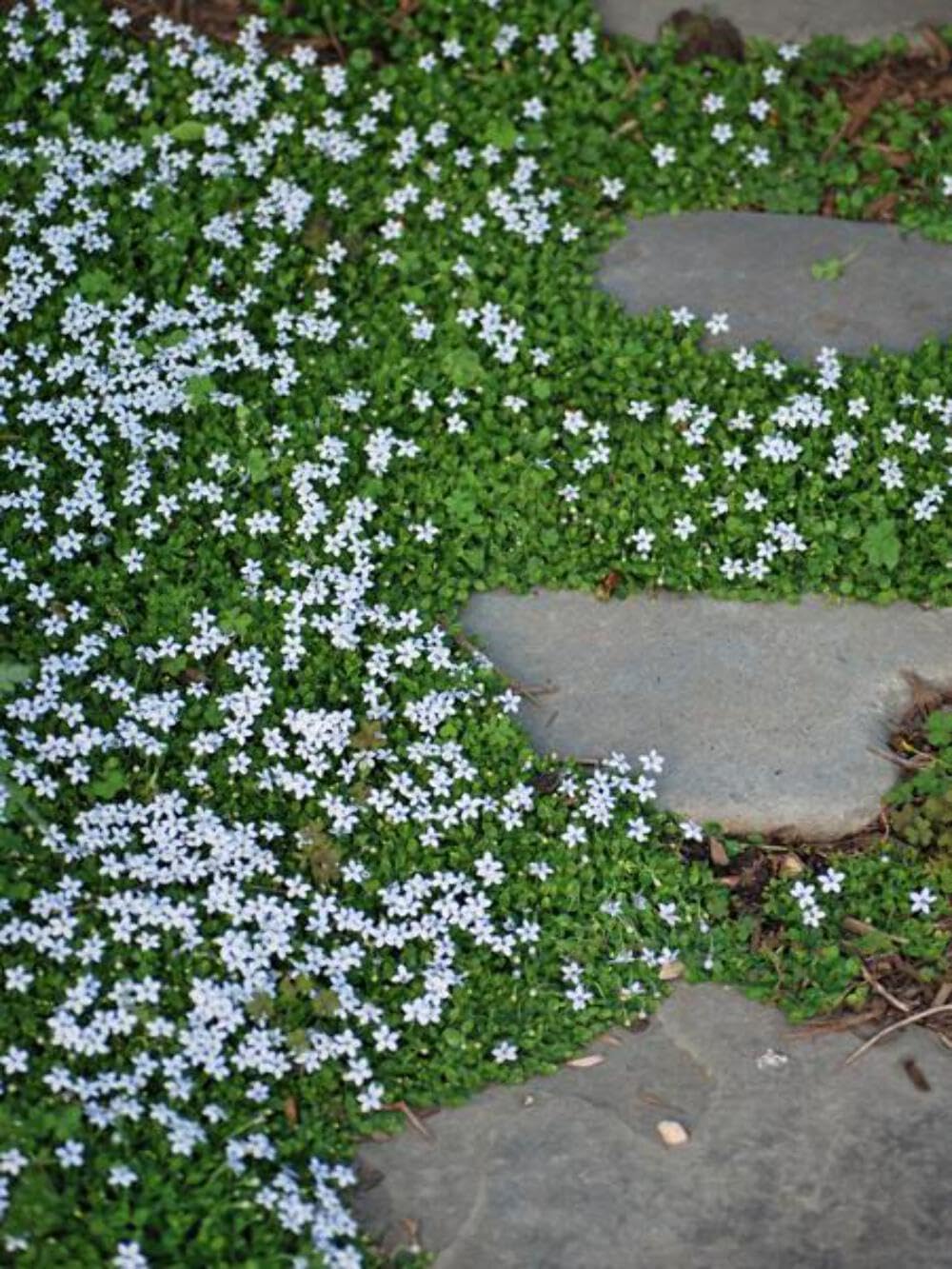
This Blue Star Creeper arrives potted and ready to plant as a durable, low matting groundcover for small areas, between stepping stones, or around bulbs. It produces sky-blue star-shaped flowers in late spring and summer while the medium green leaves create a 2 to 3 inch dense carpet that tolerates moderate foot traffic. The plant is adaptable to a range of moisture levels and soil types, so it establishes reliably in typical garden conditions and can serve as a small lawn replacement in compact spots. Expect quick visual impact in planted clusters, and useful erosion control on gentle slopes. Limitations include its small mature height, which makes it unsuitable where taller cover is wanted, and the need for occasional thinning if it spreads into areas you want clear. For reliable, low-profile flowering groundcover in high-visibility areas like paths and rock gardens, this is a practical choice.
Best for: Gardeners who want a dependable, low-maintenance flowering groundcover for small areas, paths, or between pavers and who prioritize reliable establishment and seasonal color.
Less Ideal for: People seeking a tall or dense privacy groundcover or a single-species replacement for large lawn areas should consider larger or more robust alternatives.
- Produces sky-blue star-shaped flowers from late spring through summer for seasonal color
- Forms a dense 2–3 inch mat that fills gaps and creeps between stepping stones
- Tolerant of a variety of soil moisture levels and soil types for easy establishment
- Withstands moderate foot traffic, making it suitable for paths and small lawn replacements
- Very low-growing habit is not suitable where taller groundcover is needed
- May require occasional thinning to prevent unwanted spread into adjacent beds
Verdict: Choose this Blue Star Creeper when you need a reliable, low-growing flowering carpet that fills gaps and tolerates light foot traffic.
Groundio Moss Rose (Portulaca grandiflora) Mixed-Color Seeds, 23,500 Count

| Unit Count | 23500 Count |
|---|---|
| Expected Blooming Period | Summer to Fall |
| Sunlight Exposure | Full Sun |
| Material Features | GMO Free, Heirloom |
| Other Special Features of the Product | High Germination Rate |
These Groundio moss rose seeds supply a huge quantity of Portulaca grandiflora seed for quickly establishing a colorful carpet of low annual flowers. They are intended to be surface-sown in well-drained soil and will germinate quickly in warm temperatures, producing double-petaled blooms in mixed pinks, reds, yellows, oranges, whites, and purples from summer into fall. Key useful traits are high reported germination, non-GMO heirloom seed, and strong tolerance for heat and drought, which makes them easy to use in pots, hanging baskets, rock gardens, and dry sunny beds. Practical benefits include very broad coverage from one packet, minimal watering needs once established, and simple sowing that does not require a green thumb. Limitations are that the seed mix is aimed at full sun and well-drained soils only, so performance will drop in shadier or waterlogged locations, and buyers who need precise spacing or single-color uniformity may prefer smaller, variety-specific packets instead of this mixed bulk offering.
Best for: Gardeners who want a low-maintenance, high-coverage annual to fill pots and sunny containers quickly without fuss, and who prioritize easy establishment and drought tolerance over precise variety control.
Less Ideal for: People planting in shade, consistently moist containers, or those seeking single-color displays or tight spacing control for formal designs should choose a different seed selection.
- Very large seed count (23,500) provides extensive coverage for pots and containers
- High reported germination for faster, more reliable establishment
- Heat and drought tolerant once established, suitable for hot sunny sites
- Non-GMO heirloom seed for traditional varieties and genetic consistency
- Designed for full sun and well-drained soil so not suitable for shady or wet conditions
- Mixed colors mean less control if you want a single color or uniform look
Verdict: If you need an easy, low-water annual to rapidly fill sunny pots and hanging baskets with nonstop summer color, this giant pack of moss rose seeds delivers simple, reliable results.
Choosing the Right Flowers That Are Good Ground Cover: Key Factors to Consider
Growth Habit and Spread
A reliable ground-cover flower should have a naturally low, spreading habit rather than growing upright into a clump. Plants that send creeping stems, stolons, or wide mats will fill gaps and suppress weeds more quickly. Consider mature spread when planning spacing: tight spacing reduces weed pressure sooner but increases competition, while wider spacing leaves time for the planting to knit together.
Think about how the plant spreads over time. Some species form steady, even mats; others expand in patches or via runners. If you need to cover an irregular area, choose a plant known for lateral growth and the ability to root at nodes.
Bloom Timing and Visual Impact
Ground-cover flowers are often chosen for seasonal color as much as for soil protection. Look for varieties with extended bloom windows or stagger plantings of early, mid, and late-season bloomers to keep beds attractive through multiple months.
Also consider flower size and density: small, dense flowers create a carpeted look, while larger blooms can be showy but may leave visible foliage between plants. If pollinator support is a priority, check bloom form and nectar availability in addition to bloom length.
Light and Soil Tolerance
Not all flowering ground covers handle the same light or soil conditions. Some thrive in full sun and hot, dry soils; others perform best in part shade or rich, consistently moist soils. Match the plant to the actual conditions of the site rather than an idealized garden scenario. Soil pH, drainage, and fertility influence both establishment and long-term vigor.
If your site has heavy clay, consider plants known to tolerate poor drainage; for sandy or dry soils choose drought-tolerant species that will hold color with minimal irrigation.
Maintenance and Durability
Maintenance needs vary widely. Some ground-cover flowers require regular deadheading to extend blooms, periodic division to prevent thinning, or light trimming after flowering to maintain a neat carpet. Others are largely no-fuss once established. Choose according to how much time you want to spend on upkeep.
Durability includes resistance to common problems like fungal leaf spots in humid conditions or sensitivity to foot traffic in high-use beds. If you expect pets, kids, or frequent access, prioritize tougher species that tolerate occasional trampling.
Establishment Speed and Propagation
How quickly a ground cover establishes matters for weed suppression and erosion control. Fast-establishing plants reduce maintenance during the first seasons but may require more aggressive containment if they spread beyond intended borders. Slow-establishing options can be combined with fast fillers or mulches to bridge the gap.
Propagation method also affects cost and timing. Species that root from cuttings or divide readily let you expand plantings economically, while seed-grown covers offer different timing and density characteristics.
Ecological Benefits and Neighboring Plants
Beyond aesthetics, flowering ground covers provide nectar and pollen for bees, butterflies, and other beneficial insects. Some species are particularly attractive to pollinators and can enhance the ecological value of a bed.
Consider how a ground cover will interact with surrounding plantings. Low carpets can protect roots of taller perennials but may compete with small seedlings. Select species whose root depth and nutrient demand match the design intent so they support rather than undermine companion plants.
Best Sites for Flower Ground Covers
Flowering ground covers work in a variety of settings from sunny slopes to shady underplantings. In full sun, choose heat- and drought-tolerant species that will keep low and resist scorching. On north-facing banks or beneath trees, pick shade-tolerant bloomers that handle root competition and lower light.
Consider microclimates such as heat pockets near walls or cool, moist hollows. Small adjustments to soil and mulch can broaden the number of suitable species for a site, but matching the plant to the site will always reduce long-term maintenance.
- Slopes: prefer spreading, erosion-hardy roots
- Border fronts: low habit and showy color
- Under trees: shade tolerance and shallow roots
- Path edges: trampling resistance and quick recovery
Planting and Early Care Tips
Prepare the bed by removing perennial weeds and loosening the top soil to encourage root spread. Amend only if soil is extremely poor; many ground covers establish faster in well-drained soil with moderate fertility. Lay out plants at the recommended spacing and water in thoroughly to settle soil around roots.
Mulch lightly to conserve moisture and suppress weeds during the first year, but avoid deep mulch that buries crowns. Keep a consistent watering schedule until plants are established, then reduce frequency according to the species' drought tolerance.
- Remove competing vegetation before planting
- Water deeply at planting, then taper
- Use light mulch the first season only
- Stake or edge areas to contain aggressive spreaders
Controlling Spread Without Killing Vigor
Some excellent ground-cover flowers can become assertive. Use physical edging, periodic division, or selective removal of runners to keep them within bounds. Regular observation in the first two seasons reveals how aggressively a variety spreads in your specific conditions.
When containment is needed, trim runners back to near the crown or selectively lift and divide dense patches. These practices control spread while renewing vigor and often stimulate a second flush of blooms.
- Install low edging where boundaries matter
- Divide crowded patches every few years
- Trim runners if they reach unwanted areas
Combining Ground Covers with Other Plants
Ground-cover flowers pair well with taller perennials and small shrubs that provide vertical interest. Use them to knit together gaps around larger plants and to reduce mulch needs. Plan for root competition and light requirements so that companions do not outcompete the ground cover.
Use combinations that stagger bloom times to provide continuous color and support pollinators across the season. Low grasses or sedges can add texture alongside a carpet of blooms without overshadowing it.
- Stagger bloomers for longer-season color
- Place taller plants to provide afternoon shade if needed
- Monitor moisture and fertilize sparingly to avoid aggressive vigor
Seasonal Care and Renewal
Most flowering ground covers benefit from light post-bloom trimming to maintain form and encourage fresh growth. Divide and replant any thinned areas in spring or fall to keep coverage dense. Remove dead material in early spring to let new shoots emerge cleanly.
Adjust care according to winter hardiness and local climate. In colder regions, protect crowns with a light layer of mulch if winter heaving is a problem, and cut back in spring once new growth is visible.
- Deadhead or trim to extend bloom where appropriate
- Divide and fill thin patches in growing seasons
- Protect crowns in climates with freeze-thaw cycles
How We Chose the Best Flowers That Are Good Ground Cover
We selected plants based on traits that matter to gardeners using flowers as ground cover rather than focal container specimens. Primary criteria included typical spread and ground-hugging habit to ensure effective soil coverage, seasonal bloom length and habit so the planting actually provides color when you expect it, and maintenance requirements such as deadheading frequency, division intervals, and tolerance of light trimming. Durability was another key filter: we favored species and varieties known to tolerate common site stresses such as foot traffic on informal paths, light drought, and variable soil fertility. Establishment speed and seed or division propagability were considered because faster ground cover fills gaps sooner and crowds out weeds. We also weighed ecological benefits including nectar and pollen for pollinators and whether the plants support beneficial insects. We excluded tall, clumping, or highly invasive plants that do not reliably form a low, spreading carpet. Rare specialty cultivars and plants requiring highly specific soils or microclimates were also filtered out to keep the list practical for typical home gardens.
FAQ
How soon will a flowering ground cover fill in?
It often depends on species and site conditions. Many fast-spreading options can provide substantial coverage within one growing season, while slower types may take two to three seasons to fully knit together.
Can ground-cover flowers tolerate light foot traffic?
Some do, but tolerance varies. Choose species noted for quick recovery and tougher foliage for paths or edges. Even tolerant plants can decline under heavy, repeated trampling.
Do I need to divide ground-cover flowering plants regularly?
Division frequency depends on growth habit. Mat-formers and stoloniferous types often benefit from division every few years to control vigor and renew flowering, while others may need less frequent attention.
Will ground-cover flowers prevent weeds completely?
Dense, healthy ground cover significantly reduces weed pressure but rarely eliminates all weeds, especially annuals that germinate in gaps. Good establishment and occasional weeding in year one improve long-term suppression.
Are flowering ground covers hard to grow under trees?
They can be challenging because of root competition and lower light. Choose shade-tolerant species with shallow root systems and improve soil surface conditions to help new plants establish.
When is the best time to plant ground-cover flowers?
Spring or early fall are usually best because milder temperatures and seasonal rains support root establishment. In hot, dry climates, fall planting gives roots time to establish before summer stress.
Final Verdict
Choose ground-cover flowers by matching growth habit, bloom timing, and site tolerance to your landscape needs. Fast spreaders suppress weeds quickly but may need containment; slower types require patience but can offer more controlled growth. Prioritize species that balance coverage with maintenance expectations and that suit your light and soil conditions for the most successful, low-maintenance results.
