

Note: This article contains affiliate links. If you click on these links and make a purchase, I may earn a small commission at no extra cost to you. This helps support my research and content. Read my full affiliate disclosure here.
Powdery mildew can quickly coat rose leaves and blooms with a white, dusty growth that weakens plants and ruins floral displays. Choosing the right fungicide matters because roses are sensitive to spray phytotoxicity and because treatment timing, residual protection, and application method determine how well you protect a bed through a season. This guide covers seven well-vetted fungicide options suited for powdery mildew on roses, shortlisted for their real-garden performance. We evaluated products across disease control, plant safety, and ease of use so you can pick a treatment that fits your rose type, garden layout, and maintenance plan. Read on for practical notes on application, resistance management, and safety in ornamental plantings before the product list.
Top Picks at a Glance
| Best Overall The best all-around choice for most situations | BioAdvanced Disease Control for Roses, Flowers & Shrubs Concentrate, 32 oz |  |
| Best Quality Built to a higher standard if you want something more solid | Earth's Ally Disease Control Fungicide Concentrate, 32 oz |  |
| Best Value The sweet spot between price and what you get | Garden Safe Fungicide3 with Neem Oil, Ready‑to‑Use Spray (32 oz) |  |
| Best Budget The cheapest option that still gets the job done reliably | BioAdvanced All-in-One Rose & Flower Plant Care Spray, 24 fl oz | 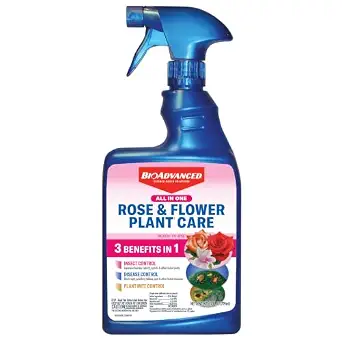 |
| Highest Rated A top-rated pick with lots of positive feedback | Monterey Fungi-Max Systemic Fungicide, 16 fl oz |  |
| Most Popular A crowd favorite that many people choose with confidence | Bonide Captain Jack's Liquid Copper Fungicide Ready-to-Use, 32 oz |  |
| Best Seller A high-volume bestseller chosen again and again | Bonide Captain Jack Copper Fungicide 16 oz Concentrate |  |
BioAdvanced Disease Control for Roses, Flowers & Shrubs Concentrate, 32 oz

| Unit Count | 32 Fluid Ounces |
|---|---|
| Item Type Name | Fungicide |
| Item Form | Spray |
| Target Species | Fungus |
| Active Ingredients | Tebuconazole |
BioAdvanced Disease Control is a pump-tank concentrate that mixes with water to deliver a systemic fungicide treatment for roses, flowers, shrubs and other outdoor ornamentals. It is typically diluted and applied as a coarse spray from a garden sprayer to control listed diseases such as black spot, powdery mildew, rust and boxwood blight. The active ingredient tebuconazole works systemically so it protects plants from the inside out and the manufacturer says protection lasts up to two weeks and becomes rainproof once dry. A 32-ounce bottle makes a large volume of spray, which is convenient for treating multiple plants or larger beds. Practical limitations are that it is formulated for outdoor use only and labeled uses must be followed closely; it is not sold for some states and contains a conventional active ingredient that requires careful handling and PPE during mixing and application. For gardeners focused on maintaining healthy roses, it provides an effective preventive and curative option when used as directed.
Best for: Gardeners who want a reliable preventive and curative fungicide to keep roses and outdoor ornamentals free of powdery mildew and other common diseases and who follow label directions for safe application.
Less Ideal for: Organic-only gardeners seeking fully organic-certified products or people who prefer non-chemical, manual disease control methods.
- Systemic action (tebuconazole) that protects plants from the inside out
- Controls a broad list of common rose diseases including black spot and powdery mildew
- Concentrate makes up to about 42 gallons of spray for treating multiple plants
- Rainproof once dry and provides up to two weeks of protection
- Contains a conventional fungicide active ingredient requiring careful handling and PPE
- Not intended for indoor use and restricted from sale in some states
Verdict: A concentrated, systemic fungicide that reliably prevents and treats powdery mildew and other common rose diseases when applied according to label instructions.
Earth's Ally Disease Control Fungicide Concentrate, 32 oz

| Item Form | Liquid |
|---|---|
| Target Species | Fungus |
| Active Ingredients | citric acid |
| Unit Count | 32 Fluid Ounces |
Earth's Ally Disease Control is a concentrated, OMRI-listed fungicide that uses citric acid as its active ingredient to treat powdery mildew, blight, leaf spot and similar fungal problems. It arrives as a 32 ounce concentrate that dilutes to make multiple gallons of ready-to-use spray; directions call for 6 tablespoons per gallon and repeat applications every 5 to 7 days until control is achieved. In practice the product is easy to mix and apply with a garden sprayer and is gentle enough to use on ornamentals, vegetables and fruit up to harvest when used as directed. Notable strengths are its natural active ingredient, suitability for organic gardens, and safety notes indicating it is proven bee safe when used correctly. Limitations are that it is not a systemic chemical so results depend on thorough coverage and repeat treatments, and highly aggressive or advanced infections may require complementary cultural controls or a stronger professional fungicide for rapid knockdown.
Best for: Gardeners who prioritize effective, organic-acceptable control of foliar fungal diseases and prefer a concentrate they can mix for repeated treatments on roses and other ornamentals.
Less Ideal for: Users needing immediate, single-application knockdown of a severe outbreak or those who prefer systemic, long-residual chemical fungicides.
- Concentrated formula makes multiple gallons of spray, reducing trips to refill
- OMRI listed and formulated with citric acid for use in organic gardens
- Labeled safe for people, pets and bees when used as directed
- Works on common diseases including powdery mildew, blight and leaf spot
- Not systemic so it requires thorough coverage and repeated applications for best effect
- May be slower to control severe or advanced infections compared with stronger synthetic fungicides
Verdict: Choose this concentrate if you want an effective, organic-friendly spray you can mix and reapply to manage powdery mildew on roses without harsh synthetic chemicals.
Garden Safe Fungicide3 with Neem Oil, Ready‑to‑Use Spray (32 oz)

| Item Form | Spray |
|---|---|
| Target Species | Fungus |
| Liquid Volume | 32 fluid ounces |
| Active Ingredients | Neem Oil Extract |
Garden Safe Fungicide3 with Neem Oil is a ready-to-use spray that combines fungicidal, insecticidal and miticidal action for use on houseplants, ornamentals and edible garden plants. You spray for full coverage of leaves and stems, preferably in the early morning or late evening to reduce the chance of leaf burn from the oil base. The active clarified neem oil extract helps control common fungal problems such as black spot, rust and powdery mildew while also targeting soft-bodied pests like aphids, whiteflies and spider mites at egg, larval and adult stages. For houseplant use it is convenient because it needs no mixing and can be applied as a preventative or at first signs of disease or infestation. Limitations to keep in mind are that oil-based sprays can cause phytotoxicity on sensitive foliage if applied in hot sun or too frequently, and this product is a broad botanical rather than a fast-acting synthetic, so pests may take longer to clear. Follow label directions carefully for dilution and reapplication intervals when treating indoor plants.
Best for: For plant owners who prioritize a dependable, low-prep treatment that controls both fungal diseases and common soft-bodied pests on houseplants and nearby ornamentals.
Less Ideal for: Not the best choice for growers wanting an immediate knockdown chemical for severe infestations or for those who prefer non-oil contact products for very sensitive foliage.
- Three-in-one action: fungicide, insecticide and miticide in one ready-to-use spray.
- Contains clarified neem oil extract, a botanical active ingredient suitable for organic gardening.
- Ready-to-use spray form requires no mixing and is easy to apply to houseplants and containerized ornamentals.
- Targets multiple life stages of pests including eggs and larvae, improving control over repeat infestations.
- Oil-based formula can cause leaf burn if applied in direct sun or at the wrong time of day.
- Not a fast-acting contact poison for all pests so multiple applications may be required for heavy infestations.
Verdict: Choose this ready-to-use neem oil spray when you want a reliable, multi-purpose botanical solution to prevent and manage common fungal diseases and soft-bodied pests on houseplants.
BioAdvanced All-in-One Rose & Flower Plant Care Spray, 24 fl oz

| Unit Count | 24 Fluid Ounces |
|---|---|
| Item Form | Liquid |
| Target Species | Fungus |
| Included Components | CARE ROSE&FLOWER RTU 3IN1 24OZ |
This ready-to-use BioAdvanced spray delivers three actions in one bottle: it kills listed insects on contact, controls common fungal diseases, and tackles spider mites while leaving a protective residue that lasts up to 14 days. You use it like a normal garden spray—apply to rose bushes, ornamentals, vines, shrubs, and similar plants when pollinators are not present. The product lists active ingredients (bifenthrin and myclobutanil) and is formulated to be rainproof within about four hours, so it holds up in typical garden conditions. Practical benefits include saving time by combining insect, disease, and mite control in a single application and being convenient as a ready-to-spray bottle. Important limitations are that it targets only the listed pests and diseases, must be used with pollinator safety in mind, and contains synthetic active ingredients that some gardeners prefer to avoid. Follow label directions and safety guidance for effective and responsible use.
Best for: Gardeners who want a simple, time-saving solution to keep roses and ornamental flowers healthy without mixing concentrates and who prioritize broad, short-term protection.
Less Ideal for: Growers seeking strictly organic or pollinator-safe products or those who need treatment for pests or diseases not listed on the label should look elsewhere.
- Three-in-one formula combines insecticide, fungicide, and miticide for fewer separate treatments
- Ready-to-use spray is convenient for spot and whole-plant applications
- Rainproof within about four hours and provides protection up to 14 days
- Kills listed pests on contact for fast visible results
- Active ingredients are synthetic and may be undesirable for organic gardeners
- Protection only covers pests and diseases specifically listed on the label
Verdict: Choose this ready-to-use spray if you want a convenient, single-product solution to kill common rose pests, control fungal diseases, and suppress mites with up to two weeks of protection.
Monterey Fungi-Max Systemic Fungicide, 16 fl oz

| Item Form | Liquid |
|---|---|
| Application Method | Spray |
| Coverage | Wide range of plants and plant types |
| Target Species | Flowers, Vegetables, Trees, Lawn Grass |
| Liquid Volume | 16 fluid ounces |
Monterey Fungi-Max is a concentrated liquid fungicide formulated for home garden and landscape use to prevent and control common fungal diseases. You mix the product with water and apply it with a spray tank or pump sprayer; it works systemically so the active ingredient moves into plant tissue to protect leaves, stems, and roots. The label cites control for problems like powdery mildew, rust, leaf spots, crown rot, and several turf diseases, and the manufacturer says one application can protect plants for up to two weeks. Because it covers flowers, shrubs, fruit and nut trees, vegetables, and lawns, it is useful for mixed gardens where multiple plant types need disease management. Practical benefits include broad-spectrum disease coverage, systemic action that reaches new growth, and straightforward dilution and spray application. Important limitations are the need to follow label directions carefully for timing and mixing, potential incompatibility with certain sprayers or tank mixes, and the fact that repeat applications may be required for ongoing pressure or severe outbreaks.
Best for: Home gardeners and property owners who prioritize dependable, proactive disease control across mixed plantings and want a product that reaches plant tissue rather than only contact protection.
Less Ideal for: Organic gardeners or those seeking a contact-only, ready-to-use spray should consider alternatives designed for certified organic use or simpler ready-mix formulations.
- Systemic action that protects new growth after application
- Broad listed coverage for ornamentals, vegetables, fruit trees and turf
- Suitable for spray-tank or pump-sprayer application for yard-scale use
- One application offers up to two weeks of protection under normal conditions
- Not an organic or OMRI-listed product, so not suited for certified organic production
- Requires careful dilution and label reading to avoid misuse
Verdict: Choose Monterey Fungi-Max when you need a reliable, systemic fungicide that provides broad disease protection across a diverse home garden.
Bonide Captain Jack's Liquid Copper Fungicide Ready-to-Use, 32 oz

| Unit Count | 32 Ounce |
|---|---|
| Item Form | Spray |
| Active Ingredients | copper |
Bonide Captain Jack’s Liquid Copper Fungicide is a trigger-spray, ready-to-use copper solution designed to prevent and treat common fungal diseases on fruits, vegetables, nuts, herbs and ornamentals. It is applied by shaking the bottle and thoroughly spraying tops and undersides of leaves, with repeat applications every 7 to 10 days or as needed. The product is labeled for organic gardening and can be used up to the day of harvest, making it practical for vegetable beds and fruit trees where residue concerns matter. Notable features include its broad-spectrum activity against powdery mildew, leaf spot, blight and peach leaf curl, and the convenience of a pre-mixed spray bottle that removes measuring or mixing. Limitations are inherent to copper products: it treats fungal problems but does not replace cultural controls like good airflow and sanitation, and overuse of copper can accumulate in soil so following label directions is important. As a ready-to-use option, it is best for gardeners who want a simple, approved solution for recurring fungal issues without handling concentrates.
Best for: Gardeners who prioritize proven, labeled products and want an easy-to-use organic-approved fungicide for edible beds and ornamentals based on real-world effectiveness and peer recommendations.
Less Ideal for: Gardeners seeking an all-in-one pest control product or those who prefer to avoid any copper-based treatments should look at non-copper alternatives or integrated disease-management approaches.
- Ready-to-use trigger spray requires no mixing or measuring
- Approved for organic gardening and can be applied up to day of harvest
- Effective against a broad range of common fungal diseases
- Convenient repeat-application interval (7–10 days) for ongoing control
- Contains copper which can build up in soil with excessive use
- Does not address non-fungal problems like insects or bacterial diseases
Verdict: A convenient, ready-to-use copper fungicide for gardeners who want an effective organic-approved spray to manage common fungal diseases.
Bonide Captain Jack Copper Fungicide 16 oz Concentrate

| Unit Count | 16 Ounce |
|---|---|
| Item Form | Liquid |
| Target Species | Fungus |
| Active Ingredients | Copper Octanoate (Copper Soap) |
Bonide Captain Jack Copper Fungicide is a liquid concentrate designed to prevent and treat a broad range of fungal diseases on vegetables, fruits, ornamentals, and turf. Mixed with water per label directions, it is sprayed onto plant surfaces, including tops and undersides of leaves, and can be applied up to the day of harvest, which makes it practical for food crops like tomatoes. The active ingredient copper octanoate provides contact protection against powdery mildew, blight, black spot, rust, peach leaf curl and similar diseases. Application is straightforward and repeatable every 7 to 10 days as needed, and the product is cleared for use in organic gardening. Limitations to consider are that copper is a contact fungicide so it does not systemically move through the plant and works best as a preventative or early-treatment tool rather than curing severe systemic infections. Users should follow safety directions and avoid overuse to reduce copper buildup in soil.
Best for: Gardeners looking for a performance-focused, organic-approved fungicide to include in a preventative disease program for tomatoes and other edibles.
Less Ideal for: Growers seeking a systemic treatment for already advanced internal infections or those who prefer non-copper chemistries to avoid soil accumulation.
- Approved for organic gardening and can be used up to the day of harvest
- Controls a wide range of common diseases affecting tomatoes such as blight and powdery mildew
- Concentrated liquid formula mixes with water for spray application
- Repeatable 7–10 day application schedule makes preventative programs easy to maintain
- Acts as a contact fungicide and does not move systemically within the plant
- Repeated use can contribute to copper accumulation in soil if not managed
Verdict: Use this organic-approved copper concentrate when you want an effective, easy-to-apply preventative spray to protect tomatoes from common fungal diseases.
Choosing the Right Fungicide for Powdery Mildew on Roses: Key Factors to Consider
Disease Control Spectrum and Speed
How quickly a fungicide stops visible powdery mildew and whether it suppresses new infections matters for roses. Fast-acting contact sprays can knock down fresh powdery growth but may offer only short-term protection, requiring more frequent reapplication. Systemic or locally systemic fungicides are absorbed and can protect new growth for longer, reducing spray frequency. Consider whether you need immediate cosmetic control before a show or long-term protection through humid seasons.
Also evaluate whether the product targets powdery mildew specifically or offers a broader spectrum that includes other common rose pathogens. A broader spectrum may reduce the number of products you store, but it can also increase selection pressure for resistance if used continuously.
Plant Safety and Phytotoxicity Risk
Roses are often treated while in bloom, so phytotoxicity risk is a critical factor. Some fungicides can cause petal spotting, leaf burn, or other damage if applied in hot sun, at high rates, or to sensitive cultivars. Always check labeled temperature restrictions and bloom-spray guidance. Products formulated for ornamentals generally have lower incidence of visible injury when used as directed.
Also consider fragrance and oil-based adjuvants. Oils and certain surfactants can increase uptake but also raise burn risk under high temperatures. If you grow tender new roses or heat-stressed plants, choose options with conservative application windows and follow dilution guidelines to protect blooms.
Mode of Action and Resistance Management
Powdery mildew populations can develop resistance when the same single-site chemistry is used repeatedly. Rotate modes of action between curative and protectant types across the season. Combining contact protectants with a different-mode systemic on a rotation schedule reduces selection pressure. Label guidance often includes resistance-management statements; follow those recommendations and avoid back-to-back applications of fungicides in the same chemical group.
For gardens that see recurrent mildew each year, integrate cultural measures and alternate chemistries to preserve effectiveness. Pay attention to the labeled limit on number of applications per season to avoid overuse.
Residual Protection and Rainfastness
Residual protection defines how long a product prevents new infections after application. In humid or wet climates, a longer residual can cut down on repeat sprays and provide steadier control. Rainfastness is the product's ability to remain active after light rainfall or overhead irrigation; some foliar treatments wash off easily and need reapplication after rain.
Match residual expectations to your local weather patterns. For frequent rainfall, choose treatments with better rainfastness or plan sprays to avoid imminent rain. For dry but humid evenings that favor mildew, systemic products that move into the plant are often more reliable.
Application Method and Ease of Use
Consider whether a product is ready-to-use, a concentrate for hose-end sprayers, or a dilution that needs measuring. Gardeners without commercial spray rigs often prefer hose-end or pump sprayers that deliver even coverage. Ease-of-mixing and clear label instructions reduce the chance of application errors that harm plants.
Also evaluate spray coverage needs. Powdery mildew thrives in dense canopies; thorough wetting of the underside of leaves and inside clusters is important. Tools that help you get complete coverage with minimal drift or waste are more practical in a rose border.
Safety, Re-entry, and Environmental Considerations
Check labeled re-entry intervals and pre-harvest intervals if you grow roses that are cut for indoor use. While ornamentals are not consumed, safety around pollinators and beneficial insects matters. Some fungicides are relatively benign to bees when used outside bloom windows, while others carry greater risk.
Also consider runoff potential and container vs in-ground plantings. Products that bind quickly to foliage or have low soil mobility reduce contamination risk. Read and follow label application rates to minimize environmental impact and protect garden biodiversity.
When to Treat Roses for Powdery Mildew
Treat at the first sign of white, powdery patches on upper or lower leaf surfaces and before heavy canopy development. Early intervention prevents spores from building to levels that rapidly spread through a bed.
Timing also matters for bloom safety. Spray in the morning or late afternoon when temperatures are cooler and bees are less active. Avoid spraying in full midday sun and follow label directions about flowering-stage use.
- Monitor susceptible cultivars weekly during humid seasons.
- Prioritize new growth and inner canopy for treatment.
- Hold off if rain is expected within a few hours of application.
Application Tips for Effective Coverage
Powdery mildew often hides on undersides of leaves and inside leaf clusters, so aim for thorough coverage rather than light misting. Use a sprayer that produces a fine, even spray and walk around plants to hit both sides of foliage.
Calibrate sprayers to apply the recommended label rate; under-dosing reduces control and accelerates resistance development. Rinse equipment after use and follow safe disposal instructions for leftover spray mix.
- Hold nozzle close enough for coverage but avoid saturating soil.
- Wet both leaf surfaces and new shoots for best effect.
- Clean sprayer parts to prevent cross-contamination between products.
Integrating Cultural Controls with Fungicide Use
Fungicides work best when combined with cultural practices that reduce mildew pressure. Improve air circulation by pruning congested stems, spacing plants correctly, and avoiding overhead watering that wets foliage for long periods.
Remove and dispose of heavily infected leaves and canes to reduce local spore load. Sanitation between seasons lowers the need for aggressive chemical programs and helps maintain long-term control.
- Prune to open canopies and increase sun exposure.
- Water at the base early in the day to let foliage dry.
- Clean or replace mulch that harbors infected debris.
Managing Repeat Infections and Seasonal Programs
Establish a seasonal program that alternates chemistries and includes periodic scouting. For recurring problems, plan applications at regular intervals during high-risk periods rather than waiting for severe outbreaks.
Keep a simple log of applications, weather conditions, and cultivar response. This record helps refine timing and product choice in subsequent seasons and informs resistance management decisions.
- Rotate active ingredients per label resistance guidelines.
- Increase inspection frequency during humid spells.
- Adjust treatment intervals based on product residual and weather.
Safety Around Pollinators and Beneficial Insects
Avoid spraying when pollinators are active and follow label directions regarding application during bloom. Some fungicides have low bee toxicity when used outside peak foraging times, but contact with wet sprays can harm beneficials.
Use spot treatments where possible and apply in the early morning or late evening to minimize exposure. Foster habitat for natural predators to help suppress secondary pest outbreaks that can follow heavy fungicide use.
- Do not apply during peak bee activity.
- Prefer targeted sprays to broad, blanket applications.
- Provide untreated refuges for beneficial insects in the garden.
How We Chose the Best Fungicide for Powdery Mildew on Roses
We selected fungicides based on criteria that matter in real rose care: disease control spectrum and speed of knockdown, plant safety including phytotoxicity risk on blooms and tender foliage, labeled rose uses and application flexibility, resistance-management mode of action, persistence and rainfastness, and ease of mixing and applying for home gardeners. Each candidate needed clear labeling for ornamental roses or generic ornamental use and documented efficacy against powdery mildew in extension literature or manufacturer labeling. Excluded products included broad-spectrum sprays not labeled for ornamentals, treatments intended only for agricultural/commercial commodities, and products with high reported phytotoxicity on roses. We also deprioritized options that require commercial-only spray equipment. The shortlist emphasizes practical tradeoffs: fast curative action versus longer residual protection, systemic versus contact modes of action, and low-risk options for use during bloom. These evaluation criteria align with the scoring metrics used in the product scorecards below.
FAQ
Can I use a fungicide while roses are in full bloom?
It depends on the product label and the fungicide type. Many labels restrict sprays during open bloom or advise avoiding direct contact with flowers. If bloom spraying is permitted, choose low-phytotoxic options and apply during cooler parts of the day when pollinators are not active.
How often should I reapply fungicide for powdery mildew on roses?
Reapplication intervals depend on the product residual and weather. Contact protectants often need reapplication every 7 to 14 days, while some systemics offer longer protection. Follow label intervals and shorten timing during persistent humid conditions.
Will pruning alone control powdery mildew?
Pruning reduces humidity and removes infected tissue, which lowers disease pressure but rarely eliminates powdery mildew by itself. Combine pruning with targeted fungicide use and cultural changes like improved airflow for the best results.
Are organic fungicides effective against powdery mildew on roses?
Some organic options can suppress powdery mildew and are useful for low-to-moderate outbreaks or as part of a rotation. They may require more frequent applications and strict timing but can be a good choice where minimizing synthetic chemistry is a priority.
How can I avoid resistance when using fungicides?
Rotate products with different modes of action and avoid consecutive applications of the same chemistry. Use the labeled number-of-applications limits and integrate nonchemical strategies to reduce selection pressure on the pathogen population.
Will spraying at night help reduce plant damage?
Night spraying can reduce pollinator exposure but may increase leaf wetness duration, which for some diseases can be problematic. For powdery mildew, cooler evening applications are often acceptable if dew and humidity patterns do not prolong leaf wetness significantly; follow label temperature and humidity guidance.
Final Verdict
Choose a fungicide strategy that balances immediate mildew knockdown with long-term protection and plant safety. Prioritize products labeled for roses, rotate modes of action to limit resistance, and match residual expectations to your climate and watering habits. Combine chemical treatments with pruning, sanitation, and proper irrigation to reduce spray frequency and protect blooms and beneficial insects. With these tradeoffs in mind, pick the treatment that fits your rose garden size, bloom schedules, and tolerance for repeat applications, and keep clear records so your program improves each season.
