

Note: This article contains affiliate links. If you click on these links and make a purchase, I may earn a small commission at no extra cost to you. This helps support my research and content. Read my full affiliate disclosure here.
If you are new to houseplants, choosing the right succulent makes the difference between a thriving display and a pot of stressed leaves. Succulents for beginners are forgiving plants that store water in fleshy leaves or stems, so they survive skipped waterings and bright, indirect light. This guide shortlists seven top options that work well in typical home and balcony conditions and explains the practical care traits that matter. We evaluated each option for how easy it is to grow, how tolerant it is of common mistakes, and what kind of light and watering routine it needs. Read on to see which types suit your space and which care habits reliably produce healthy plants.
Top Picks at a Glance
| Best Overall The best all-around choice for most situations | Fat Plants San Diego Original 25 Succulent Cuttings |  |
| Best Quality Built to a higher standard if you want something more solid | Altman Plants 20-Pack Live Succulent Assortment (2" Pots) |  |
| Best Value The sweet spot between price and what you get | Costa Farms Mini Succulents (10-Pack) Live Indoor Plants |  |
| Best Budget The cheapest option that still gets the job done reliably | Verdant Vigor 4 Assorted Live Succulents (4-count) |  |
| Highest Rated A top-rated pick with lots of positive feedback | Fleshy Flora 2" Live Succulent Echeveria 'Grace' |  |
| Most Popular A crowd favorite that many people choose with confidence | Plants for Pets Assorted 2" Succulent 20-Pack |  |
| Best Seller A high-volume bestseller chosen again and again | THE NEXT GARDENER.com Sedum lucidum Obesum succulent, 4-inch, fully rooted |  |
Fat Plants San Diego Original 25 Succulent Cuttings

| Indoor Outdoor Usage | Indoor |
|---|---|
| Plant or Animal Product Type | succulent |
| Number of Pieces | 25 |
| Material Features | Live Plant |
| Expected Blooming Period | colder months |
This pack delivers 25 live succulent and cactus cuttings sourced from a nursery, designed as a starter collection for newcomers. Typical use is to pot each cutting into well-draining soil, let wounds callus, and provide bright indirect light while avoiding overwatering. The listing notes a variety drawn from over 155 plants, so you get a broad selection that helps you learn differences in growth habit and care. Practical benefits include a ready-made collection for propagation practice and the ability to assemble a mixed display without sourcing plants individually. Because cuttings arrive with varying sizes and rooting readiness, some will root faster than others and a few may need extra attention to establish. The assortment nature means you cannot pick specific species, and indoor placement is recommended over outdoor exposure for best results. Overall this is a useful, low-commitment way for a beginner to build propagation skills and create a diverse succulent collection.
Best for: Beginners who want a hands-on, low-cost way to practice propagating succulents and build a varied indoor collection without selecting individual plants.
Less Ideal for: Collectors seeking specific species or uniformly mature plants, or gardeners who need outdoor-hardy, landscape-ready specimens.
- Large assortment of 25 cuttings provides variety for learning propagation
- Sourced from a licensed nursery which implies experienced plant handling
- Good sized range of cuttings (1 to 6 inches) suitable for potting and display
- Compact indoor orientation reduces risk from outdoor weather for new growers
- Assortment means you cannot choose exact species or guarantee uniform rooting
- Some cuttings may arrive in different stages of readiness and need extra care
Verdict: An easy, varied pack of 25 live succulent cuttings that lets beginners practice propagation and quickly assemble a mixed indoor collection.
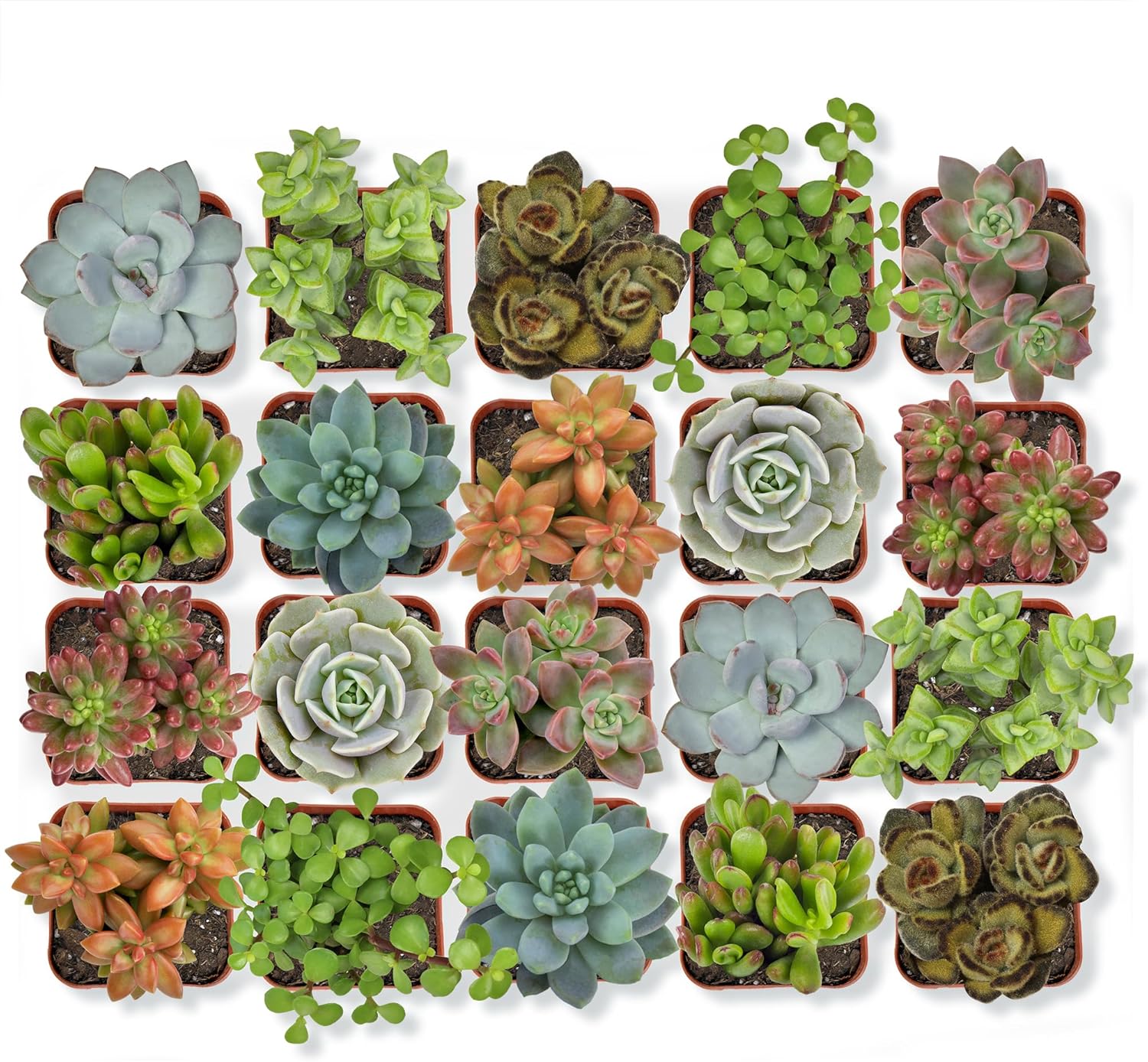
Altman Plants 20-Pack Live Succulent Assortment (2" Pots)
| Indoor Outdoor Usage | Indoor, Outdoor |
|---|---|
| Moisture Needs | Little To No Watering |
| Sunlight Exposure | Full Sun |
| USDA Hardiness Zone | 5 |
This 20-pack from Altman Plants delivers a varied selection of 2" succulents intended for starting container displays, terrariums, or gifting. Each pack contains ten paired varieties such as Echeveria, Crassula, Sedum and others, so you get color and texture variety without sourcing plants individually. The plants are grown to be drought tolerant and prefer bright light and sandy, well-draining media, which makes them easy to place in small pots or mixed container gardens. Practical benefits include low watering needs, year-round interest, and visibly healthy nursery-rooted stock suited to DIY arrangements. Limitations to note are the small nursery pot size, so plan to pot up into larger containers for long-term growth, and full sun preferences mean some indoor spots may require very bright light or supplemental light. For container projects these give a quick, coordinated start but expect to replant or group them for mature displays.
Best for: Buyers who want a reliable, low-maintenance way to start multiple container displays or DIY succulent projects and who value visible social proof that the mix performs well for other gardeners.
Less Ideal for: Gardeners seeking mature, display-size specimens or those who need plants for consistently low-light indoor spots should consider larger, sun-tolerant varieties or shade-adapted houseplants instead.
- Twenty individually potted succulents provide immediate variety for mixed container arrangements
- Pairs of ten different varieties make it easy to create balanced, symmetrical plantings
- Low watering needs and drought tolerance reduce maintenance for container growers
- Suitable for both indoor and outdoor container use when given bright light
- Plants come in 2" nursery pots and will need repotting for sustained growth
- Many varieties prefer full sun, which can limit bright indoor placement options
Verdict: A convenient, low-maintenance 20-pack that gets container succulent projects started quickly with a variety of ready-to-pot plants.
Costa Farms Mini Succulents (10-Pack) Live Indoor Plants

| Indoor Outdoor Usage | Indoor |
|---|---|
| Other Special Features of the Product | Air Purification |
| Sunlight Exposure | Partial Sun |
| USDA Hardiness Zone | 3-11 |
| Moisture Needs | Little To No Watering |
These Costa Farms mini succulents are a ready-to-display assortment of small, slow-growing succulents grown and shipped from the grower in plastic grower pots. They are meant for bright, direct sunlight and minimal watering—about 1/4 cup every two weeks—so they are easy to maintain on a windowsill, desk, or tabletop. The pack typically includes a mix of common genera such as Haworthia and Echeveria, which offers variety for crafting, centerpieces, or gifting. Practical benefits include low moisture needs, small size that fits tight spaces, and pre-potted presentation that makes them usable straight out of the box. Limitations are that these are starter plants in small grower pots with limited root space, so plan to repot into larger containers as they grow or for longer-term health. The assortment is grower choice so you cannot pick exact varieties, and a small proportion of plants may need a short acclimation period after shipping.
Best for: Buyers who want low-effort, attractive indoor succulents for decor, gifts, or event favors and value plants that require minimal weekly care.
Less Ideal for: Gardeners seeking mature, specimen-sized succulents or those who need specific cultivars for a collection should look for larger, named plants instead.
- Low maintenance watering schedule suitable for beginners
- Comes pre-potted and ready to display on windowsills or tabletops
- Assorted varieties create visual interest for decor or craft projects
- Grown and shipped from a commercial grower which supports consistent quality
- Plants arrive in small grower pots and will need repotting for long-term growth
- Varieties are selected by the grower so exact species are not guaranteed
Verdict: A hassle-free 10-pack of small, attractive succulents that deliver instant decor and minimal care for busy or new plant owners.
Verdant Vigor 4 Assorted Live Succulents (4-count)

| Indoor Outdoor Usage | Indoor, Outdoor |
|---|---|
| Other Special Features of the Product | Drought Tolerant |
| Sunlight Exposure | Partial Shade |
| USDA Hardiness Zone | 9-11 |
| Moisture Needs | Moderate Watering |
These four assorted succulents arrive as live plants with root balls so you can pot them straight into drainage-friendly containers or a mixed indoor arrangement. They are drought tolerant and suited to partial shade, which makes them low-maintenance houseplants for busy or new growers. Typical use is to plant them in sandy, well-draining soil, water sparingly and keep them in a bright spot away from intense midday sun. The pack works well for creating a small tabletop display, filling a windowsill, or experimenting with propagation. Practical benefits include year-round appearance without frequent watering and pet-safe varieties for shared indoor spaces. Limitations are that sizes are small at about a few inches tall so they are not a standalone focal point, and specific varieties are not listed so you cannot pick a precise color or growth habit. Because they are live plants, initial care in the first week matters to reduce transplant shock.
Best for: Buyers wanting an affordable, low-effort way to add greenery indoors or to start a small succulent collection; ideal for first-time plant owners or those furnishing apartments and desktops.
Less Ideal for: Plantsmen seeking showy large specimens or collectors who need exact species and color selection should choose single-specimen listings instead.
- Includes four live, rooted succulents ready to pot
- Drought tolerant and suitable for partial shade indoor conditions
- Pet-safe selection suitable for homes with animals
- Compact size good for windowsills, terrariums, or small containers
- Plants are small and meant for grouping rather than a single statement plant
- No specific species names provided so variety and color are unpredictable
Verdict: An inexpensive, low-maintenance way to get four pet-safe succulents ready to pot and display indoors.
Fleshy Flora 2" Live Succulent Echeveria 'Grace'

| Sunlight Exposure | Partial Sun |
|---|---|
| Unit Count | 1 Count |
This 2" Echeveria 'Grace' arrives as a fully rooted starter in well-draining mix and is designed for easy home care. It prefers partial sun and will change color with light exposure, making it a low-effort option for windowsills, beginner succulent mixed pots, or small container gardens. The plant is hand-packed and shipped directly from the grower, which helps reduce transplant shock and preserves the roots for quicker acclimation. Because it is a compact, single-plant unit in a small pot, it is simple to pot up into a larger container or combine with other succulents for a display. Limitations are that the tiny size means frequent checking after repotting to avoid overwatering and it will need brighter light to develop stronger coloration and compact rosettes. Also buyers expecting mature specimens should note this is a starter plant rather than an established, display-size echeveria.
Best for: Buyers seeking a dependable, easy-to-care-for succulent starter for a windowsill or small container garden who prioritize healthy, well-rooted plants over instant size.
Less Ideal for: Gardeners who want mature specimen plants for immediate display or those who prefer fully grown, show-size succulents.
- Sold as a fully rooted starter which reduces transplant shock
- Hand-packed from the grower for careful handling
- Low-maintenance succulent suitable for partial sun conditions
- Compact 2" size makes it easy to fit into small indoor or patio setups
- Very small starter plant that will require repotting for long-term display
Verdict: A reliable, well-rooted 2" echeveria starter that makes a low-maintenance, beginner-friendly addition to small indoor or patio succulent collections.
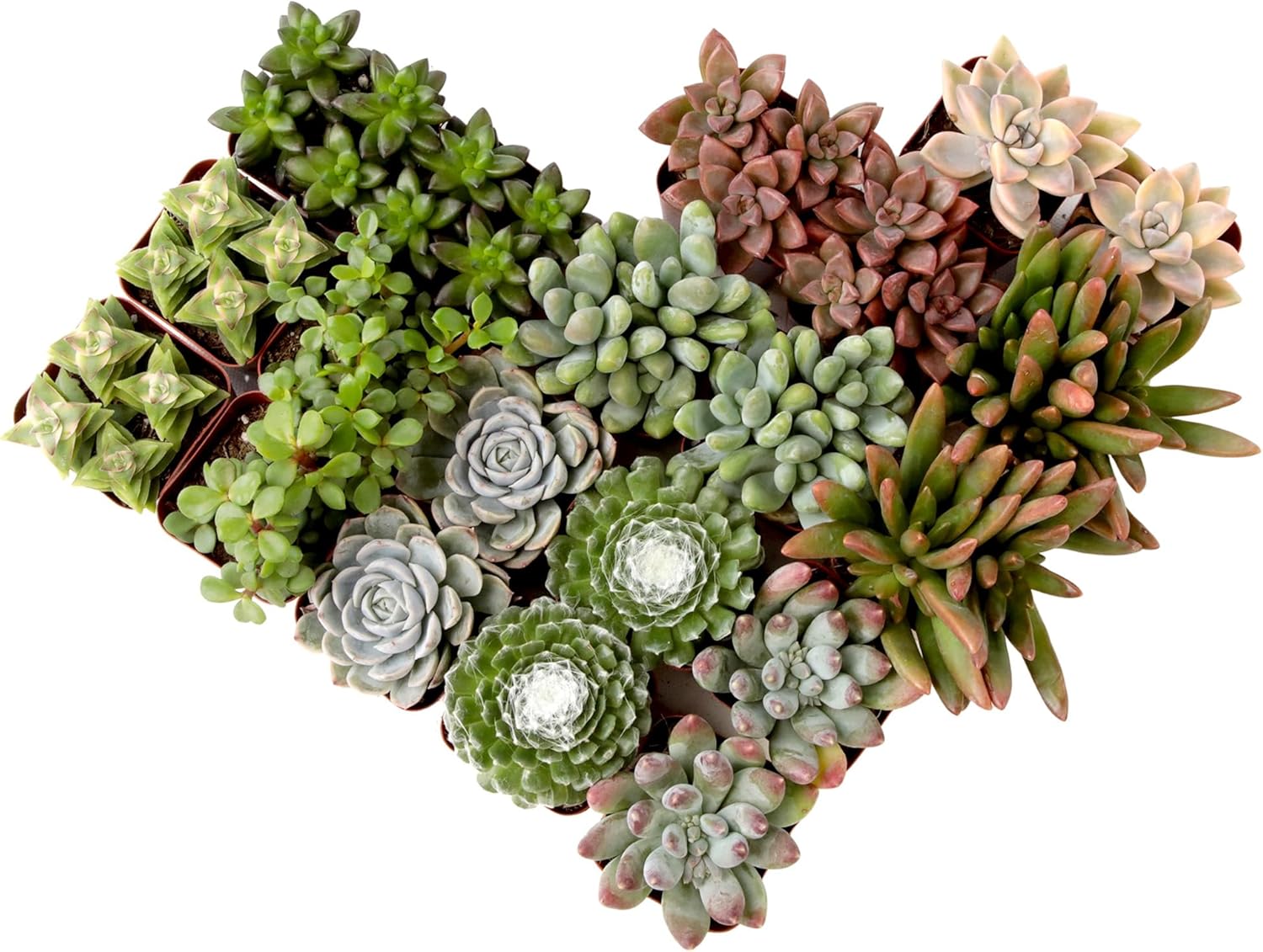
Plants for Pets Assorted 2" Succulent 20-Pack
| Indoor Outdoor Usage | Indoor, Outdoor |
|---|---|
| Sunlight Exposure | Full Sun |
| USDA Hardiness Zone | 10, 11, 9 |
| Moisture Needs | Little To No Watering |
| Unit Count | 20 Count |
This 20-pack from Plants for Pets supplies a rotating assortment of fully rooted 2-inch succulents that work well for small containers, desk displays, party favors, and beginner collections. The mix typically includes common rosette and trailing types such as Echeveria, Crassula, Sedum, and Portulacaria, giving varied shapes and colors across the set. Plants arrive potted and packaged to limit soil disruption and the brand advises simple care: bright indirect light, sandy soil, and watering only when the soil is dry. Practical benefits are clear: you get instant variety without repotting larger specimens, a compact size that fits tiny planters or craft projects, and low watering needs that suit busy owners. Limitations to expect are the small 2" pot size, which means plants will need repotting sooner if you want them to grow large, and seasonal variation in varieties so you may not receive specific cultivars shown in images. Also several common succulents in the assortment are toxic to pets, so placement matters for households with cats or dogs.
Best for: Buyers who want an easy, ready-made collection of small succulents for indoor décor, DIY projects, or to start a beginner collection and who value visible customer feedback when choosing products.
Less Ideal for: Growers seeking mature specimens ready for large containers or those who need guaranteed specific cultivars should look for larger individual plants or nursery-grade stock.
- Large assortment gives immediate variety for displays and projects
- Plants shipped fully rooted and potted to simplify setup
- Low water and light needs make them beginner-friendly
- Compact 2" size is convenient for favors, terrariums, or small containers
- 2" pots restrict growth and require repotting for long-term health
- Varieties are seasonal so exact cultivars are not guaranteed
Verdict: If you want an inexpensive, low-maintenance way to add instant variety to small indoor displays or projects, this 20-pack delivers a ready-to-use collection of fully rooted succulents.
THE NEXT GARDENER.com Sedum lucidum Obesum succulent, 4-inch, fully rooted

| Indoor Outdoor Usage | Indoor |
|---|---|
| Other Special Features of the Product | Drought Tolerant |
| Sunlight Exposure | Partial Sun |
| USDA Hardiness Zone | 3 |
| Moisture Needs | Moderate Watering |
This 4-inch Sedum lucidum Obesum arrives fully rooted and is presented as an easy-care succulent for tabletops, windowsills, or small container displays. It performs as a typical drought-tolerant succulent: place it in bright, indirect light or partial sun and follow a soak-and-dry watering routine, watering only when the soil is dry. Notable features from the listing include USDA hardiness to zone 3, sandy well-draining soil preference, and low-maintenance care instructions, which make it suitable for casual indoor growing and beginners. Practical benefits are that it does not need frequent watering, tolerates a range of indoor exposures, and can recover from common shipping or light-stress issues with simple trimming and adjusted placement. Limitations are that succulents can suffer if overwatered or kept in low light for long periods, and the small 4-inch grower pot means you will likely want to repot within a few months if the plant outgrows its container or if you prefer a decorative pot.
Best for: A cautious buyer who wants an attractive, low-maintenance succulent for indoor décor and prefers a plant that is straightforward to care for and recoverable from minor shipping stress.
Less Ideal for: Not a good fit for buyers seeking large specimen plants or for those who want immediate outdoor garden planting without container care.
- Sold fully rooted and ready to display
- Drought-tolerant and low-maintenance care suitable for beginners
- Recommended for bright, indirect or partial sun which fits typical indoor spots
- Arrives in a small 4-inch grower pot that may require repotting soon
- Sensitive to overwatering and low light conditions
Verdict: A compact, easy-care Sedum that makes a low-risk, attractive choice for buyers wanting a hassle-free indoor succulent.
Choosing the Right Succulents for Beginners: Key Factors to Consider
Watering Tolerance and Drought Resistance
How well a succulent handles missed waterings determines how beginner-friendly it is. Many succulents store water in leaves, stems, or roots, which lets them survive longer dry spells. Plants with thicker fleshy leaves generally tolerate infrequent watering better than thinner-leaved types. Overwatering is the most common cause of failure, so choosing varieties that resist rot and show clear drought signals reduces guesswork.
Also consider seasonal shifts in water needs. Most succulents grow actively in warmer months and require less water when dormant. For beginners, choosing plants with obvious signs of thirst, such as slight leaf wrinkling, makes it easier to learn proper timing.
Light Requirements and Flexibility
Light availability in your home or patio shapes which succulents will thrive. Some species demand bright, direct sun to keep compact shapes and strong coloration, while others cope with bright, indirect light. Window orientation, shading from trees, and artificial light sources all change effective light levels. Selecting species that tolerate a range of light conditions provides a buffer for imperfect placement.
Plants that stretch or pale in low light are less forgiving for beginners because they need repositioning or supplemental light to recover. Choose varieties known to retain form and color under common indoor exposures to minimize corrective effort.
Soil Mix and Drainage Needs
Soil that drains quickly is essential for healthy succulents. A fast-draining mix prevents waterlogged roots and reduces fungal rot risk. Many beginners use standard potting mix that retains too much moisture, so understanding the need for grit, coarse sand, or chunky mix components is important. Container drainage also matters: a pot with a drainage hole lets excess water escape and reduces root-sitting.
If you intend to keep plants in decorative pots without drainage, plan for careful watering and consider self-contained arrangements only for the most forgiving species.
Growth Rate and Mature Size
Knowing how big a succulent will get helps you pick appropriate containers and placement. Some species stay compact for years and suit small windowsills, while others form large rosettes or trailing stems that need more room. Faster-growing plants may require repotting or trimming and can overwhelm small displays.
Beginners often prefer slower-growing or naturally compact types because they need less maintenance and fewer interventions. If you want quicker visual impact, choose faster growers but be prepared to manage size.
Propagation Ease
Propagation potential is valuable for beginners who want to expand their collection without buying more plants. Many succulents root readily from leaf or stem cuttings with minimal equipment. Plants that produce offsets or pups simplify multiplication and replacement of damaged specimens. Varieties that root slowly or require grafting are less suitable for a low-effort start.
Understanding basic propagation signals, like callus formation and root emergence, helps new gardeners reuse healthy cuttings and recover from accidental damage.
Pest Susceptibility and Disease Resistance
Pests such as mealybugs and scale, and diseases like root rot, are common issues for succulent growers. Some species are inherently less attractive to pests or better at sealing wounds to resist infection. For beginners, choosing plants with fewer pest problems reduces the need for aggressive treatments and frequent inspections.
Good practice includes isolating new additions, checking undersides of leaves, and keeping tools clean. Still, variety selection that leans toward disease-resistant types lowers the barrier to success.
Best Spots in the Home for New Succulents
Identify bright locations with several hours of morning or late afternoon sun for sun-loving succulents. East- or west-facing windows are often ideal. If your home lacks strong natural light, place plants near the brightest window and rotate them occasionally to keep growth even.
Balcony and patio environments work well for many succulents during warm months, but watch for afternoon heat that can scorch leaves. Indoors, avoid cold drafts from entryways or constantly closing windows during winter, as many succulents prefer steady temperatures above typical cold thresholds.
- Use east- or west-facing windows for moderate sun exposure
- Protect from intense midday sun behind glass that amplifies heat
- Bring outdoor succulents inside before nights drop below safe temperatures
Potting and Repotting Basics
Start with a well-draining container and a succulent-appropriate mix. Choose a pot just slightly larger than the rootball; oversized pots retain more moisture and slow drying. When repotting, handle roots gently and allow any fresh cuts to callus for a day before planting to lower rot risk.
Repot young plants every year or two if they outgrow their pot. Older, slow-growing plants can stay longer. Refresh the top inch of soil if you notice compacted crust or reduced drainage instead of full repotting for a less disruptive maintenance step.
- Select pots with drainage holes
- Use a gritty, porous soil blend
- Repot when roots circle or growth becomes cramped
Recognizing and Recovering From Overwatering
Overwatering shows up as soft, translucent leaves, blackened stems, or a plant that suddenly collapses. The first response is to stop watering and assess the roots. Remove mushy leaves and allow the plant or healthy cuttings to dry and callus before attempting to replant in fresh, dry mix.
Prevention is easier than recovery. Establish a watering routine based on soil dryness and plant signals rather than a calendar. Use a moisture probe or finger test to confirm the top inch or two of the soil has dried before giving water.
- Look for soft leaves and stem discoloration as signs of rot
- Let cuttings and roots dry before repotting
- Water deeply but infrequently, allowing thorough drainage
Creative Displays and Groupings
Group succulents with similar light and water needs to simplify care. Arrange small varieties in shallow dishes for tabletop displays and choose trailing types for hanging pots or high shelves. Mixed containers can be attractive if everyone in the pot shares compatible cultural requirements.
Think about texture and color contrast when assembling groups. Pair spiky forms with rounded rosettes and mix greens with variegated or red-tinged leaves for visual interest without complicating care habits.
- Group by light and water needs, not just appearance
- Use shallow containers for small rosettes
- Provide airflow between plants to reduce humidity buildup
Seasonal Care and Dormancy
Many succulents slow growth or go dormant in cooler months. Reduce watering frequency and hold back on fertilizing during dormancy to avoid encouraging weak, elongated growth. Maintain bright light and stable temperatures to help plants rest without stress.
If a plant shows seasonal leaf loss or slowed growth, check for pests and water issues before changing the care plan. Dormancy is a normal cycle for many species and should not be mistaken for decline if other symptoms are absent.
- Cut back watering in cooler, low-light months
- Avoid fertilizing during dormancy
- Monitor for pests when plants are stressed or resting
How We Chose the Best Succulents for Beginners
We evaluated species and common garden varieties using criteria that reflect beginner needs and everyday home conditions. Key editorial filters included hardiness in typical indoor light, tolerance for irregular watering, and resistance to common pests and rot. We prioritized plants with straightforward propagation methods so new growers can expand their collection without special tools. Size and container adaptability mattered for small-space gardeners who need compact or slow-growing specimens. Seasonal behavior and dormancy patterns were reviewed to set realistic expectations for growth cycles. We excluded varieties that consistently require specialized greenhouse conditions, finicky humidity control, or technical grafting skills. The resulting selections favor robustness, clear care instructions, and visible visual payoff for relatively low effort.
FAQ
How often should I water a beginner succulent indoors?
It depends on light and potting mix, but many indoor succulents need water every 2 to 4 weeks. Check that the top one to two inches of soil are dry before watering and reduce frequency in cooler months.
Can succulents live in low-light rooms?
Some succulents tolerate bright, indirect light and can survive in lower-light rooms, but many will stretch and lose color. If natural light is limited, choose species known for light flexibility or use supplemental grow lighting.
What soil should I use for beginner succulents?
Use a gritty, fast-draining mix with coarse sand, perlite, or pumice combined with a light organic component. Avoid standard potting mixes that hold moisture for too long unless you amend them for drainage.
How can I propagate succulents without special tools?
Many varieties root readily from leaf or stem cuttings. Let cut ends callus for a day or two, place them on dry, gritty mix, and keep them in bright, indirect light until roots form. Offsets and pups also separate easily with minimal tools.
Why are my succulent leaves dropping or wrinkling?
Wrinkling usually signals underwatering, while soft, discolored leaves often indicate overwatering and rot. Assess soil moisture, light, and recent watering before adjusting care. Separate healthy cuttings if rot is present.
Do succulents need fertilizer when starting out?
Fertilize sparingly and only during active growth months using a balanced, diluted fertilizer. Overfertilizing can encourage weak, leggy growth, so beginners should err on the side of light feeding or skip fertilizer for the first season.
Final Verdict
Choose succulents that match your light situation and the amount of time you can commit to watering and occasional maintenance. Prioritize plants with strong drought tolerance, good resistance to rot, and straightforward propagation options if you want to expand your collection. Accept tradeoffs between showy color that often needs brighter light and lower-maintenance green types that tolerate a wider range of indoor conditions. Focus on consistent drainage, appropriate pot size, and a simple watering routine to set yourself up for success with beginner succulents.
