

Note: This article contains affiliate links. If you click on these links and make a purchase, I may earn a small commission at no extra cost to you. This helps support my research and content. Read my full affiliate disclosure here.
If ants are trailing through your patio, garden beds, or container plants, the right outdoor sugar ant killer makes the difference between a temporary nuisance and long-term control. You need a solution that attracts sugar-feeding ants, stays active outdoors, and reduces repeat re-infestations without harming plants or beneficial insects around treated areas. This guide covers six shortlisted options chosen for outdoor use and sugar-feeding ant problems. We evaluate each choice for bait attractiveness and persistence, plus practical handling and placement considerations to help you decide which approach fits your yard, potted plants, or hardscape. Read on for a concise overview of what to expect from each type of control and the criteria used to pick them.
Top Picks at a Glance
| Best Overall The best all-around choice for most situations | Terro Perimeter Ant Bait Plus Granules, 2-Pack Shaker Canisters |  |
| Best Quality Built to a higher standard if you want something more solid | Terro Outdoor Liquid Ant Bait Stakes, 12-Pack |  |
| Best Value The sweet spot between price and what you get | TERRO Outdoor Liquid Ant Bait Stations, 8-Pack |  |
| Highest Rated A top-rated pick with lots of positive feedback | ROUTADE 48-Pack Slow-Acting Ant Gel Bait Stations |  |
| Most Popular A crowd favorite that many people choose with confidence | Amdro Ant Killer for Outdoor Home Perimeter, 12 oz |  |
| Best Seller A high-volume bestseller chosen again and again | Ortho Home Defense Insect Killer for Indoor & Perimeter, 1.33 gal. with Comfort Wand |  |
Terro Perimeter Ant Bait Plus Granules, 2-Pack Shaker Canisters

| Unit Count | 2 Count |
|---|---|
| Item Form | Granules |
| Target Species | Insects |
| Active Ingredients | Orthoboric Acid 5% |
| Specification Met | EPA |
Terro Perimeter Ant Bait Plus is a granular bait sold in easy-to-use shaker canisters intended for outdoor perimeter treatments and localized nest applications. You sprinkle a 2 to 4 foot band around structures, trees, stumps, firewood piles, or directly into cavities to target carpenter ants and other crawling pests. The active ingredient is orthoboric acid at 5% in weather-resistant granules, which lets it remain effective through light rain and provides protection for up to four weeks between applications. The shaker format makes spot treatment simple without a spreader, and the product description and directions include guidance for rates and repeat timing for gardens, yards, attics, and crawl spaces. Limitations to note are that it is a slow-acting bait, so visible results can take days as worker ants return to the colony, and it is for outdoor and perimeter use rather than direct indoor broadcast. Also follow safety directions carefully to avoid accidental exposure to people or pets.
Best for: Buyers who want a straightforward, low-maintenance perimeter bait to reduce carpenter ant activity before colonies establish indoors and who prefer a product with clear application instructions.
Less Ideal for: People seeking an immediate knockdown solution or indoor-wide broadcast treatment should look at fast-acting insecticides or indoor-specific baits instead.
- Weather-resistant granules provide up to four weeks of outdoor protection
- Easy-to-use shaker canister allows targeted perimeter bands and spot treatments
- Active orthoboric acid bait works slowly so worker ants can carry bait back to the colony
- Also labeled to control other outdoor pests such as cockroaches, earwigs, slugs, and snails
- Slow-acting method can take several days to reduce visible ant activity
- Not intended for broad indoor broadcast use; designed for perimeter and localized applications
Verdict: A simple, weather-resistant granular bait that is well suited for cautious homeowners who want to bait carpenter ants at the perimeter and target nests before they move indoors.
Terro Outdoor Liquid Ant Bait Stakes, 12-Pack

| Unit Count | 12 Count |
|---|---|
| Material Type | Plastic |
| Target Species | Ant |
| Power Source | manual |
These Terro Outdoor Liquid Ant Bait Stakes are simple, low-effort bait stations designed to intercept ant colonies outdoors before they reach the house. Each stake contains a sweet liquid bait with borax that worker ants feed on and carry back to the nest, which can eliminate the queen and much of the colony over a 2 to 4 week period. They are weather-resistant, see-through so you can monitor bait consumption, and install by cutting a tab and pushing the stake into soil or mulch near ant trails. For homeowners dealing with small common species such as little black, odorous house, pavement, and ghost ants, the stakes provide targeted perimeter protection without sprays or direct contact. Limitations are that baiting takes days to weeks to fully work and you may see increased ant activity at first as foragers discover the bait. Also they must be placed where children and pets cannot access them and replaced periodically to maintain protection.
Best for: Homeowners who want a low-effort, evidence-based way to stop small common outdoor ants at the source and prefer baiting over sprays, using visual confirmation of activity before replacing units.
Less Ideal for: People needing an immediate knockdown or single-visit solution for heavy indoor infestations or those who cannot place bait stations out of reach of children and pets.
- Colony-level control via borax bait that foraging ants share with the nest
- Ready-to-use stakes are easy to deploy by cutting the tab and inserting in soil
- See-through design lets you monitor bait consumption and know when to replace
- Weather-resistant stations suitable for yards, patios, and garden perimeters
- Works gradually and can take 2–4 weeks for complete colony control
- Not child- or pet-proof if placed in accessible areas and requires careful placement
Verdict: A practical, easy-to-use baiting solution that stops small outdoor ant colonies by getting worker ants to carry borax bait back to the nest.
TERRO Outdoor Liquid Ant Bait Stations, 8-Pack

| Item Form | Liquid |
|---|---|
| Target Species | Insects |
| Unit Count | 1 Count |
TERRO Outdoor Liquid Ant Bait Stations are ready-to-use cups filled with sweet liquid bait that worker ants feed on and carry back to the nest, targeting the whole colony rather than just visible foragers. Use them where you see trails or near foundations, staking them into soil or setting them flat on decks, in garages, or in gravel areas; they can also be used indoors without the stakes. Notable features include pre-filled 1-ounce cups, a simple push-and-twist activation, and a formulation intended for a wide range of common household sugar‑feeding ants. In practice you will often see an initial increase in ant activity as workers swarm the bait before numbers decline over several days. The product is convenient and low-effort for ongoing control of outdoor ant populations, but because it is a bait it requires ants to find and share it so results are not instant and will vary by species and colony size. Keep stations out of reach of children and place them where ants are active for best results.
Best for: Gardeners and homeowners who want a low-effort, long‑term approach to reduce outdoor sugar‑feeding ant colonies and prefer baiting over spot spraying.
Less Ideal for: People who need immediate knockdown of visible ants or who require control of non‑sugar‑feeding species should consider fast‑acting contact treatments or species‑specific alternatives.
- Pre-filled, ready-to-use stations simplify placement and reduce setup time
- Designed for outdoor placement with optional stakes to secure stations in soil or gravel
- Liquid bait is attractive to a wide range of sweet‑feeding common ants
- Works systemically by having worker ants carry bait back to the colony
- Effectiveness depends on ants finding and sharing the bait so results can take days and vary by species
- Not an instant contact kill for ants you see immediately
Verdict: If you want a simple, hands‑off way to reduce outdoor sugar‑feeding ant colonies, these ready‑to‑use liquid bait stations are an effective practical choice.
ROUTADE 48-Pack Slow-Acting Ant Gel Bait Stations
| Unit Count | 48 Count |
|---|---|
| Item Form | Gel |
| Target Species | Ants |
| Included Components | Ant gel bait |
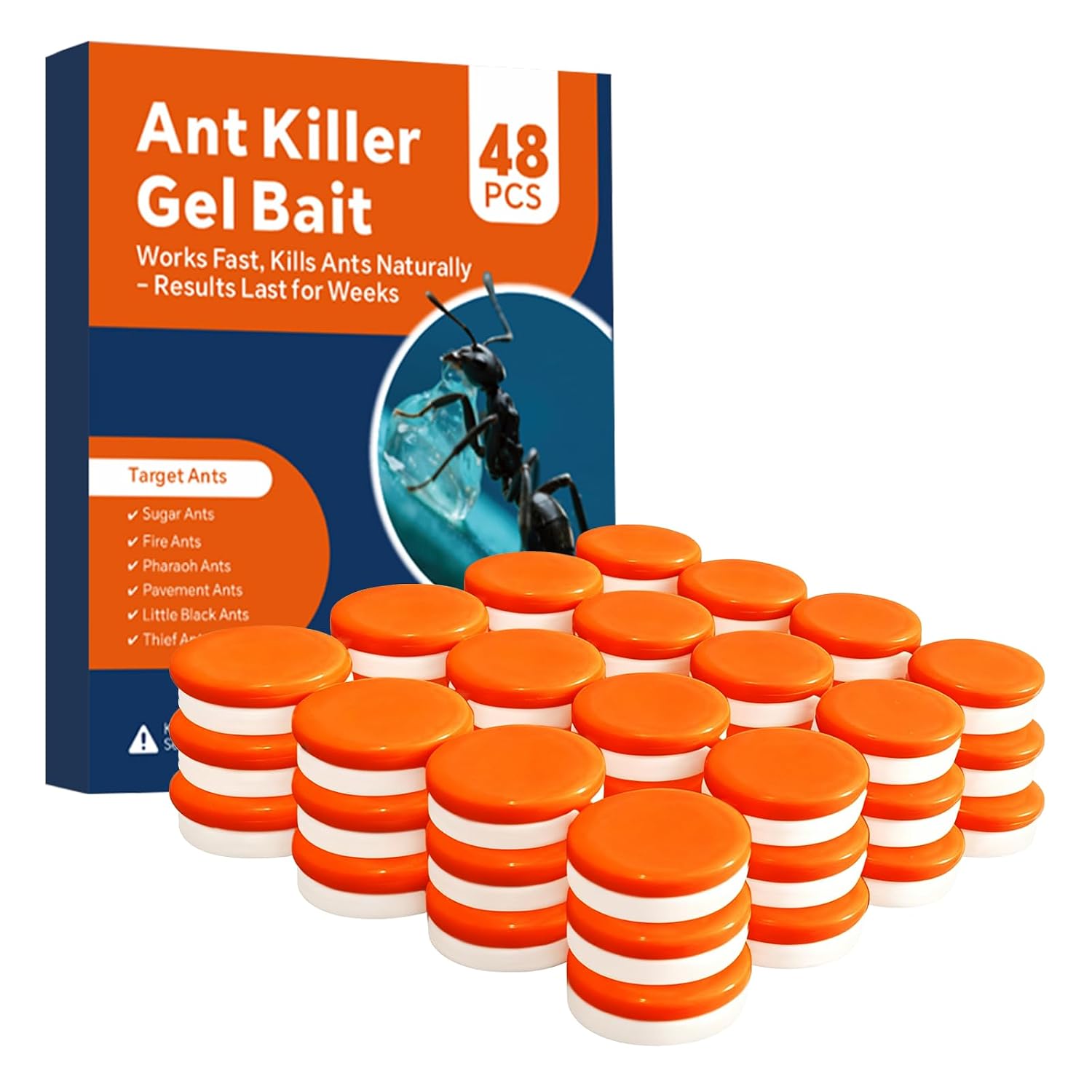
This 48-pack of ROUTADE slow-acting ant gel bait stations is built for systematic, long-term ant control in and around the kitchen. Each station contains a gel formula that worker ants consume and carry back to the nest, which helps reduce the entire colony rather than only visible foragers. The product is supplied in ready-to-use stations with adhesive tape so you can place them along baseboards, in cabinets, near sinks, and on entry thresholds without messy sprays or frequent repositioning. The large pack lets you deploy multiple stations in high-traffic areas and replace them over time for continuous coverage. Because the formula is slow-acting, it is effective against a range of common household species including carpenter ants and sugar ants, but it requires several days to weeks to knock down a colony and will not give instant removal of visible ants. Also the stations are small and contain gel rather than a tamper-resistant hard block, so keep them away from children and pets. For someone wanting a low-maintenance, colony-focused approach to kitchen ant problems, this kit makes it easy to set and forget while the bait works.
Best for: Homeowners who prioritize reliable, long-term elimination of ant colonies in kitchens and want a low-maintenance bait they can deploy across multiple hotspots.
Less Ideal for: People who need an immediate knockdown of visible ants or who require childproof solid bait stations should consider alternatives.
- Slow-acting gel designed for worker ants to carry bait back to the nest for colony-level control
- Ready-to-use bait stations with adhesive for easy placement along baseboards and in cabinets
- 48-count pack provides broad coverage around a kitchen and enough replacements for extended use
- Versatile for indoor and outdoor placement to block entry points and high-traffic ant routes
- Slow-acting formula takes days to weeks to eliminate a colony so visible results are not immediate
- Gel in small stations may require careful placement to keep away from children and pets
Verdict: A practical, deploy-and-forget gel bait kit for reliable colony-level control of kitchen ant infestations.
Amdro Ant Killer for Outdoor Home Perimeter, 12 oz

| Unit Count | 12 Ounce |
|---|---|
| Item Form | Granules |
| Target Species | Ant |
| Special Features | Ant Killer for Outdoor Home Perimeter |
Amdro Ant Killer for Outdoor Home Perimeter is a granular bait you shake around a building to create a 1-foot protective band that attracts worker ants and carries the poison back to the colony. It is typically used on lawns, around foundations and in landscaped beds during the spring and summer when ants are active. The formulation claims to work on 25 common ant species and continues to be effective for up to three months, which reduces how often you need to reapply. Practical benefits include easy application with no equipment, visible reduction in ant activity within a week, and suitability for broad perimeter treatment of larger yards. Limitations are that it must be applied to dry ground and not before rain or freezing temperatures, and it targets outdoor activity only so indoor infestations may require separate treatment. This product is best treated as a preventive or colony-control solution for routine lawn maintenance rather than a rapid indoor knockdown.
Best for: Homeowners who want an affordable, low-effort way to reduce ant pressure around lawns and landscaped perimeters and prefer a preventive, long-lasting perimeter treatment.
Less Ideal for: People needing immediate indoor ant control, emergency knockdown, or solutions for wet or shaded yards where repeated wetting makes granular application impractical.
- Granular bait that workers carry back to the colony to target queens and nests
- Claims control of up to 25 ant species common in lawns and landscapes
- Long residual action up to three months reduces reapplication frequency
- Simple shake-on application requires no special tools
- Must be applied to dry ground and avoided before rain or when temperatures are below 50°F
- Designed for outdoor perimeter use only and will not treat interior infestations directly
Verdict: Amdro provides a budget-friendly, long-lasting granular perimeter bait that makes routine lawn and foundation ant control simple and low maintenance.
Ortho Home Defense Insect Killer for Indoor & Perimeter, 1.33 gal. with Comfort Wand

| Item Form | Spray |
|---|---|
| Target Species | Insects |
| Liquid Volume | 1.33 gallons |
| Active Ingredients | Bifenthrin 0.05%, Zeta-Cypermethrin 0.0125% |
This 1.33 gallon Ortho Home Defense spray is designed to treat both indoor problem spots and the outdoor perimeter of a home to reduce ants, roaches, spiders and many other crawling and flying insects. It comes with a battery-powered Comfort Wand that delivers a continuous spray so you can apply a uniform band around foundations, patios and entry points without bending or pumping. The formula with bifenthrin and zeta-cypermethrin is intended to kill on contact and establish a barrier that the manufacturer says lasts up to 12 months for ants, roaches and spiders on non-porous indoor surfaces. In real-world use that means fewer repeat treatments in busy yard perimeters and around doors and windows. The spray dries clear with minimal fumes which helps for indoor use near kitchens and living areas. Limitations are that this is a chemical insecticide so users should follow safety directions around children, pets and plants and it is not a specific solution for pests not listed on the label. For homeowners focused on strong, perimeter-level protection this product simplifies application and covers a large area per container.
Best for: Homeowners who want a performance-focused perimeter treatment to reduce recurring yard and entry-point insect problems and prefer a ready-to-use product that is easy to apply.
Less Ideal for: People seeking organic or non-chemical control methods or those who need a targeted solution for pests not listed on the label should consider alternative products.
- Includes battery-powered Comfort Wand for continuous, fatigue-free application
- Ready-to-use 1.33 gallon container covers large perimeters without mixing
- Formula creates a barrier claimed to provide up to 12 months protection against ants, roaches and spiders on non-porous indoor surfaces
- Dries clear and gives off minimal fumes, making indoor use more practical
- Contains synthetic insecticides so precautions are required around children, pets and ornamentals
- Protection claims are specific to certain species and surfaces so results vary by pest and conditions
Verdict: A powerful, ready-to-use perimeter and indoor spray for homeowners who want long-lasting, performance-oriented protection against common yard and household insects.
Choosing the Right Outdoor Sugar Ant Killer: Key Factors to Consider
Bait Formulation and Attractiveness
Sugar-feeding ants are selective and will ignore weak attractants. A bait formulation that mimics natural sugar sources will get worker ants to pick it up and carry it back to the nest. For outdoor use you want a bait that stays palatable even as humidity and temperature change throughout the day.
If a bait does not attract foragers quickly, you will only achieve temporary knockdown of workers on the trail rather than colony-level reduction. Consider liquid gels and viscous syrups for immediate uptake and stabilized granules or enclosed stations that protect the bait while still allowing worker access.
Weather and UV Resistance
Outdoor placements face sun, rain, dew, and wind. Baits that dissolve or wash away after a single rain will fail to reach the colony and force repeated reapplication. UV exposure can also break down active ingredients or render sugar attractants less appealing.
Look for formulations or stations that shield bait from direct water and sunlight while allowing ants to enter. Weather-resistant delivery extends real-world active time and reduces labor for gardeners who cannot re-bait every few days.
Containment and Non-target Safety
In gardens you must balance ant control against risks to pollinators, birds, pets, and beneficial insects. Enclosed bait stations or tamper-resistant packaging reduces accidental contact and keeps granules or liquids where ants can reach them but other animals cannot.
Placement strategy matters as much as formulation. Keep stations away from flowering plants and water sources. If you have curious pets or small children, choose products with an added physical barrier or use stations that can be staked out of reach.
Placement Practicality and Ease of Use
How easy a product is to position and maintain affects whether you will stick with it. Stations that simply sit on the ground, stake into soil, or clip to pavers offer different advantages depending on where ants forage.
Consider whether you need handheld application, stations that hide under pots, or refillable containers. Ease of checking and replenishing bait without disturbing plants and mulch will save time and prevent accidental spread of bait material.
Speed of Control Versus Long-Term Suppression
Some approaches provide rapid worker mortality but do not reach the queen or brood, producing a short-term reduction in visible ants. Other baiting strategies aim for slower-acting toxicants carried into the nest for colony decline.
Decide whether you need immediate trail cleanup for outdoor gatherings or a slower, more thorough colony-level treatment. In many cases combining a quick-acting pick-up method with a persistent baiting strategy gives both fast and lasting control.
Compatibility With Garden Plants and Surfaces
Certain liquid sprays and drips can damage plant foliage or stain pavers. Granules and contained baits are less likely to contact leaves but may be less visible when placed in mulch.
Assess the surfaces where ants travel. For patios and decks choose low-residue stations. For mulch beds and planter rims use staked or buried stations that blend with the environment but remain effective and accessible to ants.
Choosing Between Stationed Baits and Free-Form Baits
Stationed baits enclose the attractant inside a small container that prevents rain and non-target animals from reaching the material. They are practical on patios, under pots, and along foundation lines because they concentrate activity and are easy to monitor.
Free-form baits, such as gels or granular sugar-based powders, can be quicker to attract ants but are more vulnerable to weather and accidental scattering. Use them only in sheltered spots or where you can physically protect the placement.
- Stationed baits are better where pets or birds are present.
- Free-form baits may work faster in dry, calm conditions.
- Refillable stations reduce waste and ongoing cost.
Best Placement Practices for Outdoor Areas
Place baits near active trails, at entry points to patios, under potted plants, or along mulch edges where you see consistent ant traffic. Avoid placing bait on top of flowering plants or in open water sources.
Check placements daily at first to confirm pickup. Once ants consistently visit a bait, move fewer new baits into untreated areas so workers keep collecting and transporting the toxicant to the colony.
- Start with a few baits along trails rather than scattering widely.
- Keep bait stations level and sheltered from direct rain when possible.
- Record pickup times to determine reapplication intervals.
Safety Around Pollinators, Pets, and Children
Use tamper-resistant stations and keep bait away from flowering plants where bees and other pollinators forage. If a product has a liquid formulation, avoid applying it where runoff could carry attractant to beneficial insects.
When pets or children frequent the area, select enclosed or stakeable stations and position them where access is unlikely. Read and follow label directions for safe handling, storage, and disposal.
- Place stations under benches or behind planters to reduce accidental contact.
- Avoid baiting directly on top of mulch near play areas.
- Use gloves when handling concentrated baits or liquids.
Monitoring Progress and Knowing When to Rebait
Daily checks during the first week will show whether ants accept the bait. If pickup stops suddenly, reassess placement and bait attractiveness. Rain events often require inspection and possible replacement of washed-away bait.
Expect to maintain baiting for several weeks for colony suppression. Once worker traffic drops consistently, reduce the number of stations and continue to monitor for reappearance.
- Document worker counts or activity level each visit to measure progress.
- Replace only when uptake slows or after heavy rain compromises bait.
- Keep a seasonal eye on ant activity; some colonies reinvigorate in warm months.
Integrating Non-Chemical Measures
Sanitation reduces attractants. Keep outdoor eating areas swept, store pet food indoors, and clean sticky spills promptly. Removing sugar sources reduces the time bait must compete for foraging interest.
Physical exclusion, such as sealing cracks in patio walls and trimming vegetation away from foundation lines, limits access points and channels ant traffic to predictable paths where baits can be placed.
- Eliminate open food and sugary residues before baiting.
- Use barriers or caulking to close obvious trail entry points.
- Combine sanitation with baiting for faster and longer-lasting results.
How We Chose the Best Outdoor Sugar Ant Killer
We prioritized products and approaches that work specifically against sugar-feeding ants in outdoor settings. Key evaluation criteria included bait attractiveness to sugar-feeding species, weather and UV resistance that determine how long a bait remains effective outdoors, safe placement and non-target exposure to limit risks to pets and wildlife, and practical deployment options for patios, planters, and garden beds. We also looked at formulation longevity and reapplication frequency so gardeners can estimate follow-up effort. Ease of use and containment were considered because loose baits or liquids can be messy in windy or wet conditions. Lastly, we considered compatibility with common garden surfaces and plantings to avoid phytotoxicity. Exclusions: we excluded products intended only for indoor use or those labeled for non-sugar ant species without sugar-attractant formulas. We also excluded general-purpose sprays that only knock down visible workers without baiting colony members. The final shortlist balances fast bait acceptance with outdoor durability and safe deployment.
FAQ
How long does it take for a sugar-based bait to reduce outdoor ant trails?
It often takes several days to a few weeks for bait to reduce visible trails. Fast-acting formulations can reduce worker numbers quickly, but colony suppression that prevents re-emergence usually takes repeated bait pickup over multiple days.
Will baited stations harm bees or other beneficial insects in the garden?
Baited stations that are enclosed and placed away from flowers pose minimal risk to pollinators. Open baits on flowering plants can attract non-target insects, so choose stations and placement that limit exposure.
Can I use the same bait in planters and on patios?
Many formulations work in both settings but choose different placement methods. Use stakeable or buried stations in planters to avoid soil contact with liquids, and use flat, stable stations on patios to prevent tipping and spills.
What should I do after heavy rain washes away bait?
Inspect bait placements after rain and replace or reposition weather-compromised bait. Consider switching to better-shielded stations or moving placements under slight cover to reduce future washout.
How long should I maintain baiting after trails disappear?
Continue monitoring and maintain baiting at reduced intensity for at least one to two weeks after visible trails disappear to address survivors and prevent quick re-establishment from nearby colonies.
Are liquid gels better than granules for outdoor sugar ant control?
Liquid gels are often more attractive and quicker to trigger pickup, but they are more vulnerable to weather. Granules last longer in some conditions but may be slower to attract. The best choice depends on site exposure and your ability to protect placements.
Final Verdict
Choose an Outdoor Sugar Ant Killer strategy that balances rapid bait uptake with outdoor durability and non-target safety. Prioritize baits and stations that sugar-feeding ants find attractive, protect placements from rain and sun, and use enclosed stations where pets or pollinators are present. Monitor uptake closely during the first week and be prepared to rebait after heavy weather. The right approach depends on whether you need immediate trail cleanup or colony-level suppression. Focus on consistent bait pickup, appropriate placement, and combining baiting with sanitation and exclusion for reliable, long-term control.
