

Note: This article contains affiliate links. If you click on these links and make a purchase, I may earn a small commission at no extra cost to you. This helps support my research and content. Read my full affiliate disclosure here.
When you need to eliminate an active ant colony rather than just block workers at the kitchen counter, the right ant trap and bait strategy matters. You want a system that attracts foragers, moves bait back to the nest, and stays effective long enough to reach the queen and brood. This guide covers seven shortlisted ant traps chosen for their practical use in yards, foundations, and indoor entry points. We explain the product qualities that matter to gardeners and homeowners, how to deploy traps for best results, and what to expect during the treatment window. Read on to understand the bait types, placement tactics, and durability considerations we used to evaluate each option before the product list.
Top Picks at a Glance
| Best Overall The best all-around choice for most situations | TERRO Liquid Ant Killer 3-Pack (T200-3SR) |  |
| Best Quality Built to a higher standard if you want something more solid | Advion Ant Gel Station Insecticide, Ready-to-Use Gel Bait (9 Stations) |  |
| Best Value The sweet spot between price and what you get | Combat Max 2‑in‑1 Ant Bait Station, 4 Count |  |
| Best Budget The cheapest option that still gets the job done reliably | HOT SHOT MaxAttrax Ant Bait, 4 Child-Resistant Bait Stations |  |
| Highest Rated A top-rated pick with lots of positive feedback | ROUTADE 48-Pack Slow-Acting Ant Gel Bait Stations |  |
| Most Popular A crowd favorite that many people choose with confidence | TERRO Liquid Ant Killer Bait Stations, 12-Pack (T300B) |  |
| Best Seller A high-volume bestseller chosen again and again | Ortho Orthene Ant Killer Ant Bait, 12 Bait Stations |  |
TERRO Liquid Ant Killer 3-Pack (T200-3SR)

| Item Form | Liquid |
|---|---|
| Active Ingredients | Sodium Tetraborate Decahydrate (Borax) 5.40% |
| Target Species | Insects |
| Specification Met | EPA |
TERRO Liquid Ant Killer is a straightforward indoor bait system designed to eliminate common household ants by having workers feed on a borax-based liquid and transfer it to the colony. You apply drops of the bait onto the included cardboard tiles and place them along ant trails, baseboards, counters, and other activity hotspots. The 3-pack gives multiple bait stations for treating several rooms or repeated placements. The active ingredient, sodium tetraborate decahydrate, works slowly enough to be shared among nestmates so the queen and hidden workers are affected, which can produce visible reductions in a few days. Because the formulation is liquid and comes in drip bottles, placement and reapplication are simple and low-mess compared with granular or spray options. Limitations are that the product is intended for indoor use only and requires ants to find and feed on the bait, so heavily contaminated or outdoor nests may need additional measures. When used as directed it is a practical, low-effort solution for routine household infestations.
Best for: Homeowners wanting a low-effort, indoor-focused solution to eliminate sugar ants and other household species who prefer baiting over sprays.
Less Ideal for: People who need immediate knockdown of visible ants outdoors or who require a product for large external infestations should look at targeted outdoor nest treatments.
- Borax-based liquid attracts worker ants and allows transfer to the colony for more complete elimination
- Three 2 oz bottles provide multiple placements for whole-house coverage
- Simple drop application on included cardboard tiles makes setup and reapplication low-mess
- EPA specification met and formulated for common household ant species including sugar and ghost ants
- Only effective if ants discover and consume the bait, so results depend on placement and ant behavior
- Designed for indoor use and may not address outdoor nests feeding into the house
Verdict: A simple, effective indoor bait that uses borax to knock out sugar ant colonies by relying on worker-to-colony transfer.
Advion Ant Gel Station Insecticide, Ready-to-Use Gel Bait (9 Stations)

| Brand | Advion |
|---|---|
| Included Components | 9 stations |
| Item Form | Gel |
| Target Species | Insects |
The Advion Ant Gel Station is a purpose-built gel bait that uses indoxacarb in sealed stations to attract foraging ants and transfer the active ingredient through the colony. Use is simple: remove the top tab, squeeze the gel capsule inside the station, and place stations along ant trails or near entry points. Notable features include a no-mess sealed capsule design and a formulation intended for horizontal transfer so workers feed nestmates and the queen. In practice this usually produces visible reduction in trail activity within days when placed correctly and monitored. The stations are labelled for both indoor and outdoor use and come in a 9-station pack that is convenient for treating multiple hotspots. Important limitations are that success depends on correct placement and ant species acceptance of the bait, and heavy or established infestations may require follow-up placements or integrated measures to find and treat satellite nests. This product is a focused, performance-oriented option for buyers seeking a bait designed to eliminate colonies rather than only repel ants.
Best for: Buyers focused on eliminating whole ant colonies who will place multiple bait stations along active trails and monitor results, and who prefer a targeted bait solution over repellents.
Less Ideal for: Gardeners who need a broad-spectrum surface insecticide or immediate knockdown for visible ants should consider other fast-contact treatments.
- Ready-to-use sealed gel stations provide a no-mess application
- Indoxacarb formulation promotes horizontal transfer for colony-level control
- Suitable for indoor and outdoor placement for flexible treatment
- Nine stations per pack allow coverage of multiple entry points or trails
- Effectiveness depends on ants accepting the bait so some species may avoid it
- May require repeated placements or additional control methods for large or complex infestations
Verdict: A performance-focused, ready-to-use gel bait system designed to achieve colony-level control when stations are placed along active ant trails.
Combat Max 2‑in‑1 Ant Bait Station, 4 Count

| Unit Count | 4 Count |
|---|---|
| Item Form | Gel |
| Target Species | Ant |
| Active Ingredients | Fipronil |
Combat Max 2‑in‑1 Ant Bait Station is a simple, ready-to-use solution for bringing ant trails under control. Each compact station contains one of two gel formulas—one sugar‑based and one protein‑based—so it attracts ants across feeding cycles and lets foragers carry bait back to the nest. The snap‑off tab design and transparent housing make setup and monitoring easy without mess or tools. Because the active ingredient is fipronil at very low concentrations, bait stations begin affecting colonies within hours and the product is intended to eliminate the queen and colony over time. Practical benefits include discreet placement under sinks or behind appliances, no odors, and four stations per pack for treating multiple entry points. Limitations are that it excludes certain ant types such as carpenter and pharaoh ants, and stations need replacement about monthly or when empty, so ongoing purchases may be needed for long infestations.
Best for: Buyers who need an inexpensive, easy-to-deploy solution for common household sugar and protein-feeding ants and prefer minimal setup and monitoring.
Less Ideal for: Homes dealing specifically with carpenter or pharaoh ant infestations or users who want a single, long-term treatment without periodic replacement.
- Two bait formulas (sugar and protein) attract ants in different feeding cycles
- Transparent station lets you see bait level for timely replacement
- Compact, snap-off design provides quick, mess-free setup
- Includes four ready-to-use stations to treat multiple trails
- Does not target harvester, carpenter, or pharaoh ants
- Stations require replacement roughly every month or when empty
Verdict: A budget-friendly, no-fuss four-pack of bait stations that uses sugar and protein gels to attract and eliminate common household ants.
HOT SHOT MaxAttrax Ant Bait, 4 Child-Resistant Bait Stations

| Unit Count | 4 Count |
|---|---|
| Item Type Name | Ant Bait |
| Active Ingredient | Indoxacarb (0.05%) |
| Target Species | Insects |
Hot Shot MaxAttrax comes as four sealed, child-resistant bait stations filled with an indoxacarb-based attractant designed to be placed along ant trails or in hidden spots indoors and outdoors. In practice you place the stations near walls, under sinks, inside cabinets or along exterior trails where foraging ants travel; the bait attracts both sugar- and grease-feeding ants, which then carry the toxin back to the colony. The product claims quick activity within 24 hours and the stations provide several weeks to months of protection depending on infestation level. Practical benefits include simple placement with no mess and the safety of a child-resistant design for households with children or pets. Important limitations are that effectiveness depends on ants finding and accepting the bait and heavy infestations may require replacing or adding stations more frequently; the product targets ants specifically and will not address other pests or nest removal methods beyond baiting.
Best for: Buyers who want a low-effort, affordable way to reduce ant colonies around the home and prefer ready-to-use, child-safe stations they can deploy quickly.
Less Ideal for: People needing immediate physical nest removal or solutions for mixed pest problems should consider professional services or complementary methods.
- Child-resistant bait stations reduce accidental access and are easy to place
- Attractant works for both sugar- and grease-feeding ants to increase uptake
- Contains an active ingredient (indoxacarb 0.05%) that is transferred to the colony
- No-mess, ready-to-use stations simplify indoor and outdoor application
- Requires ants to find and feed on the bait so placement and timing affect success
- May need more frequent replacement for severe infestations
Verdict: A simple, budget-friendly bait station pack that delivers an easy, child-resistant way to attract and poison ants so you can reduce colonies without specialized tools.
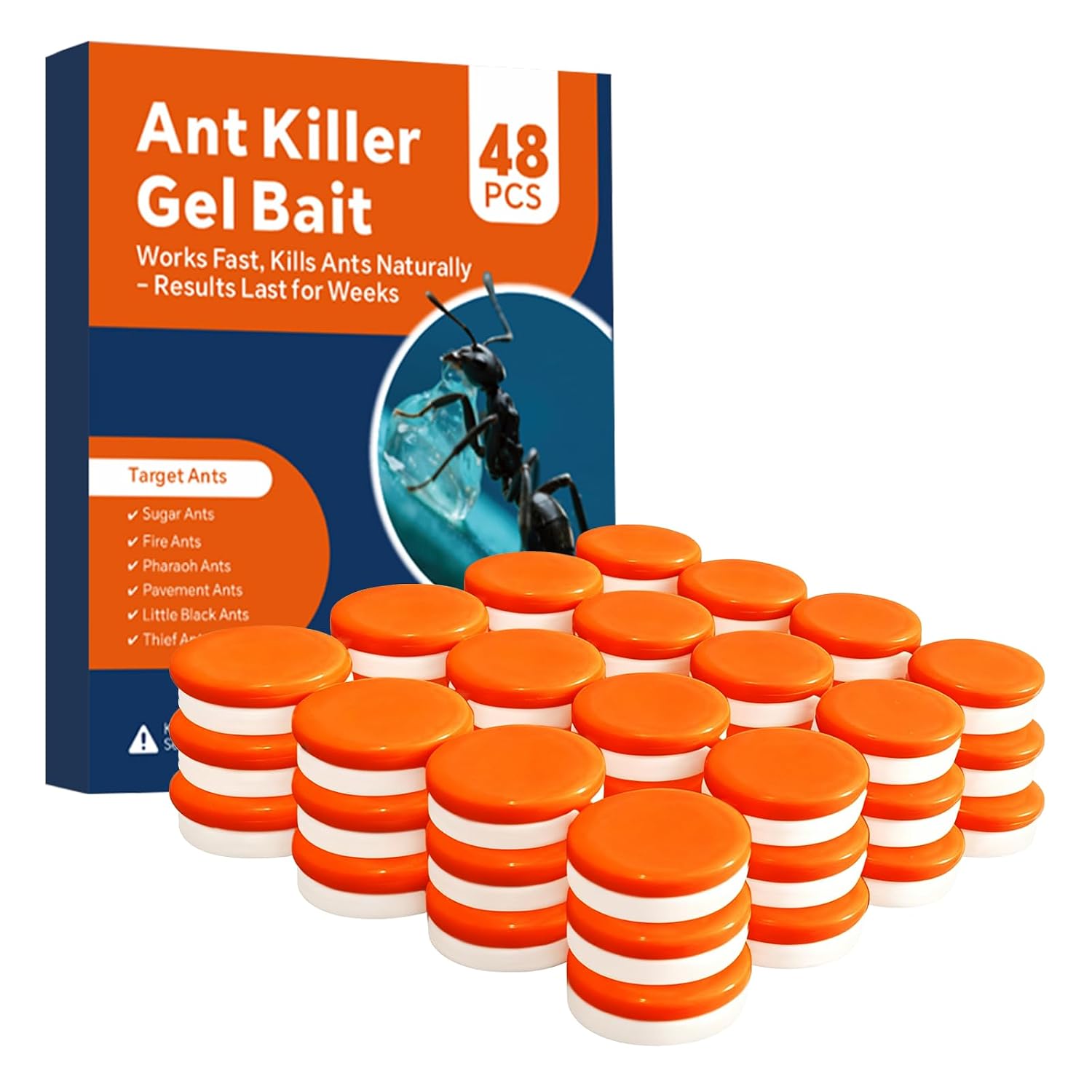
ROUTADE 48-Pack Slow-Acting Ant Gel Bait Stations
| Unit Count | 48 Count |
|---|---|
| Item Form | Gel |
| Target Species | Ants |
| Included Components | Ant gel bait |
This 48-pack of ROUTADE slow-acting ant gel bait stations is built for systematic, long-term ant control in and around the kitchen. Each station contains a gel formula that worker ants consume and carry back to the nest, which helps reduce the entire colony rather than only visible foragers. The product is supplied in ready-to-use stations with adhesive tape so you can place them along baseboards, in cabinets, near sinks, and on entry thresholds without messy sprays or frequent repositioning. The large pack lets you deploy multiple stations in high-traffic areas and replace them over time for continuous coverage. Because the formula is slow-acting, it is effective against a range of common household species including carpenter ants and sugar ants, but it requires several days to weeks to knock down a colony and will not give instant removal of visible ants. Also the stations are small and contain gel rather than a tamper-resistant hard block, so keep them away from children and pets. For someone wanting a low-maintenance, colony-focused approach to kitchen ant problems, this kit makes it easy to set and forget while the bait works.
Best for: Homeowners who prioritize reliable, long-term elimination of ant colonies in kitchens and want a low-maintenance bait they can deploy across multiple hotspots.
Less Ideal for: People who need an immediate knockdown of visible ants or who require childproof solid bait stations should consider alternatives.
- Slow-acting gel designed for worker ants to carry bait back to the nest for colony-level control
- Ready-to-use bait stations with adhesive for easy placement along baseboards and in cabinets
- 48-count pack provides broad coverage around a kitchen and enough replacements for extended use
- Versatile for indoor and outdoor placement to block entry points and high-traffic ant routes
- Slow-acting formula takes days to weeks to eliminate a colony so visible results are not immediate
- Gel in small stations may require careful placement to keep away from children and pets
Verdict: A practical, deploy-and-forget gel bait kit for reliable colony-level control of kitchen ant infestations.
TERRO Liquid Ant Killer Bait Stations, 12-Pack (T300B)

| Unit Count | 12 Count |
|---|---|
| Item Form | Liquid |
| Target Species | Insects |
| Active Ingredients | Sodium Tetraborate Decahydrate (Borax), 5.40% |
Terro Liquid Ant Killer bait stations are prefilled, single-use traps designed for indoor control of common sugar-loving ants. You place the small stations along baseboards, in corners, under appliances, or on countertops where you see ant activity. Worker ants are drawn to the sweet liquid, feed on it, and take it back to the nest so the borax-based active ingredient can eliminate the colony over days to weeks. The product is easy to use with no mixing or setup and the 12-pack gives coverage for several rooms. Because the bait is contained inside a low-profile plastic station, it reduces incidental contact risk compared with loose sprays or powders and lasts for weeks while ants continue to visit. Limitations are that the formula targets sugar-preferring species so very protein- or grease-attracted ants may ignore it, and control can take 2 to 4 weeks for larger infestations. Also stations should be placed away from pets and children despite the contained design since the bait contains borax.
Best for: Homeowners who prioritize an easy, low-hassle indoor solution and want a bait that works at the colony level with minimal hands-on pest handling.
Less Ideal for: People who need immediate knockdown of ants or who have pets or children that frequently access treated areas and cannot reliably keep them away from placed stations.
- Ready-to-use stations require no mixing or setup
- Designed to be carried back to the nest for colony-level control
- Low-profile enclosed bait reduces messy exposure compared with loose liquids or sprays
- 12 stations provide coverage for multiple rooms or hotspots
- Formulation is sugar-based so less effective on ants that prefer protein or grease
- Control can take 2–4 weeks for large or established colonies
Verdict: A simple, low-contact indoor bait system that reliably reduces sugar-loving ant infestations by getting worker ants to carry borax back to the colony.
Ortho Orthene Ant Killer Ant Bait, 12 Bait Stations

| Unit Count | 12 Count |
|---|---|
| Target Species | Ant |
| Power Source | manual |
Ortho Orthene Ant Killer comes as twelve ready-to-use bait stations intended for indoor placements where ants are active. You break apart the stations and set them along baseboards, inside cabinets, near entryways, or along known ant trails; worker ants feed on the bait and carry it back to the nest, which typically reduces visible ants within 3 to 7 days. Notable features include discrete, enclosed stations that limit exposure and a formulation labeled to target common household ants such as pharaoh, pavement, and odorous house ants. Practical benefits are straightforward: simple placement with no mixing or tools, a colony-focused approach that aims to remove the queen rather than just kill foragers, and enough stations to treat multiple hotspots around a home. Limitations include that it is not labeled for some species such as fire or carpenter ants and that results are gradual rather than instant, so persistent infestation or outdoor mound nests may need different products or professional treatment.
Best for: Homeowners looking for a low-effort indoor solution that targets the colony rather than only visible ants and who prefer discreet, ready-to-place stations for kitchens, cabinets, garages, and entryways.
Less Ideal for: People dealing with outdoor mound-forming species or severe infestations that require fast removal or professional-grade treatments should consider alternatives.
- Designed to be shared by worker ants so the bait can reach the colony and queen
- Enclosed stations reduce direct contact and keep bait contained
- Ready-to-use with no mixing or special tools required
- Includes 12 stations to cover multiple indoor problem areas
- Not labeled for fire, carpenter, or harvester ants
- Works slowly over days so it is not an immediate knockdown
Verdict: An easy, low-effort indoor bait station kit that focuses on eliminating the ant colony by letting worker ants carry bait back to the nest.
Choosing the Right Ant Trap to Kill Colony: Key Factors to Consider
Bait Type and Attractiveness
The bait matrix determines whether foraging ants will take food back to the nest. Sweet, protein, and greasy baits attract different ant species and change with season and colony needs. You should choose a bait form that matches the diet of the local pest species so workers will carry it into the colony rather than eat it on site.
Attractiveness also affects how much bait is needed and how quickly the colony is impacted. Highly palatable baits can funnel more workers and increase transfer, while poorly matched baits result in little to no colony-level effect even if workers appear dead at the station.
Bait Longevity and Replacement Cycle
How long bait remains palatable and biologically active influences treatment success. Baits exposed to sun, rain, or high humidity can dry out or break down, reducing the window for foragers to collect and transfer material back to the nest. Consider the expected replacement interval so you can maintain continuous bait availability until colony activity drops.
Longer-lasting formulations or protected stations reduce maintenance and the risk of gaps in baiting. Plan for more frequent checks during hot, wet, or high-traffic conditions where bait may be disturbed or contaminated.
Station Design and Tamper Resistance
A well-designed bait station shields bait from weather and accidental contact by pets, children, or wildlife while allowing ants easy access. Stations with secure lids, low-profile edges that match ant trails, and internal reservoirs for liquid or gel baits make deployment near structures and paths safer.
Tamper resistance also affects placement options. Stations that lock or clip closed let you position bait closer to entry points without creating a hazard, which is important when working around foundations, crawl spaces, or patio edges.
Placement Strategy and Trail Interception
Successful colony-level control depends on intercepting foragers on established trails leading to the nest. Placing stations along visible trails, near foundation lines, or at soil-to-structure transitions increases the chance ants will recruit to the bait. Random placement reduces transfer efficiency and can give a false sense of control when only workers are affected.
Understanding local ant behavior helps: some species forage along narrow linear trails while others wander widely. Adjust station spacing and number to ensure steady bait uptake by many workers rather than isolated feeding events.
Non-Target and Environmental Considerations
Choose traps that minimize exposure to beneficial insects, pets, and children. Enclosed stations and bait forms that limit residue spread reduce accidental contact. Consider placement away from pollinator-rich flowering plants and avoid overuse of broad-spectrum toxins in gardens where non-target impacts are a concern.
Also factor in local regulations and recommendations for active ingredients. Using targeted baits correctly reduces environmental risk while still enabling effective colony control.
Preparing the Site Before You Place Traps
Survey the area to identify active ant trails, recent foraging activity, and likely nest locations. Look for soil disturbances, small mounds, and consistent traffic along foundation edges, window wells, door thresholds, or tree bases.
Clean up obvious food sources such as spilled pet food, uncovered compost, or sugary residues inside and outside the structure. Removing competing food increases the attractiveness of the bait and improves the chance that foragers will recruit to what you place.
Plan station placement with accessibility and safety in mind. Note high-traffic human areas and choose low-profile spots near the trail but out of the direct path to minimize disturbance.
- Follow trails back to likely nest entrances when possible
- Keep bait away from flowering plants to protect pollinators
- Make a placement map to track station locations and check intervals
Deploying Traps for Best Colony Impact
Position multiple stations along established trails and within a short distance of the structure or suspected nest. Using several stations increases the number of foragers that find bait and the rate of transfer to the queen and brood.
Check stations frequently at first. Early monitoring shows whether ants accept the bait or if you need to switch bait types. Refill or replace bait promptly when it is depleted or contaminated to maintain a continuous food source.
- Place stations at soil-to-structure interfaces and near cracks
- Avoid moving stations once ants establish a feeding line
- Record uptake levels to decide when to add or change bait
Monitoring Progress and What to Expect
Expect a delay between initial bait uptake and visible decline in colony activity. Foragers may continue to be seen for days or weeks while bait is transported to the nest and impacts brood development. Patience and consistent bait availability are essential.
If bait disappearance is rapid but worker numbers do not fall, the bait may be attracting workers from outside the target colony or not reaching the queen. In that case, adjust station density or try a different bait matrix that better matches the ant species' feeding preferences.
- Use photo or note logs to track bait levels and worker numbers
- Replace wet or moldy bait immediately
- Expect gradual reduction rather than immediate elimination
Indoor Versus Outdoor Placement Differences
Indoor stations are typically placed in corners, under appliances, and along baseboards where trails are visible. Because indoor bait is less exposed to weather, longevity tends to be higher, but safety and pet access must be prioritized.
Outdoor placement needs to account for rain, sun exposure, and lawn care activities. Low-profile, weather-resistant stations placed along foundation lines, under foliage, or in sheltered crevices work best. Elevating stations slightly off saturated soil reduces water intrusion and bait loss.
- Indoors prioritize tamper resistance and discreet placement
- Outdoors prioritize weather protection and secure footing
- Adjust check frequency for outdoor stations after storms
Common Mistakes That Delay Colony Control
Using repellent sprays or over-cleaning trails immediately after baiting can interrupt forager recruitment and reduce bait transfer. Avoid interfering with established trails once bait is deployed.
Relying on a single, poorly placed station often leads to low uptake. Spread stations to match the scale of the infestation and the species' foraging pattern.
Switching baits too quickly without giving the colony time to consume and transfer the material may prevent reaching the queen. If uptake is consistent, maintain the same bait until activity declines.
- Do not sprinkle loose bait in high-traffic areas where it will be removed
- Avoid placing bait on flowering plants or near pollinator habitat
- Do not confuse reduced worker sightings with complete colony elimination
How We Chose the Best Ant Trap to Kill Colony
We focused on ant trap attributes that directly affect the odds of colony-level control. First, bait formulation was a primary filter: we favored baits with active ingredients and food matrices known to be carried back to the nest by foragers. Second, delivery design mattered; enclosed stations that protect bait from rain and non-target exposure scored higher. Third, persistence was evaluated by expected bait longevity outdoors or in high-traffic indoor spots so toxicant remains available while workers feed it to brood and queen. Fourth, placement flexibility and access influenced selection because traps need to sit along trails, near foundations, or inside cracks without being disturbed. We also considered safety features that reduce accidental contact by pets and children. We excluded single-use spot sprays, repellent-only products, and traps intended only for incidental worker control. The final shortlist prioritizes systems that combine an attractive bait matrix with a durable, tamper-resistant station and clear placement guidance. These are the criteria we used to compare options and explain tradeoffs to gardeners and homeowners.
FAQ
How long does it take for an ant trap to affect the colony?
It often takes days to several weeks. Foragers must find the bait, carry it back to the nest, and the toxicant needs time to affect brood and the queen. Expect gradual reduction rather than immediate disappearance.
Can I use the same bait indoors and outdoors?
Often yes, but environmental factors change effectiveness. Outdoor bait must withstand rain and sun, while indoor bait needs stronger tamper resistance. If outdoor uptake is poor, try a protected station or a different bait matrix.
Will trapping workers alone eliminate the nest?
Usually not. Removing only workers seen at feeding points rarely kills the queen. Effective colony control depends on bait transfer to the nest and sustained availability until brood and queen are affected.
How many traps should I place for a typical foundation infestation?
It depends on trail density and infestation size, but multiple stations spaced along visible trails and near entry points are best. Using several traps increases the number of foragers that find bait and speeds transfer.
Are bait stations safe around pets and children?
Enclosed stations reduce exposure and are safer than loose baits, but no system is risk-free. Place stations out of reach, use tamper-resistant designs, and follow label safety guidance for active ingredients.
Final Verdict
Focus on bait type, station durability, and correct placement when your goal is colony elimination. Prioritize baits that foragers will carry back to the nest, protect bait from weather and non-target access, and maintain continuous availability until activity drops. Expect a patient, monitored approach: multiple stations and regular checks are more reliable than one-off treatments. Choose a trap system that balances bait transfer potential with safety and weather resistance. That combination will give you the best chance of stopping the colony rather than just the visible workers.
