

Note: This article contains affiliate links. If you click on these links and make a purchase, I may earn a small commission at no extra cost to you. This helps support my research and content. Read my full affiliate disclosure here.
When you want to keep biting insects out of your yard without putting pets at risk, selecting the right bug spray matters. The wrong product or application routine can increase exposure for pets or reduce time you can safely spend outside together. This guide shortlists the top options for dog-friendly yard use and explains what made those choices stand out. We evaluated candidates for pet safety, knockdown and repellency, longevity of protection, and ease of application. Read on to see the picks and the specific criteria we used to help you pick a solution suited to your yard and your dog.
Top Picks at a Glance
| Best Overall The best all-around choice for most situations | Wondercide Outdoor Pest Control Spray — 32 oz Ready-to-Use |  |
| Best Quality Built to a higher standard if you want something more solid | Wondercide Flea & Tick Yard Spray (Ready-to-Use, 32 oz) |  |
| Best Budget The cheapest option that still gets the job done reliably | EcoLogic Home Insect Control Ready-to-Use Spray, 64 fl oz |  |
| Highest Rated A top-rated pick with lots of positive feedback | Yard Patrol Cedar Oil Yard Spray — 32 oz Hose‑On Plant-Based Insect Barrier |  |
| Most Popular A crowd favorite that many people choose with confidence | Vet's Best Flea & Tick Yard and Kennel Spray, 32 oz |  |
Wondercide Outdoor Pest Control Spray — 32 oz Ready-to-Use
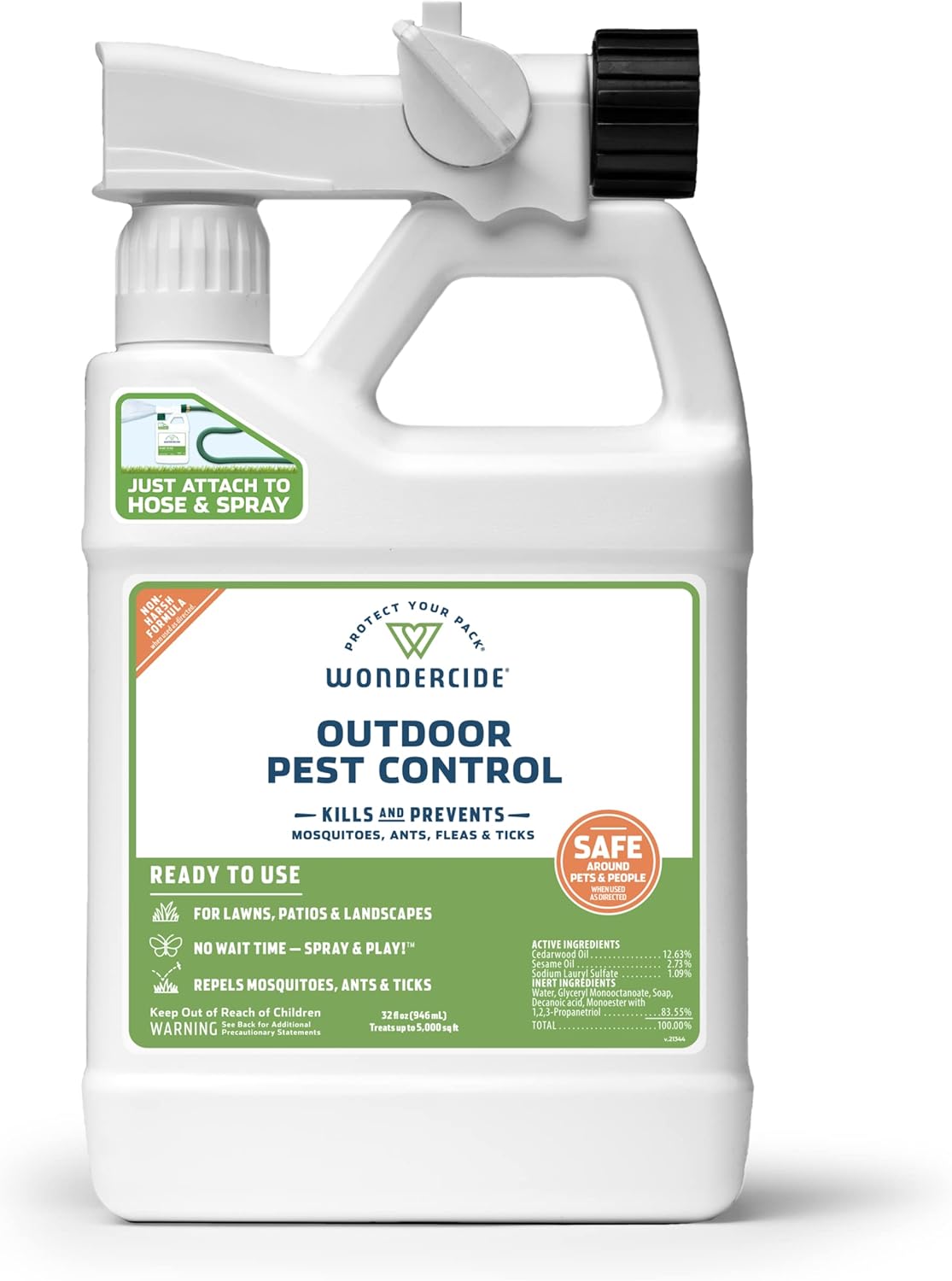
| Format | Pre-mixed, hose-end spray |
|---|---|
| Active ingredients | Cedarwood Oil 12.63%, Sesame Oil 2.73% |
| Coverage | Up to 5,000 sq ft (general); 2,500 sq ft (ticks/mosquito repel) |
Wondercide Ready-to-Use Outdoor Pest Control is a hose‑end spray designed for treating yards up to 5,000 sq ft for general pests and 2,500 sq ft for ticks and mosquito repellency. You attach the bottle to a garden hose, sweep the nozzle across lawns, patios, and foundation lines, and the cedarwood‑based formula delivers quick coverage with no dry time required. Notable features include plant-powered active ingredients (cedarwood and sesame oils), ready-to-use convenience, and instructions for both active infestations and preventative maintenance. Practical benefits are that it is safe to use around people and pets when directions are followed, residues are reported to be non-harmful to pollinators, and the hose attachment makes treating large areas fast. Important limitations are that effectiveness depends on water pressure, walking speed, and weather, heavy rain may require reapplication, and spraying in temperatures above 90°F or direct sun can cause plant burn. Users who need an all‑season, high‑durability pesticide for heavy infestations should plan on repeated applications and follow label precautions to protect sensitive plants.
Best for: Buyers who prioritize effective, plant‑based mosquito and tick control for medium to large yards and want a fast hose‑attached solution that is safe around families and pets when used as directed.
Less Ideal for: Gardeners who need a single, long‑lasting professional‑grade pesticide for severe, persistent infestations or who cannot reapply after rain should consider alternative, heavier‑duty treatments.
- Ready-to-use hose-end applicator for fast coverage of large yards
- Plant-based active ingredients (cedarwood and sesame oils) that target common yard pests
- No dry time required so kids and pets can re-enter treated areas quickly
- Covers up to 5,000 sq ft for general pest control and 2,500 sq ft for ticks/mosquito repellency
- May cause phytotoxic burning if applied in direct sun or temperatures above 90°F
- Performance depends on water pressure and user walking speed which can lead to uneven coverage
- Heavy rain can wash it away and requires reapplication
Verdict: If you want a fast, family- and pet-friendly plant‑based spray to reduce mosquitoes and ticks across a medium to large yard, this ready‑to‑use hose‑end formula delivers practical, repeatable results.
Wondercide Flea & Tick Yard Spray (Ready-to-Use, 32 oz)

| Liquid Volume | 946 ml |
|---|---|
| Item Form | Spray |
| Active ingredient | 12.63% Cedarwood Oil |
| Coverage (fleas/mosquitoes) | Up to 5,000 sq ft |
| Coverage (ticks/mosquito repel) | Up to 2,500 sq ft |
Wondercide Flea & Tick Yard Spray is a ready-to-use hose-end treatment that uses cedarwood and other plant-derived ingredients to kill and repel fleas, ticks, and mosquitoes in the yard. You attach the bottle to a garden hose, turn the sprayer on, and walk steady sweeping passes to treat up to 5,000 sq ft for fleas and mosquitoes or 2,500 sq ft for ticks and mosquito repellency. Notable features include a pre-mixed formula for quick application, a hose-powered sprayer for even coverage, and an ingredient list centered on cedarwood oil that the brand says is safe for pollinators when used as directed. In practice it is convenient for routine maintenance and for reducing pest pressure around foundations, patios, and pet areas without waiting for drying or reentry. Important limitations are sensitivity to high heat or direct sun which can cause plant foliage browning if applied above 90°F and reduced residual effect after heavy rain, which may require reapplication. The product is exempt from EPA registration under FIFRA and carries typical safety instructions to avoid eye contact and keep out of reach of children.
Best for: Buyers who want a convenient, natural-first yard repellent that treats broad outdoor areas and lowers pest pressure around pets and play spaces with minimal setup.
Less Ideal for: Those who need a product that holds up through heavy storms or who require a chemically registered pesticide for regulatory or commercial settings should consider other options.
- Pre-mixed hose-end bottle makes whole-yard treatment fast and easy
- Plant-based active (cedarwood oil) targets fleas, ticks, and mosquitoes
- Covers a large area per bottle (up to 5,000 sq ft for fleas and mosquitoes)
- Formulated to be safe for people, pets, and pollinators when used as directed
- Can cause phytotoxic browning if applied in direct sun or when temperatures exceed 90°F
- Heavy rain or intense irrigation can wash away residue and may require reapplication
Verdict: If you want an easy, plant-powered yard spray to reduce mosquitoes, fleas, and ticks over large lawns while prioritizing pet and pollinator safety, this ready-to-use option delivers fast, low-fuss coverage.
EcoLogic Home Insect Control Ready-to-Use Spray, 64 fl oz

| Unit Count | 64 Fluid Ounces |
|---|---|
| Item Form | Spray |
| Target Species | Insects |
| Ingredients | Cornmint Oil, Lemongrass Oil, Water, White Mineral Oil, Others |
This EcoLogic Home Insect Control is a large ready-to-use spray formulated with lemongrass and cornmint oils to kill ants, spiders, cockroaches and many other common pests by contact. It comes with a pump sprayer for both spray and stream settings, so you can spot-treat cracks and crevices indoors or spray exterior entry points, screens and patios. The botanical formula makes it a practical option for households that want alternatives to conventional synthetic pesticides and the label notes it can be used around kids and pets when directions are followed. The included instructions and clear ingredient list make it straightforward to use, and the 64-ounce size reduces the need for frequent refills. Limitations are that it is a contact killer rather than a long-lasting residual treatment and effectiveness can vary by pest and infestation level, so heavy infestations may require professional or repeat treatment.
Best for: Homeowners who want an affordable, plant-based spray to spot-treat common yard and household insects and prefer a ready-to-use product that is simple to apply.
Less Ideal for: People needing long-lasting barrier control or heavy-duty commercial-strength insect management should consider residual or professional options instead.
- Botanical active ingredients (lemongrass and cornmint oils) listed on the label
- Large 64 fl oz ready-to-use bottle reduces refills for yard and home tasks
- Pump sprayer with spray and stream settings for targeted indoor and outdoor application
- Label states safe for use around children and pets when directions are followed
- Works by contact with limited residual protection between applications
- May be less effective on large or established infestations compared with professional treatments
Verdict: A cost-conscious, plant-based ready-to-use spray that handles spot treatments around the yard and home without mixing or complicated application.
Yard Patrol Cedar Oil Yard Spray — 32 oz Hose‑On Plant-Based Insect Barrier

| Volume | 32 oz |
|---|---|
| Active ingredient | Cedarwood oil |
| Application | Hose-end sprayer |
| Coverage | Approximately 3,000 sq ft |
Yard Patrol is a ready-to-use cedarwood oil yard spray designed to set up a scent-based perimeter barrier around lawns, under decks, and near shrubs. The bottle includes a hose-end sprayer so you attach it to a standard garden hose and spray without measuring or mixing; a single 32 oz bottle claims roughly 3,000 sq ft coverage. The label recommends weekly applications for the first three weeks to establish the barrier, then reapplying every three to four weeks or after heavy rain. Being built around cedarwood oil and plant-derived inert ingredients, it is positioned as kid- and pet-friendly compared with conventional synthetic pesticides. For reliability-minded users, the hose-on format and clear reapplication schedule make it easy to maintain consistent coverage, and the product is made in the USA. Limitations to note are the scent-based mode of action, which may be less effective on all insect species and requires repeat applications and reapplication after rain to remain protective.
Best for: Owners who prioritize a predictable, easy-to-apply, pet-friendly yard treatment and want a simple perimeter spray they can maintain on a schedule.
Less Ideal for: People seeking a one-time, long-lasting chemical knockdown for all pest types or professional-grade pest control should consider stronger specialist options.
- Hose-end sprayer included for quick, no-mix application
- Plant-based formula centered on cedarwood oil that is marketed as kid and pet safe
- Large claimed coverage of about 3,000 sq ft per 32 oz bottle
- Clear application schedule to build and maintain a barrier
- Effect relies on scent masking so performance can vary by insect species
- Requires regular reapplication and after heavy rain to maintain effectiveness
Verdict: A simple, kid- and pet-friendly hose-on cedar oil spray that makes maintaining a regular perimeter insect barrier quick and reliable.
Vet's Best Flea & Tick Yard and Kennel Spray, 32 oz

| Unit Count | 32 Fluid Ounces |
|---|---|
| Item Form | Spray |
| Scent Name | Peppermint |
| Target Species | Dog |
| Active Ingredients | eugenol, peppermint oil |
This 32 oz Vet's Best yard and kennel spray is a plant-based, ready-to-use treatment designed to protect outdoor spaces from fleas, ticks, and mosquitoes. It connects to a garden hose via a built-in applicator so you can cover turf, patios, kennels, and other landscaping quickly and evenly without mixing. The active botanical ingredients are peppermint oil and eugenol from clove, which the maker says kill pests on contact while leaving a peppermint scent rather than strong synthetic odors. Practical benefits include easy application with a hose attachment, coverage suitable for large areas, and a formula safe to use around dogs 12 weeks and older when directions are followed. Important limitations are that it is for outdoor use only, requires reapplication after heavy rain or for severe infestations, and can cause eye or skin irritation in sensitive people or pets if not rinsed promptly. For owners looking for a natural, vet-formulated option to add to a multi-pronged flea control plan, this spray is a convenient outdoor tool, but it should be used as directed and paired with pet treatments for best results.
Best for: Pet owners who want an easy, plant-based yard spray to reduce outdoor flea and tick pressure and who prefer solutions backed by vet formulation and broad customer use.
Less Ideal for: People who need an all-in-one single-treatment solution for severe indoor infestations or who require products safe for pregnant or nursing animals should look at other specialized options.
- Ready-to-use hose attachment for fast, even coverage of yards and kennels
- Plant-based active ingredients (peppermint oil and eugenol) that kill fleas, flea eggs, ticks, and mosquitoes on contact
- Formulated for use around dogs 12 weeks and older when used according to label
- Leaves a natural peppermint scent instead of strong synthetic fragrances
- Outdoor use only and not designed to replace on-pet treatments
- Requires reapplication after heavy rain and for ongoing infestations
- Contains ingredients that can cause eye or skin irritation in sensitive individuals or animals
Verdict: A convenient, vet-formulated plant-based yard spray for pet owners who want a ready-to-use outdoor tool to reduce fleas, ticks, and mosquitoes without harsh chemicals.
Choosing the Right Bug Spray for Yard Dog Friendly: Key Factors to Consider
Active Ingredients and Pet Safety
Active ingredients determine both how well a product repels or kills biting insects and how it interacts with animals. Some actives break down quickly on grass and foliage, reducing long-term exposure for dogs, while others persist and can transfer to fur or paws. Read labels for explicit pet-related directions and waiting periods after application.
Consider whether the product is a contact repellent or a longer-lasting residual control. Short-lived contact repellents may allow quicker re-entry for pets but require more frequent applications. Longer-residual actives reduce reapplication frequency but can increase the window when pets might contact treated surfaces.
Residual Duration and Reapplication Frequency
Residual duration describes how long treated areas remain protective. Longer-lasting sprays are convenient because they lower application frequency, but they may leave treated surfaces that pets can contact for days. Shorter residual products often need more frequent use, changing the cumulative exposure your dog experiences over a season.
Match residual expectations to your yard use. If dogs regularly roll or lay on treated grass or chew foliage, favor approaches with labeled guidance on safe re-entry times and those that minimize transfer risk from treated surfaces to fur.
Application Method and Timing
How a spray is applied strongly affects safety. Hose-end sprayers, pump sprayers, and backpack units produce different droplet sizes and trajectories. Fine mists can drift onto pets or into sheltered areas, whereas targeted sprays to perimeter vegetation reduce broad exposure. Plan application when dogs are indoors or otherwise kept away until surfaces dry.
Timing also matters. Apply treatments when wind is low and foliage is dry to limit drift and wash-off. Follow label directions on how long to wait before allowing pets back into treated areas, and consider spot-treating high-traffic zones rather than blanket applications.
Coverage Needs and Yard Layout
Your yard layout-fenced lawns, garden beds, shaded corners, standing water-affects where insects concentrate and thus where you need protection. Perimeter treatments can reduce mosquito entry into play areas, while targeting shady, humid microclimates helps control ticks. Over-application across the entire property increases treated surface area and potential pet contact.
Prioritize treatment of areas dogs frequent, and consider creating untreated zones where pets can rest shortly after applications. Mapping hot spots before treating reduces product use and limits pet exposure to treated surfaces.
Weather and Environmental Impact
Rain, irrigation, and UV light affect how long a spray remains active. Some formulations are rainfast within hours and resist break down, extending protection but increasing persistence in the environment. Others degrade quickly, reducing runoff concerns but shortening protection time.
Assess the risk of runoff into garden beds or neighboring areas, especially if you have vegetable plots or wildlife attractors. Choose products with clear instructions for post-application irrigation and avoid treatments before heavy rain when possible.
Label Instructions and Re-entry Intervals
Labels specify safe handling, re-entry intervals for people and pets, and maximum seasonal application rates. These instructions are legally important and provide the best guidance for minimizing risk to dogs. Some products require allowing treated surfaces to dry fully before pet re-entry; others set specific hour windows.
Always follow label storage and disposal instructions. When labels differ from common-sense practice, follow the label. The safest approach is to designate an indoor or untreated outdoor holding area for pets during application and drying.
Preparing Your Yard Before Treatment
Survey the area to identify where dogs spend most time and where insects are most active. Look for shaded corners, dense shrubbery, standing water, and areas with tall grass that can harbor ticks.
Remove toys, bowls, and anything pets might pack into treated zones. Trim back vegetation along fences and gates so sprays can penetrate the understory rather than sitting only on outer foliage.
- Map pet activity zones and insect hot spots
- Clear or cover pet items before application
- Mow or trim vegetation to improve coverage and reduce hiding places
Safe Application Practices
Keep pets indoors or in an untreated holding area during application and until treated surfaces are dry or until the label re-entry interval has passed. Apply treatments on calm, dry days to reduce drift and wash-off.
Aim sprays at the base of vegetation and perimeter areas rather than broadcasting over open play surfaces. Use the lowest effective rate and avoid spraying pet bedding, food bowls, or areas where dogs frequently rest.
- Avoid treating dog bedding and direct pet-contact items
- Prefer perimeter and targeted vegetation treatments
- Follow label-specified personal protective equipment during application
Non-Chemical Alternatives and Integration
Combine responsible spraying with non-chemical tactics to reduce chemical use overall. Remove standing water, circulate stagnant pools with aeration, and use physical barriers like screens or netting around seating and dog areas.
Landscape choices that reduce insect habitat include removing dense leaf litter, keeping grass short, and planting less-attractive species for mosquitoes and ticks. Integrated approaches reduce reliance on repeated chemical treatments and lower exposure for pets.
- Eliminate standing water and improve drainage
- Maintain trimmed lawns and clean leaf litter regularly
- Use physical barriers for high-use outdoor spots
Monitoring Effectiveness and Pet Reactions
After applying a yard spray, watch how insect pressure changes and how long protection seems to last. Note when mosquitoes or ticks return to treated areas so you can refine reapplication timing without overusing product.
Also monitor your dog for any unusual behaviors, skin irritation, or changes in appetite after treatment. If you see signs of irritation, rinse the pet's fur with clean water and consult a veterinarian if symptoms persist.
- Keep a treatment log with dates and observed effectiveness
- Check pets for contact with treated foliage and signs of irritation
- Adjust treatment frequency based on observed performance and label limits
How We Chose the Best Bug Spray for Yard Dog Friendly
We prioritized products that balance effective mosquito and tick control with formulations and usage patterns that reduce risk to dogs. Key evaluation criteria included active ingredient profile and known pet-safety data, residual protection duration measured as expected hours of repellency on treated foliage or turf, application method and coverage consistency for yards, and environmental persistence including runoff and odor that affect pet exposure. We also looked at formulation type and ease of use, since spray systems that generate fine aerosols can increase inhalation risk for pets and people during application. Longevity of effect and recommended reapplication intervals were considered because more frequent treatments change exposure patterns. Exclusions included products intended solely for direct-on-pet application and any treatments requiring specialized equipment or professional-only licensing. The resulting list focuses on practical, homeowner-level yard sprays with clear label guidance for pet households.
FAQ
Can I spray my yard with insecticide if I have dogs?
Often you can, but it depends on the product and how you apply it. Choose yard-specific formulations with clear pet guidance, keep dogs away during application, and follow label re-entry intervals to minimize exposure.
How long should I keep my dog off treated grass?
That usually depends on the label. Many products advise keeping pets away until surfaces are dry, which can be a few hours, while others specify a set number of hours. Follow label instructions and err on the side of a longer wait if you are unsure.
Are there spray types that are safer around puppies or senior dogs?
Puppies and seniors can be more sensitive, so choose products with lower persistence and clear low-exposure application methods. Consider spot treatments and non-chemical controls to reduce overall chemical contact for vulnerable animals.
Will yard sprays protect against ticks as well as mosquitoes?
Some yard sprays target both mosquitoes and ticks, but effectiveness varies by active ingredient and application location. Target shaded, leaf-littered areas and the yard perimeter for better tick control. Check the product label for claimed target pests.
Can treated grass transfer insecticide to my dog's fur or paws?
Yes, transfer is possible if dogs come into contact with wet or recently treated surfaces. Waiting until treated areas dry and following label re-entry guidance reduces transfer risk. Limiting pet access to treated zones during drying also helps.
Should I bathe my dog after it has been in a recently treated yard?
A rinse or bath can reduce any residue on fur if you suspect direct contact with treated surfaces. Routine bathing is not always necessary if label guidance was followed and the pet did not roll or lie in freshly treated areas.
Final Verdict
Prioritize products and practices that match your yard layout and your dog's behavior. Focus on active ingredients with clearer pet-safety guidance, targeted application methods, and sensible re-entry intervals to limit exposure. Balance the desire for lasting protection against the need to keep high-contact surfaces low-risk for pets. By treating only problem areas, applying on calm dry days, and integrating non-chemical measures, you can reduce insect pressure while keeping your dog safer. Use label instructions as your primary guide and choose the approach that fits your yard routine and pet's habits.
