

Note: This article contains affiliate links. If you click on these links and make a purchase, I may earn a small commission at no extra cost to you. This helps support my research and content. Read my full affiliate disclosure here.
String of pearls is a delicate trailing succulent that responds to light, consistent feeding more than heavy applications. Choosing the right fertilizer matters because overconcentrated solutions scorch thin roots while the wrong nutrient balance can produce stretched, weak stems. This guide gathers a shortlist of the top options for string of pearls and explains how each was evaluated for safe succulence care. You will find picks suited to low-strength, dilute feeding and slow-growth management. We focus on nutrient ratio, application method, and ease of diluting for small pots so you can keep your strands full and compact. Read on for practical guidance before the product summary list.
Top Picks at a Glance
| Best Overall The best all-around choice for most situations | Grow More Cactus Juice 1-7-6 Liquid Succulent Fertilizer (16 oz) |  |
| Best Quality Built to a higher standard if you want something more solid | Osmocote Smart-Release Plant Food Plus Outdoor & Indoor, 1 lb |  |
| Best Value The sweet spot between price and what you get | The Grow Co Slow-Release Succulent & Cactus Fertilizer, 5 oz |  |
| Best Budget The cheapest option that still gets the job done reliably | Schultz Cactus Plus Liquid Plant Food 2-7-7, 4 fl oz |  |
| Highest Rated A top-rated pick with lots of positive feedback | Purived Succulent & Cactus Liquid Fertilizer, 16 oz (Makes 50 Gallons) |  |
| Most Popular A crowd favorite that many people choose with confidence | TPS NUTRIENTS Succulent Fertilizer Liquid Plant Food, 8 oz |  |
Grow More Cactus Juice 1-7-6 Liquid Succulent Fertilizer (16 oz)

| Item Form | Liquid |
|---|---|
| Specific Uses For Product | Plant Growth |
| Target Species | Cactus |
| Mixing Ratio | 1 teaspoon per gallon |
Grow More Cactus Juice is a water-soluble liquid fertilizer formulated for cacti and other succulents that you mix at a very low concentration (1 teaspoon per gallon). It delivers a high-phosphorus middle value (1-7-6 NPK) plus added calcium to encourage root development, flowering and stronger tissue in plants like string of pearls, aloe and snake plants. In practice you dilute and apply it during the active growing season and use sparingly to avoid overfeeding slow-growing succulents. The liquid form makes it easy to dose and apply as a top-dress drench or a gentle foliar spray for small pots. Key benefits are targeted nutrient balance for bloom and root health and a simple mixing ratio for repeatable feeds. Important limitations are the concentrated phosphorus-forward formula, which may be more than some growers want for frequent monthly feeds, and the small 16 oz size for people with many plants who prefer bulk supply.
Best for: Gardeners who want an easy-to-use, bloom-encouraging fertilizer tailored to succulents and prefer straightforward liquid dosing for small to medium collections.
Less Ideal for: Those managing very large collections who need bulk fertilizer or growers seeking a low-phosphorus maintenance feed for extremely slow-growing succulents.
- Formulated specifically for cacti and succulents with a 1-7-6 NPK profile
- Includes calcium to support root strength and tissue health
- Liquid concentrate is easy to mix and apply at low rates
- Versatile application as soil drench or light foliar spray
- Simple mixing ratio for predictable dosing (1 teaspoon per gallon)
- Phosphorus-heavy NPK may be stronger than needed for very slow growers or frequent use
- 16 oz bottle may require frequent replacement for larger collections
Verdict: A simple, calcium-enriched liquid fertilizer that makes boosting root health and blooms on string of pearls and other succulents quick and fuss-free.
Osmocote Smart-Release Plant Food Plus Outdoor & Indoor, 1 lb
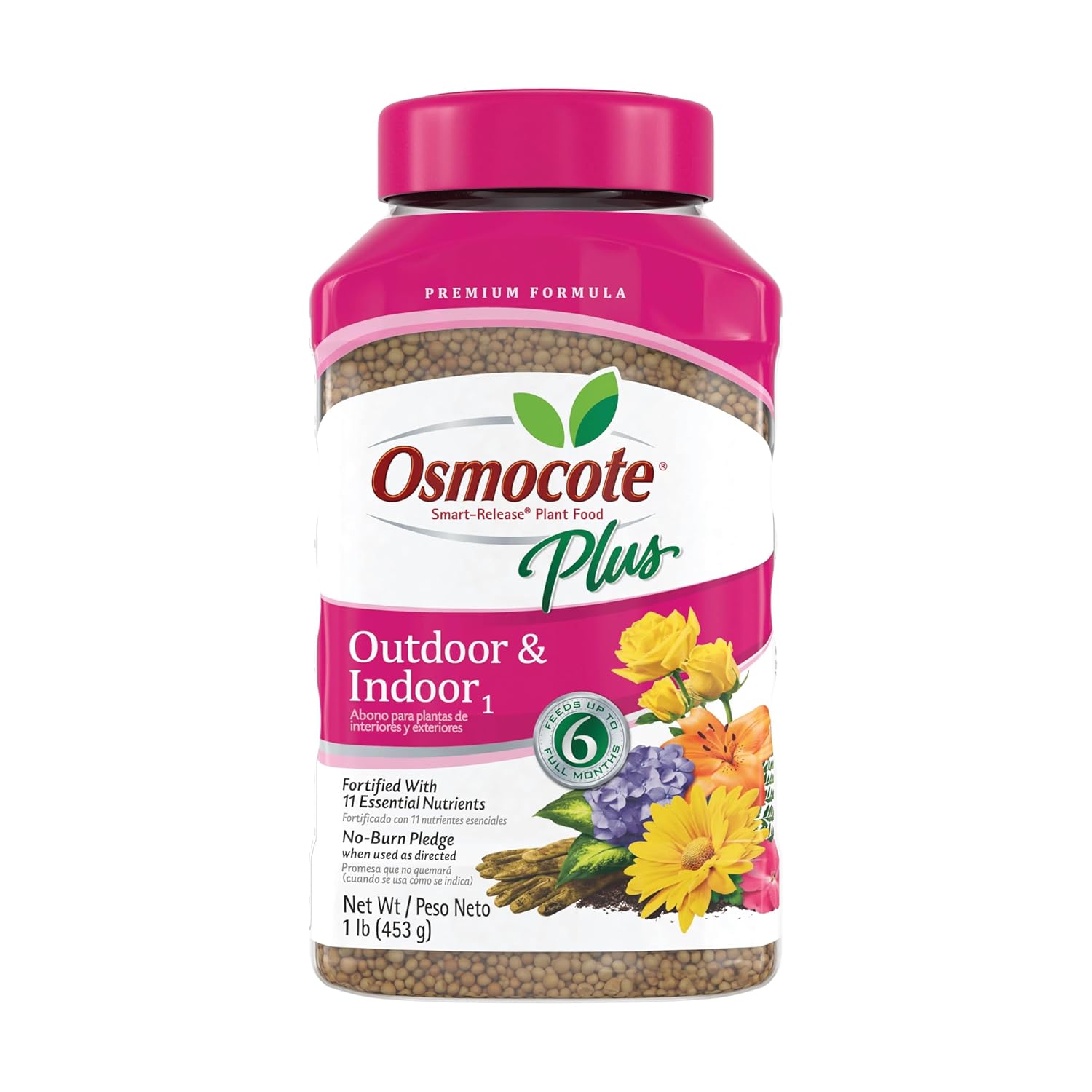
| Item Form | Granules |
|---|---|
| Specific Uses For Product | Plant Food |
| Application Method | sprinkle around the base and work into the soil |
| Unit Count | 16 Ounce |
Osmocote Smart-Release Plant Food Plus is a resin-coated granular fertilizer designed to deliver steady nutrition to a wide range of plants for up to six months from a single application. You apply it by sprinkling the recommended scoop into the top inch or so of potting mix for containers or around plants in garden beds, then watering to activate the coating. The product contains 11 essential nutrients and is formulated to release based on soil temperature, which helps reduce overfeeding and supports consistent bloom and foliage performance in hanging baskets. Its no-burn pledge makes it easy to use at the recommended rates for mixed annuals, trailing plants, and container veggies. Limitations are that coverage is modest from a 1 lb. container so frequent use on many large baskets will require buying more, and release timing still depends on temperature so plants in cool, shaded spots may receive nutrients more slowly than those in warm sun.
Best for: Gardeners who prioritize steady, low-maintenance feeding for hanging baskets and containers and want consistent bloom and foliage without frequent fertilizing.
Less Ideal for: Those who need immediate, short-term nutrient boosts or precise liquid feeding schedules for plants that demand fast correction.
- Resin-coated granules provide controlled release of nutrients for up to six months
- Formulated with 11 essential nutrients suitable for a wide variety of plants
- No-burn pledge when used as directed reduces risk of damaging roots in containers
- Simple sprinkle-and-water application works well for hanging baskets and pots
- 1 lb container covers a limited area so multiple baskets will need additional product
- Release rate depends on temperature so nutrient delivery can be slower in cool conditions
Verdict: An easy, low-maintenance slow-release fertilizer that keeps hanging baskets fed for months with minimal effort.
The Grow Co Slow-Release Succulent & Cactus Fertilizer, 5 oz
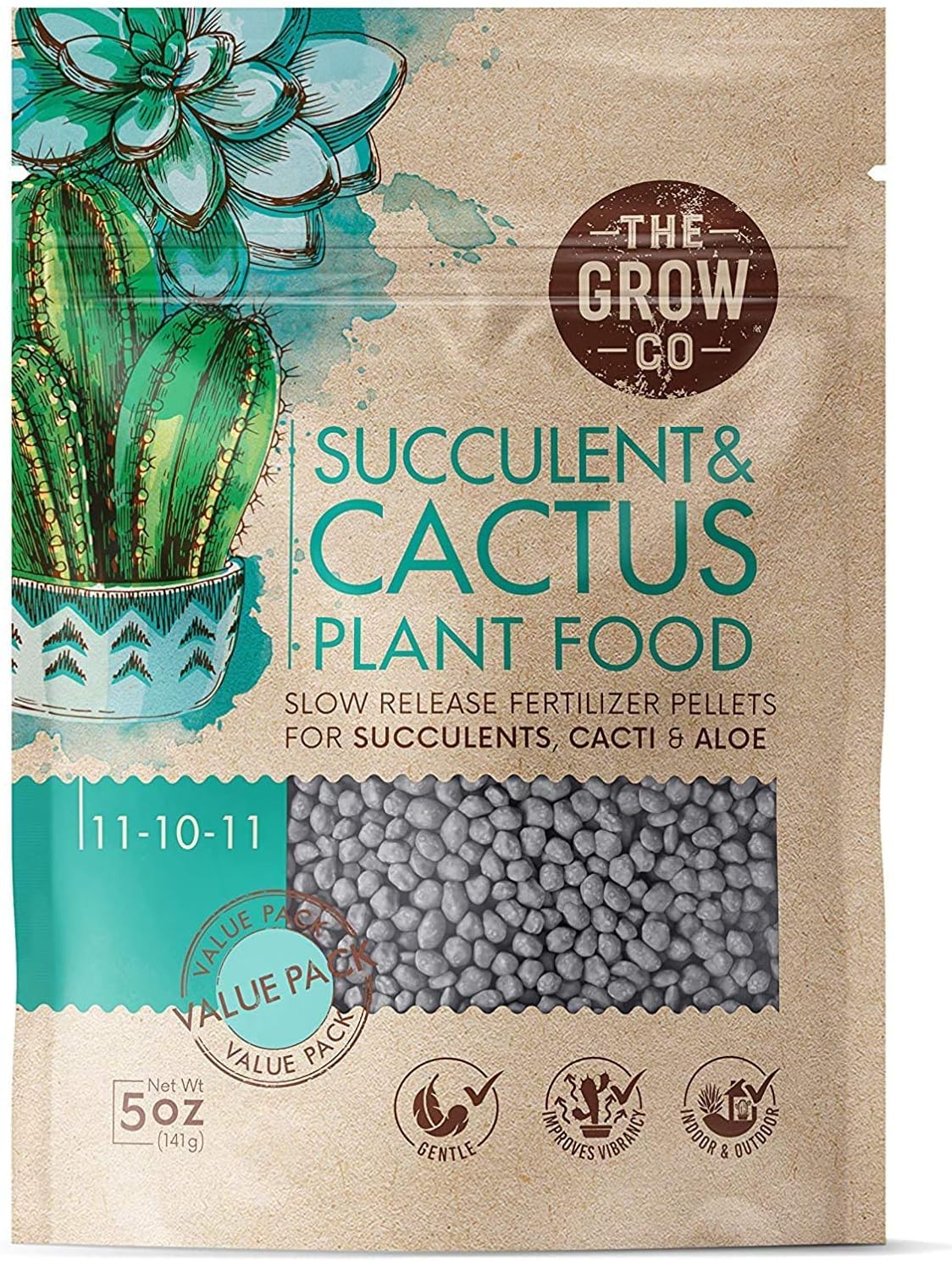
| Item Form | Granules |
|---|---|
| Specific Uses For Product | Plant Food,Root Development |
| Application Method | Sprinkle or Poke Holes |
| Target Species | Cactus |
| Unit Count | 5 Ounce |
This granular slow-release fertilizer is designed for potted succulents like string of pearls and other cacti that benefit from gentle, long-term feeding. You sprinkle or poke the coated granules into the top layer of potting mix, water once to activate, and the unique coating releases nutrients gradually so plants receive steady nourishment for up to nine months. The low NPK approach and small, easy-to-measure application rates make it suitable for delicate species that are sensitive to fertilizer burn. It works well in indoor containers and outdoor pots and pairs neatly with well-draining soils and typical succulent mixes containing pumice or perlite. Limits to consider are the fixed nutrient ratio and the long release period, which reduces control if you need to correct specific deficiencies quickly, and the 5 oz size is modest for larger collections. For routine maintenance this product reduces dosing frequency and lowers the chance of overfeeding, but it is not a substitute for targeted liquid treatments when rapid correction is required.
Best for: Buyers who want a low-maintenance, predictable feeding schedule for potted succulents like string of pearls and prefer simple, infrequent applications over frequent liquid dosing.
Less Ideal for: Growers who need precise, fast correction of nutrient deficiencies or those managing large collections that need frequent applications from bulk-size products.
- Slow-release coating feeds plants gradually for up to nine months, reducing reapplication frequency.
- Low NPK formulation tailored for sensitive succulents and cacti to minimize fertilizer burn risk.
- Ready-to-use granules require no mixing and are simple to apply by sprinkling or poking into soil.
- Suitable for indoor and outdoor potted succulents and compatible with well-draining potting mixes.
- Fixed nutrient ratio limits ability to address specific nutrient deficiencies quickly.
- Small 5 oz unit may require frequent repurchase for larger collections.
Verdict: A low-effort slow-release granule that keeps string of pearls and other potted succulents lightly fed for months with minimal upkeep.
Schultz Cactus Plus Liquid Plant Food 2-7-7, 4 fl oz

| Item Form | Liquid |
|---|---|
| Specific Uses For Product | Plant Food |
| Coverage | Medium |
| Target Species | Cacti, Succulents |
| Unit Count | 4 Fluid Ounces |
Schultz Cactus Plus is a small, concentrated liquid plant food designed specifically for cacti, jade, aloe and other succulents. It is used by adding a tiny measured amount to the water you normally give your plants—the directions call for just seven drops each time you water—which makes it easy to dose for small pots and infrequent watering schedules. The 2-7-7 formula provides higher phosphorus and potassium relative to nitrogen, which supports root strength and flowering without encouraging overly lush, water-needy growth. Because it feeds through the roots and comes in a 4 ounce bottle, it is convenient for hobbyists with a modest collection and for spot-feeding individual plants. Important limitations are its small volume, which means frequent repurchase for larger collections, and the minimal dosing guidance on exact dilution per water volume beyond the drop instruction. Also take normal safety precautions when handling concentrated liquids near pets and children.
Best for: Someone building or maintaining a small-to-moderate collection of cacti and succulents who wants an easy, low-effort fertilizer to use at each watering.
Less Ideal for: Not a good fit for gardeners with large collections or commercial growers who need bulk quantities and clearer dilution ratios.
- Formulated specifically for cacti and succulents so it matches those plants' needs
- Very concentrated dosing (7 drops) makes it easy to apply to small pots and reduces waste
- Higher phosphorus and potassium helps root development and encourages blooming
- Liquid formula feeds through the roots for faster uptake than solids
- Small 4 fl oz bottle may require frequent replacement for larger collections
- Mixing instructions are minimal and do not give an exact water volume for the 7-drop dose
Verdict: A concentrated, easy-to-dose liquid fertilizer tailored to cacti and succulents for hobbyists who want simple, regular feeding.
Purived Succulent & Cactus Liquid Fertilizer, 16 oz (Makes 50 Gallons)

| Item Form | Liquid |
|---|---|
| Application Method | Soil Drench |
| Target Species | Succulent & Cactus Plants |
| Mixing Ratio | 320:1 |
| Liquid Volume | 16 fluid ounces |
This concentrated liquid fertilizer is designed specifically for succulents and cacti and comes in a 16 ounce bottle that makes about 50 gallons of feed solution. It is a water-soluble, odorless soil-drench formula with a balanced 1-2-2 nutrient profile plus calcium and micronutrients, so you can apply it directly when watering to give plants quick, gentle nourishment. Typical use is mixing 1 capful (about 2 teaspoons) per gallon and feeding every other watering during active growth or much less frequently during dormancy. Practical benefits include easy measuring, low smell, and compatibility with a wide range of desert-loving houseplants and outdoor potted cacti. Important limitations are that it is a liquid concentrate that requires dilution and careful dosing to avoid overfeeding, and it is not formulated for heavy-feeding garden plants outside the succulent/cactus group. For someone who wants dependable, no-fuss nutrient boosts for slow-growing succulent collections, this product offers a simple routine; buyers should follow the mixing and seasonal directions to avoid stressing plants.
Best for: Buyers who prioritize consistent, hassle-free care for indoor or potted succulents and cacti and want a reliable, concentrated feed that fits a regular watering routine.
Less Ideal for: Gardeners seeking a general-purpose or high-nutrient fertilizer for vegetables, lawns, or heavy-feeding ornamentals should consider other products tailored to those plants.
- High concentrate makes about 50 gallons from one 16 oz bottle, reducing purchase frequency
- Formulated specifically for succulents and cacti with a 1-2-2 nutrient balance and added calcium
- Water-soluble and odorless, applies easily as a soil drench mixed with watering
- Clear dosing instructions for routine feeding and reduced application during dormancy
- Requires accurate dilution and dosing to avoid overfertilizing sensitive succulent roots
- Not intended for general garden or heavy-feeding plants outside succulents and cacti
Verdict: A concentrated, easy-to-use liquid feed that reliably supplies balanced nutrients to keep succulents and cacti healthy with minimal fuss.
TPS NUTRIENTS Succulent Fertilizer Liquid Plant Food, 8 oz

| Brand | TPS NUTRIENTS |
|---|---|
| Item Form | Liquid |
| Target Species | Cactus |
| Unit Count | 8 Fluid Ounces |
| Mixing Ratio | 1 teaspoon per gallon |
This 8 ounce liquid succulent fertilizer from TPS Nutrients is designed to feed potted succulents and cacti without encouraging leggy, stretched growth. It mixes at a very dilute rate (about 1 teaspoon per gallon) so you can feed small indoor or outdoor containers safely and avoid nutrient buildup. The product promotes firmer leaves, compact habit, and better root development, which is useful for Echeveria, Jade, and other common cacti and succulents. It is a liquid formula, so it dissolves quickly and is easy to apply with routine watering. Practical benefits include a gentle NPK balance targeted at preventing overvigorous top growth and a coverage level suited to medium-sized collections. Limitations are the small bottle size if you have many plants and the need to follow safety warnings to keep it away from children and pets. For gardeners who prefer low-risk, easy-to-control feeding, this is a straightforward option that supports steady, compact growth.
Best for: For cautious plant owners who want a mild, easy-to-control fertilizer to maintain compact, healthy succulents and cacti without risking overgrowth.
Less Ideal for: Not the best choice for gardeners with large outdoor beds or commercial growers who need bulk quantities or higher-strength formulations.
- Formulated specifically to prevent leggy growth and encourage compact succulent form
- Easy-to-mix liquid formula with a very dilute mixing ratio for safe container feeding
- Supports root development and nutrient uptake for healthier plants
- Suitable for indoor and outdoor use on common succulents and cacti
- Small 8 oz bottle may require frequent repurchasing for larger collections
- Not intended for edible food crops and requires careful storage away from children and pets
Verdict: A gentle, easy-to-use liquid fertilizer ideal for risk-averse succulent and cactus owners who want compact, healthy plants.
Choosing the Right Fertilizer for String of Pearls: Key Factors to Consider
Nutrient Ratio and Balance
String of pearls favors a balanced, low-strength nutrient supply rather than high-nitrogen formulas. Too much nitrogen encourages soft, elongated growth that undermines the compact, bead-like appearance the plant is known for. Look for fertilizers with moderate nitrogen paired with adequate phosphorus and potassium to support root health and overall vigor.
When choosing a concentrate or soluble feed, check the N-P-K numbers and favor formulations intended for succulents or cacti, or a balanced houseplant feed that can be diluted heavily. The correct ratio helps maintain compact internodes and preserves the plant's trailing habit.
Dilution Precision and Dosing Instructions
Because string of pearls is commonly grown in small pots with shallow root systems, precise dosing is essential. A fertilizer that provides clear, small-volume dilution instructions reduces the risk of accidental overfeeding and salt buildup. Liquid or water-soluble feeds that dissolve evenly and list teaspoons per liter or milliliters per gallon are easiest to measure.
Avoid products that expect large-volume dosing or only give vague guidance like 'apply monthly' without concentration details. Being able to cut the recommended strength to one quarter or one half without losing clarity is a practical advantage when working with tiny containers.
Salt Index and Root Safety
High salt buildup in the potting medium can harm delicate succulent roots and cause leaf drop or brown tips. Fertilizers with a lower salt index or those labeled safe for regular, diluted use help prevent osmotic stress. Some formulas include buffering agents or chelated micronutrients that reduce localized salt hotspots.
Consider how often you water and whether you flush the medium periodically. If you rarely repot or leach, choose a feed with a lower tendency to leave residues, and adopt lighter feeding schedules to protect the root zone.
Formulation Type and Application Method
Liquid concentrates, water-soluble powders, and dry granules all behave differently in small pots. Liquids and soluble powders mix directly into the watering can and give uniform results, which is useful for evenly feeding trailing stems. Granules can be harder to control in shallow mixes and risk uneven nutrient release.
Think about whether foliar feeding is desirable for you. While foliar sprays can deliver micronutrients quickly, they are generally secondary for string of pearls. Prioritize formulations designed for root feeding with clear instructions for dilution and frequency.
Container Size and Potting Mix Compatibility
Shallow pots and fast-draining succulent mixes alter nutrient availability and leaching. Fast-draining mixes mean nutrients can be flushed out more quickly, so you may need gentler, more frequent feedings at low strength. In very small pots, the margin for error is narrow because a single overfeed can concentrate salts quickly.
Match the fertilizer schedule to your pot size and mix. If you repot infrequently or use a mix with a lot of coarse grit, choose a lower-strength regimen and plan periodic leaching to reset salt levels.
Frequency and Seasonality of Feeding
String of pearls has a growth cycle tied to light and temperature. During active growth months you may feed more often at low strength, while in cooler or lower-light months you should reduce or pause fertilization. A fertilizer that clearly states frequency for growing vs dormant periods makes it easier to follow a safe schedule.
Avoid feeds that imply heavy seasonal pushes or fast-growth recipes intended for annual vegetables. Instead, plan a modest program timed to the plant's active phase to encourage steady, compact growth without stressing the roots.
How Much and How Often to Feed
For string of pearls, aim for a low-strength approach: a quarter to half the label strength of a general houseplant solution during the active growing season. Feed every two to four weeks rather than using a single strong application. This reduces the chance of salt buildup and keeps growth steady without stretching the stems.
Reduce feeding in late autumn and winter when growth slows. If you use a slow-release pellet or spike in a small pot, use the lowest recommended dose and monitor the plant closely for signs of overfeeding such as soft, translucent leaves or browning at the tips.
- Active season: dilute solution every 2-4 weeks.
- Dormant season: pause or feed very lightly once per month at most.
- When repotting: flush the medium to remove built-up salts before resuming feeding.
Watering and Feeding Together
Because this succulent is sensitive to salts, combine feeding with a normal watering event rather than separate strong treatments. Mix the fertilizer into the water you would normally give and ensure the solution reaches the root ball. Allow excess to drain thoroughly to avoid concentrating salts around the roots.
If you practice a soak-and-dry watering routine, apply feed only when the soil is moist rather than when it is bone dry. This helps distribute nutrients more evenly and prevents the roots from encountering a sudden high-salt concentration.
- Always water first if the medium is extremely dry, then feed on the next normal watering.
- Ensure good drainage so excess fertilizer-laden water can exit the pot.
Signs of Overfeeding and How to Recover
Common signs of overfeeding include yellowing or translucent leaves, brown leaf tips, sudden leaf drop, and a crust of salts on the surface of the potting mix. If you see these symptoms, stop fertilizing immediately and flush the pot thoroughly with clean water to leach accumulated salts.
In severe cases remove the plant from its pot, rinse the roots in lukewarm water, trim any clearly dead roots, and repot into fresh, fast-draining mix. Resume feeding at a much lower concentration after the plant shows recovery.
- Look for salt crusts or white deposits on the surface as early warning.
- Flush with several times the pot volume in water to clear salts.
Choosing Between Liquid and Slow-Release Options
Liquid and water-soluble feeds offer the greatest control for small pots because you can measure and adjust concentration precisely. They are preferable for growers who want to tailor feeding frequency and strength throughout the year. Slow-release granules or spikes can work in larger containers but are harder to dose safely in tiny pots.
If you prefer low maintenance, choose a slow-release product formulated for succulents and apply at the lowest recommended rate. Monitor for signs of excess because these products continue to emit nutrients over months and are less forgiving once placed in a small root volume.
- Liquids: best for precise, seasonal control.
- Slow-release: better for low-maintenance setups but use caution in small pots.
Micronutrients and Trace Elements
String of pearls typically benefits from trace elements like iron, magnesium, and manganese in small amounts. Look for formulas that include chelated micronutrients to prevent deficiencies without raising overall salt load. Micronutrients support chlorophyll production and overall resilience to stressors.
Avoid over-supplementing with foliar sprays of micronutrients unless a deficiency is identified. Most balanced liquid feeds will supply adequate trace elements when used at appropriate dilution.
- Chelated forms are easier for plants to absorb in neutral to slightly alkaline mixes.
- Micronutrient-only products should be used sparingly and only when a deficit is suspected.
How We Chose the Best Fertilizer for String of Pearls
We focused on fertilizers that match the specific needs of string of pearls: low-concentration feeding, balanced macro nutrients, and clear dilution instructions for small pots. Our selection criteria emphasized formulas that avoid high nitrogen surges that cause leggy growth, while still supplying phosphorus and potassium for root and overall plant health. We favored liquid and water-soluble formulations that allow precise dosing and even distribution during regular watering. Ease of use for small containers, compatibility with common succulent potting mixes, and availability of dilution guidance were key. We also considered salt index and typical application frequency to reduce the risk of root burn in shallow-rooted trailing succulents. Excluded from consideration were high-analysis houseplant spikes, unbuffered high-nitrogen feeds, and fertilizers designed for heavy-feeding vegetables or lawns. We did not include products lacking clear dilution rates or those intended only for outdoor landscape use. The resulting shortlist reflects options that balance nutrient content, dilution control, and practical application for string of pearls.
FAQ
How strong should I dilute fertilizer for String of Pearls?
Dilute to about one quarter to one half the strength recommended for typical houseplants. Smaller pots and shallow roots need gentler concentrations to avoid salt burn. Start on the low side and increase slightly only if the plant shows healthy new growth.
Can I use a fertilizer labeled for cacti and succulents?
Yes. Formulas labeled for cacti and succulents are usually lower in nitrogen and designed for fast-draining mixes, making them a good fit. Confirm dilution guidance and err on lighter applications for very small pots.
How often should I fertilize during growth season?
Typically every two to four weeks at low strength during active growth. Frequency depends on light and pot size; under bright, longer-day conditions you can feed more regularly, while shaded or low-light environments require less frequent feeding.
Should I stop fertilizing in winter?
Usually yes. Reduce or pause feeding during cooler months when growth slows. If you live in a warm, well-lit area where the plant continues to grow, cut the dose and frequency rather than maintaining full-strength applications.
What are the signs my string of pearls needs fertilizer?
Signs include very slow new growth under otherwise adequate light, paler leaves, and a general lack of vigor. Before increasing fertilizer, check light, watering, and potting mix; often improving those factors helps as much as feeding.
Is foliar feeding useful for string of pearls?
Foliar feeding can supply micronutrients quickly but is rarely necessary for routine care. It can be used sparingly to correct a specific deficiency, but root feeding with a diluted liquid is the preferred, lower-risk method for overall nutrition.
Final Verdict
Pick a fertilizer that lets you feed at low strength with clear dilution instructions, and match the schedule to your pot size and seasonal growth. Prioritize liquid or soluble formulas for precision, or use slow-release sparingly in larger containers. Watch for salt buildup and signs of overfeeding, and adjust frequency and concentration rather than switching to a stronger product. With modest, carefully measured feeding you will encourage compact beads and steady trailing growth without stressing the shallow roots. Use the decision factors above to choose the right approach for your string of pearls and keep maintenance simple.
