

Note: This article contains affiliate links. If you click on these links and make a purchase, I may earn a small commission at no extra cost to you. This helps support my research and content. Read my full affiliate disclosure here.
Growing raspberries in containers or raised beds starts with the right potting soil. The wrong mix either drowns roots or dries out too quickly, both of which stunt cane growth and reduce fruit set. This guide focuses on potting soil for raspberries and explains why texture, organic matter, and nutrient-holding capacity matter in real garden and patio situations. We shortlisted six top potting soils that suit raspberry use, then evaluated them across drainage, moisture retention, fertility, and disease-resistance factors. Read on to understand the tradeoffs so you can pick a mix that fits your container size, watering habit, and climate.
Top Picks at a Glance
| Best Overall The best all-around choice for most situations | Coast of Maine Planting Soil for Acid-Loving Plants (20 qt, 2-pack) |  |
| Best Quality Built to a higher standard if you want something more solid | FoxFarm Happy Frog Potting Soil, Container Garden, 2 cu ft (with 2 Plant Tags) |  |
| Best Value The sweet spot between price and what you get | Miracle-Gro Organic Outdoor Potting Mix, 16 qt. |  |
| Best Budget The cheapest option that still gets the job done reliably | Office Roast 3 qt All-Purpose Potting Mix |  |
| Highest Rated A top-rated pick with lots of positive feedback | KXUPOIAV Premium Potting Mix (Compressed Bale, Expands to 4 cu ft) |  |
| Best Seller A high-volume bestseller chosen again and again | Back to the Roots Premium Organic Potting Mix, 6 Quart |  |
Coast of Maine Planting Soil for Acid-Loving Plants (20 qt, 2-pack)

| Unit Count | 2 Count |
|---|---|
| Volume | 20 quarts |
| Item Weight | 18 pounds |
| Style Name | Planting Soil |
This Coast of Maine planting soil is formulated specifically for acid-loving plants such as blueberries, rhododendrons, azaleas, and hydrangeas. It combines sphagnum peat moss, composted manure, and aged bark to create a naturally low-pH mix that improves structure, drainage, aeration, and moisture retention. Typical use is mixing it into garden beds, raised beds, or containers when planting or refreshing soil for blueberries and other ericaceous species. Notable features include OMRI listing, ocean- and farm-sourced organic amendments like kelp and lobster meal, and a focus on supporting beneficial soil microbes. Practical benefits are better root establishment and healthier foliage and fruit when used to correct alkaline or neutral soil around acid-loving plants. Limitations are the modest 20 quart bag size and lightweight volume, which means multiple bags are needed for larger beds or heavy soil correction; gardeners should test soil pH to confirm how much amendment is required. This product favors organic, biodiversity-minded gardeners who want a proven low-pH planting medium rather than a bulk topsoil solution.
Best for: Gardeners growing blueberries and other acid-loving plants who prioritize a reliable, organic low-pH soil amendment for containers, raised beds, or small in-ground patches.
Less Ideal for: People needing to fill large garden beds or who want a bulk, no-frills topsoil alternative; commercial growers or landscapers needing high volume should look elsewhere.
- Formulated with a naturally low pH suitable for blueberries and other acid-loving plants.
- OMRI-listed organic ingredients that support soil biology and long-term soil health.
- Blend of peat moss, composted manure, and aged bark improves moisture retention, drainage, and aeration.
- Pack of two 20 qt bags provides a convenient starter quantity for containers and small raised beds.
- Small bag volume means you will need many bags to amend larger planting areas.
- Contains peat moss, which some gardeners avoid for sustainability reasons.
Verdict: A reliable OMRI-listed low-pH planting mix that makes correcting soil for blueberries straightforward and organic.
FoxFarm Happy Frog Potting Soil, Container Garden, 2 cu ft (with 2 Plant Tags)

| Brand | FoxFarm |
|---|---|
| Style Name | Container Garden |
| Unit Count | 600 Ounce |
| Volume | 2 cubic feet |
FoxFarm Happy Frog Potting Soil is a premixed container blend made to nourish potted plants without additional amendments. It comes ready to use and is formulated with beneficial microbes and mycorrhizal fungi alongside organic inputs such as earthworm castings, bat guano, and aged forest humus to support root development and nutrient uptake. For growing hot peppers in containers this mix offers a nutrient-rich, well-amended medium that encourages strong vegetative growth and flowering when paired with proper watering and feeding. The included plant tags make keeping track of varieties and planting dates convenient. Practical limits to note are that this is a potting soil designed for containers rather than field beds, so peppers in ground or very large planters may still need different soil or additional bulk amendments. Also, while the mix is nutrient-dense at planting, active growers should plan a feeding schedule because high-demand fruiting crops benefit from supplemental fertilizer over the season.
Best for: Growers who want a dependable, ready-made potting medium for container-grown hot peppers and prefer a product that supports root health out of the bag.
Less Ideal for: Gardeners planting directly in raised beds or open ground who need large volumes of soil or want to custom-blend base soil at scale.
- Pre-amended with earthworm castings, bat guano, and aged forest products for immediate nutrient availability
- Contains beneficial microbes and mycorrhizal fungi to improve root health and nutrient uptake
- Ready to use straight from the bag for quick potting and repotting
- Includes plant tags to track varieties and planting dates
- Formulated specifically for containers so may not be ideal for in-ground garden beds
- Nutrient levels diminish over time for heavy-feeding crops and require supplemental fertilization
Verdict: A reliable, microbe-rich potting mix that simplifies container pepper growing by delivering immediate nutrients and strong root support.
Miracle-Gro Organic Outdoor Potting Mix, 16 qt.

| Volume | 16 qt. |
|---|---|
| Item Highlight | Plant Soil For Outdoor Container Plants, Contains Quick-Release Natural Fertilizer, OMRI Listed |
| Manufacturer | Scotts Miracle Gro |
This 16 qt. Miracle-Gro Organic Outdoor Potting Mix is designed specifically for outdoor container plants and is useful for planting strawberries in pots. The mix contains responsibly sourced peat and upcycled green waste and includes a quick-release natural fertilizer that feeds for up to two months, which helps young strawberry plants establish and start producing. It is OMRI listed so it fits an organic container-gardening approach. Typical use is to partially fill a 12-inch pot, set the plant with a loosened root ball, add more mix, and water thoroughly; a single bag is sized to fill about one 12-inch container. Practical benefits include moisture retention suitable for exposed pots and a built-in starter nutrient charge so you may not need immediate additional feeding. Important limitations are that nutrients last about two months so plan a feeding schedule for fruiting plants and that peat-based mixes can compact over time, so repotting or refreshing the soil biannually is recommended for continued vigor.
Best for: Gardeners who want an organic-ready potting mix for outdoor container strawberries and prefer a product that gives an initial nutrient boost while simplifying first-season care.
Less Ideal for: Growers who need a long-term, self-sustaining soil blend for mature strawberry beds or those who avoid peat entirely should consider alternatives.
- OMRI listed and made with responsibly sourced peat suitable for organic container gardening
- Includes quick-release natural fertilizer that feeds plants for up to two months
- Formulated to retain moisture for outdoor containers exposed to sun and wind
- Contains upcycled green waste and is locally crafted to reduce transport distance
- Fertilizer effect is limited to about two months so additional feeding is needed for ongoing fruiting
- Peat-based mix can compact over time and requires bi-annual repotting to refresh structure
Verdict: A convenient OMRI-listed container potting mix that gives outdoor strawberry starters an organic nutrient boost and good moisture retention for the first months.
Office Roast 3 qt All-Purpose Potting Mix

| Brand Name | Office Roast |
|---|---|
| Unit Count | 16 Ounce |
| Volume | 3 quarts |
| Style Name | Potting Mix |
This 3-quart Office Roast potting mix is a lightweight, pre-mixed soil for pots, seed trays, and container-grown plants. It is formulated to retain moisture while still draining well, which helps prevent waterlogged roots in containers and supports seed germination and early root development. Typical uses include repotting houseplants, filling small containers for herbs or annuals, and starting seeds in trays. The product is convenient out of the bag with no amendments required for basic planting and is sized for small projects or trial pots. Notable features described by the maker are seed-starter readiness, indoor and outdoor versatility, and a balance of moisture retention and drainage. Limitations are the small 3-quart volume, which means you will need multiple bags for larger containers or several hydrangea pots, and there is no listed fertilizer analysis or long-term nutrient profile, so heavier feeders will need additional feeding. The mix is best for short-term potting and starting plants rather than large-scale or nutrient-hungry container plantings.
Best for: Buyers looking for an inexpensive, ready-made potting mix to fill small containers, start seeds, or trial new plants and who prioritize convenience over bulk supply.
Less Ideal for: Gardeners needing larger volumes for multiple large pots or long-term nutrient-rich mixes for heavy-feeding plants should look for bulk or fertilized potting soils instead.
- Ready-to-use out of the bag for quick potting and seed starting
- Balanced moisture retention with fast drainage to reduce risk of root rot in containers
- Lightweight formulation suited to small pots and seed trays
- Versatile for indoor and outdoor container use
- Small 3-quart volume requires multiple bags for medium to large pots or several hydrangeas
- No listed fertilizer content or N-P-K values for long-term feeding planning
Verdict: A convenient, budget-friendly 3-quart potting mix that works well for seed starting and small hydrangea pots when you need a ready-to-use soil.
KXUPOIAV Premium Potting Mix (Compressed Bale, Expands to 4 cu ft)
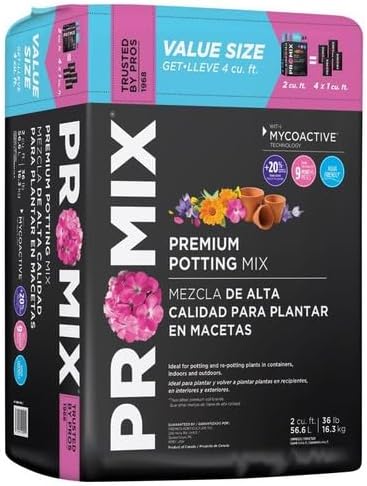
| Brand Name | KXUPOIAV |
|---|---|
| Volume | 4 cubic feet |
| Number of Packs | 1 |
| Model Number | 0305RG |
This compressed potting mix is designed for container gardeners who want a low-maintenance, reliable growing medium. The bale expands from a compressed 2 cu ft pack to about 4 cu ft, making it convenient to store and easy to hydrate before use. It includes mycorrhizae to support root development and a slow-release fertilizer that the manufacturer says feeds for up to nine months, which reduces the need for frequent feeding. A polymer water-holding gel helps the mix retain moisture so containers dry out less quickly between waterings. Typical uses are filling hanging baskets, patio containers, and mixed planters where consistent moisture and steady nutrients matter. Important limitations are that exact nutrient analysis and pH are not listed, so heavy feeders or plants with specific pH needs may require supplemental amendments or testing. Also, compressed bales require time and space to fully expand and integrate before planting. For reliability-focused container gardening this mix simplifies watering and feeding, but expect to monitor specific nutrient needs for demanding plants.
Best for: Gardeners who prioritize a low-maintenance, consistent potting mix for containers and want products that reduce watering and feeding frequency.
Less Ideal for: Growers who need exact nutrient profiles or strict pH control for specialist or heavy-feeding plants should consider blends with labeled analysis or amend this mix accordingly.
- Expands from compressed bale to usable potting mix for easier storage and transport
- Contains mycorrhizae to promote stronger root growth and stress resistance
- Includes slow-release fertilizer that provides extended feeding up to nine months
- Polymer water-holding gel improves moisture retention in containers
- No detailed N-P-K or pH values provided for precise nutrient management
- Requires time and space to fully hydrate and expand before planting
Verdict: Buy this mix if you want a convenient, low-maintenance container soil that expands from a compressed bale and supplies root-supporting biology plus long-lasting nutrients.
Back to the Roots Premium Organic Potting Mix, 6 Quart

| Unit Count | 192 Fluid Ounces |
|---|---|
| Volume | 6 quarts |
| Item Highlight | Peat-free potting soil for outdoor plants, indoor plants, vegetables, herbs and flowers |
| Made in | USA |
Back to the Roots Premium Organic Potting Mix is a small-batch, all-purpose soil designed for indoor and outdoor container plants, including flowers, herbs, and vegetables. The 6 quart bag contains a peat-free blend made from upcycled plant matter and wood fines, with added organic plant food, yucca extract to help retain and regulate moisture, and dolomitic limestone to stabilize pH. In practice this mix is easy to use straight from the bag for potting annuals and bedding plants or for refreshing topsoil in containers. Its light, well-draining texture helps roots establish without becoming waterlogged while still holding enough moisture for frequent flowering plants. Because it is organic and made in the USA, it suits growers who want a lower-carbon-footprint option. Limitations are the small bag size for larger projects and that very heavy feeders or long-term container plantings may need periodic fertilization or larger volumes of soil to maintain vigor.
Best for: Buyers who want a safe, organic, ready-to-use potting mix for potted flowers and small container gardens and prefer products with predictable performance and lower environmental impact.
Less Ideal for: Gardeners planning large-scale repotting, heavy-feeding perennials, or long-term container plantings that require bulk soil or extended nutrient release.
- Peat-free organic formula made from upcycled plant matter and wood fines
- Includes yucca extract for improved moisture retention and control
- Dolomitic limestone added to help balance soil pH for flowering plants
- Light, well-draining texture suitable for container-grown flowers and annuals
- Small 6 quart bag is not economical for large pots or multiple containers
- Does not include slow-release fertilizer strong enough for long-term heavy feeders
Verdict: A reliable, peat-free organic potting mix that delivers predictable moisture control and pH balance for potted flowers and small container gardens.
Choosing the Right Potting Soil for Raspberries: Key Factors to Consider
Drainage and Aeration Balance
Raspberries need roots that are moist but not waterlogged. A potting soil with a mix of coarse particles such as pine bark, perlite, or expanded clay provides channels for excess water to escape while keeping pore space for oxygen. Too much fine material leads to poor aeration and root suffocation, while overly coarse mixes can dry out too fast and stress the plants.
When choosing a mix, consider the container size and whether you will be watering frequently. Larger containers buffer moisture swings, allowing a slightly richer, finer mix. Small containers require coarser structure to maintain aeration between waterings.
Moisture Retention and Watering Frequency
Good potting soil for raspberries holds enough moisture to support steady growth during bloom and fruiting but releases excess so the crown does not rot. Ingredients like coconut coir or well-aged compost increase water-holding capacity without turning the mix into a sponge. Look for mixes that list both water-retentive and draining components to provide a stable moisture environment.
Think about your local climate and irrigation approach. In hot, windy locations opt for mixes with higher water retention or plan for drip irrigation. In cool, humid climates prioritize drainage to reduce disease pressure.
Nutrient Content and Feeding Strategy
Raspberries benefit from steady, moderate fertility rather than heavy, quick-release feeding. Potting soils that include a base of compost or a slow-release organic fertilizer reduce early nutrient deficits and support root development. However, mixes that rely exclusively on short-term soluble fertilizers can cause salt buildup or uneven growth.
Plan a feeding schedule adapted to the chosen mix: richer, compost-amended soils typically need less frequent fertilization, while inert mixes require regular liquid feeds during active growth and fruiting.
pH Stability and Ease of Amendment
Raspberries prefer slightly acidic to neutral soil pH, roughly 5.5 to 6.8. Potting mixes that are close to neutral give you flexibility, but some peat-heavy mixes can be too acidic and may need lime additions. Choose soils that accept common amendments-lime, elemental sulfur, or compost-without dramatic swings in structure.
Check whether the mix has a labeled pH range or is described as balanced for fruiting shrubs. Being able to correct pH easily is important for nutrient availability and long-term cane health.
Cleanliness and Disease Resistance
Container-grown raspberries do best in clean, pasteurized or otherwise pathogen-minimized mixes. Potting soils free of weed seeds and soil-borne pathogens reduce early mortality and long-term disease buildup. Some commercial mixes include beneficial microbes or mycorrhizal inoculants that can help root establishment, though these are not a substitute for clean, well-structured media.
Avoid reused garden soil or unprocessed compost for containers unless it has been well-screened or sterilized. Observing sanitation practices when repotting and replacing topsoil annually can reduce disease issues.
Texture Consistency and Longevity
A quality potting soil should hold its structure through a growing season without compacting into a dense mass. Mixes containing stable organic components like aged bark and coir keep pores open longer. Rapidly decomposing mixes settle and reduce aeration, requiring more frequent repotting or topdressings.
Consider whether you want a one-season mix that is easy to discard or a long-lasting media you can refresh and topdress. Longer-lasting mixes save effort but may cost more up front or require specific amendments to maintain fertility.
Container Size and Soil Depth Considerations
Raspberry canes need room for roots to spread and for crowns to remain cool and moist. Choose a pot or raised bed depth that leaves at least 12 to 18 inches of rooting medium for mature plants; young canes can start in smaller containers but will require repotting quickly. Shallow containers increase temperature and moisture stress, which amplifies the importance of a water-retentive mix.
In tall containers, the bottom tends to stay wetter than the top, so ensure the potting soil is well-draining and consider adding coarse material at the base only if the container lacks drainage holes.
- Match mix drainage to container volume
- Use heavier water-retaining mixes for small pots
- Ensure reliable drainage holes and avoid saucer overflow
Amending Potting Soil for Your Site
Most commercial potting soils can be adjusted to better suit raspberries. To boost water retention add a small proportion of coconut coir or compost. To improve drainage, fold in coarse bark or horticultural perlite. Make amendments gradually and mix thoroughly before planting.
Test the pH after amending and before planting. If the mix is too acidic, add garden lime in small amounts and retest after a week. If it is too alkaline, incorporate sphagnum peat or sulfur amendments with caution.
- Add coir or compost for retention
- Add bark or perlite for drainage
- Adjust pH and retest after settling
Seasonal Management and Repotting
Potting soil changes over time as organic components break down and nutrients are used. Inspect containers each spring and refresh the top 2 to 3 inches with fresh mix or compost. Every one to three years depending on decomposition rate, repot raspberries into fresh media or replace a portion of the old soil to restore structure and fertility.
Winter moisture control matters. In colder climates, reduce watering and improve drainage before dormancy to avoid crown rot from prolonged wet and cold conditions.
- Topdress yearly with compost or balanced organic fertilizer
- Repot when mix compacts or rootbound
- Reduce watering before winter dormancy
Watering Techniques That Complement Soil Choice
Match your watering approach to the potting soil. Use drip irrigation or soaker systems for mixes with higher retention to avoid overwatering the surface while roots access lower moisture. For fast-draining media, water more deeply and less frequently to encourage deeper root growth.
Monitor moisture with a finger test or a moisture meter rather than relying solely on a schedule. Raspberries respond well to consistent moisture during flowering and fruit set, so adjust irrigation to maintain steady root zone conditions.
- Use deep, infrequent watering for well-draining mixes
- Use regular, measured irrigation with water-retentive mixes
- Use a moisture meter for consistent scheduling
Organic Amendments and Long-Term Soil Health
Incorporating aged compost and well-balanced organic fertilizers supports microbial life and steady nutrient release. Small applications of compost each growing season restore organic matter removed by harvest and leaching.
Avoid fresh manure or uncomposted materials in container mixes as these can burn roots or introduce pathogens. Opt for tested, stable organic amendments that will not dramatically change the mix structure in a single season.
- Topdress with aged compost annually
- Prefer slow-release organic fertilizers for consistency
- Avoid fresh, raw manures in containers
How We Chose the Best Potting Soil for Raspberries
We selected soils that match the specific needs of raspberry plants in containers and small raised beds. Key evaluation criteria included particle texture and drainage, which dictates how quickly water moves through the root zone; moisture retention and aeration balance, which determines how often you must water and how well roots access oxygen; nutrient content and slow-release feeding capacity, since raspberries benefit from steady fertility during cane growth and fruiting; pH buffering and amendability, because raspberries prefer slightly acidic to neutral conditions and mixes should accept pH adjustments; and disease suppression and cleanliness, so mixes minimize soil-borne pathogens and weed seeds that harm young canes. We excluded garden topsoil, raw compost, and unamended field soils that do not provide consistent drainage or sanitation for containers. We also filtered out mixes with unclear ingredient lists or heavy reliance on fine silt that increases compaction risk. The shortlisted soils were judged on measurable, gardener-relevant specs rather than brand reputation alone, and recommendations favor mixes that are easy to amend to local conditions.
FAQ
Can I use regular garden soil for container raspberries?
Usually not. Garden soil often compacts in containers, reducing aeration and drainage. Containers benefit from light, well-structured potting soil that balances retention and drainage to support healthy roots.
How acidic should potting soil be for raspberries?
Raspberries prefer slightly acidic to near-neutral conditions, typically about pH 5.5 to 6.8. Test the mix and adjust with lime to raise pH or with acidic amendments if pH is too high.
How often should I fertilize raspberries in pots?
It depends on the mix. In inert mixes, feed every two to four weeks during active growth with a balanced fertilizer. In compost-rich mixes, fertilize less often and watch new cane growth for signs of nutrient need.
When should I repot container-grown raspberries?
Repot when roots start to crowd the container or when the soil structure has noticeably compacted, often every one to three years. Younger plants in small pots may need repotting sooner as they establish.
Are there disease concerns with potting soils?
Yes. Soils that contain weed seeds, pathogens, or poorly composted material can introduce problems. Use pasteurized or commercially prepared mixes and replace or refresh media if you observe rot, wilting, or persistent pest issues.
Final Verdict
Choose a potting soil that strikes an honest balance between drainage and moisture retention, and plan to adjust it to your container size and climate. Prioritize mixes that maintain structure, offer steady nutrient release, and are easy to amend for pH and water-holding needs. The right media reduces watering headaches and disease risk while supporting consistent cane growth and fruiting. Use the decision factors above to match a soil to your watering routine, container dimensions, and site conditions so you can focus on cane care and harvests.
