

Note: This article contains affiliate links. If you click on these links and make a purchase, I may earn a small commission at no extra cost to you. This helps support my research and content. Read my full affiliate disclosure here.
If you grow sansevieria or snake plants, the right potting soil makes the difference between a thriving specimen and one that struggles with root rot. Sansevieria need mixes that drain quickly yet hold enough moisture for slow, steady uptake. Poor soil can stay waterlogged around the crown or compact and starve roots of oxygen. This guide covers six top potting soils shortlisted for Sansevieria, chosen for their drainage, aeration, and nutrient balance. We explain key tradeoffs, what to look for in a mix, and practical tips for repotting and aftercare. Read on to find the soil type that matches your pots, watering style, and light conditions.
Top Picks at a Glance
| Best Overall The best all-around choice for most situations | Miracle-Gro Indoor Potting Mix for All Plants, 6 qt., 2-Pack |  |
| Best Quality Built to a higher standard if you want something more solid | Perfect Plants Snake Plant Soil, 4 qt Coco Coir Potting Mix |  |
| Best Value The sweet spot between price and what you get | Grow Queen Craft Houseplant Potting Mix, 2 Quart |  |
| Best Budget The cheapest option that still gets the job done reliably | Succulent Potting Mix by Succulent Market |  |
| Highest Rated A top-rated pick with lots of positive feedback | Gardenera Snake Plant Potting Mix, 4 Quart |  |
| Most Popular A crowd favorite that many people choose with confidence | Miracle-Gro Indoor Potting Mix for Cactus & Succulent, 8 qt. (2-Pack) |  |
Miracle-Gro Indoor Potting Mix for All Plants, 6 qt., 2-Pack

| Number of Packs | 2 |
|---|---|
| Unit Count | 400.58 Ounce |
| Item Highlight | Feeds for up to 6 Months |
| Ingredients | Sphagnum Peat Moss, Coir, Perlite, Fertilizer, Wetting Agent |
This Miracle-Gro indoor potting mix is formulated as an all-purpose soil for indoor container plants and is sold in a two-pack of 6‑quart bags. It combines sphagnum peat moss, coconut coir, and perlite to create a lightweight, well-draining mix that holds moisture yet releases it to roots, which helps tropical houseplants like a Dragon Tree avoid waterlogged roots. The bagged mix includes a slow-release fertilizer meant to feed plants for up to six months so you do not need to amend immediately after potting. Notably the formula excludes bark and compost, which can reduce habitats for fungus gnats — useful when repotting indoor specimens. Use is straightforward: fill a pot with drainage, set the plant, backfill with mix, and water. Limitations are that the fertilizer schedule is fixed to the included feed and heavy feeders may need additional fertilizing after several months, and serious growers who want a custom cactus or orchid-style mix will find the texture too fine. For routine repotting of Dragon Trees and similar tropical houseplants this mix is convenient and consistent.
Best for: Buyers who want a reliable, low-effort potting mix for repotting tropical houseplants like Dragon Trees and prefer a product with built-in feeding and pest-reduction features.
Less Ideal for: Specialist growers who need custom texture blends for succulents, orchids, or aggressive feeders should choose purpose-formulated mixes or amend this product accordingly.
- Balanced blend of peat moss, coir, and perlite for good moisture retention and drainage
- Includes slow-release fertilizer that feeds up to six months for low-maintenance care
- Bark- and compost-free formula reduces places for fungus gnats to breed
- Ready-to-use bag makes repotting quick with no mixing required
- Fertilizer is fixed for about six months so additional feeding may be necessary for heavy feeders
- Texture may be too fine for plants that prefer very fast-draining or chunky mixes
Verdict: A convenient, low-maintenance indoor potting mix that keeps Dragon Trees healthy with good drainage and up to six months of built-in feeding.
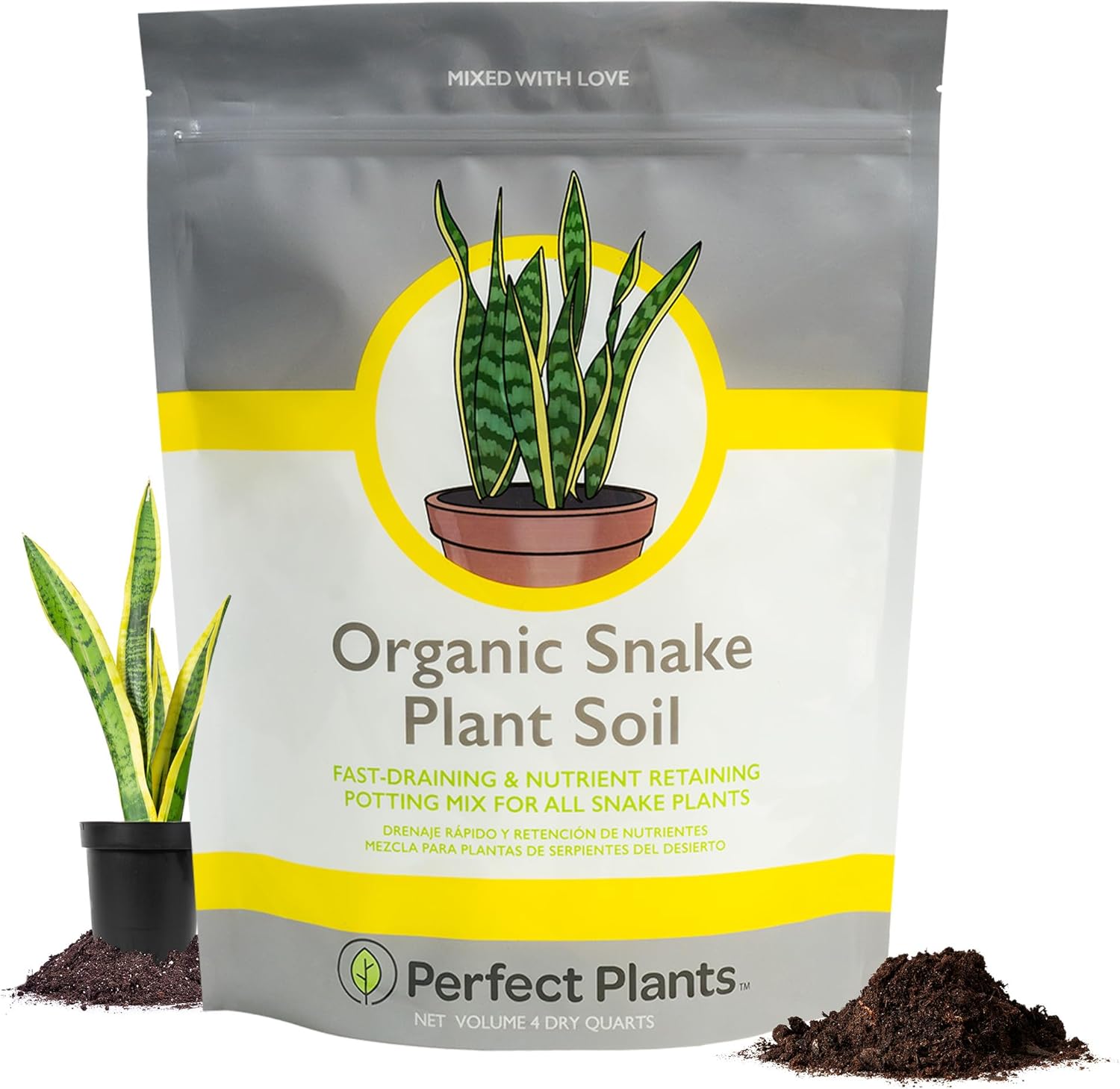
Perfect Plants Snake Plant Soil, 4 qt Coco Coir Potting Mix
| Volume | 4 quarts |
|---|---|
| Item Highlight | All-natural pine bark, perlite and sand blend for Sansevieria varieties |
| Unit Count | 1 Count |
| Style Name | Houseplant,Bark,Vermiculite,Potting,Garden |
This 4 qt mix is formulated specifically for Sansevieria and similar snake plant varieties to reduce water retention and protect roots. It is typically used when repotting indoor snake plants or refreshing the top layer in containers; the blend of coconut coir, pine bark chips, perlite, and sand gives a loose, airy structure that drains quickly after watering. Because it contains no slow-release fertilizer, it is a neutral starting medium that lets you control feeding separately. The resealable heavy-duty bag makes it convenient to store between uses and small-volume packaging is handy for single pots or propagations. Limitations include the small 4 quart volume for larger plants and the absence of added nutrients, so expect to supply fertilizer on a schedule. For growers who prefer a tailored, fast-draining substrate for snake plants, this mix is a practical, low-risk choice backed by consistent user feedback.
Best for: Buyers who want a purpose-made, fast-draining substrate for repotting or maintaining snake plants and who prefer to manage fertilization themselves.
Less Ideal for: People who need a large bulk supply for many containers or who want an all-in-one mix with preloaded nutrients and long-term feeding.
- Blend optimized for snake plants with coconut coir, pine bark, perlite, and sand for improved drainage
- No added slow-release fertilizer so you can control feeding for specific plants
- Resealable heavy-duty bag for tidy storage between uses
- Made and blended in the USA on a family-run nursery
- 4 quart size may be insufficient for larger pots or multiple repots
- No built-in nutrients requires users to add fertilizer separately
Verdict: A small-batch, fast-draining potting mix designed to keep snake plant roots healthy while letting you control feeding.
Grow Queen Craft Houseplant Potting Mix, 2 Quart

| Unit Count | 64 Ounce |
|---|---|
| Item Type Name | Potting Mix |
| Volume | 2 quarts |
| Ingredients | Douglas Fir Bark, Lava Rock, Pumice, Coco Coir, Organic Worm Castings, Charged Biochar |
This Grow Queen craft houseplant mix is a chunky, peat-free potting soil made for repotting and ongoing care of indoor plants like peace lily. The blend uses Douglas fir bark, lava rock and pumice to create permanent air pockets so the mix drains quickly and resists compaction, which helps prevent root rot while still allowing the soil to dry evenly between waterings. It arrives slightly moist and ready to use, which makes repotting new plants or rooting cuttings faster and less messy. Organic worm castings and charged biochar supply steady micronutrients and help retain water and nutrients at the root zone without synthetic fertilizer burn. The formula excludes peat and perlite and is designed to stay structured for multiple seasons, so you repot less often. Note that the bag is small at 2 quarts, so you will need larger sizes for bigger plants or multiple repots and should confirm quantity before starting a project.
Best for: Buyers who want a low-maintenance, sustainable indoor potting mix that prevents soggy roots and feeds plants gradually while minimizing repotting frequency.
Less Ideal for: People who need large volumes of soil for many plants or very large containers should choose bigger bag sizes or bulk potting mix alternatives.
- Chunky mix with bark, lava rock and pumice for lasting aeration and fast drainage
- Contains organic worm castings and charged biochar for slow-release nutrition and improved moisture retention at roots
- Peat-free and perlite-free formula reduces compaction and uses renewable ingredients
- Arrives pre-moistened and ready to use for immediate repotting or rooting cuttings
- Small 2 quart bag may not be enough for larger peace lilies or multiple plants
Verdict: A sustainable, chunky houseplant mix that keeps peace lilies healthy by combining fast drainage with bioactive nutrition.
Succulent Potting Mix by Succulent Market

| Brand Name | SUCCULENTMARKET.COM |
|---|---|
| Unit Count | 128 Fluid Ounces |
| Volume | 4 quarts |
| Style Name | Peat Moss,Potting Mix,Potting |
This succulent potting mix is a straightforward, no-frills soil designed to keep arid-loving plants healthy by combining peat moss with perlite for quick drainage and moderate water retention. It is typically used to repot small to medium succulents and Sansevieria where fast-draining media prevents root rot and encourages firmer roots. The mix is made at the seller's nursery and marketed as containing the basic nutrients succulents need, so you can use it alone for most potted succulents or blend it with extra grit for species that prefer even drier conditions. Practical benefits include easy handling, improved aeration compared with plain garden soil, and reduced risk of overwatering. Limitations are that the product is a general succulent mix rather than a specialist blend for heavy-feeding plants, and the 4-quart volume suits individual pots or small projects but may require multiple bags for larger repots or many plants. Buyers should expect a simple, well-draining starting medium rather than a customized, nutrient-rich professional mix.
Best for: Buyers who want an affordable, ready-to-use soil to repot a few Sansevieria or other succulents and who prioritize drainage and simplicity over specialized amendments.
Less Ideal for: Collectors with many plants, large repotting jobs, or growers who need a heavily amended, fertilizer-rich commercial substrate should look for larger or specialty mixes instead.
- Formulated for succulents with peat moss and perlite to improve drainage
- Made at the seller's nursery rather than generic mass-produced mix
- Suitable as a ready-to-use medium for repotting small to medium succulents
- Compact 4-quart size is convenient for single pots and small projects
- Small volume means multiple bags are needed for larger collections or big repots
- Not a heavy-feeding or amended professional blend for nutrient-hungry specimens
Verdict: A simple, nursery-made succulent mix that gives Sansevieria fast drainage and a hassle-free repotting option for small-scale growers.
Gardenera Snake Plant Potting Mix, 4 Quart

| Volume | 4 quarts |
|---|---|
| Brand Name | Gardenera |
| Style Name | Snake Plant Potting Mix |
Gardenera Snake Plant Potting Mix is a ready-to-use 4 quart blend made for Sansevieria and similar houseplants. The mix pairs peat moss and extra perlite for noticeably faster drainage and improved aeration, while lime and earthworm castings add buffering and organic nutrients. Typical use is simple repotting or top-dressing: remove the plant, replace heavy or compacted soil with this aerated mix, and the combination helps prevent waterlogged roots that commonly cause mushy or droopy leaves. Because it is pre-blended, it saves time compared with measuring individual components and is suitable for repeat repots or for starting young divisions. The formula is focused on drainage and root growth rather than water retention, so you should still monitor moisture for newly potted plants. The 4 quart size is convenient for single-plant jobs but may require multiple bags for larger collections. For a reliability-minded gardener, this mix delivers consistent, plant-appropriate structure and organic feed in an off-the-shelf package.
Best for: Plant owners who prioritize a dependable, ready-made soil that reduces overwatering risk for Sansevieria and prefer a mix that supports steady root development during repotting.
Less Ideal for: People who need large volumes of soil for many plants or gardeners who want a moisture-retentive mix for thirstier houseplants.
- Formulated specifically for snake plants with peat moss, perlite, lime, and worm castings
- High perlite content improves aeration and rapid drainage to reduce root rot risk
- Pre-mixed and ready to use, simplifying repotting and potting tasks
- Contains organic inputs suitable for organic growing
- Small 4 quart bag may not be sufficient for multiple or larger plants
- Focus on fast drainage means it holds less moisture than mixes designed for moisture-loving plants
Verdict: Buy this mix if you want a reliable, ready-made soil that improves drainage and root health for snake plants with minimal fuss.
Miracle-Gro Indoor Potting Mix for Cactus & Succulent, 8 qt. (2-Pack)

| Item Highlight | Fast-Draining Cactus and Succulent Potting Mix with Plant Food |
|---|---|
| Number of Packs | 2 |
| Included Components | 2 bags |
| Item Type Name | Soil |
| Ingredients | Sphagnum Peat Moss, Sand, Perlite |
This two-pack of Miracle-Gro Indoor Potting Mix is designed for repotting indoor cacti, succulents and other desert-loving container plants like Thanksgiving cactus. The mix combines sphagnum peat moss, sand, perlite and other forest products to promote fast drainage and reduce water retention that can cause root rot. Each bag is pre-mixed and ready to use, so you simply fill a pot with drainage, add the plant and firm the soil around the root ball. It also contains a measured amount of plant food to support early growth so you may not need extra fertilizer right away. Practical benefits include easier watering schedules for moisture-sensitive plants and a light, airy texture that helps roots establish after repotting. Limitations are that the bags are small for larger specimens and the formula is focused on drainage rather than long-term nutrient reserve, so plan to feed or repot periodically for established or heavy-feeding plants.
Best for: Buyers who prioritize protecting moisture-sensitive indoor succulents and want a trusted, ready-to-use mix that reduces the chance of overwatering issues when repotting.
Less Ideal for: Gardeners who prefer to custom-blend potting mixes for long-term nutrient delivery or who need large-volume soil for many or large containers.
- Formulated for cacti and succulents with fast-draining components like sand and perlite
- Pre-mixed and ready to use so no additional amendments are required at potting
- Includes plant food to give new repots an initial nutrient boost
- Light texture helps roots establish and reduces risk of overwatering-related rot
- 8 qt. bag size is limited for repotting larger plants or multiple sizable pots
Verdict: A convenient, fast-draining potting mix that makes repotting Thanksgiving cactus and other succulents safer and simpler.
Choosing the Right Potting Soil for Sansevieria: Key Factors to Consider
Drainage and Porosity
Sansevieria are prone to root rot when soil retains too much water. A mix with large particles and plenty of pore space lets excess water pass through quickly and keeps oxygen available for roots. Look for ingredients such as coarse sand, perlite, pumice, or grit that create channels for water and air.
Porosity also affects how often you need to water. Highly porous mixes dry faster, which suits frequent indoor watering mistakes and humid environments. Conversely, if you have very dry air or bright windowsill conditions, a slightly higher water-holding balance may be acceptable, but never at the expense of drainage.
Water-Holding Balance
While drainage is essential, Sansevieria still need steady moisture between waterings. A good potting mix holds enough water near the root zone without staying wet for days. Components like coir or small amounts of fine peat can provide this buffering without creating a sponge effect.
Consider how you water and the pot material. Terracotta wicks moisture away faster, so a mix with modest water retention can be helpful. Plastic or glazed pots keep moisture longer, so choose a drier, coarser mix for those containers.
Particle Size and Stability
Particle size governs how a mix behaves over months and years. Very fine particles compact and reduce aeration; coarse particles stay looser but may settle and create pockets if not well blended. Stability means the mix maintains structure and does not break down into mud after repeated wetting.
Long-term stability reduces the need for annual repotting. Materials like pumice, perlite, and coarse bark hold shape, while finely shredded compost or decayed peat will compress. For larger containers, aim for a higher proportion of stable, chunky components.
Nutrient Profile and Slow-Release Feeding
Sansevieria grow slowly and do not need rich, high-nitrogen mixes. A modest nutrient baseline with the option for occasional feeding is ideal. Look for mixes that include a balanced slow-release fertilizer or mild organic matter rather than heavy, fast-release formulas.
Too much initial fertility can push rapid top growth that the root system cannot support, increasing stress and disease risk. A predictable, low-strength nutrient profile makes it easier to fine-tune feeding schedules and avoid salt buildup.
pH, Salt Levels, and Chemical Safety
Soil pH affects nutrient availability. Sansevieria prefer a slightly acidic to neutral range, but they tolerate a range as long as salts are low. High soluble salts from fertilizers or peat extracts can cause leaf tip burn and slow root activity.
Choose mixes with clear sourcing or low-salt guarantees when possible. If you reuse potting mix, flush it periodically to prevent salt accumulation and test pH if you notice persistent leaf discoloration.
Compatibility with Pot Type and Watering Routine
The same mix behaves differently in terracotta, plastic, or ceramic pots and in different climates. Terracotta wicks moisture and will make a mix dry faster; glazed pots retain moisture longer. Outdoor containers in hot sun will dry quicker than shaded indoor setups.
Match the mix to your container and how often you are willing to water. If you prefer infrequent watering, choose a mix with slightly more water retention but maintain good drainage. For growers who water on a strict schedule or use drip systems, a more porous mix is safer to avoid overwatering.
Why Sansevieria Need Specialized Potting Soil
Sansevieria are succulents by habit, storing water in thick leaves and preferring a root environment that alternates between wet and dry. Standard houseplant mixes designed for tropical foliage often contain too much fine organic matter and hold moisture for too long. That increases the risk of root rot and crown decline.
Using a mix tailored for succulents or one amended for drainage helps mimic the plant's native, well-draining soil. This reduces watering frequency stress and gives you more margin for error when indoor conditions fluctuate.
- Better root oxygenation reduces rot risk
- Fewer watering mistakes because soil dries predictably
- Improved stability for slow-growing root systems
Common Ingredients and What They Do
Typical components in suitable mixes include coarse sand, perlite, pumice, coarse bark, and a small proportion of organic matter like coco coir or well-aged compost. Each ingredient contributes a specific property: pumice and perlite increase porosity, sand improves weight and drainage, and coarse bark prevents compaction.
Avoid mixes heavy in fine peat or garden soil unless they are explicitly labeled for succulents. Fine particles collapse over time and trap moisture. For an in-between option, consider blending a standard indoor mix with extra pumice or grit to strike a better balance.
- Perlite: increases aeration and lightness
- Pumice: durable porosity and mineral stability
- Coarse sand or grit: improves fast drainage
- Coir or fine organic matter: modest water retention
How to Repot Sansevieria Into a New Mix
Choose a pot with drainage holes and clean the rootball by removing loose old soil. Inspect roots and trim any that are mushy or black. Place a thin layer of the chosen mix in the bottom, set the plant so the crown sits slightly above the rim, and fill around the roots without packing the soil tightly.
After repotting, allow the plant to settle for a week before the first thorough watering. This gives damaged roots time to callus and reduces the risk of rot. Record the new mix and watering interval to refine care going forward.
- Use pots with drainage to prevent standing water
- Do not pack soil; keep it airy around roots
- Wait several days before the first full watering
Adjusting Water and Light After Changing Soil
A faster-draining mix will dry more quickly and may require a slightly shorter watering interval initially. Monitor the top inch of soil and the plant's leaves rather than following a strict schedule. Sansevieria store water in leaves and will wrinkle slightly when thirsty.
Light levels interact with soil moisture. In bright light the plant uses water faster; in low light it uses less. After repotting, place the plant in typical light conditions and observe for a few weeks to adjust watering habits.
- Check soil moisture at root level, not just surface
- Reduce watering in low light and winter months
- Increase monitoring after repotting or mix changes
DIY Mixes and Simple Amendments
If you prefer to blend your own mix, start with a standard indoor potting soil and replace roughly one third to one half of its volume with coarse amendments like pumice, perlite, or horticultural grit. Add a small fraction of coco coir if you want some moisture buffering without using peat.
For quick amendments, stir in a handful of coarse sand or grit to an existing mix. Avoid overdoing fine sand which can cake; use coarse builder's sand or horticultural grit. Label any homemade blends with the ratio used so you can replicate successful mixes later.
- Blend guideline: 1 part potting soil, 1 part coarse amendment, 1 part bark or coir
- Sterilize repurposed soil by sun baking or replacing entirely
- Keep records of mix ratios for consistent results
How We Chose the Best Potting Soil for Sansevieria
We shortlisted mixes that match the specific needs of Sansevieria and then applied concrete editorial filters to identify the most practical options for gardeners. Primary evaluation criteria included drainage and porosity, because sansevieria are highly sensitive to waterlogged roots. We also assessed nutrient profile and slow-release feeding to support occasional fertilizing without causing excess growth that stresses roots. Particle size and structure were examined to ensure mixes stay open over time rather than compacting. Salt content and pH stability were considered to avoid leaf tip burn and nutrient lockup. We looked for mixes suitable for a range of container types and growers, from indoor pot culture to brighter patios. Excluded from the list were mixes formulated for exclusively moisture-loving plants, dense peat-only blends, and products designed only for seed starting. We prioritized real-world gardener needs: steady drainage, root aeration, moderate water-holding, and starter nutrients compatible with the slow growth habit of Sansevieria.
FAQ
Can I use regular houseplant potting soil for Sansevieria?
You can, but regular houseplant mixes often retain too much moisture. If you use a standard mix, amend it with coarse material like pumice or perlite to improve drainage and reduce rot risk.
How often should I water after moving a Sansevieria to new soil?
Wait about a week after repotting before the first thorough watering. After that, water when the top inch of the mix is dry and adjust frequency based on light and pot type. Sansevieria generally need less frequent watering than typical houseplants.
Is grit or pumice better for drainage?
Both help, but pumice is preferred because it is lightweight, durable, and retains some moisture while maintaining porosity. Coarse horticultural grit or builder's sand also improves drainage when used in the correct particle size.
Should I add fertilizer to a potting mix for Sansevieria?
A mild, balanced feeding during the growing season is usually sufficient. Choose mixes with a modest nutrient baseline or add a light liquid feed sparingly. Avoid heavy initial fertilizer that can stress roots.
Can I reuse old potting soil for sansevieria?
Reusing old mix is possible if it has not become compacted and has low salt buildup. Refresh the structure with fresh coarse amendments and replace any fine, decomposed material. Flush salts if you suspect fertilizer buildup.
Does pot size matter when choosing a mix?
Yes. Larger pots hold more moisture and may need a coarser mix to avoid prolonged dampness. Smaller pots dry faster and can tolerate a slightly higher proportion of water-retentive material.
Final Verdict
Choose a potting soil that prioritizes drainage and stable particle structure while providing a modest nutrient baseline. Tradeoffs are mostly between faster drying versus slight moisture buffering; match the mix to your pot type and how often you will water. For most growers, a succulent-style or amended indoor mix with added pumice, perlite, or grit will offer the best balance. Focus on porosity and low soluble salts first, then adjust feeding and watering to suit your light and container conditions.
