

Note: This article contains affiliate links. If you click on these links and make a purchase, I may earn a small commission at no extra cost to you. This helps support my research and content. Read my full affiliate disclosure here.
Exterior siding takes a beating from pollen, algae, mildew, and airborne dirt. Using a detergent formulated for siding makes cleaning faster and reduces the risk of streaking, bleaching, or paint damage when you run a pressure washer. This guide covers our top shortlisted pressure washer detergents for siding so you can pick a product that balances cleaning power with surface safety. We evaluated options on cleaning strength, material compatibility, rinsing behavior, and ease of mixing and application. Below are practical notes to help you decide which detergent suits your siding type and maintenance schedule.
Top Picks at a Glance
| Best Overall The best all-around choice for most situations | Simple Green Oxy Solve House & Siding Pressure Washer Cleaner, 1 Gal Concentrate |  |
| Best Quality Built to a higher standard if you want something more solid | Kärcher Multi-Purpose Pressure Washer Detergent, Highly Concentrated |  |
| Best Value The sweet spot between price and what you get | Krud Kutter Multi-Purpose Pressure Washer Concentrate, 1 Gallon |  |
| Best Budget The cheapest option that still gets the job done reliably | Zep House & Siding Pressure Wash Concentrate, 128 oz |  |
| Highest Rated A top-rated pick with lots of positive feedback | Elemonator House Wash Surfactant (1 Gallon) |  |
| Most Popular A crowd favorite that many people choose with confidence | Simple Green Oxy Solve Total Outdoor Cleaner Concentrate (1 gal) |  |
| Best Seller A high-volume bestseller chosen again and again | 30 SECONDS Outdoor Cleaner 64 fl oz (Pack of 3) with Hose-End Sprayer |  |
Simple Green Oxy Solve House & Siding Pressure Washer Cleaner, 1 Gal Concentrate

| Formulation | Peroxide-based concentrate |
|---|---|
| Coverage | Cleans up to 6,400 sq. ft. (manufacturer claim) |
| Suitable surfaces | Vinyl, aluminum, wood, brick, stucco |
| Directions | Apply at low pressure, dwell 3-5 minutes, rinse at high pressure |
Simple Green Oxy Solve is a one-gallon pressure-washer concentrate intended for cleaning vinyl, aluminum, wood, brick, and stucco siding. It is applied through a pressure-washer siphon tube or mixed for hand-cleaning, left to dwell for 3 to 5 minutes at low pressure, then rinsed at high pressure. The formula uses hydrogen peroxide to lift organic stains without relying on harsh bleach, and the product is labeled safe for direct release into waterways. In practice it handles algae, moss, and general discoloration well on broad exterior surfaces and the concentrate claim means a single bottle covers a large area when diluted as directed. Important limits: it needs a pressure washer or elbow grease to be fully effective on heavy buildup, and the dwell time means you must work in manageable sections so the cleaner does not dry. Also the product carries a chemical warning for certain ingredients, so follow safety directions and local regulations when using near plants and water.
Best for: Homeowners who want a broadly effective siding cleaner for seasonal cleaning and prefer a concentrate that works with a pressure washer or hand-scrubbing routines.
Less Ideal for: People who need a detergent-free or fully nonchemical cleaning method or those who cannot use a pressure washer should consider alternative approaches.
- Peroxide-based formula lifts algae and organic stains without bleach-like harshness
- Concentrate covers a large area when diluted, useful for whole-house siding jobs
- Works through a pressure-washer siphon or can be mixed for brush-and-hose cleaning
- Labeled safe for direct release into lakes and streams, simplifying outdoor use approvals
- Requires a pressure washer or scrubbing for heavy, set-in grime
- Contains chemicals that trigger a California Proposition 65 warning
Verdict: A versatile peroxide concentrate that reliably removes algae and staining from most siding when used with a pressure washer or brush-and-hose cleaning.
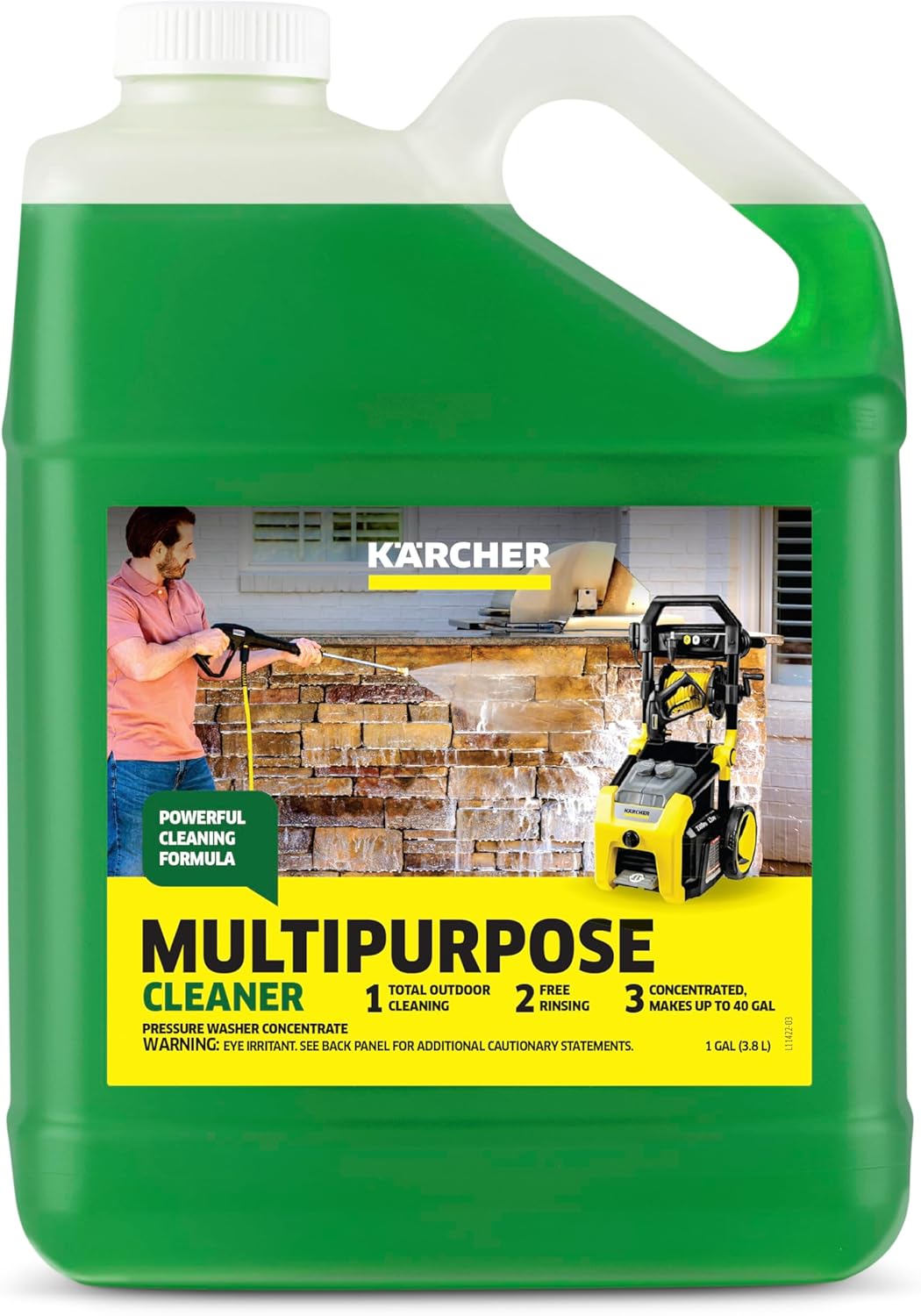
Kärcher Multi-Purpose Pressure Washer Detergent, Highly Concentrated
| Manufacturer | Karcher |
|---|---|
| Volume | 1 Gallon |
| Concentration | Highly Concentrated |
| Compatibility | Kärcher and other brands |
This Kärcher multi-purpose pressure washer detergent is a highly concentrated liquid designed to stretch a gallon into many gallons of ready-to-use cleaner for outdoor surfaces. You dilute the concentrate according to the label and apply it through a pressure washer or foam cannon, or use it manually for spot cleaning. It is formulated to speed cleaning of concrete, decks, siding, patio furniture, vehicles and more, so you remove grime and stains with less scrubbing. Notable features include universal compatibility with consumer gas and electric washers and concentrated yield that makes it cost-effective for frequent use. Practical benefits are faster cleaning times and improved soil removal compared with plain water, plus clear dilution guidance for different tasks. Limitations are that it is a general-purpose formula rather than a specialist product for delicate finishes or heavy industrial grease, and you must follow dilution and rinsing instructions to avoid residue or surface damage.
Best for: Buyers who prioritize cleaning performance and economy for routine home outdoor jobs and want a single detergent that handles driveways, decks, siding and vehicles.
Less Ideal for: Specialty users who need a dedicated degreaser, paint-safe vehicle shampoo, or formulations for sensitive surfaces should consider dedicated cleaners instead.
- Highly concentrated formula stretches a single gallon into many gallons of ready-to-use detergent
- Compatible with Kärcher and most consumer gas and electric pressure washers including foam cannons
- Suitable for a wide range of outdoor surfaces including concrete, decks, siding, vehicles and patio furniture
- Makes cleaning faster and reduces manual scrubbing by boosting the pressure washer's cleaning power
- General-purpose formula is not optimized for very delicate paint finishes or specialized stain removal
- Requires correct dilution and rinsing to avoid residue on some surfaces
Verdict: Choose this concentrated Kärcher detergent if you want a single high‑yield formula that improves cleaning speed and performance across common home outdoor jobs.
Krud Kutter Multi-Purpose Pressure Washer Concentrate, 1 Gallon

| Unit Count | 128 Fluid Ounces |
|---|---|
| Tank Volume | 1 gallons |
| Manufacturer | Rust-Oleum |
Krud Kutter Multi-Purpose Pressure Washer Concentrate is a one-gallon cleaning concentrate designed for use with pressure washers to tackle exterior grime on siding, concrete, decks, outdoor furniture, vehicles, and more. It mixes with water to increase coverage—one gallon dilutes to as much as 11 to 20 gallons of working solution depending on instructions—so a single bottle can clean large areas without frequent repurchasing. The water-based, bleach-free formula contains anti-corrosive agents intended to protect pump components and works by penetrating stains for 3 to 5 minutes before rinsing, which eliminates most need for scrubbing. Practical benefits include broad surface compatibility, strong stain removal on oil and organic matter, and efficient coverage that suits whole-house or driveway jobs. Limitations to note are that it must be rinsed before drying, it is a concentrate so correct dilution is important, and it requires a pressure washer for best results rather than manual application for small spot jobs.
Best for: Best for homeowners looking to clean large exterior surfaces on a budget who want a single, concentrated detergent that stretches across multiple jobs and surfaces.
Less Ideal for: Not a great choice for someone who needs a ready-to-use spray for small spot cleaning or who prefers manual scrubbing without a pressure washer.
- Concentrated formula provides high coverage so one gallon treats a large area
- Bleach-free, water-based formula suitable for many exterior surfaces
- Contains anti-corrosive agents to help protect pressure washer components
- Penetrates and lifts tough soils like oil, grease, bird droppings, and tree sap
- Requires correct dilution and a pressure washer for best performance
- Must be rinsed promptly and not allowed to dry on surfaces
Verdict: A concentrated, bleach-free pressure washer detergent that stretches far and removes tough exterior stains, making it a cost-effective choice for large outdoor cleaning jobs.
Zep House & Siding Pressure Wash Concentrate, 128 oz

| Makes up to | 20 gallons |
|---|---|
| Intended use | Pressure washer concentrate |
| Surfaces | Vinyl, aluminum, wood, brick, stucco, gutters |
| Material feature | Biodegradable |
Zep House & Siding Pressure Wash is a professional-style concentrate made for use in pressure washers to restore exterior surfaces. You mix the concentrate to create up to 20 gallons of cleaner and apply it with a pressure-washer detergent injector or low-pressure applicator to tackle algae, mildew, and general grime on vinyl, aluminum, wood, brick, and hard-coat stucco. Notable features include a surfactant blend with alkaline builders to break down organic stains and a formula marketed as biodegradable. In practice the concentrate simplifies large cleaning jobs because one 128-ounce bottle covers extended area and reduces the number of containers you handle. Limitations are that it is a chemical cleaner so you should protect plants and rinse thoroughly after use, and it is intended for pressure-washer use rather than hand-scrubbing, so it is less convenient for small spot cleaning. Follow label directions for dilution and safety to get the best results.
Best for: Homeowners who need to clean large exterior surfaces on a budget and prefer a concentrate that reduces trips to refill or rebuy, especially when using a pressure washer.
Less Ideal for: People who only need occasional small spot cleaning or who want a ready-to-use spray cleaner for delicate surfaces should consider simpler, non-pressure-washer options.
- Concentrated formula makes up to 20 gallons so a single bottle covers large exterior jobs
- Works on a wide range of surfaces including vinyl, wood, brick, aluminum, gutters and hard-coat stucco
- Formulated for pressure washers which speeds cleaning compared with manual scrubbing
- Biodegradable formulation compared to some heavy-duty industrial cleaners
- Not formulated for hand-washing small spots or delicate surfaces
- Requires careful dilution and rinsing to protect nearby plants and landscaping
Verdict: A high-coverage, budget-friendly pressure-wash concentrate that lets you clean large exterior surfaces quickly without frequent repurchases.
Elemonator House Wash Surfactant (1 Gallon)

| Manufacturer | Pressure Tek |
|---|---|
| Ingredients | alkyldimethylamine oxide |
| Date First Available | September 20, 2024 |
Elemonator is a concentrated house wash surfactant formulated to work alongside bleach for exterior cleaning tasks like siding, roofs, and concrete. It is typically mixed at low dilution rates (about 1 oz per gallon) and applied via downstream injectors or pressure-washer detergent tanks to improve foam, lift dirt, and mask bleach odor with a lemon fragrance. Key features include bleach compatibility and pH boosting to maintain bleach effectiveness, plus strong foaming and easy rinsing that help remove grime without heavy scrubbing. In practice it reduces the need for repeated passes on large surfaces and leaves fewer streaks thanks to its rinsing profile. Limitations are that it is a chemical cleaner and requires proper handling and protective gear, and its lemon scent may be noticeable on finished surfaces. It is best used by homeowners or contractors who run bleach-based soft wash or pressure-wash routines and want a product that preserves bleach performance while improving wetting and foaming.
Best for: Homeowners and exterior cleaning contractors who prioritize reliable, bleach-compatible detergents for routine siding and roof soft-wash work and want predictable cleaning performance.
Less Ideal for: People seeking fragrance-free or fully biodegradable cleaners for sensitive landscapes or indoor use should consider alternative formulations.
- Formulated to be stable and compatible with bleach so it preserves disinfecting power
- High foaming action improves contact time and visible cleaning on vertical siding
- Low use rate (about 1 oz per gallon) makes it economical for large jobs
- Contains surfactant chemicals that require gloves and eye protection during mixing and application
- Scent may persist after cleaning which could be undesirable for scent-sensitive users
Verdict: Buy this if you need a dependable, bleach-compatible surfactant that boosts pH and increases foam for effective siding and roof cleaning.
Simple Green Oxy Solve Total Outdoor Cleaner Concentrate (1 gal)

| Item model number | 8541813566 |
|---|---|
| Ingredients | Water, Ethoxylated Alcohol, Hydrogen Peroxide, Tetrasodium Glutamate Diacetate, Surfactant Blend, Citric Acid |
| Directions | Mix 1 part with 20 parts water for hand cleaning; follow pressure washer reservoir instructions |
| Coverage | Covers up to 6,400 sq. ft. per bottle |
Simple Green Oxy Solve is a peroxide-powered concentrate designed to remove dirt, mildew, and organic stains from decks, siding, driveways and patios using either a pressure washer or hand cleaning. For pressure-washing you add it to the soap reservoir or siphon tube, wet the surface, apply at low pressure, let it dwell 3 to 5 minutes, then rinse at high pressure. The formula is EPA Safer Choice certified and uses hydrogen peroxide rather than strong alkalis, which makes it safer around children and pets when used as directed. It claims broad surface compatibility including wood, vinyl, concrete, brick and composite and covers large areas per bottle, making it a cost-effective option for seasonal maintenance or pre-sale cleaning. Important limits are following dilution and dwell-time instructions exactly and avoiding direct contact with plants and clothing; it is not a bleach replacement for deep-set stains and will be less aggressive on oil or paint-based marks than stronger chemical cleaners.
Best for: Buyers who prioritize safer, family-friendly cleaning and want a versatile detergent that works with a pressure washer for routine outdoor maintenance and seasonal deep cleans.
Less Ideal for: Professionals or users needing a heavy-duty solvent cleaner for oil, grease or paint removal should choose a specialized product instead.
- Peroxide-based formula certified Safer Choice for milder, less toxic cleaning than strong bleaches
- Works with pressure washers and hand-scrubbing, with clear dilution and application instructions
- Suitable for a wide range of outdoor surfaces including wood, concrete, vinyl, brick and composite
- Concentrated bottle covers large areas so one purchase can handle whole-yard seasonal cleaning
- Not designed to remove oil stains or baked-on paint as effectively as stronger solvent-based cleaners
- Requires correct dilution and dwell time to be effective, adding a small setup step for casual users
Verdict: Choose this peroxide-based concentrate if you want a Safer Choice certified, multi-surface pressure-washer detergent that cleans large outdoor areas while minimizing harsh chemicals.
30 SECONDS Outdoor Cleaner 64 fl oz (Pack of 3) with Hose-End Sprayer

| Unit Count | 192 Ounce |
|---|---|
| Number of Packs | 3 |
| Included Components | 3 Refill Bottles, 1 Hose End Sprayer Attachement |
| Item Form | Spray |
| Coverage | 900 square feet |
30 SECONDS Outdoor Cleaner is a liquid concentrate sold as three 64 fl oz refill bottles with a hose-end sprayer attachment for easy application. It is formulated to remove organic stains from moss, algae, mold and mildew on surfaces such as siding, decks, concrete and patio furniture. Use is straightforward: attach the sprayer, dilute according to surface type if directed, spray the affected area and rinse with a hose — the product is designed to eliminate the need for pressure washing. Notable features include a high coverage claim (up to 900 sq ft listed for the package) and labeling that says it is safe around lawns and plants when used as directed. Practical benefits are quick visible results on visible staining and the convenience of a hose-end applicator for homeowners who want a low-effort cleanup. Limitations to consider are that this is a surface cleaner, not a long-term systemic moss killer for roofs, and repeated applications may be necessary to prevent regrowth; users should follow safety instructions to protect nearby plants and finishes.
Best for: Homeowners who want a low-effort, rinse-off solution to remove visible moss and algae from exterior surfaces and prefer a straightforward, safety-minded product.
Less Ideal for: People seeking a one-time, permanent moss eradication solution for roofs or professional roof treatment where systemic control and long-term prevention are required.
- Cleans common organic stains from many exterior surfaces without scrubbing
- Includes a hose-end sprayer for simple, low-effort application
- Pack of three 64 fl oz bottles provides extended coverage for multiple jobs
- Label states it is safe for lawns and plants when used as directed
- Not marketed as a long-term, systemic roof moss killer so regrowth may occur
- Effectiveness can vary by surface porosity and extent of moss buildup
Verdict: Choose this kit if you want a simple, plant-safe hose-on cleaner that quickly removes visible moss and staining from exterior surfaces without pressure washing.
Choosing the Right Pressure Washer Detergent for Siding: Key Factors to Consider
Cleaning Strength Vs Surface Safety
Cleaning strength determines how quickly and thoroughly a detergent removes mildew, algae, pollen, and general grime. Stronger chemistries cut through tough stains and can let you use lower pressure settings, which protects fragile siding and trim. However, aggressive cleaners can strip paint, dull finishes, or etch softer materials if they use high concentrations of bleach or caustic alkalis.
Balance is key. Look for a product that lists effectiveness against the specific contaminants you face and allows dilution so you can test a small area first. When in doubt, start with a milder mix and repeat application rather than jumping to the strongest setting.
Material Compatibility
Different siding types react very differently to detergents. Vinyl and composite generally tolerate mild alkaline cleaners, while painted wood or older fiber cement can be more sensitive to bleach or strong bases. Some detergents advertise paint-safe formulas and include guidance for use on popular siding substrates.
Always check label guidance for your siding material and do a small inconspicuous test patch. Compatibility also extends to adjacent materials like window trim, caulking, and landscaping, since overspray and runoff can affect them.
Rinsability and Residue
How easily a detergent rinses away affects final appearance and how quickly surfaces re-soil. Formulations that cling and create foam can improve dwell time on vertical siding, loosening grime for easier removal, but they can also leave streaks or residue if not rinsed thoroughly. Low-residue formulas reduce the need for repeated rinsing and lower the risk of attracting dust after cleaning.
Consider your water supply and how long you can spend rinsing. If you have limited water pressure or want to minimize runoff, prioritize detergents noted for clean rinsing and low residue.
Dilution Flexibility and Concentration
Concentrated detergents that allow variable dilution give you control over cleaning intensity and overall cost. Being able to weaken the mix for regular maintenance and strengthen it for heavy staining makes a single product useful across multiple jobs. Look for clear dilution ratios and whether the product needs special measuring tools or pre-mixing steps.
Consistency of concentration also matters for safety. Overly concentrated mixes increase risk to siding and plants and can void paint warranties. Products with clear, flexible instructions are easier to use safely.
Application Method and Equipment Compatibility
Some detergents work best when applied with a pump-up sprayer and allowed to dwell, while others are formulated for use through a pressure washer bucket or low-pressure injector. Compatibility with common pressure-washer detergent inlets, siphon tubes, and soap nozzles simplifies application and reduces setup time.
Consider whether you want a foaming product for visual coverage, a low-foaming cleaner for faster rinsing, or a pump-spray approach for spot treatments. Equipment compatibility prevents improper mixing and reduces the chance of damaging your pressure washer.
Environmental Impact and Plant Safety
Runoff from siding cleansers can affect nearby lawns, gardens, and storm drains. Biodegradable formulations and lower-toxicity surfactants lessen environmental impact. Some products explicitly state plant-safe dilution and offer instructions for protecting landscaping, such as wetting down plants before work or covering beds with plastic.
When cleaning near planted areas, use protective measures and choose formulas with lower environmental risk. That reduces the chance of harming ornamentals or beneficial soil organisms and keeps your cleanup simpler.
Matching Detergent Chemistry to Common Siding Types
Vinyl, fiber cement, painted wood, and composite siding respond differently to detergents. Mild alkaline cleaners and non-bleach surfactant blends work well for vinyl and composite because they remove organic grime without risking color loss. For painted wood, avoid high-bleach or extremely alkaline formulas that could strip paint or damage trim.
If mildew or algae is the main issue, look for products that specify biological stain removal. These typically contain targeted surfactants and oxygen-based agents that loosen growth without the harshness of straight bleach.
- Vinyl and composite: Mild alkaline, low-bleed formulas
- Painted wood: Low-alkaline, paint-safe detergents and test patches
- Fiber cement: Stronger cleaners tolerated, but avoid prolonged dwell times
Application Technique to Protect Trim and Landscaping
Proper technique reduces risk. Apply detergent at low pressure or with a pump sprayer, let it dwell to loosen dirt, then rinse with gentle sweeping passes. Avoid directing high-pressure sprays at seams, caulk lines, or window trim.
Protect plants by wetting them first and rinsing with clear water after cleaning, or drape vulnerable beds with plastic. Use runoff controls where possible, and follow label guidance about plant exposure.
- Pre-wet plants and cover beds when possible
- Always rinse from top to bottom for consistent results
- Avoid prolonged contact on painted trim and caulking
Preparing Surfaces and Testing Before Full Application
Do a light cleaning of loose debris and dust before applying detergent so the cleaner can contact the surface directly. After mixing a dilution, test a small, hidden area to confirm no discoloration or finish changes occur.
Allow the test patch to dwell the recommended time and rinse fully. Inspect after drying; some reactions only appear when the surface is dry.
- Remove loose cobwebs and surface dirt first
- Test with the weakest recommended dilution and observe drying effects
- Note any manufacturer warnings for your siding material
Maintenance Schedules and Choosing Frequency
How often you clean siding depends on local climate, exposure, and surrounding vegetation. Homes near trees or in humid climates may need annual or twice-yearly washings to prevent mildew buildup. In drier, low-pollen areas, cleaning every few years may be sufficient.
Lighter maintenance washes can use weaker dilutions and save stronger applications for heavy staining. Regular light cleaning reduces the need for harsh chemicals later.
- High-humidity or shaded exteriors: inspect and clean yearly
- Sun-exposed, low-growth areas: clean every 2 to 3 years
- Use mild dilutions for routine maintenance
Safe Disposal and Runoff Management
Manage runoff to prevent chemical exposure to plants and storm drains. Where possible, direct rinse water onto grassy areas that can absorb and break down biodegradable detergents, not into paved drains. Use minimal water pressure and volume consistent with effective rinsing.
Follow label disposal instructions and local regulations. For concentrated products, never pour unused mix down drains where municipal rules prohibit it.
- Direct rinse water to vegetated areas when safe
- Contain and collect runoff if working near sensitive water sources
- Follow label disposal guidance and local codes
How We Chose the Best Pressure Washer Detergent for Siding
We prioritized detergents that balance cleaning power with safe use on common siding materials such as vinyl, fiber cement, painted wood, and composite. Cleaning strength was judged on reported effectiveness against mildew, algae, and general grime while still allowing for lower pressure settings. Material compatibility focused on pH range, presence of harsh bleaches, and manufacturer notes that reduce risk to paint, trim, and landscaping. Rinsability and residue were included as evaluation pillars because detergents that leave deposits can cause streaking, attract dirt, or accelerate re-soiling. Concentration and dilution flexibility mattered for both economy and the ability to adjust strength for stubborn spots. Application convenience covered how easy a product is to mix, whether it foams or clings, and compatibility with common pump sprayers and pressure-washer detergent tanks. We excluded formulations intended only for vehicles, deck brighteners that require follow-up neutralizers, and specialty industrial cleaners with hazardous-use profiles. Products lacking clear usage guidance for siding or that recommended high-pressure blasting as the primary method were also filtered out. The final short list reflects detergents that real homeowners can use with typical residential pressure washers while minimizing risk to siding and nearby plants.
FAQ
Can I use regular household bleach in a pressure washer on siding?
Household bleach can remove mildew and stains but is often harsher on paint and trim and can harm nearby plants. Many siding-specific detergents use oxygen-based agents or buffered formulas that are gentler while still effective. If you use bleach, dilute carefully, test a small area, and protect landscaping.
How long should detergent dwell on siding before rinsing?
Dwell times usually range from a few minutes up to 10 minutes depending on the product and severity of staining. Avoid letting strong cleaners dry on the surface. Always follow label directions and rinse thoroughly once the soil has loosened.
Will a siding detergent allow me to use lower pressure settings?
Yes. Effective detergents loosen stains and biological growth so you can achieve good results at lower pressure, which helps protect seams and trim. Choose a product that advertises clinging action or foaming for better dwell time on vertical surfaces.
Are foaming detergents better for vertical siding?
Foam improves visual coverage and dwell time on vertical surfaces, helping cleaners work longer before rinsing. However, some foaming formulas leave more residue, so select a product known for clean rinsing if runoff or streaking is a concern.
How should I protect plants when washing siding?
Wet plants before starting, cover sensitive beds with plastic sheeting, and rinse them after the job. Choose detergents with lower toxicity claims and follow label guidance about plant exposure to reduce risk.
Can I mix different siding detergents to boost cleaning power?
Mixing different detergents is not recommended because chemical reactions can reduce effectiveness or create hazardous fumes. Stick to the manufacturer's dilution instructions and test any new product on a small area first.
Final Verdict
Prioritize detergents that let you match cleaning strength to the siding material while minimizing risk to paint, trim, and landscaping. Balance effective mildew and grime removal with low-residue rinsing and clear dilution instructions. Choose a product that fits your siding type, offers flexible dilution, and is compatible with your application method. That approach reduces the need for high-pressure blasting and gives reliable, repeatable results over time.
