

Note: This article contains affiliate links. If you click on these links and make a purchase, I may earn a small commission at no extra cost to you. This helps support my research and content. Read my full affiliate disclosure here.
Getting the right pressure washer nozzle for vinyl siding matters because siding is sturdy but can warp or strip if the water pressure or spray pattern is wrong. You want a nozzle that removes dirt, mildew, and pollen while preserving seams and caulking. This guide covers six shortlisted nozzles that suit typical home siding jobs and explains the practical tradeoffs between spray angle, pressure control, and user technique. Read on for hands-on guidance about which nozzle traits matter for effective, damage-free cleaning, plus the decision factors we used to select the top picks.
Top Picks at a Glance
| Best Overall The best all-around choice for most situations | Hourleey 7-Piece Pressure Washer Nozzle Tip Set with Holder, 1/4" Quick Connect, 4000 PSI |  |
| Best Quality Built to a higher standard if you want something more solid | McKillans 40° Stainless Steel Pressure Washer Rinsing Nozzle (4.0 Orifice) |  |
| Best Value The sweet spot between price and what you get | DBR Tech 7-Pack Pressure Washer Nozzle Tips Set (up to 4500 PSI) |  |
| Best Budget The cheapest option that still gets the job done reliably | Twinkle Star 7‑Piece 1/4" Pressure Washer Nozzle Tip Set, 2.5 GPM |  |
| Most Popular A crowd favorite that many people choose with confidence | Twinkle Star 5-Pack Pressure Washer Nozzle Tips (1/4" NPT, 2.5 GPM) |  |
| Best Seller A high-volume bestseller chosen again and again | Tool Daily Pressure Washer Nozzle Tips 5‑Pack (1/4" Quick Connect, 2.5 GPM) |  |
Hourleey 7-Piece Pressure Washer Nozzle Tip Set with Holder, 1/4" Quick Connect, 4000 PSI

| Maximum Operating Pressure | 4000 psi |
|---|---|
| Inlet Connection Type | 1/4 inch quick connect |
| Material Type | Brass, Plastic, Stainless Steel |
This Hourleey nozzle kit supplies seven quick-connect tips plus a plastic holder so you can switch spray patterns for different cleaning jobs on vinyl siding and around the house. The set includes standard color-coded tips from 0° to 65°, a soap nozzle and a rinse nozzle, all with 1/4" quick-connect fittings that attach to most consumer pressure washers. Brass and stainless-steel nozzle bodies resist corrosion better than plain plastic tips, and the included holder keeps the tips organized on a cart or stored in a garage. Practical benefits for siding work are the 25° to 40° options for removing dirt and mildew with less force and the soap tip for low-pressure detergent application. Limitations are that the holder is plastic rather than metal and the pack does not include a turbo or adjustable nozzle for fine-tuning pressure on fragile surfaces. For everyday homeowners looking to clean vinyl siding, decks, cars, and walkways, this set covers the common angles and is easy to use.
Best for: Homeowners who want a single, affordable kit to handle routine exterior cleaning tasks like vinyl siding, decks, cars, and sidewalks without fuss.
Less Ideal for: Professionals or users who need heavy-duty commercial nozzles, specialty turbo tips, or a metal storage solution should look for a more specialized kit.
- Color-coded 0°–65° tips and soap/rinse nozzles cover common spray angles for versatile cleaning
- Universal 1/4" quick-connect fittings fit most consumer pressure washers for fast swaps
- Brass and stainless-steel nozzle construction offers improved corrosion resistance
- Includes a plastic holder to keep tips organized and accessible during jobs
- Holder is plastic and may wear faster than metal storage options
- No turbo or adjustable nozzle included for high-impact or delicate variable-pressure needs
Verdict: A complete, color-coded 7-tip quick-connect set that gives homeowners the common spray angles they need to clean vinyl siding and general outdoor surfaces effectively.
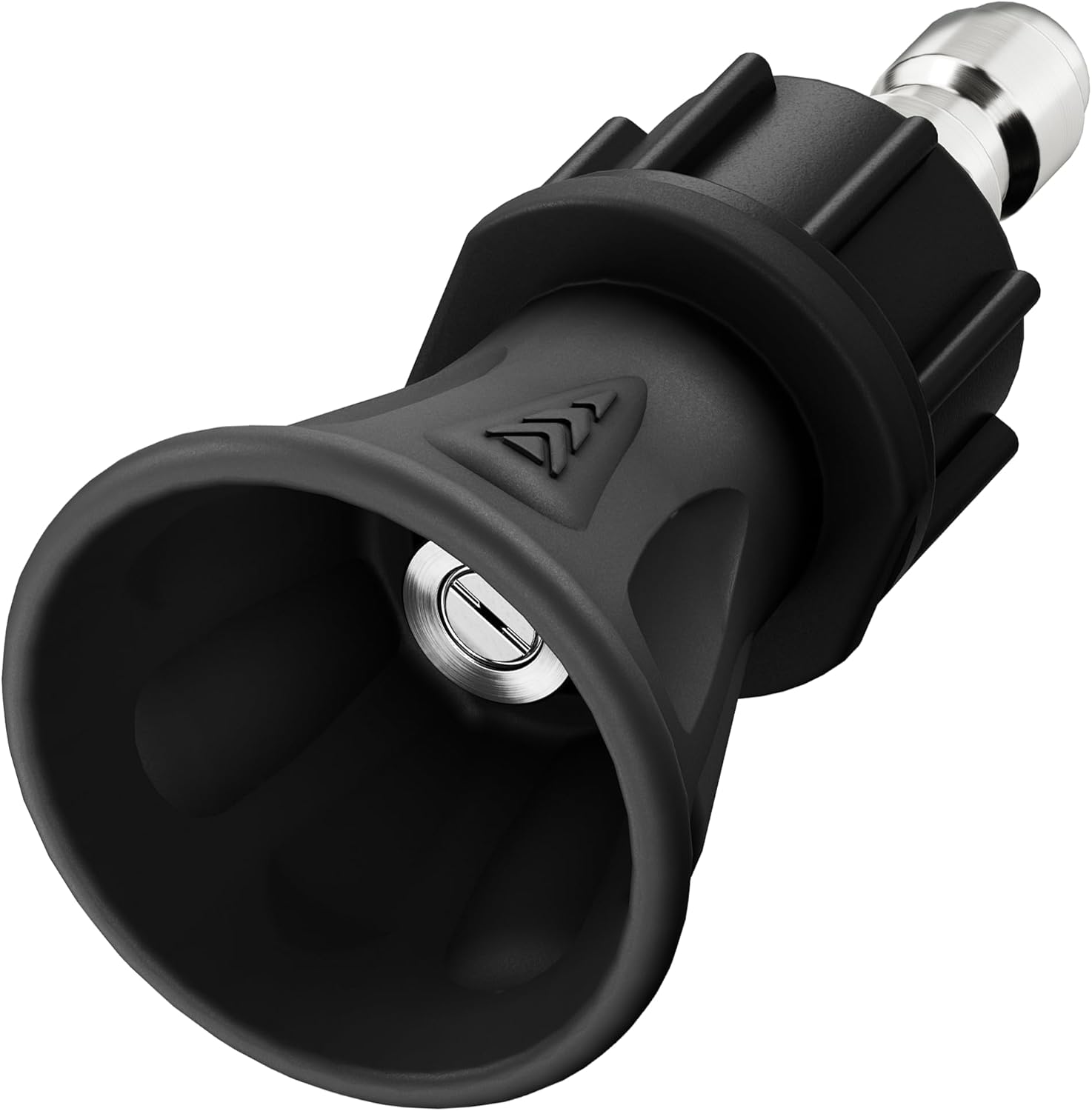
McKillans 40° Stainless Steel Pressure Washer Rinsing Nozzle (4.0 Orifice)
| Exterior Finish | Stainless Steel |
|---|---|
| Inlet Connection Type | Quick-Connect Fitting |
| Outlet Connection Type | Quick-Connect Fitting |
| Valve Type | Nozzle |
| Material Type | Stainless Steel, Nickel Coated Brass |
This McKillans 40° rinsing nozzle is built for frequent use on vehicles and siding where a wide, even spray is desired. It attaches via quarter‑inch quick‑connect fittings and uses a 4.0 orifice to deliver a generous, 40° fan pattern that rinses soap and dirt without the concentrated force of a turbo tip. The stainless steel internal construction and nickel‑coated brass components make it corrosion resistant for regular outdoor use, while the rubberized tip and guard lower the chance of scratching painted surfaces and reduce backsplash. Typical use is straightforward: swap it onto a pressure washer lance for car washing, vinyl siding rinsing, or general exterior cleanup when you want coverage rather than high pressure. Limitations are its fixed 40° pattern and relatively large orifice which reduce pressure intensity compared with narrower tips, so it is not intended for stripping tough grime or heavy paint removal. Buyers should also match the quarter‑inch connection to their hose setup or use an adapter when needed.
Best for: Buyers who prioritize effective, surface‑safe rinsing for cars or vinyl siding and want a durable nozzle that reduces paint contact risk during frequent washes.
Less Ideal for: Not a good choice for users who need high‑pressure narrow‑angle cleaning for deep grime removal or paint stripping on hard surfaces.
- Durable stainless steel internals and nickel‑coated brass resist corrosion for frequent outdoor use
- Rubberized tip and guard reduce risk of scratching sensitive surfaces and help decrease backsplash
- 40° fan pattern provides broad, even rinsing ideal for washing cars and cleaning vinyl siding
- Quick‑connect inlet and outlet make swapping tips fast and convenient
- Fixed 40° spray and large 4.0 orifice limit pressure intensity for heavy-duty cleaning
Verdict: A rugged, surface‑safe 40° nozzle that delivers broad, even rinsing for cars and vinyl siding while protecting paint during frequent use.
DBR Tech 7-Pack Pressure Washer Nozzle Tips Set (up to 4500 PSI)

| Max pressure | 4500 PSI |
|---|---|
| Connector | 1/4-inch quick-connect |
| Pieces | 7 |
This DBR Tech 7-piece nozzle set gives a full range of spray patterns for most homeowner pressure-washing tasks. The kit includes 0°, 15°, 25°, 40°, 65° spray tips plus a soap and rinse tip and a plastic holder, and the quick-connect 1/4-inch fitting snaps onto standard wands for fast changes. Metal construction (brass and stainless-steel components) makes these tips more durable than typical plastic alternatives and rated to handle up to 4500 PSI, so they stand up to heavy use on driveways, siding, decks, and vehicles. In practice the different angles let you switch from a concentrated stripping jet to gentler rinsing without swapping tools, and the soap tip speeds up wash-and-rinse cycles. The main limitation is that compatibility depends on a standard quick-connect fitting, so very old or proprietary machines may need an adapter. Also the kit does not include a durable hard case, only a small holder, so carry and storage are modestly basic. For routine and demanding home cleaning this set covers the bases with sturdy materials and a complete angle range.
Best for: Homeowners and practical users who want one durable, complete nozzle set to handle routine and heavy-duty outdoor cleaning without fuss.
Less Ideal for: Owners of older or specialty pressure washers with nonstandard connectors or professionals who need a transport-ready case and inventory-grade storage.
- Complete angle range from 0° to 65° plus dedicated soap and rinse tips for versatile cleaning
- Universal 1/4-inch quick-connect for fast, tool-free nozzle changes
- Metal construction (brass and stainless steel) rated up to 4500 PSI for durability
- Includes a holder to keep nozzles organized and reduce loss
- No hard carrying case included for secure long-term storage
- May require an adapter for pressure washers with nonstandard or proprietary fittings
Verdict: A practical, durable 7-piece metal nozzle kit that gives homeowners the full range of spray angles and quick-connect convenience for most pressure-washing jobs.
Twinkle Star 7‑Piece 1/4" Pressure Washer Nozzle Tip Set, 2.5 GPM

| Material Type | Brass, Plastic, Stainless Steel |
|---|---|
| Inlet Connection Type | National Pipe Tapered |
| Outlet Connection Type | FNPT |
| Maximum Operating Pressure | 4000 psi |
| Thread Size | 1/4 inch |
This Twinkle Star 7‑piece nozzle set supplies the basic spray angles you need for cleaning vinyl siding and other exterior surfaces. The kit includes 0, 15, 25, and 40 degree stainless steel tips plus rinse and soap brass fittings, all in a 1/4 inch quick‑connect format rated to 4000 psi and 2.5 GPM. In practice the different degrees let you switch from a concentrated strip for stubborn grime to a wide fan for rinsing without swapping guns. Brass and stainless parts improve durability versus all‑plastic tips, and the universal quick connection fits standard wands so you can start using them immediately. Limits to note are the fixed 2.5 GPM/orifice size and absence of adjustable pressure control, so fine control for very delicate surfaces requires keeping a wider nozzle angle and greater nozzle distance. For everyday siding cleaning, car rinses, and general outdoor washing this set is a straightforward, no‑frills option that covers the common angles you will need.
Best for: Homeowners who want an inexpensive, ready‑to‑use nozzle set to handle routine vinyl siding cleaning and general outdoor washing without buying specialty tips.
Less Ideal for: Professionals needing variable flow rates, specialty rotary or low‑pressure detergent systems, or precise pressure control for fragile surfaces should look at higher‑end or adjustable nozzle options.
- Seven common spray angles (including soap and rinse) cover typical siding and exterior cleaning tasks
- Brass and stainless steel construction for better wear resistance than plastic tips
- 1/4 inch quick‑connect design compatible with standard pressure washer wands
- Rated to 4000 psi, suitable for most consumer pressure washers
- Fixed 2.5 GPM/orifice size limits fine flow adjustments for delicate surfaces
- No adjustable pressure or built‑in safety features for extremely fragile materials
Verdict: A budget friendly, durable 7‑tip quick‑connect set that gives the essential spray angles needed for cleaning vinyl siding effectively.
Twinkle Star 5-Pack Pressure Washer Nozzle Tips (1/4" NPT, 2.5 GPM)

| Material Type | Brass, Stainless Steel |
|---|---|
| Maximum Operating Pressure | 4000 psi |
| Thread Type | 1/4 inch NPT |
| Size | 5 Nozzle Tips-Orifice 2.5 |
| Outlet Connection Type | National Pipe Tapered |
This Twinkle Star set supplies five common pressure-washer tips (soap, 0°, 15°, 25°, 40°) in stainless steel and brass with 1/4-inch NPT quick-connect fittings. It is used by swapping tips on a pressure-washer wand to change spray pattern and intensity for tasks like loosening grime, rinsing soap, or reaching high or angled surfaces. The 0° red tip delivers a focused, high-impact jet for stubborn stains while the wider 25° and 40° tips are better for rinsing and delicate surfaces; the included soap tip lets you apply detergent without extra accessories. The kit is built to handle up to 4000 PSI and 2.5 GPM so it covers most homeowner electric and gas machines. Practical benefits include having the right angle on hand for different jobs and durable metal construction that resists wear. Limitations are that the set uses 1/4-inch NPT connections only and the 2.5 GPM flow rating may underutilize higher-flow commercial washers, so confirm fit and flow compatibility before use.
Best for: Buyers who want an inexpensive, ready-to-use set of nozzle angles to handle routine home cleaning and occasional tougher spots without buying single specialty tips.
Less Ideal for: Professional users with high-flow commercial machines or anyone who needs multiple thread sizes should look for industrial-grade or multi-fit nozzle systems.
- Complete five-angle kit (soap, 0°, 15°, 25°, 40°) for common cleaning tasks
- Durable brass and stainless-steel construction designed for repeated use
- 1/4-inch NPT/quick-connect fit works with most consumer pressure-washer wands
- Rated to 4000 PSI for compatibility with most home pressure washers
- Compact set makes swapping spray patterns fast and convenient
- Only supplied in 1/4-inch NPT size so adapters are required for other thread standards
- 2.5 GPM specification may not match higher-flow professional pressure washers
Verdict: A wallet-friendly, durable five-tip kit that gives homeowners the right spray angles for most outdoor cleaning jobs.
Tool Daily Pressure Washer Nozzle Tips 5‑Pack (1/4" Quick Connect, 2.5 GPM)

| Maximum Operating Pressure | 4000 psi |
|---|---|
| Inlet Connection Type | Quick Connect |
| Exterior Finish | Stainless Steel |
| Material Type | Brass, Plastic, Stainless Steel |
This Tool Daily 5‑pack gives you the common pressure washer spray angles you need for general outdoor cleaning. The set includes 0°, 15°, 25°, 40° and a 65° soap tip, all with 1/4" quick-connect inlets and 2.5 GPM orifices that work up to 4000 psi. In practice the stainless steel and brass construction feels durable and resists corrosion better than cheap plastic tips, while the quick-connect design makes swapping angles fast when moving from stubborn grime to rinsing or applying soap. The different spray degrees make the kit useful for rinsing cars, cleaning driveways and washing siding without changing guns or wands. Limitations are straightforward: the orifices are fixed at 2.5 GPM so you cannot tune flow rate without buying different-sized tips, and the metal tips can nick if dropped on concrete. For buyers who prefer proven parts, this set covers the standard angles and is simple to use, reliable for regular homeowner and weekend‑warrior cleaning jobs.
Best for: Buyers who value reliable, proven hardware and want a compact set that covers the common spray angles for routine car, driveway, deck, and siding cleaning.
Less Ideal for: Users who need adjustable flow rates, specialty orifices, or commercial heavy‑duty tips for continuous high‑flow industrial work.
- Includes the five most useful spray angles (0°, 15°, 25°, 40° and 65° soap) for a wide range of cleaning tasks
- Stainless steel and brass components offer greater durability and corrosion resistance than plastic tips
- 1/4" quick connect inlet for fast, leak‑free swaps between nozzles
- Rated for up to 4000 psi, suitable for most consumer and many professional pressure washers
- Fixed 2.5 GPM orifice limits flexibility if you need higher or lower flow rates
- Metal tips can be damaged if dropped or struck against hard surfaces
Verdict: A durable, no‑nonsense five‑tip set that gives most homeowners the spray angles they need for reliable pressure washing performance.
Choosing the Right Pressure Washer Nozzle for Vinyl Siding: Key Factors to Consider
Spray Angle and Coverage
Spray angle determines how concentrated the water is when it hits the siding. Narrow angles concentrate force into a smaller area and increase the risk of stripping paint or denting panels, while wider angles spread the force and usually clean more gently. For vinyl siding, look for nozzles that offer a wider fan pattern or adjustable angles so you can start wide and narrow slightly if needed.
Coverage also affects how quickly you can finish an area. A consistent, even spray reduces streaking and the need for multiple passes. In practice, using a 25-degree or wider fan for general rinsing and a 40-degree or broader setting for delicate areas is a safer approach than relying on a single point jet.
Pressure Control and Washer Compatibility
Nozzles do not create pressure by themselves but change how the water is directed. It is important the nozzle is rated for your washer's PSI and GPM. A nozzle that cannot handle the machine's pressure can wear prematurely, while a nozzle designed only for very high pressure can be too aggressive for siding. Some nozzles pair with adjustable pressure wands or have built-in pressure modulation; those are helpful when you need to reduce force without changing technique.
Check the compatibility of the quick-connect size and any recommended PSI/GPM ranges. If you routinely clean with a high-PSI washer, plan to use a wider spray or step down power through an adjustable wand to avoid damage.
Build Material and Corrosion Resistance
Exposure to water, minerals, and detergent can corrode low-quality nozzle parts. Brass and stainless-steel fittings resist corrosion and last longer than plastic under regular use. Plastic tips can be lightweight and inexpensive, but they may wear faster when subjected to abrasive particles or high-pressure streams.
Beyond material, look at seals and o-rings. Reliable sealing prevents leaks and maintains consistent spray patterns. Consider nozzles with replaceable wear parts so you can service them without replacing the entire unit.
Connection Security and Fit
A nozzle that pops off mid-cleaning is unsafe and frustrating. Secure locking mechanisms, snug quick-connect interfaces, or threaded fittings reduce the chance of accidental detachment. The fit also influences spray symmetry; a loose connection can wobble or create an uneven pattern.
Test connections briefly before starting a siding run and keep a spare quick-connect fitting or locking sleeve on hand. If you often switch tips, choose a system that balances secure attachment with easy swapping.
Flow Rate and Detergent Support
Flow rate (GPM) influences cleaning speed and how well soap is applied or rinsed. Some nozzles are designed to introduce detergent or work with a low-pressure soap setting. For siding, you may want a nozzle that lets you apply cleaner at a lower pressure, then switch to a wider rinse pattern.
Consider whether the nozzle is compatible with common detergent injectors and whether its flow characteristics leave residue. A nozzle that meters detergent properly will reduce oversudsing and avoid leaving streaks that attract dirt later.
Safe Starting Technique for Siding
Begin each siding cleaning job by testing your setup on a small, inconspicuous area. Stand several feet back and use the widest fan setting you have to gauge how the siding reacts. Gradually move closer or narrow the spray only if you are not removing soil with the gentler pattern.
Keep the wand at a shallow angle, not perpendicular to the siding. A 20 to 30 degree angle reduces the direct lifting force on seams and caulk joints. Work top to bottom so loosened dirt rinses downward instead of being trapped under upper panels.
- Start wide, then narrow if needed
- Keep wand angled along the board, not directly at seams
- Work from top to bottom for better runoff
When to Use Detergent Versus Rinse Only
Light accumulations of pollen, dust, and loose grime will often rinse free with the right spray angle and adequate flow. For mildew, oil stains, or heavily soiled areas, apply a siding-appropriate detergent at low pressure and allow dwell time before rinsing.
Use detergent sparingly and follow manufacturer instructions for dwell time. After applying soap with a low-pressure nozzle or injector, rinse with a wider fan pattern to avoid concentrated pressure on softened siding.
- Rinse first to assess how stubborn the soil is
- Apply detergent on vertical sections and avoid saturating caulk lines
- Always thoroughly rinse soap residue to prevent streaking
Protecting Trim, Windows, and Caulking
Trim, window seals, and caulking are more vulnerable than flat siding panels. Keep extra distance and use the gentlest spray that removes dirt. Avoid pointing a narrow jet directly at sealed seams; repeated direct impact can push water behind trim and lead to future rot issues.
Masking or temporarily covering delicate trim and vents is an option for high-pressure work. When in doubt, hand-scrub small areas with a soft brush and detergent instead of using a concentrated jet.
- Keep extra distance from trim and seams
- Use wider fans near windows and penetrations
- Switch to manual cleaning for delicate or aged caulk
Maintaining Nozzles for Consistent Performance
Rinse nozzles after each use to clear grit and detergent that can erode tips. Inspect for wear and uneven spray patterns which indicate it is time to service or replace the tip. Clean out any mineral deposits with a mild vinegar soak if your water is hard.
Store nozzles in a dry place and replace worn o-rings promptly to keep connections tight. Regular inspection prevents sudden failures during a job and keeps spray patterns symmetric for even cleaning.
- Flush with clean water after use
- Soak in vinegar for mineral buildup
- Replace worn o-rings and tips when spray becomes uneven
Choosing Accessories That Complement Nozzles
Wands, extension poles, and pressure regulators change how a nozzle performs on siding. A variable-pressure wand paired with a wider nozzle gives fine control over force without changing distance. Extension wands help reach high areas while maintaining safer angles and distances.
Consider quick-connect adapters and locking sleeves for secure swaps. If you frequently apply detergent, a compact injector or a low-pressure soap nozzle will streamline the process and reduce time spent switching tools.
- Pair adjustable wands with wider nozzles for control
- Use extensions to keep a safe distance from siding
- Choose secure connectors for frequent tip changes
How We Chose the Best Pressure Washer Nozzle for Vinyl Siding
We focused on nozzle attributes that affect cleaning performance and siding safety. Key evaluation criteria included spray angle and distribution because wider, gentler angles reduce concentrated force on panels; pressure control and compatibility with common pressure washer PSI ranges so a nozzle can be used without overloading or underperforming; build material and wear resistance since brass and stainless fittings last through grit and detergent exposure; ease of attachment and secure locking to minimize accidental detachments during use; and flow rate and detergent mixing where applicable for rinsing and mild cleaning. We tested fit with common quick-connect fittings and considered whether a nozzle allowed stepped pressure adjustment or relied only on washer settings. Exclusions included specialty high-pressure nozzles intended for concrete or industrial use and any accessories that require permanent tool changes. The shortlist reflects nozzles that balance effective soil removal with safer spray profiles for residential vinyl siding.
FAQ
What nozzle spray angle is safest for vinyl siding?
Wider fan angles are generally safer because they spread force across a larger area. Many gardeners use a 25-degree or wider setting for most siding jobs and only narrow the spray for stubborn spots after testing on an inconspicuous area.
Can I use a pressure washer on older or warped vinyl siding?
It depends. Older or warped siding is more vulnerable to pressure damage, so use the lowest effective pressure and the widest nozzle. Hand-cleaning or low-pressure detergent application is often a better choice for fragile sections.
How far should I hold the nozzle from the siding?
Start at several feet away and move closer only as needed. Maintaining distance reduces the risk of gouging or loosening seams. A good practice is to begin at three to four feet and adjust based on cleaning effectiveness.
Will detergent damage vinyl siding?
Most siding-safe detergents formulated for exteriors will not damage vinyl when used as directed. Avoid harsh solvents and allow recommended dwell time before rinsing thoroughly with a wide fan spray to remove residue.
How do I know if a nozzle tip is worn?
A worn tip produces irregular or asymmetrical spray patterns, decreased coverage, or sudden changes in cleaning power. Inspect tips visually for erosion and replace them if the spray looks uneven even when pressure and distance are constant.
Final Verdict
Choosing the right pressure washer nozzle for vinyl siding is about balancing cleaning power with gentleness. Prioritize wider spray angles, compatibility with your washer's pressure range, and durable construction to avoid accidental damage and frequent replacement. Consider how you will apply detergent and whether you need accessories like adjustable wands or extensions. By focusing on spray angle, pressure control, and secure connections, you can clean siding effectively while minimizing the risk to trim and seams.
