

Note: This article contains affiliate links. If you click on these links and make a purchase, I may earn a small commission at no extra cost to you. This helps support my research and content. Read my full affiliate disclosure here.
Mogra plants reward consistent care with fragrant, prolific blooms, but the wrong feeding approach can reduce flower count or stress the shrub. Choosing the right fertilizer for Mogra Plant matters because nutrient balance, release rate, and application method directly affect bloom size, scent intensity, and overall plant health. This guide covers seven shortlisted fertilizers suited to Mogra use, chosen for real-garden performance. We evaluate each pick on nutrient composition, ease of application, longevity, and safety for container and in-ground plants. Read on to understand which feeding styles match your soil, season, and time available for maintenance.
Top Picks at a Glance
| Best Overall The best all-around choice for most situations | Miracle-Gro Water Soluble All Purpose Plant Food, 3 lb |  |
| Best Quality Built to a higher standard if you want something more solid | Leaves and Soul Professional Jasmine Liquid Fertilizer Concentrate 3-1-2 (8 oz) |  |
| Best Value The sweet spot between price and what you get | Osmocote Smart-Release Plant Food Plus Outdoor & Indoor, 1 lb |  |
| Best Budget The cheapest option that still gets the job done reliably | TPS Nutrients Jasmine Liquid Fertilizer, 8 fl oz |  |
| Highest Rated A top-rated pick with lots of positive feedback | Sovata Mogra Growth Food Organic Fertilizer (400 g) |  |
| Most Popular A crowd favorite that many people choose with confidence | FoxFarm Big Bloom Liquid Plant Food, 16 fl oz |  |
| Best Seller A high-volume bestseller chosen again and again | TPS NUTRIENTS Indoor Plant Food Liquid Fertilizer, 8 fl oz |  |
Miracle-Gro Water Soluble All Purpose Plant Food, 3 lb

| Item Form | Powder |
|---|---|
| Application Method | Mix with water in a watering can |
| Fertilizer Analysis (N‑P‑K) | 24-8-16 |
| Unit Count | 48 Ounce |
| Coverage | Feeds approximately 1,200 sq. ft. |
Miracle‑Gro Water Soluble All Purpose Plant Food is a powdered NPK 24‑8‑16 formula that dissolves in water to give plants a quick nutrient boost. You mix measured scoops into a watering can and apply to the soil at the base of plants every 7–14 days for outdoor use or every 14 days for houseplants. Notable features include a high nitrogen content for leafy growth, compatibility with containers and in‑ground beds, and guidance for use with a Miracle‑Gro Garden Feeder for larger areas. In practical terms this is a fast‑acting feed that encourages bigger, greener foliage and works well in regular maintenance of perennials like hostas. Limitations are that it is a fast‑release fertilizer rather than a slow‑release option, so it requires regular reapplication and careful measuring to avoid overfeeding. Also, the 24‑8‑16 balance is geared toward vegetative growth, so it is not optimized if you want to prioritize flowering or bloom boosting.
Best for: Buyers who want a reliable, fast‑acting feed to maintain lush, leafy perennials and container plants and who value proven products with broad user endorsement.
Less Ideal for: Gardeners seeking a single, long‑lasting granular fertilizer or a bloom‑focused formula should consider alternative slow‑release or high‑phosphorus products.
- Water‑soluble powder mixes easily for quick uptake by roots
- High nitrogen formula promotes robust leafy growth ideal for shade plants
- Clear mixing and application instructions for both indoor and outdoor use
- Suitable for containers and in‑ground gardens and compatible with garden feeders
- Requires frequent applications so it is not a low‑maintenance, slow‑release option
- High nitrogen ratio is less suitable when the primary goal is more flowers than foliage
Verdict: A fast‑acting, water‑soluble fertilizer that reliably produces bigger, greener hosta leaves when used as directed.
Leaves and Soul Professional Jasmine Liquid Fertilizer Concentrate 3-1-2 (8 oz)

| NPK | 3-1-2 |
|---|---|
| Form | Liquid concentrate |
| Unit Count | 8 Ounce |
| Mixing Ratio | 1–2 tsp per 8 cups water |
This concentrated liquid fertilizer is formulated specifically for jasmine and is intended to be mixed with water and applied to the root zone every 2 to 4 weeks. The 3-1-2 NPK balance targets leafy growth with moderate phosphorus for root development and potassium for overall vigor, and the formula also includes micronutrients to fill common nutritional gaps. Use it for container-grown jasmine, climbing or shrub varieties, and outdoor plantings by mixing the recommended 1 to 2 teaspoons per 8 cups of water and applying the solution to the soil surface. Practical benefits include fast absorption compared with granular feeds, easy measuring for repeatable applications, and suitability across growth stages from young plants to mature bloom. Important limitations are the small 8 oz bottle which makes it a short-term supply for larger plantings and the need for careful dilution since the product is a concentrate and should never be applied undiluted. Regular results depend on proper watering, light, and drainage alongside the feeding schedule.
Best for: Gardeners seeking targeted, repeatable nutrient support for jasmine who prioritize measurable performance and want a liquid feed they can use across seedlings to mature bloom cycles.
Less Ideal for: People managing large beds or many jasmine plants who need bulk fertilizer or very long-lasting slow-release options.
- Balanced 3-1-2 NPK tailored to promote foliage, root development, and flowering in jasmine
- Concentrated liquid mixes easily for quick uptake and consistent dosing
- Includes micronutrients for broader nutritional support beyond primary NPK
- Suitable for indoor and outdoor jasmine across growth stages with a simple feeding schedule
- Only an 8 oz bottle so multiple purchases may be needed for larger gardens
- Requires careful measurement and dilution to avoid overfeeding because it is a concentrate
Verdict: A performance-focused liquid concentrate that delivers targeted 3-1-2 nutrition and fast uptake for gardeners who want measurable, stage‑appropriate feeding for jasmine.
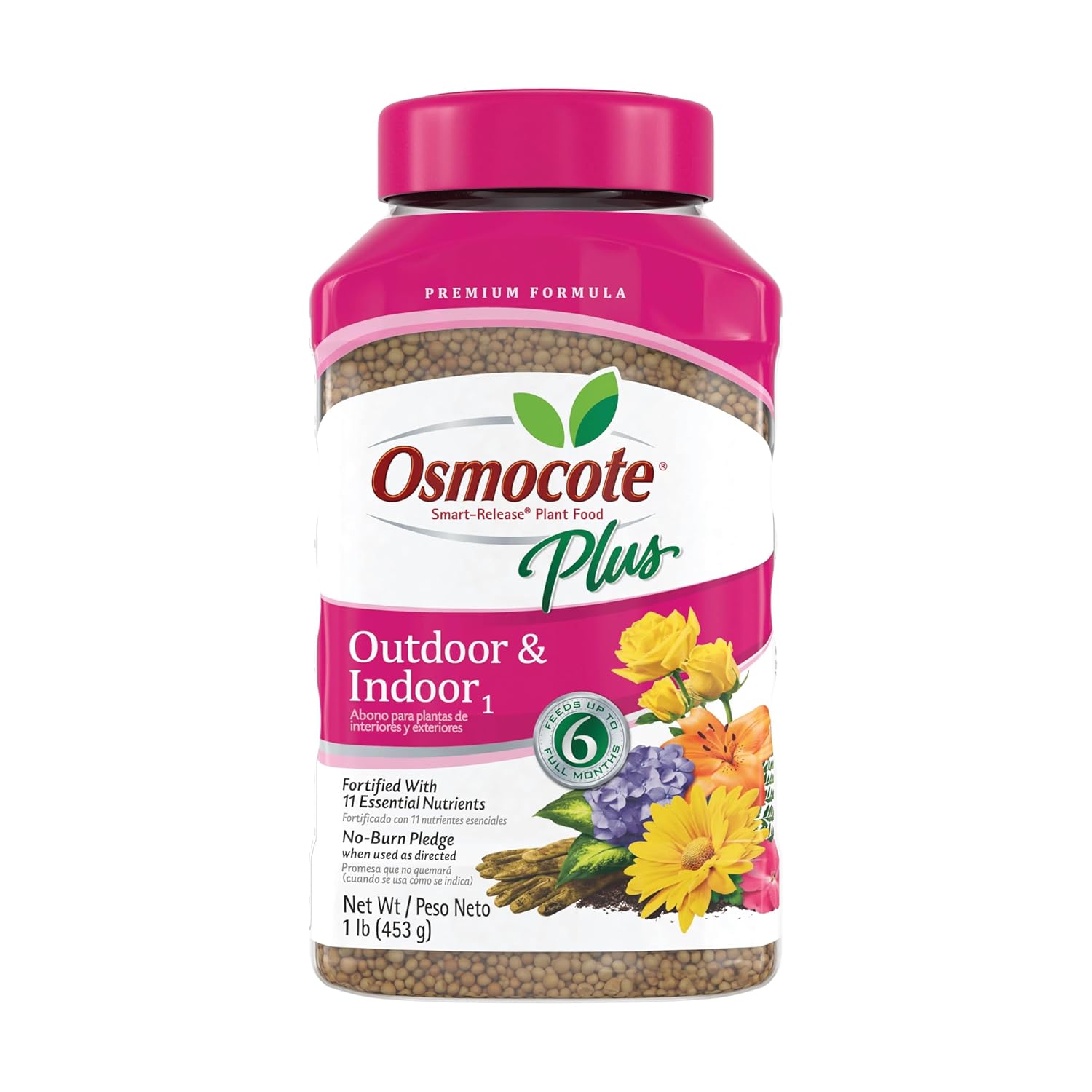
Osmocote Smart-Release Plant Food Plus Outdoor & Indoor, 1 lb
| Item Form | Granules |
|---|---|
| Specific Uses For Product | Plant Food |
| Application Method | sprinkle around the base and work into the soil |
| Unit Count | 16 Ounce |
Osmocote Smart-Release Plant Food Plus is a resin-coated granular fertilizer designed to deliver steady nutrition to a wide range of plants for up to six months from a single application. You apply it by sprinkling the recommended scoop into the top inch or so of potting mix for containers or around plants in garden beds, then watering to activate the coating. The product contains 11 essential nutrients and is formulated to release based on soil temperature, which helps reduce overfeeding and supports consistent bloom and foliage performance in hanging baskets. Its no-burn pledge makes it easy to use at the recommended rates for mixed annuals, trailing plants, and container veggies. Limitations are that coverage is modest from a 1 lb. container so frequent use on many large baskets will require buying more, and release timing still depends on temperature so plants in cool, shaded spots may receive nutrients more slowly than those in warm sun.
Best for: Gardeners who prioritize steady, low-maintenance feeding for hanging baskets and containers and want consistent bloom and foliage without frequent fertilizing.
Less Ideal for: Those who need immediate, short-term nutrient boosts or precise liquid feeding schedules for plants that demand fast correction.
- Resin-coated granules provide controlled release of nutrients for up to six months
- Formulated with 11 essential nutrients suitable for a wide variety of plants
- No-burn pledge when used as directed reduces risk of damaging roots in containers
- Simple sprinkle-and-water application works well for hanging baskets and pots
- 1 lb container covers a limited area so multiple baskets will need additional product
- Release rate depends on temperature so nutrient delivery can be slower in cool conditions
Verdict: An easy, low-maintenance slow-release fertilizer that keeps hanging baskets fed for months with minimal effort.
TPS Nutrients Jasmine Liquid Fertilizer, 8 fl oz

| Item Form | Liquid |
|---|---|
| Coverage | Single Jasmine plant |
| Target Species | Jasmine |
| Mixing Ratio | 1:400 |
| Unit Count | 8 Fluid Ounces |
This 8 ounce liquid fertilizer from TPS Nutrients is formulated for jasmine and other flowering vines, using a kelp-based mix with added calcium and magnesium. It is designed to be diluted (mixing ratio 1:400) and applied to single jasmine plants, making it easy to dose for containers or individual trellised vines. In use it supplies balanced nutrition aimed at steady foliage growth and improved bloom production without overstimulating vegetative growth. Practical benefits include targeted support for fragrant blooms, compatibility with potted jasmine and climbing specimens, and a small bottle size that reduces waste if you only feed a few plants. Limitations are the small unit size if you care for many plants and the need to follow the dilution instructions carefully to avoid under- or over-feeding. There is no multi-plant coverage specification beyond a single plant, so bulk buyers will need multiple bottles or a different product for larger gardens.
Best for: Buyers who want a simple, plant-specific fertilizer to maintain steady blooming on a few jasmine plants and prefer low-risk, easy-to-follow feeding routines.
Less Ideal for: Gardeners with large numbers of jasmine or who need broad-coverage, economy-sized fertilizer options should consider larger-capacity products.
- Formulated specifically for jasmine and flowering vines for targeted nutrition.
- Kelp-based with added calcium and magnesium to support blooms and overall plant vigor.
- Liquid concentrate with a clear 1:400 mixing ratio for precise dosing.
- Small bottle size minimizes waste for owners of one or a few plants.
- Only lists coverage as a single jasmine plant, so not cost-effective for large plantings.
- Small 8 fl oz volume requires frequent repurchase for multiple plants.
Verdict: A small, easy-to-dose liquid fertilizer formulated for jasmine that makes reliable bloom support simple for owners of a few plants.
Sovata Mogra Growth Food Organic Fertilizer (400 g)

| Item Form | Powder |
|---|---|
| Coverage | Medium |
| Target Species | Mogra |
This Sovata Mogra Growth Food is a powder organic fertilizer designed to encourage heavier flowering and faster vegetative growth in mogra (jasmine) plants. It is typically applied to potted or garden-grown mogra according to package directions to feed roots with charged micro-organisms and micronutrients that support bloom production and flower color. Notable features include a formulation targeted to mogra, an all-natural ingredient list, and a compact 400 g pack that is easy to store. In practice it should help increase the number and size of blooms when used as part of a regular feeding schedule and when combined with good light and watering. Because it is a species-specific product, growers get a focused nutrient mix rather than a generic fertilizer. Limitations are the small unit size for larger plantings and the lack of detailed application rates on the listing, which means careful measurement is needed to avoid overapplication.
Best for: Buyers who prioritize a reliable, plant-specific organic feed for mogra and want a product focused on increasing flowers rather than a general-purpose fertilizer.
Less Ideal for: Gardeners managing many plants or large beds who need bulk fertilizer or detailed dosing guidance should consider larger or more fully specified products.
- Formulated specifically for mogra to encourage heavier flowering and enhanced bloom color
- Uses organic ingredients and charged micro-organisms suitable for natural gardening
- Powder form is easy to measure and mix into potting soil or top-dress garden beds
- Suitable for both indoor and outdoor mogra plants
- Small 400 g size may require frequent repurchasing for multiple plants or larger gardens
- Listing lacks explicit application rates and schedule which requires careful dosing
Verdict: Choose this if you want a focused organic fertilizer made to reliably boost flowering in mogra plants.
FoxFarm Big Bloom Liquid Plant Food, 16 fl oz

| Item Form | Liquid |
|---|---|
| Specific Uses For Product | Organic |
| Application Method | watering can, sprayer, or drip system |
| Liquid Volume | 16 fluid ounces |
| Mixing Ratio | 4 |
Big Bloom is a concentrated liquid bloom fertilizer aimed at boosting flowers and fruit by supplying readily available organic nutrients. It mixes into water (manufacturer recommends 4 tablespoons per gallon) and can be applied with a watering can, sprayer, hose-end siphon, or through drip systems, so you can feed potted plants, beds, or containers without changing your routine. Notable features are its OMRI listing for organic use and the inclusion of bat guano and earthworm castings, which provide phosphorus and organic matter to encourage blooms and seed set. Because it is liquid and fast-acting, you can expect visible perk-up within a short time after feeding, and it is suitable for regular use at watering times to extend flowering. Limitations to consider are the small 16 fl oz size for larger gardens and the presence of phosphorus, which may be restricted in some locales and requires careful application to avoid runoff.
Best for: Gardeners focused on maximizing blooms and fruit who want an organic, fast-acting feed they can add to routine watering for container and bed-grown flowering plants.
Less Ideal for: Large-scale landscapers or very large perennial beds who need bulk fertilizer solutions or want to avoid phosphorus-based products due to local regulations.
- OMRI-listed organic formula with natural inputs like bat guano and earthworm castings
- Liquid concentrate allows fast nutrient uptake and flexible application methods
- Works with watering cans, sprayers, hose-end siphons, and drip systems for easy integration
- Small 16 fl oz bottle may require frequent repurchasing for larger flower beds
- Contains phosphorus so local restrictions on phosphorus fertilizers may apply
Verdict: Choose Big Bloom when you want an OMRI-listed, easy-to-apply liquid fertilizer that delivers fast organic nutrients to boost flowering and fruiting.
TPS NUTRIENTS Indoor Plant Food Liquid Fertilizer, 8 fl oz

| Item Form | Liquid |
|---|---|
| Specific Uses For Product | Plant Food |
| Application Method | Watering can |
| Mixing Ratio | 2:1 (oz/gallon) or 1:64 (tbsp/gallon) |
TPS NUTRIENTS Indoor Plant Food is a concentrated liquid fertilizer made for regular use with houseplants. You mix the measured dose into water and apply it with your usual watering can; the label gives an easy mixing ratio for household use. Its kelp-enriched formula is pitched at improving leaf color, encouraging steady new growth, and supporting root health, so expect glossier foliage and more frequent leaf production when plants are fed consistently. The 8 fl oz bottle is portable and fits on a plant shelf or utility area, and the liquid form dissolves readily for even application. It is intended for medium coverage and labeled as gentle for weekly feeding, which simplifies care for busy owners. Important limitations are that this is a small bottle meant for regular top-up feedings rather than long-term bulk use, and it assumes you will follow dilution directions to avoid overfeeding. Keep it away from children and pets and avoid skin or eye contact when handling.
Best for: Plant owners who want a simple, low-effort weekly fertilizer to keep indoor foliage vibrant and encourage steady new leaf growth. Good for people who prefer an easy liquid mix applied during regular watering routines.
Less Ideal for: Gardeners needing a bulk or multi-season fertilizer for outdoor beds or large collections should consider larger-capacity or specialized products instead.
- Liquid concentrate mixes easily for even application with a watering can
- Kelp-enriched formula aimed at improving foliage color and encouraging new growth
- Gentle enough for weekly feedings according to product guidance
- Clear mixing instructions for home use
- Small 8 fl oz volume limits how many plants you can feed before repurchasing
- Not formulated or labeled for outdoor or large-scale garden use
Verdict: A convenient kelp-enriched liquid concentrate that makes weekly feeding easy for anyone who wants healthier, more vibrant indoor foliage.
Choosing the Right Fertilizer for Mogra Plant: Key Factors to Consider
Nutrient Ratio and Timing
The ratio of nitrogen, phosphorus, and potassium determines whether a fertilizer promotes leafy growth or flowering. Mogra plants need a formula that supports bud formation and sustained bloom without excessive foliage. Applying higher phosphorus during bud set encourages more flowers, while moderate nitrogen keeps leaves healthy.
Timing matters too. Feed in early spring as new growth begins and again during the main flowering flush. Avoid heavy late-season nitrogen that can delay dormancy and stress the plant in cooler months.
Release Type and Feeding Frequency
Fertilizers come as fast-release water-soluble formulations, slow-release granules, and organic amendments that release nutrients gradually. Fast-release feeds give an immediate bloom boost useful when buds are forming, but they require more frequent reapplication and careful dosing to prevent burn.
Slow-release granules reduce the frequency of feeding and lower the risk of salt accumulation, which is helpful for busy gardeners or potted Mogra. Organic options improve soil structure and microbe activity over time, but they act more slowly and may need pairing with a soluble feed during peak blooming.
Soil Type and pH Influence
Soil texture and pH influence nutrient availability. Mogra prefers well-draining soil; heavy clay can hold salts and increase burn risk from concentrated feeds. If your soil is alkaline or very acidic, certain micronutrients become less available even if they are present in the fertilizer.
Testing soil pH and adjusting with appropriate amendments helps ensure the fertilizer you choose actually supplies usable nutrients. In containers, use potting mixes with good drainage and flush pots occasionally to prevent salt build-up.
Application Method and Garden Size
Consider how you plan to apply fertilizer across beds or containers. Granular top-dressings are efficient for larger hedges and borders and are easier to spread evenly by hand or with a spreader. Water-soluble feeds are convenient for container Mogra and allow quick correction of deficiencies.
Foliar sprays can supply micronutrients faster but are a supplement rather than a replacement for root feeding. Choose a format that fits your garden scale and how often you want to feed.
Salt Content and Root Health
Excessive soluble salts from concentrated feeds can damage roots and reduce flowering. This risk is greater in containers where salts concentrate between waterings. Low salt-index fertilizers and organic amendments reduce burn risk and are safer for repeated use.
When using soluble fertilizers, follow dilution directions and periodically flush container soil with plain water to remove accumulated salts. In ground plantings, incorporate compost to buffer salt effects.
Micronutrients and Fragrance Development
Trace minerals such as magnesium, sulfur, and iron contribute to strong scent production and healthy foliage. While macronutrients drive bloom number and size, a lack of micronutrients can make flowers smaller or less fragrant.
Look for fertilizers that list key micronutrients or pair a primary feed with an occasional micronutrient drench. Organic soil enhancers that feed the soil biology can also improve nutrient uptake and, indirectly, fragrance intensity.
Feeding Schedule Through the Seasons
Adjusting feed timing through the year helps Mogra plants use nutrients when they need them most. Start with a balanced or bloom-focused feed in early spring as buds form, follow with supplementary feeding during the main flowering period, and taper back in late summer to let plants rest before cooler weather.
- Early spring: balanced or bloom-focused feed to support new shoots and bud initiation
- Peak flowering: lighter, more frequent soluble feeds to sustain blooms
- Late season: reduce nitrogen and stop heavy feeding to encourage natural dormancy
Pre-Plant Soil Preparation
Improving soil before planting sets the stage for less intensive feeding later. Work in well-rotted compost and ensure good drainage to prevent root stress. If soil test results show pH imbalances or nutrient deficiencies, correct these with targeted amendments before planting.
- Mix compost into planting hole to improve structure and nutrient reserve
- Address pH issues with lime or sulfur according to soil test
- Avoid over-amending with high-nitrogen materials that favor foliage
Fertilizing Potted Mogra
Containers concentrate salts and deplete nutrients faster than garden soil. Use a slow-release granular for steady delivery or a diluted soluble feed every few weeks during the growing season. Regular repotting or top-dressing with fresh potting mix plus compost helps maintain a healthy root environment.
- Use potting mix with good drainage and organic matter
- Flush containers periodically to prevent salt build-up
- Reduce feeding in small pots to avoid root burn
Combining Organic and Synthetic Feeds
A hybrid approach pairs the quick response of soluble fertilizers with the soil-building benefits of organic amendments. Use organic compost or well-rotted manure as a baseline and apply a targeted soluble bloom feed during heavy blossom periods if needed.
- Apply compost annually to build long-term fertility
- Use soluble bloom feeds sparingly to correct short-term demand
- Monitor plant response and adjust the mix of products accordingly
Common Signs of Nutrient Problems
Yellowing leaves, poor bud set, or weak scent can signal specific deficiencies. Uniform yellowing often points to nitrogen shortage, while poor blooming with healthy foliage may indicate insufficient phosphorus or micronutrients. Scorched leaf edges and stunted roots suggest fertilizer burn or salt accumulation.
- Yellow older leaves: possible nitrogen deficiency
- Few flowers despite green foliage: check phosphorus and potassium
- Leaf scorching or wilting: suspect salt build-up or overfeeding
How We Chose the Best Fertilizer for Mogra Plant
Our shortlist focuses on fertilizers that consistently support jasmine-family shrubs under typical garden and container conditions. We prioritized formulas and formats that deliver the nutrients Mogra plants use most during bud set and bloom while minimizing salt build-up and leaf scorch. Key evaluation criteria included the balance of nitrogen, phosphorus, and potassium tailored to flowering shrubs; micronutrient content important for fragrance and foliage color; release profile, from quick soluble charges to slow-release granules; and user-friendly application methods for both ground beds and pots. We also assessed fertilizer salt index and recommended application rates to avoid root burn, along with compatibility with common soil types and organic amendments. Safety and environmental considerations were part of the filter: products with hazardous application patterns or frequent reapplication needs were deprioritized. Exclusions: general-purpose turf feeds designed for high-nitrogen lawns and fertilizers with nutrient profiles that favor foliage over bloom were not considered. The result is a focused set of options that gardeners can match to their Mogra planting situation.
FAQ
How often should I feed Mogra in a pot?
Typically feed potted Mogra every 4 to 6 weeks with a balanced soluble feed during the growing season, or use a slow-release formula applied once at potting. Frequency depends on pot size and product release profile.
Can I use general-purpose flower fertilizer on Mogra?
Often yes when the N-P-K balance supports flowering. Avoid high-nitrogen lawn formulas that encourage foliage over blooms. Choose a feed labeled for flowering shrubs or adjust with a phosphorus-focused supplement during bud set.
Will organic fertilizers make Mogra smell stronger?
Organic fertilizers improve soil biology and nutrient uptake over time, which can support healthier flowers and better fragrance. Scent strength also depends on variety, weather, and pruning more than fertilizer alone.
How do I avoid fertilizer burn on Mogra roots?
Follow label dilution and application rates, avoid overapplication, and flush container soil occasionally. Use low salt-index products for containers and incorporate compost in garden beds to buffer salts.
When is the best time of day to apply soluble feed?
Apply soluble feeds in the morning or early evening when temperatures are cooler to reduce stress and evaporation. Avoid feeding at the hottest part of the day to lower burn risk.
Do Mogra plants need micronutrient supplements?
They often benefit from occasional micronutrient applications if soil tests show deficiencies. Magnesium and iron are common contributors to foliage health and indirectly support better blooms and scent.
Final Verdict
Focus on nutrient balance and application method when choosing fertilizer for Mogra plants. Prioritize formulas that support flowering with adequate phosphorus and modest nitrogen, and pick a release profile that fits your maintenance routine and planting situation. Manage salt risk in containers, correct soil pH where needed, and use organic matter to improve long-term soil health. With attention to timing and the tradeoffs between quick-response and slow-release feeds, you can choose a fertilizer that reliably increases bloom count and fragrance without stressing the plant.
