

Note: This article contains affiliate links. If you click on these links and make a purchase, I may earn a small commission at no extra cost to you. This helps support my research and content. Read my full affiliate disclosure here.
If you grow moss rose in containers, rock gardens, or sunny borders, the right fertilizer makes a noticeable difference in bloom count and plant vigor. These low-growing succulents respond best to fertilizer that supports flowering without encouraging leggy growth. This guide shortlists five top fertilizer options chosen for moss rose, explaining how we judged nutrient profiles, application schedules, and suitability for container versus in-ground planting. Use the following quick evaluation of feeding strategies and practical considerations to pick a fertilizer that fits your site, watering habits, and desired bloom intensity.
Top Picks at a Glance
| Best Overall The best all-around choice for most situations | Osmocote Smart-Release Plant Food Plus Outdoor & Indoor, 1 lb |  |
| Best Value The sweet spot between price and what you get | Miracle-Gro Shake 'N Feed Rose & Bloom Plant Food, 4.5 lb |  |
| Highest Rated A top-rated pick with lots of positive feedback | Espoma Organic Rose-Tone 4-3-2 Organic Fertilizer, 18 lb. Bag (2-Pack) |  |
| Most Popular A crowd favorite that many people choose with confidence | Miracle-Gro Watering Can Singles All Purpose Plant Food, 24 Packets |  |
| Best Seller A high-volume bestseller chosen again and again | Miracle-Gro Water Soluble All Purpose Plant Food, 3 lb |  |
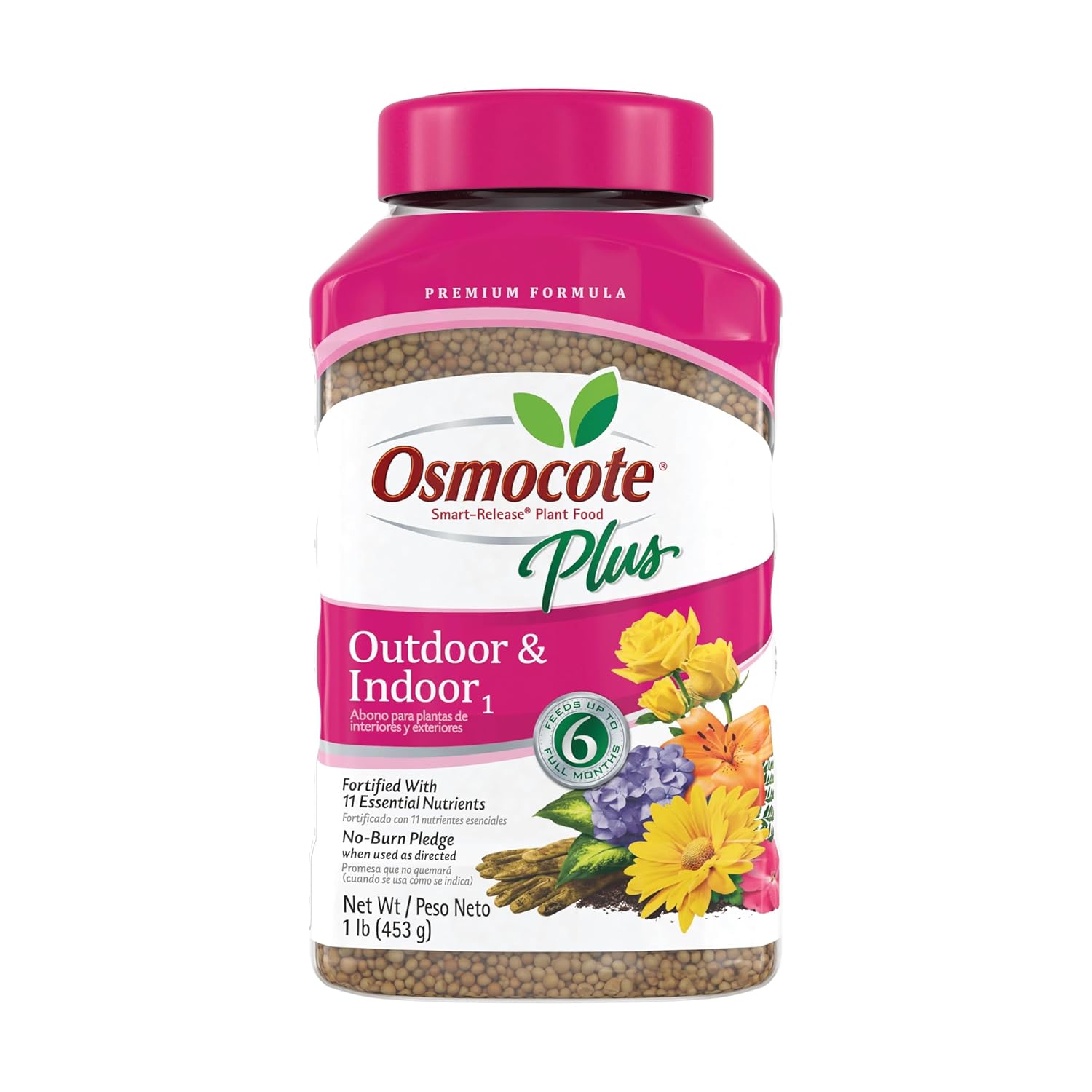
Osmocote Smart-Release Plant Food Plus Outdoor & Indoor, 1 lb
| Item Form | Granules |
|---|---|
| Specific Uses For Product | Plant Food |
| Application Method | sprinkle around the base and work into the soil |
| Unit Count | 16 Ounce |
Osmocote Smart-Release Plant Food Plus is a resin-coated granular fertilizer designed to deliver steady nutrition to a wide range of plants for up to six months from a single application. You apply it by sprinkling the recommended scoop into the top inch or so of potting mix for containers or around plants in garden beds, then watering to activate the coating. The product contains 11 essential nutrients and is formulated to release based on soil temperature, which helps reduce overfeeding and supports consistent bloom and foliage performance in hanging baskets. Its no-burn pledge makes it easy to use at the recommended rates for mixed annuals, trailing plants, and container veggies. Limitations are that coverage is modest from a 1 lb. container so frequent use on many large baskets will require buying more, and release timing still depends on temperature so plants in cool, shaded spots may receive nutrients more slowly than those in warm sun.
Best for: Gardeners who prioritize steady, low-maintenance feeding for hanging baskets and containers and want consistent bloom and foliage without frequent fertilizing.
Less Ideal for: Those who need immediate, short-term nutrient boosts or precise liquid feeding schedules for plants that demand fast correction.
- Resin-coated granules provide controlled release of nutrients for up to six months
- Formulated with 11 essential nutrients suitable for a wide variety of plants
- No-burn pledge when used as directed reduces risk of damaging roots in containers
- Simple sprinkle-and-water application works well for hanging baskets and pots
- 1 lb container covers a limited area so multiple baskets will need additional product
- Release rate depends on temperature so nutrient delivery can be slower in cool conditions
Verdict: An easy, low-maintenance slow-release fertilizer that keeps hanging baskets fed for months with minimal effort.
Miracle-Gro Shake 'N Feed Rose & Bloom Plant Food, 4.5 lb

| Item Form | Granules |
|---|---|
| Specific Uses For Product | Plant Food |
| Coverage | 4.5 pounds |
| Target Species | roses and flowering plants |
Miracle-Gro Shake 'N Feed Rose & Bloom is a granular, slow‑release plant food designed to encourage bigger blooms and sustained flowering with minimal upkeep. You apply it by shaking the granules onto dry soil around the plant, working them in, and watering to start the release; one application is meant to feed for up to three months. The formula contains organic ingredients such as kelp, feather meal, bone meal, and earthworm castings that support soil microbes and root development, which can improve water efficiency and bloom production. For ranunculus growers seeking reliable bloom performance without frequent feedings, this product offers convenient, season‑long nutrition for both in‑ground beds and containers. Limitations to consider are that it is a general rose/flower formula rather than a ranunculus‑specific NPK balance and results will depend on proper soil preparation and watering; heavy feeders or growers wanting very precise nutrient ratios may prefer a specialty bulb or bloom booster fertilizer. Pack size and the granular format make it easy to apply to small beds but do require occasional incorporation into the topsoil.
Best for: Gardeners who prioritize reliable, low‑maintenance bloom feeding and want season‑long results with minimal reapplication for their flowering borders or containers.
Less Ideal for: Specialists who need a fertilizer matched precisely to ranunculus tuber requirements or growers who prefer water‑soluble feeds and exact NPK control.
- Slow‑release formula feeds up to three months from one application
- Contains natural, soil‑building ingredients that support microbes and root health
- Easy granular application for beds and containers
- Suitable for both in‑ground and container flowering plants
- Not formulated specifically for ranunculus so NPK is not tailored to bulb/tuber needs
- Granules must be worked into soil surface for best effect rather than delivered directly to the crown
Verdict: Provides convenient, long‑lasting nutrition to boost blooms with one easy granular application every three months.
Espoma Organic Rose-Tone 4-3-2 Organic Fertilizer, 18 lb. Bag (2-Pack)

| Item Form | Granules |
|---|---|
| Specific Uses For Product | Organic Plant Food for flowers |
| Coverage | Medium |
| Target Species | roses |
| Mixing Ratio | 4-3-2 |
Espoma Rose-Tone is a ready-to-use granular organic fertilizer designed for roses and other flowering shrubs like viburnum. You apply it around the plant drip line and water in monthly during the growing season to encourage green growth and abundant blooms. The 4-3-2 N-P-K balance with added calcium and the company s Bio-tone blend provides gentle, slow-release nutrition suited to established shrubs and repeat feeding without mixing. Being an approved organic input makes it a dependable choice for gardeners who want predictable, soil-friendly feeding that supports long-term plant health. The product is medium coverage per bag and comes in a large unit suited to multiple plants or repeat monthly applications. It does not dissolve instantly like a liquid feed, so results build over weeks rather than days, and it requires correct placement and watering to be effective. For reliability-focused gardeners this fertilizer reduces guesswork by using a proven formula, but those needing rapid correction of severe deficiencies may prefer a soluble supplement.
Best for: Gardeners who prioritize consistent, low-risk feeding for flowering shrubs and want an organic, easy-to-apply fertilizer they can use monthly through the growing season.
Less Ideal for: Growers who need a fast corrective feed for acute nutrient deficiencies or who prefer liquid concentrates for quick uptake should consider alternative products.
- Organic formulation approved for organic gardening and soil-friendly feeding
- Balanced 4-3-2 N-P-K with added calcium supports flowering and overall plant vigor
- Ready-to-use granular form that requires no mixing and is easy to apply around the drip line
- Suitable for repeat monthly applications through the growing season for steady nutrition
- Slow-acting granular formula means results accumulate over weeks rather than delivering an immediate boost
- Coverage is described as medium so very large plantings may require multiple bags
Verdict: A reliable, organic granular fertilizer that delivers steady monthly nutrition to support flowering shrubs like viburnum and roses.
Miracle-Gro Watering Can Singles All Purpose Plant Food, 24 Packets

| Number of Packs | 24 |
|---|---|
| Unit Count | 10.24 Ounce |
| Item Form | SOLID |
| Application Method | watering can |
| Mixing Ratio | 1 teaspoon per 1 gallon of water |
Miracle-Gro Watering Can Singles are single-use, pre-measured fertilizer packets intended to make feeding roses and other garden plants simple and reliable. To use, tear a packet into a watering can, add the specified amount of water, then apply the solution while watering; the manufacturer recommends feeding every 7 to 14 days during active growth. The packets remove measuring errors and mess, which helps prevent accidental overfeeding. Because the formula is labeled for all flowers, vegetables, trees and shrubs, it fits into regular rose care routines for bloom and bush development. Practical benefits include instant solubility, clear application instructions for outdoor and indoor containers, and consistent coverage per packet for about 10 sq. ft. of garden. Limitations are that you must keep up with the every-1–2-week schedule for best results and that the product is sold as a general-purpose feed rather than a rose-specific bloom booster, so dedicated rosarians seeking targeted NPK ratios might prefer a specialized rose fertilizer.
Best for: Gardeners who want a low-risk, no-mess way to feed roses and mixed flower beds as part of routine watering and prefer simple, foolproof dosing.
Less Ideal for: Specialist rose growers seeking a targeted bloom-boosting formula or those who want a single, slow-release application instead of frequent liquid feedings.
- Pre-measured packets eliminate measuring and reduce mess and dosing errors
- Water-soluble formula mixes quickly in a watering can for immediate application
- Labeled for use on flowers, roses, shrubs, trees and vegetables so it suits mixed beds
- Clear directions for indoor and outdoor application and coverage per packet
- General all-purpose formula rather than a rose-specific NPK for bloom boosting
- Requires regular reapplication every 7–14 days to maintain results
Verdict: If you want a safe, fuss-free way to feed roses while you water, these pre-measured soluble packets make regular feeding simple and consistent.
Miracle-Gro Water Soluble All Purpose Plant Food, 3 lb

| Item Form | Powder |
|---|---|
| Application Method | Mix with water in a watering can |
| Fertilizer Analysis (N‑P‑K) | 24-8-16 |
| Unit Count | 48 Ounce |
| Coverage | Feeds approximately 1,200 sq. ft. |
Miracle‑Gro Water Soluble All Purpose Plant Food is a powdered NPK 24‑8‑16 formula that dissolves in water to give plants a quick nutrient boost. You mix measured scoops into a watering can and apply to the soil at the base of plants every 7–14 days for outdoor use or every 14 days for houseplants. Notable features include a high nitrogen content for leafy growth, compatibility with containers and in‑ground beds, and guidance for use with a Miracle‑Gro Garden Feeder for larger areas. In practical terms this is a fast‑acting feed that encourages bigger, greener foliage and works well in regular maintenance of perennials like hostas. Limitations are that it is a fast‑release fertilizer rather than a slow‑release option, so it requires regular reapplication and careful measuring to avoid overfeeding. Also, the 24‑8‑16 balance is geared toward vegetative growth, so it is not optimized if you want to prioritize flowering or bloom boosting.
Best for: Buyers who want a reliable, fast‑acting feed to maintain lush, leafy perennials and container plants and who value proven products with broad user endorsement.
Less Ideal for: Gardeners seeking a single, long‑lasting granular fertilizer or a bloom‑focused formula should consider alternative slow‑release or high‑phosphorus products.
- Water‑soluble powder mixes easily for quick uptake by roots
- High nitrogen formula promotes robust leafy growth ideal for shade plants
- Clear mixing and application instructions for both indoor and outdoor use
- Suitable for containers and in‑ground gardens and compatible with garden feeders
- Requires frequent applications so it is not a low‑maintenance, slow‑release option
- High nitrogen ratio is less suitable when the primary goal is more flowers than foliage
Verdict: A fast‑acting, water‑soluble fertilizer that reliably produces bigger, greener hosta leaves when used as directed.
Choosing the Right Fertilizer for Moss Rose: Key Factors to Consider
Nutrient Ratio and Flower Support
Moss rose benefits from a fertilizer that supports flowering without encouraging excessive leafy growth. Look for a balanced formula with a moderate to slightly elevated middle number for phosphorus relative to nitrogen. Too much nitrogen will produce lush foliage and fewer blooms, while too little phosphorus can limit bud set and flower size.
Consider fertilizers labeled for flowering annuals or bedding plants, and check the N-P-K numbers so you can match the product to your bloom goals.
Formulation: Liquid, Water-Soluble, or Granular
Liquid and water-soluble fertilizers give fast, controllable feeding for container-grown moss rose and are easy to adjust during the growing season. Granular and slow-release types are useful if you prefer a low-maintenance schedule but may be less flexible for correcting deficiencies quickly.
If you grow moss rose in small pots, water-soluble feeds let you reduce concentration and frequency to limit salt buildup. In beds with good drainage, a light granular application can support steady bloom production without frequent refeeding.
Salt Tolerance and Soil Build-up
Moss rose is sensitive to high soluble salt levels in potting mixes and shallow soils. Frequent fertilizer applications at too-strong concentrations can cause leaf browning or reduced water uptake. Choose fertilizers formulated to minimize salt stress or use lower-strength feedings more often.
Flushing containers occasionally with clean water helps prevent salt accumulation. For in-ground plantings, heavy fertilization in dry soils increases salt concentration near roots, so apply feeds when soil is moist and follow with light watering.
Container Size and Root Volume
Root volume limits how much nutrient and water a pot can hold. Small containers heat and dry quickly, increasing nutrient concentration between waterings. For moss rose in small pots, prefer soluble feeds at reduced strength and higher frequency rather than heavy granular applications that the root ball cannot buffer.
Larger containers and garden beds can accept slightly higher nutrient loads, but you should still match the fertilizer type to pot size to avoid stress from overfertilizing.
Feeding Schedule and Maintenance
Decide whether you want a low-maintenance, set-and-forget approach or hands-on feeding to push continuous blooms. Slow-release granules reduce the number of interventions, while liquid feeds give immediate results and let you react to weather or growth changes.
Consider seasonal adjustments: reduce or stop feeding as temperatures fall or bloom fades. Regular deadheading and appropriate watering often do more for flower display than frequent heavy fertilization.
Application Safety and Garden Compatibility
Think about how a fertilizer fits with the rest of your garden. Some formulations can harm nearby succulents, seedlings, or sensitive groundcovers if applied at the same rate. Use targeted application methods such as dilute foliar feeds, spot-applying granular products, or measuring doses carefully for multiple pots.
Also consider storage safety and ease of measuring doses to avoid accidental over-application by other household members or pets.
Feeding Frequency for Different Growing Conditions
How often you feed moss rose depends on the product formulation, container size, and seasonal growth. In containers, a weak water-soluble feed every 7 to 14 days during the active bloom period gives consistent flowers without excessive nutrient buildup. For plants in well-amended garden beds, feeding every 3 to 4 weeks with a light granular or soluble feed is often enough.
Adjust feeding frequency after hot or dry spells. Plants stressed by heat or drought are less able to take up nutrients efficiently. Lower the concentration or pause feeding until the plants recover and new growth appears.
- Small pots: dilute liquid feed every 7-10 days
- Medium to large containers: every 10-14 days or light granular every 4-6 weeks
- In-ground beds: light applications every 3-4 weeks during bloom season
- Reduce or stop feeding in cooler, low-light periods
Applying Fertilizer Safely in Containers
Container-grown moss rose needs steady moisture and well-draining mix. When feeding, always use the recommended dilution or less. Start with half the label strength for the first application, then monitor plant response. If leaves show signs of burn or browning, flush the pot thoroughly and reduce dosing.
Avoid letting fertilizer sit on foliage or crowns. Apply to moist soil to prevent root shock, and water lightly after feeding to distribute nutrients through the root zone.
- Begin with half-strength solution to assess tolerance
- Pour feeds into the soil surface, not over foliage
- Flush pots if you see white crusting or leaf tip burn
Organic Versus Synthetic Options for Moss Rose
Organic fertilizers release nutrients more slowly and add organic matter that can improve soil structure. They are less likely to cause sudden salt spikes but may not produce as rapid a bloom response as synthetic fertilizers. For gardeners who prioritize soil health and steady flowering, organic liquid blends or compost teas can be suitable.
Synthetic water-soluble feeds give faster, predictable results and are easy to dose for repeat bloom encouragement. If you use synthetics, adopt conservative concentrations and periodic flushing to avoid salt build-up in pots.
- Organics: gentler, soil-building, slower bloom response
- Synthetics: fast-acting, precise control, higher salt risk
Timing Fertilizer Around Light and Temperature
Moss rose flowers best under bright sun and warm temperatures. Apply fertilizer when plants are actively growing and flowering, not during prolonged cloudy or cool periods. Feeding during peak light periods helps plants turn nutrients into flowers rather than just foliage.
In very hot weather, reduce concentration and increase frequency rather than applying stronger doses. Cooler night temperatures or shorter days call for tapering off fertilizer until growth resumes.
- Feed during active bloom periods in full sun
- Lower concentration during heat stress
- Pause feeding when days shorten or temps drop significantly
Troubleshooting Common Feeding Problems
If blooms are sparse despite regular feeding, check light levels, watering, and deadheading practices before increasing fertilizer strength. Excess foliage with few flowers usually indicates too much nitrogen. Yellowing leaves can result from nutrient imbalance or salt stress from overfeeding.
White crust on the soil surface signals salt buildup. Flush containers with ample water and cut back on feed concentration. If plants show sudden decline after feeding, water thoroughly to leach salts and stop fertilizing until recovery.
- Sparse blooms: check light and reduce high nitrogen feeds
- Leaf yellowing: consider nutrient imbalance or overwatering
- White crust: flush containers and reduce feeding strength
How We Chose the Best Fertilizer for Moss Rose
We focused on specifications and real-garden behavior that matter for moss rose. Primary evaluation criteria included nutrient ratio and bloom support, application method and frequency, formulation suitability for containers and beds, and salt tolerance for plants exposed to frequent watering. We also considered ease of use for home gardeners and the impact on soil structure and drainage. Products were excluded if they were formulated specifically for unrelated plant groups or contained high nitrogen ratios that promote excessive foliage at the expense of flowers. We omitted slow-release blends designed for large shrubs rather than small, fast-flowering annuals. The final shortlist comprises fertilizers with balanced phosphorus to support blooms, clear dosing instructions for small pots, and formulations that minimize salt buildup. Editorial filters prioritized predictable flowering response, low maintenance for container growers, and minimal impact on soil moisture dynamics.
FAQ
How often should I fertilize moss rose in a small pot?
Usually a weak water-soluble feed every 7 to 10 days during the flowering season works well for small pots. Start at half the recommended strength to avoid salt buildup and adjust based on bloom response.
Can I use a general-purpose fertilizer on moss rose?
You can, but choose a general-purpose formula with a balanced or slightly higher phosphorus ratio to support blooms. Avoid high-nitrogen formulas that favor foliage over flowers.
Should I use slow-release granules or liquid feed for containers?
Liquid feeds give faster control and are easier to dilute for small containers. Slow-release granules reduce maintenance but can be harder to adjust if plants show nutrient stress.
What are signs of fertilizer burn on moss rose?
Look for brown or crispy leaf tips, sudden leaf drop, or white crust on the soil surface. These signs usually indicate excess salts or over-concentrated feeding; flush the soil and reduce future doses.
Will organic fertilizers keep moss rose blooming as well as synthetic ones?
Organic fertilizers can support steady blooms and improve soil health, but they often act slower than synthetics. Gardeners seeking immediate, repeat flowering may prefer synthetic soluble feeds used carefully.
Is foliar feeding a good option for moss rose?
Foliar feeding can provide a quick nutrient boost, especially for minor deficiencies, but it should not replace root feeding. Apply dilute solutions and avoid spraying during the hottest part of the day to prevent leaf scorch.
Final Verdict
Prioritize a fertilizer that encourages flowers without promoting leggy foliage. Match the formulation and feeding frequency to your planting method: dilute, regular liquid feeds for small pots and conservative granular or soluble options for larger containers and beds. Monitor plants for salt buildup and adjust concentration or timing as needed. Focus on predictable bloom support, ease of application, and container compatibility when choosing a fertilizer for moss rose. With the right feeding plan you can keep plants floriferous and healthy throughout the season.
