

Note: This article contains affiliate links. If you click on these links and make a purchase, I may earn a small commission at no extra cost to you. This helps support my research and content. Read my full affiliate disclosure here.
Choosing the right Tulip Daffodil fertilizer matters because bulbs need different feeding timing and nutrient balance than perennials. The right product helps bulbs store energy after flowering, build larger bulbs for next year, and produce fuller, longer-lasting blooms in spring. In this guide we shortlisted the top options suited to spring-blooming bulbs and fall feedings, focusing on nutrient ratios, application method, and gardener usability. Use the summary and evaluation criteria to find an option that fits your planting scale and maintenance style. Below are the top picks and the criteria we used to evaluate them.
Top Picks at a Glance
| Best Overall The best all-around choice for most situations | Espoma Bulb-Tone Organic Bulb Fertilizer, 18 lb |  |
| Best Quality Built to a higher standard if you want something more solid | Jobe's Organics Granular Bulb Fertilizer, 4 lb | 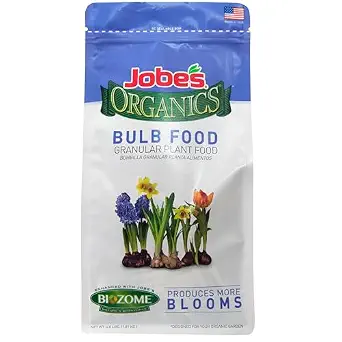 |
| Best Value The sweet spot between price and what you get | Lilly Miller Bulb & Bloom Food 4-10-10 (4 lb) |  |
| Best Budget The cheapest option that still gets the job done reliably | TPS NUTRIENTS Tulip Bulb Fertilizer Liquid Plant Food, 8 oz |  |
| Highest Rated A top-rated pick with lots of positive feedback | Espoma Bulb-Tone Organic Fertilizer 3-5-3, 4 lb |  |
| Most Popular A crowd favorite that many people choose with confidence | Burpee Bone Meal Fertilizer, 3 lb |  |
| Best Seller A high-volume bestseller chosen again and again | Jobe's Organics Granular Bone Meal Fertilizer, 4 lb |  |
Espoma Bulb-Tone Organic Bulb Fertilizer, 18 lb

| Item Form | Granules |
|---|---|
| Application Method | Sprinkle on soil surface or mix into planting hole |
| Target Species | Bulbs |
| Mixing Ratio | 3:5:3 |
Espoma Bulb-Tone is an organic granular fertilizer designed specifically for bulbs such as tulips, daffodils, crocus and hyacinths. You apply it directly in the planting hole for new bulbs or sprinkle over the soil for established bulbs and then water in; the product is ready to use and requires no on-site mixing. Its 3-5-3 nutrient blend and added calcium support bloom development and bulb health, while the Bio-tone formula and organic ingredients aim to improve soil biology over time. Practical benefits include simple application, suitability for organic gardens, and a medium coverage that works well for small beds or multiple planting rounds. Important limitations are that granules release nutrients slowly so you should not expect an immediate leafy surge, and an 18 lb bag is a one-size offering that may be more than needed for very small spaces. For tulip growers the clear planting and feeding instructions make it an easy, low-maintenance way to encourage consistent spring blooms.
Best for: Gardeners who want an easy, organic fertilizer tailored to spring and fall flowering bulbs and prefer simple, low-maintenance feeding when planting or after bloom.
Less Ideal for: Growers who need a fast-acting soluble feed for immediate green-up or those who only have a few bulbs and prefer to buy in much smaller quantities.
- Formulated specifically for bulbs with a 3-5-3 N-P-K to promote flowering
- Organic ingredients and certified for use in organic gardening
- Ready-to-use granular form that can be placed in planting holes or sprinkled on the soil
- Contains added calcium which helps bulb development and reduces common deficiencies
- Slow-release granular formula so results are gradual rather than immediate
- Sold only in an 18 lb bag which may be excessive for very small plantings
Verdict: Choose Espoma Bulb-Tone if you want a ready-to-use organic fertilizer made to support healthy, consistent blooms from tulips and other spring bulbs.
Jobe's Organics Granular Bulb Fertilizer, 4 lb

| Item Form | Granules |
|---|---|
| Specific Uses For Product | Plant Growth, Root Development, Seed Development, Soil Conditioning |
| Target Species | bulbs, flowers |
| Mixing Ratio | 3-5-4 |
Jobe's Organics Granular Bulb Fertilizer is an OMRI-listed, pet- and kid-friendly granular formula designed to feed tulips and other spring bulbs through bloom. It uses a 3-5-4 NPK ratio aimed at supporting flowering and root development and is applied every 3 to 5 weeks during the growing season. In practice the granules are easy to measure and sprinkle into bulb beds or mixed into the planting hole, and because it is organic it reduces the risk of burning delicate bulbs when used as directed. The product is versatile for both new plantings and established beds and is intended to minimize runoff and mess compared with liquids. Limitations to know are that granular organics release nutrients more slowly than soluble feeds, so you should expect gradual results rather than an immediate boost, and regular reapplication is required during bloom. For growers seeking steady, low-risk feeding tailored to bulb flowering, this delivers practical, reliable nutrition.
Best for: Gardeners who prioritize steady, low-risk feeding for tulips and other bulb flowers and want an organic product that protects delicate bulbs while supporting bloom production.
Less Ideal for: Growers who need an immediate, dramatic bloom response or who prefer quick-release, water-soluble feeds for rapid correction of nutrient deficiencies.
- OMRI listed organic formula suitable for certified organic production
- 3-5-4 NPK ratio formulated to promote blooms and root development
- Granular form is easy to measure and apply to beds or planting holes
- Labeled safe for use around children and pets when used as directed
- Slower nutrient release than water-soluble fertilizers, so effects are gradual
- Requires repeated applications every 3–5 weeks during the season for best results
Verdict: Choose this product if you want a reliable organic granular fertilizer that steadily promotes bulbs' blooms and root health without risking burn.
Lilly Miller Bulb & Bloom Food 4-10-10 (4 lb)

| Item Form | Powder |
|---|---|
| Specific Uses For Product | plant care |
| Coverage | Medium |
| Target Species | bulbs |
| Mixing Ratio | 4:10:10 |
Lilly Miller Bulb & Bloom Food is a slow-release powder fertilizer formulated as a 4-10-10 blend aimed at boosting bloom strength and vigor in bulbous plants. It is typically worked into the soil around the base of bulbs at the start of the growing season or mixed according to the manufacturer mixing ratio for ongoing feeding. Notable features include its higher middle number phosphorus content to support flower development and potassium for overall plant health, and a powder form that mixes readily with soil and potting mixes. Practical benefits for Asiatic lilies include clearer flower set and sustained bloom energy over the season without needing weekly feedings. Important limitations are that it contains phosphorus so local regulations may restrict its use on turf or near waterways, and users should follow safety directions to avoid inhalation and wear gloves during application. This product is best used as a targeted seasonal feed rather than a continuous high-nitrogen growth fertilizer.
Best for: Gardeners who want a no-fuss seasonal bloom booster for Asiatic lilies and other flowering bulbs and prefer a slow-release feed to reduce application frequency.
Less Ideal for: People seeking a high-nitrogen fertilizer for leafy growth or those who must avoid phosphorus inputs due to local restrictions or proximity to sensitive waterways.
- Formulated with higher phosphorus and potassium to support stronger, longer-lasting blooms
- Slow-release powder reduces the need for frequent applications
- Easy to incorporate into soil or potting mix using the provided mixing ratio
- Designed specifically for bulbs so it matches the nutrient needs of flowering bulbs
- Contains phosphorus which may be restricted in some areas and requires careful application to avoid runoff
- Powder form can be dusty and requires protective equipment to avoid inhalation
Verdict: A purpose-built slow-release bloom fertilizer that gives Asiatic lilies stronger flowers with less frequent feeding.
TPS NUTRIENTS Tulip Bulb Fertilizer Liquid Plant Food, 8 oz

| Item Form | Liquid |
|---|---|
| Coverage | Tulip bulbs |
| Target Species | Tulips |
| Unit Count | 8 Fluid Ounces |
This 8 oz liquid bulb fertilizer from TPS Nutrients is made for feeding tulips at planting and in early spring to encourage stronger roots, sturdier stems, and better blooms. It is applied as a diluted liquid feed that targets bulbs rather than general garden plantings, so you can treat newly planted bulbs or give a pre-bloom boost without overfeeding foliage. Notable features include a bulb-focused formulation and guidance for fall and early spring use, which makes timing straightforward for seasonal bulb care. For gardeners on a budget the small bottle is easy to store and simple to measure so you do not waste product when treating small beds or containers. The main limitation is the modest 8 oz volume, which means frequent purchases or multiple bottles are needed for larger plots, and there is no multi-plant coverage listed so you will need a different product for mixed flower beds. If you want a tulip-specific, easy-to-use liquid feed for targeted seasonal treatments this product delivers practical, focused nutrition.
Best for: Budget-minded gardeners who plant tulips in small beds or containers and want a simple, bulb-specific feed for planting and pre-bloom care.
Less Ideal for: Large-scale gardeners or those who need an all-purpose fertilizer for mixed flower beds should choose a higher-volume or multi-plant product instead.
- Formulated specifically for tulip bulbs to support rooting and bloom development
- Liquid form is easy to dilute and apply precisely to bulbs and small plantings
- Clear seasonal guidance for fall planting and early spring feeding
- Compact 8 oz bottle reduces waste for small gardens and container growers
- Small volume may require multiple purchases for larger gardens
Verdict: A practical, easy-to-use liquid feed for budget-conscious gardeners who need targeted seasonal nutrition for tulips.
Espoma Bulb-Tone Organic Fertilizer 3-5-3, 4 lb

| Item Form | Granules |
|---|---|
| Specific Uses For Product | Gardening,Organic,Plant Food |
| Coverage | Medium |
| Target Species | bulbs |
| Mixing Ratio | 3:5:3 |
Espoma Bulb-Tone is an organic granular fertilizer designed primarily for planting and feeding spring and fall bulbs, but it can be applied to other allium crops like onions when a balanced, natural boost is desired. It is ready to use out of the bag and recommended for placing in the planting hole for new bulbs or sprinkling on the soil surface for established plants then watering in. Notable features include its 3-5-3 NPK ratio, inclusion of calcium, and Espoma's Bio-tone formula made from organic ingredients approved for organic gardening. In practice this product provides steady nutrient release and helps support root development and flowering; for onions that translates to healthier sets and improved bulb formation when applied at planting and during early growth. Limitations are that it is formulated for bulbs rather than specifically for vegetable onions, so growers seeking higher nitrogen for heavier foliage or a slow-release formulation tailored to vegetable production may want a fertilizer made for vegetables. For gardeners who prioritize natural inputs and predictable, gentle feeding, Bulb-Tone is a dependable choice.
Best for: Gardeners who prefer organic, reliable products and want a gentle, easy-to-apply fertilizer to support bulb and bulb-like crops during planting and early growth.
Less Ideal for: Growers who need a vegetable-specific fertilizer with higher nitrogen or a targeted slow-release program for commercial onion production.
- Organic formula approved for organic gardening
- Ready-to-use granular form that can be placed at planting or sprinkled on soil
- Balanced 3-5-3 NPK with added calcium to support root and bulb development
- Produces steady, gentle nutrient release suitable for sensitive bulb roots
- Formulated for ornamental bulbs rather than specifically for vegetable onions
- Not a high-nitrogen feed if you want vigorous foliage growth
Verdict: Choose Bulb-Tone when you want an organic, ready-to-use granular fertilizer that reliably supports bulb and bulb-like crops with balanced nutrients.
Burpee Bone Meal Fertilizer, 3 lb

| Item Form | Powder |
|---|---|
| Specific Uses For Product | Plant Growth, Root Development |
| Coverage | 240 Sqaure Feet |
| Target Species | tomatoes, peppers, and bulbs |
Burpee Bone Meal is a slow-release granular fertilizer designed to boost early root development and flowering in root and bulb crops. Gardeners typically work it into planting holes for bulbs or mix it into soil and potting media when starting seeds or transplanting vegetables like carrots, beets, and onions. The product is OMRI listed for organic gardening and provides phosphorus and calcium that support stronger root systems and better early-season growth. Its fine granular texture makes it easy to apply evenly, and because it breaks down slowly it feeds plants over the season without burning them. Practical benefits include targeted support for root vegetables and an easy application method for beds and containers. Limitations are that it supplies mainly phosphorus and calcium rather than a balanced NPK profile, so it is best used alongside a nitrogen source if foliage development is needed, and results are gradual rather than immediate because of the slow-release nature.
Best for: Gardeners focused on improving root development and bulb planting who prefer organic inputs and want a simple amendment to add at planting or during bed preparation.
Less Ideal for: Growers seeking an all-in-one balanced fertilizer for both foliage and root development or those who need fast-acting, soluble nutrients for immediate correction.
- OMRI listed for organic gardening, suitable for certified organic beds
- Fine granular form that is easy to spread and incorporate
- Provides phosphorus and calcium to encourage strong root and bulb development
- Slow-release action reduces risk of burning plants and supplies season-long support
- Not a complete fertilizer profile so additional nitrogen may be needed for leafy growth
Verdict: A reliable organic bone meal to strengthen roots and jump-start bulbs and root vegetables when added at planting.
Jobe's Organics Granular Bone Meal Fertilizer, 4 lb

| Item Form | Granules |
|---|---|
| Application Method | Soil |
| Unit Count | 64 Ounce |
| Mixing Ratio | 2-14-0 |
Jobe's Organics Granular Bone Meal is a prilled, dust-reduced source of phosphorus and calcium aimed at strengthening root systems and improving blooms and tuber development. It is typically worked into the soil at planting for bulbs or applied around established plants every eight weeks during the growing season to support root- and flower-focused crops. The 2-14-0 NPK profile makes it especially useful where phosphorus is needed, and the granulated form is compatible with spreaders or hand application with minimal mess. Being OMRI-listed and made from 100 percent bone meal means it fits organic garden plans and is safe to use around children and pets when handled properly. Important limitations are that it supplies little to no nitrogen, so it should be paired with a balanced or nitrogen-rich amendment for leafy growth, and local regulations may restrict phosphorus use on lawns or near waterways. Also, results depend on existing soil phosphorus levels so a soil test is recommended before use.
Best for: Gardeners growing bulbs, tubers, flowering vegetables, or onions who want an organic phosphorus boost and prefer a low-dust granular product backed by positive user feedback.
Less Ideal for: Growers who need a complete all-purpose fertilizer for rapid leafy growth or those managing phosphorus-restricted turf or sites near sensitive waterways.
- High phosphorus and calcium content supports strong root development and better blooms
- Granulated prilled form reduces dust and works well with spreaders or hand application
- OMRI-listed and made from 100 percent organic bone meal suitable for organic gardens
- Directions recommend regular application every eight weeks for season-long support
- Contains little to no nitrogen so not sufficient alone for leafy growth
- Phosphorus fertilizers can be restricted in some areas because of runoff concerns
Verdict: A reliable organic bone meal to boost root development and bulb or onion bloom potential when soil phosphorus is needed.
Choosing the Right Tulip Daffodil Fertilizer: Key Factors to Consider
Nutrient Ratio and Formulation
Bulbs need a different balance of nutrients than young annuals or lawn grass. Phosphorus and potassium help bulbs build dense storage tissue and support root development, while excess nitrogen late in the season can promote leafy growth at the expense of stored energy. Choose formulas with a clear N-P-K profile that favors middle and end numbers appropriate for bulbs.
Slow-release or granular formulations often deliver nutrients over time, which can be beneficial during the bulb's storage period. Water-soluble feeds can be useful for quick uptake but require precise timing to avoid encouraging top growth instead of bulb maturation.
Timing of Application
When you feed matters as much as what you feed. Many bulbs benefit from a low-nitrogen, higher-phosphorus feed in the fall at planting and again after flowering to help transfer energy back into the bulb. Feeding too early in spring can push foliage growth and may reduce bloom quality.
Consider products that have clear instructions for fall and post-bloom use. Some granular formulations are designed for a single application, while others recommend split feedings. Match the timing recommendations to your climate and local frost dates for best results.
Application Method and Coverage
How a fertilizer is applied affects its effectiveness and convenience. Granules spread by hand or with a broadcast spreader are practical for beds and borders, while water-soluble powders or liquids suit containers and spot treatments. Pelleted or slow-release types reduce the risk of overfeeding and decrease the number of applications.
Also think about how easy it is to get even coverage without disturbing bulbs. Products with clear per-square-foot or per-bulb dosing make it simpler to apply the correct amount across different planting densities.
Soil Type and Compatibility
Bulb performance is tied to soil drainage and fertility. Sandy soils may need repeat feedings or slow-release formulations to maintain nutrients, while heavy clay benefits from products that do not exacerbate poor drainage. Some fertilizers include soil conditioners or organic matter that can help structure the root zone for bulbs.
Check for compatibility with your existing soil management plan. If you use compost or other soil amendments, choose fertilizers that complement rather than duplicate nutrients, and avoid products that can cause salt buildup in containers or compacted beds.
Safety For Bulbs and Surrounding Plants
Bulbs are sensitive to concentrated fertilizers applied in direct contact with their tissues. Look for products that reduce risk of root or bulb burn and that specify safe application distances from bulbs and foliage. Less soluble, coated, or diluted formulations lower the risk of damage during application.
Consider potential effects on nearby plants, including early-sprouting perennials and groundcovers. If pets or wildlife frequent your garden, check labels for safety guidance and choose options with lower toxicity risks where appropriate.
Environmental Impact and Residue
The garden impacts of fertilizer choices extend beyond the bulb. Water-soluble synthetic formulas can leach into drains and waterways if overapplied or used on saturated soils; organic or slow-release options generally reduce nutrient runoff. Some products include inert fillers or salts that accumulate over time, which matters for container-grown bulbs.
Assess whether you prefer low-runoff, certified organic, or slow-release chemistry based on your site. Long-term soil health and local regulations about runoff may guide your choice more than single-season bloom enhancements.
When To Feed Tulips And Daffodils
Feed bulbs at two key times: at planting in the fall and after flowering in spring. A low-nitrogen formula at planting helps young roots establish, while a post-bloom application sends carbohydrates back into the bulb to build reserves for the next year.
Adjust timing to local climate. In colder zones wait until the soil is cool but not frozen; in milder climates follow label guidance for fall planting and avoid feeding during warm spells that stimulate unnecessary top growth.
- Planting-time feed helps root development
- Post-bloom feed promotes bulb enlargement
- Avoid high-nitrogen summer feedings that encourage leafy growth
Granular Versus Liquid Fertilizers
Granular and slow-release products offer longer nutrient availability and are forgiving if you cannot reapply frequently. They are easy to broadcast across beds and are less likely to cause immediate foliar burn when used as directed.
Liquid and water-soluble fertilizers provide faster uptake and are useful for container plantings or when a quick nutrient boost is needed after an unexpectedly heavy bloom. They require careful dilution and timing to avoid encouraging foliage over bulb storage.
- Granular: longer-lasting, lower risk of burn
- Liquid: quick uptake, needs precise dosing
Using Fertilizer In Containers And Raised Beds
Containers and raised beds dry out faster and concentrate salts, so choose low-salt or slow-release formulas and monitor soil moisture. Smaller soil volumes make accurate dosing essential; follow per-pot or per-bulb instructions rather than per-square-foot rates designed for in-ground beds.
Topdress containers with a light granular feed in fall and apply a diluted liquid feed after flowering if needed. Repotting bulbs into fresh mix every few years helps avoid nutrient buildup and keeps drainage healthy.
- Prefer slow-release or low-salt options for containers
- Follow per-pot dosing to avoid salt buildup
Combining Fertilizer With Other Garden Practices
Healthy blooms depend on more than fertilizer. Proper soil drainage, correct planting depth, and adequate winter chilling are essential for tulips and daffodils. Combine feeding with good cultural practices to get the best results.
Mulch can reduce weeds and moderate soil temperature but avoid thick layers that stay wet and lead to rot. After foliage dies back naturally, remove debris to reduce disease pressure and allow the bulb to enter dormancy.
- Good drainage and planting depth matter as much as nutrients
- Remove diseased foliage and avoid overmulching around bulbs
Organic And Slow-Release Options
Organic feeds and slow-release granules supply nutrients steadily and lower the risk of runoff. They are worthwhile if you prefer to build soil life and avoid repeated spot treatments. Manure-based or bone meal amendments can supply phosphorus but require time to break down and may not suit compacted or cold soils.
Read product guidance for timing and expected release period. Organic components are often gentler on bulbs, but their nutrient concentrations are lower, so they may need to be part of a longer-term fertility plan rather than a single-season fix.
- Organic options improve soil over time
- Slow-release reduces need for frequent applications
How We Chose the Best Tulip Daffodil Fertilizer
We selected products that specifically address the nutritional needs of spring bulbs and that perform well in real garden conditions. Our evaluation emphasized nutrient formulation tailored for bulbs, application timing and method, and how well a product supports bulb strength and bloom quality. We also considered ease of use for common garden settings, safety for bulbs and surrounding plants, and consistency of results reported by gardeners. Included criteria: nutrient balance for bulb development, recommended timing and application method, ease of use and spreadability, and safety for bulbs and nearby plants. We prioritized formulations that deliver phosphorus and potassium without excessive nitrogen at the wrong time, products designed for post-bloom feeding and fall planting, and options that work with common garden soils and scales from containers to beds. Exclusions: general-purpose lawn fertilizers and products without clear bulb-specific guidance were not considered. We focused on measures that matter to gardeners: how much the fertilizer supports next-season bulb size, simplicity of applying it correctly, and whether it avoids foliar burn or excessive vegetative growth at the wrong stage.
FAQ
How often should I fertilize bulbs to get the best blooms?
Usually two targeted applications are sufficient: at fall planting and once after flowering in spring. Some slow-release products may only need a single application at planting, while liquid feeds can be used for an extra boost after bloom if needed.
Can I use general-purpose garden fertilizer on tulips and daffodils?
You can, but general-purpose products are not always ideal because they may be high in nitrogen. For bulbs, choose a product with a nutrient profile that supports root and bulb development rather than excessive leafy growth.
Is bone meal effective for bulb growth?
Bone meal supplies phosphorus, which supports root development and flowering, but it breaks down slowly and depends on soil biology. It can be useful as part of fall planting but may not provide quick results in cold or sterile soils.
When should I stop feeding bulbs in the season?
Avoid feeding once foliage has completely died back and the bulb has entered dormancy. Post-bloom feeding should be completed while leaves are still photosynthesizing so sugars move into the bulb for next year.
Are there safety concerns for pets when using bulb fertilizers?
Some fertilizers can be harmful if ingested by pets. Choose products with clear safety information and follow label instructions for application and storage. Organic or low-toxicity options may reduce risk but always keep pets away from freshly applied fertilizer until it is watered in or settled.
Final Verdict
When choosing a Tulip Daffodil fertilizer, prioritize nutrient formulations that favor phosphorus and potassium for bulb development and time applications to planting and post-bloom feeding. Match the product form to your garden style: slow-release granules for beds and low-volume containers, liquids for quick corrections in pots. Balance ease of use, soil compatibility, and safety for bulbs and nearby plants. By focusing on nutrient balance, correct timing, and appropriate application methods, you can strengthen bulbs and improve bloom performance year after year.
