

Note: This article contains affiliate links. If you click on these links and make a purchase, I may earn a small commission at no extra cost to you. This helps support my research and content. Read my full affiliate disclosure here.
If you want easier access to summer tomatoes, buckets of herbs, or steady rows of greens without kneeling, the right elevated planter makes a big difference. Elevated planters for vegetables lift beds to waist height, improve drainage, and let you control soil mix and pests more easily than ground beds or low containers. This guide covers seven shortlisted elevated planters that suit common vegetable gardens, patios, and small yards. We evaluated options for useful soil depth, durable construction, ease of planting and maintenance, and gardener ergonomics to help you choose the best fit.
Top Picks at a Glance
| Best Overall The best all-around choice for most situations | Best Choice Products 48 x 24 x 32 in Mobile Raised Garden Bed (Fir Wood) |  |
| Best Quality Built to a higher standard if you want something more solid | SoliWood Cedar Raised Garden Bed with Legs, 48 x 24 x 30 in |  |
| Best Value The sweet spot between price and what you get | YEFU 48-Inch Raised Garden Bed with Legs (HIPS) |  |
| Best Budget The cheapest option that still gets the job done reliably | JERIA Galvanized Raised Garden Bed 4×2×1 ft |  |
| Highest Rated A top-rated pick with lots of positive feedback | Outland Living 6-Ft 4-Bin Vertical Raised Garden Bed |  |
| Most Popular A crowd favorite that many people choose with confidence | FOYUEE 2-Pack Elevated Metal Raised Garden Beds with Wheels and Shelf |  |
| Best Seller A high-volume bestseller chosen again and again | Rakukiri 5 ft Galvanized Raised Garden Bed Planter Box |  |
Best Choice Products 48 x 24 x 32 in Mobile Raised Garden Bed (Fir Wood)

| Capacity | 135 quarts |
|---|---|
| Material Type | Fir Wood |
| Plant or Animal Product Type | Vegetable |
| Other Special Features of the Product | Drainage Hole |
| Mounting Type | Floor Standing |
This raised garden bed is designed for small outdoor vegetable plots where mobility and comfort matter. The bed stands 32 inches tall so you can tend plants without bending, and the included locking casters let you reposition the planter to follow sun or shade. Constructed from unfinished fir wood with a removable liner, it keeps soil off the wood to reduce rot while the liner also helps block weeds. A built-in lower shelf gives a handy spot for potting tools and small bags of soil and the four drainage holes prevent waterlogging for healthier roots. Assembly is required and the unfinished wood will need sealing or staining for long-term weather resistance. The 100 lb weight capacity limits very heavy soil mixes or large potted specimens, and fir is less rot-resistant than cedar, so expect to treat or replace it sooner if exposed to constant moisture. For gardeners who want an ergonomic, movable elevated planter with storage, this is a practical, space-efficient option.
Best for: Gardeners who want an easy-to-access, movable raised bed for growing vegetables in small yards, patios, or balconies and who prioritize comfort and practical storage while gardening.
Less Ideal for: People seeking a maintenance-free or long-lasting hardwood planter or those who need to use very heavy professional soil mixes or large planters that exceed the stated load capacity.
- Ergonomic 32 inch height reduces bending and back strain for planting and maintenance
- Locking wheels provide easy mobility to move the bed for optimal light or protection
- Removable garden bed liner separates soil from wood to slow rot and block weeds
- Built-in lower shelf offers convenient storage for tools and supplies
- Multiple drainage holes help prevent oversaturation and root problems
- Unfinished fir wood will require sealing or staining to resist weathering and decay
- 100 lb weight capacity limits use with very heavy soil mixes or large container loads
Verdict: A practical, movable elevated planter that makes vegetable gardening easier by combining ergonomic height, drainage, and on-board storage.
SoliWood Cedar Raised Garden Bed with Legs, 48 x 24 x 30 in

| Capacity | 6 cubic feet |
|---|---|
| Material Type | Cedar Wood |
| Finish Types | Grey Water Based Painting |
| Included Components | Liner |
This SoliWood raised garden bed is a straightforward elevated planter designed for reliable home vegetable growing. It provides a roomy planting area and a comfortable 30-inch working height so you can tend herbs and vegetables without constant bending. Constructed from cedar with a water-based finish, the box resists outdoor exposure better than untreated softwood and comes with a liner and drainage holes to reduce waterlogging and help roots stay healthy. Assembly uses pre-drilled holes and basic fasteners so one person can put it together in a short time. The 2.4-inch-thick legs and a specified weight capacity make it stable for soil and mature plants on patios, balconies, and backyards. Expect natural wood to require occasional maintenance if left exposed over years, and the planting volume is moderate so very large root crops or multiple seasons of heavy soil may need more frequent replenishing. For straightforward, low-fuss vegetable beds that prioritize durable materials and ergonomic access this unit delivers predictable performance.
Best for: Gardeners who want a dependable, ergonomic planter for growing vegetables and herbs on patios, balconies, or small backyards and who prioritize durable natural materials over lowest cost.
Less Ideal for: People who need very large planting volume for commercial-scale or heavy-rooted crops or who prefer maintenance-free synthetic planters.
- Cedar construction with water-based finish offers natural rot resistance for outdoor use
- Included liner and drainage holes improve soil moisture control and root health
- 30-inch height reduces bending and makes planting and harvest easier
- Pre-drilled holes and straightforward assembly speed setup for most users
- Moderate planting capacity may be small for very large vegetables or dense planting plans
- Natural wood will need periodic maintenance to preserve appearance and longevity
Verdict: A reliable, ergonomically raised cedar planter that makes growing vegetables easier while offering durable, well-draining construction.
YEFU 48-Inch Raised Garden Bed with Legs (HIPS)

| Material Type | HIPS |
|---|---|
| Other Special Features of the Product | Drainage Hole, Fade Resistant, Frost Resistant, UV Resistant, Weather Resistant |
| Planting Depth | 8.5 inches |
| Capacity | 385 pounds |
| Mounting Type | Floor Standing |
The YEFU 48-inch raised garden bed is an elevated plastic planter designed to make small-scale vegetable, herb and flower growing easier on patios, decks and garden corners. It assembles into a 30-inch-high rectangular bed with a faux-wood HIPS finish that resists UV, frost and general weathering so you do not need wood maintenance. Practical details include a removable liner for easier filling, bottom drainage holes to prevent waterlogging, and an 8.5-inch planting depth that fits most herbs, lettuces and shallow-rooted vegetables. The unit passed a 385 lb static-load test so it will hold soil and plants without flexing on a stable surface. Because it is plastic, the bed rinses clean and will not rot, but it will not provide the insulating or moisture-buffering properties of real wood or heavy composite materials. Assembly is straightforward and the raised height reduces bending, but the shallow planting depth limits truly deep-rooted crops. For someone optimizing for low maintenance and ergonomic planting in a small outdoor space, this is a solid elevated box planter option.
Best for: Buyers who want a low-maintenance, ergonomic elevated planter to maximize growing space on patios, decks, or small yards while minimizing bending and upkeep.
Less Ideal for: Gardeners who need deep planting beds for large root vegetables or those seeking the insulating benefits and natural look of real wood should consider alternatives.
- Weather-resistant HIPS construction resists UV, frost and fading for low maintenance
- Included liner and drainage holes simplify filling and prevent waterlogging
- Raised 30-inch height reduces bending and improves accessibility
- Static-load rated to 385 pounds when properly assembled for stable soil support
- 8.5-inch planting depth is shallow for large or deep-rooted vegetables
Verdict: A low-maintenance, elevated HIPS planter that makes ergonomic, small-space vegetable and herb growing easy and durable.
JERIA Galvanized Raised Garden Bed 4×2×1 ft

| Capacity | 424.8 liters |
|---|---|
| Material Type | Galvanized sheet |
| Finish Types | Powder Coated |
| Included Components | Tools, Instruction manual, Hardware |
| Indoor Outdoor Usage | Outdoor |
This JERIA galvanized raised garden bed is a straightforward, no-frills planter built for small vegetable and herb projects. It assembles from pre-cut galvanized sheets with the included hardware and basic tools, and the kit also adds rubber edge strips and gloves for safer handling. The open base drains freely, so it is best used on soil, gravel, or with a liner if you want to hold potting mix. Powder-coated, galvanized steel resists rust and fading for season-long outdoor use, and the 4×2×1 ft footprint gives enough room for a few rows of lettuces, herbs, or a couple of tomato cages in a compact space. Because it is shallow, it suits shallow-rooted vegetables more than deep-rooted crops. The lightweight panels make the bed easy to move during setup, but that also means it can be less rigid than heavier framed beds and may need extra support if placed on uneven ground. For gardeners wanting an affordable, durable raised bed to start a small vegetable patch, this delivers the essentials without extras.
Best for: Gardeners on a tight budget who want a durable, easy-to-assemble raised bed to grow small vegetables and herbs in a limited space.
Less Ideal for: Growers planning deep-rooted crops like large carrot varieties or permanent heavy-duty beds should choose a deeper, more rigid option instead.
- Galvanized steel with powder coating offers rust resistance for outdoor use
- Includes assembly hardware, tools, rubber edge strips and gloves for safer setup
- Open base allows natural drainage without additional modifications
- Compact 4×2 ft footprint fits small patios, balconies, or tight garden spots
- Shallow 1 ft depth limits planting to shallow-rooted vegetables and herbs
- Lightweight panels can feel less sturdy and may require extra bracing on uneven ground
Verdict: An affordable, corrosion-resistant raised bed that gives budget gardeners a quick, compact planting area for vegetables and herbs.
Outland Living 6-Ft 4-Bin Vertical Raised Garden Bed

| Capacity | 100 quarts |
|---|---|
| Number of Levels | 4 |
| Included Components | 4 food-safe plastic bins (28 L each), assembly hardware |
| Material Type | Plastic, Polypropylene (PP) |
| Indoor Outdoor Usage | Indoor, Outdoor |
The Outland Living 6-foot vertical raised garden bed stacks four food-safe plastic planting bins on a freestanding powder-coated frame to maximize growing space without taking a large footprint. It is typically used on patios, balconies, or small yards to grow vegetables, herbs, and flowers where ground beds are impractical. Notable features include four 28 L certified food-grade polypropylene bins, a rust- and UV-resistant frame, and floor-standing stability designed to bear the combined weight of soil and water. In practice this makes planting, watering, and harvesting easier than low beds because the elevated design reduces bending and keeps plants off the ground. Assembly is straightforward with included hardware and clear instructions, and the plastic bins are lightweight and easy to remove for replanting or cleaning. The main limitations are that bin depth and overall capacity restrict very large root vegetables and long-term heavy crops, and strong winds could require anchoring on exposed sites since it is freestanding. For gardeners prioritizing a reliable, low-maintenance elevated planter for multiple small vegetable and herb beds, this is a solid choice.
Best for: Buyers who want a dependable, low-maintenance elevated planter to grow multiple herbs and small vegetables in tight outdoor spaces and who value ease of use and weather resistance.
Less Ideal for: Gardeners planning to grow large root crops or heavy, long-term vegetable production that requires deeper, higher-capacity beds should consider deeper or in-ground options.
- Four certified food-safe polypropylene bins suitable for growing edible plants
- Rust resistant, UV resistant, and weather resistant frame for outdoor durability
- Elevated, ergonomic design reduces bending and makes planting and harvesting easier
- Compact footprint delivers about 10 lineal feet of growing space within 6 square feet
- Bin depth and total capacity limit very large or deep-rooted vegetables
- Freestanding design may need anchoring in windy locations
Verdict: A sturdy, weather-resistant elevated planter that reliably maximizes vegetable and herb growing space in small patios or balconies.
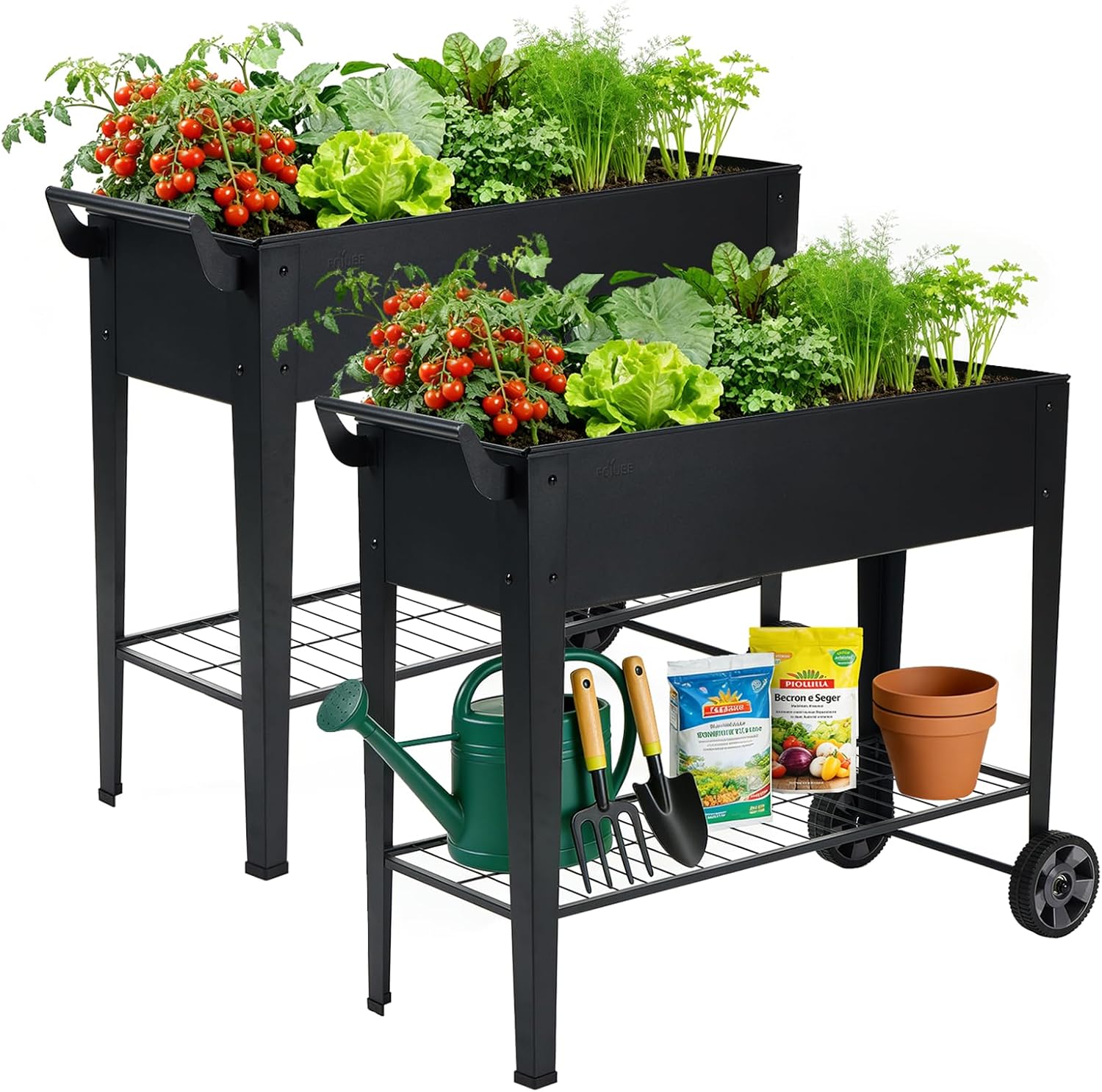
FOYUEE 2-Pack Elevated Metal Raised Garden Beds with Wheels and Shelf
| Capacity | 19.3 gallons |
|---|---|
| Number of Pieces | 2 |
| Material Type | Metal |
| Other Special Features of the Product | Dual-Layer Drainage System, Detachable Storage Shelf |
| Mounting Type | Floor Standing |
These two elevated metal planters are designed for vegetable growing where reduced bending and mobility matter. Each unit stands about 32 inches tall and holds roughly 19.3 gallons of soil, so you can plant small vegetables, herbs, or starter seedlings at comfortable working height. The galvanized, powder-coated steel construction and anti-rust treatment make the beds outdoor-ready for several seasons. A grooved bottom with multiple drain outlets helps prevent waterlogging while the detachable shelf gives a convenient spot for tools and pots and supports lighter supplies. Large 6-inch all-terrain wheels and an ergonomic handle let you roll a filled planter to follow sun or shelter from storms, which is helpful for container-grown veggies that need changing light. Assembly is straightforward with included mounting kits. Limitations: these are not deep beds for very large root crops, and mobility on steep slopes or steps is limited when filled. The metal walls will conduct heat more than wood, so situate them where midday soil overheating is less likely or use shading in hot climates.
Best for: Gardeners who prioritize easy access and proven performance and want mobile elevated planters for growing vegetables with minimal bending and demonstrable durability.
Less Ideal for: People growing very large root crops or those who need permanent, immovable beds in uneven, stepped terrain should consider deeper or fixed alternatives.
- Galvanized powder-coated steel resists rust and stands up to outdoor use
- Raised 32" height reduces bending and makes planting and harvesting easier
- Built-in grooved bottom with multiple drain outlets improves drainage and root health
- Large 6" wheels and ergonomic handle enable relocating planters to follow sun or shelter
- Detachable shelf provides handy storage and a work surface near the bed
- 12" planting depth and 19.3 gallon capacity limit use for very large root vegetables
- Wheels reduce stability on steep slopes and are not suited for steps
Verdict: A durable, easy-to-move elevated planter pair that makes growing vegetables at waist height simple while minimizing back strain.
Rakukiri 5 ft Galvanized Raised Garden Bed Planter Box

| Capacity | 68 gallons |
|---|---|
| Material Type | Metal |
| Finish Types | Powder Coated |
| Other Special Features of the Product | Rust Resistant, Weather Resistant |
| Indoor Outdoor Usage | Outdoor |
This Rakukiri 5 ft galvanized raised garden bed is a straightforward, durable planter for growing vegetables and herbs. It assembles with simple hardware and butterfly nuts, then sits as an open-bottom oval that lets excess water drain into the soil below while keeping roots from sitting in standing water. The 0.8 mm galvanized sheet and powder-coated finish provide corrosion resistance that suits year-round outdoor use and reduces the need for frequent replacement. With roughly 68 gallons of planting capacity the bed gives enough soil depth for most shallow- to medium-rooted vegetables and herbs. Because it is metal and not insulated, soil in very hot or cold climates will respond faster to ambient temperatures, so you may need to add mulch or insulation for extreme conditions. The open base also means you must place it on stable, reasonably level ground and expect some root growth into the subsoil. For gardeners who want a low-maintenance, long-lasting planting container that maximizes growing area per footprint, this is a practical choice.
Best for: Gardeners who want a sturdy, low-maintenance raised bed to maximize productive vegetable and herb growing area without complex installation.
Less Ideal for: People needing a portable or insulated raised bed for container-only production or those who must prevent any root penetration into underlying soil.
- Thicker 0.8 mm galvanized metal construction for better durability and rust resistance
- Open-bottom design provides natural drainage and improved root access to subsoil
- Powder-coated finish adds weather resistance for outdoor use
- Easy assembly with butterfly nuts and included hardware
- Metal walls offer little thermal insulation so soil temperature can fluctuate in extreme heat or cold
- Open bottom allows roots to grow into underlying soil which may complicate relocation
Verdict: A robust, easy-to-assemble galvanized raised bed that gives practical, long-lasting planting space for vegetable and herb gardeners.
Choosing the Right Elevated Planter for Vegetables: Key Factors to Consider
Usable Soil Depth
Vegetable roots vary widely, from shallow for lettuce to deep for carrots and peppers. A planter's stated depth often includes framing thickness, so focus on the actual soil depth you can fill. Deeper, uninterrupted soil encourages stronger root systems and steadier moisture reserves, reducing watering frequency and improving yield.
Too little soil depth restricts root development, which can reduce plant vigor and make crops more susceptible to heat stress. For mixed vegetable plantings include deeper pockets or choose a deeper bed so root crops and heavy feeders have enough volume.
Build Durability and Materials
Materials determine how an elevated planter stands up to wet winters, sun exposure, and repeated planting seasons. Look for rot-resistant woods, powder-coated metals, or UV-stable plastics designed for outdoor use. Joinery and hardware quality matter; rust-prone screws or loose fittings shorten usable life.
Durable construction also affects how well the planter holds shape under load when filled with moist soil. Choose materials and fastenings that resist sagging and warping so the bed stays level and planting holes remain even across seasons.
Drainage and Soil Aeration
Good drainage prevents waterlogging and root rot while adequate aeration supports beneficial microbial life and root oxygenation. Elevated planters should combine bottom drainage openings or slatted bases with a design that avoids compacting the soil under weight. Adding a coarse layer of grit or broken pottery is not always necessary if the planter has sufficient outlet space.
Consider how easy it is to modify drainage later. Some designs let you remove a liner or install additional holes; others trap excess water and require lifting or reworking the entire bed. Think about the rainfall patterns in your area and whether you need faster or slower-draining profiles.
Planting and Maintenance Ease
You will fill, plant, water, and occasionally replace soil, so choose a planter that simplifies those tasks. Wide tops and removable side panels make filling with bags of soil or wheelbarrows less tedious. Accessibility for hand tools and hose access matters for daily care and harvesting.
Maintenance ease also covers cleaning between crops and replacing liners or mulch layers. Beds that allow you to reach the center without standing on the frame reduce soil compaction and make weeding and harvesting quicker.
Ergonomics and Accessibility
Elevated planters are primarily valued for reduced bending and easier harvests. Height should match your working posture whether you prefer standing, using a stool, or sitting. Consider knee and back limitations when choosing heights and leg designs.
Accessibility also includes edge width for leaning or sitting, location for path access on multiple sides, and mounting options for supports or trellises. A planter that is comfortable to work from will encourage better garden care over the season.
Soil Volume and Weight Management
Soil volume drives both planting choices and how heavy the filled planter will be. Larger volumes support bigger plants and longer continuous cropping but increase load on the structure and the supporting surface. Make sure the frame and any legs or supports are rated for saturated weight.
Think about whether you will need to move the planter after filling. Some elevated beds are designed to be permanent, while others can be emptied and repositioned. Accessibility of the base for pouring soil and the option to use lighter mixes are practical considerations when weight is a concern.
Best Heights for Different Gardeners
Choosing the right working height makes daily tasks comfortable. Standard waist-height beds suit most standing gardeners, while slightly lower elevated beds are easier for seated work or using a garden stool. If mobility or back pain is an issue, prioritize a height that lets you reach the center without bending excessively.
Also consider your usual planting patterns. If you grow vine crops that need trellising, pair a height that gives headroom and anchor points. For patios and balcony gardens, lower elevated planters can provide good soil volume while keeping the visual scale appropriate.
- Waist height for standing work and less bending
- Lower elevations for seated gardeners or compact patios
- Taller frames for storage underneath or integrated irrigation
Liners, Soil Mixes, and Pest Barriers
Linings protect wood from constant moisture and help contain soil. Choose breathable liners to avoid trapping water against the frame, and make sure any liner allows for adequate bottom drainage. Removable liners simplify soil replacement and cleaning between seasons.
Soil mix matters more in an elevated bed than in the ground. A balanced vegetable mix with compost, aeration components, and water-retentive elements gives consistent fertility and structure. Consider adding a pest barrier layer of coarse gravel or hardware cloth if burrowing pests are a concern.
- Breathable, removable liners extend frame life
- Tailor soil mix for vegetables to balance water and air
- Use mesh barriers to block voles or gophers where needed
Positioning and Sun Access
Vegetables need reliable sun exposure, so place elevated planters where they get the required hours of full sun for the crops you intend to grow. The raised profile can sometimes cast and receive different shadows than ground beds, so observe morning and afternoon light patterns before final placement.
Also plan for irrigation access and airflow. Elevated beds on patios may dry faster, so factor in slightly richer water-holding amendments or more frequent irrigation. Position beds so you can reach all sides without stepping on surrounding planting areas.
- Map sun hours across your space before placing beds
- Account for faster drying on exposed patios or decks
- Leave access space on at least two sides for maintenance
Integrating Trellises and Supports
Many vegetable varieties benefit from vertical support. Look for planters with built-in brackets or straightforward attachment points for trellises. A sturdy frame simplifies anchoring heavy plants such as tomatoes or climbing beans without extra ground stakes.
If you plan to use large trellises, ensure the planter frame can handle the additional wind load transmitted through the supports. Consider removable or fold-down trellises for winter storage or to reduce strain on the bed during storms.
- Built-in attachment points ease trellis installation
- Check frame strength for wind load from large supports
- Use removable trellises where winter storage is needed
Winter Care and Off-Season Use
Plan ahead for frost and wet seasons. Elevated planters can cool faster and suffer root freeze sooner than ground soil, so insulating sides or moving planters to protected locations helps extend the growing window. Removable soil or liners make winter cleanup and cover cropping simpler.
Off-season use could include cover crops, cold frames, or simply storing a liner full of compost. Consider how easy it is to protect or prepare the bed for winter work when evaluating long-term convenience.
- Insulate or shelter beds in exposed sites to protect roots
- Use removable components to simplify winter cleanup
- Plan for cover cropping to rebuild soil in off-season
How We Chose the Best Elevated Planter for Vegetables
We focused on features that directly affect vegetable growth and gardener usability. Primary evaluation criteria included usable soil depth to support root systems, construction materials and corrosion resistance for outdoor durability, drainage design and soil aeration options, and ease of filling, planting, and routine maintenance. We also tested for ergonomics and accessibility so beds are comfortable to work from standing or seated positions, and we judged assembly complexity because many gardeners build and fill these beds alone. Products were excluded if they could not provide at least a minimum soil volume suitable for common vegetables, if materials were unsuitable for outdoor exposure, or if drainage was poorly designed for a raised soil profile. We prioritized options that balance long-term durability with straightforward filling and planting. The scoring criteria below match these priorities so readers can compare usable soil depth, build durability, drainage and aeration, planting and maintenance ease, and ergonomics at a glance.
FAQ
How deep should an elevated planter be for most vegetables?
Most vegetables do well in 10 to 18 inches of usable soil depth. Shallow-rooted crops like lettuce and herbs can grow in the lower end, while root crops and larger fruiting plants benefit from deeper profiles closer to 18 inches.
Can I use an elevated planter on a deck or balcony?
Yes, but check the deck's load capacity for saturated soil weight and use planters with robust, non-staining bases or trays to protect the surface. Lighter soil mixes and smaller volumes can reduce weight while still supporting productive plantings.
Do elevated planters dry out faster than ground beds?
Often they do because they are more exposed and heat up faster. You can offset this with soil mixes that hold moisture, adding organic matter, using mulch, and adjusting watering frequency or installing drip irrigation.
Is a liner necessary inside an elevated wooden planter?
A liner is recommended to extend the life of the wood by reducing constant wet-dry cycles. Choose breathable liners that allow drainage and consider removable types for easier seasonal cleaning or soil replacement.
How do I protect elevated planters from burrowing pests?
Install a layer of hardware cloth or rigid mesh across the bottom before adding soil to block voles and gophers. Ensure drainage holes remain clear so you do not trade pest protection for poor drainage.
Can I grow heavy feeders like tomatoes in an elevated planter?
Yes, provided the planter offers sufficient soil volume and the frame supports trellising loads. Use rich soil mixes with steady fertilization and plan for deeper soil to accommodate root systems and nutrient needs.
Final Verdict
Elevated planters are a practical way to grow vegetables with less strain and better control over soil and drainage. Prioritize usable soil depth and durable construction first, then match drainage characteristics and ergonomic height to how you will work the bed. Tradeoffs typically involve depth versus portability and heavier soil versus easier moving; choose the combination that fits your site, crops, and physical needs. With the right balance of soil volume, build quality, and accessibility features you can set up an elevated vegetable bed that produces well and stays comfortable to maintain across seasons.
