

Note: This article contains affiliate links. If you click on these links and make a purchase, I may earn a small commission at no extra cost to you. This helps support my research and content. Read my full affiliate disclosure here.
If you grow azaleas, the right plant food makes the difference between sparse leaves and a season of full color. Azaleas thrive when soil acidity and nutrient ratios match their needs, so a feed that supports bloom set without raising pH is essential. This guide outlines the top shortlisted plant foods for azaleas across common garden situations and containers, and explains the practical tradeoffs gardeners face. We evaluated options for nutrient balance, application ease, and long-term soil effects so you can pick a feeding approach that fits your maintenance rhythm. Below are the top picks for azalea feeding and the editorial criteria we used to select them.
Top Picks at a Glance
| Best Overall The best all-around choice for most situations | Espoma Organic Azalea-Tone 4-3-4 Granular Fertilizer (2-pack, 4 lb each) |  |
| Best Quality Built to a higher standard if you want something more solid | Espoma Organic Holly-Tone 4-3-4 Evergreen & Acid-Loving Plant Food, 4 lb. Bag (Pack of 2) |  |
| Best Value The sweet spot between price and what you get | ENVY Acid-Loving Special Water-Soluble Plant Food (Hydrangea, Azalea & Blueberry) |  |
| Best Budget The cheapest option that still gets the job done reliably | Gardenera 8-4-8 Acid-Loving Plant Fertilizer (8 oz) |  |
| Highest Rated A top-rated pick with lots of positive feedback | Miracle-Gro Miracid Water-Soluble Plant Food (acid-loving, 30-10-10) |  |
| Most Popular A crowd favorite that many people choose with confidence | Miracle-Gro Water Soluble Azalea, Camellia & Rhododendron Plant Food, 5 lb |  |
| Best Seller A high-volume bestseller chosen again and again | Jobe's Organics Azalea, Camellia & Rhododendron Fertilizer Spikes, 10 Count |  |
Espoma Organic Azalea-Tone 4-3-4 Granular Fertilizer (2-pack, 4 lb each)

| Item Form | Granules |
|---|---|
| Specific Uses For Product | Gardening, Organic, Plant Food |
| Application Method | No Mixing Required |
| Target Species | Azaleas, Rhododendrons, Camellias, Gardenias |
Espoma Organic Azalea-Tone is a ready-to-use granular fertilizer designed specifically for acid-loving, flowering evergreens like camellias. It supplies a 4-3-4 N-P-K analysis with added sulfur and Espoma’s Bio-tone organic amendment, so gardeners can spread it around the root zone in spring and fall without mixing. Typical use is simple: apply the granules to the soil surface around established plants and water in; the formulation feeds steadily and supports bloom production and healthy foliage in plants that prefer slightly acidic conditions. Notable features include organic certification for use in organic gardens and a formula tailored to the nutrient needs of camellias and related shrubs. Practical benefits are ease of application, a gentle nutrient release that reduces burn risk, and ingredients that support soil biology. Limitations are that it is intended for feeding established plants rather than quick correction of severe nutrient deficiencies, and the medium coverage means larger beds will need multiple bags.
Best for: Gardeners growing camellias or other acid-loving flowering evergreens who want an easy-to-apply organic fertilizer to maintain blooms and plant health.
Less Ideal for: Those needing a fast-acting corrective treatment for obvious nutrient deficiencies or gardeners managing large commercial beds who require high-coverage bulk fertilizers.
- Balanced 4-3-4 N-P-K formula suited to flowering evergreens
- Ready-to-use granules that require no mixing for quick application
- Organic formulation with Bio-tone that supports soil biology
- Contains added sulfur which benefits acid-loving plants like camellias
- Not formulated for rapid correction of severe nutrient deficiencies
- Medium coverage per bag so larger plantings may need additional product
Verdict: A simple, organic granular fertilizer tailored to camellias and other flowering evergreens for steady feeding and improved blooms.
Espoma Organic Holly-Tone 4-3-4 Evergreen & Acid-Loving Plant Food, 4 lb. Bag (Pack of 2)

| Item Form | Powder |
|---|---|
| Specific Uses For Product | Organic,Plant Food |
| Application Method | Sprinkle over the root zone and water in |
| Coverage | Medium |
| Target Species | Acid-loving Plants |
Espoma Holly-Tone is a ready-to-use organic fertilizer made for acid-loving plants such as blueberries and raspberries. Supplied as a powder/granular form with an N-P-K of 4-3-4 and added sulfur, it is intended to be sprinkled around the root zone and watered in, providing a slow-release nutrient reservoir that supports blooms and fruiting over the growing season. Its organic ingredients and Bio-tone inoculant are designed to feed plants while improving soil biology, which suits gardeners who prefer low-chemical approaches. Practical benefits include simple application with no mixing, suitability for spring and fall feedings, and certification for organic gardening. Limitations are that it delivers modest nutrient levels per application, so heavy-feeding situations may need more frequent use or supplementary fertilizer, and the medium coverage means larger plantings require multiple bags. For cautious gardeners wanting predictable, organic nutrition for blueberries and raspberries, Holly-Tone offers a reliable, low-risk option that integrates easily into standard care routines.
Best for: Gardeners who prioritize organic, low-risk feeding for acid-loving fruit shrubs and want a simple, no-mix fertilizer to maintain soil health and steady fruiting.
Less Ideal for: Growers managing large commercial patches or plants that need high immediate nutrient boosts should consider higher-analysis or concentrated products instead.
- Organic formula with Bio-tone to support soil biology and gradual nutrient release
- Formulated specifically for acid-loving plants like blueberries and raspberries
- Ready-to-use granular powder that requires no mixing and is simple to apply
- Contains sulfur to help maintain acidic soil conditions favored by target plants
- Low N-P-K ratio means heavier feeders may need additional applications or supplements
- Medium coverage requires multiple bags for larger patches or rows
Verdict: A dependable organic, ready-to-use fertilizer that makes feeding blueberries and raspberries simple while supporting soil biology.
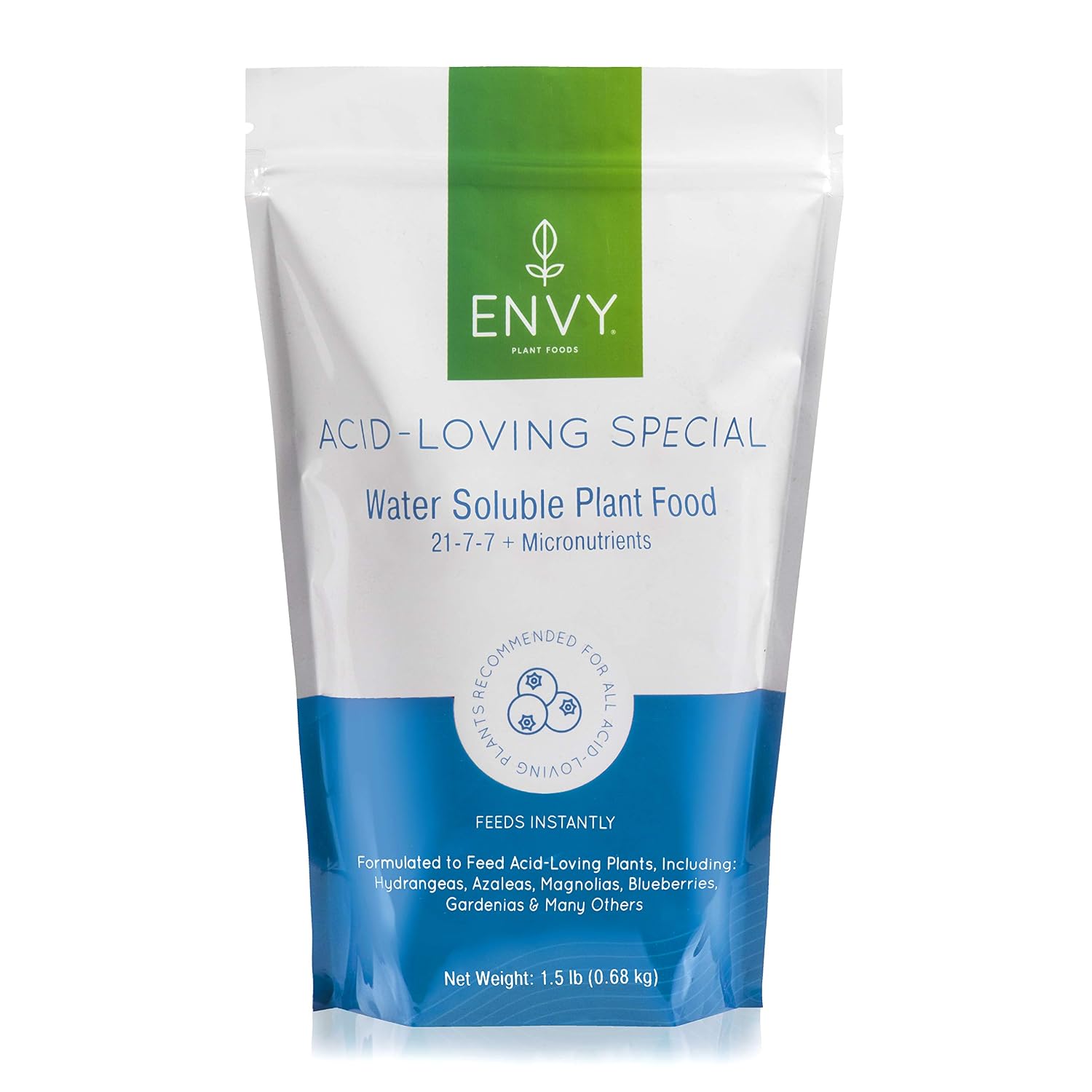
ENVY Acid-Loving Special Water-Soluble Plant Food (Hydrangea, Azalea & Blueberry)
| Item Form | Liquid |
|---|---|
| Application Method | Water Soluble |
| Specific Uses For Product | Plant Food |
| Target Species | Azaleas; Hydrangeas; Magnolias; Gardenias; Camellias; Rhododendrons; Blueberries; Citrus |
| Mixing Ratio | 21:7:7 |
This ENVY Acid-Loving Special is a water-soluble liquid plant food designed to feed acid-loving shrubs and berries. You mix the measured scoop into water using the labeled 21-7-7 ratio and apply it to soil-grown hydrangeas, azaleas, rhododendrons, gardenias and blueberries to encourage greener foliage and stronger blooms. The formula is easy to dissolve and the resealable pouch with included scoop makes repeat dosing simple and low-mess for a seasonal feeding routine. Because it targets acid-loving species, it supplies nutrients tuned to plants that prefer lower pH rather than a one-size-fits-all feed. Limitations to note are the small unit size relative to repeated large-bed use and that it is a general N-P-K blend rather than a specialty bloom booster for dramatic flower size; heavy users will need multiple pouches. For gardeners who want a straightforward, soluble fertilizer to keep hydrangeas healthy and flowering, this is a practical, easy-to-use choice.
Best for: Gardeners who prioritize efficient, repeatable feeding for hydrangeas and other acid-loving shrubs and want an easy-to-mix liquid they can apply on a regular schedule.
Less Ideal for: Large-scale landscapers or growers needing bulk quantities per season or users seeking a specialized high-phosphorus bloom concentrate for show-size flowers.
- Formulated for acid-loving plants commonly used with hydrangeas and azaleas
- 100% water soluble for easy mixing and even application
- Includes measuring scoop and resealable pouch for accurate, low-mess dosing
- Unit is relatively small so frequent gardeners or large beds may need multiple pouches
- Not marketed as a high-phosphorus bloom booster for maximizing flower size
Verdict: A practical, easy-to-mix liquid fertilizer tailored to acid-loving plants that keeps hydrangeas healthy with minimal fuss.
Gardenera 8-4-8 Acid-Loving Plant Fertilizer (8 oz)

| Unit Count | 8 Ounce |
|---|---|
| Item Form | Granules |
| Application Method | Sprinkle, mix into soil, and water |
| Mixing Ratio | 8:4:8 |
| Coverage | acid-loving plants |
Gardenera 8-4-8 is a slow-release granular fertilizer aimed at acid-loving shrubs and berry plants. You apply it by sprinkling or mixing into soil around the root zone and watering; the granules feed plants over time so you only need a few applications per season. The formula lists micronutrients such as iron, magnesium and manganese to help prevent yellowing in rhododendrons and improve flower and leaf color, and the product description notes added bio-solids with beneficial microbes to support soil health. Practical benefits include targeted nutrition for plants that prefer acidic soil and a convenient three-times-a-year feeding schedule for low-maintenance care. Important limitations are the small 8 oz unit size, which means it is best for a few containers or shrubs rather than larger beds, and specifics about exact application rates for different plant sizes are not detailed on the package, so gardeners should follow general fertilizer guidelines or consult local extension advice.
Best for: Home gardeners with a few rhododendrons, azaleas or container acid-loving plants who want an easy, low-maintenance feeding schedule and targeted nutrient support.
Less Ideal for: Those managing large landscapes, commercial plantings, or many shrubs at once who need bulk quantities and precise per-plant dosing.
- Slow-release granules provide long-lasting nutrition and reduce reapplication frequency
- Formulated specifically for acid-loving plants so it supports rhododendron nutrient needs
- Includes micronutrients like iron, magnesium and manganese to help prevent chlorosis
- Contains bio-solid derived microbes intended to improve soil health and root vigor
- Small 8 oz unit limits coverage for larger gardens
- Label lacks detailed application rates for different shrub sizes
Verdict: A convenient slow-release 8-4-8 granular fertilizer that delivers targeted nutrition for a few rhododendrons or other acid-loving shrubs with minimal reapplication.
Miracle-Gro Miracid Water-Soluble Plant Food (acid-loving, 30-10-10)

| Item Form | Powder |
|---|---|
| Specific Uses For Product | Root Development |
| Application Method | Water Soluble |
| Target Species | azaleas, hydrangeas, rhododendrons |
| Mixing Ratio | 30-10-10 |
This Miracid water-soluble plant food is formulated specifically for acid-loving shrubs such as azaleas, hydrangeas and rhododendrons and is mixed into water for foliar or soil feeding. The 30-10-10 formulation provides a high nitrogen dose that promotes quick leaf and stem growth while supporting root development and flowering when used as directed. It dissolves easily and the product description notes a double feeding action that supplies nutrients both to roots and leaves, so you can apply it as a soil drench or a foliar spray depending on need. Practical benefits include fast uptake and visible greening and bloom response in responsive plants, plus suitability for repeat feedings during the growing season. Important limitations are the high nitrogen ratio, which means it should be used carefully on bloom-focused plants if overapplied, and that it is aimed at acid-loving species so it is not a general-purpose fertilizer for all garden plants.
Best for: Buyers who prioritize a dependable, plant-specific fertilizer for reliably greening and strengthening blue hydrangeas and other acid-loving shrubs and who plan to follow mixing directions carefully.
Less Ideal for: Gardeners seeking an all-purpose or low-nitrogen bloom-specific fertilizer or those growing plants that prefer neutral to alkaline soil.
- Formulated for acid-loving plants like hydrangeas and azaleas
- Water-soluble powder for foliar or soil application and quick uptake
- Double-action feeding through roots and leaves for flexible use
- High-nitrogen 30-10-10 mix supports rapid greening and root development
- High nitrogen ratio may encourage foliage over blooms if overused
- Not appropriate as a one-size-fits-all fertilizer for neutral or alkaline-loving plants
Verdict: A reliable, acid-loving plant fertilizer that delivers fast, water-soluble feeding ideal for strengthening and greening blue hydrangeas.
Miracle-Gro Water Soluble Azalea, Camellia & Rhododendron Plant Food, 5 lb

| Item Form | Powder |
|---|---|
| Application Method | watering can or Miracle-Gro Garden Feeder |
| Target Species | Azaleas, Camellias, Rhododendrons, Gardenias, Hibiscus, Hollies, Hydrangeas, Orchids |
| Mixing Ratio | 1:144 (indoor), 1:18 (outdoor) |
| Coverage | Medium |
This water-soluble Miracle-Gro formula is designed specifically for acid-loving shrubs and flowering plants and is straightforward to use: mix into a watering can or fill a Miracle-Gro Garden Feeder and apply every 7 to 14 days while plants are actively growing. It lists a broad target range that includes azaleas, camellias, rhododendrons, gardenias, hydrangeas and even orchids and hibiscus, so you can use one product across much of an acid-loving border or collection. The powder form dissolves for quick uptake and the package provides mixing ratios for indoor and outdoor use, making dose control easy. Practical benefits are fast nutrient delivery and convenience for regular feeding of shrubs and container plantings. Limits to note are that this is a soluble feed meant for routine use rather than long-term slow release so it requires repeat applications, and it assumes you will follow the specified dilution to avoid overfeeding.
Best for: Gardeners who want a reliable, easy-to-apply feed for acid-loving shrubs and mixed container plantings and who are willing to commit to regular watering-can or feeder applications.
Less Ideal for: Those seeking a one-time, slow-release fertilizer or a product they can apply infrequently over months instead of every few weeks.
- Formulated specifically for acid-loving plants like azaleas and rhododendrons
- Water-soluble powder gives fast nutrient availability when mixed and applied
- Clear mixing instructions for indoor and outdoor use simplify dosing
- Works with a watering can or compatible Miracle-Gro Garden Feeder for convenience
- Requires repeated applications every 7–14 days during active growth
- Not a slow-release soil amendment for long-term feeding
Verdict: A straightforward, water-soluble fertilizer that delivers fast, targeted nutrition for acid-loving plants when used regularly.
Jobe's Organics Azalea, Camellia & Rhododendron Fertilizer Spikes, 10 Count

| Item Form | Sticks |
|---|---|
| Application Method | Spikes |
| Specific Uses For Product | Plant Growth, Root Development, Soil Conditioning |
| Target Species | Azalea, Camellia, Rhododendron |
| Mixing Ratio | 9-8-7 |
These Jobe's Organics spikes are designed to feed acid-loving shrubs like azaleas, camellias, rhododendrons and other similar plants by inserting premeasured sticks into the root zone. Each spike contains a 9-8-7 NPK mix that releases nutrients slowly, which reduces surface runoff and the need for frequent granular or liquid feeding. They are simple to use: push the spikes into the soil around shrubs every 4 to 6 weeks during the growing season, and the waterproof resealable pouch keeps unused spikes dry. Practical benefits include mess-free application, reduced risk of overfertilizing because each spike is portioned, and targeted root delivery that supports bloom production. Limitations are that spikes cover a medium area so larger or densely planted shrubs may need several spikes per plant, and they are specific to acid-loving species so they are not a one-stop fertilizer for mixed beds. Also the spike format is less flexible than a granular or soluble feed if you prefer custom dosing or foliar feeding.
Best for: Ideal for gardeners who want a low-effort, no-mess way to maintain flowering acid-loving shrubs and prefer straightforward, premeasured applications.
Less Ideal for: Not a good fit for gardeners needing a single fertilizer for mixed plantings or those who want precise custom dosing or foliar/soil drench applications.
- Premeasured spikes reduce mess and make dosing straightforward
- Slow-release 9-8-7 NPK delivers nutrients at the roots to support blooms
- Waterproof resealable pouch preserves unused spikes
- Formulated specifically for acid-loving shrubs to match nutrient needs
- Medium coverage per spike means multiple spikes needed for large shrubs
Verdict: A simple, low-mess slow-release spike feed that makes keeping holly and other acid-loving shrubs blooming easy for budget-minded gardeners.
Choosing the Right Plant Food for Azaleas: Key Factors to Consider
Nutrient Ratio and Bloom Support
Azaleas respond strongly to the balance of nitrogen, phosphorus, and potassium. A formula with moderate nitrogen, adequate phosphorus, and balanced potassium encourages robust leaf growth while supporting bud set and flowering. Too much nitrogen late in the season can produce lush foliage at the expense of blooms, while insufficient phosphorus can limit flower development.
When choosing plant food, check labels for an N-P-K distribution that favors bloom support without pushing excessive vegetative growth. Consider seasonal feeding patterns: higher phosphorus in early spring can help bud formation, while balanced maintenance feeds during the growing season sustain color and vigor.
pH Influence and Acid-Loving Compatibility
Azaleas prefer slightly acidic soil, typically between pH 4.5 and 6.0. Some fertilizers include acidifying components or sulfur-containing additives that help maintain suitable conditions, while others are neutral or can slowly raise pH through repeated use. Knowing how a plant food affects soil acidity matters for long-term health and nutrient availability.
If your garden soil trends alkaline, choose formulations designed for ericaceous plants or plan complementary practices like using acidic mulches or soil amendments. Regular pH checks will reveal whether a chosen feed is keeping root-zone conditions in the desired range.
Release Profile: Quick Boosts Versus Slow Feeding
Plant foods come as fast-release soluble formulas and slow-release granules or coated fertilizers. Soluble feeds give a rapid nutrient boost useful for immediate bloom pushes or corrective applications, but they require more frequent dosing. Slow-release options supply nutrients over weeks or months, reducing application frequency and lowering the risk of nutrient burn from overapplication.
Choose a release profile that matches how often you tend to your garden and how quickly you need results. For container azaleas or high-drain soils, more frequent soluble feeding may be necessary. For in-ground shrubs with stable soil, a slow-release product can simplify seasonal care.
Application Method and Practicality
Consider how you will apply the plant food: granular top-dress, water-soluble drench, foliar spray, or tablet-style inserts. Granules and tablets are easy to apply and less likely to be washed away, while soluble feeds require mixing but deliver uniform coverage. Foliar sprays can correct nutrient deficiencies quickly but are more labor intensive and provide shorter-term effects.
Practical factors include clear dosing instructions, measurement convenience, and safety for pets and wildlife. Products with simple, low-mess application reduce mistakes and make seasonal feeding routines easier to maintain.
Salt Index and Root Safety
Some concentrated fertilizers have a higher salt index that can stress roots, cause leaf scorch, or inhibit water uptake, especially in containers or poorly drained soils. Azaleas have relatively fine root systems that are sensitive to salt buildup. Choosing a lower-salt formulation or using recommended dilutions helps prevent damage.
Regularly leaching containers and avoiding overapplication are practical steps to minimize salt accumulation. When in doubt, err on the side of lighter feeding and monitor plants for signs of stress after application.
Compatibility with Soil Amendments and Mulches
Gardeners often combine plant food with mulches, compost, or peat to preserve moisture and acidity. Some fertilizer types interact well with organic matter, releasing nutrients as microbes break down compost, while others are designed to work independently. Understanding these interactions helps maximize nutrient uptake and maintain target pH.
For example, acidic mulches like pine needles or shredded oak complement acid-forming feeds, whereas alkaline amendments can negate acidifying benefits. Factor in your mulching and soil-improvement plan when choosing a feeding strategy so the different elements support rather than counteract each other.
When to Feed Azaleas During the Year
Timing feeds to the plant life cycle improves results. Apply a bloom-supporting feed in late winter or early spring as new growth begins to appear, and follow with lighter maintenance applications through the growing season if needed. Avoid heavy nitrogen applications late in the season, which can delay dormancy and reduce winter hardiness.
For container-grown azaleas, check moisture and responsiveness more often; pots dry faster and may need monthly soluble feeding during active growth. In-ground shrubs with established roots usually do well with one or two well-timed feeds per year combined with organic mulches.
- Early spring feed encourages bud set and new shoots
- Light midsummer maintenance supports extended bloom
- Skip heavy feeding in late fall to allow hardening off
Soil Testing and Adjusting pH
A simple soil test gives actionable information about acidity and nutrient availability. Test in spring before the main feeding season and recheck every couple of years or after significant soil amendments. Small home kits or laboratory analyses both give useful baselines.
If pH is outside the ideal range, choose feeds that help correct acidity or plan companion amendments. Adjustments take time, so pair feeding with mulching and organic matter to stabilize conditions.
- Test every 1 to 3 years depending on changes you make
- Use targeted amendments rather than increasing fertilizer frequency to alter pH
Feeding Azaleas in Containers Vs. In-Ground
Container azaleas require closer attention because soil volume limits nutrient and water retention. Use a well-draining, acidic potting mix and favor regular, diluted soluble feeds or tablet systems designed for pots. Flush containers occasionally to prevent salt buildup.
In-ground azaleas benefit from deeper root zones and greater buffering capacity. Slow-release granular products or a single seasonal application combined with acidic mulch often suffice for established shrubs.
- Containers: frequent, lower-dose soluble feeding and periodic leaching
- In-ground: slow-release or seasonal top-dress with organic mulch
Organic Versus Synthetic Feeding Options
Organic fertilizers release nutrients as soil biology breaks down the material, often improving soil structure and microbial life over time. They are generally lower risk for salt damage but release nutrients more slowly and unpredictably.
Synthetic options offer precise nutrient labels and predictable release patterns, which can be valuable when you need a targeted bloom response. Choose based on your preference for soil health, timing needs, and how closely you can follow dosing instructions.
- Organic feeds support long-term soil biology and are gentler on roots
- Synthetic feeds give precise, quick nutrient availability for targeted results
Common Mistakes to Avoid When Feeding
Overfeeding is a frequent issue that leads to leaf burn, reduced flowering, and salt buildup. Always follow label dilution instructions and resist the urge to increase frequency when results are slow. More is not always better.
Another mistake is ignoring pH. Feeding an azalea the right N-P-K while the soil pH is off can still leave nutrients locked out. Finally, applying fertilizer to dry soil or during heat stress reduces uptake and increases the risk of damage. Water first, then feed when soil conditions are favorable.
- Do not exceed recommended application rates
- Check pH before changing feeding programs
- Avoid feeding in extreme heat or drought
How We Chose the Best Plant Food for Azaleas
We focused on feeding products and formulations designed for acid-loving shrubs and ornamental azaleas. Selection prioritized nutrient ratios known to influence flowering and foliage health, plus how a product interacts with typical garden soils and watering routines. Key evaluation criteria included nutrient balance and release profile, impact on soil pH and buffering, ease and safety of application for home gardeners, and suitability for both in-ground and container-grown azaleas. We excluded general-purpose lawn or vegetable fertilizers that do not specify use on ericaceous plants or that contain ingredients likely to raise soil pH. We also filtered out formulations with unclear nutrient labeling or excessive salt index for typical garden use. The final shortlist emphasizes products that provide appropriate levels of nitrogen, phosphorus, and potassium for bloom development while helping maintain the slightly acidic soil azaleas prefer. Other considerations included soluble versus slow-release formats, compatibility with mulches and organic soil amendments, and straightforward dosing instructions that reduce the risk of overfeeding.
FAQ
How often should I feed azaleas in the ground?
Usually one to two targeted feedings per year are enough for established in-ground azaleas. Apply a bloom-supporting feed in early spring and consider a light maintenance application midseason if growth or flowering seems weak.
Can container azaleas use the same plant food as those in the ground?
They can, but containers need more frequent, lower-dose applications because nutrients wash out more quickly and salts build up. Use diluted soluble feeds or slow-release tablets specifically labeled for potted ornamentals and flush pots regularly.
Will feeding azaleas change my soil pH quickly?
Most fertilizers change pH slowly over time; acidifying feeds can help maintain acidity but are not a rapid fix. If pH adjustment is urgent, combine feeding with acidifying mulches or targeted soil amendments and retest after several months.
Are organic plant foods effective for azaleas?
Organic feeds can be effective and improve soil structure, but they release nutrients more slowly and rely on soil biology. For steady long-term health, combine organic amendments with periodic targeted feeds if faster results are needed.
What signs indicate overfeeding or salt buildup?
Leaf scorch, brown leaf edges, stunted growth, and poor water uptake often indicate salt stress from overfeeding. In containers, white crust on the soil surface or pot rim also signals buildup. Leach soil with water and reduce feeding frequency if you see these signs.
Is foliar feeding useful for azaleas?
Foliar sprays can correct short-term deficiencies quickly, especially for micronutrients, but they provide temporary effects and do not replace root feeding. Use foliar applications as a supplement when you need a rapid correction.
Final Verdict
Prioritize a plant food that supports bloom-set while maintaining the slightly acidic soil azaleas need. Balance nutrient ratio, pH influence, and release profile with your garden routines and whether plants are in pots or the ground. Simpler, lower-salt feeding schedules reduce risk and work well for busy gardeners. Choose feeds that match your timing goals and soil conditions, monitor pH and plant response, and be willing to adjust frequency rather than increasing dose. With the right approach, you can encourage fuller flowering without stressing roots or upsetting soil balance.
