

Note: This article contains affiliate links. If you click on these links and make a purchase, I may earn a small commission at no extra cost to you. This helps support my research and content. Read my full affiliate disclosure here.
If you spend time outdoors with pets, choosing an animal safe mosquito spray changes how comfortable your yard, porch, or patio feels. The right spray reduces biting pressure on dogs, cats, and outdoor-friendly animals while minimizing risk from harsh chemicals. This guide looks at six vetted animal-safe mosquito spray options shortlisted for real pet households and outdoor living spaces. We evaluate each choice for ingredient safety, how well it repels mosquitoes, application convenience, and suitability around common pets. Read on to understand the tradeoffs so you can pick an option that balances protection and animal safety.
Top Picks at a Glance
| Best Overall The best all-around choice for most situations | Wondercide Outdoor Pest Control Spray — 32 oz Ready-to-Use |  |
| Best Quality Built to a higher standard if you want something more solid | Cedarcide Original Bug Spray (4 oz) — Natural Cedar Oil Repellent |  |
| Best Value The sweet spot between price and what you get | Cutter Essentials Bug Control Spray Concentrate, 32 fl oz |  |
| Best Budget The cheapest option that still gets the job done reliably | Vet's Best Mosquito Repellent Spray for Dogs & Cats, 8 oz |  |
| Most Popular A crowd favorite that many people choose with confidence | Wondercide Flea, Tick & Mosquito Spray for Pets & Home, Lemongrass, 32 oz |  |
| Best Seller A high-volume bestseller chosen again and again | Vet's Best Flea & Tick Yard and Kennel Spray, 32 oz |  |
Wondercide Outdoor Pest Control Spray — 32 oz Ready-to-Use

| Format | Pre-mixed, hose-end spray |
|---|---|
| Active ingredients | Cedarwood Oil 12.63%, Sesame Oil 2.73% |
| Coverage | Up to 5,000 sq ft (general); 2,500 sq ft (ticks/mosquito repel) |
Wondercide Ready-to-Use Outdoor Pest Control is a hose‑end spray designed for treating yards up to 5,000 sq ft for general pests and 2,500 sq ft for ticks and mosquito repellency. You attach the bottle to a garden hose, sweep the nozzle across lawns, patios, and foundation lines, and the cedarwood‑based formula delivers quick coverage with no dry time required. Notable features include plant-powered active ingredients (cedarwood and sesame oils), ready-to-use convenience, and instructions for both active infestations and preventative maintenance. Practical benefits are that it is safe to use around people and pets when directions are followed, residues are reported to be non-harmful to pollinators, and the hose attachment makes treating large areas fast. Important limitations are that effectiveness depends on water pressure, walking speed, and weather, heavy rain may require reapplication, and spraying in temperatures above 90°F or direct sun can cause plant burn. Users who need an all‑season, high‑durability pesticide for heavy infestations should plan on repeated applications and follow label precautions to protect sensitive plants.
Best for: Buyers who prioritize effective, plant‑based mosquito and tick control for medium to large yards and want a fast hose‑attached solution that is safe around families and pets when used as directed.
Less Ideal for: Gardeners who need a single, long‑lasting professional‑grade pesticide for severe, persistent infestations or who cannot reapply after rain should consider alternative, heavier‑duty treatments.
- Ready-to-use hose-end applicator for fast coverage of large yards
- Plant-based active ingredients (cedarwood and sesame oils) that target common yard pests
- No dry time required so kids and pets can re-enter treated areas quickly
- Covers up to 5,000 sq ft for general pest control and 2,500 sq ft for ticks/mosquito repellency
- May cause phytotoxic burning if applied in direct sun or temperatures above 90°F
- Performance depends on water pressure and user walking speed which can lead to uneven coverage
- Heavy rain can wash it away and requires reapplication
Verdict: If you want a fast, family- and pet-friendly plant‑based spray to reduce mosquitoes and ticks across a medium to large yard, this ready‑to‑use hose‑end formula delivers practical, repeatable results.
Cedarcide Original Bug Spray (4 oz) — Natural Cedar Oil Repellent

| Ingredients | Cedarwood Oil, Soybean Oil, Mineral Oil, Silica Hydrate, Isopropyl Myristate |
|---|---|
| Intended use | People, pets, and indoor surfaces |
| Application frequency (people) | Reapply every 5–7 hours |
| Bottle size | 4 oz |
Cedarcide Original is a plant-based bug spray that uses cedarwood oil to both kill insects on contact and repel mosquitoes, ticks, fleas, ants, mites, chiggers, and more. It is supplied in a handheld spray bottle and is intended for direct application to skin and clothing, light misting of pets, and spot use indoors on floors, furniture, and pet areas. The formula is free of harsh synthetic insecticides and is marketed as family- and pet-friendly when used as directed, with a quick-drying finish and a pleasant cedar scent. Practical benefits include multi-use convenience across personal, pet, and indoor use and a gentler ingredient profile that reduces concern about toxic residues. Limitations are its short reapplication interval for personal protection compared with longer-lasting chemical repellents, and the product is explicitly noted as not plant safe so it should not be used broadly around lawns or garden beds. For heavy infestations or long-duration outdoor protection you may need a targeted outdoor product or more frequent applications.
Best for: Buyers who prioritize effective pest control without synthetic insecticides and who need a multi-use spray for people, indoor areas, and pets.
Less Ideal for: Gardeners or homeowners seeking long‑duration outdoor lawn and bed protection or a single treatment solution for heavy outdoor infestations.
- Uses natural cedarwood oil that repels and kills a wide range of common pests
- Formulation intended for use on people, dogs, and some pets with clear application guidance
- Quick-drying and leaves a pleasant cedar scent instead of chemical odor
- Versatile for indoor spot treatment on furniture, carpets, and pet areas
- Protection duration is shorter than many synthetic long‑lasting repellents requiring reapplication every 5–7 hours for people
- Not safe for use on plants or broad lawn applications
Verdict: Choose Cedarcide Original if you want a family‑safe, cedar‑oil spray that protects people and pets indoors while avoiding synthetic insecticides.
Cutter Essentials Bug Control Spray Concentrate, 32 fl oz

| Unit Count | 32 Fluid Ounces |
|---|---|
| Item Form | Liquid |
| Target Species | Insects |
| Liquid Volume | 32 fluid ounces |
Cutter Essentials Bug Control Spray Concentrate is a garden hose‑attachable liquid designed to treat lawns, landscaping and outdoor play areas for mosquitoes, ticks and other listed insects. You mix it on a hose-end sprayer and spray evenly over the treatment area; the manufacturer says one bottle covers up to 5,000 square feet. Notable features include a convenient hose-end applicator and a formula that uses plant-derived oils such as cinnamon, peppermint and cornmint, which the brand positions as mindful ingredients and safe around children and pets when used and stored as directed. In practice this product is best for broad perimeter treatments and spot applications where contact kill is acceptable. Expect fast knockdown of visible insects but remember it works by contact so it will not provide long‑term systemic control. Follow label directions about pollinators and avoid spraying blooming plants. The hose‑end application makes coverage quick for larger yards, though users who need residual, long‑lasting protection or indoor use will want a different approach.
Best for: Buyers who prioritize practical, fast yard treatments and want a pet- and family-conscious option for knocking down mosquitoes across a medium to large outdoor area.
Less Ideal for: Gardeners seeking long‑term residual pest control, indoor insect solutions, or a product safe to spray on blooming plants frequented by pollinators should look elsewhere.
- Hose‑end sprayer connects to a garden hose for quick, even coverage
- Covers up to 5,000 square feet for treating lawns and landscaping
- Formulated with plant-derived oils and described as safe around children and pets when used and stored as directed
- Kills mosquitoes and other listed insects by contact for immediate knockdown
- Kills by contact and does not provide systemic or long-lasting residual control
- Should not be applied when pollinators are foraging and may harm ornamental foliage if overapplied
Verdict: A practical hose‑end concentrate for fast, large‑area knockdown of mosquitoes that prioritizes family and pet safety when used as directed.
Vet's Best Mosquito Repellent Spray for Dogs & Cats, 8 oz

| Item Volume | 8 fluid ounces |
|---|---|
| Target Species | Dog |
| Scent Name | Citronella, Lemongrass |
| Item Form | Oil |
Vet’s Best Mosquito Repellent is a plant-based spray formulated for dogs and cats 12 weeks and older to repel mosquitoes during outdoor and indoor activities. You shake and mist the coat while avoiding the face and genital areas, focusing on exposed skin like the belly; directions recommend reapplying about every two hours. The formula uses certified essential oils such as lemongrass, geraniol and peppermint and is free of DEET, which makes it a gentler alternative for pet owners who prefer botanical ingredients. Practical benefits include a light scent, suitability for use on bedding and pet areas when used as directed, and simple application for walks, hikes, or backyard time. Limitations are that protection is short duration compared with chemical repellents so frequent reapplication is needed, and it is labeled for pets 12 weeks or older so it is not for very young or pregnant animals. Also the active oil concentrations mean you should avoid contact with eyes and mouths and follow label directions closely.
Best for: Buyers who want a budget-friendly, chemical-free mosquito repellent for routine outdoor use and who prioritize gentler, natural ingredients over long-lasting synthetic protection.
Less Ideal for: Pet owners who need all-day, low-maintenance protection or who treat very young or pregnant animals should choose a longer-lasting or veterinarian-prescribed option instead.
- Plant-based, DEET-free formula using certified essential oils
- Clear, simple spray application for coat and pet areas
- Safe for dogs and cats 12 weeks and older when used as directed
- Light, non-staining scent suitable for indoor and outdoor use
- Requires reapplication roughly every two hours for continued protection
- Not validated for species or animals younger than label age
Verdict: A affordable, plant-based spray that provides short-term, DEET-free mosquito protection for dogs and cats when reapplication is acceptable.
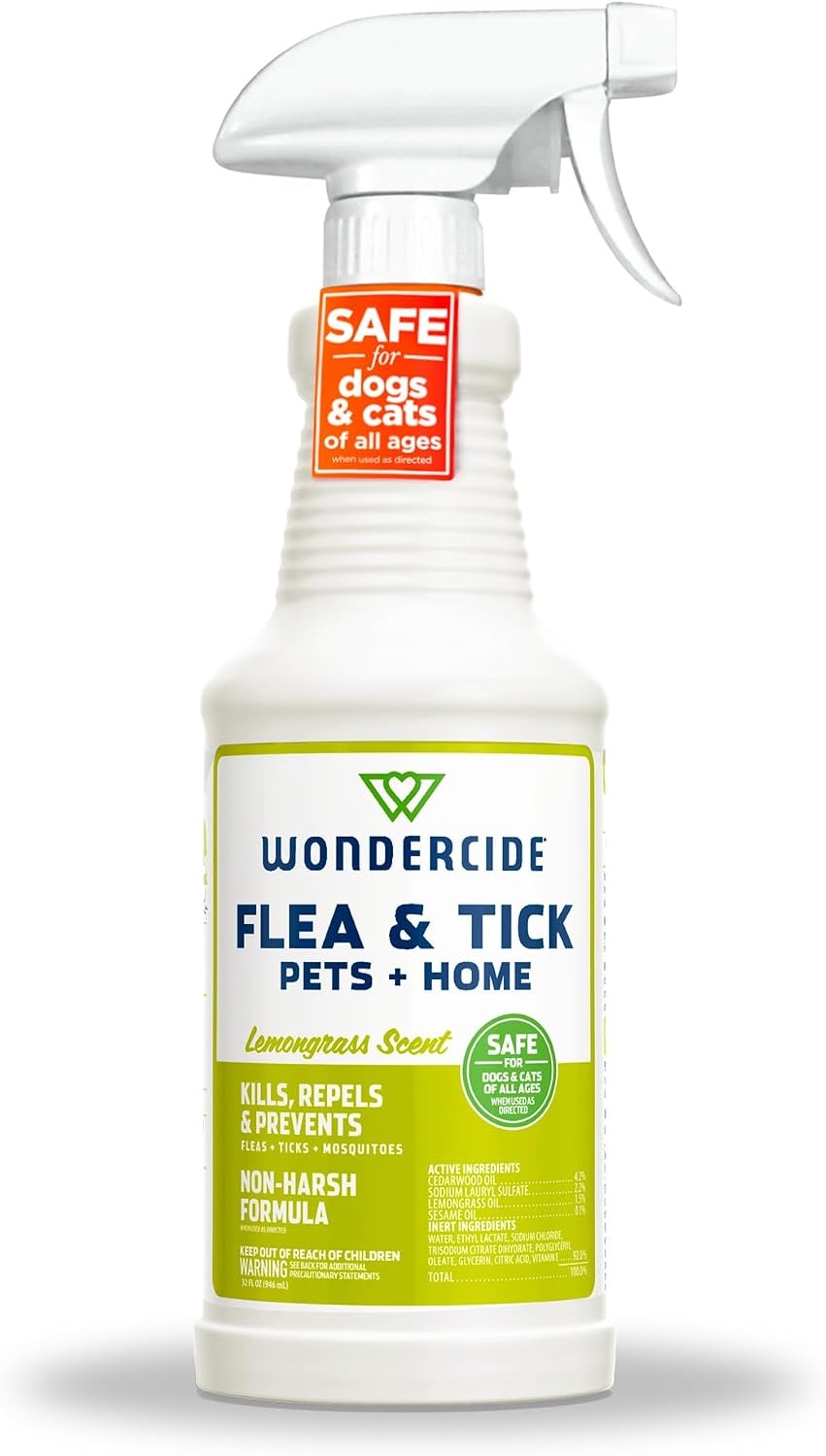
Wondercide Flea, Tick & Mosquito Spray for Pets & Home, Lemongrass, 32 oz
| Unit Count | 32 Ounce |
|---|---|
| Active Ingredients | Lemongrass Oil, Cedar Oil |
| Target Species | Dog |
| Age Range Description | All Life Stages |
Wondercide Lemongrass Flea, Tick & Mosquito Spray is a 32 oz plant-powered topical and household spray designed to kill by contact and repel common pests on dogs and cats and in pet environments. You use it like a conventional spray: mist pets (avoiding eyes and mucous membranes) for spot treatments or spray around bedding, carpets, kennels, and furniture to reduce fleas and ticks in the home. The formula lists cedar oil, lemongrass oil and mild surfactants and is labeled safe for all life stages when directions are followed, making it suitable for frequent use and for households with puppies or kittens. Practical benefits include a non-harsh scent that freshens rooms and a multiuse application that can break the flea life cycle by targeting eggs, larvae and adults. Limitations are that efficacy claims are based on lab testing rather than field guarantees, it is a topical/contact product so full-season control may require repeated applications, and users should follow label guidance and spot-test for skin sensitivity.
Best for: Buyers who want a practical, plant-based spray to manage fleas, ticks, and mosquitoes on pets and in the home and who prioritize a non-chemical alternative they can apply themselves.
Less Ideal for: Owners facing heavy or persistent infestations who need fast, guaranteed whole-animal or systemic control should consult veterinary options instead.
- Plant-based active ingredients (cedar oil and lemongrass) suitable for households preferring natural options
- Works as both a pet topical and household spray to target fleas, ticks, and mosquitoes
- Safe for use on all life stages when directions are followed, including puppies and kittens
- Large 32 oz size supports repeated applications around pets and the home
- Effectiveness is reported from laboratory testing and may require repeated applications in real-world infestations
- Not a systemic treatment so it may not replace monthly oral or topical veterinary preventives for heavy infestations
Verdict: A practical, plant-powered spray for pet owners who want a multiuse, gentle option to reduce fleas, ticks, and mosquitoes around pets and the home.
Vet's Best Flea & Tick Yard and Kennel Spray, 32 oz

| Unit Count | 32 Fluid Ounces |
|---|---|
| Item Form | Spray |
| Scent Name | Peppermint |
| Target Species | Dog |
| Active Ingredients | eugenol, peppermint oil |
This 32 oz Vet's Best yard and kennel spray is a plant-based, ready-to-use treatment designed to protect outdoor spaces from fleas, ticks, and mosquitoes. It connects to a garden hose via a built-in applicator so you can cover turf, patios, kennels, and other landscaping quickly and evenly without mixing. The active botanical ingredients are peppermint oil and eugenol from clove, which the maker says kill pests on contact while leaving a peppermint scent rather than strong synthetic odors. Practical benefits include easy application with a hose attachment, coverage suitable for large areas, and a formula safe to use around dogs 12 weeks and older when directions are followed. Important limitations are that it is for outdoor use only, requires reapplication after heavy rain or for severe infestations, and can cause eye or skin irritation in sensitive people or pets if not rinsed promptly. For owners looking for a natural, vet-formulated option to add to a multi-pronged flea control plan, this spray is a convenient outdoor tool, but it should be used as directed and paired with pet treatments for best results.
Best for: Pet owners who want an easy, plant-based yard spray to reduce outdoor flea and tick pressure and who prefer solutions backed by vet formulation and broad customer use.
Less Ideal for: People who need an all-in-one single-treatment solution for severe indoor infestations or who require products safe for pregnant or nursing animals should look at other specialized options.
- Ready-to-use hose attachment for fast, even coverage of yards and kennels
- Plant-based active ingredients (peppermint oil and eugenol) that kill fleas, flea eggs, ticks, and mosquitoes on contact
- Formulated for use around dogs 12 weeks and older when used according to label
- Leaves a natural peppermint scent instead of strong synthetic fragrances
- Outdoor use only and not designed to replace on-pet treatments
- Requires reapplication after heavy rain and for ongoing infestations
- Contains ingredients that can cause eye or skin irritation in sensitive individuals or animals
Verdict: A convenient, vet-formulated plant-based yard spray for pet owners who want a ready-to-use outdoor tool to reduce fleas, ticks, and mosquitoes without harsh chemicals.
Choosing the Right Animal Safe Mosquito Spray: Key Factors to Consider
Ingredient Safety and Toxicology
Look past marketing phrases and read ingredient lists to identify actives and carriers. Some botanical ingredients are lower risk for mammals but can still irritate sensitive animals. Verify whether the active repellent is listed and whether the formulation contains solvents, fragrances, or additives known to cause skin or respiratory irritation in pets.
Certain conventional insecticides present higher acute or chronic risks to pets, especially cats, which metabolize some compounds differently. Consider formulations that use actives with clearer mammalian safety data and avoid sprays that do not disclose active ingredients or provide specific pet-related warnings.
Repellency Duration and Effectiveness
Evaluate how long a spray is expected to reduce mosquito activity and whether the label provides a realistic protection window. Short-duration botanical sprays may need more frequent applications, which could increase exposure over time. Longer-lasting actives can reduce application frequency but may carry different safety tradeoffs.
Think about the typical time you and your pets spend outdoors. If you need multi-hour protection during evening hours, prioritize sprays with longer documented repellency while balancing ingredient safety for animals.
Application Method and Coverage Area
Different products are designed for different targets: perimeter yard treatments, spot-sprays for patios, or sprays safe for use near animal bedding. Yard-focused sprays should list recommended coverage per bottle and whether equipment like a pump sprayer is required. Spot treatments need clear instructions on how close to place the spray and whether surfaces should dry before pets return.
Application method affects both effectiveness and animal exposure. Aerosol foggers or misting systems may disperse chemicals more widely than targeted sprayers, increasing the chance of pets inhaling residues. Choose the delivery method that fits your space and ability to restrict pet access during and after application.
Label Guidance on Pet Exposure and Re-entry Times
Safe use depends on following label directions about when pets can return to treated areas. Good products provide explicit re-entry intervals for animals, recommend holding pets during application, and outline first-aid steps for accidental contact. If a product lacks clear pet-specific instructions, it is harder to use safely in a home with animals.
Also check for guidance about treating kennels, bedding, or areas where pets rest. Treatments intended for vegetation or hardscape only may not be appropriate near animal sleeping areas.
Risk to Non-Target Animals and Wildlife
Consider how a product behaves beyond pets in your household. Some sprays may be toxic to pollinators, amphibians, or aquatic life if runoff reaches ponds or storm drains. If your outdoor space includes bird feeders, ponds, or wildlife corridors, prioritize formulations with lower non-target toxicity and guidance to avoid contamination of water.
Read label precautions about protecting bees and other beneficials and avoid broad-spectrum sprays applied indiscriminately over flowering plants.
Storage, Residue, and Long-Term Use
Think about how you will store the product safely away from pets and whether the spray leaves residues on outdoor furniture or flooring. Persistent residues can lead to ongoing pet exposure through contact or grooming. Products that break down quickly or rinse off easily reduce long-term exposure but may require repeated treatments.
Also consider whether the product needs special disposal methods. Clear storage and disposal instructions reduce accidental access by curious animals.
When to Use Animal-Safe Sprays Versus Other Controls
Animal-safe sprays are a practical tool for evening gatherings, fenced yards, and spaces where pets spend time, but they are only one element of mosquito management. Use sprays in combination with habitat reduction, such as removing standing water, maintaining gutters, and keeping dense vegetation trimmed to reduce mosquito breeding and resting sites.
Mechanical controls and physical barriers remain important. Screens, fans, and pet-safe topical repellents used under veterinary guidance can complement area sprays. Relying solely on sprays may mask an underlying breeding source that requires addressing for long-term relief.
- Use sprays for targeted, temporary reduction of biting pressure
- Pair treatments with source control to reduce repeat applications
- Combine with barriers and scheduling to limit evening exposure
Safe Application Workflow Around Pets
Plan applications when pets can be kept indoors or in an untreated area until surfaces dry and re-entry intervals have passed. Read the label first and measure coverage so you do not overapply. For spot treatments near pet resting areas, treat early in the day and allow thorough drying before allowing animals back into the space.
If pets have direct contact with treated surfaces, schedule applications when you can supervise and prevent grooming for the recommended time. Keep animals away from treated foliage and avoid spraying directly on animal bedding or toys unless the product explicitly permits it.
- Restrict pet access during and after application as directed
- Allow surfaces to dry completely before pets return
- Store products securely out of reach of animals
Managing Sensitive Pets and Reactivity
Some pets are sensitive to fragrances or botanical oils and can show coughing, sneezing, or skin irritation after exposure. Start with small, localized treatments and monitor animals for signs of respiratory distress or skin changes. If any adverse reaction occurs, rinse affected areas with water and contact a veterinarian.
For cats and certain small mammals that have specialized metabolism, avoid products that list ingredients flagged as high risk. When in doubt, consult your veterinarian before applying a new product around sensitive or geriatric animals.
- Test a small area first and watch for reactions
- Consult a veterinarian for pets with health concerns
- Favor lower-volatility formulations for animals with respiratory sensitivity
Using Sprays in Gardens and Around Pollinators
Avoid spraying flowering plants where pollinators forage. If you must treat vegetated areas, do so at times when bees are inactive, such as early morning or late evening, and target the lower canopy or groundcover rather than blooms. Consider alternate placement like treating nonflowering perimeter shrubs or hardscape.
Some animal-safe formulations are designed to minimize pollinator impact, but label directions about bee safety vary. Use mechanical barriers or targeted physical treatments near high-value pollinator habitat instead of broad-area sprays.
- Do not spray open flowers or feeders
- Apply when pollinators are least active
- Target ground-level vegetation away from blooms
Storage, Handling, and Disposal Best Practices
Store sprays in a locked cabinet or high shelf away from pets and children. Keep products in their original containers with labels intact so you have usage and safety instructions handy. Avoid transferring sprays to unmarked containers that could be mistaken for water.
Dispose of empty containers according to local regulations. Do not pour leftover product into storm drains, ponds, or on soil where non-target animals might encounter treated areas. Adequate containment and proper disposal reduce accidental exposures.
- Keep containers sealed and out of reach
- Follow label disposal instructions
- Do not dump unused product outdoors
How We Chose the Best Animal Safe Mosquito Spray
We focused on formulations and features that matter for households with animals and outdoor pets. Primary evaluation criteria included ingredient safety for mammals, measured by exclusion of high-risk chemicals and use of lower-toxicity actives or botanical repellents. Repellency and duration were judged by reported protection times and recommended reapplication intervals. Application method and coverage were important because sprays intended for treating outdoor areas or pet bedding differ from direct-on-animal products. Ease of use and user guidance were assessed for clear label instructions on pet exposure, drying time, and safe re-entry intervals. Environmental footprint factors such as biodegradability and nonpersistent actives were included when available. We excluded products without clear animal-safety guidance, those intended solely for agricultural or industrial pest control, and any formulations that lack labeling about pets or contain well-known high-toxicity actives. The final list emphasizes transparent labeling, practical application guidance, and a balance between repellency and reduced risk to animals.
FAQ
Are all animal-safe mosquito sprays truly safe for cats and dogs?
Not all products labeled animal-safe are equally appropriate for every species. Cats and dogs differ in how they metabolize certain chemicals, so check the label for species-specific guidance and avoid products that list explicit warnings for a pet type. When unsure, consult a veterinarian.
How long after spraying can my pet go back outside?
Re-entry times vary by product. Many animal-focused sprays recommend waiting until treated surfaces are fully dry, which can be a few minutes to several hours. Follow the product label for pet-specific re-entry intervals to minimize inhalation or contact exposure.
Can I spray my pet directly with animal-safe mosquito spray?
Most area sprays are not intended for direct application to animals. Only use products explicitly labeled for direct-on-animal use, and follow dosing and application instructions carefully. For topical protection, consider veterinarian-approved products made specifically for pets.
Will animal-safe sprays affect pollinators in my garden?
Some formulations have low pollinator impact when used as directed, but any spray applied to flowers or foraging areas can pose a risk. Avoid spraying blooms and apply treatments during times when pollinators are inactive to reduce impact.
What should I do if my pet shows signs of exposure after a spray?
If you observe unusual drooling, vomiting, excessive scratching, breathing difficulty, or lethargy after exposure, rinse the pet with water to remove surface residues and contact a veterinarian promptly. Keep the product label available to share ingredient information with the clinic.
How often do outdoor animal-safe sprays need to be reapplied?
Reapplication frequency depends on the active ingredient and environmental conditions. Botanical sprays often require more frequent applications, such as every few days, while longer-lasting actives may protect for several weeks. Follow label directions and consider weather and mosquito pressure when scheduling repeats.
Final Verdict
When selecting an animal-safe mosquito spray, prioritize clear ingredient disclosure and label guidance for pet exposure. Balance the need for reasonable repellency duration with lower-toxicity actives, and choose an application method that minimizes inhalation and contact for animals. Address source reduction and use sprays as one part of an integrated approach. With careful product selection and correct application, you can reduce mosquito biting pressure while keeping pets safe.
