

Note: This article contains affiliate links. If you click on these links and make a purchase, I may earn a small commission at no extra cost to you. This helps support my research and content. Read my full affiliate disclosure here.
Getting lawn seed to germinate evenly depends on good seed-to-soil contact, moisture retention, and a nutrient profile that supports young grass without burning it. The right compost for lawn seeding helps small seeds stay put, holds moisture through the first critical weeks, and gently feeds seedlings as roots establish. This guide shortlists seven top composts suited specifically for overseeding and starting new turf, and evaluates them on seedbed texture, nutrient balance, and ease of application. Read on to see which compost characteristics matter most for your lawn seeding project and why these options made the cut.
Top Picks at a Glance
| Best Overall The best all-around choice for most situations | Coast of Maine Monhegan Blend Organic Topsoil (1 cu ft) |  |
| Best Quality Built to a higher standard if you want something more solid | Blue Ribbon Organics OMRI-Certified Organic Compost (Bag) |  |
| Best Value The sweet spot between price and what you get | Back to the Roots Organic All-Purpose Compost Mix, 25.7 qt |  |
| Best Budget The cheapest option that still gets the job done reliably | Gantessa Stone Premium Organic Compost, 2 lb |  |
| Highest Rated A top-rated pick with lots of positive feedback | Coast of Maine Quoddy Blend Organic Compost (1 cu ft, 2 pack) |  |
| Most Popular A crowd favorite that many people choose with confidence | Garden Magic Michigan Peat Compost & Manure Blend, 40 lb |  |
| Best Seller A high-volume bestseller chosen again and again | R&M Organics Cow Manure Compost Soil Amendment (10 lb) |  |
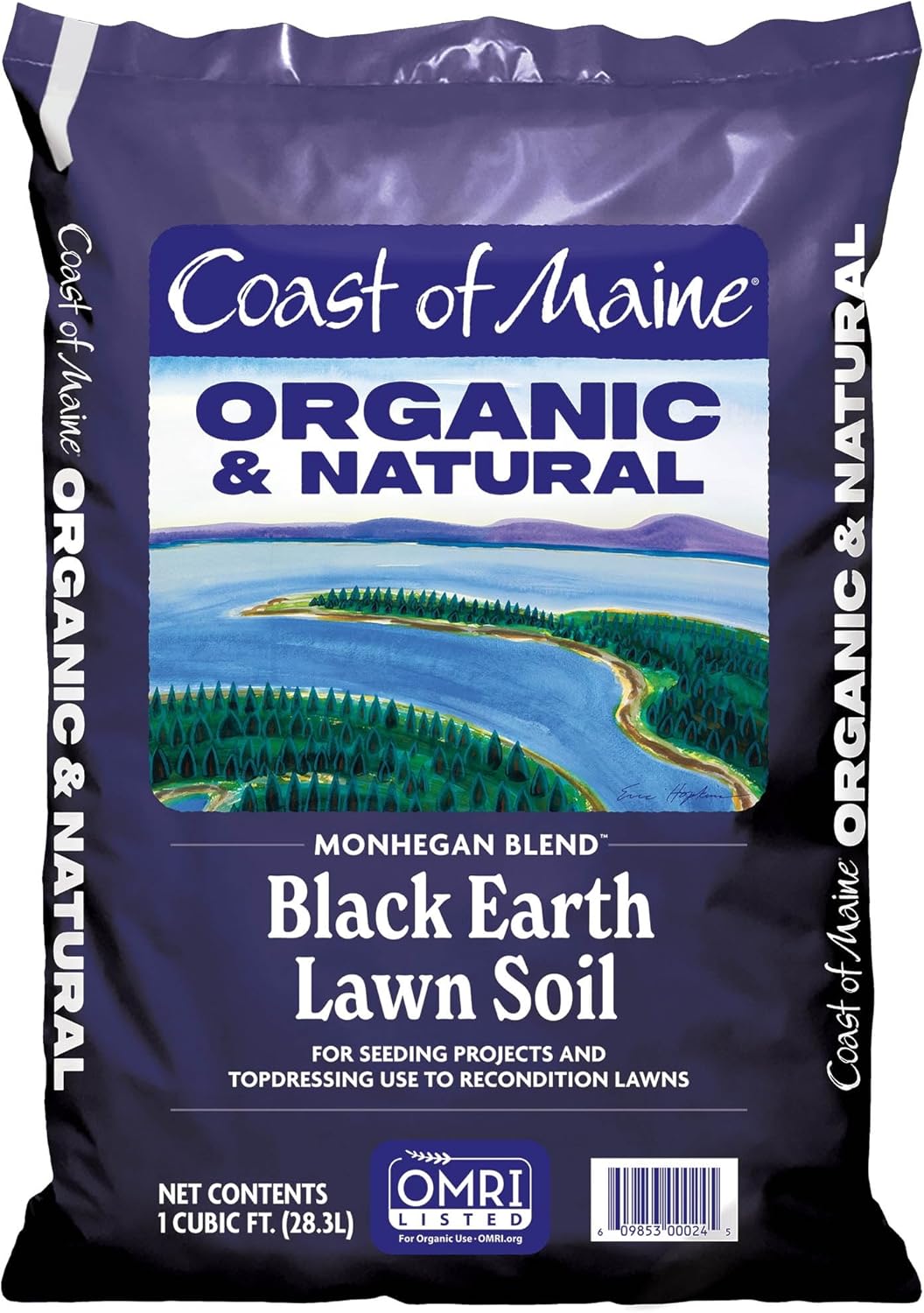
Coast of Maine Monhegan Blend Organic Topsoil (1 cu ft)
| Unit Count | 1 Count |
|---|---|
| Volume | 1 cubic feet |
| Main Ingredients | Composted farm manures, sphagnum peat moss, aged bark |
| Made in | United States |
Coast of Maine Monhegan Blend is an organic topsoil formulated from composted farm manures, sphagnum peat moss, and aged bark that works well for reconditioning lawns and filling thin or bare patches. Typical use is as a topdressing or spot repair material: spread a thin layer over the turf or bare area, water it in, and allow grass to grow through. Notable features include OMRI listing for organic gardening, a fine texture that makes it easy to spread by hand or with a rake, and ingredients that improve moisture retention and soil structure to support root development and beneficial microbes. In practice this means fewer amendments are needed to establish seed or strengthen weakened turf and it is light enough to use in raised beds and containers as well. Limitations to note are the small 1 cu ft bag size, which requires many bags for large lawns, and the peat content, which some gardeners avoid for sustainability reasons. Also handle with care to avoid inhaling fine particles.
Best for: Gardeners who prioritize a reliable, organic soil amendment for repairing lawns and improving thin turf and who prefer ready-to-use topdressing that supports soil biology.
Less Ideal for: People who need to cover large lawn areas with a single purchase or who want a peat-free or bulk delivery soil option.
- OMRI-listed organic formula suitable for organic lawns
- Fine, easy-to-spread texture ideal for topdressing and patching
- Blend of composted manures, peat moss, and aged bark improves moisture retention and soil structure
- Supports beneficial microorganisms that aid turf recovery
- Small 1 cubic foot bag means multiple bags are needed for larger lawns
- Contains peat moss, which some gardeners avoid for environmental reasons
Verdict: Choose this OMRI-listed topsoil when you want a dependable organic blend for reliable lawn patching and topdressing.
Blue Ribbon Organics OMRI-Certified Organic Compost (Bag)

| Brand | Blue Ribbon Organics |
|---|---|
| Included Components | Compost |
| Item Type Name | Organic Compost |
| Volume | 7.48 gallons |
Blue Ribbon Organics OMRI-Certified Compost is a bagged, fully processed organic compost designed to be worked into beds, used as a topdressing on lawns, or applied as a mulch around trees and shrubs. It is made from recycled food and yard residuals, monitored for maturity and contaminants, and certified for organic use so you can add it directly to vegetable, flower, and landscape plantings. Typical applications include incorporating 3–4 inches into new beds, adding a light 1/4–1 inch replenishment to established beds, or topdressing lawns at 1/4–1/2 inch in fall. The product claims improved aeration, increased water retention, pH buffering, and a boost of key nutrients such as nitrogen, phosphorus, and potassium. Because it is a natural material, moisture variation can affect bag weight and handling, and a single bag covers a modest area, so larger projects will require multiple bags or bulk compost. For gardeners focused on measurable soil improvement and organic certification, this compost delivers an easy, safe way to rebuild soil health without synthetic inputs.
Best for: Gardeners who prioritize measurable soil improvement and organic certification and want a ready-made compost to reliably boost planting beds, lawns, and established landscapes.
Less Ideal for: Large-scale landscapers or gardeners needing to amend many beds quickly should consider bulk compost options rather than repeated bag purchases.
- OMRI certified and meets US Composting Council standards so it is suitable for organic vegetable and flower gardens
- Processed and tested for maturity, pathogens, and weed seed to reduce risk of introducing problems
- Versatile use: can be tilled into new beds, used as a topdressing for lawns, or applied as mulch around trees and shrubs
- Contains a balanced mix of organic nutrients and improves soil aeration and water retention
- Bag size/volume is modest so several bags are needed for large beds or multiple trees
- Moisture variation in a natural product can make individual bag weights inconsistent
Verdict: Choose this bagged OMRI-certified compost when you want a tested, organic-ready product that reliably improves soil structure and supports performance-oriented gardening.
Back to the Roots Organic All-Purpose Compost Mix, 25.7 qt

| Item Highlight | Organic compost soil amendment for raised beds, gardens and plants; peat-free blend with yucca and gypsum; 25.7 quart bag |
|---|---|
| Unit Count | 822.4 Ounce |
| Item Type Name | garden soil |
| Brand Name | Back to the Roots |
| Style Name | Compost |
This Back to the Roots compost is a ready-to-use organic soil amendment designed to enrich raised beds and containers for vegetables, herbs, fruits, and flowers. It mixes easily into existing bed soil or can be used as part of a potting blend to boost nutrient content and improve moisture behavior. Notable features include a peat-free base made from upcycled plant matter and wood fines, dolomitic limestone for pH adjustment, gypsum to aid water absorption, and yucca extract for better moisture control. In practical use it helps promote healthier root growth and can reduce watering frequency thanks to improved moisture retention and absorption. The bag size covers small to medium raised beds when incorporated as an amendment but may require multiple bags for larger projects. This product is focused on organic, sustainable inputs rather than synthetic fertilizers, so gardeners seeking an all-in-one high-NPK concentrate may need to supplement with targeted fertilizers as plants mature.
Best for: Gardeners who prioritize sustainable, organic amendments and want an easy-to-use compost to blend into raised beds and containers to improve soil health and moisture behavior.
Less Ideal for: Gardeners who need a single high-NPK soil or who are filling large commercial-scale beds from scratch without willingness to buy multiple bags.
- 100% organic and peat-free base made from upcycled plant matter
- Includes dolomitic limestone and gypsum to help balance pH and improve water uptake
- Yucca extract helps with moisture control to reduce over- or under-watering
- Formulated for raised beds, containers, and in-ground use across edible and ornamental plants
- Bag volume is modest for larger raised beds so multiple bags may be needed
- Not formulated as a high-concentration fertilizer so additional feeding can be necessary for heavy-feeding crops
Verdict: A sustainably made, peat-free compost mix that quickly improves raised-bed and container soil health and moisture control.
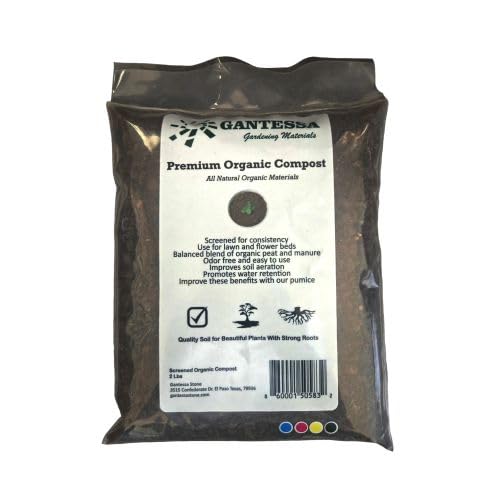
Gantessa Stone Premium Organic Compost, 2 lb
| Item Form | Solid |
|---|---|
| Application Method | Soil Amendment, Top Dressing, Compost Tea |
| Coverage | Medium |
| Target Species | flowers, vegetables, herbs, and more |
| Unit Count | 32 Ounce |
This 2 lb bag of Gantessa Stone premium organic compost is a screened, manure-based amendment meant to boost soil structure and moisture retention in small vegetable garden beds or containers. Typical uses are mixing into potting mixes at the recommended 1:2 ratio, top-dressing established beds, or brewing compost tea. The product emphasizes improved porosity and water holding capacity and supplies a range of organic nutrients and beneficial microbes rather than concentrated NPK values. Because it is screened and sold in a compact unit, it is handy for hobby gardeners, balcony growers, and patch repairs where hauling large bags is impractical. Limitations are the small unit size and lack of guaranteed nutrient analysis, so it is best used to build organic matter rather than as a primary fertilizer for heavy-feeding crops. For larger beds you will need multiple bags or a bulk compost source, but for spot applications and seedling mixes this is a convenient, low-effort option.
Best for: Gardeners working on small vegetable beds, containers, or seedlings who want an easy-to-use organic amendment without hauling bulk compost.
Less Ideal for: Large-scale vegetable gardeners or those who need a measured fertilizer program for heavy-feeding crops should choose bulk compost or a product with a guaranteed nutrient analysis.
- Screened organic compost improves soil structure and water retention
- Suitable for multiple application methods: soil amendment, top dressing, or compost tea
- Compact 2 lb bag is convenient for container gardeners and small repairs
- Small 2 lb unit requires buying multiple bags for larger vegetable beds
- No detailed NPK or guaranteed nutrient analysis provided
Verdict: A handy screened organic compost for small vegetable gardens and containers when you want to quickly add organic matter without buying bulk.
Coast of Maine Quoddy Blend Organic Compost (1 cu ft, 2 pack)

| Unit Count | 768 Ounce |
|---|---|
| Volume | 1 cubic feet |
| Style Name | 2 Pack |
Coast of Maine Quoddy Blend is a bagged organic compost mix intended for improving garden soil and supporting healthier plant growth. It combines compost, sphagnum peat moss, aged bark and chitin-rich lobster and crab meal to add organic matter, feed soil microbes and improve drainage in beds or containers. Typical uses are top-dressing vegetable plots, amending in-ground garden soil before planting and mixing into raised beds to increase water retention without creating heavy, poorly draining soil. Notable features include OMRI-listed organic inputs, a formula that encourages microbial life and inclusion of marine-derived nutrients that release slowly. Practical benefits are richer soil structure, better root development and a sustainable ingredient profile that reuses byproducts. Limitations are typical of bagged mixes: one cubic foot per bag covers a small area so larger projects need many bags, and peat content means gardeners concerned about peat extraction may prefer peat-free alternatives. Also the product is a soil amendment rather than a complete potting mix, so additional fertilizer may be needed for high-demand crops.
Best for: Gardeners who prioritize reliable, organic soil improvement for vegetables, flowers or raised beds and want a proven amendment that supports soil life.
Less Ideal for: People doing large-scale landscaping who need bulk volume or gardeners seeking a peat-free amendment should consider alternative products.
- OMRI-listed organic ingredients that support sustainable gardening
- Contains compost and chitin-rich lobster and crab meal to feed microbes and provide slow-release nutrients
- Loose texture that improves drainage and root penetration
- Suitable for in-ground beds and raised beds as a soil amendment
- Small volume per bag makes it less efficient for large landscape projects
- Contains peat moss which some gardeners avoid for environmental reasons
Verdict: A dependable organic compost blend that reliably improves soil structure and feeds soil biology for healthier garden beds.
Garden Magic Michigan Peat Compost & Manure Blend, 40 lb

| Unit Count | 640 Ounce |
|---|---|
| Included Components | Michigan Peat – 5240 – 40lb |
| Item Type Name | Manure |
| Manufacturer | Michigan Peat |
This 40 lb Garden Magic Michigan Peat Compost & Manure Blend is a pre-mixed, odor-reduced soil amendment intended to boost nutrients and organic matter in raised beds and containers. It combines reed sedge peat with composted animal manure so you can work it into existing bed soil or use it to refresh potting mixes without additional processing. The bag is easy to scoop and spread around planting holes, top-dress beds, or mix into the top few inches of soil for vegetables, flowers, and lawns. Notable features are the organic compost content, manure-derived nutrients, and the claim of being odor-free, which makes handling more pleasant than raw manure. Because it is a blend rather than a complete potting soil, expect it to act as an amendment that improves texture and fertility rather than a standalone, soilless potting mix. If you need large volumes for deep beds you will likely need multiple bags, but for small raised beds and container refreshes this provides a straightforward, no-mix option to add organic matter and feed plants.
Best for: Ideal for gardeners updating small raised beds or refreshing container soil who prioritize value and a simple, ready-to-use organic amendment.
Less Ideal for: Not the best choice for growers who need a full premium potting mix formulated for seed starting or for large-scale bed builds where bulk soil or compost deliveries are more economical.
- Ready-to-use blend that can be applied directly to raised beds and containers
- Contains composted animal manure for added nutrients to support plant growth
- Odor-reduced reed sedge peat makes handling more pleasant than raw manures
- 40 lb bag provides a manageable amount for small beds and planter refreshes
- Sold as a soil amendment rather than a complete soilless potting mix
- One 40 lb bag covers a limited volume so larger projects require multiple bags
Verdict: A convenient, budget-friendly organic amendment that quickly boosts fertility and structure in small raised beds and containers.
R&M Organics Cow Manure Compost Soil Amendment (10 lb)

| Item Form | Solid |
|---|---|
| Specific Uses For Product | Organic |
| Application Method | Apply a thin layer around plants or mix into soil |
| Coverage | All-purpose |
| Target Species | fruits, vegetables, flowers, lawns, trees |
This 10 lb bag of R&M Organics compost is a straightforward, all-purpose soil amendment aimed at improving soil health in garden beds, containers, and raised beds. Made from cured cow manure and fully composted, it is low-odor and easy to work with — apply a thin quarter-inch layer around established plants or mix into planting soil at the recommended 5:1 ratio for new beds. The compost enhances moisture retention, aeration, and organic matter, which helps roots establish and reduces watering frequency. Its small bag size and modest weight make it convenient for small to medium projects and for gardeners who prefer incremental soil improvements. Because the product is pure compost rather than a balanced fertilizer, it is best used as a long-term soil builder rather than a quick nutrient fix; you may still need targeted fertilizers for heavy-feeding vegetables or to correct specific nutrient deficiencies. The simplicity and low odor make it a practical choice for backyard growers who want a reliable organic amendment without handling fresh manure or bulk deliveries.
Best for: Gardeners who prefer incremental, low-effort soil improvement for beds and containers and who prioritize organic, low-odor amendments for everyday maintenance.
Less Ideal for: Large-scale gardeners or landscapers who need bulk amendments or immediate corrective fertilizers for specific nutrient deficiencies should look for bulk compost or formulated plant foods.
- Fully composted cow manure reduces pathogens and minimizes odor compared with raw manure
- Improves soil structure and moisture retention for beds, containers, and raised beds
- Small 10 lb bag is easy to carry, store, and apply for small to medium gardens
- Versatile all-purpose amendment suitable for fruits, vegetables, flowers, lawns, and trees
- Not a formulated fertilizer so it may not supply immediately available nutrients for heavy feeders
- Bag size is small for larger beds or bulk soil rebuilding projects
Verdict: A convenient, low-odor organic compost that steadily improves soil structure and moisture retention for small to medium garden beds.
Choosing the Right Compost for Lawn Seeding: Key Factors to Consider
Particle Size and Texture
Particle size determines how well grass seed contacts the soil. Fine, screened compost creates a close interface between seeds and mineral soil, encouraging faster, more uniform germination. Coarse chunks can sit under or over seed, creating air gaps that dry out small seeds and yield thin stands.
Texture also affects how evenly compost distributes when broadcasting or raking. A consistent, crumbly texture blends into the topsoil and resists clumping during application, which reduces patchiness in the finished lawn.
Nutrient Balance and Compost Maturity
Young or incompletely composted material can tie up nitrogen or produce heat that damages tender seedlings. Mature compost has a stable nutrient profile that supplies modest, slow-release fertility without causing burn. Look for compost with moderate nitrogen, available phosphorus and potassium suited to early growth, and an absence of excessive soluble salts.
Maturity also influences microbial activity. Well-aged compost supports a healthy soil microbiome that helps seedlings access nutrients, while immature compost may shift microbial communities unpredictably and stress new grass.
Moisture Retention and Watering Needs
Compost improves moisture-holding capacity, which is crucial during the germination window. Compost with good porosity retains moisture near seeds while still allowing air exchange at the root zone, reducing the frequency of irrigation. However, overly fine or peat-heavy mixes can hold too much water and suffocate seed, so balance matters.
Consider your local climate: in dry regions, higher moisture retention helps; in wet climates, choose a compost that drains well to avoid rot or fungus issues on young shoots.
Weed Seed Content and Sanitation
Compost contaminated with viable weed seeds undermines seeding efforts by introducing competition at the earliest stage. Composts that reach proper thermophilic temperatures during processing are less likely to contain live weed seed. For lawn seeding, prioritize screened and pasteurized or heat-processed composts to minimize the weed load.
Sanitation also covers the absence of pathogens and persistent contaminants like plastics or woody debris that can interfere with spreaders or seedbed preparation.
Ease of Application and Compatibility with Seeding Methods
How you apply compost influences the final result. Light dressing or mixing into the top inch of soil works best for overseeding, while new lawns may benefit from a slightly thicker starter layer. Compost that is too heavy, wet, or lumpy can clog drop or broadcast spreaders and hamper even distribution by hand.
Compatibility with mechanical or hand tools, and whether the material spreads and rakes smoothly, affects the labor required and the uniformity of the lawn after planting.
Salt Levels and Suitability for Sensitive Seed Varieties
Soluble salts in some composts can inhibit germination, particularly for fine fescues and other salt-sensitive turf varieties. Compost derived from salty feedstocks or improperly composted waste may register higher electrical conductivity. For seed mixes with sensitive cultivars, choose lower-salt composts to avoid reduced emergence and stunted first leaves.
If you cannot test salts, prefer composts labeled or described as low-salt or produced from yard and plant waste rather than marine or industrial feedstocks.
Preparing the Seedbed
Successful germination starts with a properly prepared seedbed. Remove debris and loosen the top 1 to 2 inches of soil to break up crusts and compacted patches. If the lawn area has an excessive thatch layer, rake it out so the compost can contact mineral soil and seed directly.
Spread compost in a thin, even layer for overseeding or a slightly thicker starter layer for new lawns. Lightly work the compost into the loosened soil with a rake to improve seed-to-soil contact, then sow seed at the recommended rate and finish with a gentle tamp or light roll to press seed into place.
- Use a broadcast spreader or hand broadcast for even compost distribution.
- Avoid burying seed too deeply; most turf seed needs only 1/8 to 1/4 inch of cover.
- Firm lightly after sowing to ensure contact without compacting the soil.
Application Rates and Layer Thickness
Application rates depend on whether you are overseeding an existing lawn or starting a new one. For overseeding, a thin topdressing of compost-typically 1/8 to 1/4 inch-improves seed contact without smothering existing grass. For new lawns, plan a starter layer of about 1/2 to 1 inch of compost mixed with topsoil for a balanced seedbed.
Avoid layers thicker than an inch when seeding small-seeded grasses, as deep organic layers can prevent seedlings from reaching the surface. Thicker layers may be appropriate when installing sod or large-seeded erosion-control mixes.
- Overseeding: aim for a very light topdressing to fill soil depressions and improve contact.
- New lawn: blend compost with topsoil to create a uniform 1/2 to 1 inch seedbed layer.
Timing and Seasonal Considerations
Cool-season grasses benefit from seeding in early fall when soil temperatures favor germination and weeds are less competitive. Warm-season grasses establish best in late spring to early summer when soil warms and moisture is available. Align compost application with these windows to maximize seedling survival.
In hot, dry weather, increase irrigation frequency for the first two to three weeks and use compost with good moisture retention. In wet or cool conditions, choose composts with better drainage to prevent rot and fungal pressure on young grass.
- Fall is usually the best time for cool-season turf seeding.
- Avoid seeding in extreme heat unless irrigation is assured.
Tools and Techniques for Even Coverage
Hand rakes, leaf rakes, push brooms, and light rollers are the most useful tools for integrating compost and ensuring seed contact. Use a seed spreader for consistent seed distribution and follow with a light rake or roller to embed seeds into the compost-amended seedbed.
For larger areas, a drop spreader followed by a power rake or turf drag helps achieve uniform surface texture. Keep equipment clean to prevent transferring weeds or debris from other sites.
- Calibrate spreaders on a small test area before full application.
- Use a light roller only if soil is loose; avoid compacting when moisture is high.
Aftercare: Watering and Early Maintenance
Maintain consistent moisture until seedlings develop their first true leaf. Water lightly and frequently to keep the compost and soil surface moist but not waterlogged. As seedlings strengthen, gradually lengthen intervals and increase water depth to encourage deeper root growth.
Avoid heavy traffic on newly seeded areas until grass is well established. Mow for the first time only when seedlings reach a recommended height for the grass type, and keep mower blades sharp to prevent pulling or tearing young shoots.
- Start with several light waterings per day if conditions are hot and dry.
- Transition to deeper, less frequent watering after two to three weeks.
How We Chose the Best Compost for Lawn Seeding
We selected products that suit the needs of starting or renovating turf, focusing on attributes that directly affect seed germination and early growth. Primary evaluation criteria included particle size and texture for seed-to-soil contact, nutrient balance and maturity to avoid burning seedlings, moisture-holding capacity to maintain an even germination environment, and absence of weed seeds or contaminants. We also considered ease of spreading and consistency across batches because uneven texture can cause patchy germination. Excluded items included heavy, uncomposted manures and mixes intended for woody ornamentals; those can overheat or supply inappropriate nutrient ratios for grass seed. We favored well-aged, screened composts and mixes formulated or tested for turf use. The shortlist reflects products that meet these practical lawn-starting requirements rather than broad garden or landscape-grade composts.
FAQ
Can I use any garden compost for lawn seeding?
Often garden compost works, but suitability depends on texture and maturity. Fine, screened, mature compost is best because it promotes seed-to-soil contact and avoids nitrogen tie-up or heat that can harm seedlings.
How thick should a compost layer be when overseeding?
For overseeding, keep the layer thin, typically 1/8 to 1/4 inch. A light topdressing improves contact and moisture without burying seeds. Thicker layers risk reduced emergence for small-seeded grasses.
Does compost replace starter fertilizer when seeding a lawn?
Compost can supply gentle, slow-release nutrients but may not provide the immediate soluble nitrogen some starters use. Many gardeners use compost for soil health and add a light starter fertilizer if quick, early greening is desired, depending on soil test results.
When is the best time to seed after applying compost?
You can seed immediately after applying and lightly raking compost into the topsoil. Avoid waiting too long without seeding, because wind and rain can displace a loose topdressing and sunlight-exposed compost can dry out.
How do I avoid introducing weed seeds with compost?
Choose compost that is screened and thermally processed to reduce viable weed seed. Avoid untested or uncomposted manure piles and ask about processing standards if buying bulk to minimize weed introduction.
Final Verdict
Choosing compost for lawn seeding is about balancing texture, maturity, and moisture handling. Prioritize a fine, screened, mature compost with moderate nutrient levels and low weed seed content to maximize germination and early root development. Match application rate and timing to whether you are overseeding or establishing a new lawn, and focus on consistent moisture during the first few weeks. With the right compost and simple aftercare, you can improve germination uniformity and set new grass up for long-term success.
