

Note: This article contains affiliate links. If you click on these links and make a purchase, I may earn a small commission at no extra cost to you. This helps support my research and content. Read my full affiliate disclosure here.
Potted roses need a growing medium that drains reliably, feeds steadily, and resists compaction between waterings. Choosing the right compost for planting roses in pots makes the difference between a container that blooms all season and one that struggles with root rot, nutrient deficiencies, or stunted growth. This guide looks at five well-suited compost options shortlisted for container roses and explains the practical tradeoffs gardeners should weigh. We focus on moisture management, nutrient profile, and structure so you can match a compost to your watering style and climate. Below you will find concise evaluations of the top picks, plus guidance on mixing, feeding, and repotting to keep potted roses vigorous. Read on for the criteria we used and the factors to consider when selecting compost for container roses.
Top Picks at a Glance
| Best Overall The best all-around choice for most situations | Old Potters Organic Plant-Based Compost, 24 Quarts |  |
| Best Quality Built to a higher standard if you want something more solid | Coast of Maine Roses & Flowers Planting Soil, 20 qt (2-Pack) |  |
| Best Value The sweet spot between price and what you get | BRUT Worm Farms Cow Compost — 10 Quart Bag |  |
| Best Budget The cheapest option that still gets the job done reliably | Gantessa Stone Premium Organic Compost, 2 lb |  |
| Highest Rated A top-rated pick with lots of positive feedback | Sawgrass Organics Organic Potting Mix, 4 qt |  |
Old Potters Organic Plant-Based Compost, 24 Quarts

| Unit Count | 768 Fluid Ounces |
|---|---|
| Style Name | Nutrient-rich |
| Brand Name | Old Potters |
This Old Potters organic compost is a plant-based, chemical-free amendment intended to boost soil health for gardens and lawns. Gardeners typically use it as a top dressing, mixed into potting mixes, or incorporated into planting holes to improve aeration and moisture retention. Notable features include a nutrient-rich blend with peatmoss and horticultural charcoal mentioned by the brand and a large 24-quart (768 fl oz) volume per bag. In practice it adds organic matter that can help turf roots establish when used as a thin top dressing and will lighten compacted soil when worked in. The product is sustainable in that it recycles plant material and avoids synthetic inputs. Important limitations are standard for compost products: it may vary in particle size and nutrient concentration batch to batch, and handling requires gloves and a mask for dust protection due to possible allergens. It is not a quick-release synthetic fertilizer, so expect gradual improvement over weeks to months rather than instant green-up.
Best for: Home gardeners and turf stewards who prefer organic, sustainable soil amendments and want a reliable compost to improve soil structure and moisture retention over time.
Less Ideal for: People who need immediate, fast-release nutrient fixes or precise, laboratory-grade soil amendments for professional turf management.
- 100% plant-based and chemical-free formulation suitable for organic lawn care
- Large 24-quart bag provides substantial coverage for top dressing or mixing into soil
- Contains peatmoss and horticultural charcoal components that aid aeration and moisture control
- Improves long-term soil structure and nutrient availability when incorporated into turf or garden beds
- Not a fast-acting synthetic fertilizer so results develop over multiple weeks
- May produce dust and requires gloves and a mask for safe handling due to allergy risk
Verdict: A roomy, plant-based compost that steadily improves soil structure and moisture retention, making it a practical choice for organic lawn top dressing.
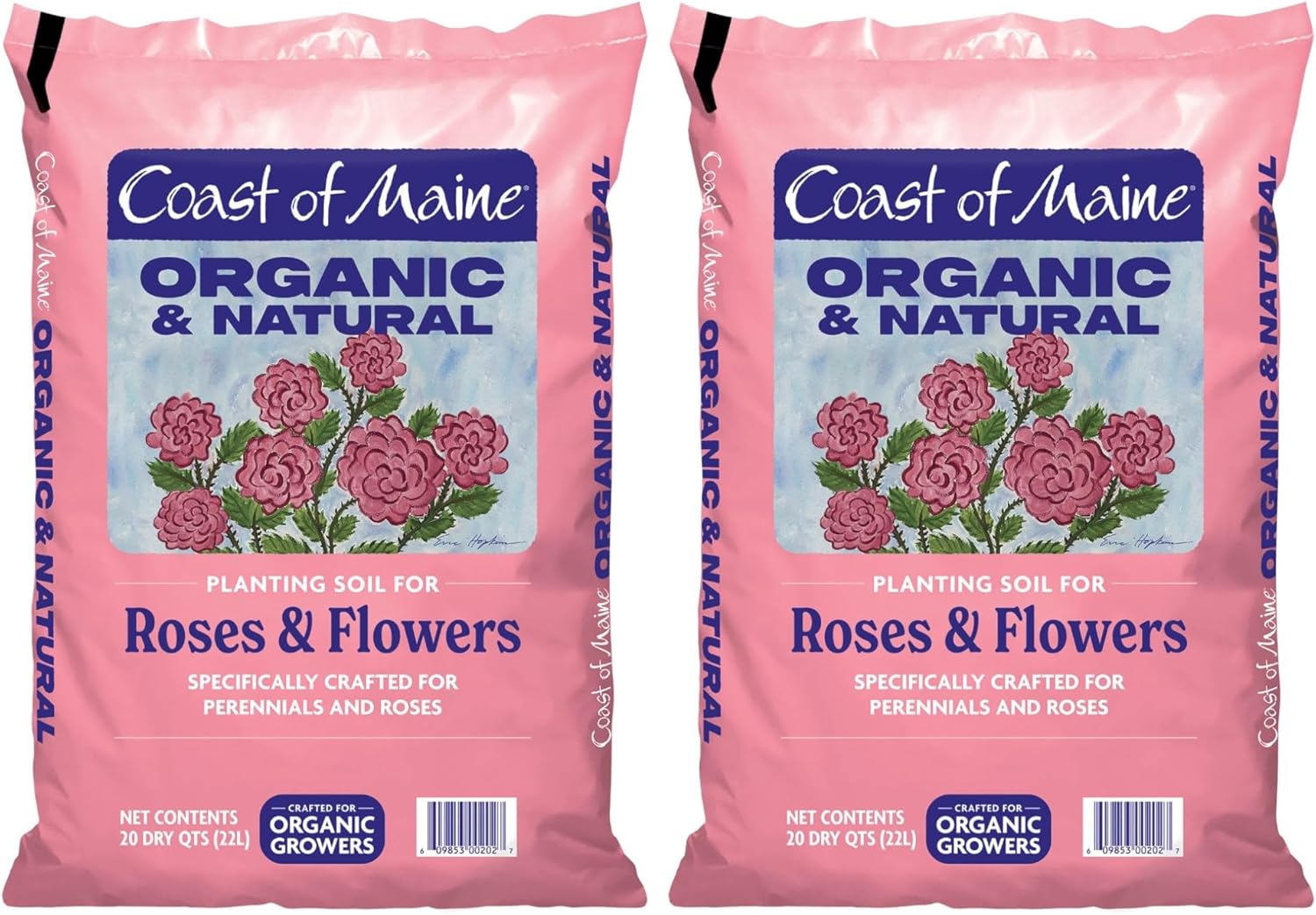
Coast of Maine Roses & Flowers Planting Soil, 20 qt (2-Pack)
| Unit Count | 2 Count |
|---|---|
| Volume | 20 quarts |
| Brand Name | Coast of Maine |
This Coast of Maine Roses & Flowers planting soil is an organic compost blend designed to revive planting mixes for roses, annuals, and perennials. Gardeners typically use it as a top dressing, a soil amendment mixed into existing bed soil, or straight into containers when repotting roses and flowering plants. Notable features include OMRI listing for organic use and a formula that uses seaweed, lobster meal, and composted materials to boost microbial life and supply slow-release nutrients. In practice the mix improves moisture retention while offering adequate drainage, which helps reduce watering frequency without waterlogging root crowns in containers. The product supports soil biodiversity and is safe around children and pets when used as directed. Important limitations are that this is a 20 quart bag sold in a two pack so it is best for small-scale container work or targeted amendments rather than large landscaping projects, and heavier organic mixes like this can compact over time compared with lightweight potting mixes formulated solely for container aeration.
Best for: Buyers who want an organic, nutrient-rich amendment for container roses and flowering pots and who value soil health and sustainable ingredients.
Less Ideal for: Anyone needing a lightweight commercial potting mix optimized only for maximum aeration or gardeners tackling large in-ground areas who need bulk volume.
- OMRI listed organic formula made from seaweed, lobster meal, and compost
- Balanced moisture retention and drainage suitable for container roses
- Supports soil microbiology and biodiversity for healthier root systems
- Safe for use around kids and pets when handled per instructions
- 20 quart bags are small for large projects so multiple bags are needed for beds
- Denser compost-rich mix can compact in containers over time compared with lighter potting-only mixes
Verdict: A small-batch organic soil blend that revitalizes container roses and flower pots by adding slow-release nutrients and supporting soil life.
BRUT Worm Farms Cow Compost — 10 Quart Bag

| Unit Count | 192 Ounce |
|---|---|
| Volume | 10 quarts |
| Brand Name | BRUT WORM FARMS |
| UPC | 860000284295 |
Brut Cow Compost is a ready‑to‑use bagged cow manure compost aimed at improving soil fertility and structure. It is made from 100% composted cow manure that has been finely sifted, which makes it easy to mix into potting mixes, top‑dress containers, or incorporate into garden beds. Notable features include an OMRI listing for organic use, a nutrient profile with nitrogen, calcium and iron, and a low‑odor, non‑burning formula that is safe around seedlings and houseplants. In practice the compost increases microbial activity and helps retain moisture, so plants show healthier foliage and better growth when used regularly. The 10 quart bag is convenient for small gardens, potted plants, or spot treatments without handling bulk loads. Limitations are the modest volume per bag for larger beds and the product is a general amendment rather than a complete, balanced fertilizer, so heavier feeding or specific NPK management may still be needed for high‑demand crops.
Best for: Gardeners who want an easy, certified organic soil amendment to boost soil life and moisture retention in containers, small beds, or targeted spots without handling raw manure.
Less Ideal for: People establishing large garden plots or those seeking a complete NPK fertilizer for heavy feeding crops should consider bulk compost or supplemental fertilizers instead.
- OMRI‑listed organic compost safe for edible and ornamental plants
- Finely sifted, low‑odor formula suitable for indoor use and seedlings
- Adds organic matter and beneficial microbes to improve moisture retention and soil structure
- Versatile application as top dressing, mix‑in amendment, or container soil enhancer
- Small 10 quart volume requires multiple bags for larger garden projects
- Not formulated as a balanced complete fertilizer for high‑demand crops
Verdict: A compact, OMRI‑listed bag of finely composted cow manure that reliably adds organic matter and microbial life to containers and small garden beds.
Gantessa Stone Premium Organic Compost, 2 lb

| Item Form | Solid |
|---|---|
| Application Method | Soil Amendment, Top Dressing, Compost Tea |
| Coverage | Medium |
| Target Species | flowers, vegetables, herbs, and more |
| Unit Count | 32 Ounce |
This 2 lb bag of Gantessa Stone premium organic compost is a screened, manure-based amendment meant to boost soil structure and moisture retention in small vegetable garden beds or containers. Typical uses are mixing into potting mixes at the recommended 1:2 ratio, top-dressing established beds, or brewing compost tea. The product emphasizes improved porosity and water holding capacity and supplies a range of organic nutrients and beneficial microbes rather than concentrated NPK values. Because it is screened and sold in a compact unit, it is handy for hobby gardeners, balcony growers, and patch repairs where hauling large bags is impractical. Limitations are the small unit size and lack of guaranteed nutrient analysis, so it is best used to build organic matter rather than as a primary fertilizer for heavy-feeding crops. For larger beds you will need multiple bags or a bulk compost source, but for spot applications and seedling mixes this is a convenient, low-effort option.
Best for: Gardeners working on small vegetable beds, containers, or seedlings who want an easy-to-use organic amendment without hauling bulk compost.
Less Ideal for: Large-scale vegetable gardeners or those who need a measured fertilizer program for heavy-feeding crops should choose bulk compost or a product with a guaranteed nutrient analysis.
- Screened organic compost improves soil structure and water retention
- Suitable for multiple application methods: soil amendment, top dressing, or compost tea
- Compact 2 lb bag is convenient for container gardeners and small repairs
- Small 2 lb unit requires buying multiple bags for larger vegetable beds
- No detailed NPK or guaranteed nutrient analysis provided
Verdict: A handy screened organic compost for small vegetable gardens and containers when you want to quickly add organic matter without buying bulk.
Sawgrass Organics Organic Potting Mix, 4 qt

| Volume | 4 quarts |
|---|---|
| OMRI Listed | Yes |
| Unit Count | 128 Ounce |
| Peat-Free | Yes |
| Triple Screened Compost | Yes |
This 4 qt Sawgrass Organics potting mix is a ready-to-use, peat-free blend designed for potted vegetables, herbs and seedlings. It combines fully composted, triple-screened compost with coco coir for water retention and biochar to support microbial life and nutrient holding. Because it is triple screened and blended at a controlled moisture level it arrives consistent and largely free of debris and gnats, which makes it easy to use straight from the bag for repotting, starting seeds or top-dressing containers. The peat-free formula re-wets reliably after drying and resists compaction so root systems stay airy in small pots and raised planters. It is OMRI listed, so it fits an organic vegetable garden workflow. The main limitations are the small 4 quart volume, which means frequent repurchasing for larger beds, and the lack of built-in fertilizer so regular feeding is still needed for heavy-feeding vegetables.
Best for: Gardeners who prioritize reliable, organic-tested potting media for container-grown vegetables, herbs, and seedlings and who want a consistent, low-maintenance mix to repot or start plants.
Less Ideal for: People installing or amending large in-ground vegetable beds who need bulk soil or those seeking a mix with built-in long-term fertilizer and amendments for heavy feeders.
- Peat-free blend with coco coir for good water retention and easier re-wetting
- Contains fully composted, triple-screened compost for consistent texture and few debris
- Biochar included to support beneficial microbes and nutrient retention
- OMRI listed for use in organic production
- Blended and bagged at controlled moisture to reduce gnats and make it usable immediately
- Small 4 quart bag is insufficient for large vegetable beds or multiple containers
- Does not include starter fertilizer so feeding is required for heavy-feeding vegetables
Verdict: Choose this potting mix when you want a consistent, peat-free, OMRI-listed blend that re-wets well and supports healthy roots in container vegetable gardens.
Choosing the Right Compost for Planting Roses in Pots: Key Factors to Consider
Drainage Versus Water Holding Balance
Good drainage prevents waterlogged roots, which is a common problem in containers where excess water cannot escape into surrounding soil. For potted roses you want a compost that sheds surplus water quickly around the root zone while still retaining enough moisture in the mix to supply the plant between waterings.
This balance affects how often you must water, how susceptible the pot is to root rot, and how evenly nutrients move through the container. A mix that is too fine or heavily peat-based can stay soggy; a mix with too much coarse material will dry out rapidly and stress the plant. Choose a compost that matches your watering frequency and the local climate.
Nutrient Profile and Slow-release Feeding
Potted roses rely on the compost and any supplemental feeding rather than an extended soil profile. The compost should supply a baseline of macro- and micronutrients and ideally release them gradually so fertilizers do not need constant correction.
Look for a balanced organic matter source that offers available nutrients but also retains cation exchange capacity so that added fertilizers are effective. Poorly matured compost can temporarily lock up nitrogen as microbes continue decomposing, so fully composted mixes are preferable for immediate planting.
Particle Size and Structure Stability
The physical make-up of a compost determines how it holds shape in a pot and how roots can penetrate it. A stable structure with a mix of fine particles and some coarse fragments keeps air spaces open and reduces compaction after repeated wet-dry cycles.
Composts with a heterogeneous texture encourage deeper rooting and better oxygen flow. Over time, even good mixes will settle, so starting with adequate volume and a resilient structure helps reduce the need for frequent repotting or root disturbance.
pH Compatibility with Roses
Roses prefer a slightly acidic to neutral root environment. Compost that is too alkaline or strongly acidic can impair nutrient uptake and reduce bloom quality. Knowing the expected pH range of a compost helps you decide whether to adjust it at planting or choose a different mix.
Some organic components can gradually alter pH as they continue to break down, so pick a compost with a stable, rose-friendly pH or be prepared to monitor and correct pH with amendments over the season.
Disease Cleanliness and Weed Seed Content
Compost used for containers should be well-matured and free of viable weed seeds, persistent pathogens, or fungal sclerotia. Containers create a concentrated environment where pests or pathogens can rapidly affect the whole rootball.
High-temperature composting and proper screening reduce these risks. Choosing a clean compost lowers the chance of introducing root diseases or weed competition that would be harder to manage in a small volume of medium.
Ease of Use and Mixing Flexibility
Gardeners often need to tailor a base compost for specific pots and climates. A user-friendly compost blends easily with perlite, grit, or loam to tweak drainage and nutrient levels without forming clumps or slurries.
A mix that responds predictably to amendments reduces guesswork when adjusting for hot, dry summers or cool, wet conditions. Consider how easy the compost is to scoop, measure, and combine when planning multiple containers or seasonal top-ups.
How to Amend Compost for Better Container Drainage
If your chosen compost tends toward water retention, you can improve drainage with simple amendments that are common and inexpensive. Materials such as horticultural grit, coarse sand, or pumice increase macroporosity and prevent the compost from becoming anaerobic after thorough watering.
Aim to mix amendments at a ratio that matches your pot size and watering habits. For standard 30 to 40 cm pots, adding 10 to 20 percent coarse material by volume can noticeably speed drainage without drying the plant out between waterings. For larger containers reduce the amendment percentage slightly since larger volumes dry more slowly.
- Use coarse, angular materials rather than rounded sands to preserve air pockets
- Avoid using builder's sand or clay-rich materials that can compact
- Test a small batch before mixing entire supply to check watering frequency changes
Feeding and Top-Dressing Schedules for Potted Roses
Compost provides an initial nutrient reserve, but container roses benefit from a consistent feeding schedule. Slow-release organic feeds or regular liquid fertilizing through the season keep blooms abundant and foliage healthy.
Top-dressing with a thin layer of compost or well-rotted manure in spring can refresh nutrients and improve surface moisture retention. Avoid thick layers that hold too much moisture against the crown.
- Apply a light top-dress of compost each spring after potting or repotting
- Use monthly liquid feeds during active growth if the compost is low in available nitrogen
- Flush containers occasionally to prevent buildup of soluble salts
Best Potting Practices When Planting Roses in Containers
Choose a pot with adequate drainage holes and consider raising it slightly to allow water to exit freely. Filling the bottom with coarse material is unnecessary if the compost drains well; instead, place a few broken pots or a layer of coarse grit to prevent soil blocking the holes.
When planting, avoid burying the graft union or crown too deeply. Leave a bit of space at the top of the pot for watering and for top-dressing. After planting, water thoroughly to settle the compost and then monitor the moisture level for the first two weeks, adjusting watering frequency as the roots establish.
- Select breathable containers where possible to moderate soil temperature
- Repot every two to three years or when roots circle densely
- Position containers where they receive appropriate sun for the rose variety
Managing Watering in Different Climates
In hot, dry climates composts that retain more moisture reduce watering frequency but must still allow drainage to prevent salt buildup. In cooler, wetter climates prioritize mixes that dry out faster to avoid chronic sogginess.
Use mulch on the surface of the pot to reduce evaporation in summer, but choose materials that do not trap moisture against the stem. Adjust watering schedules seasonally and consider the pot material: terracotta dries faster than plastic and may need a different compost amendment ratio.
- Increase watering during heatwaves and cut back in cooler months
- Check moisture below the surface with a simple finger test or probe
- Group pots with similar water needs to simplify irrigation
Reusing and Refreshing Old Compost in Pots
Over time compost in containers breaks down and compacts, reducing aeration and nutrient content. When refreshing, remove the top 5 to 8 cm and replace with fresh compost mixed with a light amendment to restore structure.
If the whole rootball is aged and rootbound, repot into fresh compost at a slightly larger size. Avoid reusing heavily depleted compost without amending because it may be low in organic matter and have an altered pH.
- Top-dress annually and perform full repotting every few years
- Restore structure with coarse materials when the mix feels dense
- Replace compost that smells sour or shows signs of disease
How We Chose the Best Compost for Planting Roses in Pots
We evaluated composts based on real-world container performance for roses, emphasizing attributes that affect root health and flowering in pots. Primary evaluation criteria included moisture retention versus drainage balance, nutrient availability and slow-release feeding characteristics, physical structure and resistance to compaction, and organic matter quality including maturity and pathogen risk. We also considered texture consistency, pH range suitability for roses, and how simple each compost is to use in common container sizes. Products were excluded if they were formulated primarily for in-ground beds with heavy loam, had poor drainage characteristics, or showed inconsistent particle size that can cause anaerobic zones in pots. We filtered out mixes lacking clear information on organic content or those with high proportions of uncomposted woody material that can immobilize nitrogen. The featured picks met practical standards for container use, offering predictable moisture behavior, a rose-friendly nutrient profile, and a loose structure that supports root aeration while holding enough moisture between waterings.
FAQ
How often should I water roses in pots with compost?
Frequency depends on pot size, compost texture, and climate. Small pots and lightweight mixes dry faster and may need daily watering in hot weather, while heavier mixes in large pots usually need water every few days. Check moisture a few centimetres below the surface and adjust for rainfall and sun exposure.
Can I use garden compost for planting roses in pots?
You can use well-matured garden compost if it is free of weed seeds and finished so it does not continue active decomposition. Mix it with a structured potting compost or coarse amendment to ensure good drainage and avoid nitrogen drawdown that can occur with partially composted material.
Should I add fertilizer to compost when planting roses in containers?
Yes, compost supplies baseline nutrients but container roses typically need supplemental feeding. Use a balanced slow-release organic fertilizer at planting and supplement with liquid feeds during the growing season depending on bloom and leaf performance.
What pH should compost for roses have?
Aim for a slightly acidic to neutral range, roughly pH 6.0 to 7.0. This supports uptake of iron, phosphorus, and other key nutrients that roses need. If a compost falls outside this range, you can correct pH with appropriate soil amendments before planting.
How can I tell if compost is too compacted for container roses?
Signs of compaction include poor drainage, water pooling on the surface, slow drying between waterings, and shallow or circling roots at repotting. A healthy container medium remains friable and allows a finger or probe to penetrate easily to the root zone.
Final Verdict
For planting roses in pots prioritize a compost that balances drainage with moisture retention, delivers a steady nutrient supply, and holds an open structure that resists compaction. Match the mix to your pot size, container material, and local climate to minimize watering headaches and maximize bloom production. Focus on the practical tradeoffs: mixes that retain more moisture reduce watering but must still drain well, while leaner mixes need more frequent feeding. Choose a compost that fits your maintenance style and amend it as needed to achieve the right balance for healthy, flowering container roses.
