

Note: This article contains affiliate links. If you click on these links and make a purchase, I may earn a small commission at no extra cost to you. This helps support my research and content. Read my full affiliate disclosure here.
Choosing the right eco friendly fertilizer changes how your garden performs season after season. The right product supplies nutrients without harming soil life, reduces soluble salt buildup, and lowers the risk of runoff into nearby beds or waterways. This guide covers seven shortlisted eco friendly fertilizers chosen for real-garden performance across lawns, vegetable beds, containers, and flower borders. We evaluate nutrient composition, delivery method, environmental impact, and how each option fits common gardening routines. Read on to see which types match your growing goals and site conditions before the product list.
Top Picks at a Glance
| Best Overall The best all-around choice for most situations | Down To Earth Organic Vegetable Garden Fertilizer 4-4-4, 5 lb |  |
| Best Quality Built to a higher standard if you want something more solid | FoxFarm Big Bloom Liquid Plant Food, 16 fl oz |  |
| Best Value The sweet spot between price and what you get | Milorganite Slow-Release Organic Fertilizer, 5 lb |  |
| Best Budget The cheapest option that still gets the job done reliably | Jobe's Organics Granular Fruit & Citrus Fertilizer, 4 lb |  |
| Highest Rated A top-rated pick with lots of positive feedback | Brut Organic Worm Castings, 5 lb |  |
| Most Popular A crowd favorite that many people choose with confidence | Grow Queen Organic Liquid Indoor Plant Food 5-5-5 with Sea Kelp, 8 oz |  |
| Best Seller A high-volume bestseller chosen again and again | Dr. Earth Organic Tomato, Vegetable & Herb Fertilizer (64 oz) |  |
Down To Earth Organic Vegetable Garden Fertilizer 4-4-4, 5 lb

| Item Form | Granules |
|---|---|
| Specific Uses For Product | Vegetables, greens, tomatoes, herbs |
| Application Method | Apply directly to the soil or mix into garden beds |
| Mixing Ratio | 4-4-4 |
This granular fertilizer is formulated to feed vegetables, herbs and greens with a balanced 4-4-4 NPK and a slow-release profile that supplies nutrients over time. It is applied by distributing into the planting hole, mixing into topsoil, or working into raised beds at planting and during the season for maintenance. Notable features include all-natural ingredients sourced from plant, marine and mineral resources and OMRI-friendly formulation that supports organic gardening and beneficial soil life. Practically, the slow-release granules reduce the need for frequent feeding and help avoid nutrient spikes that can stress plants. The 5 lb unit is convenient for small to medium beds but means frequent repurchasing for larger plots. While it is versatile across vegetables and herbs, gardeners who need rapid corrective feeding for a specific deficiency will still need a targeted amendment or foliar feed in addition to this product.
Best for: Gardeners who prioritize steady, reliable plant performance and want an organic, low-maintenance fertilizer for raised beds and small plot vegetable production.
Less Ideal for: Growers managing large acreage or those needing immediate corrective nutrient treatments should look for bulk or fast-acting specialty products instead.
- Balanced 4-4-4 NPK suitable for overall vegetable development
- Slow-release granular formula for sustained feeding
- Made from all-natural ingredients and compatible with organic systems
- Easy to apply directly to soil or mix into raised beds
- Small 5 lb size may require frequent replacement for larger gardens
- Not formulated for quick correction of specific nutrient deficiencies
Verdict: Choose this product when you want an organic, slow-release 4-4-4 fertilizer that delivers steady nourishment for productive vegetable beds.
FoxFarm Big Bloom Liquid Plant Food, 16 fl oz

| Item Form | Liquid |
|---|---|
| Specific Uses For Product | Organic |
| Application Method | watering can, sprayer, or drip system |
| Liquid Volume | 16 fluid ounces |
| Mixing Ratio | 4 |
Big Bloom is a concentrated liquid bloom fertilizer aimed at boosting flowers and fruit by supplying readily available organic nutrients. It mixes into water (manufacturer recommends 4 tablespoons per gallon) and can be applied with a watering can, sprayer, hose-end siphon, or through drip systems, so you can feed potted plants, beds, or containers without changing your routine. Notable features are its OMRI listing for organic use and the inclusion of bat guano and earthworm castings, which provide phosphorus and organic matter to encourage blooms and seed set. Because it is liquid and fast-acting, you can expect visible perk-up within a short time after feeding, and it is suitable for regular use at watering times to extend flowering. Limitations to consider are the small 16 fl oz size for larger gardens and the presence of phosphorus, which may be restricted in some locales and requires careful application to avoid runoff.
Best for: Gardeners focused on maximizing blooms and fruit who want an organic, fast-acting feed they can add to routine watering for container and bed-grown flowering plants.
Less Ideal for: Large-scale landscapers or very large perennial beds who need bulk fertilizer solutions or want to avoid phosphorus-based products due to local regulations.
- OMRI-listed organic formula with natural inputs like bat guano and earthworm castings
- Liquid concentrate allows fast nutrient uptake and flexible application methods
- Works with watering cans, sprayers, hose-end siphons, and drip systems for easy integration
- Small 16 fl oz bottle may require frequent repurchasing for larger flower beds
- Contains phosphorus so local restrictions on phosphorus fertilizers may apply
Verdict: Choose Big Bloom when you want an OMRI-listed, easy-to-apply liquid fertilizer that delivers fast organic nutrients to boost flowering and fruiting.
Milorganite Slow-Release Organic Fertilizer, 5 lb
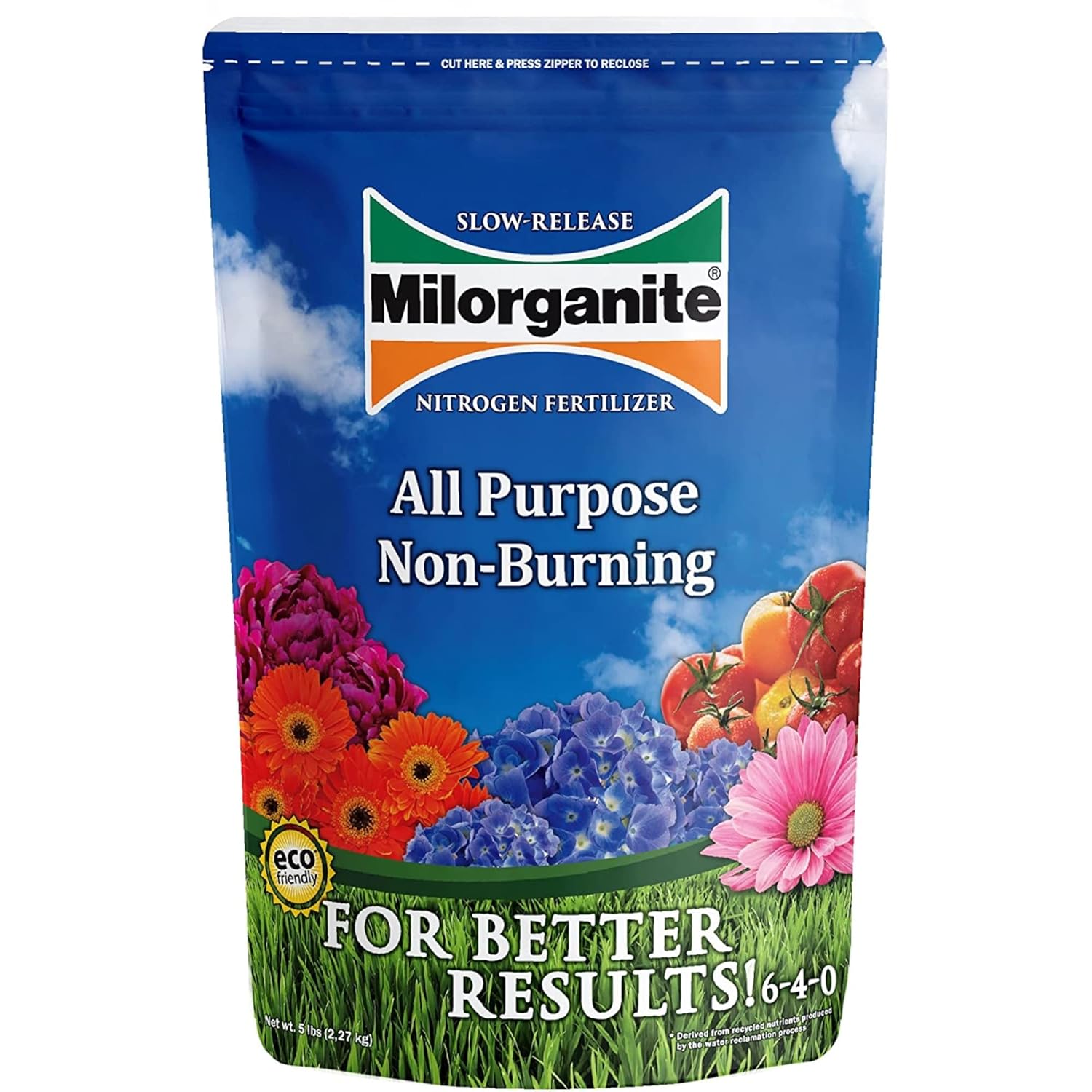
| Item Form | Granules |
|---|---|
| Specific Uses For Product | Lawns, Flowers and Gardens |
| Coverage | 390 Square Feet |
| Ingredients | Nitrogen |
Milorganite is a granular, slow-release organic fertilizer formulated to feed lawns and garden plants for about 8 to 10 weeks per application. It is typically broadcast by hand or with a spreader and does not require immediate watering in, making it easy to fit into routine maintenance. Notable features include a low-salt formula that greatly reduces the risk of burning turf, organically complex iron that greens grass without staining hard surfaces, and about 85% organic matter that helps improve soil structure over time. The product covers roughly 390 square feet from a 5 pound bag and is positioned as safe for use on lawns, shrubs, flowers, trees, and edible gardens. Limitations are that nutrient release is gradual, so it is not a quick fix for severe nitrogen deficiency, and the bag has an earthy odor at first that some pets may find attractive until it dissipates or is watered in. For someone managing Empire Zoysia, use on the recommended schedule and expect steady, low-risk green-up rather than instant color change.
Best for: Gardeners who prioritize steady, low-risk nutrient delivery and soil health and who prefer a hands-off feeding schedule for fine-textured lawns like Empire Zoysia.
Less Ideal for: Homeowners wanting rapid color correction or fast-acting synthetic nitrogen boosts should choose a quick-release fertilizer instead.
- Slow-release nitrogen feeds lawns for 8–10 weeks reducing application frequency
- Low salt formulation minimizes risk of burning sensitive turf like Zoysia
- Provides organically complex iron that greens grass without staining concrete
- High organic matter improves soil structure and water retention over time
- Slow-release action means it will not correct severe yellowing immediately
- Initial earthy odor that may attract some pets until it is watered in or dissipates
Verdict: Choose Milorganite for Empire Zoysia when you want a safe, slow-release organic feed that greens turf steadily without burning or staining.
Jobe's Organics Granular Fruit & Citrus Fertilizer, 4 lb

| Item Form | Granules |
|---|---|
| Specific Uses For Product | Plant Growth, Root Development, Seed Development, Soil Conditioning |
| Application Method | Spread evenly around base |
| NPK | 3-5-5 |
| OMRI Listed | Yes |
This granular Jobe's Organics fertilizer is designed to feed fruit and citrus trees with a slow-release, root-targeted NPK of 3-5-5. It is typically applied by measuring and spreading the granules evenly around the base of the tree, then watering in; applications are recommended every 4 to 8 weeks during the growing season. Notable features include OMRI listing for organic gardening, a blend of feather meal, bone meal and processed poultry manure for organic nutrient sources, and a resealable bag for convenient storage. In practice the formula supports root development and fruit set without synthetic chemicals, and the slow-release nature reduces the need for very frequent feeding. Limitations are that the lower nitrogen level makes it better suited for fruiting and flowering stage nutrition rather than rapid leafy growth, and larger trees will require repeated applications or larger quantities. For gardeners aiming for an organic, low-fuss feed for citrus, this provides predictable, targeted nutrition, but it is not a quick-fix soluble feed for immediate green-up.
Best for: Gardeners who prefer organic, low-maintenance feeding for citrus and fruit trees and want a slow-release product that focuses on fruit and root health.
Less Ideal for: Growers needing fast, high-nitrogen correction or a soluble foliar feed; landscapers managing many mature trees who need bulk quantities more often.
- OMRI listed organic formula suitable for certified organic gardens
- Balanced 3-5-5 NPK aimed at improving flowering and fruit production
- Slow-release granules that feed roots over time and reduce application frequency
- Resealable packaging keeps product fresh between uses
- Lower nitrogen content means it will not rapidly promote leafy growth
- 4 lb bag may be insufficient for mature trees or larger plantings
Verdict: A reliable OMRI-listed granular fertilizer that delivers slow-release, fruit-focused nutrition for organic citrus gardeners.
Brut Organic Worm Castings, 5 lb

| Item Form | Granules |
|---|---|
| Specific Uses For Product | Gardening,Organic |
| Target Species | All plants |
| Mixing Ratio | 1:5 |
Brut Organic Worm Castings function as a concentrated, natural soil amendment you mix into potting mixes or top-dress garden beds and raised beds. Typical use is mixing at the recommended 1:5 ratio for new indoor plants, sprinkling a cup around established houseplants, or working into outdoor planting holes and beds according to the brand directions. The product is OMRI/CDFA listed and produced in controlled conditions, which supports consistent nutrient content and beneficial microbial life that help roots establish, improve soil structure, and increase moisture retention without burning plants. Practical benefits for raised garden beds include improved aeration, slow-release nutrients, and a boost in microbial activity that supports long-term fertility. Limitations are that it is not a complete NPK fertilizer for immediate heavy feeding needs and larger beds require significant quantities to hit the suggested per-square-foot rates, so frequent applications or bulk purchases may be needed for big projects.
Best for: Gardeners who prioritize dependable, organic soil improvement for raised beds and container gardens and prefer predictable, low-risk amendments that support long-term soil health.
Less Ideal for: Those needing immediate, high-NPK feeding for heavy-feeding crops or gardeners who want to amend very large beds without buying supplemental bulk material.
- Certified organic and produced indoors for consistent purity
- Rich in beneficial microbes that improve soil structure and plant vigor
- Easy-to-use granular form suitable for mixing or top-dressing
- Not a standalone high-NPK fertilizer for rapid nutrient correction
- Five-pound bag may be small for large raised beds and repeated seasonal use
Verdict: Use this OMRI/CDFA-listed worm castings product to reliably build long-term fertility and microbial health in raised beds and containers.
Grow Queen Organic Liquid Indoor Plant Food 5-5-5 with Sea Kelp, 8 oz

| Item Form | Liquid |
|---|---|
| Mixing Ratio | 1:1 |
| Specific Uses For Product | Plant Growth |
| Application Method | Watering |
| Target Species | Plants |
Grow Queen's 8 oz concentrated liquid plant food is a balanced 5-5-5 organic fertilizer designed for regular use on houseplants, tropicals and container gardens. You mix one capful (about 4 ml) per gallon of water and either drench the soil or apply as a foliar mist every one to three weeks, which makes it straightforward to fold into a weekly watering routine. The formula includes Ecklonia maxima sea kelp and trace micronutrients, which help support greener foliage, stronger stems and root development without the burning risk of high-strength synthetic feeds. At the stated dilution the bottle treats up to 50 gallons so it will last a small collection for months. It is also labeled safe for aerated hydroponic systems when reservoirs are changed regularly, though it can form a film in stagnant water so fresh mixes are recommended. The product has an earthy ocean scent from real kelp and excludes perfumes and dyes, but that natural smell may bother some users. Directions are simple and the fertilizer pairs well with slow-release feeds for longer-term nutrition.
Best for: Buyers who want a simple, one-bottle solution to feed a mixed collection of houseplants regularly and prefer organic ingredients and seaweed benefits.
Less Ideal for: Growers who need precision nutrient formulas for specific flowering or high-yield vegetable crops or those who require ready-to-use sprays without mixing.
- Balanced 5-5-5 NPK suitable for general indoor plant feeding
- Concentrated formula stretches up to 50 gallons from an 8 oz bottle
- Contains sea kelp and micronutrients to promote foliage color and root strength
- Safe for regular use at recommended dilution with low burn risk
- Natural kelp scent may be noticeable indoors
- Can form a film in standing water so not ideal for non-aerated reservoirs
Verdict: A concentrated, easy-to-use organic 5-5-5 liquid fertilizer with sea kelp that provides straightforward, all-purpose nutrition for indoor plant collections.
Dr. Earth Organic Tomato, Vegetable & Herb Fertilizer (64 oz)

| Unit Count | 64 Ounce |
|---|---|
| Item Form | Granules |
| Specific Uses For Product | Organic |
| Target Species | Herb |
| Coverage | Medium |
This granular organic fertilizer is designed to boost vegetable and herb production by supplying balanced nutrients and soil biology support. It is typically broadcast into beds, mixed into potting mixes, or applied at planting and midseason for a nutritional lift; the manufacturer recommends reapplying every six weeks for containers. Notable features include a fully organic ingredient list, fast but sustained nutrient release, and a blend of probiotic microbes plus ecto and endo mycorrhizae intended to improve nutrient uptake and drought tolerance. In practice that means healthier root systems and potentially better yields and flavor in crops like cucumbers when used as part of an organic program. Limitations are that it is a medium coverage product in a 64 ounce bag so larger plots will need more frequent purchases, and it contains phosphorus so local runoff rules should be checked before use. Follow the directions for pH and application timing to avoid overapplication in small containers.
Best for: Gardeners who prioritize organic soil health and want a single, biology‑focused fertilizer to support vegetables like cucumbers in beds or containers.
Less Ideal for: Large‑scale growers seeking a bulk, high‑coverage fertilizer or those who must avoid phosphorus due to local regulations should consider other options.
- 100 percent organic formula suitable for certified organic gardens
- Contains beneficial microbes and eight strains of mycorrhizae to support root health and nutrient uptake
- Granular form releases nutrients quickly and continues feeding for several months
- Works for beds, raised planters and containers and can be used at planting, transplanting or midseason
- Bag is medium coverage so not economical for very large vegetable plots
- Includes phosphorus which may be restricted in some local jurisdictions
Verdict: Choose this product if you want an organic, microbe‑rich granular fertilizer that supports root health and steady feeding for cucumber and other vegetable plantings.
Choosing the Right Eco Friendly Fertilizer: Key Factors to Consider
Nutrient Composition and Release Pattern
Know the balance of nitrogen, phosphorus, and potassium and whether nutrients are fast- or slow-release. Slow-release and organically derived nitrogen feed plants steadily and reduce the chance of foliar burn or rapid vegetative flushes that demand more frequent feeding.
Release pattern affects timing and labor. A steady-release product can support a growing season with fewer applications, while a faster-release material is helpful when quick greening or rapid growth is needed. For vegetables and annuals, predictable availability matters for crop scheduling.
Support for Soil Microbial Life
Eco friendly fertilizers should encourage microbial activity and fungal networks that unlock nutrients and improve soil structure. Look for materials that include organic carbon, kelp, composted feedstocks, or microbial inoculants rather than only mineral salts.
Supporting biology helps with water retention and nutrient cycling over time. If a product boosts organic matter, expect better crumb structure, slower nutrient loss, and improved resilience through drought or heavy rain.
Potential for Runoff and Leaching
Consider how soluble a fertilizer is and the risk it poses for moving offsite after heavy rain or irrigation. Highly soluble synthetic formulations are more likely to leach nitrogen below the root zone or contribute to runoff into nearby water features.
Placement and timing reduce risk. Products that bind to soil organic matter or release nutrients slowly are less likely to migrate. Match application timing to weather forecasts and avoid applying before heavy rain.
Source Sustainability and Production Impact
The environmental footprint of an eco friendly fertilizer depends on where its ingredients come from and how they were processed. Materials sourced from responsibly managed organic waste, byproducts, or low-energy processes score better than those requiring intensive chemical manufacture.
Consider certifications or supplier transparency about sourcing. A product made from reclaimed organic material or sustainably harvested seaweed typically has a smaller production impact than one relying on energy-intensive extraction.
Application Method and Garden Compatibility
How a fertilizer is applied changes convenience and effectiveness. Granular spreads, slow-release coated granules, liquid concentrates, and soluble powders each fit different gardening styles and planting systems.
Containers and small raised beds often favor liquid or soluble products for quick uptake, while broad beds and lawns benefit from granular or slow-release forms. Also factor in equipment needs such as spreaders or sprayers.
Residual Effects on Soil and Future Crops
Think beyond the immediate season and consider whether the fertilizer builds organic matter, alters pH, or accumulates salts that could affect later plantings. Products that foster long-term soil fertility reduce the need for frequent reapplications.
Some eco friendly fertilizers add minor amounts of salts or acids that, with repeated use, can shift soil chemistry. Monitor soil tests periodically to track changes and adjust input choices accordingly.
When to Choose Slow-Release Versus Quick-Acting Products
Slow-release fertilizers are best for maintaining steady growth, reducing labor, and lowering leaching risk. They are a practical choice for established beds, lawns, and perennial borders where steady nutrient supply is more important than rapid greening.
Quick-acting products can rescue plants showing acute deficiency or provide a short-term boost for transplants and heavy feeders. Use soluble or liquid eco friendly options sparingly and pair them with organic matter to reduce runoff.
- Slow-release: fewer applications, lower runoff risk, good for maintenance
- Quick-acting: immediate uptake, useful for transplants and corrective feeding
- Combine approaches: base with slow-release, supplement with targeted quick feeds
Adapting Application to Different Garden Types
Container gardens, raised beds, and small planters have limited root zone and different leaching dynamics than in-ground beds. Choose formulations with lower soluble salt content and follow lighter, more frequent applications for containers to avoid salt buildup.
Larger landscape beds and lawns can tolerate broadcast granules or slow-release blends. For edible gardens, favor products with clear ingredient lists and minimal processing, and avoid anything with additives that leave chemical residues on produce.
- Containers: low-salt, liquid or small-dose soluble feeds
- Vegetable beds: predictable release, food-safe input sources
- Lawns and large beds: granular slow-release for broad coverage
How to Read Labels and Ingredient Lists
Labels that list exact nutrient ratios and the sources of those nutrients offer better predictability. Instead of vague "organic extracts," look for named inputs like composted plant material, feather meal, bone meal, seaweed, or rock minerals.
Also note suggested application rates and any cautions about salt buildup or pH changes. If microbial additives are claimed, check whether the product provides strain names or colony-forming unit counts to gauge likely efficacy.
- Prefer clear source listing over vague marketing terms
- Check application rates per square foot or per plant type
- Watch for soil pH or salt warnings on the label
Timing Applications Around Weather and Plant Stage
Applying eco friendly fertilizers when plants are actively growing maximizes uptake and minimizes waste. Avoid applying immediately before heavy rain to reduce runoff potential. For spring feeding, time applications after soil has warmed and seedlings are established.
For perennials and shrubs, apply near root zones and avoid heavy surface buildup that can attract pests or create uneven nutrient distribution. Repeat feeding based on product release pattern and observed plant response rather than a fixed calendar alone.
- Feed during active growth, not dormancy
- Avoid applications before heavy rain
- Match timing to plant life stage for best uptake
Integrating Fertilizers with Compost and Soil-Building Practices
Eco friendly fertilizers are most effective when used alongside practices that build organic matter. Regular top-dressing with compost, mulching, and cover cropping improve nutrient retention and reduce dependence on external inputs.
Use fertilizers to complement, not replace, soil-building work. Over time, richer soil with higher organic content needs fewer supplemental fertilizers and supports healthier, more resilient plants.
- Top-dress with compost to improve retention
- Use mulches to reduce nutrient loss and retain moisture
- Consider cover crops to fix nitrogen and add biomass
How We Chose the Best Eco Friendly Fertilizer
We prioritized products and formulations that demonstrably support soil health and reduce environmental harm. Evaluation focused on nutrient profile transparency, source materials, and whether the fertilizer promotes biological activity rather than relying on highly soluble synthetic salts. Application practicality was assessed, including ease of spreading, compatibility with common watering practices, and availability of clear application rates for different crops. Environmental impact criteria looked at leaching potential, runoff risk, and whether materials are produced from renewable or recycled inputs. Long-term soil effects were considered by examining claims or evidence for building organic matter and supporting microbial communities. We excluded products that lacked clear ingredient lists, used ambiguous claims about being "natural," or depended primarily on fast-release synthetic nitrogen. The shortlist reflects options that balance measurable plant nutrition with lower ecological footprint and gardener-friendly application.
FAQ
How often should I apply eco friendly fertilizers in a vegetable garden?
It depends on the product release pattern. Slow-release options often need only one or two applications per season, while soluble or liquid feeds may be applied every few weeks during peak production. Monitor plant vigor and adjust timing rather than following a rigid schedule.
Can eco friendly fertilizers supply all nutrients my soil needs?
They can supply primary nutrients and many secondary elements, but soil tests are the best way to detect specific deficiencies. Sometimes targeted mineral amendments or pH adjustments are necessary in addition to organic fertilizers.
Are liquid organic fertilizers better for containers than granular forms?
Liquid or soluble formulations can be easier to manage in containers because they deliver nutrients quickly and allow precise dosing. However, frequent use can increase salt buildup unless combined with periodic flushing or top-dressing with compost.
Will eco friendly fertilizers attract pests or rodents?
Some organic inputs such as manures or fish-based products can attract animals if not incorporated or applied carefully. Use properly composted materials and apply in ways that minimize exposed attractants, such as mixing into soil or covering with mulch.
How can I measure whether a product is actually improving soil health?
Regular soil tests for organic matter, nutrient levels, and pH provide objective data. Additionally, observing improved structure, better water infiltration, and more robust root growth over seasons are practical signs that soil health is improving.
Is it safe to use eco friendly fertilizers near ponds or streams?
Use caution. Even organic nutrients can contribute to algae growth if they enter water bodies. Prefer slow-release products, apply away from edges, and avoid application before heavy rain to reduce runoff into aquatic systems.
Final Verdict
Prioritize fertilizers that are transparent about ingredients, support soil biology, and match the release profile you need for your planting style. Balance convenience against long-term soil benefits: slow-release, low-solubility options reduce runoff and labor, while targeted quick feeds address immediate needs. Use application timing, composting, and mulching to amplify benefits and minimize environmental impact. With those tradeoffs in mind, choose the product type that best fits your garden size, planting systems, and commitment to building healthier soil over time.
