

Note: This article contains affiliate links. If you click on these links and make a purchase, I may earn a small commission at no extra cost to you. This helps support my research and content. Read my full affiliate disclosure here.
Picking the right fertilizer for flower baskets changes how full and colorful your hanging displays look all season. Basket plants face special challenges: shallow soil, fast drying, and concentrated root zones that need steady nutrients without salt buildup. This guide covers seven top fertilizer options shortlisted for use in baskets and containers, with notes on nutrient ratios, release type, and ease of application. You will find practical evaluation of feeding schedules, salt risk, and how each feed type fits common basket plants. Use the summary to match a fertilizer to how you water, what you grow, and how often you want to feed.
Top Picks at a Glance
| Best Overall The best all-around choice for most situations | Miracle-Gro Water Soluble Bloom Booster Flower Food, 4 lb |  |
| Best Quality Built to a higher standard if you want something more solid | Osmocote Smart‑Release Plant Food Plus Outdoor & Indoor, 2 lb |  |
| Best Value The sweet spot between price and what you get | Farmer's Secret Fruit & Bloom Booster Liquid Fertilizer (16 oz) |  |
| Best Budget The cheapest option that still gets the job done reliably | Jobe's Flower Fertilizer Spikes for Potted Plants and Hanging Baskets, 18 Count |  |
| Highest Rated A top-rated pick with lots of positive feedback | Miracle-Gro Water Soluble All Purpose Plant Food, 1.5 lb |  |
| Most Popular A crowd favorite that many people choose with confidence | Miracle-Gro Pour & Feed Liquid Plant Food, 32 fl. oz. | 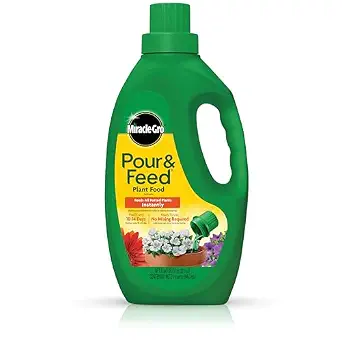 |
| Best Seller A high-volume bestseller chosen again and again | Miracle-Gro Watering Can Singles All Purpose Plant Food, 24 Packets |  |
Miracle-Gro Water Soluble Bloom Booster Flower Food, 4 lb

| Item Form | Powder |
|---|---|
| Application Method | Water Soluble |
| Target Species | flowers |
| Mixing Ratio | 1 tablespoon per gallon |
This Miracle‑Gro Bloom Booster is a water‑soluble powder designed to promote bigger, more colorful blooms on annuals and perennials. It mixes easily in a watering can (mixing ratio 1 tablespoon per gallon for outdoor use) and can also be used with a garden feeder to treat multiple containers and flower beds. The high phosphorus 10-52-10 formulation is the notable feature for encouraging bud set and more abundant flowers, and it delivers results quickly because nutrients dissolve and reach roots fast. Typical use is every 7 to 14 days during the growing season, which makes it convenient for regular maintenance of flowering groundcovers like creeping phlox or mixed container displays. Limitations include the frequent reapplication schedule compared with slow‑release granular fertilizers and the focused bloom‑boosting formula which is not balanced for leafy growth or nonflowering plants. It is best used as a periodic flowering supplement alongside a basic all‑purpose feed or when you specifically want to increase bloom production.
Best for: Gardeners who prioritize frequent, visible flowering results and want an easy soluble booster to use on spring and summer bloomers such as creeping phlox in beds and containers.
Less Ideal for: Those seeking a low‑maintenance, slow‑release fertilizer for foliage development or for primarily nonflowering perennials should consider an all‑purpose or slow‑release option instead.
- High phosphorus 10-52-10 formula to encourage bud formation and more blooms
- Water‑soluble powder that dissolves quickly for fast nutrient uptake
- Works with a watering can or Miracle‑Gro Garden Feeder for flexible application
- Clear mixing directions (1 tablespoon per gallon) make dosing straightforward
- Requires feeding every 7–14 days rather than long‑term slow release
- Specialized bloom formula may not support vigorous leafy growth for nonflowering periods
Verdict: Choose this bloom booster when you want a fast‑acting, water‑soluble fertilizer that reliably increases flower production in creeping phlox and other bloom‑focused plantings.
Osmocote Smart‑Release Plant Food Plus Outdoor & Indoor, 2 lb

| Item Form | Granules |
|---|---|
| Application Method | Sprinkle |
| Target Species | All plants |
| Mixing Ratio | 1 capful (3 tablespoons) per 2 gallons soil or per 4 sq. ft. |
| Unit Count | 32 Ounce |
Osmocote Smart‑Release Plant Food Plus is a granular, resin‑coated fertilizer designed to feed flowers and other plants steadily for up to six months with 11 essential nutrients. You apply it by sprinkling the recommended amount into the top inch or two of potting mix or garden soil, watering it in, and reapplying every six months; indoor plants use about half the outdoor rate. The resin coating times nutrient release to moisture and temperature, which reduces the need for frequent feedings and lowers the risk of fertilizer burn when used as directed. It works across containers, raised beds, and in‑ground flower beds and covers up to roughly 75 square feet per 2 lb container. Limitations are that a single 2 lb container is only enough for small gardens or several pots, and the slow‑release formula is not suitable when an immediate corrective boost is needed for acute nutrient deficiencies. For gardeners focused on steady, maintenance feeding for flowering plants this is an easy, low‑effort option.
Best for: Gardeners who want reliable, low‑maintenance feeding for flowers and mixed plantings and prefer a consistent supply of nutrients over months rather than frequent liquid feedings.
Less Ideal for: Growers who need fast corrective feeding for visible nutrient deficiencies or those managing very large beds who want bulk fertilizer options to reduce trips to reapply.
- Feeds continuously up to six months with a single application
- Resin coating times nutrient release to plant needs based on moisture and temperature
- Formulated with 11 essential nutrients suitable for a wide range of flowering plants
- No-burn pledge when used as directed reduces risk of overfeeding
- 2 lb container only covers about 75 sq. ft., so frequent repurchase is needed for larger gardens
- Slow‑release formulation does not provide a rapid corrective nutrient boost
Verdict: Choose this product if you want a hands-off, long‑lasting fertilizer that keeps flowering plants fed for months with a single application.
Farmer's Secret Fruit & Bloom Booster Liquid Fertilizer (16 oz)

| Item Form | Liquid |
|---|---|
| Specific Uses For Product | Organic |
| Application Method | pour or spray |
| Liquid Volume | 16 fluid ounces |
| Mixing Ratio | 1 teaspoon per 2 gallons of water |
Farmer’s Secret Fruit & Bloom Booster is a super‑concentrated liquid fertilizer designed to encourage blooms, stronger roots, and higher yields when applied as a foliar spray or soil drench. It is mixed at 1 teaspoon per 2 gallons of water and is intended for mid‑to‑late growth stages, applied every 1–2 weeks. The formula emphasizes phosphorus and potassium to support flowering and fruit set while supplying nitrogen and trace minerals to maintain overall plant health. Practical benefits include quick availability to plants compared with granular feeds, flexible application with a watering can, sprayer, or irrigation system, and a long shelf life. Limitations are that exact N‑P‑K percentages are not listed on the product page and dosing relies on the single recommended dilution, so careful measuring is needed to avoid overfeeding. For watermelons, using this during bloom and fruit set should promote stronger root systems and better fruit development, but pair it with a balanced program that meets seedlings' earlier nitrogen needs and with appropriate soil moisture management.
Best for: Gardeners who prioritize efficient, results‑driven feeding during bloom and fruit set and who want a concentrated liquid they can apply selectively to maximize yield.
Less Ideal for: Growers looking for detailed N‑P‑K labels or those who prefer slow‑release granular fertilizers for steady early‑season nitrogen feeding.
- Highly concentrated so a small amount treats a large area
- Formulated to boost flowering and fruit set with elevated phosphorus and potassium
- Can be applied as a soil drench, foliar spray, or through irrigation for flexible use
- Contains trace minerals in addition to primary macronutrients
- Long practical shelf life when stored properly
- No explicit N‑P‑K ratio printed in the provided product details
- Requires accurate dilution to avoid overapplication
Verdict: A concentrated, bloom‑focused liquid fertilizer that is ideal for gardeners wanting a targeted, easy‑to‑apply boost during watermelon bloom and fruit set.
Jobe's Flower Fertilizer Spikes for Potted Plants and Hanging Baskets, 18 Count

| Unit Count | 18 Count |
|---|---|
| Application Method | Insert into soil |
| Item Form | Sticks |
| Mixing Ratio | 8-9-12 |
Jobe's Flower Fertilizer Spikes are pre-measured, slow-release sticks designed for potted plants and hanging baskets. To use, you push the spikes into the potting mix around the root zone and replace them roughly every eight weeks; the spikes dissolve slowly so nutrients are delivered at the roots rather than washed off the surface. The product uses an 8-9-12 NPK formula aimed at encouraging bloom and foliage development and is sold in an 18-count pack. Practical benefits include a mess-free application, reduced chance of overfertilizing because each spike is pre-measured, and convenience for busy gardeners who want low-maintenance feeding. Limitations are that the fixed NPK ratio and dosing may not suit every plant or growth stage and spikes provide medium coverage so very large baskets or dense plantings may need multiple spikes or more frequent replacement. Also this format does not allow custom blending of nutrients the way granular or liquid feeds do.
Best for: Ideal for budget-minded gardeners who want a low-effort, reliable way to keep hanging flower baskets and potted annuals fed without frequent mixing or measuring.
Less Ideal for: Not a good fit for growers who need precise control of nutrient ratios for specialty plants or for those managing very large or heavily planted baskets that need heavy feeding.
- Pre-measured slow-release sticks for mess-free, root-targeted feeding
- Feeds up to eight weeks per application reducing maintenance frequency
- Convenient insert-into-soil application suitable for hanging baskets and pots
- Formulated 8-9-12 NPK to support blooms and foliage
- Fixed nutrient ratio and dosage limit customization for specific plant needs
- Medium coverage means multiple spikes may be required for large or densely planted baskets
Verdict: A simple, low-maintenance spike feed that keeps hanging baskets blooming with minimal cost and effort.
Miracle-Gro Water Soluble All Purpose Plant Food, 1.5 lb

| Item Form | Powder |
|---|---|
| Application Method | Watering Can |
| Target Species | For all flowers, vegetables, trees, shrubs and houseplants |
| Mixing Ratio | 24-8-16 |
Miracle-Gro Water Soluble All Purpose Plant Food is a powdered, water-soluble fertilizer formulated to deliver fast nutrition to a broad mix of plants. You mix the powder into a watering can or a garden feeder and apply every 1 to 2 weeks depending on whether plants are indoors or out. The 24-8-16 NPK ratio supplies a strong nitrogen boost for leafy growth along with phosphorus and potassium to support flowering and fruit set. For pepper growers this means it can help produce vigorous plants and encourage fruit development when used at the recommended strengths. Notable features include clear mixing guidance for both indoor and outdoor use and compatibility with container and in-ground plantings. Practical benefits are quick uptake by roots and flexible application options. Important limitations are the high nitrogen proportion, which can favor foliage over fruit if overused, and the need to follow dilution instructions to avoid nutrient burn. This product is best used as a regular boost within a balanced feeding plan rather than the only fertility source for long-term soil health.
Best for: Home gardeners looking for an affordable, easy-to-use boost to support vigorous pepper plant growth and quick results in both containers and garden beds.
Less Ideal for: Growers who want a low-nitrogen or slow-release fertility plan for long-term soil building should consider specialized or organic alternatives.
- Water-soluble powder that feeds plants quickly through the roots
- Clear mixing instructions for indoor and outdoor applications
- Broadly labeled for use on flowers, vegetables, trees, shrubs and houseplants
- Feeds approximately 600 sq. ft. from the 1.5 lb container
- High nitrogen ratio may encourage foliage more than fruit if used too frequently
Verdict: A budget-friendly, fast-acting soluble fertilizer that gives bell pepper plants a regular nitrogen-rich boost to promote vigorous growth and quicker results.
Miracle-Gro Pour & Feed Liquid Plant Food, 32 fl. oz.

| Item Form | Liquid |
|---|---|
| Application Method | Directly to the soil |
| Target Species | potted plants |
| Unit Count | 32 Fluid Ounces |
Miracle-Gro Pour & Feed is a ready-to-use liquid fertilizer designed for container plants and houseplants. You apply it by measuring with the bottle cap and pouring the recommended amount directly onto the soil around each pot, so no mixing or watering-can prep is required. Its convenience makes it easy to maintain a regular 10–14 day feeding schedule for bedding plants like petunias in containers. The product is formulated for potted plants only, and the liquid form gives fairly quick nutrient availability compared with slow-release granules. Practical benefits include simple dosing with the cap, suitability for indoor and outdoor use, and a clearly stated application rhythm that helps keep flowering plants vigorous. Important limitations are that it is not intended for in-ground beds and that frequent applications mean you need to remember regular feedings; it is also a general all-purpose formula rather than a petunia-specific bloom booster.
Best for: A plant owner who prefers simple, low-effort care for container flowers and wants a dependable, easy-to-measure fertilizer to keep petunias and other potted ornamentals blooming.
Less Ideal for: Gardeners seeking a long-term, in-ground soil amendment or those who prefer an infrequent, slow-release feeding schedule should consider other products.
- Ready-to-use liquid requires no mixing so application is fast and low-effort
- Cap-measure dosing makes it easy to apply the correct amount for each container
- Suitable for both indoor and outdoor container plants so one product covers many uses
- Feeds on a 10–14 day schedule for consistent nutrient supply to flowering containers
- Not formulated for in-ground planting so unsuitable for garden beds
- Requires frequent application compared with slow-release fertilizers
Verdict: Use this if you want a no-mix, easy-to-measure liquid fertilizer to keep container petunias fed and blooming on a regular schedule.
Miracle-Gro Watering Can Singles All Purpose Plant Food, 24 Packets

| Number of Packs | 24 |
|---|---|
| Unit Count | 10.24 Ounce |
| Item Form | SOLID |
| Application Method | watering can |
| Mixing Ratio | 1 teaspoon per 1 gallon of water |
Miracle-Gro Watering Can Singles are single-use, pre-measured fertilizer packets intended to make feeding roses and other garden plants simple and reliable. To use, tear a packet into a watering can, add the specified amount of water, then apply the solution while watering; the manufacturer recommends feeding every 7 to 14 days during active growth. The packets remove measuring errors and mess, which helps prevent accidental overfeeding. Because the formula is labeled for all flowers, vegetables, trees and shrubs, it fits into regular rose care routines for bloom and bush development. Practical benefits include instant solubility, clear application instructions for outdoor and indoor containers, and consistent coverage per packet for about 10 sq. ft. of garden. Limitations are that you must keep up with the every-1–2-week schedule for best results and that the product is sold as a general-purpose feed rather than a rose-specific bloom booster, so dedicated rosarians seeking targeted NPK ratios might prefer a specialized rose fertilizer.
Best for: Gardeners who want a low-risk, no-mess way to feed roses and mixed flower beds as part of routine watering and prefer simple, foolproof dosing.
Less Ideal for: Specialist rose growers seeking a targeted bloom-boosting formula or those who want a single, slow-release application instead of frequent liquid feedings.
- Pre-measured packets eliminate measuring and reduce mess and dosing errors
- Water-soluble formula mixes quickly in a watering can for immediate application
- Labeled for use on flowers, roses, shrubs, trees and vegetables so it suits mixed beds
- Clear directions for indoor and outdoor application and coverage per packet
- General all-purpose formula rather than a rose-specific NPK for bloom boosting
- Requires regular reapplication every 7–14 days to maintain results
Verdict: If you want a safe, fuss-free way to feed roses while you water, these pre-measured soluble packets make regular feeding simple and consistent.
Choosing the Right Fertilizer for Flower Baskets: Key Factors to Consider
Nutrient Ratio and Bloom Focus
Flower baskets benefit from a nutrient profile that supports abundant blooms and strong petal color. Look for fertilizers with slightly higher phosphorus relative to nitrogen when the label specifies bloom support, but be mindful that too much phosphorus does not compensate for missing micronutrients. A balanced N-P-K with added iron, magnesium, and trace elements helps produce rich color without encouraging leggy foliage.
Because containers hold limited soil, the absolute quantity of nutrients matters as much as the ratio. Choose formulations that allow precise, small doses and follow label dilution rates geared to container volumes rather than landscape applications.
Release Pattern and Feeding Frequency
Release pattern affects how often you must feed and how stable nutrient levels remain between waterings. Water-soluble or liquid fertilizers give rapid uptake and let you correct deficiencies quickly, which is helpful during peak bloom. Slow-release granules provide longer intervals between feedings but may be less predictable in very wet or very dry baskets.
Consider how often you want to climb a ladder or mix solution. If you prefer weekly attention, a concentrated water-soluble feed works well. If you want to feed less often, choose a slow-release option rated for containers and follow guidelines for media depth and temperature sensitivity.
Salt Accumulation and Root Safety
Small containers are prone to salt buildup from repeated fertilizing and evaporation. High-salt fertilizers or heavy-handed dosing can burn roots and reduce water uptake, causing wilting even when the media is moist. Prefer low-salt-index formulas, especially for tender annuals and mixes with organic components that hold salts.
Leaching by occasional deep watering can mitigate buildup, but not all gardeners can perform that regularly. Select products with clear dosing instructions for container volumes and consider periodic flushing of baskets during long feeding cycles.
Compatibility With Watering Practices
How you water affects fertilizer choice. If you hand-water daily, a milder, more frequent liquid feed maintains steady nutrition without spikes. For gardeners who water less often or use self-watering inserts, slow-release granules or spikes designed for containers provide a steadier supply over weeks.
Also consider water quality. Hard water can interact with some liquid feeds and reduce micronutrient availability. If your tap water is high in minerals, choose formulas with chelated micronutrients or plan occasional acidifying feeds for iron availability.
Formulation and Ease of Use
Practicality matters when feeding hanging baskets. Powders that dissolve cleanly and liquids with measured caps are easier to use safely from a ladder. Granules should be small and evenly distributed so they do not sit on the media surface where they can dry and salt-burn roots.
Clear labeling, straightforward dilution instructions for small container volumes, and packaging that allows controlled dispensing reduce waste and mistakes. If you often multitask outdoors, simple application methods lower the chance of over- or under-feeding.
Longevity and Season Planning
Decide whether you want a single-application solution that lasts several weeks or a program of regular feedings. Slow-release products can cover multiple weeks to months but may release faster in hot weather, while liquids allow you to boost flowering during peak display times.
Match your choice to your season plan: for a long summer display with minimal intervention, favor longer-lasting feeds designed for containers. For peak performance in short bloom windows, plan a regular liquid feeding schedule to maximize flower production.
When To Start Feeding Hanging Baskets
Begin feeding once root systems have established after transplanting into the basket, typically one to two weeks after planting. Early gentle feeds help plants recover from transplant shock without overwhelming young roots.
Increase feeding frequency when flower buds set and during sustained warm weather that accelerates growth. Conversely, reduce or pause feeding in very hot, drought-stressed periods until irrigation and plant vigor recover.
- Feed lightly after potting up to avoid salt stress in fresh media.
- Shift to a bloom-focused program when the first flower buds appear.
- Adjust frequency rather than concentration to avoid sudden salt spikes.
Feeding Techniques for Busy Gardeners
If you have limited time, choose a feed method that matches your routine. Weekly liquid applications are quick and effective if you already water on that schedule. Slow-release granules are suited to less frequent maintenance but still require occasional checks for compaction or uneven distribution.
Use simple measuring tools and mark bottles with dilution ratios for container volumes. Carry a small watering can or a dosing bottle when working from a ladder to avoid spills and overapplication.
- Prepare a small pre-mixed jug of liquid feed for multiple baskets to save time.
- Apply granules evenly around the root ball and lightly rake them into the media surface.
Managing Micronutrient Needs
Visible signs like yellowing between leaf veins or pale new growth can indicate micronutrient shortages common in soilless mixes. Iron and magnesium are frequent culprits that affect flower color intensity and foliage health.
Choose fertilizers that include chelated micronutrients or supplement with targeted foliar sprays if symptoms appear. Foliar feeds act quickly but do not replace balanced root feeding over the season.
- Check for interveinal chlorosis to identify iron shortage.
- Apply foliar sprays in cool, calm conditions for best uptake.
Adjusting Feed for Different Basket Plants
Different species have different nutrient appetites. Petunias and calibrachoas are heavy feeders that respond well to steady, balanced nutrition. Slower-growing foliage plants and succulents used in baskets require a lighter approach to avoid leggy growth or root damage.
Group baskets by plant type and feeding need so you can apply tailored programs rather than a one-size-fits-all schedule. This reduces waste and improves overall display health.
- Pair heavy feeders together and set a weekly liquid schedule.
- Give foliage-focused baskets milder, lower-phosphorus feeds.
Troubleshooting Common Feeding Problems
If plants show burnt leaf edges or sudden wilting after feeding, suspect over-fertilization or salt stress. Flush the media with generous water and hold off further feeding until plants recover. Re-assess dosing and frequency for small containers.
If blooms are sparse despite regular feeding, review sunlight, watering, and pruning practices. Fertilizer cannot fully compensate for inadequate light or overcrowded roots; sometimes repotting into fresh media or trimming back growth helps restore bloom production.
- Flush if you suspect salt buildup and reduce concentration next feed.
- Check irrigation and light before increasing nutrient input.
How We Chose the Best Fertilizer for Flower Baskets
We focused on fertilizers that are practical for use in hanging and mixed flower baskets because container-grown displays have distinct needs compared with in-ground beds. Primary evaluation criteria included nutrient balance tailored to flowering (N-P-K and micronutrients), release pattern and predictability (liquid, water-soluble, or slow-release granules), salt accumulation risk and safe application rates for small volumes of media, and ease of use for typical gardeners who feed from a ladder or patio. We also evaluated watering compatibility, meaning how a product behaves with daily to twice-weekly irrigation and whether it disperses evenly through a shallow root zone. Longevity in a basket environment and compatibility with peat-based or soilless mixes were considered, along with product handling and dosing clarity to reduce the chance of overfeeding. Exclusions included fertilizers formulated exclusively for lawns or trees, heavy mineral fertilizers unsuited to containers, and formulations requiring specialist equipment. These filters produced a list of options that suit common hanging-basket plants and real-world garden routines while minimizing common container gardening risks.
FAQ
How often should I feed flower baskets during summer?
It depends on the fertilizer type. Water-soluble feeds are typically applied weekly or every two weeks. Slow-release options may last 6 to 12 weeks but can release faster in hot weather, so monitor plants and adjust as needed.
Can I use garden fertilizer designed for beds in hanging baskets?
Garden or landscape formulations are often too strong for small containers and may cause salt buildup. If using them, reduce dose substantially and follow container-specific dilution guidance rather than landscape rates.
What signs show my basket is underfertilized?
Underfed baskets often have reduced flowering, small or pale leaves, and slow growth. Lack of new buds during peak season is a common indicator that plants need more frequent or targeted feeding.
Will slow-release fertilizer work in every basket?
Slow-release can work well, but performance depends on media depth, temperature, and moisture. Very shallow baskets or those that dry quickly may not release evenly, so choose a formula rated for containers and check plants for nutrient needs.
Are foliar feeds useful for container flowers?
Foliar feeds can correct micronutrient shortages quickly and are useful as a temporary boost. They do not replace a balanced root feeding program and should be used as a supplement when deficiencies are evident.
How do I avoid fertilizer burn in small pots?
Use lower concentrations, follow container-specific dosing, and avoid applying fertilizer to very dry media. When in doubt, dilute further and feed more frequently rather than increasing concentration.
Final Verdict
Choose a fertilizer that matches how you water, the types of plants in your baskets, and how often you want to feed. Prioritize a balanced bloom-focused nutrient profile, predictable release behavior for shallow media, and clear dosing instructions to minimize salt stress. Tradeoffs are inevitable: liquids give fast results and control, while slow-release products cut maintenance but can be affected by heat and moisture. Match the product to your routine and monitor plants so you can adjust feeding for the best, longest-lasting displays.
