

Note: This article contains affiliate links. If you click on these links and make a purchase, I may earn a small commission at no extra cost to you. This helps support my research and content. Read my full affiliate disclosure here.
Choosing the right fertilizer for foliage plants makes a big difference in leaf color, density, and the overall vigor of indoor and shaded outdoor plants. Overfeeding or using the wrong nutrient balance can cause burned tips, weak stems, or dull leaves, while the right formula encourages steady, lush growth. This guide covers seven top-rated fertilizers for foliage plants shortlisted for common houseplants and shade-loving garden specimens. We evaluate nutrient balance, feeding frequency, and ease of use so you can match a formula to your watering habits and the plant mix in your home or garden. Read on to see the decision factors that mattered and which approaches suit different care routines.
Top Picks at a Glance
| Best Overall The best all-around choice for most situations | Dyna-Gro Foliage Pro 32 oz Liquid Plant Fertilizer | 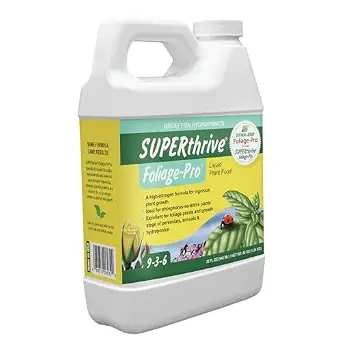 |
| Best Quality Built to a higher standard if you want something more solid | Growth Technology GT Foliage Focus Liquid Plant Food (250 mL) |  |
| Best Value The sweet spot between price and what you get | BLESS YOUR SOIL Big Green Leaves Indoor Plant Food, 1 lb Concentrated Powder |  |
| Best Budget The cheapest option that still gets the job done reliably | Miracle-Gro Liquid All Purpose Plant Food Concentrate, 32 oz |  |
| Highest Rated A top-rated pick with lots of positive feedback | Schultz Liquid Plant Food 8 fl oz (pack of 3) |  |
| Most Popular A crowd favorite that many people choose with confidence | Miracle-Gro Indoor Plant Food Spikes, 48 Spikes (2-Pack) |  |
| Best Seller A high-volume bestseller chosen again and again | TPS NUTRIENTS Indoor Plant Food Liquid Fertilizer, 8 fl oz |  |
Dyna-Gro Foliage Pro 32 oz Liquid Plant Fertilizer

| Item Form | Liquid |
|---|---|
| Specific Uses For Product | indoor plant care, greenhouse production, and low light environments |
| Application Method | Mix with water |
| Mixing Ratio | 3:1:2 or 9-3-6 |
Dyna-Gro Foliage Pro is a concentrated liquid fertilizer designed as a complete nutrient source for tropical foliage and common indoor plants. It mixes with water and can be used as the sole feed in soil or hydroponic setups, with the label recommending a 3:1:2 or 9-3-6 mixing ratio to match plant needs. In practice it encourages leafy growth, stronger stems, and richer leaf color thanks to its foliage-focused NPK balance, and its liquid form makes it easy to apply during regular watering. The formula is versatile for greenhouse production and low-light interiors where steady nutrition matters. Expect reliable, steady results rather than instant dramatic changes; you still need to follow dilution guidance and schedule to avoid overfeeding. The product comes in a pint/quart-sized bottle that is easy to measure and store, but users should wear basic protection when handling concentrate and keep it away from children and pets.
Best for: Plant owners who prioritize steady, performance-oriented foliage results and want a single liquid feed they can rely on for indoor and greenhouse plants.
Less Ideal for: Growers who need a bloom-boosting or high-phosphorus feed for flowering and fruiting plants should choose a fertilizer formulated for blooms instead.
- Balanced foliage-focused NPK (3:1:2) tuned for leaf growth and coloration
- Liquid concentrate that mixes easily with water for consistent feeding
- Suitable as a sole nutrient for both soil and hydroponic systems
- Works well in low-light and greenhouse environments where steady nutrition is needed
- Requires careful dilution and regular scheduling to avoid nutrient buildup
- Not formulated for heavy-flowering or fruiting requirements where different NPK is preferred
Verdict: If you want a dependable, foliage-focused liquid fertilizer that can serve as a single feed for indoor and greenhouse plants, this is a strong choice.
Growth Technology GT Foliage Focus Liquid Plant Food (250 mL)

| Item Form | Liquid |
|---|---|
| Specific Uses For Product | Soil / Hydroponics / Semi Hydro / Foliar Spray |
| Application Method | Foliar Spray |
| Target Species | Houseplants, Leafy Tropical |
| Liquid Volume | 250 ml |
Growth Technology GT Foliage Focus is a liquid concentrate designed to support leafy tropicals like monstera by supplying macronutrients and trace elements in an easy-to-use, pH‑buffered solution. It is mixed at low milliliter-per‑liter rates for routine feeding: lower dilutions for soil and potting mixes and slightly stronger mixes for hydroponic or semi‑hydro systems. Typical use is adding the recommended dose to your watering can and feeding with every watering or applying as a foliar spray for faster leaf uptake. The formula lists nitrate‑nitrogen, potassium, calcium, magnesium, and trace elements, so it supports steady chlorophyll production and robust foliage when used consistently. Practical benefits include clear dosing guidelines, compatibility across growing media, and a compact bottle that fits on a shelf or in a small greenhouse. Limitations are the small 250 mL size for growers who feed many plants frequently and the need to flush monthly to avoid salt buildup if used with each watering.
Best for: Buyers who prioritize consistent, reliable feeding routines for monstera and other leafy tropicals and want a single product that works across soil and hydro systems.
Less Ideal for: Large-scale growers or collectors who prefer bulk concentrates or an all-in-one slow-release option should consider larger-volume or alternative delivery formats.
- pH‑buffered, ready-to-dilute liquid formula for straightforward mixing
- Clear dosing guidance for soil, hydroponic, semi‑hydro and foliar use
- Contains macronutrients and trace elements targeted at leafy tropicals
- Small concentrated bottle is convenient for home and small greenhouse setups
- Only 250 mL volume may require frequent repurchasing for larger collections
- Requires monthly flushing to manage mineral salt buildup
Verdict: A reliable, pH‑buffered liquid feed that makes steady, cross‑media nourishment simple for monstera and other leafy indoor plants.
BLESS YOUR SOIL Big Green Leaves Indoor Plant Food, 1 lb Concentrated Powder

| NPK Ratio | 12-4-8 |
|---|---|
| Form | Powder, water-soluble concentrate |
| Yield | Makes ~90 gallons of solution |
| Application Methods | Soil drench, foliar feed, hydroponic/LECA compatible |
| Includes | Pre-measured teaspoon scoop |
Big Green Leaves is a dry, water-soluble houseplant fertilizer designed to drive leafy growth in tropical indoor plants. It mixes quickly with a pre-measured scoop and yields roughly 90 gallons of feed solution from a 1 lb pouch, so it is typically used as a routine soil drench or foliar spray every 2–4 weeks during active growth. The 12-4-8 NPK leans high on nitrogen for bigger leaves and stems while included sea kelp and a chelated micronutrient blend support root development and consistent uptake across variable pH levels. Practical benefits include compatibility with potting mixes, soilless media, and hydro/LECA systems, a resealable pouch for tidy storage, and no fillers or urea that can cause salt buildup. Important limitations are that its formulation is aimed at foliage-driven tropicals rather than cacti, succulents, or high-phosphorus flowering plants, and the concentrated powder requires careful measuring and dilution to avoid overfeeding sensitive specimens. For growers focused on vigorous leaf production, it delivers a clear, concentrated option with broad application modes.
Best for: Buyers who prioritize rapid, healthy leaf growth on tropical and foliage houseplants and want a concentrated, value-oriented fertilizer they can use across soil and soilless systems.
Less Ideal for: Gardeners who mainly grow succulents, cacti, or flowering houseplants that require higher phosphorus or very low-nitrogen fertilizers should choose a product tailored to those needs.
- High 12-4-8 NPK tailored for leafy tropical houseplants to promote rapid foliage growth.
- Contains sea kelp and chelated micronutrients to support root health and improve nutrient uptake.
- Very concentrated yield (about 90 gallons per pound) for lower cost and less packaging than liquid fertilizers.
- Versatile application: soil drench, foliar feed, hydroponic and LECA compatibility.
- Resealable pouch with a pre-measured scoop for consistent mixing and tidy storage.
- Not formulated for cacti, succulents, or flowering plants that need higher phosphorus levels.
- Requires accurate measuring and dilution because of its concentration, which can risk overfeeding if misused.
Verdict: If you want fast, fuller foliage on tropical houseplants, this concentrated 12-4-8 powder gives strong, versatile feeding and excellent value per gallon.
Miracle-Gro Liquid All Purpose Plant Food Concentrate, 32 oz

| Item Form | Liquid |
|---|---|
| Specific Uses For Product | Plant Growth, Root Development |
| Application Method | Mix with water in a watering can |
| Mixing Ratio | 1:10 (concentrate to water, estimate) |
Miracle-Gro Liquid All Purpose is a water-soluble concentrate you mix into a watering can and apply every 1 to 2 weeks to container and in-ground plants. It is formulated for general plant growth and root development and is marketed for flowers, vegetables, shrubs and houseplants, so it works as a straightforward feed for flowering bulbs like calla lilies. The bottle’s mixing guidance (cap measures for garden application and 1 teaspoon per gallon for containers) makes it easy to dose for pots or small beds. Practical benefits include fast uptake through the soil when applied as directed and compatibility with routine watering schedules. Limitations to note are that it is an all-purpose formula rather than a bloom-focused or calcium-rich fertilizer tailored specifically to calla lilies, so growers seeking targeted bloom enhancement or specialty nutrition may want a supplement. Also, frequent use at higher-than-recommended strength can risk fertilizer burn, so follow the mixing directions and schedule.
Best for: Buyers who want an affordable, easy-to-use liquid fertilizer to keep calla lilies and other flowering plants regularly fed without fuss.
Less Ideal for: Growers seeking a specialist bloom-boost or a fertilizer formulated for specific micronutrient needs should consider a targeted or bloom-specific product instead.
- Concentrated liquid mixes easily with water for quick application
- Clear dosing instructions for both garden beds and container plants
- Suitable for a wide range of plant types including flowering bulbs and houseplants
- General all-purpose formula not specifically formulated for enhancing blooms of calla lilies
Verdict: A budget-friendly, easy-to-use liquid concentrate that reliably feeds calla lilies and other common garden plants on a regular schedule.
Schultz Liquid Plant Food 8 fl oz (pack of 3)

| Item Form | Liquid |
|---|---|
| Application Method | Mix 7 drops per quart of water |
| Specific Uses For Product | Plant Food |
| Target Species | flowers, tomatoes, roses, vegetables, fruits, trees, shrubs, annuals, perennials, houseplants |
| Unit Count | 8 Fluid Ounces per bottle |
Schultz Liquid Plant Food is a concentrated, easy-to-use liquid fertilizer intended for a wide range of foliage and flowering plants. It is supplied as three 8 fl oz bottles and mixes at a very low rate of seven drops per quart of water, which makes dosing quick and reduces storage space compared with bulky granular options. The liquid form is absorbed quickly by roots and foliage when applied with regular watering, helping produce greener leaves and steadier growth on houseplants, roses, vegetables and ornamentals. Practical benefits include straightforward mixing, suitability for indoor and outdoor use, and a small convenient bottle size that is simple to keep on a shelf. Limitations are that the product gives only general-purpose feeding rather than a foliage-specific N-P-K profile, and because it is concentrated a precise dropper or measuring tool is advised to avoid overfeeding small pots. Gardeners looking for a tried-and-true, low-fuss liquid feed will find this reliable for routine maintenance but may prefer a specialized formula if correcting specific nutrient deficiencies.
Best for: Buyers who prioritize a dependable, no-frills liquid feed to keep foliage plants healthy with regular, simple applications and minimal storage hassle.
Less Ideal for: Growers who need a fertilizer formulated specifically for high-nitrogen foliage boost or precise nutrient correction should consider targeted products instead.
- Concentrated liquid formula mixes at seven drops per quart for minimal storage and simple dosing
- Suitable for a wide range of plants including houseplants, vegetables, roses and perennials
- Quick absorption due to liquid form, which can lead to faster visible results
- Comes as three 8 fl oz bottles so you have enough feedings for routine maintenance
- No detailed N-P-K breakdown provided so it is not tailored for correcting specific nutrient imbalances
- Very concentrated dosing requires careful measuring to avoid overapplication
Verdict: A compact, easy-to-dose liquid fertilizer that reliably maintains healthy foliage for a wide range of indoor and outdoor plants.
Miracle-Gro Indoor Plant Food Spikes, 48 Spikes (2-Pack)

| Unit Count | 48 Count |
|---|---|
| Number of Packs | 2 |
| Item Form | Sticks |
| Application Method | Insert into soil |
| Mixing Ratio | 6:12:6 |
These Miracle-Gro Indoor Plant Food Spikes are preformed sticks you push into moist potting soil to feed houseplants without measuring or mixing. Each spike releases nutrients over time, with replacement every 30 days in spring and summer and every 60 days in cooler seasons. The formula (NPK 6-12-6) emphasizes phosphorus to support blooms while still supplying nitrogen for foliage, so it works for a broad range of indoor plants from pothos and snake plants to flowering houseplants. Practical benefits include very low maintenance application, predictable dosing per spike, and compatibility with most potted indoor species. Limitations are that spikes feed a local root zone only so placement matters for large pots or plants with uneven root distribution, and they do not allow fine control of nutrient ratios for specialty plants. Also spikes assume soil is already moist at insertion and are not a substitute for corrective treatments if a plant is nutrient deficient or suffering from root issues.
Best for: Buyers who want a low-effort, reliable feeding method to keep indoor foliage healthy and occasionally support blooms without frequent mixing or dosing.
Less Ideal for: Experienced growers who need exact nutrient control for sensitive or high-performance specimens should choose adjustable liquid or granular fertilizers instead.
- Pre-measured spikes simplify feeding with no mixing or measuring
- Continuous release feeds plants for up to two months per pack when used as directed
- NPK 6-12-6 supports both foliage health and flowering
- Easy application with included aerator spike makes it beginner-friendly
- Feeds only the local root zone so may not distribute evenly in larger pots
- Does not allow precise adjustment of nutrient ratios for specialized plant needs
Verdict: If you want a fuss-free, premeasured way to keep foliage plants fed and occasionally boost blooms, these spikes deliver predictable, low-maintenance nutrition.
TPS NUTRIENTS Indoor Plant Food Liquid Fertilizer, 8 fl oz

| Item Form | Liquid |
|---|---|
| Specific Uses For Product | Plant Food |
| Application Method | Watering can |
| Mixing Ratio | 2:1 (oz/gallon) or 1:64 (tbsp/gallon) |
TPS NUTRIENTS Indoor Plant Food is a concentrated liquid fertilizer made for regular use with houseplants. You mix the measured dose into water and apply it with your usual watering can; the label gives an easy mixing ratio for household use. Its kelp-enriched formula is pitched at improving leaf color, encouraging steady new growth, and supporting root health, so expect glossier foliage and more frequent leaf production when plants are fed consistently. The 8 fl oz bottle is portable and fits on a plant shelf or utility area, and the liquid form dissolves readily for even application. It is intended for medium coverage and labeled as gentle for weekly feeding, which simplifies care for busy owners. Important limitations are that this is a small bottle meant for regular top-up feedings rather than long-term bulk use, and it assumes you will follow dilution directions to avoid overfeeding. Keep it away from children and pets and avoid skin or eye contact when handling.
Best for: Plant owners who want a simple, low-effort weekly fertilizer to keep indoor foliage vibrant and encourage steady new leaf growth. Good for people who prefer an easy liquid mix applied during regular watering routines.
Less Ideal for: Gardeners needing a bulk or multi-season fertilizer for outdoor beds or large collections should consider larger-capacity or specialized products instead.
- Liquid concentrate mixes easily for even application with a watering can
- Kelp-enriched formula aimed at improving foliage color and encouraging new growth
- Gentle enough for weekly feedings according to product guidance
- Clear mixing instructions for home use
- Small 8 fl oz volume limits how many plants you can feed before repurchasing
- Not formulated or labeled for outdoor or large-scale garden use
Verdict: A convenient kelp-enriched liquid concentrate that makes weekly feeding easy for anyone who wants healthier, more vibrant indoor foliage.
Choosing the Right Fertilizer for Foliage Plants: Key Factors to Consider
Nutrient Ratio and Nitrogen Focus
Foliage plants respond strongly to nitrogen, which fuels leaf cell division and chlorophyll production. Look for formulas that emphasize a higher first number in the N-P-K ratio while still providing adequate phosphorus and potassium to support root and overall plant health. Too much nitrogen relative to other nutrients can cause soft, floppy growth, while too little results in slow, pale leaves.
Consider whether the fertilizer includes chelated micronutrients such as iron and manganese; these prevent common indoor deficiencies that show up as yellowing between veins. A well-balanced product reduces the need for corrective spot treatments later on.
Concentration and Dosing Flexibility
Concentrated liquid fertilizers and water-soluble powders offer fine control for small pots and mixed collections, allowing you to dilute down for seedlings and increase for larger specimens. Slow-release granules or spikes reduce the chance of accidental overfeeding but limit your ability to make rapid adjustments.
Choose a concentration that fits your routine: if you tend to forget regular feedings, a lower-strength daily feed might be safer than occasional full-strength doses. Clear dosing instructions and the ability to measure accurately are crucial for container-grown foliage plants.
Application Method and Frequency
Different application methods affect how quickly plants show results and how easy the feed is to deliver. Foliar sprays deliver micronutrients directly to leaves and can correct mild deficiencies fast, but they are a supplement rather than a complete nutrition plan. Soil drenches and water-soluble feeds supply the root zone and support sustained growth, while slow-release granules are low-maintenance options for mixed displays.
Frequency matters too. Many foliage plants do best with moderate, regular feeding during active growth and little to none during dormancy. Match the product's recommended schedule to how often you water and the seasonal growth pattern of your plants.
Salt Build-Up and Water Quality Interaction
Container soils can accumulate salts from fertilizers and tap water, leading to burned leaf edges and reduced water uptake. Products with lower salt index or those designed for regular, dilute feeding tend to minimize buildup. Consider how often you flush pots or repot; gardeners who rarely leach soil should favor gentler, lower-salt formulas.
If you use hard water, be aware that some fertilizers can interact with dissolved minerals and form precipitates or reduce nutrient availability. Products that list chelated micronutrients and guidance for hard-water use are safer choices for many indoor gardeners.
Compatibility With Plant Types and Soil Mixes
Foliage plants range from heavy feeders to slow growers, and potting mixes vary in organic content and drainage. A fertilizer that works well with peat-based mixes might behave differently in a chunky bark or coco coir blend. Choose a product whose instructions include potting media recommendations or that is explicitly formulated for container use.
Match the feed strength to plant appetite: dense-leaved tropicals often tolerate and benefit from slightly stronger feeding than finicky succulents or shade-tolerant species that prefer leaner conditions.
Ease of Use and Safety for Indoor Settings
Because many foliage plants live inside living spaces, ease of measuring, clean application, and low odor are practical considerations. Liquid concentrates with clear measuring caps or premeasured water-soluble packets reduce spills and mistakes. Slow-release options can be neater but may complicate repotting.
Also consider safety around children and pets. Fertilizers vary in toxicity and labeling; pick products with clear safety instructions and store them securely. Simple application steps reduce accidental overfeeding and make a consistent schedule easier to maintain.
When to Use Foliar Feeding Versus Soil Feeding
Foliar feeding gives a direct nutrient boost to leaves and is most useful for correcting micronutrient deficiencies or for a quick color lift. It works best on warm, humid days when stomata are open and the plant can absorb nutrients through the leaf surface. Do not rely solely on sprays for macronutrients; they complement root feeding rather than replace it.
- Use foliar sprays sparingly for spot correction or short-term pick-me-ups.
- Avoid foliar feeding in strong sun to prevent leaf scorch.
- Follow with a root drench if you need sustained growth changes.
Adjusting Feed Strength by Season and Growth Stage
Foliage plants typically show the most growth in spring and summer and benefit from more regular feeding during that time. Reduce or stop fertilizer in fall and winter when growth slows to prevent salt accumulation and unnecessary energy use by the plant. Seedlings and newly rooted cuttings need much weaker solutions than mature plants. Start at quarter strength for young plants and increase gradually as they develop.
- Increase frequency or strength during active growth.
- Cut back feeding during dormancy or low light.
- Use lighter mixes for new transplants and small pots.
Practical Tips for Measuring and Applying Liquid Fertilizers
Accurate measurement prevents both underfeeding and toxic buildup. Use measuring caps, syringes, or small graduated cups for concentrated liquids, and mix in a watering can to dilute evenly. Apply to evenly moist soil rather than bone-dry pots to improve nutrient uptake. Avoid adding fertilizer to the top of dry soil to prevent root burn. For mixed collections, prepare a weaker solution more often rather than a very strong dose less frequently to keep nutrient levels steady.
- Rinse measuring tools after use to avoid residue.
- Label diluted solution if you store it briefly.
- Water first, then apply fertilizer for even distribution.
Managing Salt Buildup and When to Flush Pots
Regularly check pot edges and drainage holes for white crusts that indicate salt buildup. Flush pots with a generous volume of water several times a year or when you notice burned leaflet margins. Repotting every one to two years with fresh mix also reduces long-term accumulation. If you use a slow-release product, flushing is still necessary occasionally because those granules can release salts over time. Keep an eye on plant response and reduce feed strength if you see persistent tip burn.
- Leach containers with plenty of water when crust appears.
- Repot into fresh mix on a routine schedule for heavy feeders.
- Choose lower-salt formulas if you cannot flush often.
Matching Fertilizer Choice to Common Foliage Plant Groups
Tropical-leaved plants with large leaves usually tolerate and appreciate higher nitrogen levels but also need stable moisture and regular micronutrients. Ferns and fine-textured foliage often prefer gentler, more frequent feeds. Succulent foliage plants require far less nitrogen and perform better with restrained feeding schedules. Assess the dominant plant types in your collection and choose a feeding approach that suits the thirstiest plants without overwhelming the more delicate ones. When in doubt, err on the side of slightly weaker, more frequent feedings.
- Use higher-nitrogen feeds for tropical leaf plants.
- Choose low-strength routines for ferns and delicate textures.
- Feed succulents minimally and with long rest periods.
How We Chose the Best Fertilizer for Foliage Plants
We started by defining what matters specifically for foliage-focused feeding. Primary evaluation criteria included nitrogen-centered nutrient balance, which drives leaf growth; concentration and mixing flexibility, which affects dosing accuracy for small pots and large planters; and application method, since foliar feeds, liquid drench, and slow-release options perform differently in real care routines. We also judged fertilizer salt load and buildup risk because foliage plants in containers are sensitive to root burn and mineral accumulation. Our shortlist excluded formulas designed solely for flowering or fruiting, as well as specialty fertilizers meant only for seedlings or bonsai. We favored products with clear labeling of N-P-K and micronutrients, predictable feeding intervals, and options that work across typical indoor light and humidity ranges. Durability of packaging and ease of measuring were additional filters because amateur and experienced gardeners alike benefit from straightforward dosing. The resulting picks represent a range of concentrations and application styles suitable for most foliage plant situations.
FAQ
How often should I fertilize indoor foliage plants?
It depends on the product and plant vigor. Many liquid feeds work well every two to four weeks during active growth, while diluted daily feeds are an alternative for consistently moist mixes. Slow-release options generally last several months, so feeding frequency is much lower.
Can I use a fertilizer meant for flowering plants on foliage plants?
You can, but formulas geared to flowering often have higher phosphorus, which does less for leaf development. If you use a bloom fertilizer, reduce frequency or dilute heavily and monitor leaf color and vigor.
Are foliar sprays safe for all foliage plants?
Most broadleaf foliage plants tolerate light foliar feeding, but avoid delicate or hairy leaves and newly potted specimens. Do a small patch test first and apply during cooler parts of the day to prevent scorch.
How do I know if my plant is overfertilized?
Common signs include brown or crisp leaf edges, stunted new growth, and white crust on potting mix. If you suspect overfertilization, flush the potting mix with water and pause feeding until the plant recovers.
Should I change fertilizer for plants in low light?
Low-light plants need less fertilizer overall. Choose weaker solutions and reduce frequency rather than changing the product type. Overfeeding in low light is a common cause of salt buildup and leaf damage.
Final Verdict
Prioritize nutrient balance, dosing control, and application method when choosing a fertilizer for foliage plants. Nitrogen-focused formulas with clear dilution instructions work well for most leafed specimens, but consider salt index and how the product interacts with your watering habits. Decide on a feeding routine that matches your plant mix and schedule: steady, dilute feeds for mixed collections and higher-strength, less frequent applications for robust tropicals. With the right balance and consistent application, you will see healthier, more vibrant foliage without the common problems caused by overfeeding.
