

Note: This article contains affiliate links. If you click on these links and make a purchase, I may earn a small commission at no extra cost to you. This helps support my research and content. Read my full affiliate disclosure here.
Getting fertilization right for garlic makes a measurable difference at harvest. Garlic responds to a sequence of nutrient needs through its growth: a modest boost early to establish roots, careful nitrogen management during leaf growth, and increased potassium and phosphorus as bulbs swell. That variability is why the right fertilizer matters for gardeners who want reliably large, firm cloves rather than soft or split bulbs. This guide shortlists the top options for garlic and explains how we evaluated them. We focus on nutrient ratios, ease of application, and suitability for typical garden soils so you can pick an approach that fits your planting schedule and maintenance routine.
Top Picks at a Glance
| Best Overall The best all-around choice for most situations | Old Cobblers Farm Wicked Growth Garlic and Onion Fertilizer (10 lb, 5-10-10) |  |
| Best Quality Built to a higher standard if you want something more solid | Old Cobblers Farm Wicked Growth Garlic & Onion Fertilizer (5 lb) |  |
| Best Value The sweet spot between price and what you get | TPS Nutrients Garlic Fertilizer Liquid Plant Food, 32 oz |  |
| Best Budget The cheapest option that still gets the job done reliably | TPS NUTRIENTS Onion Fertilizer Liquid Plant Food, 8 oz |  |
| Highest Rated A top-rated pick with lots of positive feedback | Gardenera Liquid Power Garlic Fertilizer Concentrate, 8 oz |  |
| Most Popular A crowd favorite that many people choose with confidence | TPS NUTRIENTS Garlic Fertilizer Liquid Plant Food, 8 oz |  |
Old Cobblers Farm Wicked Growth Garlic and Onion Fertilizer (10 lb, 5-10-10)

| Item Form | Granules |
|---|---|
| Specific Uses For Product | Plant Growth |
| Model Number | Wg-5-10-10 |
| Unit Count | 16 Ounce |
This granular Allium-specific fertilizer is designed for planting and side-dressing garlic, onions, shallots, and leeks. With an NPK of 5-10-10 plus added sulfur, calcium, boron, and zinc, it aims to strengthen roots and promote solid bulb development while boosting the sulfur compounds that contribute to garlic and onion flavor. Typical use is mixing the recommended amount into the planting bed before setting cloves or bulbs and then applying light side-dressings when tops reach 4 to 6 inches, repeating every 4 to 6 weeks and stopping a few weeks before harvest. Practical benefits include targeted nutrients for bulb formation, micronutrients that help even development and storage quality, and clear application guidance for pre-plant and in-season feeding. Limitations are that it is a conventional granular fertilizer so you should follow a soil test to avoid overapplication, keep granules off foliage and bulb shoulders, and it is not an organic-certified product if that is a requirement.
Best for: Gardeners who want a purpose-built, no-nonsense fertilizer to maximize bulb size and flavor in garlic and other alliums and who prefer straightforward granular feeding routines.
Less Ideal for: Growers committed to organic or certified organic inputs or those who want liquid foliar feeds rather than granular soil applications.
- Formulated specifically for garlic and other alliums with added sulfur to enhance flavor compounds
- Balanced 5-10-10 NPK that emphasizes phosphorus and potassium for strong bulbs
- Includes micronutrients calcium, boron, and zinc to support bulb firmness and even development
- Suitable for both pre-plant incorporation and periodic side-dressing during the season
- Not labeled as organic
- Requires careful application and soil testing to avoid nutrient excess
Verdict: A focused granular formula that gives garlic and other alliums the phosphorus, potassium, sulfur, and micronutrients they need to produce firm, flavorful bulbs.
Old Cobblers Farm Wicked Growth Garlic & Onion Fertilizer (5 lb)

| Item Form | Granules |
|---|---|
| Application Method | Granular |
| Target Species | Garlic and Onion |
| Unit Count | 16 Ounce |
This granular fertilizer is designed specifically for allium crops and is used as both a pre-plant soil amendment and as a repeat side-dress during the growing season. The guaranteed analysis (roughly 5-10-10 with added sulfur and calcium) supplies balanced nitrogen, phosphorus and potassium while the gypsum and elemental sulfur target the sulfur needs that drive garlic and onion flavor and bulb development. Directions show mixing into soil before planting and side-dressing when tops reach 4 to 6 inches, with reapplications every 4 to 6 weeks and a final stop 2 to 3 weeks before harvest. Practical benefits include targeted nutrition for firmer, better-storing bulbs and trace boron and zinc to support even bulb set. Because it is granular you must water it in after application and take care to keep granules off foliage and bulb shoulders to avoid burn. It is intended for conventional use and is best paired with a soil test so you avoid unnecessary applications of nutrients you do not need.
Best for: Gardeners focused on maximizing bulb size, flavor and storability for garlic and onions who plan applications based on a programmatic pre-plant and side-dress schedule.
Less Ideal for: Growers seeking organic-only amendments or those who prefer liquid fertigation or foliar feeds should consider alternatives better matched to those methods.
- Formulated for alliums with added sulfur to support garlic and onion flavor compounds
- Balanced NPK that supports bulb growth and storage quality
- Contains calcium plus boron and zinc to help bulb formation and even development
- Granular form works for pre-plant incorporation and timed side-dressing applications
- Not calibrated to soil test results so could supply unneeded nutrients if used without testing
- Granules must be kept off foliage and bulb shoulders and require watering in after application
Verdict: Choose this granular, sulfur-enriched formula when you want a purpose-built feed that boosts flavor and bulb development in garlic and onions.
TPS Nutrients Garlic Fertilizer Liquid Plant Food, 32 oz

| Item Form | Liquid |
|---|---|
| Specific Uses For Product | Plant Growth |
| Coverage | Garlic and All Allium Varieties |
| Liquid Volume | 32 fluid ounces |
| Mixing Ratio | 1:0:0 |
This 32-ounce liquid fertilizer from TPS Nutrients is designed for garlic and other alliums and is used as a regular feed to encourage tight bulb formation and sturdy tops. It is a low-nitrate, kelp-enriched formula with added calcium and magnesium, intended to deliver balanced nutrients without pushing excessive leaf growth. Typical use is diluting per the included mixing directions and applying during the growing season to garden beds or raised rows where garlic is planted. Practical benefits include targeted nutrition for bulb development, easy foliar or soil feeding because it is liquid, and trace mineral support that can help reduce tip burn and strengthen tissue. Limitations are that the label gives a simple mixing ratio but little detailed timing guidance for different garlic varieties, and a single 32 fl oz bottle may be small for larger plots. This product is a straightforward option for gardeners who want a garlic-focused feed rather than a general-purpose fertilizer.
Best for: Practical home gardeners growing garlic in beds or raised rows who want a purpose-built feed to promote consistent bulbs without encouraging excess leafy growth.
Less Ideal for: Large-scale growers or those seeking an all-purpose fertilizer for many crop types should consider higher-volume or multi-crop products instead.
- Formulated specifically for garlic and other alliums to support bulb development
- Liquid form makes measuring, diluting, and applying quick and flexible
- Includes calcium, magnesium, and kelp for improved plant strength and micronutrient support
- Limited dosing and timing detail on the label for different planting conditions
- 32 fl oz volume may require multiple bottles for larger garden areas
Verdict: Choose this if you want a simple, garlic-specific liquid feed that helps form tighter bulbs and strengthens plants.
TPS NUTRIENTS Onion Fertilizer Liquid Plant Food, 8 oz

| Item Form | Liquid |
|---|---|
| Application Method | Mix with water and spray or pour onto plants |
| Target Species | Onions |
| Liquid Volume | 8 fluid ounces |
| Mixing Ratio | 1 tablespoon per gallon of water |
This 8 oz liquid onion fertilizer is designed specifically for bulb-forming crops and is mixed with water for foliar or soil application. You use it at the stated mixing rate (1 tablespoon per gallon) and apply by spraying or pouring during the key growth phases to promote stronger roots, balanced foliage, and fuller bulbs. The liquid form delivers nutrients quickly compared with granular feeds, which is helpful when plants need a timely boost. It is labeled for garden beds, raised planters, and containers so it suits small plots and urban gardens. The small unit size keeps upfront cost low but means you'll need multiple bottles for larger beds or repeated applications over a full season. Coverage is described as low, so this is best for targeted feeding rather than whole-field fertilization. For gardeners on a budget growing garlic and onions in modest spaces, this offers a straightforward, crop-specific option; larger operations will want higher-volume or granular products to reduce application frequency and cost per use.
Best for: Home gardeners growing garlic or onions in beds, raised planters, or containers who want a targeted, easy-to-use liquid feed and are managing costs with small purchases.
Less Ideal for: Large vegetable growers or those needing to fertilize many beds regularly because the small bottle and low coverage increase cost and labor for repeated applications.
- Formulated specifically for onions and other alliums to encourage bulb development
- Liquid concentrate allows quick nutrient uptake when mixed and applied
- Suitable for garden beds, raised planters, and containers
- Simple mixing ratio (1 tablespoon per gallon) makes application easy for beginners
- Small 8 oz volume provides limited coverage and may require multiple purchases for medium to large gardens
- Coverage listed as low so not optimal for large-scale feeding
Verdict: A practical, crop-specific liquid feed that gives small-scale garlic and onion growers an easy and affordable way to support bulb development.
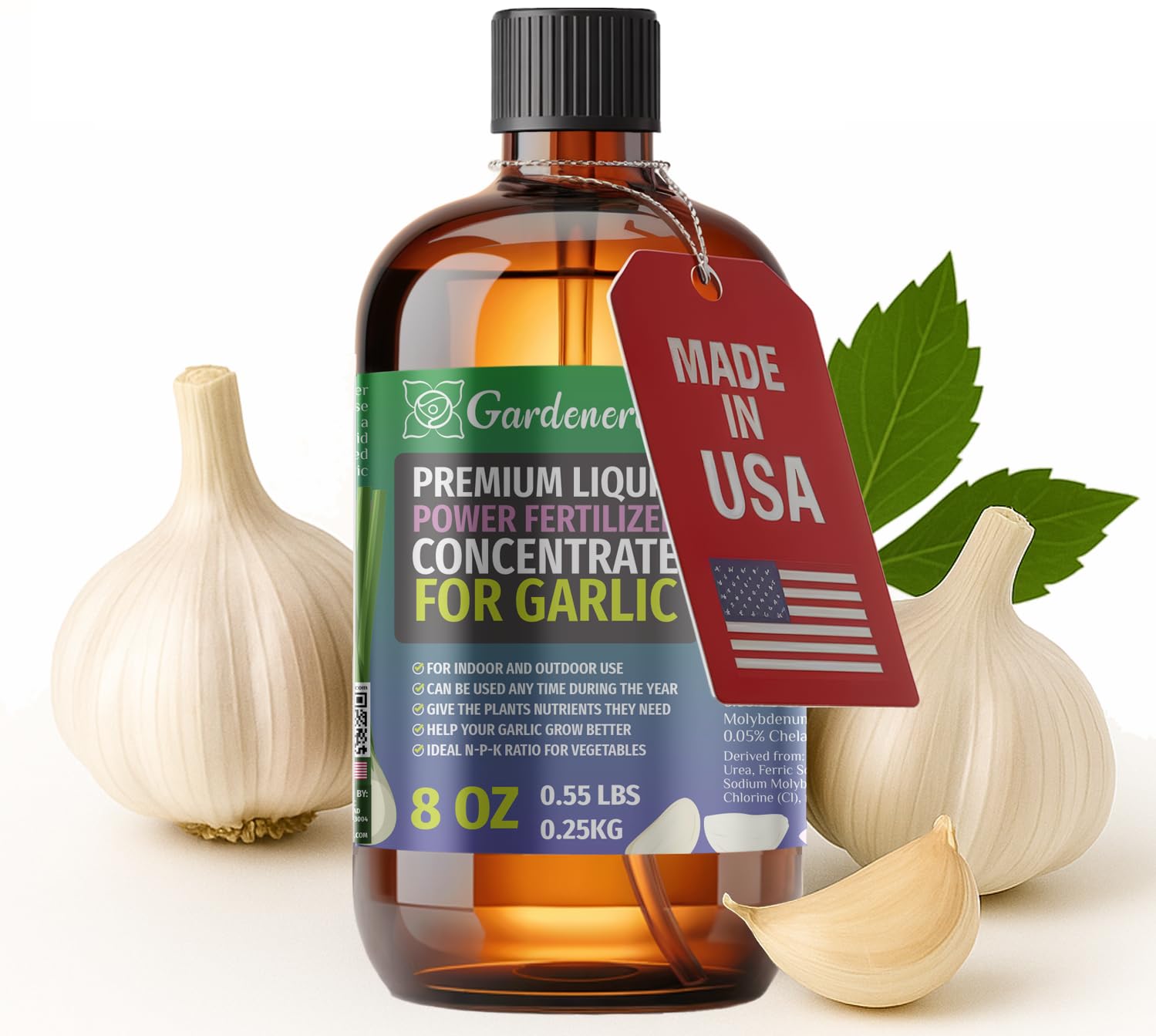
Gardenera Liquid Power Garlic Fertilizer Concentrate, 8 oz
| Item Form | Liquid |
|---|---|
| Application Method | root drench, hose sprayer, or foliar mist |
| Coverage | Low |
| Target Species | Garlic |
| Liquid Volume | 8 fluid ounces |
Gardenera Liquid Power is a focused liquid fertilizer made specifically for garlic, offered as an 8 ounce concentrate for root drenches, hose sprayers, or foliar misting. In practice you dilute and apply it during key growth stages to encourage vigorous tops, bigger cloves, and stronger root systems. The formula combines NPK with chelated micronutrients and an acidic profile to free locked-up elements in alkaline soils, which can help correct common nutrient deficiencies and improve flavor development. Its small concentrated bottle is convenient for hobby beds, containers, or small plots and makes targeted feeding straightforward. Because coverage is listed as low, this product is best for seasonal applications or for growers who treat specific plants rather than wide-area feeding. The low pH and concentrated nutrition mean you should follow dilution guidance to avoid overfeeding or foliar burn, and the 8 ounce volume may require multiple purchases for larger gardens. For growers seeking a garlic-tailored feed that acts quickly and supports bulb quality, this is a practical, reliable option.
Best for: Gardeners who prioritize predictable, crop-specific feeding for garlic beds and value a product engineered to support bulb size and flavor in small plots or containers.
Less Ideal for: Large-scale growers or those who need broad coverage from a single purchase should consider bulk or landscape-grade fertilizers instead.
- Formulated specifically for garlic with a balanced NPK and chelated micronutrients
- Multiple application methods: root drench, hose sprayer, or foliar mist
- Acidic formula helps unlock micronutrients in alkaline soils
- Concentrated 8 oz bottle is easy to store and transport
- Coverage rated as low so not suited for treating large areas in a single bottle
- Very acidic pH requires careful dilution to avoid plant or foliar damage
Verdict: Buy this if you want a garlic-specific, fast-acting concentrate that reliably promotes bigger bulbs and stronger roots in small-scale gardens.
TPS NUTRIENTS Garlic Fertilizer Liquid Plant Food, 8 oz

| Item Form | Liquid |
|---|---|
| Specific Uses For Product | Plant Growth |
| Coverage | garlic and allium varieties |
| Target Species | garlic and allium varieties |
| Unit Count | 8 Fluid Ounces |
This 8 oz liquid garlic fertilizer is formulated to encourage tight bulb formation and strong green tops without overstimulating leafy growth. You apply it to garden beds, raised rows, or container-grown garlic as a periodic feed during the growing season; dosing instructions are included. The formula highlights calcium, magnesium, kelp, and a gentle nitrate balance, which in practice helps plants develop firm bulbs and maintain vigor through the season. The liquid form makes it easy to measure and mix for targeted applications and works well for small plots or trial beds where you want controlled feeding. Practical downsides are the small 8 oz volume, which means you will need multiple bottles for larger plantings, and the product requires careful handling and protective gear per the safety guidance. For growers who prefer a garlic-specific feed and want predictable, modest results, this fertilizer delivers focused nutrition without pushing excessive foliage.
Best for: Gardeners growing garlic in backyard beds or raised rows who want a dedicated, garlic-focused feed and prefer products with clear ingredient cues and user feedback.
Less Ideal for: Those managing large-scale plantings or commercial plots who need bulk fertilizer solutions or want an all-purpose fertilizer for many crop types.
- Formulated specifically for garlic and allium varieties to support bulb development
- Includes calcium, magnesium and kelp to bolster plant strength and root health
- Liquid concentrate is easy to measure and mix for targeted applications
- Gentle nitrate balance designed to feed bulbs without excessive leafy growth
- Small 8 oz bottle may be insufficient for larger beds or multiple plantings
- Requires safety precautions when handling due to concentrated ingredients
Verdict: Choose this product if you want a small-batch, garlic-specific liquid feed that encourages firm bulbs and controlled top growth.
Choosing the Right Fertilizer for Garlic Plants: Key Factors to Consider
Nutrient Ratio and Timing
Garlic requires different nutrients at distinct growth stages. Early on, a moderate nitrogen level helps establish vigorous foliage and root mass, which supports later bulb development. As the season progresses toward bulbing, too much nitrogen can produce long green tops at the expense of bulb size. Higher phosphorus and potassium during bulbing help drive energy into clove formation and skin strength.
Choosing a fertilizer means matching the N-P-K balance and whether the product is meant for early growth or for bulbing. Some gardeners apply a two-step approach: a balanced feed at planting or early growth, then a lower-nitrogen, higher-potassium feed when bulbs begin to swell.
Application Method and Frequency
How you apply fertilizer affects both effectiveness and convenience. Granular fertilizers are often top-dressed and worked lightly into the soil surface before irrigation, offering a simple routine for beds and rows. Liquid feeds deliver nutrients quickly and can be used for foliar feeding, but they require more frequent applications and mixing. Slow-release granules can reduce labor and risk of overfeeding by providing steady nutrients over weeks.
Consider how often you want to fertilize and whether your gardening style favors a once-or-twice seasonal treatment or repeated light feeds. Also factor in whether the product requires incorporation, top-dressing, or foliar spray to match your available tools and time.
Soil Type and Existing Fertility
Soil texture and baseline fertility change how fertilizers behave. Heavy clay holds nutrients longer but may limit root oxygenation, while sandy soils leach soluble nutrients quickly, requiring more frequent applications. A soil test before choosing a fertilizer clarifies pH and existing levels of phosphorus, potassium, and organic matter, allowing you to correct specific deficiencies rather than applying a broad-spectrum product unnecessarily.
Selecting a fertilizer that complements your soil avoids waste and reduces the risk of nutrient imbalances that can harm garlic performance. Amendments that build organic matter also improve long-term fertility and bulb quality.
Release Profile and Risk of Burn
Release profile indicates how rapidly nutrients become available. Water-soluble fertilizers give a quick nutrient spike that is useful for short-term correction but can burn young roots or encourage excessive leaf growth if overapplied. Slow-release or controlled-release formulas spread nutrient delivery across weeks, lowering burn risk and smoothing growth.
For garlic, which benefits from steady nutrition rather than repeated spikes, a controlled-release option or conservative liquid program reduces stress on developing bulbs and lowers the chance of foliage collapse from overfertilization.
Compatibility with Organic Practices
Many gardeners prefer organic fertilizers for their soil-building benefits and lower environmental risks. Organic amendments release nutrients as microbes break them down and often supply secondary nutrients and organic matter. They tend to be slower acting, which suits long-season crops like garlic, but you must ensure they supply enough potassium and phosphorus for bulbing.
If you follow organic practices, prioritize products with clear certification or ingredient lists and plan applications earlier to allow microbial activity time to make nutrients available.
Clarity of Label and Application Guidance
Clear directions on labeling make it easier to apply the right amount at the right time. Good labels include recommended rates for bulb crops, timing advice for early growth versus bulbing, and warnings about burn risk. They also indicate how to adjust applications for different soil types and irrigation schedules.
When labels are vague or omit bulb-specific guidance, gardeners may underapply or overapply, leading to poor bulb formation or wasted product. Choose fertilizers that communicate dosage in simple garden units.
When to Fertilize Garlic During the Season
Timing fertilizer applications to garlic growth stages improves nutrient uptake and reduces waste. Apply a balanced or modest-nitrogen feed at planting or immediately after shoots emerge to support root and leaf establishment. Cut back on high-nitrogen inputs once leaves are well developed and the scapes or flowering stalks appear.
About two to three weeks before bulbing intensifies, switch to a formulation with relatively higher potassium and phosphorus or reduce overall nitrogen. Stop fertilizing about three to four weeks before harvest to allow plants to harden off and concentrate sugars in the bulbs.
- Apply starter feed at planting or early emergence
- Reduce nitrogen as scapes form
- Increase potassium and phosphorus as bulbs swell
- Cease fertilizing several weeks before harvest
Soil Testing and Simple Corrections
A basic soil test guides decisions and can prevent unnecessary applications. Test for pH, phosphorus, potassium, and organic matter. Garlic prefers neutral to slightly acidic soil, and severe pH imbalances can lock up nutrients even when they are present.
If tests show low phosphorus or potassium, select a fertilizer or amendment that supplies those elements. For small gardens, bone meal and wood ash are traditional amendments that raise phosphorus and potassium respectively, but use them with care and according to test results.
- Test pH and major nutrients before planting
- Match amendments to specific deficiencies
- Avoid blanket high-nitrogen feeding without testing
Organic Vs Synthetic Approaches
Organic fertilizers build soil health and add slow-available nutrients, which works well for garlic grown in beds where you plan to rotate crops. They often contain other beneficial micro-nutrients and improve soil structure over time.
Synthetic or water-soluble fertilizers can be useful when a quick correction is needed or for gardeners who want precise N-P-K control. Use those cautiously to avoid pushing leaf growth at the expense of bulb development. Many gardeners combine organic base amendments with targeted soluble feeds during critical stages.
- Organics improve long-term soil fertility
- Synthetics offer precise, rapid correction
- Hybrid approaches can give both soil building and targeted nutrition
Application Tools and Techniques
Match your fertilizer form to tools you already use. A hand spreader or scoop works for row-ready granular applications, while watering-can or hose-end injectors suit liquid feeds. For small beds, applying measured spoonfuls avoids overapplication.
Work granular products lightly into the soil surface or top-dress and irrigate to move nutrients toward root zones. With foliar sprays, apply in the early morning or late afternoon to reduce leaf scorch and improve uptake.
- Use spreaders or spoons for accurate measurements
- Irrigate after granular applications to move nutrients
- Apply foliar sprays during cooler parts of the day
Preventing Common Fertilizer Mistakes
Overfeeding, especially with high-nitrogen formulas, is a common mistake that leads to lush tops and weak bulbs. Follow label rates and err on the conservative side if you are uncertain. Another issue is applying fertilizers right before heavy rain, which can cause leaching and waste nutrients.
Avoid topping heavy compost with fresh high-nitrogen fertilizer late in the season. Also do not rely on one blanket application for the whole season unless using a proven slow-release product designed for bulb crops.
- Follow label rates and avoid excessive nitrogen
- Do not apply before heavy rain to prevent leaching
- Plan feeding schedule instead of a single late-season application
How We Chose the Best Fertilizer for Garlic Plants
We evaluated fertilizers for garlic plants using criteria that reflect how bulbs actually develop in the garden. Primary considerations were nutrient balance and timing, because garlic needs different elements at rooting, leaf growth, and bulbing stages. Application method and ease matter for backyard gardeners who may prefer granular top-dressings, liquid feeds, or slow-release formulas. Soil and environmental compatibility was included to ensure products work across common soil types and irrigation patterns. Availability of clear usage guidance and safety information was considered so gardeners can use fertilizers confidently without damaging young shoots. We excluded specialty products aimed solely at lawns or greenhouse hydroponics that do not provide clear instructions for buried bulbs. We also filtered out formulations with inappropriate N-P-K ratios for garlic or those that require complex mixing steps beyond normal garden practice. The final picks balance measurable nutrient profiles, straightforward application, and documented suitability for the garlic growth cycle.
FAQ
How much fertilizer does garlic need at planting?
Garlic needs a modest starter dose at planting to support root and top growth. Exact amounts depend on product concentration, but aim for a light, balanced application rather than heavy nitrogen. A pre-plant soil test helps refine the rate.
Can I use compost instead of fertilizer for garlic?
Compost adds organic matter and slow-release nutrients and is an excellent baseline amendment. It often does not supply all potassium or phosphorus needs for bulbing, so combining compost with a targeted fertilizer or specific amendments can produce better bulb size.
When should I stop fertilizing before harvest?
Typically stop fertilizing garlic about three to four weeks before harvest to let foliage and bulbs harden. Ceasing feeds helps the plant redirect energy into bulb maturation and reduces the risk of soft skins at harvest.
Is foliar feeding effective for garlic?
Foliar feeding can correct micronutrient deficiencies quickly and is useful for short-term boosts. It is less effective for providing the larger macronutrient needs of bulbing, which are better met through soil applications or systemic feeds.
Does garlic prefer organic fertilizers?
Many gardeners prefer organics because they improve soil structure and provide slow nutrition, which suits garlic's long season. Organic products may act more slowly, so plan applications earlier to ensure nutrients are available during bulbing.
Final Verdict
Choose a fertilizer strategy that matches garlic's changing nutrient needs through the season. Prioritize a product or plan that provides a balanced start, reduces nitrogen during bulbing, and supplies adequate phosphorus and potassium as bulbs swell. Consider soil tests, application convenience, and whether you prefer organic soil-building amendments or precise soluble feeds. The right choice balances steady nutrient availability with clear instructions and a release profile that fits your maintenance habits. Focus on timing and ratios rather than chasing a single perfect product to get consistently larger, healthier garlic bulbs.
