

Note: This article contains affiliate links. If you click on these links and make a purchase, I may earn a small commission at no extra cost to you. This helps support my research and content. Read my full affiliate disclosure here.
If you want a lawn that fills in fast and stands up to foot traffic, choosing the right fertilizer matters. The right products for thick grass support vigorous leaf growth, stronger root systems, and improved recovery from wear and drought. This guide covers six top fertilizer options suited to thick turf, shortlisted for real-world garden performance. We evaluated each product for nutrient balance, release type, and how easy it is to apply in small and large yards. Read on to find options that match your mowing, watering, and maintenance style.
Top Picks at a Glance
| Best Overall The best all-around choice for most situations | Scotts Turf Builder Lawn Food, 12.5 lb |  |
| Best Quality Built to a higher standard if you want something more solid | The Andersons PGF Balanced 10-10-10 Granular Fertilizer with Micronutrients and 2% Iron (18 lb, 5,000 sq ft) | 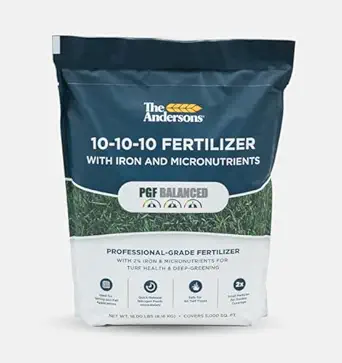 |
| Best Value The sweet spot between price and what you get | Milorganite 6-4-0 Slow-Release Fertilizer, 32 lb (with Feeding Tips Brochure) |  |
| Highest Rated A top-rated pick with lots of positive feedback | Ferti-lome Slow Release Nitrogen Lawn Fertilizer 15-0-15 with Iron (2 Pack, 16 lb each) |  |
| Most Popular A crowd favorite that many people choose with confidence | Scotts Green Max Lawn Food (16.67 lb) |  |
| Best Seller A high-volume bestseller chosen again and again | Scotts Turf Builder WinterGuard Fall Lawn Food, 10 lb. |  |
Scotts Turf Builder Lawn Food, 12.5 lb

| Item Form | Powder |
|---|---|
| Specific Uses For Product | Lawn |
| Coverage | 5,000 sq. ft. |
| Mixing Ratio | 32:0:4 |
Scotts Turf Builder Lawn Food is a general-purpose granular fertilizer formulated for use on any grass type to thicken turf and improve root strength. You spread it with a broadcast or drop spreader (Scotts provides recommended settings) and can apply it to wet or dry lawns in spring, summer, or fall. The formula is pesticide-free and emphasizes building deeper roots so the lawn better absorbs water and nutrients, which helps turf resist stress over the season. One 12.5 lb bag covers about 5,000 sq. ft., making it a simple option for small to medium yards or spot treatments. Practical benefits include clear application guidance, compatibility with common spreaders, and the option to water in for faster greening. Limitations are that this single bag covers a modest area compared with larger homeowner bags and it does not include weed control or insect protection, so you may need additional products for comprehensive lawn care.
Best for: Buyers who want a reliable, easy-to-apply granular fertilizer to strengthen and green a small to medium lawn and prefer products with widespread user approval and clear instructions.
Less Ideal for: Homeowners needing one-step weed or pest control, or those with large properties who want a single bag to cover many thousands of square feet.
- Works on all common grass types so one product fits mixed lawns
- Builds stronger, deeper roots to improve water and nutrient uptake
- Clear spreader settings and can be applied to wet or dry turf for flexibility
- Pesticide-free formula suitable when you only want fertilization
- Covers only about 5,000 sq. ft. per bag, requiring multiple bags for larger yards
- Does not include weed or insect control so additional products may be needed
Verdict: A reliable, easy-to-use granular lawn food that builds stronger roots and is a solid choice for feeding small to medium lawns.
The Andersons PGF Balanced 10-10-10 Granular Fertilizer with Micronutrients and 2% Iron (18 lb, 5,000 sq ft)

| Item Form | Granules |
|---|---|
| Application Method | spreader |
| Coverage | 5000 square feet |
| Mixing Ratio | 10-10-10 |
| Target Species | Lawns and Gardens |
The Andersons PGF Balanced 10-10-10 is a fine-particle granular fertilizer designed for broad, even coverage across lawns and garden beds. It is typically applied with a broadcast spreader and then watered in to activate the quick-release nutrients. The unusually small particle size means a single 18 lb bag claims coverage up to 5,000 sq ft and helps reduce patchy feeding compared with coarse granules. The formula is balanced for nitrogen, phosphorus and potassium and includes micronutrients plus 2% iron for enhanced greening. It works well for spring and fall applications, for establishing new turf or boosting established lawns, and can be worked into soil for vegetable or flower beds. Users should sweep or blow product off paved surfaces to avoid iron staining and store any leftover in a dry area. Because the fertilizer is quick-release, expect faster visible response but shorter duration between applications than slow-release products.
Best for: Homeowners who prioritize consistent, dependable feeding and want a straightforward granular option that gives quick visible results across lawns and planting beds.
Less Ideal for: Gardeners seeking a long-duration, slow-release feeding program or those who need a no-iron product to avoid any risk of surface staining.
- Very fine particle size for more even coverage and less patchy feeding
- Balanced 10-10-10 formula with added micronutrients and 2% iron for deeper greening
- Suitable for lawns, gardens, trees and shrubs and can be applied at planting or during the season
- Covers up to 5,000 sq ft from a single 18 lb bag when applied as directed
- Quick-release nutrients mean results appear sooner but may require more frequent reapplication versus slow-release formulas
- Contains iron that can stain sidewalks and driveways if not cleaned off immediately
Verdict: Choose this fine-particle 10-10-10 if you want a reliable, fast-acting granular fertilizer that delivers even coverage and deeper greening for summer lawn care.
Milorganite 6-4-0 Slow-Release Fertilizer, 32 lb (with Feeding Tips Brochure)

| Item Form | Pelletized |
|---|---|
| Application Method | Broadcast, Rotary or Manual |
| Coverage | 2,500 Square Feet |
| Specific Uses For Product | Lawns, Flowers and Gardens, Education |
Milorganite 6-4-0 is an organic, pelletized slow-release fertilizer intended for routine lawn and garden feeding. It is typically broadcast with a rotary or manual spreader and provides nitrogen slowly over 8 to 10 weeks, which reduces the need for frequent applications and lowers burn risk. The product contains organically complex iron for greening without the strong staining associated with iron salts and is low in soluble salts, so it performs well in warm or drier conditions. The 32 lb bag covers roughly 2,500 square feet and comes with a printed feeding and spreader tips brochure to simplify seasonal timing and application rates. Because it is made from heat-dried microbes, it also adds organic matter to improve soil structure in heavy clay or sandy soils. Limitations are that nutrient release is gradual so it is not suited to quick color fixes or rapid turf recovery, and users seeking tightly controlled N-P-K ratios or fast-acting synthetic performance may prefer a different product.
Best for: Buyers who want a low-maintenance, environmentally minded fertilizer that steadily feeds established lawns and mixed garden beds with minimal risk of burn and fewer repeat applications.
Less Ideal for: If you need rapid turf recovery, immediate color correction, or precise synthetic nutrient control for athletic fields or newly sodded lawns, choose a fast-release or specialty fertilizer instead.
- Slow-release nitrogen feeds lawns and plants for 8–10 weeks, reducing application frequency
- Low-salt formulation minimizes fertilizer burn and streaking in hot or dry conditions
- Organically complex iron promotes deep greening without heavy staining of concrete
- Pelletized form works with broadcast, rotary, or manual spreaders for easy application
- Adds organic matter that can improve drainage and soil structure in clay or sandy soils
- Not fast-acting, so it will not deliver an immediate green-up after application
- Contains biosolids which some buyers may prefer to avoid for personal or local reasons
Verdict: Pick this if you want a reliable, low-salt slow-release fertilizer that feeds lawns and gardens for weeks with minimal maintenance.
Ferti-lome Slow Release Nitrogen Lawn Fertilizer 15-0-15 with Iron (2 Pack, 16 lb each)

| N‑P‑K | 15-0-15 |
|---|---|
| Item Form | Granules |
| Target Uses | Lawn Care |
| Included Components | Lawn Fertilizer |
This two‑bag pack of Ferti-lome 15-0-15 delivers slow‑release nitrogen with added iron to maintain color and steady growth on warm and cool season lawns. Each 16 lb bag is intended to cover up to 4,000 sq ft, so the bundle is convenient for larger yards or for having a spare for the next application. Typical use is a spring and fall feeding at the recommended rate, applied with a broadcast or drop spreader; the slow‑release formulation reduces the need for frequent reapplication and helps avoid quick flushes of growth. The inclusion of iron and micronutrients improves leaf color without extra liquid treatments, and compatibility with many grasses makes this usable on Empire Zoysia. Limitations are that the blend has no phosphorus and is focused on nitrogen and potassium balance, so soils needing phosphorus will require a separate product, and precise coverage depends on correct spreader settings and uniform application. For homeowners prioritizing predictable, low‑maintenance feeding and improved lawn color, this pack is a practical choice.
Best for: Homeowners who want a dependable, low‑maintenance fertilizer regimen and need steady feeding and color improvement across a sizable Empire Zoysia lawn.
Less Ideal for: Gardeners whose soil tests show a phosphorus deficiency or who need a specialized nutrient program focused on establishing new turf should consider a different formula.
- Slow‑release nitrogen provides extended feeding and fewer applications
- Contains iron and micronutrients to enhance leaf color
- Two 16 lb bags cover large areas or allow for a follow-up application
- Suitable for a wide range of grass types including warm‑season Zoysia
- No phosphorus in the 15-0-15 formula so it will not correct phosphorus deficiencies
- Effective, even coverage requires correct spreader calibration and application technique
Verdict: Choose this two‑pack slow‑release 15-0-15 fertilizer when you want predictable, low‑frequency feeding and improved color for an established Empire Zoysia lawn.
Scotts Green Max Lawn Food (16.67 lb)

| Item Form | Granules |
|---|---|
| Coverage | 5000 square feet |
| Specific Uses For Product | Lawn |
| Target Species | lawn grass |
Scotts Green Max Lawn Food is a granular, all-purpose lawn fertilizer formulated to deliver fast greening with a 2-in-1 feed plus 5% iron supplement. It is applied with a broadcast or drop spreader to any grass type and is recommended for routine spring, summer, or fall applications. Notable features include a guaranteed nonstaining formula when used as directed and settings provided for Scotts spreaders to help get an even application across the advertised 5,000 sq ft coverage. The iron content speeds visible greening in as little as three days and the granules are ready to water in for faster uptake. For a risk-averse homeowner growing fescue in spring, the product is straightforward to use and safe to re-enter the lawn immediately after application. Limitations are that proper spreader settings and sweeping up excess product are important to avoid runoff and that it is a general lawn food rather than a specialized product for nutrient-deficient soils, so a soil test is still useful for targeted corrections.
Best for: Homeowners who want a low-risk, easy-to-apply lawn food that produces quick green results on fescue lawns in spring and prefer established brand guidance for application.
Less Ideal for: Gardeners seeking a product to correct a specific nutrient imbalance or those who prefer liquid or organic-only fertilizing approaches.
- Includes 5% iron for faster, deeper greening visible in about three days
- Premeasured granular form covers up to 5,000 sq ft from one bag
- Manufacturer provides spreader settings to simplify even application
- Formulated not to stain concrete or driveways when used as directed
- Not a tailored corrective fertilizer for specific soil deficiencies
- Requires correct spreader settings and cleanup to prevent runoff
Verdict: A simple, fast-acting granular lawn food with added iron that reliably greens fescue lawns when applied with a spreader.
Scotts Turf Builder WinterGuard Fall Lawn Food, 10 lb.

| Item Form | Granules |
|---|---|
| Specific Uses For Product | Lawn Fertilizer |
| Application Method | spread |
| Coverage | 4000 |
| Target Species | lawn grasses |
Scotts Turf Builder WinterGuard is a granular fall lawn food designed to build strong, deep roots and help turf recover from summer heat, drought, and regular wear. It is applied with a broadcast or drop spreader over a lawn in autumn and can be used on any grass type. The bag covers about 4,000 sq. ft., and the package directions include recommended spreader settings and note that watering-in is optional for fast results. In practice this product provides a straightforward, DIY-friendly way to add nutrients before winter; the granules are easy to spread and work with standard spreaders. Notable features are its all-grass compatibility and clear application guidance. Limitations are that it is a single-season bag sized for small to medium yards and it does not include weed or insect control functions found in some other Scotts formulas, so you may need additional products if those issues are a concern. For homeowners wanting a simple autumn boost to root strength, this is an effective, no-frills option.
Best for: Homeowners who want a simple, reliable fall fertilizer to strengthen roots and help lawns recover from summer stress without complicated application steps.
Less Ideal for: People managing large lawns who need wide-coverage bulk fertilizer or those who want combined weed or insect control in the same product.
- Formulated specifically for fall to build deep, winter-ready roots
- Works on all grass types so it fits mixed lawns
- Clear application instructions and spreader settings for easy DIY use
- Covers 4,000 sq. ft. from a single 10 lb. bag for small to medium yards
- No built-in weed or insect control so additional products may be needed
- Single 10 lb. bag may be small for larger properties
Verdict: Choose this bag if you want an easy-to-apply fall fertilizer that strengthens roots and helps your lawn recover before winter.
Choosing the Right Fertilizer for Thick Grass: Key Factors to Consider
Nutrient Ratio and Secondary Elements
The N-P-K ratio determines how a fertilizer directs growth. For thick grass you generally want a product with adequate nitrogen to drive leaf density while not starving roots of phosphorus and potassium. Secondary elements like iron, magnesium, and sulfur help color and chlorophyll production and can correct specific soil deficiencies.
Knowing the soil nutrient picture matters because adding high nitrogen to a soil already rich in nutrients can cause weak growth or increased disease susceptibility. A balanced product reduces the need for ad-hoc supplements and makes results more predictable across a growing season.
Release Type and Timing
Quick-release nitrogen provides rapid green-up but raises the risk of burn and requires more frequent feeding. Controlled-release or slow-release formulations feed turf steadily, encouraging deeper rooting and thicker density with fewer applications. Match release type to your maintenance rhythm: frequent quick feeds suit intensive care routines, while controlled-release fits lower-maintenance schedules.
Timing also interacts with climate and mowing. Applying at the wrong time of season or before a heatwave can stress plants. Choose a release profile that lines up with your watering capacity and expected weather patterns to keep turf vigorous without excess flushes of weak growth.
Application Method and Equipment Compatibility
Granular products are often applied with broadcast or drop spreaders; liquids require sprayers. Ease of getting a uniform application affects how evenly the lawn fills in. Spreaders should match granule size and flow characteristics to avoid streaking. Liquids can be easier to calibrate for small areas but need mixing and clean sprayers.
Check label instructions for recommended spreader settings or spray rates. If you plan to overseed, select a fertilizer whose application method will not displace seed or interfere with germination. Practical compatibility with the tools you already own reduces wasted product and uneven patches.
Salt Index and Turf Safety
Some fertilizers have high soluble salt levels that can dry out grass blades or burn roots, especially in hot or drought conditions. Products formulated to be turf-safe minimize this risk, either through coated granules, polymer coatings, or lower salt carrier choices. Always follow label rates to protect thin or newly seeded areas.
Turf safety also includes how the product behaves when rain is expected. High-solubility feeds can wash away if heavy rain follows application, causing uneven growth and potential environmental runoff concerns. Consider products with reduced wash-off risk for sloped lawns or heavy rainfall regions.
Compatibility with Overseeding and Lawn Repairs
If you are trying to thicken a lawn by overseeding thin spots, the fertilizer you choose should support seed germination and young seedlings. Some quick-release high-nitrogen products can harm tender seedlings, while starter fertilizers with higher phosphorus and gentler nitrogen can improve establishment.
Read label guidance on applying over seed. Timing a starter feed at seeding and transitioning to a maintenance fertilizer after seedlings are established helps build density without causing patchy growth.
Environmental Impact and Runoff Risk
Fertilizer choices affect local waterways and soil health. Slow-release formulations and products with low-soluble nitrogen forms reduce the chance that nutrients will leach into groundwater or run off into storm drains. Applying the correct rate and avoiding applications before heavy rain cuts runoff risk.
For gardeners near sensitive waterways or with strict local regulations, prefer products with controlled-release labels and clear guidance on buffer zones and application timing to reduce environmental impact.
When to Feed for Maximum Thickening Effect
Timing fertilizer applications to growth cycles gets the most out of each treatment. In cool-season lawns the best thickening response comes from early fall and late spring applications when root growth and leaf production are both active. Warm-season grasses respond best to mid- to late-summer feedings once active growth is established.
Avoid heavy feeding during extreme heat or drought because rapid top growth can outpace root support and increase disease risk. Pair applications with an appropriate irrigation plan so nutrients move into the root zone without washing away.
- Match feeding to your grass type seasonal growth window
- Water lightly after application when label recommends
- Avoid fertilizing immediately before heavy rain
How Soil Testing Improves Outcomes
A basic soil test guides which nutrients your lawn truly needs. Testing reveals pH, available phosphorus and potassium, and common micronutrient deficiencies. Armed with results you can choose a fertilizer that corrects real shortages rather than adding excess nitrogen that only masks underlying issues.
Soil tests also indicate whether lime or sulfur is needed to adjust pH, which affects nutrient availability and ultimately contributes to denser turf. Retest every few years to track changes after treatment.
- Collect multiple samples across the yard for representative results
- Follow label recommendations to match fertilizer to soil report
- Adjust pH before expecting dramatic thickening results
Practical Application Tips for Home Gardeners
Calibrate your spreader or sprayer on a small area before treating the whole lawn. Uneven distribution creates striping and patchy density that undermines thickening efforts. Apply in overlapping passes and vary your spreading direction between treatments to improve uniformity.
Store fertilizers in a cool, dry place and keep products sealed to maintain flow characteristics. Wear gloves while handling, and rinse equipment promptly after use to prevent corrosion or clogging.
- Use spreader settings recommended for your product and test on a driveway
- Apply half rates if you are unsure and observe turf response
- Combine light irrigation with application when label suggests
Managing Thatch and Its Effect on Fertilizer Performance
Thick thatch layers block nutrient movement and can shelter pests and disease. If thatch exceeds about half an inch, fertilizer applications may sit on top rather than reach the root zone. Dethatching or mechanical aeration helps fertilizers penetrate and supports healthier, denser turf.
Aeration is especially useful before applying controlled-release granules because it gives the slow-release nutrients a pathway into the soil, improving uptake over the season.
- Inspect for thatch before major feeding programs
- Aerate compacted or high-traffic areas to improve root growth
- Dethatch only when grass is actively growing to recover quickly
Watering Strategy After Fertilizing
Follow the product label for watering guidance. Many slow-release products need little immediate irrigation, while quick-release feeds often require light watering to activate nutrients and reduce burn risk. Consistent deep watering supports deeper root systems that translate to thicker turf.
Avoid heavy watering that causes runoff. Instead, use shorter, more frequent cycles after application to move nutrients into the root zone without creating excess surface flow.
- Lightly water to settle granular fertilizers when recommended
- Shift to deep, infrequent watering once turf begins to thicken
- Adjust irrigation by weather and soil moisture sensors if available
How We Chose the Best Fertilizer for Thick Grass
We selected fertilizers that are suited specifically to promoting dense, resilient turf rather than simply pushing temporary greening. Our editorial filters emphasized nutrient balance and predictable nitrogen release so treatments encourage steady top growth while supporting root development. Release profile and timing were central: we looked for products with known quick-release or controlled-release behavior to match common maintenance rhythms. Application practicality guided selection. We prioritized spreader-friendly granules and liquids with clear labeling for common spreader settings and rates. Turf safety matters, so we excluded any formulations that commonly cause severe burn when used at standard rates. Environmental considerations were part of the process, with preference given to products that reduce runoff risk through lower soluble salt or controlled-release chemistry. Other criteria included compatibility with overseeding and common turf species, clarity of nutrient ratios, and the presence of secondary nutrients that support thick growth. Products lacking clear instructions, missing nutrient breakdowns, or with inconsistent release claims were excluded. The result is a set of options suited to gardeners seeking thicker, longer-lasting turf performance.
FAQ
How often should I fertilize to encourage a thicker lawn?
It depends on grass type and product release profile. Many gardeners use two to four feedings per year with controlled-release products, while quick-release formulas may be applied more frequently. Space applications to match active growth periods and follow label intervals to avoid overfeeding.
Can I use a high-nitrogen product to bulk up thin turf quickly?
High nitrogen will green and thicken foliage rapidly but can promote shallow roots and increase mowing and disease risk. For lasting thickness, combine nitrogen with practices that support roots, such as aeration and appropriate watering, or choose a balanced or slow-release formulation.
Will fertilizer help if my lawn has bare patches?
Fertilizer supports growth but does not replace seed or sod for bare spots. Use a starter or balanced feed when overseeding, and prepare soil by loosening and removing debris. Fertilizer helps new seedlings establish more quickly if applied according to seeding guidance.
Is there an environmental risk to frequent fertilizing for thicker grass?
Yes. Excess nutrients can leach or run off into waterways, especially with soluble products and heavy rain. Use recommended rates, prefer slow-release formulations, and avoid applications before storms to reduce environmental impact.
Should I change fertilizer based on my soil test results?
Usually. Soil tests reveal deficiencies or pH issues that influence product choice. If phosphorus or potassium is low, select a formula that addresses those needs rather than defaulting to high-nitrogen products.
Can overseeding and fertilizing be done at the same time?
Often yes, but choose a fertilizer labeled safe for new seed. Starter fertilizers with moderate nitrogen and higher phosphorus help germination. Avoid heavy quick-release nitrogen at seeding time to prevent seedling stress.
Final Verdict
To build a thick, resilient lawn focus on choosing a fertilizer that suits your grass type, soil conditions, and maintenance rhythm. Prioritize predictable nitrogen release, appropriate secondary nutrients, and products that work with your spreader or sprayer so applications are even and safe. Balance feeding with cultural practices such as aeration, correct watering, and overseeding. When you match product chemistry to seasonal timing and soil needs, you are far more likely to achieve denser turf without increased disease or environmental risk.
