

Note: This article contains affiliate links. If you click on these links and make a purchase, I may earn a small commission at no extra cost to you. This helps support my research and content. Read my full affiliate disclosure here.
Tree peonies are long-lived woody perennials that reward careful feeding with bigger, longer-lasting blooms and stronger crowns. Using the right fertilizer for tree peonies helps maintain balanced growth without forcing soft, frost-prone shoots or burning shallow roots. This guide shortlists the top options suited to established and newly planted tree peonies, assessing nutrient mix, release pattern, and ease of application. Below you'll find concise evaluations based on factors gardeners care about most, from feeding timing and soil impact to safety around woody stems and companion plants.
Top Picks at a Glance
| Best Overall The best all-around choice for most situations | Espoma Organic Tree-Tone 6-3-2 Organic Tree Fertilizer, 36 lb bag |  |
| Best Quality Built to a higher standard if you want something more solid | Down To Earth Bone Meal Organic Fertilizer 3-15-0, 5 lb |  |
| Best Value The sweet spot between price and what you get | Jobe's Slow Release Tree and Shrub Fertilizer Spikes, 15 Count |  |
| Best Budget The cheapest option that still gets the job done reliably | Ironite Plus Granular Plant Food 12-10-10 (3 lb) |  |
| Highest Rated A top-rated pick with lots of positive feedback | Jobe's Organics Tree & Shrub Fertilizer Spikes 16-4-4, 30 Count (2 Pack) |  |
| Most Popular A crowd favorite that many people choose with confidence | Miracle-Gro Tree & Shrub Plant Food Spikes, 12 Spikes |  |
| Best Seller A high-volume bestseller chosen again and again | Miracle-Gro Shake 'N Feed Flowering Trees & Shrubs Plant Food, 8 lb. |  |
Espoma Organic Tree-Tone 6-3-2 Organic Tree Fertilizer, 36 lb bag

| Item Form | Granules |
|---|---|
| Application Method | Granular spreading |
| Target Species | trees |
| Mixing Ratio | 1:0 |
Espoma Tree-Tone is a granular, ready-to-use organic fertilizer designed specifically for trees. You apply it by spreading around the root zone in spring and fall; because it is granular and contains natural ingredients plus a Bio-tone formula, it feeds gradually and improves soil biology rather than giving a sharp quick flush. The 6-3-2 NPK with 5% calcium suits long-term health for woody trees, helping root development and reducing nutrient shocks common with high-nitrogen synthetics. It is labeled for use on shade, fruit, and ornamental trees and is approved for organic gardening, which matters if you want to avoid synthetic inputs. Limitations are that the feed is medium coverage and slower acting, so it is not the best choice when a quick green-up is needed, and a 36 lb bag is comparatively heavy to handle for a single-use application. For performance-minded tree care, it favors steady, soil-building results over instant growth spurts.
Best for: Buyers who prioritize long-term tree health and soil-building for live oaks and other shade trees and who prefer organic, steady-release nutrition over fast-acting synthetics.
Less Ideal for: Gardeners who need a rapid foliage green-up or smaller-quantity, lightweight packaging for spot treatments should consider faster-acting or smaller-format products.
- Organic, natural ingredients that support soil biology and are approved for organic gardening
- Balanced 6-3-2 NPK with added calcium to support woody tree health and root development
- Ready-to-use granular form requires no mixing and is simple to apply around the root zone
- Medium coverage and slow-release action mean results appear gradually rather than immediately
- Large 36 lb bag can be cumbersome for single-person application
Verdict: Choose Espoma Tree-Tone when you want an organic, steady-release fertilizer that builds soil health and supports long-term vigor in live oak and other shade trees.
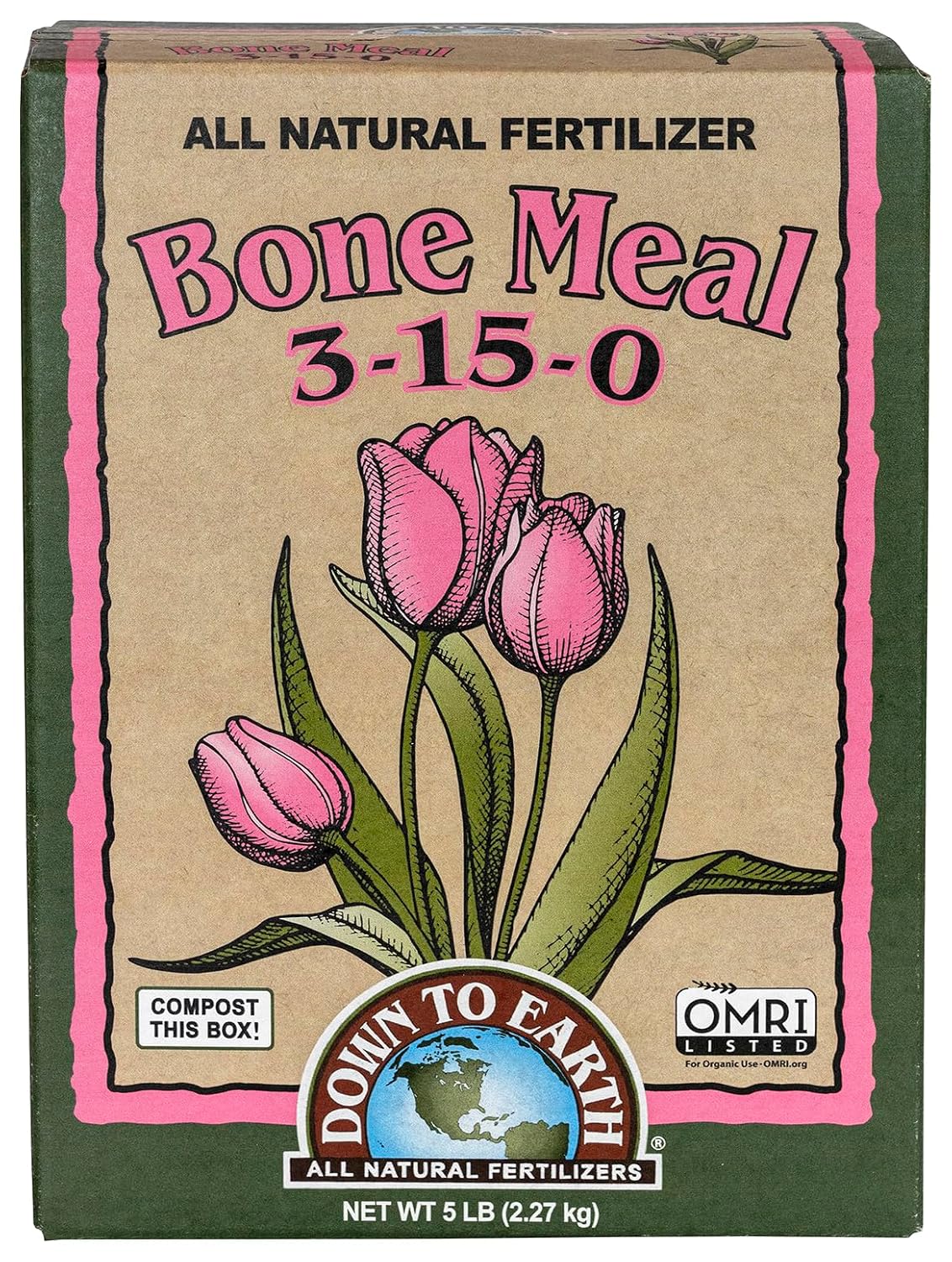
Down To Earth Bone Meal Organic Fertilizer 3-15-0, 5 lb
| Item Form | Granules |
|---|---|
| Specific Uses For Product | Plant Growth, Soil Conditioning |
| Coverage | Medium |
| Target Species | flowering plants, trees, ornamentals, bulbs |
| Mixing Ratio | 3:15:0 |
Down To Earth Bone Meal is a granular, OMRI-listed organic fertilizer formulated to supply readily available phosphorus and calcium to support root and bloom development. Gardeners typically work it into planting holes for bulbs or side-dress established plants every 4 to 6 weeks; for woody ornamentals like tree peonies it helps strengthen early root establishment and encourages strong spring bloom set. The product’s 3-15-0 N-P-K profile means it is phosphorus-forward, so it is especially effective where bloom or root development is the priority. It is easy to apply, stores dry in its box, and is made from natural bone meal rather than synthetic sources. Limitations are that it provides minimal nitrogen and no potassium, so you will need to pair it with an appropriate N or balanced feed for season-long nutrition, and results are gradual because it relies on soil biology to release nutrients. Handle with gloves and keep away from children and pets per safety guidance.
Best for: Buyers who want to prioritize strong root establishment and abundant blooms on flowering shrubs like tree peonies and are willing to combine this with other feeds for complete nutrition.
Less Ideal for: Gardeners seeking a single, all-in-one fertilizer that supplies immediate, balanced N-P-K for rapid green-up or fruiting should consider a different product.
- High phosphorus concentration (3-15-0) supports strong root growth and better bloom set
- OMRI-listed for organic use, suitable for organic gardens
- Granular form is easy to apply as a planting amendment or side dressing
- Made from natural bone meal sources for slow release of phosphorus and calcium
- Provides little to no nitrogen and no potassium so it must be paired with other fertilizers for balanced nutrition
- Slow release dependent on soil biology so effects are not immediate
Verdict: If you want to boost root development and bloom production on tree peonies with an organic phosphorus source, this bone meal is a reliable choice.
Jobe's Slow Release Tree and Shrub Fertilizer Spikes, 15 Count

| NPK | 16-4-4 |
|---|---|
| Application method | Insert spikes into soil |
| Coverage | 15 fertilizer spikes |
| Target species | Tree and Shrub |
Jobe's Tree and Shrub Fertilizer Spikes are premeasured slow-release sticks designed to deliver nutrients directly to the root zone with minimal effort. You insert the spikes around the drip line in early spring and again in late fall; the 16-4-4 NPK blend derived from feather and bone meal supplies steady nitrogen and modest phosphorus and potassium over the growing season. For a Japanese maple this means easier maintenance and reduced risk of surface burn or overfertilizing compared with granulars or liquid feeds. The spikes cut down on mess and runoff and are simple to place with the included plastic caps and a hammer. Limitations are that the fixed NPK ratio may not match specific soil test recommendations and the spikes only treat the area where they are placed, so larger trees or uneven root spread may need more spikes or supplemental feeding. Also they require two timed applications per year rather than continuous top-dressing.
Best for: Buyers who want a low-effort, no-mess way to keep small ornamental trees like Japanese maples fed twice a year and prefer targeted root feeding over frequent applications.
Less Ideal for: Gardeners who follow detailed soil test recommendations, need adjustable nutrient ratios, or manage very large trees with wide root zones should consider granular or liquid options instead.
- Direct root-zone delivery reduces surface waste and runoff
- Slow-release 16-4-4 formula provides season-long nutrient supply
- Premeasured spikes are easy to place and minimize mess
- Safe for use around lawns, children, and pets when used as directed
- Fixed NPK ratio may not match soil-specific needs
- Coverage is localized so large or irregular root systems may need extra spikes
Verdict: A simple, low-maintenance way to feed Japanese maples by delivering slow-release nutrients directly to the root zone with two seasonal applications.
Ironite Plus Granular Plant Food 12-10-10 (3 lb)

| Item Form | Granules |
|---|---|
| Specific Uses For Product | Outdoor |
| Application Method | Pour |
| Coverage | 100 square feet |
| Target Species | Shrubs, Trees, Flower gardens |
Ironite Plus is a small-bag granular fertilizer intended for routine feeding of shrubs, trees, and flowering beds. You spread or pour the granules around the root zone following package directions; the 12-10-10 N-P-K ratio supports leafy growth early in the season while phosphorus encourages stronger roots and better blooms. The formula also includes iron, sulfur, and other micronutrients that can help correct minor iron deficiencies and improve color. A 3 pound unit is easy to store and convenient for spot treatments or for homeowners with a few specimens rather than large landscapes. Coverage is listed at about 100 square feet, so it is best used on a handful of trees or concentrated flower beds rather than broad lawns. Limitations are the modest package size and the nitrogen-forward ratio, which may not be ideal if you need a lower-nitrogen bloom booster or long-term slow-release feeding for large plantings. Follow the label rates to avoid overapplication near young roots.
Best for: Home gardeners who want an affordable, easy-to-apply granular fertilizer for a few flowering trees, shrubs, or concentrated beds and who prefer quick visible results over long-term slow-release feeding.
Less Ideal for: People managing large landscapes or beds who need coverage from a single purchase or gardeners seeking a specialized low-nitrogen bloom booster should consider larger bags or different formulas.
- Balanced 12-10-10 N-P-K that supports growth, root development, and flowering
- Includes iron and micronutrients to help correct minor deficiencies and improve foliage color
- Granular form is easy to apply by hand and suitable for spot treatments
- Small 3 lb bag is convenient and reduces waste for homeowners with a few trees or beds
- Small package covers limited area so multiple purchases are needed for larger gardens
- Not a low-nitrogen bloom-specific formula for gardeners seeking a dedicated flowering booster
Verdict: A budget-friendly, easy-to-use granular 12-10-10 fertilizer that supplies iron and micronutrients for a few flowering trees and shrubs.
Jobe's Organics Tree & Shrub Fertilizer Spikes 16-4-4, 30 Count (2 Pack)

| Item Form | Sticks |
|---|---|
| Application Method | Insert spikes around each tree's dripline |
| Coverage | Medium |
| Target Species | Trees and shrubs |
| Mixing Ratio | 16:4:4 |
Jobe's Organics Tree & Shrub Fertilizer Spikes deliver a season-long supply of nutrients directly to root zones using ready-to-insert sticks. You place spikes around each tree's dripline in early spring and late fall and the time-release 16-4-4 formula supplies nitrogen, phosphorus, and potassium over time without mixing, runoff, or strong odors. The sticks are simple to use for homeowners who want low-effort maintenance and are especially helpful for fruit trees that benefit from steady nitrogen and balanced nutrients during the growing season. Practical advantages include mess-free application and reduced risk of overfertilizing since the product releases slowly. Limitations are that spikes give a general, medium coverage rather than precise dosing for individual tree ages or soil tests, and they are not a complete soil amendment if the soil lacks micronutrients or organic matter. For productive fruit trees, use these spikes as a routine, easy supplemental feed while still monitoring tree health and adjusting with soil tests or targeted treatments as needed.
Best for: Homeowners who want a low-effort, consistent feeding method for established fruit trees and shrubs and prefer an easy seasonal routine over frequent liquid or granular applications.
Less Ideal for: Gardeners who need customized fertilizer programs based on soil tests, young transplants requiring precise starter feeds, or those who want to correct micronutrient deficiencies with targeted products.
- Slow-release 16-4-4 formula feeds trees over the season without runoff
- Very easy application by inserting spikes around the tree dripline
- Mess-free, no mixing or strong odors
- Pack contains 30 spikes suitable for multiple trees or repeat treatments
- Medium coverage and fixed nutrient ratio limit precise dosing for specific tree needs
- Does not address soil structure or micronutrient deficiencies
Verdict: A simple, season-long slow-release spike that makes regular supplemental feeding of fruit trees quick and nearly foolproof.
Miracle-Gro Tree & Shrub Plant Food Spikes, 12 Spikes

| NPK | 15-5-10 |
|---|---|
| Coverage | 12 spikes per season |
| Target Species | trees, shrubs, evergreens and acid-loving plants |
| Application Method | Place spikes around the tree's drip line |
These Miracle-Gro Tree & Shrub Plant Food Spikes are pre-measured sticks that deliver slow-release nutrition directly to the root zone of trees and shrubs. They are typically used by watering the soil around the drip line, spacing spikes around the drip line at least 3 feet apart, and driving them into the ground so they sit below the soil surface. The 15-5-10 NPK mix supplies a higher proportion of nitrogen for foliage with phosphorus and potassium to support root and overall plant health, and the package contains 12 spikes intended for seasonal feedings. Practical benefits include simple, low-effort applications for established cherry trees where precise granular spreading is inconvenient, and the spikes help localize nutrients to the root zone rather than blanket-feeding the whole bed. Limitations are that they are designed for early spring and mid-fall use only, so they do not replace a tailored feeding schedule for trees needing summer supplements, and they require firm soil for insertion which can be difficult in very compacted or rocky sites. The product is best as an easy seasonal maintenance feed rather than an intensive corrective treatment.
Best for: Gardeners who want a low-effort, dependable seasonal feed for established flowering trees and shrubs and prefer an application that targets the root zone without granular spreading.
Less Ideal for: People needing aggressive summer corrections, quick nutrient fixes, or those working on newly planted trees that require a different feeding routine.
- Slow-release formula delivers nutrients directly to the root zone
- Pre-measured spikes make application simple and low-mess
- NPK 15-5-10 supports foliage color and overall tree vigor
- Includes 12 spikes, enough for multiple small trees or one larger drip line
- Intended for two seasonal applications only and not for summer feeding needs
- Can be hard to install in very rocky or compacted soils
Verdict: A simple, targeted seasonal feeding option that makes it easy to maintain vibrant foliage on established flowering trees with minimal effort.
Miracle-Gro Shake 'N Feed Flowering Trees & Shrubs Plant Food, 8 lb.

| Item Form | Granules |
|---|---|
| Application Method | shake evenly onto the soil |
| Target Species | flowering trees, shrubs and other acid-loving plants |
| Mixing Ratio | 18:6:12 |
| Unit Count | 128 Ounce |
Miracle-Gro Shake 'N Feed Flowering Trees & Shrubs is a granular, slow-release fertilizer designed to support flowering shrubs and acid-loving plants over an extended period. You apply it by shaking the granules evenly onto the soil under the branch spread or working it into potting mix for containers, then watering to activate the nutrients. The formula lists an 18-6-12 N-P-K ratio and includes organic-derived inputs such as kelp, feather meal, bone meal and earthworm castings to help feed soil microbes and support root development. Practically, that means less frequent feeding and improved foliage and bloom quality across a season—Miracle-Gro recommends reapplying every three months. It works for both in-ground and container plantings and covers a medium area per bag. Limitations are that it is a general-purpose shrub formula tuned for acid-loving species so it is not a precision fertilizer for nutrient-deficient soils and you still need to avoid contact with trunks and foliage when applying. For best results monitor soil pH and follow labeled application rates for newly planted versus established shrubs.
Best for: Gardeners who want a low-effort, season-long feed for flowering shrubs like forsythia and prefer a product that supports soil health without frequent reapplication.
Less Ideal for: Growers who need a precise corrective fertilizer for diagnosed nutrient deficiencies or who maintain shrubs that prefer neutral to alkaline soils.
- Continuous-release granules feed plants for up to three months reducing application frequency
- Contains organic inputs like kelp and earthworm castings to support soil microbes and root health
- Clear application method for both in-ground and container plants makes it easy to use
- Higher nitrogen ratio (18-6-12) promotes lush foliage and supports flowering season-long
- Not a targeted corrective fertilizer for specific mineral deficiencies
- Designed for acid-loving plants so less suitable for neutral or alkaline-preferring shrubs
Verdict: Use this to give forsythia and other acid-loving shrubs an easy, three-month continuous feeding that boosts foliage and blooms with minimal effort.
Choosing the Right Fertilizer for Tree Peonies: Key Factors to Consider
Nutrient Ratio and Timing
Tree peonies need a feeding profile that supports bud formation and strong woody structure rather than rapid leafy growth. A fertilizer with moderate nitrogen, adequate phosphorus for blooms, and potassium for overall plant vigor helps encourage flowers while limiting soft shoot flushes that are vulnerable to late frost.
Timing ties directly to ratio. Apply feedings in early spring as growth resumes and again after flowering if the plant shows slow recovery. Avoid high-nitrogen boosts late in the season because they can delay dormancy and weaken winter hardiness.
Release Mechanism
Slow-release and controlled-release fertilizers deliver nutrients over weeks or months, reducing the risk of root burn and limiting the need for frequent reapplication. This is especially useful around woody crowns where localized salt buildup can harm shallow roots.
Water-soluble feeds give quick correction for visible deficiencies or to push flowering in a season, but they require precise dosing and more frequent applications. Choose a release mechanism that matches your maintenance cadence and soil drainage to avoid under- or over-feeding.
Root and Crown Safety
Tree peonies have shallow, spreading roots and a sensitive crown at the soil surface. Fertilizer placement and formulation matter because granular product left in a concentrated band near the crown can cause chemical damage or burn.
Look for formulations that can be broadcast and lightly raked into the topsoil, or water-soluble options that dilute evenly. Avoid placing fertilizer directly against stems and consider pre-mixed organic amendments that are gentler where roots are shallow and crowns are exposed.
Soil Health and Long-Term Effects
Repeated applications of high-salt synthetic fertilizers can alter soil structure and microbial communities. For long-lived plants like tree peonies, maintaining good soil biology supports root health and resilience to drought and disease.
Incorporating organic matter, using low-salt formulas, and alternating slow-release mineral feeds with organic amendments helps maintain porosity and microbial life. Consider how a fertilizer affects pH and ongoing nutrient availability, not just immediate growth.
Application Practicality
Gardeners need fertilizer options that fit how they care for woody ornamentals. Ease of measuring, spreading, and rinsing matters more for a shrub bed than for container-grown annuals. Granular blends that require no mixing, easy-to-dissolve water-soluble packets, or pre-measured slow-release prills save time and reduce application errors.
Also evaluate how the product works with mulches and companion plants. If you use heavy mulch, choose a feed method that delivers nutrients into the root zone rather than sitting on top of the mulch layer.
Environmental and Safety Considerations
Safety for pollinators and nearby plantings should be part of the decision. Some concentrated synthetic feeds can leach quickly or harm beneficial soil organisms if misused. Organic options and stabilized-release mineral fertilizers reduce runoff risk and are gentler to the garden ecosystem.
Read and follow label directions for buffer zones, and avoid high-salt applications before heavy rain or in poorly drained sites to minimize environmental impact.
When to Feed Tree Peonies
Feed tree peonies in early spring as buds swell and again after flowering if growth appears weak. The first feeding supports shoot emergence and bud development while a post-bloom feed helps replenish reserves used for bloom production.
Avoid late-summer or fall applications that encourage tender new growth heading into dormancy. On recently planted specimens, stick to light, balanced feedings in the second season to let roots establish without forcing top growth.
- Early spring application aligns with natural nutrient demand.
- A light post-bloom feeding aids crown recovery.
- Skip heavy feeds in late summer and fall.
Organic Versus Synthetic Options
Organic fertilizers release nutrients more slowly and also add organic matter that benefits soil biology. They are less likely to cause salt buildup and are forgiving if application timing or amounts vary a bit.
Synthetic or mineral fertilizers can supply specific nutrient ratios and act quickly to correct deficiencies. Stabilized slow-release mineral formulas combine predictable nutrient delivery with lower reapplication rates.
- Organics support long-term soil structure and microbes.
- Mineral feeds offer precise N-P-K ratios and rapid correction.
- Consider alternating types to get both short-term correction and long-term soil benefits.
How to Apply Fertilizer Safely
Broadcast granular fertilizer evenly across the root zone rather than piling it at the base of the crown. Lightly work it into the top inch of soil or water thoroughly to move nutrients downward. Keep a clear soil-free ring immediately next to the woody stems to avoid crown contact.
For water-soluble feeds, dilute according to directions and water around the dripline rather than against the trunk. When using slow-release prills, follow labeled rates and factor in soil organic matter and prior applications to avoid overfeeding.
- Measure doses carefully to prevent burn.
- Water after application to incorporate nutrients.
- Protect the crown by keeping fertilizer away from stems.
Adjusting Feeding by Soil Test
A simple soil test reveals pH and available nutrients, letting you tailor fertilizer choices. Tree peonies prefer slightly acidic to neutral soils; extreme pH can lock up nutrients and reduce fertilizer effectiveness.
If tests show low phosphorus or potassium, choose a formulation that corrects those deficiencies. If organic matter is low, prioritize amendments that build soil rather than frequent high-dose mineral feeds.
- Test soil every few years for targeted feeding.
- Match fertilizer to soil test recommendations.
- Use amendments to correct pH or improve structure.
Integrating Fertilizer with Mulch and Watering
Mulch moderates soil temperature and moisture, but thick layers can block granular fertilizer from reaching the root zone. Either thin the mulch before application or apply fertilizer to the mulch surface and allow water to carry nutrients through.
Consistent deep watering after feeding helps nutrients move into the root zone. In drought-prone periods, reduce application rates and prioritize slow-release formulas to avoid stressing roots.
- Thin mulch before applying granular feeds.
- Water deeply after fertilizing to move nutrients into roots.
- Favor slow-release feeds in dry climates.
How We Chose the Best Fertilizer for Tree Peonies
We focused on fertilizers that fit the specific needs of tree peonies rather than general annual-flower feeds. Selection prioritized nutrient ratios that support bud set and root health, release mechanisms that reduce burn risk and feeding frequency, and formulations compatible with woody crowns and woody shrub beds. We also considered ease of application for home gardeners, including granular spread, water-soluble options, and slow-release formulations that fit typical seasonal schedules. Environmental impact and soil health mattered too, with preference for products that minimize salt buildup and support microbial activity. Exclusions included high-nitrogen lawn fertilizers, mixes designed only for bulbs or vegetables, and products with application methods unsuitable for planted woody perennials. The final shortlist balances immediate bloom support with long-term crown and root care, matching the scoring metrics below.
FAQ
How often should I fertilize an established tree peony?
Established tree peonies typically need a light feeding in early spring and an optional light boost after flowering. Frequency depends on soil fertility and plant vigor. Heavy repeated feedings are usually unnecessary and can encourage weak growth.
Can I use bulb or rose fertilizer on tree peonies?
Some bulb and rose formulas may work if their nutrient ratios match tree peony needs, but be cautious of high-nitrogen mixes designed to boost foliage. Prefer balanced or bloom-focused ratios and adjust application rates to avoid overfeeding.
Will organic fertilizers give the same bloom results as synthetic ones?
Organic fertilizers can produce excellent blooms over time while improving soil health, but they release nutrients more slowly. If immediate correction is needed, a targeted mineral feed can help while transitioning to organic amendments for long-term care.
Is foliar feeding effective for tree peonies?
Foliar feeding can supply quick micronutrients and correct some deficiencies, but it is not a substitute for good root-zone fertility. Use foliar feeds sparingly and as a complement to a proper soil-based feeding program.
How do I avoid fertilizer burn around the crown?
Avoid placing dry fertilizer directly against the crown or trunk. Broadcast evenly over the root zone, water in well, and keep a clear soil ring next to woody stems. Choose slow-release or low-salt products when soil moisture is unreliable.
Final Verdict
Choose a fertilizer for tree peonies with an appropriate nutrient balance and a release pattern that matches your maintenance rhythm. Prioritize root and crown safety by applying feeds to the root zone, avoiding contact with stems, and using slow-release or organic options where practical. Use soil tests to correct specific deficiencies and balance short-term bloom needs with long-term soil health. Focusing on these tradeoffs will help you select a feeding strategy that supports robust blooms and resilient woody structure.
