

Note: This article contains affiliate links. If you click on these links and make a purchase, I may earn a small commission at no extra cost to you. This helps support my research and content. Read my full affiliate disclosure here.
Getting Zoysia plugs to knit into a dense, even lawn depends less on luck and more on timely nutrition. When you plant plugs, young stolons and roots need a fertilizer approach that encourages steady root growth without forcing excessive top growth that can stress the developing sod. This guide focuses on fertilizers formulated and applied with Zoysia plug establishment in mind. Below you will find our shortlisted top options for fertilizing Zoysia plugs and clear notes on how we judged them. We evaluated nutrient ratios, release type, and application ease to highlight choices that help plugs establish quickly and produce even green-up. Read on for practical guidance before you start feeding new plugs.
Top Picks at a Glance
| Best Overall The best all-around choice for most situations | The Andersons Premium New Lawn Starter Fertilizer (20-27-5), 18 lb |  |
| Best Quality Built to a higher standard if you want something more solid | The Andersons PGF Balanced 10-10-10 Granular Fertilizer with Micronutrients and 2% Iron (18 lb, 5,000 sq ft) | 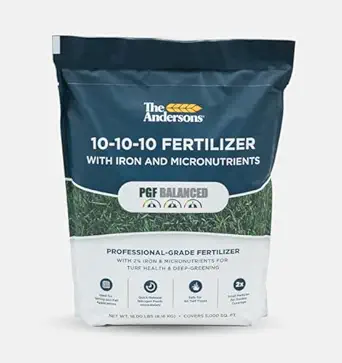 |
| Best Value The sweet spot between price and what you get | Southern Ag Plug Fast 12-12-6 Fertilizer, 5 lb |  |
| Best Budget The cheapest option that still gets the job done reliably | ferti-lome New Lawn Starter Fertilizer 9-13-7, 4 lb |  |
| Most Popular A crowd favorite that many people choose with confidence | Scotts Turf Builder Starter Food for New Grass, 15 lb |  |
| Best Seller A high-volume bestseller chosen again and again | Espoma Organic Bio-Tone Starter Plus 4-3-3 Organic Starter Fertilizer, 8 lb |  |
The Andersons Premium New Lawn Starter Fertilizer (20-27-5), 18 lb

| Item Form | Granules |
|---|---|
| Specific Uses For Product | Lawn |
| Coverage | 5000 |
| Mixing Ratio | 20:27:5 |
This starter fertilizer is made specifically for establishing new lawns and is formulated to encourage seedling vigor and root development. You apply it before seeding or laying sod, working it into the top few inches of soil and keeping the area moist until germination. The 20-27-5 analysis means it supplies extra phosphorus for strong root growth while the blend of quick- and slow-release nitrogen gives an initial boost and continued feeding. It also includes micronutrients and a small amount of iron for improved greening. The granular form and 5,000 sq ft coverage make it practical for mid-sized yards, and directions note it is best used in spring or fall when conditions favor establishment. Important limitations are that it must be incorporated into soil and kept moist for best results and that it is a starter product rather than a routine maintenance fertilizer, so additional feedings will be needed later in the season.
Best for: Homeowners installing new sod or seed who want a purpose-built starter fertilizer to encourage fast germination and strong root establishment.
Less Ideal for: Those looking for an all-season maintenance fertilizer or a liquid feed system should consider other products tailored to ongoing lawn care or different application methods.
- High phosphorus ratio to promote root development in new lawns
- Combination of quick- and slow-release nitrogen for both immediate and sustained feeding
- Granular form with coverage up to 5,000 sq ft simplifies application for mid-sized yards
- Includes micronutrients and 1% iron for healthier, deeper greening
- Designed as a starter product so it does not replace regular maintenance fertilization
Verdict: Choose this starter fertilizer when you need a phosphorus-rich, granular product to jump-start root development and establishment in new lawns.
The Andersons PGF Balanced 10-10-10 Granular Fertilizer with Micronutrients and 2% Iron (18 lb, 5,000 sq ft)

| Item Form | Granules |
|---|---|
| Application Method | spreader |
| Coverage | 5000 square feet |
| Mixing Ratio | 10-10-10 |
| Target Species | Lawns and Gardens |
The Andersons PGF Balanced 10-10-10 is a fine-particle granular fertilizer designed for broad, even coverage across lawns and garden beds. It is typically applied with a broadcast spreader and then watered in to activate the quick-release nutrients. The unusually small particle size means a single 18 lb bag claims coverage up to 5,000 sq ft and helps reduce patchy feeding compared with coarse granules. The formula is balanced for nitrogen, phosphorus and potassium and includes micronutrients plus 2% iron for enhanced greening. It works well for spring and fall applications, for establishing new turf or boosting established lawns, and can be worked into soil for vegetable or flower beds. Users should sweep or blow product off paved surfaces to avoid iron staining and store any leftover in a dry area. Because the fertilizer is quick-release, expect faster visible response but shorter duration between applications than slow-release products.
Best for: Homeowners who prioritize consistent, dependable feeding and want a straightforward granular option that gives quick visible results across lawns and planting beds.
Less Ideal for: Gardeners seeking a long-duration, slow-release feeding program or those who need a no-iron product to avoid any risk of surface staining.
- Very fine particle size for more even coverage and less patchy feeding
- Balanced 10-10-10 formula with added micronutrients and 2% iron for deeper greening
- Suitable for lawns, gardens, trees and shrubs and can be applied at planting or during the season
- Covers up to 5,000 sq ft from a single 18 lb bag when applied as directed
- Quick-release nutrients mean results appear sooner but may require more frequent reapplication versus slow-release formulas
- Contains iron that can stain sidewalks and driveways if not cleaned off immediately
Verdict: Choose this fine-particle 10-10-10 if you want a reliable, fast-acting granular fertilizer that delivers even coverage and deeper greening for summer lawn care.
Southern Ag Plug Fast 12-12-6 Fertilizer, 5 lb

| N-P-K | 12-12-6 |
|---|---|
| Iron | 1% |
| Item Form | Granules |
| Specific Uses For Product | Lawns |
Southern Ag Plug Fast is a purpose-built granular fertilizer for planting grass plugs, supplying 12% nitrogen, 12% phosphorus and 6% potassium with 1% iron and a small slow-release nitrogen fraction. It is intended to be used by sprinkling about one teaspoon into the plug hole under each zoysia plug at planting to promote root establishment and early growth. The relatively high phosphorus content is useful for stimulating root development in new plugs while the included iron can help maintain green-up. Packaging in a 5 pound bag makes it practical for treating medium-sized plug installs without buying bulk. Limitations to note are that it contains phosphorus, which some local regulations restrict for non-agricultural turf and which can contribute to runoff if misapplied, and the product is a targeted planting fertilizer rather than an all-purpose feed for established lawns.
Best for: Gardeners installing zoysia plugs who prioritize efficient, targeted establishment and want a product designed to feed plugs at planting for reliable rooting.
Less Ideal for: Homeowners seeking an all-season lawn fertilizer or those in areas with strict phosphorus restrictions should consider alternative formulations or check local rules first.
- Formulated specifically for planting plugs with instructions to apply directly in the plug hole
- Balanced 12-12-6 N-P-K ratio that supports root initiation and early top growth
- Contains 1% iron to aid early green-up of warm-season grasses
- Includes a portion of slow-release nitrogen for steadier nutrient availability after planting
- Contains phosphorus which may be restricted by local regulations and can increase runoff risk
- Not intended as a regular maintenance fertilizer for established lawns
Verdict: A focused plug-time fertilizer that supplies high phosphorus and steady nitrogen to help zoysia plugs root quickly and green up fast.
ferti-lome New Lawn Starter Fertilizer 9-13-7, 4 lb

| Mixing Ratio | 9:13:7 |
|---|---|
| Item Form | Granules |
| Specific Uses For Product | Lawn |
| Application Method | Spread |
| Coverage | 1 |
This 4 lb bag of ferti-lome New Lawn Starter Fertilizer is a granular 9-13-7 starter formula intended for use with grass seed or immediately after laying sod. It supplies a higher phosphate level to encourage root development and can be applied with a drop or broadcast spreader at 4 lbs per 1,000 sq ft, with directions to work it into the top 2 to 3 inches of soil. The product covers small new lawn areas and is useful for establishing plug varieties like zoysia where strong early root growth matters. Practical benefits include a simple application method, clear mixing ratio, and a formulation focused on root establishment rather than rapid top growth. Limitations are the small bag size and limited coverage, so larger projects will need multiple bags and extra handling. Also it is a basic granular starter without slow-release additives or extended feeding, so follow-up applications will be necessary during the growing season to maintain vigor.
Best for: Homeowners establishing small zoysia plug or seeded patches who want a straightforward starter fertilizer on a tight budget and prefer simple spreader application.
Less Ideal for: Large lawns or landscaping projects where one-time coverage and long-duration feeding are priorities; commercial installers who need bulk quantities and slow-release formulations.
- Starter-focused 9-13-7 N-P-K encourages root development for new seed and sod
- Granular form works with standard drop or broadcast spreaders for even application
- Clear application rate and soil incorporation guidance simplifies use on new lawns
- Small 4 lb bag covers limited area so multiple bags are required for larger lawns
- No listed slow-release or extended feed components for longer nutrient release
Verdict: A no-frills, root-focused starter fertilizer that gives zoysia plugs the early phosphorus boost they need without unnecessary extras.
Scotts Turf Builder Starter Food for New Grass, 15 lb

| Item Form | Powder |
|---|---|
| Application Method | spreader |
| Specific Uses For Product | Starting |
| Coverage | 5000 square feet |
| Mixing Ratio | 24-25-4 |
Scotts Turf Builder Starter Food for New Grass is a powder starter fertilizer with a 24-25-4 NPK formulated specifically for new lawns. It is applied with a broadcast or drop spreader at planting and again 2 to 4 weeks later to encourage root development and faster, thicker turf. The high phosphate content is intended to fuel early root growth, which helps seedlings and newly laid sod establish more reliably than seed alone. Practical benefits include clear application guidance for Scotts spreaders, coverage of roughly 5,000 square feet per 15 lb bag, and compatibility with all grass types. Users should plan two timed applications and maintain consistent watering until seedlings are 2 inches tall, so it works best for owners willing to follow a short feeding schedule. Limitations are that it is a starter-only formula meant for initial establishment rather than ongoing maintenance and that proper spreader settings and watering are important for results, otherwise performance will be diminished.
Best for: Homeowners starting a lawn or reseeding patches who want a proven, easy-to-follow starter fertilizer to improve root establishment and germination success.
Less Ideal for: Gardeners looking for a year-round fertilizer or a combined weed-and-feed product should consider maintenance blends or targeted weed control options instead.
- High phosphate 24-25-4 formula designed to promote early root development
- Covers up to 5,000 sq. ft. per 15 lb bag, suitable for modest lawns
- Clear instructions for spreader settings and a recommended two-application schedule
- Safe for use on any grass type and applicable to seed, sod, plugs, or sprigs
- Starter-only formula so you must switch to a maintenance fertilizer after establishment
- Requires careful spreading and consistent watering to realize the claimed results
Verdict: Use this starter fertilizer if you want a straightforward, phosphate-rich feed to help new seed or sod establish stronger roots and fill in faster.
Espoma Organic Bio-Tone Starter Plus 4-3-3 Organic Starter Fertilizer, 8 lb

| Item Form | Granules |
|---|---|
| Application Method | Mix with soil |
| Specific Uses For Product | Gardening |
| Target Species | For everything you plant |
Espoma Organic Bio-Tone Starter Plus is a granular, ready-to-use starter fertilizer designed for planting and transplanting a wide range of garden plants. You mix it into backfill soil or potting mixes so the nutrients and added mycorrhizae sit in the root zone at planting time. The formula combines an organic 4-3-3 nutrient ratio with beneficial bacteria, humates, and both endo and ecto mycorrhizae to encourage faster root development, improved soil structure, and better establishment under stressful conditions. Typical uses include flower beds, bulbs, transplant holes, and planting mixes where quick root growth matters. Because it is organic and approved for organic gardening, it is suited to gardeners who prefer natural inputs. The main limitations are that it is intended as a starter or planting amendment rather than an all-season feed and dosing is by volume for different applications so you need to follow the mixing instructions for correct results. For gardeners wanting an easy organic boost at planting, this product provides a focused, microbially active start.
Best for: Gardeners who prioritize natural, microbially active amendments and want a reliable organic boost when planting or transplanting ornamentals, vegetables, and bulbs.
Less Ideal for: Buyers looking for a one-product solution for seasonal feeding or those who prefer liquid feeds or quick-release chemical fertilizers for immediate foliar results.
- Contains both endo and ecto mycorrhizae to aid root establishment
- Organic 4-3-3 formula enhanced with beneficial bacteria and humates
- Ready-to-use granules that are mixed into soil at planting
- Approved for organic gardening and made by a long-standing organic fertilizer brand
- Formulated primarily for initial planting and transplant use rather than ongoing feeding
- Dosing instructions vary by application and require measuring by volume for correct results
Verdict: Choose this if you want an organic, microbe-enhanced starter fertilizer to help new plantings establish strong roots.
Choosing the Right Fertilizer for Zoysia Plugs: Key Factors to Consider
Nutrient Ratio and Timing
Young Zoysia plugs need a nutrient profile that supports roots as much as shoots. A starter blend will typically offer a modest nitrogen rate with slightly higher phosphorus relative to a standard maintenance feed. That extra phosphorus helps early root development and faster plug anchoring in the soil.
Timing matters because applying a high-solubility, high-nitrogen fertilizer too soon can drive tender leaf growth at the expense of root spread and can increase desiccation risk. Apply starter-style nutrition at planting and follow with lower, maintenance-level feeds once plugs show steady stolon growth.
Release Type: Quick Feed Vs Controlled Release
Soluble fertilizers offer fast green-up, which can be useful when plugs need visible growth quickly. However, that speed comes with higher risk of foliar burn and requires more frequent, smaller applications.
Controlled-release formulas deliver nutrients over weeks to months, reducing application frequency and lowering burn risk. For plug establishment, many gardeners prefer a balanced approach: a mild soluble starter at planting followed by a controlled-release feed to sustain growth without spikes in top growth that outpace root development.
Phosphorus and Root Stimulants
Phosphorus is often emphasized for establishing new turf because it supports root initiation and development. Look for products with an emphasis on available phosphorus or labeled as starter fertilizers for new plantings.
Some formulations include root stimulants or biologicals that can enhance early root activity. These can be helpful in heavy soils or when plugs are planted late in the season, but their effectiveness depends on soil conditions and product consistency.
Application Method and Equipment Compatibility
How you apply fertilizer affects coverage and dosing accuracy. Granular fertilizers need a spreader that can handle small-area work without over-applying to individual plug sites. Water-soluble or liquid starter fertilizers are convenient for precise, even application around plugs, especially when using a hose-end sprayer or watering can.
Consider also the practicality of multiple follow-up feeds. If you prefer fewer applications, choose a controlled-release product compatible with your spreader or one that can be top-dressed without disturbing plugs.
Soil Type and Moisture Management
Soil texture and moisture regime change how fertilizer behaves. Sandy soils leach soluble nutrients faster, so controlled-release or split applications work better. Clay soils hold phosphorus more tightly, which may require adjustment in phosphorus expectations and more attention to starter placement near the plug roots.
Consistent moisture is critical when establishing plugs. Fertilizer benefits are limited if plugs dry out; conversely, overwatering can move soluble nutrients away from roots. Match fertilizer schedule to a realistic irrigation plan for steady uptake.
Risk Management and Environmental Considerations
Avoid over-application. Excessive nitrogen can burn young plugs and encourage shallow, weak root systems that fail to spread. Pay attention to label rates for new plantings and err toward lower rates with more frequent touch-ups.
Also consider runoff and local regulations. Phosphorus use may be restricted or discouraged in some areas; follow local guidelines and choose formulations and application timings that minimize nutrient loss to surrounding water bodies.
When to Start Feeding After Planting
Start feeding at planting if the fertilizer is labeled as a starter or if it has a moderate phosphorus component. A light starter application at the time of setting plugs helps roots get going without forcing top growth.
If you use a high-solubility nitrogen product, wait until plugs have rooted and shown some stolon growth to reduce burn risk. In many climates, that means planning a first follow-up feed 3 to 6 weeks after planting rather than immediately.
- Apply starter near the plug root zone rather than directly on crowns.
- Water lightly after application to move nutrients into the rooting zone.
- Avoid heavy nitrogen within the first few weeks unless product specifically targets new plantings.
How Much Fertilizer to Use on New Plugs
Dosing for plugs is lower than for established lawns. Follow label rates for new plantings and reduce broadcast rates when working in small plug plots. It is better to under-apply and reapply than to over-apply once.
Measure application by area and consider concentrating starter nutrients in the immediate plug zone rather than across the entire lawn if plugs represent a small percentage of the turf area.
- Calculate fertilizer by square footage and adjust for the portion actually planted.
- Use a spoon or small spreader for isolated plugs to avoid hotspots.
- Document application dates so you can time follow-ups consistently.
Matching Fertilizer to Your Soil Test
A soil test is the most reliable way to pick the right fertilizer. Soil tests reveal available phosphorus levels and indicate whether a starter feed is necessary. In soils already high in phosphorus, focus on balanced nitrogen and potassium instead.
If you cannot test, default to a mild starter with moderate phosphorus for new plugs and plan a test in the first year to fine-tune your program.
- Test pH as well; extreme pH levels limit nutrient availability.
- Amend soil prior to planting if tests show major deficiencies.
- Re-test after the first growing season to adjust maintenance feeding.
Avoiding Common Fertilizer Mistakes
Common mistakes include applying maintenance rates to new plugs, over-relying on high-solubility nitrogen, and spreading fertilizer when plugs are dry or the forecast predicts heavy rain. Each can reduce establishment success or increase burn risk.
Also avoid applying granular starter that sits on crowns without watering it in. That wastes product and increases the chance of root-zone nutrient shortfall.
- Do not broadcast high-rate maintenance feeds immediately after planting.
- Apply when soil is moist and forecast is favorable for light watering.
- Avoid fertilizing during heat stress or drought conditions.
Watering and Fertilizer Interactions
Water and fertilizer work together. Gentle, frequent watering helps plugs take up starter nutrients and encourages stolon spread. Heavy irrigation after soluble fertilizer can cause leaching, especially in sandy soils.
For controlled-release products, regular but moderate watering keeps nutrients available without displacing them from the root zone.
- Coordinate initial watering with the first application to move nutrients into roots.
- Adjust irrigation frequency based on release type and soil texture.
- Reduce watering after heavy rain to avoid nutrient runoff.
How We Chose the Best Fertilizer for Zoysia Plugs
We focused on product attributes that directly affect plug establishment and early stolon spread. Criteria included nutrient ratio and bioavailability to ensure appropriate nitrogen, phosphorus, and potassium levels for root and shoot balance; release type so gardeners can choose between immediate feed for early green-up or controlled-release for steady, low-risk nutrition; and soluble phosphorus or starter formulations that support root development in new plugs. Application practicality was another key filter. We considered ease of measuring and spreading, compatibility with common spreaders or hose-end applicators, and instructions for safe timing relative to planting. Slow-release behavior and potential for turf scorching or nitrogen burn were evaluated to exclude aggressive high-solubility fertilizers unsuitable for young plugs. We also checked formulation suitability for warm-season grasses and whether products provided guidance specific to plug planting rates and timelines. Products lacking clear application guidance for new plantings, or those geared solely toward mature lawn maintenance, were excluded. The result is a set of fertilizers chosen for balanced starter nutrition, manageable application, and predictable results during the first season of Zoysia plug establishment.
FAQ
Can I use a regular lawn fertilizer on Zoysia plugs?
You can, but regular maintenance fertilizers often have higher nitrogen levels that favor top growth. For plugs, choose a starter-oriented product or reduce the rate of maintenance fertilizer to protect young roots and avoid burn.
How soon after planting plugs should I apply fertilizer?
If the product is a labeled starter, apply at planting to help root initiation. If it is high in soluble nitrogen, wait until plugs show initial rooting and stolon growth, usually 3 to 6 weeks, to reduce burn risk.
How often should I fertilize during the first season?
Frequency depends on release type. Soluble starters may need a light follow-up every 3 to 4 weeks, while controlled-release products can last several months. Monitor growth and soil moisture to decide on timing.
Does soil type change my fertilizer choice?
Yes. Sandy soils benefit from controlled-release or split applications to prevent leaching. Clay soils may retain phosphorus, so starter phosphorus may be less necessary. Adjust timing and form to match your soil texture.
Will fertilizer speed up plug spreading?
Appropriate nutrition supports stolon and root growth, which can help plugs spread faster. However, excessive nitrogen can promote weak top growth at the expense of root development, so balanced feeding matters.
Are there environmental rules I should know about?
Some areas restrict phosphorus use or regulate timing to protect waterways. Check local guidelines and avoid fertilizing before heavy rains to reduce runoff risk.
Final Verdict
When establishing Zoysia from plugs, prioritize starter nutrition that supports roots more than aggressive top growth. Choose a fertilizer with an appropriate nutrient ratio and a release pattern that matches your irrigation and maintenance preferences. Balance quick green-up with the risk of burn by using lower initial rates and following up with controlled-release feeds as plugs root. Focus on soil test results, modest application rates, and consistent moisture to give plugs the best chance to knit into a dense lawn. With a sensible feeding plan you can confidently encourage steady establishment without overtaxing young turf.
