

Note: This article contains affiliate links. If you click on these links and make a purchase, I may earn a small commission at no extra cost to you. This helps support my research and content. Read my full affiliate disclosure here.
Picking the right NPK fertilizer for roses matters because roses have predictable nutrient needs that affect bloom count, flower size, and cane vigor. The wrong ratio or delivery method can mean limp growth, fewer flowers, or foliar problems. In this guide we shortlisted the top options garden-tested for common rose situations and growing styles. You will find products that suit heavy feeders, potted roses, and disease-prone varieties. We evaluate nutrient ratios, application ease, and how each option behaves in typical garden conditions to help you choose the right feed for stronger blooms and healthier plants.
Top Picks at a Glance
| Best Overall The best all-around choice for most situations | Miracle-Gro Water Soluble Rose Plant Food, 1.5 lb |  |
| Best Quality Built to a higher standard if you want something more solid | Espoma Organic Rose-Tone 4-3-2 Granular Rose Fertilizer (4 lb, 2-Pack) |  |
| Best Value The sweet spot between price and what you get | Osmocote Smart‑Release Plant Food Plus Outdoor & Indoor, 2 lb |  |
| Best Budget The cheapest option that still gets the job done reliably | Scotts Rose & Bloom Continuous Release Plant Food, 3 lb |  |
| Highest Rated A top-rated pick with lots of positive feedback | Espoma Organic Rose-tone 4-3-2 Granular Fertilizer, 18 lb Bag (2-Pack) |  |
| Most Popular A crowd favorite that many people choose with confidence | Miracle-Gro Water Soluble All Purpose Plant Food, 10 lb | 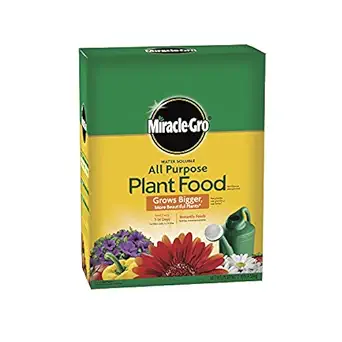 |
| Best Seller A high-volume bestseller chosen again and again | BioAdvanced All-in-One Rose & Flower Care Granules, 64 oz |  |
Miracle-Gro Water Soluble Rose Plant Food, 1.5 lb

| Item Form | Powder |
|---|---|
| Application Method | watering can |
| Target Species | Roses |
| Mixing Ratio | 1.5 tbsp/1.5 gal outdoor; 0.5 tsp/1 gal indoor |
| Fertilizer Analysis | 18-24-16 |
Miracle-Gro Water Soluble Rose Plant Food is a powder fertilizer designed for regular feeding of roses to encourage bigger blooms and greener foliage. It dissolves in a watering can or can be used with the Miracle-Gro Garden Feeder, letting you soak the base of plants with a nutrient solution. The product lists an NPK analysis (18-24-16) tailored for roses and includes clear mixing guidance for indoor and outdoor use, so you can feed plants every 7 to 14 days for consistent results. Practical benefits include quick uptake because it is water soluble and flexible application options for containers or in-ground beds. It also covers a moderate area from the 1.5 lb size when used with the garden feeder. Limitations to consider are the need for frequent applications compared with slow-release granular fertilizers and the requirement to measure and mix each feeding. Users should follow label safety guidance to avoid contact with skin and eyes and keep the product away from children.
Best for: Roses growers who want a reliable, easy-to-use feed they can apply regularly to boost blooms and foliage in containers or garden beds.
Less Ideal for: Gardeners who prefer low-maintenance, single-application fertilizers or who want organic or slow-release nutrient solutions should consider other options.
- Water-soluble formula provides fast nutrient uptake for quicker visible results
- Clear mixing ratios for indoor and outdoor applications make dosing straightforward
- Works with a watering can or Miracle-Gro Garden Feeder for flexible application
- Formulated specifically for roses to encourage bigger blooms and lush foliage
- Requires frequent feeding every 7 to 14 days compared with slow-release options
- Powder must be measured and mixed each time which adds repeat effort
Verdict: Choose this if you want a rose-specific, fast-acting soluble fertilizer you can apply regularly for bigger blooms and greener foliage.
Espoma Organic Rose-Tone 4-3-2 Granular Rose Fertilizer (4 lb, 2-Pack)

| Item Form | Granules |
|---|---|
| Specific Uses For Product | Plant Growth |
| Coverage | Medium |
| Target Species | Roses, Viburnum, Bougainvillea, Clematis |
| Mixing Ratio | 4-3-2 |
Espoma Rose-Tone is a ready-to-use granular organic fertilizer designed specifically for roses and other flowering shrubs. You apply it around the drip line and water it in, typically once a month during the growing season, to feed plants with a 4-3-2 nutrient balance and added calcium. The formula combines feather meal, poultry and bone meals, alfalfa and greensand, so it releases nutrients gradually to encourage steady green growth, stronger stems and more abundant blooms rather than a quick flush. It is approved for organic gardening and has a medium coverage rating, making it suitable for beds and individual shrubs. Practical benefits include ease of use, a slow-release feed that lowers the risk of burn, and organic inputs that improve soil over time. Limitations are that results are slower compared with synthetic quick-release fertilizers and monthly application is needed through the season for best performance. This is primarily a soil-applied maintenance feed rather than a fast corrective treatment for severely deficient plants.
Best for: Gardeners who prioritize consistent bloom performance and soil health and prefer an organic, low-risk monthly feed for roses and flowering shrubs.
Less Ideal for: Gardeners seeking rapid correction of acute nutrient deficiencies or immediate green-up should consider a faster-acting synthetic product instead.
- Specifically formulated for roses and common flowering shrubs so nutrient balance targets bloom production
- Organic, slow-release ingredients that feed steadily and help build soil health
- Ready-to-use granular form that is easy to apply around the drip line and does not require mixing
- Contains added calcium which can improve cell strength and reduce blossom problems
- Slower to show results compared with synthetic fast-release fertilizers
Verdict: Choose this if you want an easy, organic monthly feed that promotes steady growth and better blooms in roses and flowering shrubs.
Osmocote Smart‑Release Plant Food Plus Outdoor & Indoor, 2 lb

| Item Form | Granules |
|---|---|
| Application Method | Sprinkle |
| Target Species | All plants |
| Mixing Ratio | 1 capful (3 tablespoons) per 2 gallons soil or per 4 sq. ft. |
| Unit Count | 32 Ounce |
Osmocote Smart‑Release Plant Food Plus is a granular, resin‑coated fertilizer designed to feed flowers and other plants steadily for up to six months with 11 essential nutrients. You apply it by sprinkling the recommended amount into the top inch or two of potting mix or garden soil, watering it in, and reapplying every six months; indoor plants use about half the outdoor rate. The resin coating times nutrient release to moisture and temperature, which reduces the need for frequent feedings and lowers the risk of fertilizer burn when used as directed. It works across containers, raised beds, and in‑ground flower beds and covers up to roughly 75 square feet per 2 lb container. Limitations are that a single 2 lb container is only enough for small gardens or several pots, and the slow‑release formula is not suitable when an immediate corrective boost is needed for acute nutrient deficiencies. For gardeners focused on steady, maintenance feeding for flowering plants this is an easy, low‑effort option.
Best for: Gardeners who want reliable, low‑maintenance feeding for flowers and mixed plantings and prefer a consistent supply of nutrients over months rather than frequent liquid feedings.
Less Ideal for: Growers who need fast corrective feeding for visible nutrient deficiencies or those managing very large beds who want bulk fertilizer options to reduce trips to reapply.
- Feeds continuously up to six months with a single application
- Resin coating times nutrient release to plant needs based on moisture and temperature
- Formulated with 11 essential nutrients suitable for a wide range of flowering plants
- No-burn pledge when used as directed reduces risk of overfeeding
- 2 lb container only covers about 75 sq. ft., so frequent repurchase is needed for larger gardens
- Slow‑release formulation does not provide a rapid corrective nutrient boost
Verdict: Choose this product if you want a hands-off, long‑lasting fertilizer that keeps flowering plants fed for months with a single application.
Scotts Rose & Bloom Continuous Release Plant Food, 3 lb

| Item Form | Granules |
|---|---|
| Coverage | Medium |
| Target Species | Roses, annuals, perennials |
| Mixing Ratio | 12-4-8 |
| Unit Count | 48 Ounce |
This Scotts Rose & Bloom formula is a simple, no-frills granular fertilizer made to encourage flowering on roses, annuals and perennials. You apply it directly to soil, lightly rake it into the top 1–3 inches, water in, and it releases nutrients steadily for about two months. The N-P-K analysis (12-4-8) and emphasis on phosphorus means it favors bloom production over leafy growth, so it is useful during the flowering season. Its strengths are ease of use and predictable, slow feeding that reduces how often you need to treat beds. Because it is a granular continuous-release product, results appear over weeks rather than instantly like a liquid feed. Users should follow label rates to avoid overapplication and wear gloves to avoid skin or eye contact. For gardeners wanting a budget-friendly, low-maintenance way to increase bloom set, this product delivers reliable performance, but those who need rapid corrective feeding or precise soluble nutrition may prefer a water-soluble alternative.
Best for: Gardeners who want an affordable, low-maintenance fertilizer to increase flowering with fewer applications during the growing season.
Less Ideal for: Growers who need fast-acting, soluble feeds for quick correction or precise nutrient control should consider a water-soluble fertilizer instead.
- Continuous-release granules feed plants for up to two months, cutting application frequency
- Formulated to promote blooms on roses, annuals and perennials
- Easy application: sprinkle, rake into topsoil and water in
- Widely suitable for outdoor beds and containers when used as directed
- Not water-soluble so it does not provide an immediate nutrient boost
- Contains chemicals that require safe handling and temporary area reentry restrictions
Verdict: A budget-friendly, easy-to-use continuous-release fertilizer that reliably boosts blooms with only occasional applications.
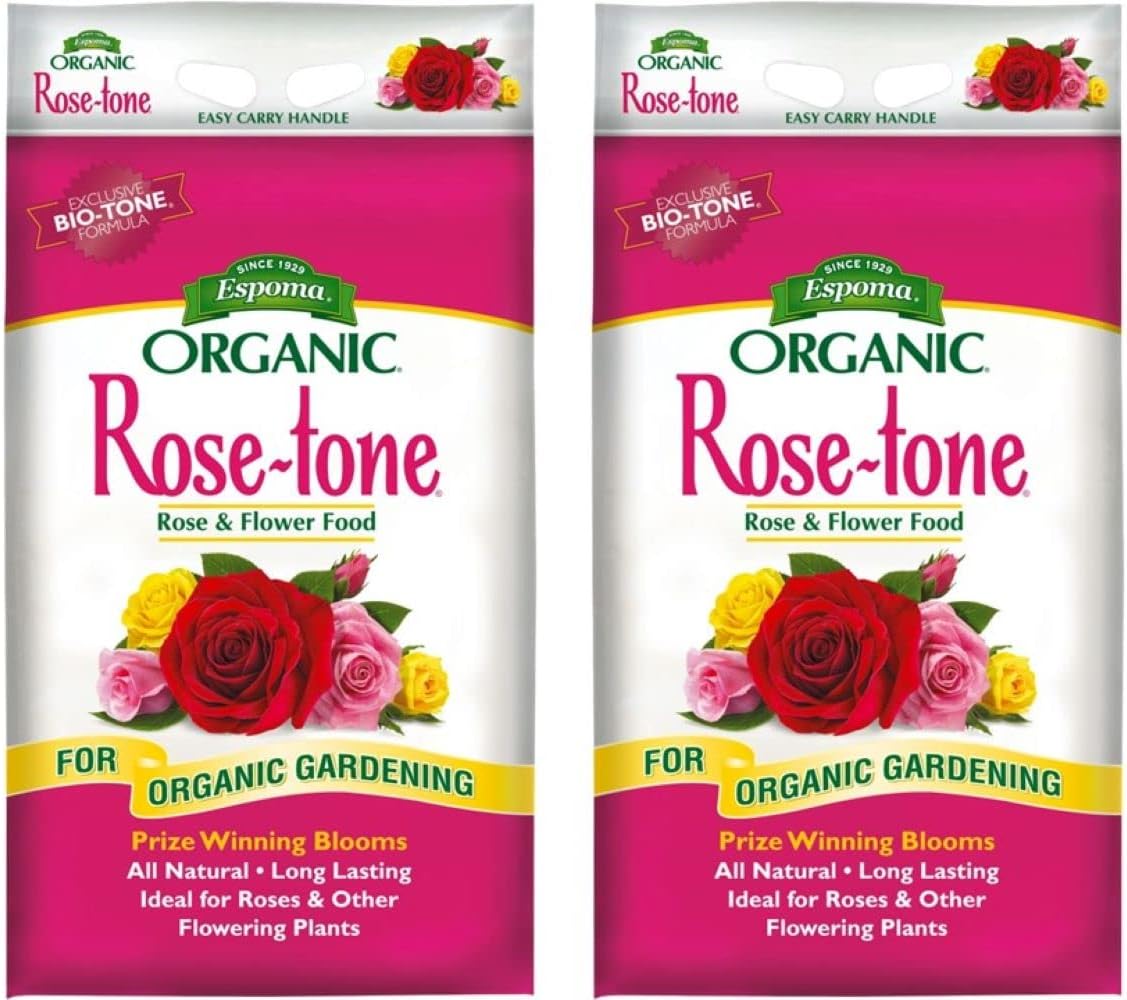
Espoma Organic Rose-tone 4-3-2 Granular Fertilizer, 18 lb Bag (2-Pack)
| Item Form | Granules |
|---|---|
| Specific Uses For Product | Gardening, Organic, Plant Food |
| Coverage | Medium |
| Target Species | roses, viburnum, bougainvillea, clematis |
| Mixing Ratio | 4-3-2 |
Espoma Rose-tone is a ready-to-use organic granular fertilizer designed specifically for roses and similar flowering shrubs. It supplies an NPK ratio of 4-3-2 with added calcium and a biological amendment to encourage strong green growth and more blooms. Typical use is to apply around the plant drip line once a month from May through September and water in; the product is labeled for roses, viburnum, bougainvillea and clematis. Because it is granular and formulated for organic gardening, it is easy to spread by hand or with a broadcast spreader and avoids mixing or liquid preparation. The practical benefits are steady, low-risk feeding with organic nutrients and an established brand backing the formulation. Limitations are that the nutrient ratio is modest compared with high-analysis synthetic fertilizers, so gardeners seeking rapid, high-feeding results or precise soluble feeding schedules may find it slower to act; also coverage is listed as medium so large beds may require multiple bags for season-long feeding.
Best for: Gardeners who prioritize a reliable, low-risk organic feeding program for roses and flowering shrubs and want a no-mix granular fertilizer they can apply monthly.
Less Ideal for: Growers who need rapid, high-nitrogen boosts, exact soluble fertilizing schedules, or who manage very large beds that demand high coverage per application.
- Organic formula approved for organic gardening and enhanced with a microbial Bio-tone amendment.
- Ready-to-use granular form requires no mixing and is simple to apply monthly around the drip line.
- Includes calcium which helps overall plant health and supports stronger stems and blooms.
- Sold in an 18 lb bag and offered as a two-pack for extended season coverage.
- Lower NPK numbers compared with synthetic rose fertilizers so results are more gradual.
- Coverage rated as medium so larger rose gardens may need additional quantity.
Verdict: Choose Espoma Rose-tone if you want a dependable, ready-to-use organic granular fertilizer that supports steady bloom and plant health with monthly applications.
Miracle-Gro Water Soluble All Purpose Plant Food, 10 lb

| Item Form | Granules, Powder |
|---|---|
| Application Method | watering can |
| Target Species | For all flowers, vegetables, trees, shrubs and houseplants |
| Fertilizer Analysis | 24-8-16 |
Miracle-Gro Water Soluble All Purpose Plant Food is a fast-acting granular formula that dissolves in water to feed shrubs, flowers, vegetables and houseplants. You mix measured scoops into a watering can or garden feeder and apply at the soil line every 1 to 2 weeks; the water-soluble format delivers nutrients quickly to roots, which can produce visibly fuller growth compared with unfed plants. The product is labeled safe for all common plant types when used as directed and includes guidance for indoor and outdoor dilution rates. Notable features are the broad target list (shrubs included), the 24-8-16 NPK balance that favors leafy growth, and a large 10 lb container that covers extensive garden area. Practical benefits for shrub care are rapid nutrient availability during the growing season and easy application with routine watering. Important limitations are the relatively high nitrogen proportion, which is ideal for leaf development but may be less suitable when the goal is to limit vegetative growth or to force blooms or fruit without adjusting timing or concentration. Follow the package directions to avoid overfeeding and protect nearby sensitive plants.
Best for: Gardeners who want a reliable, quick-feed fertilizer to boost shrub vigor and see noticeable growth within weeks and who value products with extensive customer use and guidance.
Less Ideal for: Growers seeking a low-nitrogen bloom booster or a slow-release, low-maintenance fertilizer for seasonal feeding should consider more specialized formulas.
- Water-soluble formula delivers nutrients quickly to roots for faster response
- Broadly labeled for indoor and outdoor use including shrubs, trees, flowers and vegetables
- Clear dilution and application instructions for watering can or garden feeder
- High-coverage 10 lb container suitable for large gardens
- High nitrogen ratio may encourage leafy growth over blooms or fruiting if used during flowering
- Requires regular reapplication every 1–2 weeks rather than long-term slow feeding
Verdict: A dependable, fast-acting water-soluble fertilizer that reliably boosts shrub growth when used as directed.
BioAdvanced All-in-One Rose & Flower Care Granules, 64 oz

| Unit Count | 64 Ounce |
|---|---|
| Item Form | Granules |
| Target Species | Insects |
| Specification Met | EPA |
BioAdvanced All-in-One Rose & Flower Care is a granular, three-in-one product that combines fertilizer, insect control, and fungicide into a single application for roses and other flowering shrubs. You apply the granules around the base of the plant, pulling back mulch first, and the systemic formula is taken up by roots so no spraying is required and protection remains effective through rain for up to six weeks. Notable features include a balanced N-P-K analysis and active ingredients (acephate and tebuconazole) that target common pests like aphids and leafhoppers while reducing fungal issues such as black spot and powdery mildew. For a gardener seeking convenience, this simplifies routine rose care by reducing separate feeding and spray steps and helps maintain stronger roots and better blooms. The main limitations are that it contains conventional active ingredients that some gardeners may wish to avoid and it is formulated for listed pests and diseases rather than every possible problem, so you should follow label directions and local regulations when using it.
Best for: Gardeners who want a straightforward, low-effort way to feed roses and reduce common insect and fungal problems with a single seasonal application.
Less Ideal for: People who prioritize organic or all-natural products or who need treatments for pests or diseases not listed on the label.
- Combines fertilizer, insect control, and disease control in one granular application
- Systemic, rainproof formula provides protection for up to six weeks
- Easy to apply around the plant base with no spraying required
- Targets common rose pests and diseases, helping improve blooms and plant health
- Contains conventional pesticides and fungicides that may not suit organic gardeners
- Protection covers only listed pests and diseases and requires correct placement and timing
Verdict: Choose this product when you want a convenient single-product solution to feed roses and provide multiweek, rainproof insect and disease protection.
Choosing the Right NPK Fertilizer for Roses: Key Factors to Consider
Nutrient Ratio and Timing
Roses respond differently to nitrogen, phosphorus, and potassium at various growth stages. A higher middle number, phosphorus, supports bud set and bloom development, while moderate nitrogen encourages healthy leaf and cane growth without excessive foliage. Potassium helps overall plant hardiness, water regulation, and blossom quality.
Timing matters: use a balanced or bloom-biased ratio during flowering, and shift toward slightly higher nitrogen in early spring for cane development. Knowing the ratio on the label lets you plan feedings across the season and avoid overapplication that can reduce bloom production.
Formulation Type and Release Profile
Granular, slow-release, and water-soluble NPKs behave differently in soil and containers. Slow-release granules supply nutrients over weeks and reduce the need for frequent feeding, which is handy for busy gardeners or mixed beds. Water-soluble formulas deliver a quick nutrient boost and are useful for correcting deficiencies or feeding potted roses where nutrients wash out faster.
Consider how often you can fertilize and the typical rainfall or irrigation in your garden. Fast-release feeds can cause a quick flush of growth that requires pruning, while slow-release options give steadier results and reduce the risk of root burn when applied at recommended rates.
Application Method and Ease
How you apply fertilizer affects accuracy and plant safety. Measuring, broadcasting, side-dressing, or using a liquid feeder each has tradeoffs. Granular products are easy to broadcast in beds but require attention to even distribution. Soluble fertilizers need accurate mixing but allow precise dosing for individual plants or containers.
Look for clear label instructions and straightforward application schedules. Products that integrate with standard watering systems or have simple shake-and-apply measures reduce mistakes and help you maintain consistent feeding.
Micronutrients and Soil Health
Roses benefit from micronutrients like iron, magnesium, and boron in addition to NPK. These elements support chlorophyll production, flower set, and disease resistance. Some NPK blends include chelated micronutrients that are more available in varied pH soils.
If your soil test shows specific deficiencies, choose a fertilizer that supplies those trace elements or plan to supplement. Healthy soil biology also affects nutrient uptake, so pairing regular fertilization with organic matter maintains long-term fertility and root health.
Suitability for Containers and Potted Roses
Potted roses have smaller soil volumes and need more frequent feeding because nutrients leach with each watering. Use formulations designed for containers or soluble feeds you can apply at lower doses more often. Slow-release pellets made for container use can reduce the risk of overfeeding but may not supply enough phosphorus or potassium for heavy bloomers without supplementation.
Check recommended application intervals and whether the product specifies container rates. Also consider potting mix quality and drainage, since compacted or poorly draining media can lead to salt buildup and root stress when fertilizing.
Environmental Impact and Runoff
Fertilizer runoff can harm nearby plantings, pollinators, and water bodies. Slow-release and targeted application methods reduce the chance of nutrient wash-off compared with frequent high-dose liquid feeding. Choose products with clear dosing that minimize excess nitrogen and phosphorus in surrounding soil and drainage.
Gardeners near water or with sandy soils should be especially careful about timing applications before heavy rain. Properly stored and applied feeds also reduce waste and contamination risks in the garden.
Feeding Schedules for Different Rose Types
Hybrid teas, shrub roses, and climbers have varied growth habits and bloom cycles, so feeding schedules should match those habits. For repeat-blooming varieties, a regular every-four-to-six-week feed during the active season helps sustain bud production. In contrast, once-blooming types usually benefit from a single spring application timed for bud formation.
Potted roses often need lighter, more frequent liquid feeds because nutrients drain with each watering. Establish a rhythm that matches plant response: if new growth is consistently pale or sparse, increase frequency slightly; if lush foliage and few blooms appear, reduce nitrogen-rich feeds and favor a bloom-focused ratio.
- Start light in early spring and increase as shoots develop.
- Feed every 4 to 6 weeks for repeat bloomers with balanced or bloom-biased NPK.
- Use gentler, more frequent liquid feeds for containers.
Interpreting N-P-K Numbers for Bloom Goals
N-P-K numbers show relative proportions, not absolute amounts. For bigger blooms, many gardeners look for formulas where the middle number is equal to or higher than the nitrogen figure, signaling phosphorus availability to support flowers. However, extremely high phosphorus is rarely necessary and can be wasteful in well-supplied soils.
Pair NPK choices with soil tests or observations. If soils are already fertile, choose maintenance feeds with moderate ratios rather than high-analysis formulas that risk nutrient imbalance.
- Balanced feeds (for example similar N and P) suit general maintenance.
- Bloom-biased ratios favor flowering but check soil fertility first.
- Adjust feeding intensity based on plant vigor and bloom frequency.
Integrating Fertilizer with Pruning and Watering
Feed timing should coordinate with pruning and watering. Apply fertilizer after the initial spring prune and after removing spent blooms to encourage new shoots and repeat flowering. Avoid heavy feeding right before hot dry spells, which can stress plants and increase salt concentration in the root zone.
Consistent watering helps plants take up nutrients evenly. When using water-soluble feeds, water deeply after application so nutrients move into the root zone without concentrating salts near the surface.
- Feed after pruning to support new shoot growth.
- Water thoroughly after granular or liquid feeding to move nutrients in.
- Reduce feeding during drought stress or extreme heat.
Adjusting Fertilizer Strategy for Soil Types
Sandy soils leach nutrients more quickly and often benefit from more frequent, lighter applications or slow-release feeds. Heavy clay soils retain nutrients better but may tie up phosphorus if pH is off, so paired soil amendment and pH correction are important.
Amending soils with compost improves nutrient retention and fosters microbial activity that helps release nutrients to roots. A combined approach of organic matter plus targeted NPK applications gives more predictable results across varied soil textures.
- Sandy: prefer soluble or more frequent low-dose feeds.
- Clay: check pH and consider timed-release formulations.
- Add compost to improve nutrient holding and soil structure.
Common Feeding Mistakes and How to Avoid Them
Overfeeding is common and can produce lush foliage at the expense of blooms or cause salt buildup and root damage. Always follow label rates and start at the lower end for potted plants or newly planted roses. If you see leaf scorch or slowed growth after application, flush the root zone with water to dilute excess salts.
Another mistake is mismatching feed type to the planting situation. Fast-release liquids applied to beds with good fertility can over-supply nutrients quickly, while slow-release pellets in containers may not deliver enough phosphorus for heavy flowering without supplemental feedings.
- Follow recommended rates and err on the conservative side for containers.
- Flush the soil if you suspect salt buildup.
- Match formulation to planting situation to avoid under- or over-feeding.
How We Chose the Best NPK Fertilizer for Roses
We focused on attributes that determine how well an NPK fertilizer performs for roses in garden beds, containers, and cutting gardens. Our primary filters included nutrient ratio suitability for flowering roses, clarity of labeling so gardeners know exact N-P-K and secondary nutrients, and formulation type because granules, water-soluble formulas, and slow-release pellets behave differently in soil and containers. We also considered application practicality, including how easily a gardener can dose by plant size and whether the product works with common irrigation and feeding schedules. Additional editorial criteria covered nutrient availability and how quickly effects appear, plus any built-in micronutrients that support disease resistance and root health. Products were excluded if labels lacked clear NPK information, if the formulation was inappropriate for typical rose feeding schedules, or if the product required specialized equipment beyond normal garden tools. The resulting shortlist emphasizes options that balance flowering-focused NPK ratios, reliable release profiles, and straightforward application so gardeners can match a feed to their maintenance routine.
FAQ
How often should I feed roses with an NPK fertilizer?
It depends on the formulation and planting. Slow-release granules are usually applied every 8 to 12 weeks, while water-soluble feeds are often used every 3 to 6 weeks during the growing season. Potted roses typically need more frequent, lighter feedings because nutrients leach faster from containers.
Can I use a general-purpose NPK fertilizer on roses?
Often a general-purpose NPK will work, but roses usually respond better to formulas that provide adequate phosphorus for blooms and sufficient potassium for hardiness. Check soil fertility first; if the soil is fertile, a balanced maintenance formula may be enough.
Should I change the fertilizer ratio after pruning?
After a hard spring prune, slightly higher nitrogen can help cane and foliage development. Once flower buds begin to form, switch to a bloom-focused ratio to support bud set and larger flowers. Timing feeds to growth stages yields better results than a single fixed ratio all season.
Are slow-release fertilizers better than liquid feeds for roses?
Each has advantages. Slow-release options reduce application frequency and lower runoff risk, while liquid feeds provide quick correction for visible deficiencies and are easier to dose for individual plants or containers. Choose based on how often you want to feed and the planting situation.
Do roses need micronutrients in addition to NPK?
Yes, micronutrients like iron, magnesium, and boron support chlorophyll production, flower development, and overall vigor. If leaves show specific deficiency symptoms or a soil test indicates low trace elements, pick a fertilizer that supplies those micronutrients or supplement as needed.
Can I apply NPK fertilizer right before heavy rain?
It is not ideal. Heavy rain can wash fertilizer away before plants take it up and increase runoff risk. Apply when no heavy rain is expected for at least 24 hours, or use slow-release formulations that are less prone to immediate leaching.
Final Verdict
Match fertilizer choice to your rose type, growing conditions, and how much maintenance you want to do. Prioritize an NPK ratio that supports blooming without overstimulating leafy growth, and choose a formulation that fits your watering and pruning habits. Remember that soil health and micronutrients influence how well plants use added NPK, so pair feeding with compost and occasional soil checks. Focusing on nutrient ratio fit, appropriate release profile, and clear application instructions will help you select a rose feed that produces fuller blooms and stronger canes while minimizing common problems like salt buildup or nutrient runoff.
