

Note: This article contains affiliate links. If you click on these links and make a purchase, I may earn a small commission at no extra cost to you. This helps support my research and content. Read my full affiliate disclosure here.
If you grow bitter gourd, the right organic fertilizer makes a big difference in vine health, flowering, and fruit quality. Soil fertility affects leaf vigor, pest resistance, and how well flowers set into fruits. This guide covers the top shortlisted organic fertilizers for bitter gourd and explains how each was judged against real garden needs like nutrient balance, ease of use, and suitability for containers or in-ground beds. Below you will find concise product summaries followed by practical advice to match a fertilizer to your growing situation and schedule.
Top Picks at a Glance
| Best Overall The best all-around choice for most situations | Espoma Organic Plant-Tone 5-3-3 All-Purpose Granular Plant Food (2 × 4 lb.) |  |
| Best Quality Built to a higher standard if you want something more solid | BuildASoil All-Purpose Organic Fertilizer for Vegetable Gardens (10 lb) |  |
| Best Value The sweet spot between price and what you get | Jobe's Organics All-Purpose Granular Fertilizer (16 lb) |  |
| Best Budget The cheapest option that still gets the job done reliably | 2nd Nature Organic BSFL Frass Pellets 3-3-2 Shake-n-Spread 2.2 lb |  |
| Highest Rated A top-rated pick with lots of positive feedback | Brut Organic Worm Castings, 5 lb |  |
| Most Popular A crowd favorite that many people choose with confidence | FoxFarm Big Bloom Liquid Plant Food, 32 fl oz |  |
| Best Seller A high-volume bestseller chosen again and again | Jobe's Organics Granular Tomato & Vegetable Fertilizer, 4 lb |  |
Espoma Organic Plant-Tone 5-3-3 All-Purpose Granular Plant Food (2 × 4 lb.)

| Item Form | Granules |
|---|---|
| Specific Uses For Product | Organic,Plant Food |
| Coverage | All-purpose |
| Target Species | all flowers, vegetables, trees and shrubs |
| Mixing Ratio | 5-3-3 |
Espoma Plant‑Tone is a ready‑to‑use granular organic fertilizer designed to feed a wide range of garden plants, from roses and perennials to shrubs and vegetables. You broadcast it around the drip line and water it in; because it is slow‑releasing, it builds a steady nutrient reservoir rather than delivering a quick burst. Notable features include its 5-3-3 NPK formulation with added calcium and the Bio‑Tone microbial blend that aids nutrient breakdown and uptake. Practical benefits are improved bloom and foliage development with monthly applications for flowers and vegetables and spring/fall feeding for trees and shrubs, plus certification for organic gardening. Limitations are that results are gradual compared with synthetic quick‑release fertilizers and the product is sold in multiple small bags, which may require more frequent replenishing for larger beds. Also it is a general all‑purpose formula, so gardeners seeking highly specific high‑nitrogen or bloom‑boost mixes will need to supplement or choose a specialized product.
Best for: Gardeners who prioritize steady, plant‑friendly performance and organic inputs for shrubs and flowering beds and who plan regular seasonal or monthly feedings.
Less Ideal for: Growers who need immediate, high‑intensity nutrient boosts for rapid vegetative growth or who prefer single large bulk bags for extensive acreage.
- Organic, slow‑release granules that feed plants steadily over time
- Includes Bio‑Tone microbes to help break down organics and improve nutrient availability
- Versatile all‑purpose formula suitable for flowers, vegetables, trees and shrubs
- Slower visible results compared with fast‑acting synthetic fertilizers
- Packaging is in 4 lb. bags which may be small for very large gardens
Verdict: Choose Espoma Plant‑Tone when you want a proven organic, slow‑release fertilizer that reliably improves shrubs and flowering plants over the season.
BuildASoil All-Purpose Organic Fertilizer for Vegetable Gardens (10 lb)

| Item Form | Granules |
|---|---|
| Specific Uses For Product | Plant Growth, Soil Conditioning |
| Coverage | Full |
| Mixing Ratio | 1:400 (nutrient tea) or 1:12 to 1:6 (soil amendment) |
BuildASoil All-Purpose Organic Fertilizer is a 10 lb granular blend aimed at improving plant vigor and soil health in vegetable gardens and flower beds. Gardeners use it as a top dressing, a soil amendment mixed into potting or garden soil, or brewed into a nutrient tea using the provided mixing ratios. The formula lists a 2-4-2 NPK balance plus rock dust and calcium, which supports steady vegetative growth, root development, and improved flower and fruit quality. Notable features include organic ingredients and a mix designed for both immediate feeding when brewed as a tea and longer-term soil conditioning when incorporated into soil. Practically this means quicker visible green-up and fuller plants while also adding minerals that benefit soil biology over repeated applications. Limits to expect are the need for regular reapplication for continuous heavy-feeding crops and that specific nutrient percentages beyond NPK are not detailed, so users wanting tailored micronutrient programs or exact analysis for high-demand fruiting stages may need supplemental inputs.
Best for: Gardeners focused on strong, consistent performance who want an organic, multi-use fertilizer to boost vegetable and flower production while improving soil health over time.
Less Ideal for: Growers who require tightly controlled, high-concentration NPK formulations or a complete lab-style micronutrient profile for intensive commercial production should consider specialized alternatives.
- Balanced 2-4-2 NPK formula supports vegetative growth and flowering
- Organic granular form works as top dressing, soil amendment, or to brew nutrient tea
- Includes rock dust and calcium to supply trace minerals and support soil biology
- Clear mixing ratios provided for tea and soil amendment make dosing straightforward
- Not a highly concentrated synthetic fertilizer so heavy feeders may need additional supplements
- Product label does not provide a full micronutrient breakdown for precision feeding
Verdict: A versatile organic granular fertilizer that delivers reliable vegetable and flower performance while building soil health.
Jobe's Organics All-Purpose Granular Fertilizer (16 lb)

| Item Form | Granules |
|---|---|
| Specific Uses For Product | Plant Growth, Root Development, Seed Development, Soil Conditioning |
| Mixing Ratio | 4-4-4 |
| Coverage | Resealable |
This is a straightforward organic granular fertilizer designed for regular feeding of vegetable gardens and other ornamentals. With an NPK of 4-4-4 and ingredients like feather meal, bone meal, and processed poultry manure, it supplies balanced nutrients and some calcium and sulfur for steady growth and improved root development. You apply it to soil every 2 to 3 weeks during the growing season; as a slow-to-release granular it reduces the need for daily attention and lowers the risk of burning when used as directed. The product is OMRI listed for organic gardening and is presented in a resealable bag for tidy storage. Limitations to be aware of are the modest NPK numbers, which mean it is best for maintenance feeding rather than rapidly correcting severe nutrient deficiencies, and the need to reapply frequently compared with longer-term slow-release formulations. For growers wanting an easy, certified-organic feed for vegetables and mixed beds, this covers most bases without complex application methods.
Best for: Home vegetable gardeners and practical growers who prioritize organic inputs and want a simple, repeatable feeding routine to maintain steady plant growth.
Less Ideal for: Growers who need a high-concentration or targeted corrective fertilizer for severe nutrient deficiencies or for single-crop intensive production should consider specialized formulas instead.
- OMRI listed and made from organic-derived sources suitable for certified organic vegetable production
- Balanced 4-4-4 NPK supports foliage, flowers, and fruit development without strong spikes
- Granular, slow-to-release form reduces immediate burn risk and simplifies feeding schedule
- Resealable packaging helps keep product dry and minimizes mess during storage
- Lower nutrient concentrations mean more frequent application or higher volumes are needed for nutrient-poor soils
- Not formulated for a single crop nutrient correction so may be insufficient for plants with specific high-demand deficiencies
Verdict: A reliable, OMRI-listed all-purpose granular fertilizer that gives practical, balanced organic feeding for vegetable gardens with minimal fuss.
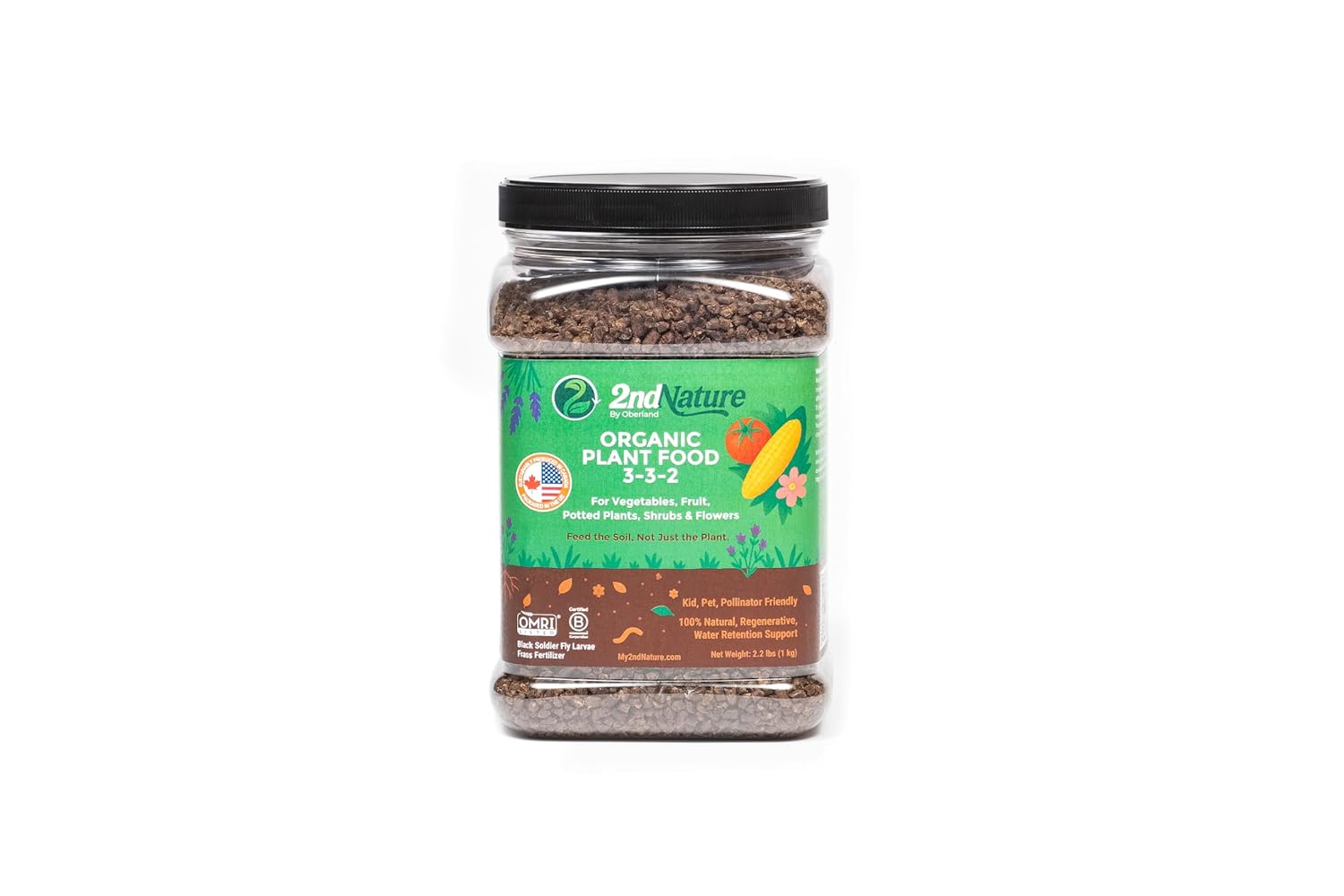
2nd Nature Organic BSFL Frass Pellets 3-3-2 Shake-n-Spread 2.2 lb
| Item Form | Pellet |
|---|---|
| Application Method | Shake-n-Spread |
| Specific Uses For Product | Plant Growth, Root Development, Soil Conditioning |
| Mixing Ratio | 3:3:2 |
| Ingredients | 100% Black Soldier Fly Larvae |
This 2nd Nature product is a pelletized organic fertilizer made from black soldier fly larvae frass, packaged in a resealable Shake-n-Spread container for easy distribution. You sprinkle it across soil or mix lightly into potting mix to provide a gentle, slow-release feed with an NPK of 3-3-2 plus micronutrients and chitin that supports root development and natural pest defenses. It is suitable for vegetables, containers, and beds so it can be used during planting or as a maintenance top dress for bitter gourd; the pellets improve moisture retention and soil conditioning while boosting root vigor. The resealable dispenser makes single-handed application simple and reduces mess. Limitations are that nutrient ratios are mild compared with concentrated synthetic fertilizers so results are gradual and multiple applications may be needed for heavy-feeding crops, and the product is sold in a modest 2.2 lb size which may require buying more for larger plots. For gardeners who prefer organic, low-impact inputs this is a practical, easy-to-use option.
Best for: Gardeners who prefer organic, low-impact plant foods and need an easy-to-apply slow-release fertilizer for vegetables and container-grown bitter gourd.
Less Ideal for: Large-scale growers or anyone needing rapid, high-dose feeding for heavy-producing crops should choose a higher-analysis or bulk fertilizer instead.
- OMRI-listed organic frass with a balanced 3-3-2 NPK suitable for steady growth
- Pellet form and resealable Shake-n-Spread container make application clean and straightforward
- Contains chitin and micronutrients that support root strength and natural pest resilience
- Produced from upcycled materials, offering a sustainable fertilizer option
- Low NPK means slower visible results compared with concentrated synthetic fertilizers
- Small 2.2 lb unit may be insufficient for larger gardens without repeat purchases
Verdict: A convenient, OMRI-listed frass pellet that provides gentle, organic nourishment and root support for bitter gourd growers who prioritize sustainable, easy-to-use fertilizers.
Brut Organic Worm Castings, 5 lb

| Item Form | Granules |
|---|---|
| Specific Uses For Product | Gardening,Organic |
| Target Species | All plants |
| Mixing Ratio | 1:5 |
Brut Organic Worm Castings function as a concentrated, natural soil amendment you mix into potting mixes or top-dress garden beds and raised beds. Typical use is mixing at the recommended 1:5 ratio for new indoor plants, sprinkling a cup around established houseplants, or working into outdoor planting holes and beds according to the brand directions. The product is OMRI/CDFA listed and produced in controlled conditions, which supports consistent nutrient content and beneficial microbial life that help roots establish, improve soil structure, and increase moisture retention without burning plants. Practical benefits for raised garden beds include improved aeration, slow-release nutrients, and a boost in microbial activity that supports long-term fertility. Limitations are that it is not a complete NPK fertilizer for immediate heavy feeding needs and larger beds require significant quantities to hit the suggested per-square-foot rates, so frequent applications or bulk purchases may be needed for big projects.
Best for: Gardeners who prioritize dependable, organic soil improvement for raised beds and container gardens and prefer predictable, low-risk amendments that support long-term soil health.
Less Ideal for: Those needing immediate, high-NPK feeding for heavy-feeding crops or gardeners who want to amend very large beds without buying supplemental bulk material.
- Certified organic and produced indoors for consistent purity
- Rich in beneficial microbes that improve soil structure and plant vigor
- Easy-to-use granular form suitable for mixing or top-dressing
- Not a standalone high-NPK fertilizer for rapid nutrient correction
- Five-pound bag may be small for large raised beds and repeated seasonal use
Verdict: Use this OMRI/CDFA-listed worm castings product to reliably build long-term fertility and microbial health in raised beds and containers.
FoxFarm Big Bloom Liquid Plant Food, 32 fl oz

| Item Form | Liquid |
|---|---|
| Specific Uses For Product | Plant Food |
| Coverage | Medium |
| Liquid Volume | 32 fluid ounces |
| Mixing Ratio | 4 tbsp per gallon of water |
FoxFarm Big Bloom is a concentrated liquid plant food designed to boost flowering and fruit development. It is typically mixed at 4 tablespoons per gallon of water and applied every other watering, or delivered via hose-end sprayer or drip systems for regular feeding. The formula relies on organic inputs such as earthworm castings and bat guano, which promote quick nutrient uptake and encourage bigger blooms, stronger seed set, and improved flavor in fruits and vegetables. Practical benefits include easy mixing, compatibility with common irrigation setups, and a medium coverage suitable for garden beds, containers, and small orchards. Because it is low in NPK numbers, Big Bloom performs best as a bloom/fruit booster rather than a complete base fertilizer, so gardeners should pair it with a higher-nitrogen feed during vigorous vegetative growth. Users should also observe local regulations about phosphorus use and take care to avoid runoff. For growers focused on enhancing flower size and fruit quality, this product provides a reliable, easy-to-use organic bloom feed.
Best for: Gardeners aiming to maximize flower size and fruit quality who want an easy-to-apply organic bloom booster for regular feeding.
Less Ideal for: Those seeking an all-in-one primary fertilizer for rapid vegetative growth or users in areas where phosphorus-containing fertilizers are restricted.
- Concentrated liquid that's easy to mix and apply with watering systems
- Contains organic inputs like earthworm castings and bat guano for nutrient-rich feeding
- Formulated specifically to support flowering and fruit development
- Suitable for use across beds, containers, and irrigation systems
- Low NPK numbers mean it is not a complete feed for heavy vegetative growth
- Contains phosphorus which may be restricted by some local regulations
Verdict: Choose Big Bloom when your priority is bigger, more abundant flowers and better-tasting fruit delivered in an easy-to-use organic liquid feed.
Jobe's Organics Granular Tomato & Vegetable Fertilizer, 4 lb

| NPK | 2-5-3 |
|---|---|
| Item Form | Granules |
| Target Species | Vegetable and tomato |
| Unit Count | 64 Ounce |
Jobe's Organics granular fertilizer is a simple, slow-release feed designed specifically for tomato and vegetable beds. You apply the granules around plants every 4 to 6 weeks during the growing season to supply roots with nitrogen, phosphorus, and potassium in a 2-5-3 ratio aimed at fruiting and root development. The formula derives nutrients from bone meal and processed poultry manure and includes calcium and other micronutrients, which helps reduce blossom end rot and supports solid fruit set. Because it is OMRI listed it fits into organic vegetable production and is safe to use around children and pets when applied as directed. Practical gardeners will appreciate the measured, low-mess granular format and the moderate coverage for small to medium plots. Limitations are that it is not a fast-acting soluble feed for immediate correction and the 4 lb bag covers only a modest area, so larger vegetable gardens will need larger or repeated purchases.
Best for: Gardeners who prioritize organic, low-maintenance feeding for home vegetable and tomato beds and who want a measured, slow-release product for steady crop development.
Less Ideal for: Growers who need rapid correction of nutrient deficiencies or who manage large-scale vegetable plots and prefer concentrated or high-coverage fertilizers.
- OMRI listed for use in certified organic vegetable production
- Balanced 2-5-3 NPK with added calcium and micronutrients to support fruiting and root health
- Slow-release granular form feeds roots over time and reduces risk of over-fertilizing
- Easy to measure and apply for small to medium garden beds
- Not a quick soluble feed for immediate nutrient correction
- 4 lb bag provides only moderate coverage for larger vegetable gardens
Verdict: A reliable OMRI-listed granular feed that delivers balanced, slow-release nutrition ideal for home tomato and vegetable gardens.
Choosing the Right Organic Fertilizer for Bitter Gourd: Key Factors to Consider
Nutrient Ratio and Timing
Bitter gourd needs balanced nutrients with a focus on steady, moderate nitrogen early to build vines, then reliable phosphorus and potassium to promote flowers and fruit development. A fertilizer that is too high in nitrogen can encourage lush foliage at the expense of flowers and fruit set.
Consider how often you want to feed and whether you need a product formulated for early vegetative growth or one designed to support flowering. Slow-release blends or timed liquid feeds let you shift the nutrient emphasis through the season without large swings in plant vigor.
Formulation and Release Type
Organic fertilizers come as dry granules, composted blends, or concentrated liquids. Granular, slow-release organics reduce the need for frequent feeding and lower the risk of burning roots, while liquids deliver nutrients quickly and are useful for correcting deficiencies during flowering.
Think about your routine: if you prefer low-maintenance beds, choose a long-lasting granular or amended compost. If you are monitoring flowering and fruit set closely, a soluble feed applied at key stages can yield faster responses.
Soil Health and Microbial Support
Beyond N-P-K, good organic fertilizers improve soil structure and microbial activity, which helps roots access nutrients and supports long-term fertility. Ingredients like well-aged compost, fish emulsion, or humic amendments feed soil life and can enhance nutrient uptake by bitter gourd vines.
If your soil is poor or compacted, prioritize products that add organic matter and stimulate microbial communities over quick-release nutrient fixes. That investment reduces dependency on frequent feeding over multiple seasons.
Application Method and Gardener Skill
Ease of applying the fertilizer matters for backyard gardeners and small-scale growers. Some organics require pre-mixing, compost tea brewing, or repeated foliar sprays, while others can be broadcast and lightly worked into the soil or applied as a top dressing.
Match the product to your skills and schedule. If you manage multiple beds, low-labor granular options or pre-measured spike systems are practical. For container growers, soluble formulas or diluted liquid feeds are often simpler and safer for root systems.
Salt Content and Root Safety
Even organic materials can concentrate soluble salts that stress roots, especially in containers or poorly draining soils. High-salt inputs can reduce seedling vigor and cause leaf tip burn on sensitive crops like bitter gourd.
Look for low-salt formulations and follow application rates carefully, especially for potted plants. Regular watering to leach excess salts and occasional soil testing will help avoid hidden buildup.
Compatibility with Pest and Disease Management
Fertilizer choices can influence plant susceptibility. Overly lush growth from excessive nitrogen may attract pests and increase disease pressure. Conversely, balanced feeding supports stronger plants that can better resist common pests.
Choose products and schedules that reduce feast-or-famine growth cycles. Integrating organic fertilizer with mulching, regular pruning of overcrowded foliage, and good air circulation creates a healthier environment for bitter gourd.
Feeding Schedule for Bitter Gourd
Establish a simple feeding rhythm to match plant stages. Apply a balanced organic amendment at planting to build a fertile root zone, then follow with lighter, more frequent feeds during flowering and fruit set. For slow-release granules, one application at planting plus a midseason top-dressing is usually sufficient. For liquids, feed every two to three weeks during active flowering.
Adjust feeds based on leaf color and vigor. Pale leaves often indicate nitrogen or iron issues, while poor flowering suggests low phosphorus. Small, frequent corrections are safer than large, infrequent doses.
- Apply base amendment at planting or transplanting
- Switch to bloom-supporting feed when flowers appear
- Avoid heavy nitrogen once fruiting begins
Using Fertilizer in Containers Versus In-Ground Beds
Containers have limited soil volume and different water dynamics, so they need lower-salt, more frequent feeding and close monitoring for drying. Choose soluble organics or dilute liquid feeds and apply conservatively to avoid salt buildup.
In-ground beds benefit more from bulk organic matter and slow-release formulations. Incorporate compost or a granular organic at planting to create long-lasting fertility and reduce the need for repeated applications during the season.
- Containers: frequent, dilute liquid feeds and regular leaching
- Beds: incorporate compost or slow-release granules at planting
- Use soil tests to fine-tune application rates for each setting
Signs of Nutrient Deficiency and What To Do
Watch for specific symptoms: yellowing between veins suggests magnesium or iron issues; uniform pale leaves point to nitrogen shortage; and poor flowering can mean insufficient phosphorus. Leaf curl and stunted growth may also signal root problems rather than nutrition alone.
When you spot a deficiency, choose a corrective feed that targets the lacking element and avoid blanket heavy applications. Foliar sprays can provide quick relief for micronutrient shortages, while soil-applied organics improve longer-term balance.
- Identify the symptom before increasing feed rates
- Use foliar micronutrient sprays for quick fixes
- Combine short-term correction with soil-building strategies
Integrating Fertilizer with Compost and Mulch
Fertilizer works best as part of a system. Layer compost, mulch, and targeted organic feeds to maintain even moisture and steady nutrient availability. Mulch reduces moisture stress and moderates soil temperature, which helps roots take up nutrients more efficiently.
Avoid placing fresh uncomposted manures directly against young roots. Instead, let bulky organic materials mature or mix them into the soil well ahead of planting to prevent nitrogen immobilization or burning.
- Top-dress with compost in early season for steady nutrient release
- Use mulch to preserve moisture and reduce nutrient leaching
- Avoid raw manures near transplants; prefer aged compost
Organic Options for Flowering and Fruit Set
Products that emphasize phosphorus and potassium or include kelp and seaweed extracts often help with flowering and fruit retention. These additions can increase bloom counts and support pollination when used responsibly alongside balanced base fertilization.
Remember that concentrated organic bloom boosters still require proper application rates. Excessive potassium or imbalanced feeds can create deficiencies in other nutrients if used without a holistic plan.
- Use bloom-support feeds during peak flowering
- Combine with pollinator-friendly practices to improve fruit set
- Monitor plant response and reduce feeding if growth becomes overly vegetative
How We Chose the Best Organic Fertilizer for Bitter Gourd
We focused on products and formulations that are appropriate for growing bitter gourd and similar vining cucurbits. Selection centered on nutrient balance for fruiting crops, nitrogen management to avoid excessive leaf growth, and available potassium and phosphorus to support flowering and fruit set. We evaluated application methods and user experience for common backyard scenarios including containers, raised beds, and in-ground rows. Organic certification or clear ingredient transparency was required to ensure sources are naturally derived. We excluded synthetic or predominantly mineral fertilizers and any formulations clearly aimed only at lawns or non-fruiting ornamentals. Important evaluation dimensions were nutrient ratio suitability for cucurbits, ease of application for small-scale gardeners, release profile and reapplication frequency, compatibility with compost and soil amendments, and potential for salt buildup. Products that scored poorly on ingredient clarity, had impractical application requirements, or were unsuited to common garden setups were not included.
FAQ
How often should I fertilize bitter gourd with organic products?
It depends on formulation. Slow-release granular organics often need one application at planting and a midseason top-dress. Liquid organics are typically applied every two to three weeks during the flowering and fruiting period.
Can I use compost alone instead of an organic fertilizer?
Compost provides slow, broad-spectrum fertility and improves soil structure, which can be sufficient in rich soils. If your soil lacks specific nutrients for flowering, a targeted organic feed can complement compost to support better fruit set.
Will organic fertilizer prevent pests and diseases on bitter gourd?
Good nutrition supports plant vigor and can reduce susceptibility, but fertilizers do not replace integrated pest management. Balanced feeding combined with cultural practices like pruning, sanitation, and crop rotation helps reduce pest and disease pressure.
Are liquid feeds better for container-grown bitter gourd?
Liquids are often preferable for containers because they deliver nutrients quickly and are easy to control at lower rates. However, frequent monitoring and leaching are important to prevent salt buildup in pots.
How do I avoid overfeeding with organic fertilizers?
Follow label rates and observe plant response. Use soil testing if possible, and favor smaller, more frequent applications over large single doses. Watch for overly lush growth or leaf burn as signs to reduce feeding.
Can I mix different organic fertilizers together?
Mixing is possible but should be done carefully. Ensure combined products do not create nutrient imbalances or excessive salt. When in doubt, apply different products at separate times and monitor plant response.
Final Verdict
Choose an organic fertilizer that matches your growing situation and the stage of your bitter gourd plants. Prioritize a balanced nutrient profile that shifts from moderate nitrogen during vine growth to higher phosphorus and potassium at flowering and fruit set. Consider formulation, release profile, and salt risk so you can feed effectively without stressing roots. Focusing on soil-building amendments and a predictable feeding schedule will yield the most consistent results. Match product type to whether you garden in containers or in beds, and adjust frequency based on plant response for the best chance at healthy vines and reliable harvests.
