

Note: This article contains affiliate links. If you click on these links and make a purchase, I may earn a small commission at no extra cost to you. This helps support my research and content. Read my full affiliate disclosure here.
If you maintain a property with medium trees, fallen limbs, and regular firewood chores, choosing the right midsize chainsaw makes physical work faster and safer. A midsize chainsaw balances engine or motor power with a bar length and weight that suit most homeowners and small acreage owners. In this guide we shortlisted the six best midsize chainsaws that perform well across common yard tasks. Each pick was evaluated on cutting performance, durability, handling, and serviceability to help you pick the machine that fits your workload and skill level.
Top Picks at a Glance
| Best Quality Built to a higher standard if you want something more solid | EGO POWER+ 18" Cordless Chainsaw (CS1810) |  |
| Best Value The sweet spot between price and what you get | Oregon 16" Corded Electric Chainsaw (2400W) |  |
| Best Budget The cheapest option that still gets the job done reliably | CRAFTSMAN 16-Inch Corded Electric Chainsaw (CMECS600) |  |
| Highest Rated A top-rated pick with lots of positive feedback | Husqvarna 120 Mark III 16-inch Gas Chainsaw |  |
| Most Popular A crowd favorite that many people choose with confidence | Oregon CS1500 18" Corded Electric Chainsaw with PowerSharp Self-Sharpening |  |
| Best Seller A high-volume bestseller chosen again and again | Milwaukee M18 FUEL 16 in. Cordless Chainsaw (Tool Only) |  |
EGO POWER+ 18" Cordless Chainsaw (CS1810)

| Power Source | Battery Powered |
|---|---|
| Model Number | CS1810 |
| Manufacturer Warranty Description | 5 Year Tool |
| Item Type Name | CHAINSAW |
The EGO POWER+ 18" cordless chainsaw aims to deliver gas-level cutting power without fumes or the noise of a gas engine. It is powered by EGO 56V ARC Lithium batteries (sold separately) and uses a 2500W brushless motor that the manufacturer equates to a 50cc gas unit. Typical tasks are cutting large branches, bucking logs, and felling medium trees where an 18" bar is useful. Notable features include a digital LED display for speed modes and battery readout, an adjustable LED work light for low-light jobs, IPX4 weather resistance, tool-free chain tensioning, and large bucking spikes for better leverage. In practice this makes the saw convenient to start, simple to maintain, and suitable for repeated cuts when paired with a higher-capacity battery. Limitations are the dependence on EGO batteries which must be purchased separately and reduced run time compared with gas for heavy continuous work; users doing extended remote jobs will need spare batteries or a generator-backed charging solution.
Best for: Buyers who prioritize dependable, low-maintenance power and want a cordless saw that performs like a mid-size gas model for property maintenance and prosumer tasks.
Less Ideal for: Those who need long continuous runtime for remote commercial logging without access to spare batteries or onsite recharging should consider gas-powered alternatives.
- Gas-equivalent brushless motor delivers strong chain speed for demanding cuts
- Tool-free chain tensioning makes adjustments quick and user-friendly
- Digital LED display and adjustable work light improve control and visibility on site
- IPX4 weather resistance and metal bucking spikes increase durability and cutting stability
- Battery and charger not included so sustained use requires purchasing compatible batteries separately
- Run time depends on battery capacity and may be shorter than a gas saw for long uninterrupted jobs
Verdict: If you want near gas-level cutting performance with the cleanliness and convenience of cordless operation, this 18" EGO chainsaw is a reliable prosumer choice.
Oregon 16" Corded Electric Chainsaw (2400W)

| Power Source | Manual |
|---|---|
| Horsepower | 2400 watts |
| Chain Length | 16 inches |
| Manufacturer Warranty Description | 2 year |
The Oregon 16" corded electric chainsaw is a practical midsize option for homeowners who need reliable, low-maintenance cutting for branches, limbs, and small logs. It starts instantly with no fuel mixing and delivers 2400 watts of power through a 16-inch guide bar and Oregon ControlCut chain. The tool-free chain tensioning ring and built-in Lubri-Tec automatic oiler make setup and upkeep straightforward, and the low-kickback chain plus chain brake reduce the risk during common cutting tasks. Compared with gas saws it is quieter, lighter on vibration, and easier to maintain, though you are limited by the cord for range and cannot match the sustained power of larger gas models. This saw is best used for routine trimming, pruning, and cutting firewood at or near the house where an extension cord is accessible. The design balances safety features and convenience, making it a sensible, no-fuss choice for buyers who want dependable cutting without complex maintenance.
Best for: Someone who wants a reliable, low-maintenance chainsaw for regular yard work and pruning close to the house and values easy setup and safety features over maximum portability.
Less Ideal for: Commercial users, land-clearing contractors, or anyone who needs extended untethered runtime or to cut very large trees should look at petrol or high-capacity battery models instead.
- Instant electric start eliminates gas mixing and pull-start hassle
- Automatic oiler keeps bar and chain lubricated during use
- Tool-free chain tensioning simplifies adjustments in the field
- Low-kickback chain and chain brake improve safety during homeowner tasks
- Cord limits cutting range compared with cordless or gas models
- Not suited for heavy commercial use or very large-diameter logs
Verdict: A practical, low-maintenance midsize electric chainsaw that delivers instant starts, easy upkeep, and safe operation for routine homeowner cutting tasks.
CRAFTSMAN 16-Inch Corded Electric Chainsaw (CMECS600)

| Power Source | Corded Electric |
|---|---|
| Horsepower | 3.5 hp |
| Chain Speed | 44 |
| Chain Length | 16 inches |
The CRAFTSMAN 16-inch corded electric chainsaw delivers straightforward, plug-in power for pruning, limb removal, and small firewood tasks around the yard. Its 12-amp motor and 16-inch low-kickback bar and chain make it suitable for cutting medium-diameter branches and sectional logs without the noise and maintenance of a gas saw. Practical features like tool-free chain tensioning and an auto-oiling system with a visible oil window reduce setup and upkeep, so you spend more time cutting and less time fiddling with adjustments. Being corded means continuous power for extended jobs but you will need access to an outdoor-rated extension cord and must manage cord placement while working. At about 6 pounds it is reasonably easy to maneuver for most homeowners, though it is not intended for heavy forestry work or long industrial shifts. If you want a simple, low-maintenance saw for seasonal cleanup and DIY yard projects, this model covers those needs efficiently.
Best for: Homeowners who want a low-maintenance, easy-to-use saw for seasonal cleanup, pruning, and cutting firewood without the expense or upkeep of gas models.
Less Ideal for: Users who need a highly portable saw for remote properties or professionals who require high-capacity gas power for prolonged heavy cutting.
- 12-amp corded motor provides consistent power for extended cutting sessions
- 16-inch low-kickback bar and chain suitable for common homeowner tasks
- Auto-oiling with visible oil window reduces maintenance and prevents overfilling
- Tool-free chain tensioning simplifies adjustments on the job
- Corded design limits mobility and requires use of a heavy-duty outdoor extension cord
Verdict: A practical, low-maintenance corded chainsaw that reliably handles typical homeowner pruning and cleanup tasks.
Husqvarna 120 Mark III 16-inch Gas Chainsaw

| Power Source | Gas Powered |
|---|---|
| Horsepower | 1.88 hp |
| Chain Length | 16 inches |
The Husqvarna 120 Mark III is a homeowner-focused gas chainsaw built to handle firewood cutting, light felling and pruning without complicated setup. It uses a 38-cc X-Torq two-stroke engine that delivers about 1.88 hp, a 16-inch chain and automatic oiler so you can get straight to work and keep the chain lubricated during use. Practical features include an air purge for easier starting, a combined choke/stop control to reduce flooding, a simple chain tensioning system for quick adjustments and an inertia-activated chain brake for added safety. LowVib dampening reduces operator fatigue and the Air Injection centrifugal cleaning helps keep large debris out of the air filter to extend service intervals. For a typical homeowner this saw offers a good balance of starting reliability, manageable power and comfortable handling. It is not aimed at heavy professional use and the user should be prepared for routine two-stroke maintenance and fuel mixing.
Best for: Homeowners who need a dependable, easy-to-start gas chainsaw for firewood, limb work and occasional small felling and who value manageable weight and user-friendly controls.
Less Ideal for: People who need a high-hour professional saw for commercial logging or landscapers who prefer electric models for low maintenance and quieter operation.
- Efficient 38-cc X-Torq engine provides reliable power for common homeowner tasks
- Air purge and combined choke/stop control make cold starts and restarting easier
- LowVib system reduces vibration for more comfortable handling during longer jobs
- Air Injection centrifugal system helps keep large debris out of the air filter to reduce maintenance
- Simple chain tensioning and automatic oiler make upkeep and on-the-job adjustments quick
- Designed for light to moderate work so it is not intended for prolonged professional logging
- Requires two-stroke fuel mixing and regular maintenance common to gas chainsaws
Verdict: A balanced, easy-to-start 16-inch gas chainsaw that suits homeowners who want reliable power and comfortable handling for routine yard work.
Oregon CS1500 18" Corded Electric Chainsaw with PowerSharp Self-Sharpening

| Power Source | Corded Electric |
|---|---|
| Horsepower | 2400 watts |
| Chain Length | 18 inches |
| Manufacturer Warranty Description | 2 year |
The Oregon CS1500 is a homeowner-focused corded electric chainsaw designed for regular tree trimming, limb removal, and general yard cleanup. It delivers strong electric power and starts instantly so you avoid engine maintenance or gas mixing. The standout feature is the integrated PowerSharp self-sharpening system that sharpens the chain in a few seconds without removing it, which cuts downtime and keeps cuts consistent. Tool-less chain tensioning and an automatic oiler simplify upkeep, making the saw easy to maintain between uses. Safety-oriented elements such as a chain brake and a lower-noise corded motor suit suburban settings and neighbors. Limitations include dependence on a power cord, which restricts reach compared with cordless or gas saws, and a fixed 18-inch bar that is less suitable for very large trunks. For routine tree cutting on a small to medium property this model balances power, low maintenance, and safety in a package aimed at cautious, practical users.
Best for: Homeowners who want a reliable, low-maintenance chainsaw for regular pruning, limb removal, and small-to-medium tree cutting without dealing with gas engines.
Less Ideal for: Landscapers, remote jobs, or users who need cordless portability or a saw for frequent heavy-duty felling of very large trees.
- Integrated PowerSharp self-sharpening sharpens the chain in seconds without removal
- Instant corded electric start avoids gas mixing and engine maintenance
- Automatic oiler keeps bar and chain lubricated during use
- Tool-less tensioning makes chain adjustments quick and simple
- Lower noise and built-in chain brake improve safety for residential use
- Corded power limits mobility and requires access to an extension cord
- 18-inch bar is not ideal for cutting very large tree trunks
Verdict: If you want a safe, low-maintenance chainsaw for routine tree cutting around the yard, the Oregon CS1500 delivers instant corded power and a unique self-sharpening chain that keeps you cutting with minimal fuss.
Milwaukee M18 FUEL 16 in. Cordless Chainsaw (Tool Only)
| Power Source | Battery Powered |
|---|---|
| Horsepower | 5.3 hp |
| Chain Length | 16 inches |
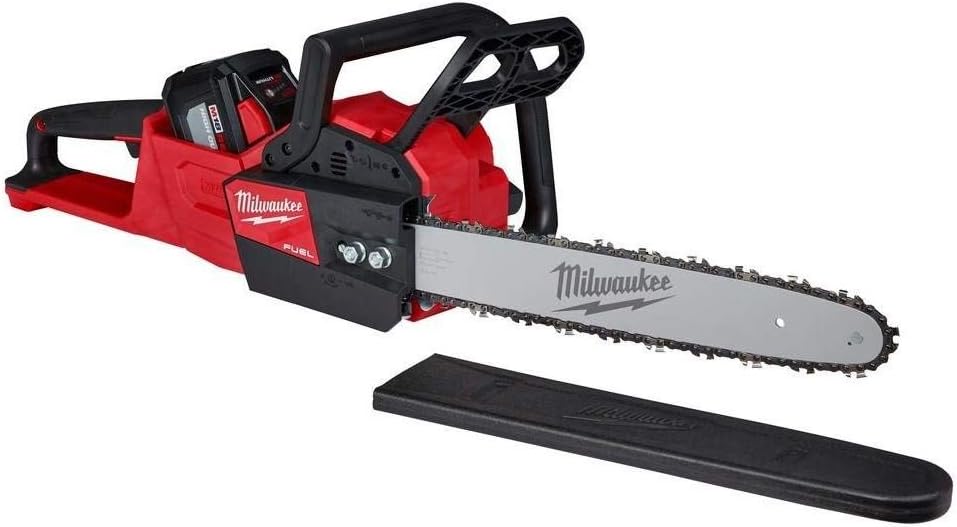
The Milwaukee M18 FUEL 16 in. cordless chainsaw is a tool-focused model that brings high power and convenient cordless operation to homeowner cutting tasks. It uses the M18 battery platform (battery and charger sold separately) and is built around a 16-inch Oregon bar and chain with an automatic oiler and variable speed trigger so you can control cut speed for different wood types. In practice this saw handles hardwood and mid-size logs quickly and is reported to deliver many cuts per charge with higher-capacity M18 packs. Notable features include the brushless FUEL motor for stronger acceleration and reduced maintenance compared with brushed motors, and a compact build that makes limbing and pruning easier in tight spaces. Important limitations are that the battery and charger are not included so you must already own or purchase compatible M18 batteries to realize the reliability benefits, and run time depends heavily on battery capacity. For homeowners who want near-professional cutting performance without gas fuss, this is a dependable cordless option when paired with a robust M18 battery.
Best for: Homeowners who prioritize a reliable, high-performance cordless saw and either already own M18 batteries or are prepared to invest in them for consistent, gas-free cutting around the yard.
Less Ideal for: Casual users who want an all-in-one package with battery and charger included or people needing very long continuous cutting sessions without spare batteries.
- Powerful brushless motor claims faster cuts than gas models for efficient work
- Automatic oiler maintains chain lubrication for consistent cutting performance
- Variable speed trigger gives precise control for pruning or larger cuts
- Compatible with the M18 battery ecosystem so higher-capacity packs boost runtime
- Battery and charger are not included so additional purchase is required
- Run time and cutting output depend on which M18 battery you use
Verdict: Choose this Milwaukee M18 FUEL 16 in. cordless chainsaw if you want near-professional cordless cutting performance and already use or plan to buy M18 batteries for dependable, gas-free operation.
Choosing the Right Midsize Chainsaw: Key Factors to Consider
Bar Length and Cutting Capacity
Bar length directly determines the maximum diameter of wood you can cut safely in a single pass. For midsize chainsaws, common bar lengths let you handle most small-to-medium trunks and larger limbs without overreaching or forcing multiple shallow cuts. Choosing the right bar length prevents unsafe techniques like excessive levers or twisting the saw during a cut.
Longer bars add weight and can change balance, so match the bar to the type of cutting you do most. If you mostly limbing and small trees, a shorter midsize bar improves control. If you frequently cut larger rounds for firewood, opt for the longest midsize bar that you can handle comfortably.
Engine or Motor Output and Torque
Power determines how quickly a chainsaw bites through dense, knotty wood and how well it recovers under load. For midsize machines you want enough torque to maintain steady chain speed without bogging down, which keeps cuts smoother and reduces the tendency to stall.
Higher peak power is useful, but sustained torque under load is often more important for real-world cutting. Consider the types of wood you will cut most often; dense hardwoods require more consistent motor or engine output than softwoods.
Weight, Balance, and Handling
Total weight affects fatigue during prolonged use, while balance determines how the saw feels in your hands when starting and finishing cuts. A midsize chainsaw should be light enough to maneuver in tight branches yet heavy enough to provide downward force for controlled cutting.
Handle placement, grip shape, and center of gravity influence precision and safety. Look for a configuration that allows a comfortable two-handed grip and clear sightlines to the bar tip for accurate felling and limbing.
Chain System and Sharpening
Chain type, gauge, and cutter profile determine cutting efficiency and how often you will need to sharpen. Chains with robust cutter teeth and easy-to-access rivets are simpler to maintain between sharpening sessions. The ability to tension the chain quickly and keep a consistent filing angle reduces downtime in the field.
Chains that resist dulling and that can be sharpened with common files or guides save time over the long run. Consider whether you will sharpen at home or rely on a service, and choose a chain system that fits that plan.
Vibration Dampening and Comfort Features
Vibration transfers to your hands and arms, increasing fatigue and reducing cutting accuracy. Good midsize chainsaws include vibration isolation between the handles and the engine or motor. Softer handle materials, anti-vibration mounts, and balanced rotating assemblies make extended cutting sessions less tiring.
Comfort features like contoured grips, adjustable front handles, and trigger locks also contribute to safer operation. If you plan long cutting sessions, these ergonomic details matter more than small differences in raw power.
Maintenance Accessibility and Serviceability
Routine maintenance keeps a chainsaw reliable and safe. For midsize saws, easy access to the air filter, spark plug or motor brushes, and chain tensioning components means less downtime and fewer tools required in the field. Quick-release covers and on-board tool storage are helpful features that simplify basic upkeep.
Also consider parts availability and the simplicity of common repairs like replacing a clutch drum or sharpening a chain. Machines designed for straightforward maintenance reduce the chance of prolonged out-of-service periods.
When a Midsize Chainsaw Is the Right Choice
A midsize chainsaw fits gardeners and landowners who need more capacity than a light-duty model but do not require full professional power. It is well suited to routine storm cleanup, seasonal tree trimming, and splitting firewood for a household.
If you regularly cut small to medium trunks, remove large limbs, or handle occasional larger rounds, a midsize saw offers a balance of control, reach, and sustained cutting performance. It also tends to be easier to store and transport than heavy professional saws.
- Good for regular property maintenance and firewood prep
- Better torque under load than light pruners
- Easier to handle than full-size professional saws
Safety Practices for Midsize Chainsaw Use
Use proper personal protective equipment including chaps rated for chainsaw use, eye protection, hearing protection, and sturdy gloves. Always inspect the chain tension, chain brake, and bar condition before starting a cut.
Plan each cut to control the direction of the fall or limb movement, and clear bystanders and trip hazards from the work area. Never cut above shoulder height and avoid cuts that bind the bar without proper support and wedges.
- Check chain tension and brake function before each use
- Work from stable footing and keep both hands on the saw
- Use wedges or supports to prevent binding on larger rounds
Fuel, Battery, and Power Considerations
Midsize chainsaws are available with gasoline engines, battery-electric drives, and corded electric options. Gas engines typically offer the highest run-time and quick refueling but require more maintenance. Battery models provide quieter operation, simpler starting, and less maintenance, though run-time depends on battery capacity and load.
Match the power source to how you use the saw. For scattered property work where you might be far from power, gas or long-lasting batteries are preferable. For quieter neighborhoods and shorter sessions, battery models often provide sufficient performance with lower vibration and easier upkeep.
- Gas for continuous, long-duration work
- Battery for cleaner starts and lower maintenance
- Consider spare batteries or fuel strategy for extended jobs
Transporting and Storing a Midsize Chainsaw
Transport chainsaws in approved cases or with a fitted scabbard over the bar to protect the chain and bystanders. Secure the saw in your vehicle to prevent damage and fuel spills. For battery models, remove the battery during transport for safety.
Store the saw in a dry place with the bar lightly oiled and the chain tension relaxed if it will sit for long periods. Regular storage checks for rust and chain lubrication help preserve cutting performance and reduce service needs.
- Use a scabbard or case for bar protection
- Drain fuel or stabilize it for long-term storage
- Remove batteries when storing to extend battery life
Accessory Basics That Improve Everyday Use
A few well-chosen accessories increase efficiency and safety. A basic chainsaw toolkit with files or a sharpening guide keeps chains cutting cleanly. A wedge and a felling rope can help with larger rounds and controlled falls.
Consider extra batteries, a high-quality scabbard, and spare chains matched to the bar length you plan to use. Proper PPE is equally important and should include chaps, hearing protection, and a helmet with face shield for felling tasks.
- Carry a flat file and guide for on-site sharpening
- Keep a wedge and felling rope for problematic cuts
- Spare chains and batteries reduce downtime
How We Chose the Best Midsize Chainsaw
We limited the shortlist to midsize chainsaws that match the article scope: machines intended for regular homeowner and small-acreage use rather than light pruners or heavy professional saws. We prioritized real-world usefulness by focusing on power-to-weight balance, bar length compatibility with common cutting jobs, and dependable chain systems that maintain sharpness through typical yard work. Durability factors included build quality of the bar and sprocket, robustness of the chain brake and clutch assembly, and corrosion-resistant finishes in areas exposed to sap and moisture. Serviceability and maintenance scored highly, with easier chain tensioning, accessible air filters, and straightforward spark plug or brush access rated favorably. We also considered vibration control and ergonomic handle layout, since operator comfort affects accuracy and fatigue over extended cuts. Units with unusually high noise, hard-to-replace parts, or specialized maintenance requirements were excluded. Final selections reflect machines that balance cutting efficiency, longevity, and ease of upkeep for most midsize property tasks.
FAQ
What bar length is best for a midsize chainsaw?
Midsize chainsaws typically use bars that balance reach and control, often in the 14 to 18 inch range. Choose the shortest bar that still handles the largest logs you cut to maintain maneuverability and reduce fatigue.
How often should I sharpen the chain during regular yard work?
Frequency depends on wood type and usage, but many homeowners find they need to sharpen after several hours of cutting or when the saw produces fine sawdust instead of clean chips. Sharpen sooner if you hit dirt or nails, which dull cutters quickly.
Are battery midsize chainsaws powerful enough for heavy limbs?
Battery midsize saws can handle many heavy limbs, especially on newer high-capacity platforms, but run-time under heavy load is limited by battery capacity. For frequent heavy cutting, carry spare batteries or choose a platform with higher continuous power ratings.
What maintenance tasks should I do after each use?
After each session, clean sawdust and debris from the bar, sprocket area, and air intake. Check chain tension and sharpness, refill bar oil, and inspect the chain brake and anti-vibration mounts for damage. Regular small tasks reduce the chance of bigger repairs.
How can I reduce kickback risk with a midsize chainsaw?
Use a chain with a reduced-kickback profile, keep the chain sharp, and avoid using the upper tip of the bar where most kickback forces originate. Maintain a firm two-handed grip and use proper cutting angles to minimize unexpected movements.
Can one midsize chainsaw handle both limbing and felling?
Yes, a well-chosen midsize chainsaw can perform both limbing and felling for small to medium trees. Adjust your bar length and cutting technique to the task, and use wedges or supports for felling larger trunks to maintain control.
Final Verdict
Choose a midsize chainsaw that balances cutting power and manageable weight based on the kinds of trees and wood you encounter. Prioritize sustained torque and a bar length that fits your routine jobs, then confirm that maintenance access and anti-vibration features meet your comfort needs. With those tradeoffs in mind, you can confidently pick a midsize machine that reduces effort and stays reliable across seasons.
