

Note: This article contains affiliate links. If you click on these links and make a purchase, I may earn a small commission at no extra cost to you. This helps support my research and content. Read my full affiliate disclosure here.
If you want vertical greenery in a dim corner, choosing climbing plants suited to low light makes the difference between steady growth and constant frustration. Low light indoor climbers behave differently than sun-loving vines: they grow more slowly, need gentler watering rhythms, and benefit from training supports that conserve energy. This guide covers seven top picks that perform in low-light interiors and explains the care tradeoffs you should expect. We shortlisted options that climb or trail reliably in subdued conditions and evaluated each by factors like light tolerance and maintenance needs. Read on to find the right climber for a shaded shelf, bathroom, or north-facing room.
Top Picks at a Glance
| Best Overall The best all-around choice for most situations | Shop Succulents Ficus Repens (Creeping Fig) — Live Indoor Trailing Plant, 6-inch Nursery Pot |  |
| Best Quality Built to a higher standard if you want something more solid | California Tropicals Scindapsus pictus 'Jade Satin' 4" |  |
| Best Value The sweet spot between price and what you get | Costa Farms Golden Pothos Live Indoor Plant in Decorative Ceramic Planter |  |
| Best Budget The cheapest option that still gets the job done reliably | Blue Pothos (Epipremnum pinnatum) 4" Nursery Pot – Trailing Indoor Vine |  |
| Highest Rated A top-rated pick with lots of positive feedback | Plants for Pets Marble Queen Pothos in 4" Nursery Pot |  |
| Most Popular A crowd favorite that many people choose with confidence | Fam Plants Syngonium Arrowhead Collection — 4 Starter Plants |  |
| Best Seller A high-volume bestseller chosen again and again | Costa Farms Monstera Deliciosa Live Indoor Plant in Decorative Pot (Large) |  |
Shop Succulents Ficus Repens (Creeping Fig) — Live Indoor Trailing Plant, 6-inch Nursery Pot

| Indoor Outdoor Usage | Indoor |
|---|---|
| Sunlight Exposure | Partial Sun |
| Unit Count | 1 Count |
The Shop Succulents Ficus Repens (Creeping Fig) is a compact trailing houseplant intended for indoor decoration and low-light spots. It arrives in a 6-inch nursery pot and produces dense, small green leaves that form an attractive cascade for hanging baskets or for training up small trellises. This variety is tolerant of bright indirect light and will also perform acceptably in lower light, making it a good option for offices, bathrooms, or shaded living-room corners. Care is straightforward: water only when the top inch of soil dries and avoid overwatering. The plant’s trailing habit and easy trainability let you use it as a hanging accent or a tabletop spillover, and its low-maintenance needs suit busy owners or beginners. Expect moderate growth rather than rapid filling of large spaces, and occasional pruning to control length and encourage denser foliage. If you want a dramatic, fast-climbing specimen or an outdoor landscape vine, this indoor-focused plant may not meet those goals.
Best for: Buyers who want an easy-care, decorative trailing houseplant for low-light indoor spots and prefer something adaptable that needs minimal daily attention.
Less Ideal for: People seeking a fast-growing outdoor climber or a large statement plant for big spaces should look at larger species or outdoor varieties instead.
- Tolerates a range of light from bright indirect to low light, good for shaded indoor spots
- Trailing growth habit works well in hanging baskets or trained on small trellises
- Low watering needs; thrives when watered only after the top inch of soil dries
- Arrives ready in a 6-inch nursery pot for immediate placement or easy repotting
- Moderate growth rate means it will not quickly fill large hanging displays
Verdict: A low-maintenance trailing indoor plant that fits low-light hanging or shelf displays and is well suited to busy or beginner plant owners.
California Tropicals Scindapsus pictus 'Jade Satin' 4"

| Indoor Outdoor Usage | Indoor |
|---|---|
| USDA Hardiness Zone | 3 |
| Soil Type | Sandy Soil |
| Moisture Needs | Regular Watering |
| Unit Count | 1 Count |
The California Tropicals Scindapsus pictus 'Jade Satin' is a small, easy-care trailing vine intended for indoor display in hanging baskets, shelves, or trained up supports. It tolerates low to medium indirect light and grows by producing trailing stems with heart-shaped, rich green leaves that add texture to indoor plantings. Care is straightforward: keep soil evenly moist but allow the top inch to dry between waterings and provide well-draining, sandy mix as recommended. Its compact 4-inch size makes it a quick option to introduce climbing or vining structure into tight spaces and to start a low-light plant collection. Because it prefers regular watering and moderate humidity, it performs best with routine care rather than neglect. Expect steady, decorative growth rather than rapid, aggressive climbing; if you want a fast-covering specimen for a large wall, this cultivar will be slower but neater. Overall it is a reliable low-light climber that balances attractive foliage with modest upkeep needs.
Best for: Buyers who want a reliable, low-light trailing houseplant to add leafy texture to small indoor spaces or hanging displays and who prefer steady, manageable growth over vigorous vines.
Less Ideal for: Gardeners seeking a rapidly spreading or large climbing plant for quick coverage of a wall or large trellis should consider faster-growing species instead.
- Tolerates low to medium indirect light suitable for shaded indoor spots
- Compact 4-inch size fits small spaces and hanging displays
- Low-maintenance watering routine of allowing top inch to dry
- Attractive heart-shaped, textured foliage that enhances indoor aesthetics
- Not a fast-growing climber so it will take time to cover large supports or walls
Verdict: A compact, low-light tolerant trailing vine that delivers attractive, low-effort foliage for small indoor climbing displays.
Costa Farms Golden Pothos Live Indoor Plant in Decorative Ceramic Planter

| Indoor Outdoor Usage | Indoor |
|---|---|
| Other Special Features of the Product | Air Purification, Low Maintenance |
| Sunlight Exposure | Partial Sun |
| Moisture Needs | Moderate Watering |
| Container Material | Ceramic |
This Costa Farms Golden Pothos is a classic low-light vine sold ready-to-display in a ceramic planter. It is typically used as a hanging or shelf plant where its trailing, heart-shaped leaves can cascade or climb a support. The listing notes it prefers medium, indirect light and weekly, moderate watering with good drainage, which makes it suitable for offices, bedrooms, and windowsill-adjacent spots that do not get direct sun. Notable features include its fast growth habit, air-purifying claims, and the included decorative pot that saves a styling step. Practical benefits are easy visual impact with minimal care, a clear repotting path as it outgrows the container, and a forgiving nature for new plant owners. Limitations are that it is only rated hardy in warmer zones and not meant for consumption by pets or children, and exact size and appearance can vary since plants are living items. Expect occasional pruning and periodic repotting to keep the vine healthy and proportionate to your space.
Best for: Practical plant owners who want an easy-care, space-saving vine that looks good immediately and requires minimal weekly attention in indoor low-to-medium light.
Less Ideal for: Gardeners seeking cold-hardy outdoor vines or buyers who need a precisely sized specimen for a specific display should consider alternatives.
- Adaptable to medium, indirect light so it performs well in lower-light indoor spots
- Arrives potted in a decorative ceramic planter ready to display
- Fast-growing trailing habit provides quick visual impact on shelves or in hangers
- Marketed as low-maintenance with once-a-week watering guidance
- Not rated for cold climates outside USDA zones 10–12
- Plant appearance and exact size can vary between shipments
Verdict: Choose this potted Golden Pothos when you want a low-effort, fast-growing indoor vine that delivers instant, low-light greenery and comes ready to display.
Blue Pothos (Epipremnum pinnatum) 4" Nursery Pot – Trailing Indoor Vine

| Indoor Outdoor Usage | Indoor |
|---|---|
| Other Special Features of the Product | Air Purification |
| Sunlight Exposure | Partial Shade |
| Soil Type | Well-draining, Fertile Soil |
| Moisture Needs | Moderate Watering |
This Blue Pothos arrives ready to display in a 4-inch nursery pot and is aimed at indoor spaces with low to moderate light. It performs as a trailing or climbing vine and is commonly used in hanging baskets, on shelves, or trained up a small support. Notable features include tolerance of low light, low maintenance care, and leaves that develop a blue-green sheen and eventual fenestrations as the plant matures. Practical benefits for office use include modest watering needs, compact size for desks or shelves, and some air-purifying qualities that improve room ambience. Limitations to expect are its small initial size from the nursery pot, which means it will take time to develop long vines or larger leaves, and it will need occasional pruning or a support structure if you want it to climb. For no-natural-light offices, supplemental artificial light will help keep growth steady over time.
Best for: People furnishing windowless offices or desks who want an inexpensive, low-maintenance trailing plant that improves air quality and requires minimal day-to-day care.
Less Ideal for: Buyers wanting an instant statement plant or rapid dramatic growth should choose a larger, more mature specimen or a species that thrives in bright light.
- Tolerates low to moderate light suitable for windowless offices
- Low-maintenance care with moderate watering needs
- Compact 4-inch nursery pot that fits desks and small shelves
- Versatile display options: trailing, hanging, or trained to climb
- Small nursery pot means slower initial growth and limited immediate presence
- Not a high-light plant so it will grow slowly without supplemental lighting
Verdict: A budget-friendly, low-light tolerant trailing pothos that fits small offices and requires minimal care.
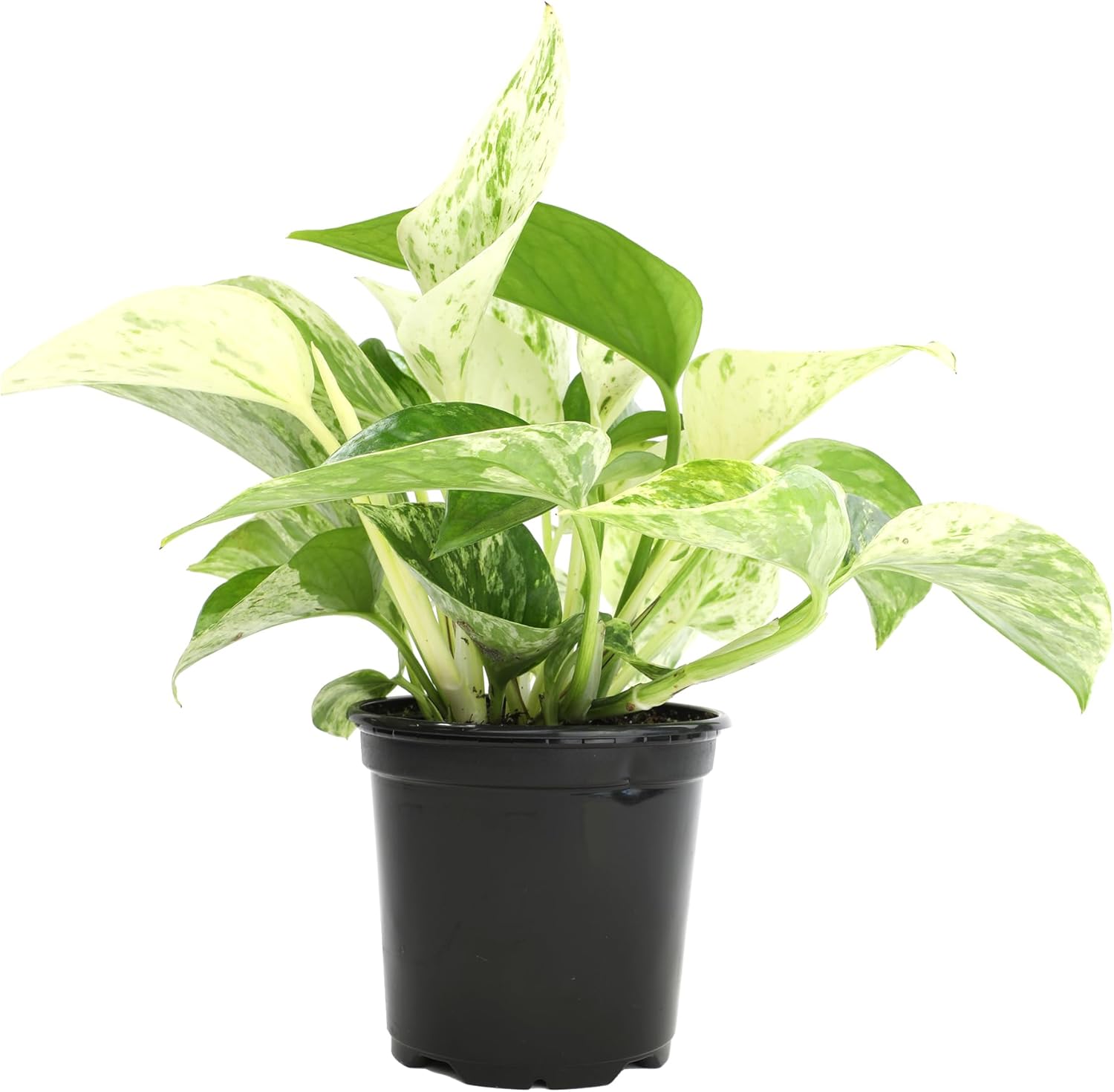
Plants for Pets Marble Queen Pothos in 4" Nursery Pot
| Indoor Outdoor Usage | Indoor |
|---|---|
| Other Special Features of the Product | Air Purification |
| Moisture Needs | Moderate Watering |
| Material Features | Natural |
The Marble Queen pothos is a compact, easy-care vining houseplant that arrives fully rooted in a 4" nursery pot and is suited for indoor spaces with limited light. Typical use is as a hanging plant, shelf specimen, or trailing accent where it can receive bright, indirect light or tolerate lower light levels. Notable features from the listing include variegated green-and-cream foliage, moderate watering needs, and an air-purifying benefit. Practically, this means the plant adds visual interest without demanding daily attention and recovers well if watering is occasionally missed, provided you avoid prolonged saturation that can cause root rot. It also responds to occasional feeding during spring and summer to keep new growth colorful. Limitations are its small nursery pot size on arrival, so taller or fuller displays will require repotting over time, and the plant is toxic to pets so it should be kept out of reach of cats and dogs. Buyers seeking a low-fuss, attractive trailing houseplant will find this an easy add to bedrooms, offices, and shaded living rooms.
Best for: Buyers who want an attractive, low-maintenance trailing houseplant for shaded rooms, shelves, or hanging displays and prefer a reliable plant that tolerates occasional care lapses.
Less Ideal for: People who need instant tall or full specimens without repotting or those who have curious pets that access plant foliage.
- Variegated, decorative foliage that brightens low-light spaces
- Tolerant of low to bright indirect light, making placement flexible
- Arrives fully rooted and ready to display in a nursery pot
- Low care: moderate watering and occasional feeding are sufficient
- Ships in a small 4" nursery pot so repotting is likely for faster growth
- Not pet friendly and should be kept away from cats and dogs
Verdict: A forgiving, variegated pothos that brings low-light rooms life with minimal maintenance and easy placement.
Fam Plants Syngonium Arrowhead Collection — 4 Starter Plants

| Indoor Outdoor Usage | Outdoor |
|---|---|
| Other Special Features of the Product | Air Purification, Low Maintenance, Shade Resistant |
| Sunlight Exposure | Partial Shade |
| Moisture Needs | Moderate Watering |
| Unit Count | 4 Count |
This four-pack of Syngonium starter plants brings together Batik, Holly M, Milk Confetti, and Neon Robusta as young, acclimation-ready plants for indoor growers. Shipped as starter sizes, they are intended to establish quickly once potted into a free-draining mix; the listing recommends letting the top inch of soil dry between waterings and pinching tips to encourage fullness or allow trailing. These varieties are chosen for colorful, variegated foliage and are noted to tolerate low light while showing the best color in brighter indirect light. Practical benefits include easy care for beginners, fast growth habit that suits climbing or trailing displays, and modest moisture needs that fit typical indoor routines. Limitations are that starter plants need patience to reach mature form and variegation intensity depends on light, so color may be subdued in very dim rooms. Occasional substitutions are possible, which keeps quality consistent but may surprise collectors expecting specific cultivars.
Best for: Indoor growers who want low-maintenance, decorative climbing or trailing plants that establish reliably from starter size and prioritize easy care and visual variety.
Less Ideal for: Collectors seeking immediate mature specimens or exact cultivar matches and people with very dim rooms who need plants that maintain strong variegation in near-dark conditions.
- Includes four different popular Syngonium varieties for immediate variety in a single purchase
- Shipped as starter plants to reduce transplant shock and improve establishment
- Tolerates low light while performing best in bright indirect light, making it versatile for indoor spots
- Simple care routine: moderate watering and occasional tip pinching to shape growth
- Variegated foliage adds decorative color without specialized care
- Starter size means several months of growth before reaching mature, showy foliage
- Variegation and leaf color are light-dependent and can fade in very low-light rooms
- Possible rare substitutions may deliver a different cultivar than pictured
Verdict: A beginner-friendly four-plant Syngonium set that reliably establishes as low-light indoor climbers while offering colorful variegation.
Costa Farms Monstera Deliciosa Live Indoor Plant in Decorative Pot (Large)

| Indoor Outdoor Usage | Indoor |
|---|---|
| Other Special Features of the Product | Air Purification |
| Sunlight Exposure | Partial Sun |
| Moisture Needs | Regular Watering |
| Product Care Instructions | Medium, Indirect Light; Water 2-3 cups once a week |
This Costa Farms Monstera arrives planted in a decorative plastic pot and offers the classic split leaves that make Monsteras a go-to statement houseplant. It is marketed as easy-care: place it in medium, indirect light and water about 2–3 cups once a week. In practice that means the plant tolerates lower light than many tropicals but will develop larger, fenestrated leaves faster in a brighter spot. The product notes air-purifying qualities and delivers a full, showy canopy suitable for living rooms or offices. Packaging and a pot are included, so it is ready to place on arrival. Expect relatively fast growth under the right light and occasional pruning or a support to encourage climbing habit. Limitations to consider are that it is sold in a plastic container and will eventually need repotting and a sturdier stake or moss pole if you want a climbing form; the care guidance is general so new owners should monitor soil moisture and adjust watering to their home conditions.
Best for: Buyers who want a low-fuss, visually impactful indoor climbing plant that improves a room’s look with minimal initial effort and straightforward weekly care.
Less Ideal for: People who need a compact, slow-growing desk plant or those unwilling to repot and provide a support for a climbing habit as the plant matures.
- Ready potted and decorative planter included so it can be displayed immediately
- Tolerates lower light while performing best in bright, indirect light, making it suitable for many indoor spots
- Large, dramatic leaves provide strong visual impact for décor and indoor greenery collections
- Described as low-maintenance with simple weekly watering guidance
- Sold in a plastic container that will need repotting as the plant grows
- Care instructions are general and may require adjustment to specific home humidity and light conditions
Verdict: A large, ready-to-display Monstera that gives risk-averse buyers an easy, high-impact indoor climber requiring only basic weekly watering and indirect light.
Choosing the Right Low Light Indoor Climbing Plants: Key Factors to Consider
Light Levels and Placement
Light level is the primary limiting factor for indoor climbers. Even plants labeled low-light do best with some indirect ambient light rather than true darkness. Measure the intended placement across the day to understand whether light is constant, morning-only, or very subdued. A north-facing window or a room lit by reflected light will support slow, steady growth but expect longer internodes and less vigorous leaf production compared with brighter spots.
Placement also dictates how you train the vine. In dimmer spots, keep supports close to the light source so the plant does not stretch excessively toward a window. Rotating the plant occasionally promotes more balanced growth when light is uneven.
Growth Rate and Mature Size
Low-light climbers typically grow more slowly than those in bright conditions, but growth rate still varies by species and individual. Consider how quickly you want a green coverage: slow growers are lower maintenance but take longer to fill a trellis, while faster growers need more frequent pruning and larger containers.
Mature size is critical in small indoor spaces. Choose a species whose eventual length and spread match your support and room height. Remember that constrained roots in pots often limit ultimate size, but regular pruning is still necessary to keep long vines from tangling or shading other plants.
Support Type and Training Method
How you support a climber affects both appearance and health. Moss poles, trellises, rings, and wall-mounted supports suit different aesthetics and root conditions. For low-light vines, vertical supports that keep foliage near the best available light are preferable. Lightweight structures reduce stress on stems and make repositioning easier.
Training technique matters: gentle tying, regular pruning, and selective pinching encourage fuller growth. Avoid heavy ties that restrict stems. In dim light, fewer lateral shoots appear naturally, so deliberate training produces a fuller look.
Watering Rhythm and Humidity
Indoor light intensity strongly influences how much water a climbing plant needs. In low light, evaporation and transpiration decrease, so plants require less frequent watering and are more prone to overwatering risks. Learn each species' drought tolerance and check substrate moisture before watering. A consistent but conservative schedule prevents root issues.
Humidity needs vary: some low-light climbers thrive in average indoor humidity, while others prefer higher humidity found in bathrooms or kitchens. Consider room humidity and whether you can supplement it with pebble trays or periodic misting if necessary.
Soil, Pot Size, and Drainage
The right container mix and drainage determine root health for any indoor climber. Use a well-draining, aerated potting mix that retains some moisture but does not stay waterlogged. Pot size influences how often you water and how much root crowding will slow growth.
Choose a pot with good drainage holes and match container volume to the species' vigor. For plants that prefer root restriction to limit growth, slightly smaller pots can be useful. Repotting frequency should be planned around growth rate and root condition rather than calendar intervals.
Pests, Disease Risk, and Maintenance
Low-light indoor conditions can increase susceptibility to certain pests and fungal problems because slower growth and cooler conditions reduce plant vigor. Inspect foliage regularly for common indoor pests such as scale, mealybugs, and spider mites. Promptly isolate and treat affected plants to prevent spread.
Routine maintenance includes pruning leggy growth, removing dead leaves, and occasional cleaning of dusty foliage to improve light capture. Regular monitoring and simple interventions often keep climbers healthy long term.
Training Tips for Dim Interiors
Train low-light climbers so foliage stays near available light. Start by installing a slim support close to the light source and encourage new growth upward or along the support instead of letting vines drape into darker corners.
Use soft ties and reposition them as vines thicken. Pinch back long runners to promote lateral branching, which creates a fuller canopy without requiring more light.
- Rotate the pot every few weeks for balanced growth
- Use small, frequent pruning cuts rather than heavy shearing
- Attach lightweight supports that are easy to reposition
Improving Light Without Artificial Lamps
If you want better performance without adding grow lights, maximize reflected and indirect light. Move the plant to brighter adjacent rooms, use sheer curtains to soften strong sun, or place climbers on shelves that catch morning light.
Clean windows and remove obstructions that block light. Even small increases in ambient light can make low-light climbers appear fuller and healthier.
- Position near doorways that receive transient daylight
- Use mirrors or light-painted walls to boost reflection
- Avoid placing plants behind heavy drapery or furniture
Humidity and Microclimate Hacks
Many indoor climbers appreciate higher humidity. Grouping plants or creating a microclimate near a humid area like a kitchen or bathroom can raise local humidity without complex equipment. Pebble trays and regular misting also help, though misting is less effective in very dry homes.
Monitor for condensation or mold when boosting humidity; good air circulation prevents stagnant conditions that favor fungal issues.
- Cluster plants together to create shared humidity
- Use a water tray with pebbles under the pot to raise local humidity
- Ensure moderate airflow to avoid mold buildup
Propagation Strategies for Indoor Climbers
Propagation is a practical way to expand coverage or replace leggy sections. Many climbers root readily from stem cuttings in water or a loose potting mix. Take cuttings from healthy, semi-ripe growth and keep them warm and humid while roots form.
Label cuttings and stagger propagation so you always have a backup plant. Rooted cuttings can be trained onto new supports to create layered greenery without waiting for slow basal branching.
- Use clean cuts and hormone powder for faster rooting when needed
- Keep cuttings out of direct sun until roots develop
- Transplant rooted cuttings into a well-draining mix and acclimate gradually
Seasonal Care Changes
Indoor growth slows in cooler months and low light. Reduce watering frequency and avoid heavy fertilizing during the plant's dormant period. Light management becomes more important in winter, so consider moving plants closer to windows during short daylight months.
In spring and summer expect a surge in growth if light increases. Prepare to prune and repot as needed to keep vines tidy and healthy.
- Cut back on feedings in late fall and winter
- Increase monitoring for pests during active growth
- Time repotting for early spring when new growth begins
How We Chose the Best Low Light Indoor Climbing Plants
We selected plants that reliably climb or trail indoors under low to moderate ambient light and that are commonly grown by houseplant enthusiasts. Our editorial filters favored species with documented shade tolerance, predictable growth habit, and manageable maintenance needs for indoor environments. Evaluation criteria focused on measurable, gardener-relevant dimensions: low-light tolerance, growth habit and trainability, water and humidity sensitivity, pest and disease resilience indoors, and how easy the plant is to propagate or replace. We also considered mature size and vigor so the plant suits small indoor supports without overwhelming the space. We excluded outdoor-only climbing species, plants that require consistent high light, and those with aggressive, invasive root or vine behavior unsuited to containers. Plants needing specialist greenhouse conditions or heavy supplemental lighting were not included. The resulting shortlist emphasizes realistic indoor performance and practical care requirements aligned with the scoring criteria above.
FAQ
Can low-light climbers survive in a north-facing room?
Often yes. Many low-light indoor climbers tolerate north-facing exposures, though growth will be slower and internodes may stretch. Position plants as close to the window as possible and rotate regularly to reduce leaning.
How do I prevent leggy growth in dim conditions?
Regular pinching and pruning encourage lateral branching, producing a fuller plant. Training vines toward the best available light and rotating the pot also helps reduce legginess.
Is it better to mist climbers or use a pebble tray for humidity?
Both methods help but pebble trays provide a steadier local humidity boost while misting gives only a brief increase. Combining methods or grouping plants works well for moderate humidity needs.
How often should I water low-light indoor climbers?
Watering frequency usually decreases in low light. Check substrate moisture before watering and allow the top inch or so to dry for most species. Overwatering is a more common issue than underwatering in dim interiors.
Can I train a climbing plant to a moss pole indoors?
Yes if the species attaches or can be tied gently. Moss poles keep foliage near light and support upright growth, but they can hold extra moisture so monitor for rot and avoid overly wet conditions.
Will low-light climbers need fertilizing?
They benefit from light feeding during the active growing season, but reduced or no fertilization in winter is usually best. Use a balanced, diluted fertilizer and follow species-specific guidance to avoid salt buildup.
Final Verdict
Choose a low-light indoor climber by balancing light availability, desired coverage speed, and maintenance commitment. Prioritize species with proven shade tolerance if your space receives little natural light, and match support type and pot size to the plant's growth habit. Expect slower growth in dim conditions, so favor training and pruning to shape the plant rather than relying on vigorous branching. With the right placement, watering rhythm, and humidity adjustments, you can get reliable vertical greenery that enhances even the shadiest indoor spots.
